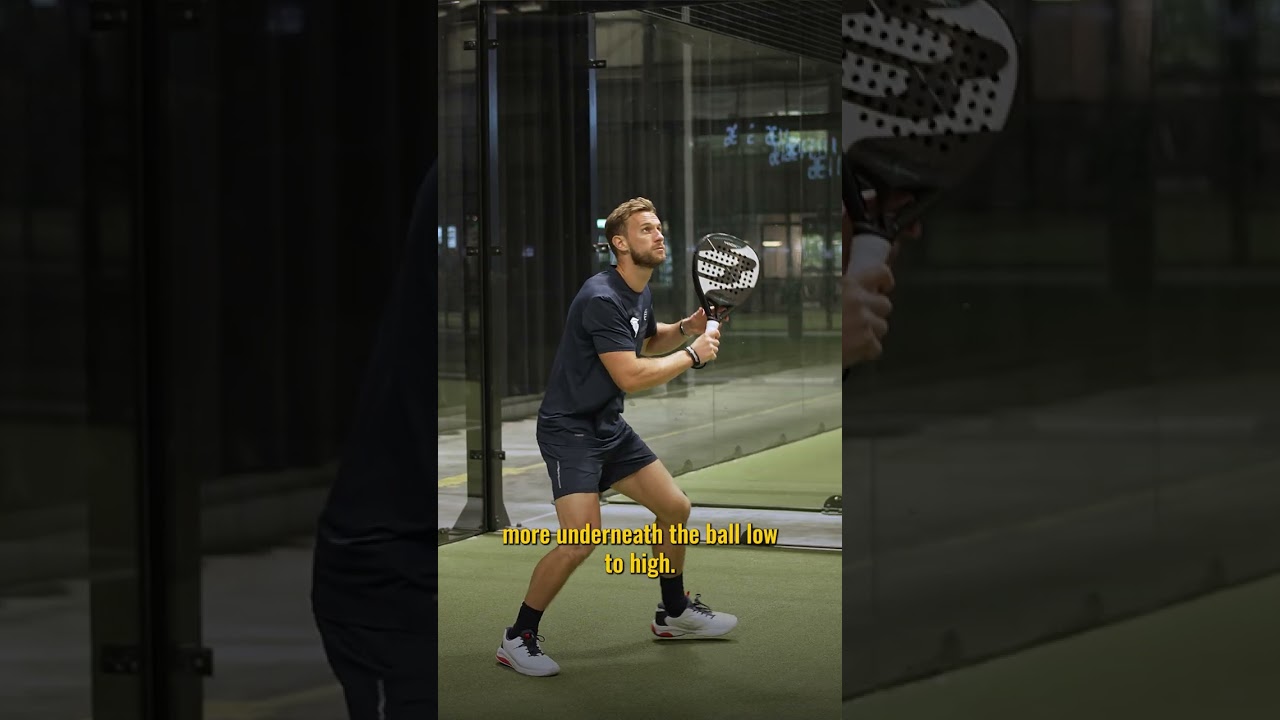
A coach breaks down the tennis forehand from ready position through contact. Keep your elbows in, turn sideways, and adjust your swing path based on the shot: low-to-high for lobs, horizontal for flat drives. Foot position creates the space that makes consistent contact possible.
Chapters
Right, now let's break down the biomechanics of the forehand first. So we're in our ready position, we've already talked about a split step. When our opponent contacts, we turn, we keep the elbows close to the side of our body, we point the racket back, and then we are essentially moving our feet depending if it's a ball in front which we hit the oncoming ball, or off the glass. The technique should look fairly similar for both. The only thing that changes is your footwork either to the ball or after the glass to move forward with the ball. Okay, but when we're in this position now, we're looking light on our toes. We are adjusting from this elbow position in here. This is our full takeback. If you want to hit softer or you want to block the ball more, you can take it less far back and you can even hit semi-open stance. But if you've got a little bit more time, you want to turn your feet so you're side on to the ball And you go from this takeback position with a smooth horizontal swing. Now, if you want to hit a lob, you're going to go more underneath the ball, low to high. A chiquita, you might also go a little bit low to high. If you want to hit a more horizontal shot, you would go more across the ball. And you want to have your takeback generally, depending on the shot, at the height of your contact. So if it's a lower ball, you would come down low, If it's a medium height, you would come medium. If it's a higher ball, you would come higher depending on where you want to contact the ball. Again, the footwork is all about good positioning so you can be in a nice position to contact that ball with a space between you and the ball. And that way you can be consistent with your swing. You can be accurate with your shot.