The Profitable Entrepreneur: Insights and Strategies for Business Success | Rick Streb Interview
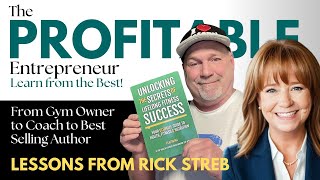
This is the inaugural episode of "The Profitable Entrepreneur: Lessons from the Best," a YouTube interview (host Sandy Wardenburg Waggett) with Rick Streb. Rick, a fitness-industry entrepreneur (31 years), describes his transition from gym owner to coach/consultant for fitness business owners (starting productized coaching work in 2015). The conversation emphasizes the importance of hiring coaches/masterminds, building systems, owning an email list, productizing services (nutrition program), relationship-based marketing, pricing confidently, and using books and content to position authority. Rick also describes pivoting during COVID by delivering workouts and nutrition through software and maintaining community via Zoom.
Questions this video answers
31 years.
Around 2015.
Six months after he hired his coach.
$65,000 in one week (and approximately $500,000 cumulative since 2015, per his statement).
Email: me@rickitnessmarketing.com; Phone: 573-302-8400; Facebook: Rick Streb.
Chapters
All right. Hey. Welcome to the Profitable Entrepreneur Lessons from the Best. And this is actually our inaugural episode. And my friends, my former personal trainer, not because he's formal, but because I'm former. He is here to be my guinea pig on our first show, but I can't think of a better person because he brings a ton of entrepreneurial experience to the table. Rick, how are you?
Fine, thank you. How are you, Shandy?
I'm doing great, thanks. So I want to give you a moment to just sort of introduce yourself and let the audience know, you know, kind of what you do and how long you've been in the business you're in, and then we'll sort of dive into the meat.
Okay, great. Well, I'm Rick Streb. I've been in the fitness industry now for 31 years.
For.
The last. For the first 20, 28 years of that. I own a fitness facility, personal training studio. Since then, I mean, back in 2015, I also started. Started to help other fitness entrepreneurs around, actually the world, not limited to the United States, with building their business, with implementing different revenue streams, with marketing and how to position them as the go to experts or authorities in their niche or marketplace. And that's where I'm at today.
That's really cool. And I kind of want to get your thoughts around if someone's just tuning into this and they're like, well, I'm not in the fitness industry, so this doesn't apply to me. I mean, the show is called the Profitable Entrepreneur Lessons from the Best for a reason. Because I believe that the entrepreneurial journey, regardless of the industry, is very similar for all of us. So give me some of your thoughts around that and why, if they're not in the fitness industry, what you have to share would be relevant.
Absolutely. Well, you're right. I mean, at the end of the day, business is business, and we, as an entrepreneur of any sort, we. We all have the same responsibilities, and we have the same things that are going to move the needle in our business, move it forward or move it backwards if we're not applying them. And one of the biggest things that I see with newer entrepreneurs, and I'm talking from the first year to, like, the fifth year, is they don't have systems in place.
They.
Become the bottleneck in their business. They're doing it all because they don't put enough faith in the people they hire or they're afraid to hire people, and they end up holding themselves because they can only grow so much. And to me, that's one of The, I mean, every business has that situation and you can see it across the country, especially when you walk into small, I don't want to call them mom and pop businesses. That's not the right term. But solopreneurs that are in their business, it's usually they're afraid to let go of the things they should not be doing, and they're not concentrating solely on the things they should be doing.
Yeah, yeah, I've struggled with that, too. So I'm, I'm really glad you brought that up. So, speaking then of challenges, talk to me about some of your early challenges. An entrepreneur. And you know what lessons came from those over the years.
Yeah, well, quite candidly, what I just mentioned was probably one of my biggest obstacles for the first five or six years of my business was my business was me. And I did everything and I was doing the things that kept me from growing my business because I was afraid to let go. And probably the biggest thing there was, quite honestly, when I decided, decided to hire a coach or a mentor, somebody that was going to call me out on the things I was doing wrong and then direct me, push me in the right direction to be successful. And that was probably one of the biggest keys. And me going from a struggling business that on the surface, everybody thought it was a great business because it looked good and it was doing well. But on the, on the backside, I wasn't making the money because I wasn't doing the things I needed to do to push myself forward.
Yeah. And that is so true of so many of us. Right. On the outside, it looks pretty, it looks polished, it looks like we know what we're doing, but the, the public doesn't really see kind of the, the bad and the ugly on the, on the backside.
Now, most people, they envy you because you own your own business and what. And they only know what they see. They don't know what's going on on the back end. They don't understand, like, the entrepreneurs that are working long hours at night and they, they're neglecting their family and their children and the people they love and the things they love. And I think one of the most important things to do, which was something I did from day one, was establish guardrails where you are, literally, you're protecting your time with your family, you prioritizing that as much as your business.
Yeah.
You know, to me, that's really important because let's face it, at the end of the day, that's what's most important.
Yeah. Yeah. Now you have a daughter Right. She's, she's grown. Has she graduated from college already?
Yeah, she's graduated. She's working for the state of Missouri and but you know, I've raised her by myself since she was 6 years old. So regardless of what my business was doing, it was always a priority. You know, I had a fitness facility but a training facility. But we didn't do the early morning training, 5, 6, 7 in the morning like most facilities do because I was going to take my daughter to school, I was going to get her to ready and we didn't have late night sessions, really late, because I was going to be home for her and you know, help her with her homework, feed her and everything. So that was a really, really important thing for me from day one. And I was at the mindset that I would give up the business before I would give up that. And I do think that helped me a lot. Now at the end of the night when she was, when she went to bed, I would stay up and work more and do what I had to do. But that to me was really, really important.
Yeah. So you mean to tell me that it's possible to be successful and not work regular hours or expected hours that the general public would.
100, 100. I mean, back then I would work really, really late, you know, and get up early in the morning and obviously work throughout the day. But you don't have to. If you put in systems for your business and you are thoughtful about what you're doing, where you're trying to go, what your end game is, you can reverse engineer it and all of a sudden you're making better decisions on what you need to be doing and what you can assign to other people, whether they're employees in your business or a virtual assistant. And next thing you know, you're concentrating on the 20% that creates 80% of your business and you're allowing other people to handle the 80% that quite honestly should be the 10, 12, $15 an hour job work that you should never be doing as the business owner.
Yeah, yeah. Now I'm funny that you came back to that because you. I'm going to circle back to when you mentioned that you brought on a coach and a mentor because it's typically the coaches and the mentors that get us mentally as entrepreneurs to that place. How early in your entrepreneurial journey did you understand the need and importance of investing in a coach or a mentor for yourself?
It was about 2015, so. And I moved down. I opened my gym prior to selling it during COVID I opened it in 2000. So it was about 15 years where I live now, before. No, no, I take that back. It was about 2008. So it was about eight years before I got out of my own way and said, you know what? I need somebody to help me. Okay. I need somebody that can shorten the learning curve. That and somebody that's already done what I want to achieve. And that's the biggest step is we got. We have to realize we don't know it all. I don't care how long you've been in business. I don't care how intelligent you are. You don't know it all. There's always somebody that can come up with ideas and creative things that can help move your business in a positive way. And it's. It can be a. It can really dent a person's ego sometimes, because, let's face it, when we're the entrepreneur, it's my way or the highway. And that's the surest way for you to be on the highway out of business.
Yeah. Yeah. Well, success leaves clues. I'm not sure who said that first, but I. I think it might have been Tony Robbins, but success leaves clues. And so I'm a huge fan, I just. As you are. I know. Of having a mentor and a coach, and actually, I'm a fan of having both because they're a little different. And I. My question, though, is you said eight years in. For me, it was 20 years in, which is insane. And it was. It was the biggest mistake, waiting 20 years. How do you feel about waiting eight years? Because I feel that's so much better than what I did.
It was still a huge mistake. I mean, there's no after. After the fact. We can all see that. Okay. But if I had to start over again, first thing I would do is hire a coach with. For whatever I was doing. I am in a conversation not long ago where I was on another podcast and I was asked, if you had to give up everything you use right now to build your business and you could only keep one thing, what would it be? Didn't even hesitate. I gave them the name of my coach.
Yeah.
I mean, that's how invaluable it is.
Yeah. I. It's for. For me, for five years, it's been insane. The. The. I had more growth in five years than I did in 20 because I finally gave in and admitted that I needed help. Right. But, you know, by nature, entrepreneurs, I mean, we're generally type A, we're go getters, we're Hard drivers. We are on the road to constant improvement and learning. But even with all of that, not having a coach, I believe and agree with you completely is the biggest mistake that we make as entrepreneurs.
Yes. I can tell you that hiring the coach was the thing that took me from being a gym owner and scraping by to being considered an influencer in the fitness industry now.
Yeah, yeah.
Because he was able to see things and position things differently than what I was seeing. And those little shifts took me from, like I said, getting by living a comfortable life to launching a product that in one week made me $65,000 and has made me probably close to half a million dollars over time since 2015. Wouldn't have happened if it wasn't for him just seeing a different way to approach something.
Well, I'm glad that we both see eye to eye on that because I, I can't just reinforce that idea enough that if you are a business owner, having a coach makes all the difference in the world. And you know, when we say coach, and I don't want to speak for you, Rick, but when I, when I'm thinking of a coach, I'm thinking of someone who challenges your thinking. It's not someone who tells you what to do. That's more like a consultant. Right. They saw.
That's a teacher.
Lead you. Yeah. Coaches lead you to your own discoveries and ahas and all of that.
Yeah. I think having a coach and joining masterminds, being around like minded people and, you know, hearing other people's trials, tribulations, finding out you're not the only one and things like that. I mean, let's face it, when we're in our business, usually we can't talk to our, to our friends about it because they don't understand it. We can't talk to. Sometimes people can't talk to their spouses about it because they just don't get it. So being in a room with people that understand it and have been through just it helps you so much. I mean, at the end of the day, you need to invest in yourself because investing in yourself is probably the best investment you'll ever make in your business. And that's the way I look at it. And thank God I learned that when I did.
Yeah. Yeah. And so much earlier than most, frankly. So good for you.
And I stumbled upon it, to be honest with you.
Yeah, well, I mean, and that's normal. We all do. We don't always all show it, but we do. Right. If we're being honest with each other, we do all Right. So let's talk strategy and growth. So what are some of the key strategies over the years? We, obviously, the coach was one of them. But let's look at some other areas over the course of your entrepreneurial journey that have really helped contribute to your business growth.
Well, one thing is the realization that. That any business, any business, no matter what industry you're in, is about building relationships. Okay. Too many owners, too many business people look at it on a transactional basis, and I look at it on a relationship basis. Okay. I don't look as at a prospect or a client or a member as a.
Without.
As a dollar sign. They're a human being just like me. And at the end of the day, they're not hiring me because of what I know. They're hiring me because of how I can help them. And there's a saying, I don't. Again, I don't know who says it is. They don't care about what you know until they know that you care. And that is probably one of the biggest thing you can do to build your business, is treat everybody like your friend, like your family. I mean, when I had the. Had the gym, I. You recall because you came to some of them.
Yeah.
Every. Every Christmas, what did I do? I had a big Christmas party. But where did I have it for everybody in my gym, at my home. You can't say you have a fitness family if you don't treat them like family. So you think about things like that. And I was fortunate. I had members paying me hundreds of dollars a month for training, 10, 15 years. And it's because they were treated like a friend, like a family. They were. They knew that we cared.
Yeah, Yeah, I remember it well. It's the reason I loved going to your gym, because I knew that you cared. You cared about our success and you cared about us personally. And the relationship was everything. And it made it also easy to refer you. So when you become very easy to refer, that substantially reduces your outside marketing.
Yes. And that's all the things that happen when you treat people in the way you treat people better than you want to be treated is the way I always approach it. Don't treat them the way you want to be treated. Treat them better. And they're always going to see that. And that goes a long way. It makes a person feel comfortable that they made the right decision. Nobody likes to be sold to, but they do like to join things and they want to join something or be involved with a business that makes them feel like they're important.
Yeah, yeah, that's great advice. Now, you and I have both been in business quite a long time, and I'm not saying we're old, but we've been in business a long time. And surely, I mean, you know, in my business and marketing and tech and all of that stuff, the changes since 1999 have been crazy. And in your industry, I'm sure it's very similar. So how, as a business owner and entrepreneur, do you or did you navigate trends and shifts and, you know, and let's not ignore what happened during COVID because that, you know, that was a big deal that hit your industry hard.
Yeah, well, obviously my business now is marketing and helping fitness entrepreneurs with their marketing. But things have really changed. They've changed definitely on the marketing aspect. People are using more technology these days. Unfortunately, a lot of people use technology wrong. And. And it affects their marketing. I mean, when I was first doing this, everything, like you said, was 100% word of mouth. We were doing direct mail and things like that to bring people in. Well, then, you know, I started learning to build an email list. Okay. And built a substantial email list that I could market to. And then I was one of the first people to jump on the social media marketing with Facebook ads. And I think that's how you originally found me, to be quite honest.
Yeah. Your seven day challenge.
Yeah. Yes. And, you know, and you know, just like that. Even in my business, personal training was always one on one, and if a client didn't show up, you're left sitting there, wait, okay, what do I do with that hour? So what I learned to do was to leverage my time and train several people at one time. Didn't have to charge them as much. So it made personal training affordable for everybody or most people. But I was able to train originally four or five people at a time, and it grew to where we were training 16 people at a time. Could charge them less, but could help more people. There's ways like this that people can do it with any business. I mean, it's just a matter of thinking outside the box, you know, and like I said, and then it got to the point where I was just running Facebook ads every time I was ready to run another six week challenge. Like you said.
Yeah, yeah. I don't know why I said seven days, but yeah, six weeks. Thank you.
Yeah, it was six week challenge. Yeah. You know, and then you come up with more, you know, creative ways to market it and you start using technology more like, you know, using technology, you know, like now we use email email systems like ConvertKit, you know, constant contact, whatever, and things like that to deliver our message. Because you start realizing, okay, I'm doing well on Facebook with my marketing. Problem is, unless they come to me, I'm not kept. I'm not capturing those people's information so I can market to them on the backside. Because the truth of the matter is if you don't have an email list that you can communicate with your prospects and clients, or what happened if Facebook shut down tomorrow, you're out of business.
Exactly. Yeah. You know, and it's not just Facebook that in any platform where you, you're using a rented audience rather than an owned audience, like.
Correct. Yes. And I just use Facebook as an example. Whether it's Facebook, LinkedIn, Twitter, whatever else people are using, it's the same thing. And heck, you don't know what's going to happen. I mean, so build something that is yours and that's a valuable asset to your business. I mean, at this point, majority of my business comes from my email list. So I work to continue growing it, you know, and because that way I can get my message out and I can resonate with people. And you know, another thing, people, they don't understand when they're doing their marketing, everybody, every prospect or lead, as so many people want to call them, they're all coming into your ecosystem at a different time in their, in their, their, the life of their buying, you know, when they're ready. Some people might see it and they're not right. Quite ready yet. Other people are ready to do it right now.
When.
Well, if you base your marketing just off the people that take instant action, you're leaving a lot of money on the table.
Oh, so much so.
And this is where I was talking about before systems. So again, being able to market to them through your emails, you know, giving them content, getting them to know you, like you and trust you. Okay. And you know, and then off making, you know, offers to them occasionally within there, you know, but again, if you're doing nothing but 100 offer emails and not giving them content, you're going to lose people because they're not, they're not reading your emails to be sold.
Absolutely. Absolutely. You know, it's amazing too, as a, as a marketing agency, so many people just don't believe that email marketing works. But it absolutely works if you do it right. And the value of your list actually adds to the value of your company. So if you're thinking about, you know, a strategic exit down the road, you know, if you're if you're 5, 7, 10 years in your business, if you don't have a list already started, you better start one yesterday because that is so critical. And people say, well, I hate when I get spam emails. But, you know, if you're doing it right, your emails aren't spam. They've opted in, and then you've cared for them and nurtured them, and they.
They opted in because they raised their hand and say, I'm interested in what you're offering. Okay. So to be afraid to email somebody too often is quite. How do I say it? There's no general way to say it. It's ridiculous. Okay. You can't. I. My coach, okay? He has sent out a daily email for 16 years. Yeah, daily, Daily. Not once a week, not twice a week. Daily for 16 years. Okay. And he's built a list and he makes multi million dollars just off his email list.
So it's funny, I just got off a call with a prospect that I was talking. I asked her how big her list was, and she said, a couple hundred. So she. She'd been starting to grow a list, which is great. And I said, how often do you communicate with your list? And she said, well, maybe once a month. Which probably means like once every three months in reality. Right. That. Is that enough?
No, no, no, no, no, no, no, no. Not even close. You're. She's losing business. You know, these, like I said, people, they raise their hand and they're interested in what you have to offer. That's the reason they joined your list to begin with. So don't let them down. You know, and another big thing, I mean, it's to come up with content for emails. Pay attention to what's going on in your world, what's going on in your business. I could easily write an email every day based on conversations I have with other business owners. That. It's like, oh, here's something I can point out. Okay. Here's something that I can elaborate on. You know, people say I have trouble coming up with content.
Yeah.
I used to write emails based on conversations I had with people in the gym. Even if they were goofy conversations.
Yeah.
You know, and you can always come up with content. You just have to be aware of it, that's all.
Yeah. And people love stories, you know?
Yeah.
I mean, I know one of the techniques I use is like, I'll just go to YouTube and I'll start typing how to. And then something in the marketing space and YouTube will return a whole list of things that People have been searching for in order of how often they're searched for so that you know that people are looking for that stuff. So you can produce content around it. It's really that easy.
And then you. Yeah, and then you can go to ChatGPT and say, Write me an article about how to. And it'll put out content. As long as you go back in and you edit that content and you put your voice to it, your personality to it. It's easy to write content anymore.
Yeah, very easy. Yeah. And hey, I, I didn't intend to do this, but I'm just going to make a plug so I don't forget about it. I actually have an AI mastery webinar that I'm doing every single month, second Thursday of the month. So you can go to the website, I'll have it in the show notes and check that out if you want to learn more about AI and how to train ChatGPT to make writing content easier and more personal. So anyway, let's move away from marketing for a bit. We may come back to it. But let's talk about profit. How long into your journey did it take you to call yourself profitable?
Six months after I hired my coach.
Nice. So the first eight years you weren't.
No, like I said, you got by, you managed to get by.
Yeah, yeah, yeah, yeah. Essentially we created, we create jobs for ourselves is what we do when we're. Yeah.
And you're being paid a lot. And you're being paid a lot less than you're paying your employees.
Yeah, I know. That was one of the first things my coach said to me. He's like, well, why do you even do this? Is it just for the love of it? Because you could clearly go work somewhere else and make a hell of a lot more money. Yeah, like, damn it, you're so right.
But it is so true. And most entrepreneurs are in that position. So that's why again, they need to take the blinders off and start looking at ways that they can monetize their business better. Creating better systems, not being afraid to assign lower level projects to employees, things like that.
Yeah. So, you know, I want to talk about financial hurdles because I really want this to be an honest and real show. So as an example, in my company we had where bridesgo.com, google changed its search algorithm, we were ranking number one and literally overnight we were penalized and lost 30 grand in revenue a month. That was a financial hurdle. And that's just one story of many. So in your business, like get get specific if you, if you're able to, like, some things that happened and how you overcame them, how you were resilient and got through it and, you know, figured it out.
Well, a big hurdle in my business and one that actually helped my business grow ultimately is I live in a small town like the Ozarks. 1400 people in Lake of the Ozarks. Okay. Well, you can't keep going out and marketing your coaching. Okay. And making the same offers over and over, whether it's on Facebook or whatever, because eventually you run out of people to market to. Right. So I had to come up and that actually created a bottleneck in my business where all of a sudden, you know, after so much time, people see my ads and things really started to slow down. Okay. We hit a sticking point where we weren't grown or anything. Well, I had. There's only three ways you make money in any business. Okay. Get more clients. Get your clients to spend more and get them to stay longer. Well, in a town of only 1400 people, knowing that only a certain percentage are interested in working out, there's only a limited amount of clients I could get. Right.
Yeah.
So I had to figure out how to make more money with them. So I created a nutrition program that built right into my business, that it became a part of my business. There was a low barrier of entry or a low product that everybody received when they joined. It was my nutrition program and my nutrition software. Well, I built in. So I was making X amount per month on these clients. When I started implementing that, I had immediately $20 a month to it. So I gave myself a, you know, $240 raise per person, but I was giving them something highly valuable. But then that was just a starting point. Then there had to be a way to ascend them into the next level of nutrition coaching. And so I had to create a system to do that. And by the time I sold my business, my nutrition in My business was 60% of everything we did. I had over a six figure nutrition revenue stream in my business that, you know, and. But it became out of necessity if I didn't figure out how to. How I was going to either get people to buy more or get them to stay longer. I wasn't going to be in business much longer.
Yeah.
So I get creative and then. But it was getting creative with something that people already want and they need. If you're in the fitness industry. And it was different than the way everybody else in the fitness industry was doing it, because they would sell nutrition. Nutrition as an add on product. Okay, well, people aren't really up to that, but when you build it into something like I did and you make it part of the culture, the buy in is better. And so it just evolved from there. And ironically, because I always, I track my KPIs all the time, I was, you know, very analytical.
Just, just real quick, let me just pause on that. For people who don't know what is a KPI, I'm just saying people don't.
Know key profit indicators, the things that move your business. Okay. If you know those numbers, you know how many leads you need to get a week, how many of those leads are going to become clients, how many of those clients are going to move to your next level products, you know, and you know all those numbers, you can predict your revenue. So then quite honestly, you can also reverse engineer how many you need to get to make the amount of money you want. I guess that's the best way for me to explain it.
Yeah, I love that because I've always heard KPI is key performance indicator, which I'm sure other people have too. And I love you saying key profit indicator because what exactly is performance? I mean that's, that can be a lot of different things, but when you really focus your numbers around the profit, that's huge.
Yes, exactly. But anyway, getting back my story, so what I discovered was that my average client usually stayed with me 18 months. Now we're staying with me 26 months. So that was an additional eight months that they were staying with my business and at between 169, $199 a month. So that made the value of each client a lot more their lifetime value. And so it, you know, just by adding that one simple thing that people already needed and just figuring out how to position it properly, I, that's what moved my business forward even more.
So yeah. I'm curious when that shift had to happen, did you have your coach at that time?
Yes, yes. But he did not help me with that. That was me coming up with that on my own. But yes, I did. My coach at that time.
Yeah. Well, I'm just curious because it's not that, not suggesting the coach came up with the idea, but coaches get you to think differently. Where a lot of people might have just closed their gym. You know, you didn't, you were confident enough and skilled enough to get creative and kind of expand your business model so that you could continue. Not only continue, but thrive.
And I also was a little, I was probably, I was a little headstrong that I wasn't going to accept defeat to.
So. So. Right. Well, I mean, there's that. There's that. Okay.
Yeah. But then when we. And then that also, like when we hit covet, like you said, in the fitness industry, that destroyed the fitness industry. So because I had that software that provided the nutrition and I could also deliver workouts in my software. Okay. I was able to transition immediately and provide all of my clients or members, whatever you want to call them, I was able to provide them with workouts they could do at home and they were still on their nutrition program. And then we were having, you know, a couple of times a week, zoom calls, just checking in things we were doing. Like on Fridays we were doing a coffee hour or happy hour. Just, you know, so it had nothing to do with training or exercise or nutrition.
Just.
Just because people needed that again, they were locked down. They needed some sort of social interaction, so it was able to keep the community going. And while everybody was shut down, we had people that they were still paying us because we were still delivering.
Now, I'm curious, how were you able to pivot your business so quickly when Covid hit what. What empowered that?
Real simple. Everybody was already receiving their meals on. In my. On my nutrition software. Well, I just had to go in and build some at home workouts in there, and it was delivered to them right there on their phone, and they knew what to do at home. And then, like I said, we still had the accountability on zoom calls. We were picking up the phone and calling and checking in on people, not always necessarily about how their workout or nutrition was going, but how they were doing personally. So we kept doing all that. I mean, again, it gets back to that, treating them like a human being. But as far as the mechanics, we had the software, they were already on it. I just dropped some at home workouts in there instead of workouts they could do at the gym, and we kept them moving forward.
Yeah. So I'm just going to tee it up and let you knock it out of the park because I'm gonna assume that your list might have helped that effort too.
Yes, it did.
I mean, yes, it did.
Because I was also able to bring. Get other people into my ecosystem there. My coaching system that were now stuck at home and couldn't even go to their gym. But they were on my list. So now they are reaching out and joining us. So, yes, it helps some. Yeah, but absolutely. And they were following us too.
Yeah, yeah, absolutely. I mean, I. I saw that happen with restaurants when Covid Hit and everything got shut down. The restaurants that managed to develop a list of customers, they were able to communicate, you know, on a dime with that group of customers about how they were going to continue some kind of service, whatever it was going to be in their model with this list of customers because they had emails, they had phone numbers for text messages and stuff. And those places that didn't and couldn't communicate with their customers easily and quickly suffered, suffered greatly.
If they even survived.
Yes, exactly, exactly. Okay, so I want to jump to customer focus and we've touched on that quite a bit. As far as treating customers like family, like human beings, how would you advise a new entrepreneur to go about, like, because you're in the fitness industry, so you saw them in person quite a bit if they were coming to the gym, so you were able to build these relationships. But if you've got a business where you're not really seeing customers who, you know, come into your physical business on a consistent basis, are there any strategies you've used or heard of that you in your network or. Successful. Successful with building those relationships because they are key.
Yes, 100%, because that's my business now. It's all working with people online. So again, email, that's primary offer. Offer them to get on a phone call, whatever you want to call it, a clarity call. You know, I don't like the whole discovery call thing, you know, but you know, some sort of call or pick up the phone and call, you call them. Just be human. They like to know that they're dealing with. They're not dealing with a company, they're dealing with an individual. I mean, so my business thrives on zoom calls at this point. It's. That's, that's is the focus of my business is to lead everybody, no matter what we're offering them. And if it's helping them write their book to build their business or other marketing avenues, it's. Let's get on a zoom call and discuss it. See if it's going to be a fit for you. This is not a sales call. No risk, no obligation. Let's just see if I can help you move your business along and then deliver more than you promise. Okay. I mean, when you, when you get on a phone call or zoom call with somebody and you over deliver for free, they get off the phone thinking, wow, if he gives you that much for free, I can only imagine when you're working with him, you know, so that's a big key is, you know, people don't care. Again, they don't care about what you know. They don't care about your certifications or the courses you took. They care about a result and a transformation, depending on what it is. So early on, if you get them a result or some sort of transformation builds that trust, that no like trust factor. And they realize that you're the person that can help them get to where they want. And that is the key.
Right.
You know, so many business owners, they hold back their good stuff and that's the biggest mistake. Sharing the whole. Because share it all. Because eventually, even if they. You share everything, most people aren't going to do it. They're going to need your guidance, they're going to need your accountability to move it forward because you're going to help them get there quicker and short shorten that learning curve. Okay. And people will pay for time.
Oh, absolutely.
So. So that's been my biggest thing and that's what I would recommend. Figure out a way to connect with them personally. Zoom like this, where they get to know you really quickly or a phone call if you can't do, do something like this. And don't be afraid to share. Be a giver. You know, go into it with a giving attitude. Not like I need to make a sale. Going, giving. And you're going to get more out of it.
Yeah. So good. I knew you'd be so good at this. Let's talk about pricing because it's, it's no secret that entrepreneurs way undercharge for the most part for their services for so many reasons. So what advice and experience do you have around pricing in your business? And you know, maybe to start with, did you make that mistake initially?
No, I never made that mistake because I knew the value of what I was offering. And when I had the gym, all, every time a new gym came into town, everybody, oh, they're going to put you out of business because they're charging this. Well, for me to compete with somebody charging less, that's a race to the bottom. That's a race to out of business. I know what I'm worth. I know I knew the numbers again. I knew what it took, how much I needed to make per client to make my business run. So there was no way I was going to undercut myself because somebody else is offering cheaper. It. You know, you can't be the best and the cheapest at the same time.
Right.
And I was not interested in being the cheapest.
Yeah.
So that is a big mistake. It, you know, sometimes instead of being cheaper, offer alternatives, maybe break it up into monthly payments or something. But you want to be perceived as an expert, you can't offer general practitioner prices. I guess that's. I, I literally the other day on social media posted about the movie Pretty Woman, how the scene that I get the got the biggest kick out of was when he offered her $3,000 for six days. And she was so happy to accept it. But the truth of the matter is he got her. He got her out hourly wage from $100 an hour to 21.
Yeah, I saw that post and I just started laughing because it's true.
But that's the way business people think. Well, and they go at it with a scare, a scarcity attitude and an attitude of panic. And your prospects can see that. They can sense it. So, you know, you have to be confident in what you do. And if you're not, then put more time into perfecting your trade so you feel confident with what you're offering. And if you feel it's too much, come up with ways to add benefits to it. What else can you add to it to make your service, your product, worth what you're doing? I always tell people that if I'm going to sell something, I want to give people 10 times the value of what I'm charging.
Mm.
So if I'm charging 1500 bucks, I want to give them $15,000 value. If I'm charging 149, I want them to feel like they're getting $1500 a month value. Okay. If you do that, that's what people are going to see. Then the price doesn't become a factor.
Yeah. That's fascinating that you said that because I'm in Donald Miller's founder circle, so Donald Miller's author, building a story, brand, Business Made simple. You know, all of that, he's great. And it's a just a small private mastermind. And one of the first things he said was, you know, you paid X number of dollars to get into this and be part of it. And my intent when I set my prices is to minimally 10x your return, if not more on that, on that money. So I, I hear what you're saying, and I, I'll be frank. And with me, it took me so long, so long, way too long to get my prices where they need to be. And it's scary as an entrepreneur to raise your prices and raise them significantly because you were way undercharging for so long. It's so hard to do. But the amazing thing is, is when you do and you, when you raise Those prices, the clients who do drop off were not the ideal clients anyway. And you ultimately attract much better clients who understand and appreciate the value and trust the fact that if you're charging that much, you're going to deliver on that. So, you know, I, it just was a huge mistake in my business for way too long. And I think it's a very common thing.
It really is. And, and that's why, because people, they're afraid that they're going to lose clients. But you're, you're losing people you probably need to lose. I mean, you know how I was. I was always particular about how I would let join my programs. Okay. Because I wanted to work with a certain kind of person. I didn't want to work with people that were going to bring me down or bring other people down. So, you know, that was established right from the very beginning. And if they. We got in and we found out that they weren't the type of person we thought they were. I was known to fire clients.
Yeah, I remember.
Yeah, I was known to, once I realized it, write them a check in full. I remember writing one a check for $3,000, handed it back, and they only had like one more month left in their training. And everybody was kind of shocked. Like, you know what? I changed my mind too. You change your mind and you don't want to respect everybody. I change my mind, yeah. But I've already been here five months. Don't worry. And I told them, don't worry, you're going to need that money to pay another trainer. So I'm fine.
Yeah, yeah. Now I agree wholeheartedly with that. And I'll tell you, having. Even if not, nobody wants fewer clients necessarily, but having fewer of the best clients who are paying more is definitely the better path to, to profitability, to less stress, all the stuff, you know. So, yeah, I. When people. What. Since we're an agency and we build websites, people call me all the time and they're like, well, why, why shouldn't I just go to GoDaddy and do a website tonight? It's free. And I'm like, well, I think you should then, because that's not, that's not the kind of business that's a good fit for what we do because we value businesses and we want businesses to be successful and profitable and we want to contribute to that profitability for those businesses. And they're not going to get that with a free website. It's just not going to happen.
Right, exactly. And they're not going to get one that is built with the elements they need to be successful. Most people build websites that they think look pretty, but they're not direct response, they're not getting the call to action. You and I had this talk 10 years ago. I know about my website night because mine was always very much direct response is, you know, that's what I'm interested in is using the website to build my business, not to just look pretty and you know, show off.
So I agree completely. Okay, so we're, we're coming up on an hour here and I'd like to close with just a couple things. First of all, key advice like if you could give one or two foundational pieces of advice that the listeners can walk away with and can be anything you want, what would those be?
Your job as a business owner is to market your business, to grow it every day. Probably your job is to fill the pipeline, plain and simple, that that comes above all that and to treat people the way better than you want to be treated. Secondly, find ways to market your business that are going to position your brand as a no brainer to do business with. You want to position yourself as an authority, as the go to expert in what you do that you can, you can either be a category of one or you can be one of the many. And I prefer being the category of one. And there's easy ways to do that, you know, in your messaging, you know, be sure that you know when you're met, when you're creating your marketing, your messages, they're talking to your ideal client. Okay, you, you don't want to talk to everybody. You, you want to think about who your favorite client, who your favorite people are to work with. And you should talk to them and them only. Your marketing not only should bring the right people in, it should repel the people you don't want to work with. That is important. So instead of casting a net wide, cast it deep, narrow and deep and you're going to be successful. There's ways to do that. You know, probably one of the easiest ways to do that these days, and actually it's been going on for decades, is to write a book. Yep, to write a book that brings people into your business and use it to build your business. Write a book, get it in as many people's hands because people, without any pressure gets to know who you are, know what you do and how you can help them at their own speed. And usually when somebody reaches out to you after reading a book for your business, they're pre sold clients. All you have to do is close the sale. That would be one of the, and that was for my online business. That was the game changer for me. And it's, I mean think about all the people that you follow or that even your coaches, guess what? They all have a book.
They do.
Think about the Frank Kerns, the Dan Kennedy's, you know, Jack Canfield, every one of them have a book. You know why?
At least one book.
Yes, but you know why they do? Because it works. It's been proven to work. So I would encourage and, and don't go thinking that I don't know what to write about. I don't. This, I don't know what to do. You know how to present your business. You sell your business every day. Nobody's better at your business than you. So guess what? You already have the content for your book. Whatever it is you do, you already have the content for it. And don't. Again, just like we were saying, to do the 20% that's most important and hire out the other, you can hire ghostwriters, you can hire publish self publishing companies that will help you get that book to the finish line.
And I'm so glad I'm going to interrupt you because I want you to feel free to talk about the fact that you do this for businesses. Right?
Okay, But I just want first I want people to understand that all these people we just mentioned that are the marketing geniuses out there and make millions of dollars off their books, none of them wrote their book. Somebody else did it for them. They did the things they needed to to market the book, to bring people into their ecosystem. And nothing positions yourself better than being an author. You are not. And here's another interesting statistic. A lot of people like to put their marketing on the Internet, create lead magnets, ebooks and everything on Amazon. 32.8 million books are on their, on their platform. 83% of everything they sell are physical books. Think about that a second. 83% are physical books. So to come back and say, oh, people won't read a book, yeah, they will. And a person that picks up your book, they don't pick it up just for the heck of it. They pick it up because they're interested in what's inside it. So it again narrows in on the right people. I can't overemphasize that. And then the numbers are easy again. It's easy to run those key profit indicators, okay? Because you can see how it's performing and you use it to build your business. The whole key is not to sell a million books on Amazon because that's never going to happen. The key is to use it to build your business. Get it in as many hands as possible. Give them out. Okay. It, it's just, it's changed my business. I've watched it change so many business. I've watched it change probably 60 businesses in the last year that I've helped do it. Just in the last six months, we've had 45 fitness entrepreneurs that are now best selling authors.
Yeah. Now if someone wanted to work with you on this, they don't have to be in fitness, do they?
No, not at all. Not at all. I'm helping, I'm helping people outside the fitness industry do the same thing. Absolutely.
Okay. Okay. So just to kind of wrap it up, I mean, it's all great advice and then I'm gonna, I'm gonna close the loop on get yourself a coach sooner than later because that cybercript so important. And the coach is going to tell you to do that too, by the way. But go ahead and share with us how people can reach out to you if they want to connect in any way. Because you are one of the kindest men and most helpful and generous men that I know and you have been since the day we met way back in 2009, unbelievably so. Go ahead and let people know how to reach you.
Well, thank you for saying that. I appreciate that. They can reach me, obviously on Facebook, Rick Streb, or they can email me@rickitnessmarketing.com Heck, they can pick up the phone and call me at 573-302-8400. I want to. I'm one of those old school people that answer the phone still because like I said, I believe in conversations and if I don't answer, it's probably because I'm on the phone with somebody else. I will call you back. Just leave a message and, and you know, I happy to answer questions. It doesn't have to be about writing a book, anything about building a business or marketing a business. I'm happy to talk, happy to talk to people.
I love it. I love it. And just thank you first of all for being my first guest on this show. I was so excited when you agreed to do it. Means so much to me. And, and you know, Rick isn't kidding about treating people like humans. When I was working out at the gym with you, I remember one year on my birthday, you, you brought in a chocolate cake for me to the gym, which I loved. I just thought that was the coolest thing ever. So, Rick, I appreciate your expertise. I have always admired you and what a gift you've given so much good advice to the people listening. So thank you for that.
Well, and thank you, Sandy. I again, I value our friendship. Always have. And you're doing great things with the things you're doing these days. I mean, people need to sit up and pay attention to what you're doing because you offer some great insights and you show a lot of compassion with people when you work with them. So they need to pay attention to that.
Thank you. Thank you. All right, Rick. Well, thank you again for your time. And we'll go ahead and sign off and I'll see you all next week with another incredible guest.
Thanks a lot.
Thank you.
More from Sandy

Calm is your best strategist. Market with intention, not emotion. #MarketingTips #MSWInteractive






Show up with the kind of energy you want YOUR business to receive - every single day! ❤️



