Unlock Business Growth: Master Financial Literacy & Collaboration with James Rericha!
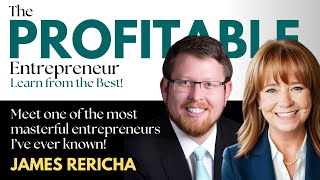
Transcript of a YouTube interview (Profitable Entrepreneur) featuring Sandy Wardenburg Waggett and entrepreneur James Rericha. Rericha describes his origin as a business owner, acquiring and operating multiple veterinary practices (seven), horizontal integrations (crematory services), real estate holdings, and a partnership in manufacturing and a smart boat-lift product. Major themes: goal-setting (becoming largest local employer), acquisitions and partnerships, operational efficiencies (shared back-office, VoIP), financial discipline (reserves, Profit First), peer masterminds (Alex Counsel), and risk mitigation strategies (fixed-rate loans, diversification across customer bases).
Chapters
Hey everyone. Welcome to the Profitable Entrepreneur show where we take lessons from the best. And I have got a friend.
Mastermind, colleague, business expert, someone I admire greatly. James, although you might hear me call him Jim because I, I, that's just how I know him. But James Rarica with our veterinary amongst other businesses. But we're going to get into that, so welcome James.
Thank you. What a nice welcome.
Oh man, you are one of the smartest men I know and I'm sure that the audience is going to discover that pretty quickly. So I generally like to start with kind of your origin story of your business. Like what, what businesses do you talking.
On college, you know, throughout the next decade, finishing a degree in professional engineering and getting a master's in engineering management. I worked amongst government, private sector, had a lot of experience, but I knew to hit my end goals that I really wanted to be a business owner. You know, I get lots of flexibility, but at the same time I work a ton of hours. You know, there's nothing like being your own boss. And you had asked me about some of the businesses I own. You know, I think the first major business was my wife and I purchasing the veterinary clinic in Lynn Creek, Missouri that she had worked at for a few years.
We worked pretty hard for about two years to come up with evaluation and a fair number and come to an agreement with the current owner and her employer at the time, which is an interesting situation, working through that while you're still employed.
You know, and we learned a lot from that, that transaction.
But we, we just haven't looked back. And that was in May of 2016. And since then we've acquired.
You know, we've got seven different veterinary practices now, some ancillary or horizontal integration of crematory services and other positions within, you know, other, other companies that we can talk about as well. More recently I've, I've taken a partnership with Argosy Consul and in Eldon, Missouri, which is a small manufacturer, live next to one of the partners and owners for the last decade. And so just developing relationships all the time and listening. All of our acquisitions have come from listening to our vendors, listening to what people don't say necessarily in words like what can we get out? How can we find something that's mutually beneficial that lets me hit my goal, but also lets you hit your goal. Are you thinking about retirement? You know, could we partner and, and become better together? So that's, that's, that's probably a whole lot more than you just asked for, but keep, keep probing.
Yeah, yeah. Well, I mean, there, there's a lot to unpack just with that. Number one, the listening for opportunities. I do want to kind of dive into that a little bit. But I mean, you have some massive goals, right?
Absolutely. So goal setting is huge. And it all started with a, you know, I would say a personal goal. I'd like to fly private pilot. You know, I, I, I only rent a plane right now, but I'd love to have a large enough business to have a business need for a plane someday. So that's, that's one of my personal goals. I love being able to control, you know, where, where we had so, so big goals have led me to, to dream big. For the longest time I said we would have 300 practices. You know, I don't know if we'll hit that again. Still. The goal has shifted. Currently, I'd love to be the largest employer in our area. And so I see my competitor as a local hospital who employs about 1200 employees or Walmart here locally who employs quite a few employees. And we currently employ just over 120 between the different organizations.
Yeah, So I found that fascinating when you shared that goal the very first time in our, our CEO, peer group or mastermind, essentially that you're one of your big drivers, was to be the largest employer in our local area, which is really cool. That's not normally a goal for small business owners, but you're doing it under multiple businesses. Right? Is that, is that an accurate statement?
It's fair. So up until recently, last year, we operated all under one entity. All the vet hospitals, we had tried keeping separate entities. You know, I like everybody from a culture standpoint to be part of one team. And so we set it up to take on the risk as one. There's plenty of much larger companies in this world than we are, and it's, it's very doable. And so we've grown as one team, one unit. We all work and succeed or fail together.
You know, recently with joining Rec.
I just took on a small stake of that entity. So it makes it hard to feel like one team. But there are so many back office services that we can blend together between the teams, whether it's bookkeeping and payroll or accounting. And it allows us to get that efficiency of scale. And so that's where we're headed.
Okay. Yeah, I know from the last show where I had Steve Denny on, he was talking about one of the, one of the ways to grow. There's lots of ways, but one of them is through partnerships and acquisitions where you can leverage resources across, you know, that companies have and pull them into one, one model. And that's kind of what you're doing now, right, with your, with your benefits and payroll and all of that.
Absolutely. I mean you would never think, you know, what does a veterinary service company have to do with a small but worldwide manufacturer, world renowned manufacturer of recording studio furniture, you know, but, but a big part of what we are, is, is our culture of our employees. And, and our cultures line up very well as far as taking care of our team, working together, providing the best products in our market segment. And so when the cultures align again, so much of that back office does align. You know, we have similar benefits where we've been able to expand our benefits because we've growing the team together. You know, each year I've typically added, you know, year, two years we've added a benefit and we went from not having any benefits other than some sick and a little bit of vacation time to now we have, you know, life insurance provided for our employees, health insurance provided for our employees, short term, long term disability. So we've grown that each year and there's certainly a cost to it, but the scale of things start making it a little bit easier to administer on the back end. I don't have to have an expert in each one of those fields or it's easier to have an expert be to one of those fields because we have scale.
Yeah. And the benefits are something that small businesses really struggle with. I mean it's hard as a small business owner. Right. Like My company is 25 years old and I just started offering health insurance three or three or four years ago now, not long because it's such an expense and there's so many challenges involved. So I love the strategy that you have done with that. Now you have another business too that is seemingly unrelated to the other two. Tell us a little bit about that one because that's brand new, right?
Absolutely. You know, my neighbor Tim, who's a co owner in Argosy, we had an opportunity to get involved with WP controls or wireless precision controls. And they have a product that's called Icon, which is a piece of smart. It's better than any other boat lift on the market. Boat lift controller, but it's a smart boat lift. We can connect your phone to your boat lift controller and you can launch your boat, you can monitor it, you got a camera, We've got ways to turn on and off.
Deicing equipment based on temperature or schedule. So all these things that this was an inanimate object that people had to walk down to. There were some other devices that worked similar to a garage door remote. But I was in Thailand last fall for an anniversary trip and just for the fun of it, I put my boat down in the water to a board position and then raised it back up from the other side of the world. You know, I don't know anybody else that can do that. And so we're fulfilling the need in the market. People often put their lifts up when they leave, and so this provides a safer way to do that. But, but it's definitely a new venture for us. It was kind of pre revenue as a company, which I'm used to buying companies that, that have a revenue stream, that have a known business model. So that's a whole new world of new challenges, for sure.
Yeah, a little risky, but you know, the cool thing and what I admire so much about you, you know, we, we both know a lot of entrepreneurs, business owners of varying degrees of scale, but small business owners. But when I think of you, I think true entrepreneur because you, you are successfully running multiple businesses in seemingly unrelated industries. And I mean that's, that is a true entrepreneur mindset. But you have expertise that you bring to the table of all of those companies that is just impressive. And what do you think sets you apart or gives you the ability to just move from industry to industry and have success? Because I have my opinion on what it is. But how do you see it?
You know, I don't see anything as a hurdle too large or insurmountable. You know, I ask often, why not us? You know, you might look at a large company like GM or GE or, you know, any, any, you know, Fortune 500 company and say, wow, they're doing that in Silicon Valley. Or wow, they're doing that in New York City. Well, why not here? Why not us? What, what is preventing us from doing that? We, you know, they, they put their pants on one leg at a time. You know, they go out there and they find skills and so they tackle it. So one, no problem is, is too large to tackle from my perspective. And then two, I, I also get very granular. Like I still love seeing, while we improve the efficiency of it, I love seeing bills come across the desk. Because in my memory I could sit there and say, whoa, what, what is this one that's hit us three times in a, in a month and do we still use it in our, you know, I, I guarantee in all these big companies, there's, you know, they're, everybody's going through cost cutting this year as part of, you know, inflation. And, and you can just take a look at your books and find so many things that you're like, you know, that doesn't provide the value. Yes, it worked for us five years ago. It's what we needed five years ago. But it's no longer providing the value we need. We need something else that drives more value. Now it may not be less cost, but something that drives more value. And so whether that's, you know, changing your, your, your trash company or Internet service provider or changing the way you market on, on the web, you know, and we haven't even talked about, you know, we operate. I'd say our largest asset class is actually real estate. You know, I.
We, we have more equity in real estate because we own the real estate for most of our entities. And we operate, you know, a couple dozen commercial property, not properties, but units, commercial units and a couple dozen residential units. And so we have a big breadth. And again, a lot of our back office manages all of these things under, under 1Co. You know, we don't, we don't have completely separate teams from all. And we've, we really look at all the problems that we can, you know, I like looking at the situation and how do we solve problems? How do we make ourselves more efficient? And so we tackle that with vengeance all the time.
Yeah. You know, one thing that I've seen just through masterminds and owning my own business, you know, a lot of times business owners, and I'm gonna, you know, stretch and say, I think most small business owners really struggle with the financial aspect and, and profitability. So since we were talking about that, improving efficiencies, cutting costs and making yourself more profitable. Can you just talk to me a little bit from an advice perspective for small business owners on things that, you know, you're looking at specifically, they should look at specifically. And how often, like, how often should we be doing that? Because it matters. Revenue, Gross revenue is irrelevant if profit isn't there. Right?
Absolutely. And in fact, that makes great targets sometimes. If you can look at businesses that aren't profitable but have some gross revenue, you know, you might be able to, if you, if you can see these things that I'm going to talk about, you might be able to make improvements that make them profitable and drastically improve the value of the company.
And so, you know, again, looking across all of our segments, you know, challenge the way you do things. As far as, you know, it may be the way you've done it for the last 10 years. But I think the number one thing I love seeing on a vet clinic that I go look at for acquisition and I've looked at dozens to the few we've acquired just because we're not right fit for culture or, or monetarily. We're not in the right. We're not in the same place. But the one I, the one transaction I love to see is phone service. They're all paying for phone service and they're spending, you know, $1,000 a month, $800 a month on, on phone and fax lines. They have maybe four lines coming in the business. You know, we've implemented a VoIP solution where we spend, you know, two to three hundred dollars a month on, on minutes and manage, you know, have a partially managed service on the back end to host VoIP service. And we can take, you know, somewhere in the neighborhood of 64 calls simultaneously between all the businesses. So, you know, people aren't getting the busy tone, they're getting better service. You know, we don't, we don't have a fax line anywhere. You know, I know tons of vet practices that still have fax lines and they say, well, this is there for medical, but it doesn't, there's no, there's no standard. So it has to be there. You know, we're not, we don't have regulations like maybe human hospital would to maintain that for certain items. And so you can find other ways to do that business and cut that cost. And then I think. So that addresses the cost side. You really also have to address the valuation side. I run into so many people who don't charge enough for their time or don't charge, you know, they're afraid to charge for what it costs. Especially now that we've seen, you know, inflation raging for the last two years. You know, I know the Fed wants to slow down, but, you know, I think we saw our largest increase in the last two years this past January. And we're, you know, we're looking at it more often because of inflation.
Depending on your industry. You know, in the manufacturing world, where we have several vendors, it's hard for us to make a change more than once per year. We have done it, or it can be done, you know, in the, in the vet services or, you know, service industry. You know, you can make that change quarterly if you need to, but you've got to keep up because when you, when you can charge enough and bring enough in, you can also. You're also more stable because you can pay your team better. You can have the better benefits, which creates stability in your team, allows your team to become more efficient because they know what they're doing and you're not spending time training up new people.
Yeah, yeah.
Are you comfortable sharing? Just. I like to make it relatable on this show. So, like, over the history doesn't have to be in the past, you know, recent years, but did you have any major financial hurdles as an early business owner or, you know, midstream, some way that you've had to overcome? And if so, how did you overcome them?
We have Adam, and we, we continue to have them, and we, you know, I think you're a better leader if you can try to anticipate where your weaknesses are so that you know how you're going to handle them when they happen. You know, coming back to trying to have funds in the banks that you can operate for two to three months, you know, time is your biggest friend. If you have something going wrong and your revenue is shut down for a month, you know, you're no longer baiting your creditors or saying, like, hey, I need a line of credit. Time allows me to work to solve a problem.
And so I can never have enough time. That's. That's always a challenge. Building enough funds as we grow to keep having a longer window, because that, that, that pot of money gets larger.
And go back to the past. You know, I, I. The very first business was, I would say, was the rental I bought in college. You know, sophomore. You know, I thought, hey, this is great. I got someone paying my rent. I'm spending 300 bucks a month myself. And back at that time in 23,003, you know, the rents, I think, on the place were 400 bucks. I was actually saving a hundred bucks. Someone else was paying enough with the mortgage, and then the furnace dies. You know, I got a 78000 expense at the time. I'm a college student. I don't, I don't have that much in the bank. And so, you know, that, that was borrowing and taking care of it and learning. Hey, I need to make sure I have reserves for these incidentals.
You know. And so then as we get larger, you know, I will say more recently, you know, as we have changes in staffing, we go through it, we, we had challenges that cost us, you know, 13, 12, 13% of our gross revenue from a large producer in our organization. And it's very hard right now to hire doctors of veterinary medicine, especially ones with the skill set that this doctor had. He's a great physician. Our DBM veterinarian and knows his job very well and has a great skill set. And so when you lose that, it is hard to transition through that. We've never, knock on wood, we've never laid anybody off. That's a big pride of mine. We have worked through attrition. We've said, hey, we're going to be on a hiring freeze. We're going to, as people move on, we're not going to fill those positions so that we can be.
In a better boat.
So I don't know that I have all the answers, but I really try to look across the organization and understand where can my risk combine together to make a really big risk and where are we separated? And this links me back to the second vet practice we bought. We are located, you and I, Sandy, are located at Lake Deals Arts, Missouri. It's very much a recreational place.
It is.
Primarily owned by second homeowners down, you know, in our counties. And so when the economy takes a dump, it can be really rough on, on that segment.
And so the second clinic we bought was actually at Fort Leonard Wood, which is a military base. Well, when the economy's bad, who spends money? Usually the government. So we saw that as a very good pairing. So that when one is seeing a better time, the other one is seeing a worse time and they match up. Well, they don't. They don't typically compound. Not saying they could never compound, and I need to be worried about that, but they don't typically align each other.
Right. So, you know, how do you, you know, speaking of economy and just things, you know, things that happen unexpectedly, how do you, as a business owner and especially of multiple businesses, you know, how do you look for, find, identify blind spots so that you can, you know, prepare or sort of anticipate or, you know, risk mitigate, things like that.
You know, that, that comes from just trying to understand the industry you're in broader. You know, we can't control.
Wars happening overseas. We can't control what the Fed decides to do next month. I can certainly sit here and guess. You know, I've, I've read articles saying they're going to cut six times this year. And, you know, at the same time, I think they're going to go back up based on some inflation data. We're not going to know that. And so again, you know, trying to build reserves so that you have time to adjust is very important.
You know, I also look at it, everybody else in the country is facing very similar challenges. You know, they have the same headwinds and so you will see companies go under, you will see companies not survive. Those will be buying opportunities for companies like myself. And so.
You need to be nimble and be able to react and to change your business as the environment changes around you because there will be some that thrive in this changing time. And that's the time when the most market share is up for grabs, when there's things that are changing, when things are normal and flat, people are happy where they're at, they're getting things done, you know, so it can be very positive if you look at it in the right light. And you know, it, it's, it, it's, it's, it's hard. I don't know all my blind spots, but I try to think about them on a regular basis. I just think thinking about them is helpful and then I've learned a lot just over time. So as you operate in your industry longer, you, you know, people who operated through the 80s know what the real estate market was like in the 80s when you know, interest rates were 15, 16%.
Right. Which is on real estate conceivable right now. But it's possible, you know, I'll give.
You another piece that, you know, sparked best stability. We just purchased a clinic and we were offered up and the bank assumed we wanted a variable rate loan. They're like, oh, they're going to cut several times this year. You know, I turned around and asked them like, that's not what we've typically gotten from you guys. We kind of want the five year fix that you had with the float after that and what are you going to offer us? And lo and behold, it was actually a percent less than the variable rate because it was based on a different standard. I was like, I'll take the known evil for the next five years because I've built my business model around that. I don't need to be the commodities market and dealing with the rate fluctuating monthly and changing my payment. I have a known, so I would rather take known. Typically.
Yeah. So this is going to be kind of a strange question, but I feel like for a show like this we're going to have a range of listeners. And so for a business owner who's watching this and they've heard you say things like reserves and variable rate and flat all you, they don't even know what you mean. What is your recommendation or your best advice for a business owner who, you know, feels and sometimes proudly admits kind of being financially illiterate, but they just watch their, their bank balance you know, watch the checkbook every month and keep going because it's not the ideal way to run a business.
Right, yeah, absolutely. We, you know, there's some great books out there. Profit first. You know, I, I want to jump back to Alex Counsel. You know, I, I've been a member of that for several years. I was invited by one of my current partners just after having drinks in the driveway because we're neighbors. I, I hear other, other CEOs problems. So getting in the room with other CEOs is in my mind, very important because you will hear things that are outside of your specific realm and they will still.
Let me, let me just do a quick interrupt on that and then I want you to continue what you're talk. Alex Counsel is a CEO mastermind. So if you don't know or haven't never heard of LX Counsel, it's like a CEO peer group. So it's business owners of various levels sitting around the table once a month for like four hour increments where we really dive deep into each other's businesses. So now we've set the kind of the frame for that. And go ahead. Because I thoroughly agree with you that masterminds and peer groups are so essential.
It's, yeah, the peer group is essential in the sense that I can be comfortable talking there. There's things that I might share with my team that, that I will eventually share with them. But you know, there's things, if we have big ideas, they can scare people who aren't used to lots of change. And so they need to be more well thought out before you present them sometimes to your team or you're dealing with a challenge and you really need somebody who actually sits in the same shoes you do. It doesn't matter if they're running a company that's doing $1 million a year, a company doing $50 million a year, they are going to have some relevant advice. I feel like we got away from another topic. You were asking me some questions there.
Yeah, no, this is, this is great because I really, you know, everybody will come to this show or interview with a different background, different expertise, but everything in common is the fact that there are business owners and entrepreneurs. And so, you know, part of it is not following my questions. It's kind of leading from the expertise that you're bringing to the table. And you know, in, it's funny because in every single. This is the third episode now, so it's a new show, but so far the commonality is that the mastermind or peer group has come up in every single one of them and the importance of it. So, you know, I do not see that as a coincidence. I see that as you know, these are smart business owners that really leverage the experience and intellect of other people of their peers.
Well, I would say I go into most relationships trying to feel that I can learn more from you than you can learn from me. Those conversations are great. But I did recall your question. You were talking about operating from your bank account and I talked a little bit about Profit first is a book we read in our Alex Council group and I think we're all guilty of it. You know, you see a growing balance and if you're not, if you're not up to date on your accounting or not not accounting for profit as an expense, you, you may not know where you're going to be at the end of the year. And so we, a lot of us and I still to today I will check my bank accounts probably two or three times a day. And it's part of my memory thing. I can sit, see them in my head. But I've also set up mechanisms like, you know, I can, I send money away from that account into an investment account on a regular basis, weekly, like not monthly, weekly. And I just see it as an expense. And so what that does is it forces me to operate with a lower balance in my daily account that I look at. So therefore I'm not thinking, oh man, we're, we're doing well, we're not doing well. And it has led to us having those reserves. So that's just the start of it. You know, that's when we needed reserves to do acquisitions recently or needed reserves to make it through a rough time last year. That came from that money that I was throwing aside and it meant I had it and it gave me time to make corrections. My business, we had, we, we didn't have the most profitable year last year, but we were never at a point where I was not able to buy what we needed, not able to hire who I needed. And so that was part of having those reserves in place and we'll turn around next year and we'll be better. I'm still very focused on growth of top line revenue.
But profitability is important still.
Yeah. And so the book that James referenced, Profit first by Mike Michalowicz, is, I think, a book every single business owner should read. And you know, the idea behind it is you take profit first, so you literally take a percentage of the cash that comes into your company and move the money he recommends weekly, but, you know, even twice a month, look at the deposits in your bank account that are cash. Take a percentage and move it to profit account without fail. And even if it makes you uncomfortable because your cash flow becomes tight in your operating or your OPEX account, what it does is it forces you then to dive deeper into the expenses and cut back, you know, on costs that are not necessary. So force is the issue. It makes you uncomfortable and makes you look epic.
Absolutely. And if I recall, he says, a different bank, you know, and that's when we do a different bank. So it's. When I look at my OPEX accounts, I don't even see it, because the whole point is it's. It's psychological. You don't want it in your mind that, oh, oh, we got this nice, you know, $300,000 reserve here or this $25,000 reserve. Whatever happens to me for you, you don't want to look at it monthly. You don't want to, you know, just. Just let it squirrel away following this procedure. And so I absolutely would concur with you that it is an excellent book and anybody looking to improve their business should read it and should follow the advice in there.
Yeah, absolutely. I know. We've implemented our business as well, and several of our council group members have done that, too. Right. Because we didn't read it as a group, but we brought the book to the group, and then once everybody read it, they're like, oh, man, I got to implement this. And so it's been good. It's been good for several business owners, you know, not just in our group, but all over the country.
Yes, yes. I can tell you like another one that's real common in small business. A lot of times if you own your real estate, your accountant or your attorney may have you have that in a different entity. I've seen businesses save until the end of the year to pay that rent. I would recommend that you do it monthly because, again, it's out of your account. It's. It's out of your opex, and you're forced to operate with what is actually in there, instead of at the end of the year deciding, well, we have to cut rent this year because we didn't have enough money.
Yeah. You know, and it's interesting. It didn't really occur to me until you gave that example, but I have a simple plan, simple IRA, for my team members, and I contribute 100% up to 3% of their salary, and I have to do that by the end of the year. But I do it every payroll. I just move the money because I don't want to look at it. I want to make sure it's covered. Don't want the stress of that coming up at the end of the year. And so just little small adjustments like that help.
Absolutely.
Right. Okay, so let's talk a little bit about budgeting. What's your philosophy on, like an annual budget or quarterly budget? Do you do one? How do you do it, and do you stick to it?
I am not a budgeter.
Okay.
In maybe the traditional sense. I, you know, I have some goals. And we try to relate that back to what we need to do and either the number of transactions or the rate in business locations or in the, in the veterinary world. There's a lot of data that says it ties to the number of doctors and number of exam rooms you have. So I have a general idea of where I want to go. You know, if, if I'll say last year we did eight half million dollars. You know, I would, across most of our entities, I would love to do 15 this year. That's a huge goal. And I may or may not hit it. But we, you know, I count my acquisitions because they take a lot of time. You know, it may not be the whole year, all those things, but I don't actually make a formal budget. Now I do take a look at regularly, like every two weeks or every month. We are looking at our pnl and we worked further and further to get our PNL up to date on a monthly basis with a closeout with our accountant. And no, we didn't do it day one. That was very hard. But as we've gone trading pretty long, we look at that and we look at KPIs around or key performance indicators around.
More from Sandy

Calm is your best strategist. Market with intention, not emotion. #MarketingTips #MSWInteractive






Show up with the kind of energy you want YOUR business to receive - every single day! ❤️



