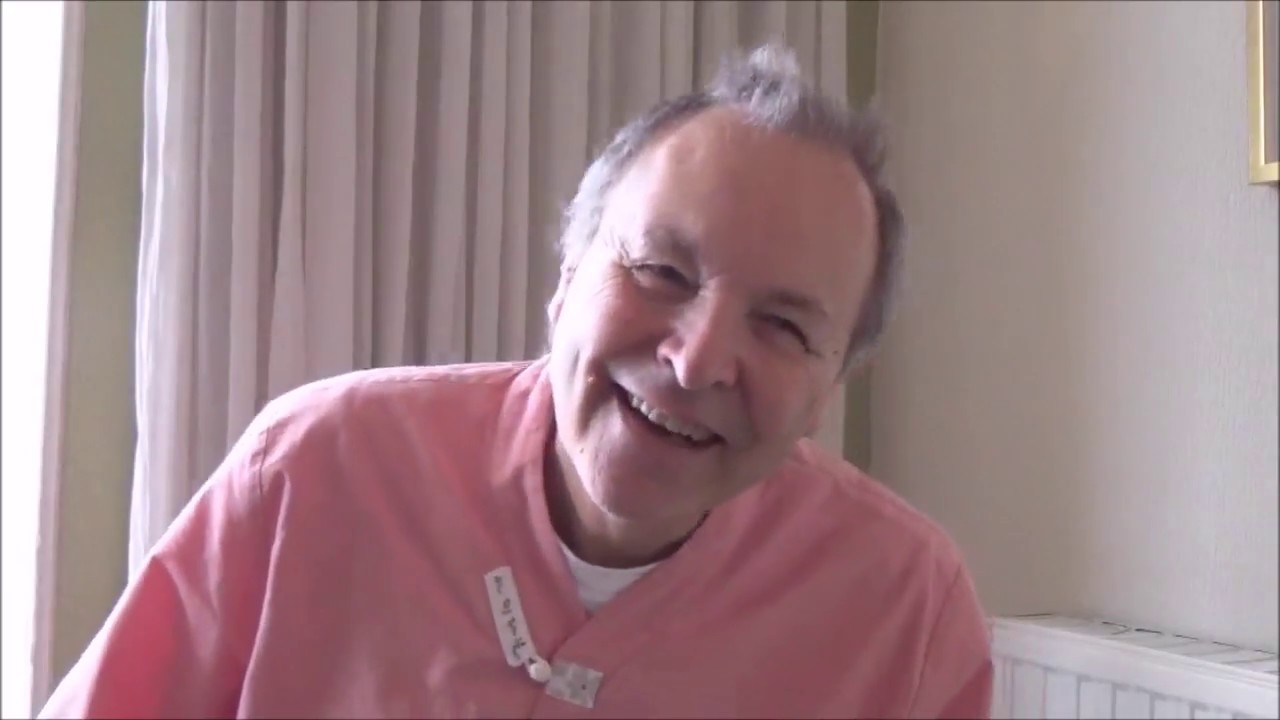
This content was created by Satya Robyn. This content was uploaded by Satya Robyn. This is a YouTube Dharma talk titled "Bodhi retreat talk by Dharmavidya David Brazier" (recorded during the Bodhi Retreat in Malvern around December 7, referenced in metadata from December 2017). The single speaker, Dharmavidya David Brazier, delivers a religious/teaching talk on the meaning of the Buddha's enlightenment—contrasting self-power and other-power, recounting the Sujata episode, discussing Pure Land themes (other-power, faith, bonbu/ordinary nature), Mara, compassion, and the role of unconditional love and receiving blessings. The talk mixes Buddhist scripture, personal and psychotherapeutic reflections, references to Dōgen and Xu Yun, and practical guidance for spiritual practice. Content type: YOUTUBE; context: Bodhi Retreat/commemoration of the Buddha's enlightenment.
Chapters
Hello. So it's the 7th? Yes. 7th of December? We are at the Bodhi Retreat in Malvern, and this is the first Dharma talk of this retreat. And this is the Bodhi Retreat, so it's the retreat in December when we commemorate the enlightenment of Buddha. So, we are here to give thanks, to express gratitude, to celebrate the enlightenment of Buddha. So, my job this morning is to explain what the enlightenment of Buddha might be. This is no easy task. In my book, The New Buddhism, I list, I think, I don't know, number 8 maybe, different interpretations of the notion of enlightenment proposed by different schools of Buddhism. So I'm not the first person to say that There are different possibilities here. Different schools have very different ideas. And to read much contemporary Buddhist literature, you can get quite different ideas. If you understand non-duality, apparently, you will be enlightened. I'm not sure if anybody does understand non-duality. Perhaps not. Or if they do, perhaps they are enlightened, I don't know. Or perhaps not. It's quite complicated. So, I want to say a little bit about that. Hmm. There's also quite a strong strain of thought, really, that's more implicit than explicit a lot of the time, that the whole business is really about, you might say, morality. There's a very strong tendency in the West probably because of our own spiritual history, to see the whole business of religion and spirituality as being about morality. And so the purpose of religion is a sort of device to get people to be good, either by convincing them that they should be, or by scaring them into it by horrific thoughts of what may happen if they're not. Of course, there's some sense in this. If people are not good, then horrific things are rather liable to happen. And actually, this is quite tautologous because largely what we mean by 'good' is what does not make horrible things happen, and what we mean by 'bad' is what does make horrible things happen. So, at a very simple level, this is just common sense. If we go around attacking each other, or stealing from each other, or raping one another, There might be some very short-term benefit to the person concerned, but it tends to be very short-term, and the consequences generally are rather awful. So there is sense in that idea, but is that enlightenment? Is that what religion and spirituality are about? I don't think so. You see, what's— it's deeper than that. You know, it's not just about knowing what is right and what is wrong and adopting one and eschewing the other. And in fact, actually, if you take upon yourself the notion of— and a lot of people do this rather implicitly— they want to 'be a good person.' This actually becomes a kind of blindness. Any attempt to be a such-and-such type of person quickly leads us into what should and what shouldn't happen. And this is some— just very, very close to closing our eyes to what actually is the case, because we just want to think that we are that kind of person, or that only that kind of person is acceptable. So we don't actually see what we ourselves are doing or what other people are doing half the time, because we are not really willing to accept the kind of beings that we actually are. You see. So I think enlightenment has to be something about accepting reality. And reality includes all that we are, which is all our instincts and appetites and our physical being, our spiritual being, good, bad, indifferent, the lot. Kabong! And, you know, you can get into an awful pickle trying to maintain a persona as a spiritual person, a religious person, or something like that. It's a big trap, you know. Probably, you know, it's probably even more of a trap the more you get into it. So for somebody in my position, it's an awful trap. And when you look at The various, you know, when you look around the various religious organizations and spiritual groups and other sanghas, you see quite a lot of quite major scandals. And I'm sure that a good deal of the basis of this is in what I'm saying, that there's a kind of On the one hand, an attempt to appear to be what one is not. At the same time, there's a general collusion in pretending. So let's all pretend, and then while we're all pretending, the most awful things can go on and get worse and worse and worse before anybody even notices and says, 'Hey, Kor, what's that? Stop!' You see? Which in a more ordinary situation would happen probably much sooner. Yes, anyway, these are just some general observations about the state of things, which I'm sure are not news to you. Now, so, I have to, as part of my job, to propose to you a principle. My general principle that I want to try and put across is that the enlightenment of Siddhartha Gautama was the point where he changed from self-power to other-power. You know, we sometimes present Pure Land Buddhism as though it's some kind of later development, and by implication not quite the real thing, not quite going to the root, not quite going back to the beginning. This is quite wrong. I think the enlightenment of Buddha was the point where he changed from self-power to other-power. What does this mean? Well, if you think about the story, you know, I— my view, many of you know my view, is that looking at it psychologically, what was probably a big driving force for Siddhartha Gautama was the guilt that he felt. His birth had occasioned the death of his mother. This is not an easy thing to live with. You know, I was put on to this by reading the biography of Xu Yun, who was one of the greatest Chinese masters of the 20th century. And he had the same circumstance. His birth had killed his mother. And he writes about how this worked on his mind and how this had a profound effect and drove him to great acts of penance. You know, for Shù Yōng, until he was 60, spent his whole life on pilgrimage. And a lot of this pilgrimage was this rather ascetic practice of prostrating yourself along the road. Yes, you prostrate yourself and then you stand up at the point where your fingertips were, and then you prostrate yourself again, and you stand up, and then you prostrate yourself again. And he went all over China doing this. You know, some of his diary is just a list of the towns I visited this year. You know, 40 of them or so. And then the next year is just another list, like that. So this was very hard ascetic practice, you see. And he would sit in the snow and starve himself and all manner of things. Well, who else did this? Siddhartha Gautama. Not for quite as long, but it's the same practice, you see. It's penance. Now, you know, there are many people who will present Buddhism to you as, 'You need to do what Buddha did in order to be enlightened, so that you can be enlightened.' I wish to suggest this is a complete mistake. The Buddha tortured himself, for sure. But you can torture yourself as much as you like, it will not make you enlightened. You see? The Buddha's torturing himself was not done in order to become enlightened. His torturing himself was his response to his own koan, to his own deep shame, if you like, that his very existence had destroyed his mother. Perhaps there were other things, we don't know, but that's the most obvious. Yeah? You know, if I was a psychotherapist listening to this man, that's what I'd home in on. It's so obvious. You see? But you see, with a bit of the mind of a psychotherapist, what do we know about that? You know, that kind of shame, and why is that shame so bitter? And why does it cling so hard? And why is it so difficult to relinquish, you see. And why is it that no matter how much asceticism you do, how many— how thin you get, how much your ribs stick out, how much fasting or self-flagellation, or whether it's mental or physical or whatever, however much you do, you're not going to solve the problem. You see, you can go on and on. It doesn't make any difference. It just becomes self-perpetuating. Doesn't work. Didn't work for Buddha either, actually. That was not the cause of his enlightenment. His enlightenment is not continuous with his ascetic practice. So people who adopt Buddhism and think, 'What I must do is do the things Buddha did before his enlightenment,' 'in other words, when he was not enlightened,' are simply imitating not being enlightened. This is not going to get you anywhere. It's completely the wrong idea, completely the wrong approach, you see. Dōgen says this very clearly in Genjokōan. He says that the state of enlightenment is not continuous with the state before enlightenment. It is cut off from it, he says. And most people are practicing in that cut-off way, one way or another. They don't go— mostly I've noticed they don't go to the same lengths as Siddhartha Gautama did. I don't see many people with their ribs sticking out in Buddhist sanghas around America. But the mentality is there. Thing. Mentality is there. And it is a kind of self-flagellation and a belief that if I flagellate myself enough, I will be good in the end. But actually, it tends to just lead to a withdrawal from life, a non-engagement in that way. And the Buddha condemned it. You know, it wasn't good enough. So, to go back to my point, you know, As a psychotherapist, what do I know about why this state of shame is so sticky? Well, it's because it's basically pride. You see, the dilemma, the internal struggle is, I don't want to think of myself as the sort of person who destroys my mother. I don't want to think of myself as a bad person. I don't want to think of my— I want to think of myself— you know, at a deep level, there's a 'I want to create a perfect self of me, a perfect me.' This is what Buddhism tells us, that it's the clinging to an ego identity that is the the glue that holds the delusive problem together. And so, Siddhartha Gautama struggled away for all these years doing ascetic practices, trying to make himself perfect by his own effort. That is self-power. This is his definition of self-power. The period of asceticism, the period from when the Buddha has his first going forth when he sees the Four Sights and he goes out into the world and he finds teachers and he practices ascetic practices. This is the period of self-power. You see? The Enlightenment is when he changes his mind, when he decides that's a useless way forward, it doesn't work. And this point is triggered by an act of simple kindness. So the giving of a gift by the milkmaid, as she's sometimes called, the sujata, who's on her way to make an offering to the forest gods. And she sees this poor man who's in the gutter, quite literally, and she gives him this gift. And she cares for him. And she has no reason to do so. This is very important. You see, she has no reason to do so. She's not related to him, she has no obligation to him, there's no ulterior motive. So in that sense it's unconditional. Unconditional generosity. And this somehow triggers him. Suddenly he realizes, suddenly he sees things differently. I said earlier, it's not just about morality. What is it about? It's about a change in our vision of how things actually are. When you start to see things differently, see the way they are differently, then everything changes. Now, somebody kindly lent me a little statue of the Buddha, which I've now left in my room, which shows what kind of a foolish being I am. I think my room's— well, I think you can imagine it. You've all seen this statue. You've all seen this statue many times. This is the classic pose of the Buddha immediately after his enlightenment. He is sitting cross-legged, lotus position, and he has one hand like this, yes, and the other hand, that's right, down there, yes. So here we have the Buddha. Here we have the Buddha. Can you do it? Let's have a little picture. Just move this. There we are. There's the Buddha. Right, so what are we told by this picture? You see? Ah, what's happening here? The Buddha has one hand like this. Receiving blessings from above. Yes, actually it's this hand. And has one hand like this, receiving blessings from below. You have to remember that at that time it was not an inanimate universe. People believed everything was animate, everything was alive. The earth, the sky, everything was alive. Yeah? And so the hand reaching down is receiving blessings from Mother Earth, 'Dhammita.' Yes? Receiving blessings from Mother Earth. The open hand is receiving blessings from heaven. Mm-hmm? Like that. But the Buddha is not looking down or looking up in the statue. The Buddha is looking horizontally, like this. The Buddha is receiving, and the Buddha's vision is of everything. It's a vision of equality, of universality, of openness to the world, like that. Now, when you have a sense that you are receiving, in such plenitude, it's quite natural that you have a generous, open-hearted attitude to things. This will happen quite naturally. You don't do it in order to be a good person, but you probably will be a better person because you have that sense of how you are receiving so much. You see? You have a sense that there is love everywhere. Doesn't matter where you look, there are Buddhas. Yes? In the— we often talk about the Three Pure Land Sutras as a kind of canon, but the most foundational original Pure Land Sutra in terms of Chinese Pure Land was the Pratyutpanna Samadhi, and this talks about Buddhas everywhere. Everywhere you look there are Buddhas. This is like saying everywhere you look there is love. There is nothing that anybody ever does that has not got love at the bottom of it somewhere. It may be distorted in all kinds of ways. You know, my father dropped bombs and killed civilians for love of his country and of his family. This sort of thing happens all the time, but there's still love there. You see? There's still love in the midst of it. And the Buddha suddenly had this vision. It was as if— using an analogy that was put to me yesterday by a good member of our sangha— it was as though, you know when you're fiddling with the radio and you're trying to find the right station? You know, most of the time all you get is crackling noise. And then at some point you just tune in, you know, and you get it. And suddenly it's clear, just like that. Boom! Yes? You can suddenly hear the voice perfectly clearly. The Buddha had a moment like that, you see. He suddenly tuned in to how it actually is. And was not just lost in the noise and crackle. That have been going on up to that point. Now, how does this happen, you see? Because there's another bit to this jigsaw, if you like, which goes back to what I said about why the shame remains so persistent. Yes? Somehow that pride has to fall away. And I think fall away is the right term. You know, in Buddhism we say falling away, or we say letting go. You can't push it down. It's counterproductive. There has to be something that enables it to open. Yes, to let go of its— the claws it's got into us. Yes, it's like it hangs on to us viciously, like that. How do we do that? Well, you see, it's very clear from Pure Land point of view, this is to do with realizing our Bong Vu nature. You see? It's very interesting that in the story of Buddha's enlightenment, at the beginning of the night of enlightenment, what happens? He, it says, he is assailed by the forces of Mara. This is poetic language, but it's very, very important. What are the forces of Mara? Well, they are lust, greed, hatred, jealousy, envy, spite, malice, and so on. Yes, these are the forces of Mara. Well, if we think that all this ascetic practice makes us gooder and gooder, what was the Buddha doing being a whole sack full of greed, anger, malice, hate, blah, blah, blah, 24 hours before he was enlightened. Yes, he should have eliminated most of it by now. But actually he's portrayed as being even more full of it than most of us think we are. Yes. So what he actually did was to have more clarity than we do about the state he was in. Yes? It wasn't that he was eliminating it item by item. "Oh, let's tick that off, no more greed. Tick that off, no more hate. Tick that off, no more envy. I've got all that mastered." You know, because as soon as we start thinking like that, "Oh, I've got all that done," pride— "Ah!" Pride comes up like an eruption of a volcano. You see? And suddenly what looked like a nice, peaceful, beautiful, symmetrical mountain is spewing poisonous gas and so on, you see? And aggression, passive or otherwise, takes over the whole landscape and devastates everything around for 25 kilometers or maybe a few thousand. And you know, we experience that ourselves. We go through these sort of cycles. We think we're getting somewhere, you know, but it's pride. You see? So this pride— so being assailed by the forces of Mara, in modern psychological terms, I think we would say is that he saw his shadow. He saw his 'bambu' nature. He saw the dark side that is inevitably part and parcel. And then what happens? Well, then he sees the hosts of Mara transformed into celestial flowers. Isn't that nice? This is wonderful, you see? Wonderful. Because all of those things are the very, um, 'grist to the mill' of the spiritual life. It's in seeing my nature that I understand your nature, because like it or not, you're just the same, you see. And if I see it, then of course this is the basis of compassion. We don't condemn in others what we admit in ourselves. We condemn in others what we're condemning in ourselves. Our condemnation of others is projection. It's because we don't want to have that criticism inside us, because we want to be perfect ourselves. Like that. You see? So, but it takes a lot of faith to own up to one's true nature. There's lots written in Buddhist literature about true nature, and initially you get the impression that it's something wonderful and golden and shining in every respect and nothing wrong with it. But your true nature is you're an animal, just like anybody else. We are part angel, part animal, sometimes people say, you know. But we certainly have a very mixed nature. That's how we are. We're 'bon vu', we're ordinary. I know I'm feeling quite happy because I had a good breakfast this morning. Some kind person gave me a breakfast and I feel very good. But, you know, I don't always feel like that. And of course, if what they'd given me had been not so clement as what I received, then I might be sitting here in great discomfort or feeling fed up about it. And we are, and we are. So Buddha firstly saw his Bambu nature, and then he saw that this isn't the end of the world. This actually can be a celestial flower. So this was great. And then he saw the morning star. I've often puzzled over this, you know. It's a very nice vision, isn't it, seeing the morning star? How lovely. Yes, wonderful, you know. Especially when you're sitting here in this wonderful temple with a tremendous view, you know, you can imagine seeing the morning star, you know. Sometimes from the terrace over there, you can have the most beautiful view in the morning. It's very inspiring and so on. And that may be the case. It may be that the Buddha at that point had a great sort of positive inspiration of that kind. There is another possibility. I can't say that this is— I can't validate this in any way. I have no textual evidence or anything, but it is a fact that in many mythologies the morning star is Lucifer, and Lucifer is the devil. So it may well be that the Buddha seeing the morning star was actually the Buddha seeing Mara directly. There are a number of occasions through the life of the Buddha where the Buddha has dialogues with Mara, including right up to his death. A little while before his death, the Buddha has a dialogue with Mara, and in which Mara says something like, 'Well, wouldn't it be rather splendid for you to die now when you're in a sort of glorious situation?' And the Buddha says, 'You can have me in a little while, but I've got other things to do first.' I think this is rather wonderful. Clearly, you know, the Buddha thought in those sorts of terms. That was a way that he— we might use different language, we might use different metaphors, different allegories, and so on, but I think the spiritual message is clear enough. The Buddha lived in sight of Mara. He was aware of his bomboon nature in that sense. And The bambú nature— greed, hate, and delusion, the poisons and so on— certainly are those things that do give rise to suffering. Excuse me. But, you know, when we talk about the end of suffering, in Sanskrit, end has the same double meaning as it does in English. The end can mean the cessation of. But it can also mean the purpose for which. You see? The end of us being here today is to hear some Dhamma. Yeah? It's the purpose for which we're here. Means and ends. Yes? Ends are very important. Hmm? The fundamental end in life is love. Love is the only thing, really, that is completely for itself. True love is not for some other purpose. When we say, well, he loved her for her money, we know it's not really love. You see? Or, you know, I read an article the other day that said something like, is love enough? Am I getting enough from it? Well, you know immediately this person isn't talking about love. They're talking about selfishness, you see. And so on. Real love is, as I said earlier, unconditional. Unconditional. Unconditionality is a nice abstract term. What does it mean in personal terms? It means faith. Faith— to have faith, to go, is to be unconditional. Yes, to go forward in faith means, okay, I go forward whatever. Yes, the conditions may be this, they may be that, we'll find out. But I go forward anyway. Yeah, maybe I go forward, you know, maybe I live, maybe I die, but I go forward like that. That's unconditional. And that's faith. That's what it feels like. Faith is like the feeling of unconditionality. And the Buddha, from that point of enlightenment on December 8th, whenever it was, 500 BC or so, went forward unconditionally. From then on, he was, he was not looking for the solution to his problem. He was not looking to perfect himself. He was not looking to achieve a reputation or show how good he was or show how clever he was or anything of that kind. He simply went forth with this sense of great gratitude and naturally helped everybody that he then encountered. You know, had a generous spirit towards, we shall say. I mean, even saying 'helped' is probably wrong because it wasn't really like he said, 'Now I will help people.' I don't think he did. He just had a naturally generous spirit. So whoever he encountered It was a natural thing, you see. And of course he encountered many different people, and some of them were greatly inspired by this, the spirit that was evidently in him. But you can see this is a complete turnaround from what had been happening before. This turnaround was because now, instead of him seeking for something for himself, he felt he'd already got. His cup runneth over. He was receiving from above, he was receiving from below. He was supported by the universe. And that's how we all are, actually. If that were not the case, we wouldn't be alive and sitting here today. Sooner or later the conditions will be such that we will be crushed. Something will take us. You know, it may be cancer, it may be a road accident, it may be— who knows? But until that happens, we are here with a surfeit, surfeit, of blessings. Otherwise we wouldn't be here. You see? And the Buddha appreciated that, celebrated that, and that became his central vision, because it was so powerful. And this is what spirituality is about. Spirituality is not about following a load of rules. The rules are— we will have some ceremonies with some rules later this week, later in this retreat. But the rules are benchmarks. You study those rules, you look at them, and they're indicators of how you're doing. They give you some evidence, and that may help. But they're not a kind of do-it-by-numbers how to be an enlightened person. Not like that. They help us. The Buddha was a natural from that point on. And it's that switch into receiving the blessing, self of other power, however you conceive it, whether you think of it as Amida, whether you think of it as God, whether you think of it as Mother Earth, as the Buddha perhaps did, doesn't matter. Think of it as kwan chi in over here with her vase, you see. That's unconditionality, you see. The vase is upside down. Just pour it out, never mind. She's not trying to hold a bit back, you see. Just like that. That's the faith. That's the— and how can she be like that? Because she doesn't feel a lack. She doesn't feel that she has to hang on to something. She doesn't feel that she has to make something of herself in that way. She's just being what she is. And if we can just be what we are, then we'll be enlightened in that sense. But of course when you think like that, you realise that we're all different. You see? Each person is different. So your enlightenment is not going to look like your enlightenment. You see? You've each got different characteristics. This is not a cloning exercise. This is not a matter of replicating some model. You're not necessarily going to live the same sort of life as Siddhartha Gautama lived in India 25 centuries ago. You know, some Buddhists practice by imitating that life. I'm glad some people do that. I'm glad some other people do that. I don't want to do it myself. But it's nice to have some people around who are doing that. They're doing a service to the world. That's nice. If that's their bag, I'm for it. More strength to their arm. But don't think that that is it. It's just one way of being. Many ways of being. And if your, if your 'sac', if you like, like Hotei, you know, over there we've got Hotei, who's the sort of patron saint of children who carries this big sack around and everybody gives him things and he's always giving things away. So he spends all his life giving things away. Because he never has any fear about it. This was the life that the Buddha gave to people, the bhikkhus. They wandered from place to place with their bowl. The bowl was empty. People put stuff in it, they ate. Didn't put things in it, well, they went hungry that day. But it's unconditional. That's a life of great faith. It's like that. But you can only have that faith when you feel that your hand is full of heaven and your other hand is full of the blessings of the earth. And the Buddha reached that point. That was the enlightenment of the Buddha. Buddha. And that's what he gives to us. Now we're all rather poor and shoddy replicas of this. It's quite useful to us to have these ideas, to have a sense of what it's all about, to see it in that way. And one of the things I'm encouraging by giving this talk is for you to see how these very basic principles of Pure Land Buddhism— other power, bonbu nature, faith, and so on— are rooted in the very original experience of Shakyamuni Buddha. This is original Buddhism. Not some later idea, development at all. Extra bit. This is the fundamental. And we say Shakya Muni Buddha, but really these principles are universal. This is the spiritual life. Even if you'd been an Aztec Indian or whatever, it would still be— never heard of Buddhism, Christianity, Greek philosophy, or any of that— principles are the same. You're a human being This is the spiritual life. When you feel full of the blessings of heaven. You know, when I went to Peru and stood on a pyramid that they built around the dot, they believed basically their gods all came from the sea. Well, that's all right. It doesn't matter. I'm sure there are seagulls as well. If we receive their blessings too. Life is full of blessings, which means of course life is full of love. Everywhere there is love, everything that happens has that. You know, this is what is unconditional. Love is unconditional. Real love is unconditional. And we appreciate it. We appreciate the little gems of love, the little pearls of love that are hidden in all the oysters around us. Even though those oysters sometimes are shut, still there is a pearl inside. Even— yes. Even people who are lying to the House of Commons and corrupting the governments of other great states, still there is love in there, you see. And when you think this way, of course you can laugh, you know. And you notice on the statue of the Buddha he has a little smile. And this is— I think I've learnt as much from that little smile as anything in my long years of the spiritual life. Somebody said to me the other day that I had a strange mixture of great faith and worldly cynicism, they said. Well, what they meant by worldly cynicism is I accept human nature, you know, people do do crazy things. It's happening all the time. And I can understand it because I have it all in me too, you know. And yet, even though I am that foolish being, that bad person. Still the sun shines, the blessings fall, the blessings rise up from Mother Earth, and I am here, alive, and still smiling. So that smile, you know, which I ultimately, I suppose, I've received from Shakyamuni Buddha, I give to you. And that is his blessing. Namo Amitabha. The original and sacred vows are the unique and essential grace by which to enter the Pure Land. Therefore, with body, speech, and mind, we are devoted to the teachings that all maintain the state of enlightenment. Namaste.









