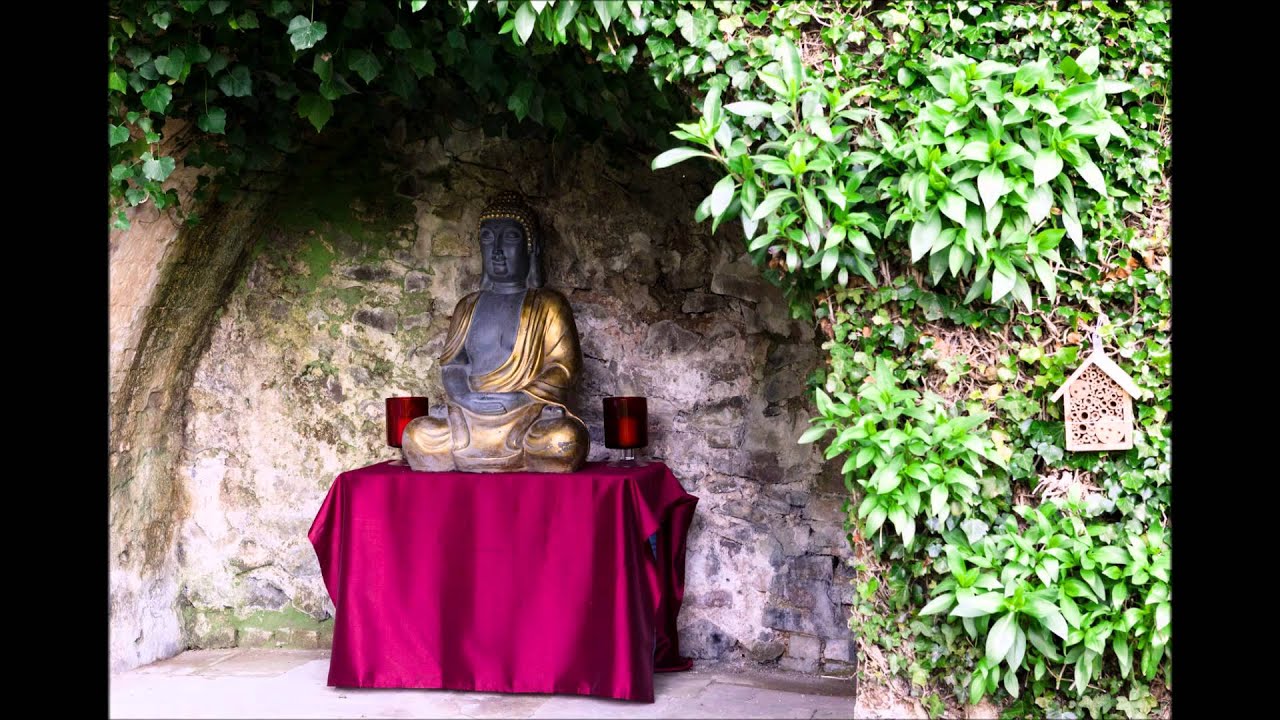
Kaspalita explores how to befriend yourself by creating the right conditions for change. She draws on Nassim Taleb's ideas about stress and recovery, Buddhist meditation, and the practice of cooling off before reacting, showing how to quiet the defensive stories that keep you stuck.
Chapters
So I want to just spend a little bit of time thinking and talking about creating good conditions for becoming friends with ourselves. I recently started reading a book called Antifragile by the previous investment banker Nicholas Taleb, who wrote Black Swan about the the economic crash that happened. And antifragile is a word that he's coined for systems or things that thrive under a certain amount of stress. So he says things that are fragile break when you put them under stress. Things that are robust like a block of wood, don't really change very much if you give them a few bashes. But things which are antifragile grow when you put them under some amount of stress. So, um, you think of pruning a fruit tree, the next year you tend to get a lot more flowers and fruits because the tree feels stressed, feels threatened, so it produces better. And in terms of the stress that helps antifragile things thrive, he says it's not chronic stress, which is often the kind of stress that we get in the workplace where we're sort of continually put under similar sorts of pressures over and over again with no reprieve. It's moments of acute stress with a period of recovery afterwards. So one example he uses is going to the gym. When he lifts weights, you know, that's painful, it stresses him and it tears the muscles. I don't exactly know how it works. And then in the period of recovery, the muscles repair themselves, but they don't repair themselves to the point where you were before you did the training session. You come out a little bit stronger. Than when you went in, if you build in the recovery time. If you don't build in the recovery time, you just end up doing yourself damage. And the relevance of that to creating friends with ourselves, I suppose, is that, um, when we did the Go-Around, people talked about getting to know different parts of themselves and One of the things you may have experienced when you catch sight of a part of yourself that you haven't seen before is a judging reaction, or reaction that goes, 'Oh, I don't want that to be part of me.' You can think of that as a moment of stress, if you like, because it produces almost like a fight-or-flight response in us. 'Oh, that's nothing to do with me.' If we don't build in spaces like the rest spaces that allow us to come down and feel more equanimous, there's no way that we're going to become friends with ourselves. Because I suppose the danger is, or the usual way of being in the world, is that we just continually go around a cycle of denying all the different parts of ourselves in order to keep ourselves from having that experience of, 'Oh, I don't like what I see, I don't want to deal with what I see.' Human beings are made up of all different sorts of pieces, and usually we just find one narrative that describes us, or one way of describing our personality that we think is reasonably constant, and anything that doesn't fit with that we ignore or we, we ascribe other reasons to it. So if we're the sort of person who doesn't want to take responsibility for things, we maybe end up blaming others a lot of the time. Or if we're the sort of person who doesn't think very much of themselves, then maybe we take responsibility for everything rather than genuinely seeing the external conditions that cause things to go wrong. There are lots of different examples of how we hide from the truth, essentially. So when we're thinking about creating conditions of becoming friends with ourself, we're thinking about conditions that allow us to come closer to the truth and maintain a friendly attitude, maintain an attitude of kindness. And situations where we're, where we're high-stressed for other reasons, or when we're just living in the world and we're continually kind of just struggling to stay on top of things, for example, If we're in that situation, when we see that part of ourselves that we haven't seen before, there isn't the headspace to deal with it, so we just— we ignore it, or we put it outside in the world, or we tell a story about it so that we don't have to start becoming friends with it, which allows us to continue without experiencing the struggle of becoming friends with parts of ourselves that we don't like. But in the long run, it's not very satisfying because it leaves those parts underneath somewhere, which, which allows them to keep operating. My own experience is those hidden parts of myself often have a great deal of power over me. They motivate my actions, they change how I interact with people in my relationships, and the longer that I let them sit unseen and unfriended for, the more power they have, the more they're allowed to keep working in my life. So all sorts of things could be going wrong, or all sorts of The other way of looking at it is that all sorts of choices are becoming restricted without me knowing why, or without me knowing that really it's because these other parts of myself just aren't being included in who Caspar is, because it doesn't fit with my idea of who I am. So what kind of conditions help create the space for us to start to engage with that process in a way that allows us to be friendly towards those parts and not just flip into our usual reaction of saying they're nothing to do with me? So I already mentioned one thing, which is building in space away from the things that that keep us anxious, or they keep us in our usual state of mind. I suppose the reason we create identities, the reason we tell stories about the world, is to keep ourselves safe in a world that's changing, in a world that presents us with, with various challenges. So to have a retreat space away from that world makes having the stories story about ourselves less crucial or less important. Now I'm much better at receiving feedback than I used to be, but I used to be awful at receiving feedback. I always took it very, very personally, even when that wasn't intended. It seemed it seemed to me like along with the feedback was the message, "And that means that you're not good enough because something needs to change," which often wasn't there in what was being said to me at all, but because of my own personal history or my configuration, somehow that's what I received. So if I put myself in situations where I'm receiving a lot of feedback, almost that's that doesn't give me the opportunity to be interested in that process because I'm continually deflecting the criticism. I'm continually creating stories to explain why actually it was nothing to do with me and it was somebody else's fault. Because receiving the feedback and owning it, my fantasy was, I guess, that that would also mean believing that I wasn't really worth anything, which I can see now wasn't true, but that was the fear which kept me from accepting the feedback. And the only way that I'm able to be— to make friends with that is to find some spaces in my life where I wasn't in a situation of receiving that sort of feedback all the time. Which allows that story or that defense mechanism to quieten down a little bit. Because when it's working, when you're in the midst of defending, or when you're in the midst of hiding from yourself, and you're putting a lot of energy into that, it's very difficult to disrupt it. The psychotherapist Irvin Yalom says, 'Strike while the iron is cold.' which means that we have to allow cooling down spaces. Actually, if a client comes to me and they're still in their mode of propping up their identity and telling stories about the world that keep them safe, right, you know, because they're sort of fueled by anxiety or anger or fear, there's very little point in me in that moment going, 'Oh well, but this is what's happening here, and this is what you need to do to change it,' because they're not in a receptive space, just as I wouldn't be in a receptive space a few years ago if you'd criticized me and then said, 'Oh, you're taking that very badly,' because I just— my defenses were too strong to receive that. So we need to allow these cooling-off spaces. The practice that we've done this morning of just being present in a reasonably quiet environment allows us to start to begin that process. Even a breathing practice, because the attention is slightly on our own processes, for some people can keep those defenses alive. Whereas something like the listening practice, which just allows us to be present to an environment, particularly when the environment isn't something that's triggering us, allows all of those stories to settle down. So one of the things we can do to create conditions is to find practices that just help those stories and defenses to settle down. Settle down. Sometimes that just takes time, but there are techniques we can use to assist with that. And of course, coming to a space like this, which doesn't trigger any of those stories or doesn't push your buttons, hopefully too much anyway, also gives you a reprieve from the kind of energy that keeps you away from yourself. Allows those thoughts and feelings to settle down. So another real example: at the beginning of the year, I was teaching my first Satya Robyn classes in this space. I've now taught them in lots of other spaces. And for the people coming into the room, it was a really peaceful, calming space for them. But for me, having just moved in here and still in the mode of wanting to get things done and tick things off the to-do list, what I noticed when I came into this space wasn't the sort of the view or the peaceful atmosphere, or it wasn't only those things, but it was also that scratch on the wall behind the clock that needed painting over, and had we booked in the carpet cleaner before the people came for the retreat, and all those sorts of So for me, in that moment, this wasn't the perfect container to allow my thoughts and feelings to settle in the way that it was for the other people coming into the space. So one of the things to think about in your own lives is, what is the space that allows me to come down and to cool off? What does that look like for me? Where's the place I can go that isn't activating all those stories and dysfunctions? Because of the style of Buddhism that I practice, there's something else that's available to me that can assist me in the process of becoming friends, not just making space which allows those sort of what gets in the way to settle and quieten down. But something else that can assist that process, and that is having a sense of being in relationship to things that are friendly towards me. So on one level, that might be coming into a spiritual community and feeling, 'Oh, actually I'm okay here. People aren't rejecting me. People are being friendly towards me. People are even being friendly towards me when I'm doing— when they're seeing bits of me that I don't necessarily like myself. Sometimes they will be friendly towards me when I'm displaying those bits. Sometimes they won't, because no spiritual community is a perfect container. But putting yourself in situations where you can receive friendliness starts to undermine your own tendency to judge and reject. And as well as putting ourselves in a spiritual community, in this form of Buddhism, we also put ourselves directly in relationship to the Buddha or to various Buddhas and bodhisattvas or spiritual figures. One of the questions that people sometimes ask me is, do they really exist or not? And my stock answer these days is to say that's not really the right question, because actually bringing a figure to mind that is completely accepting and loving, keeping that figure in mind, putting yourself imaginatively, or if you like, or spiritually, in relationship to that figure will have some effect. Whether you conjured that from your unconscious or from stories that you've been told, or whether it really exists somewhere materially outside of you, It doesn't actually make any difference to that. You know, we read— some people read stories or read novels and have profound experiences of being moved by the characters in their stories. Well, they're, as far as we know, they're just something that's been made up and put onto the page, but they still affect us. So I'd encourage you not to worry too much about those sorts of questions and be more interested in when I put myself in relationship to these things. Does it assist me in feeling friendliness towards myself and towards others, or does it make it more difficult? If I'm continually— well, I suppose one way of thinking about it is how we see in the world, who we spend time with affects our personality. We see that in ourselves, in our children, and even who we imaginatively spend time with affects who we are, you know. I didn't— I've never really followed sport, but when I was about 8, 9, 10 years old, a lot of my friends were getting haircuts the same as their favorite footballers. That's a very sort of mundane way in which we're affected by the figures that we put ourselves in relationship with. So when we put ourselves in relationship to the Buddha or figures from other spiritual traditions who embody kindliness and compassion and wisdom, that can start to undermine our own judging tendencies. Often what keeps us being friends with ourselves is almost that we're carrying around a little devil on our shoulder. Remember those old cartoons with the devil and the angel on the shoulder? And we just listen to the devil says, "Oh no, don't look at that, don't do this, oh, that's terrible, that's not a good part of yourself," when something comes up that we don't like about ourselves, or that we've been taught not to like. And I suppose I should say that some of those things might be good qualities actually that we've just been told aren't acceptable in the society we're in. So for some families, being artistic or being creative might be something that is part of us, but that we deny because it wasn't acceptable in the situation that we were brought up in. So it's not necessarily awful things that we hide from ourselves, or that we split off in this way, but sometimes it is. Regardless, because we've been taught to distrust these different parts of ourselves, bringing a figure to mind who is trusting and who creates an atmosphere of kindliness, and who will love all of those different parts of ourselves even if we can't, starts to undermine the judging figure, starts to undermine the devil on the shoulder. So for you, that may not be the Buddha, but thinking about groups of people or spiritual figures living spiritual figures that have died, spiritual figures that are more archetypal, like Amida Buddha, who is the red Buddha on the, the tanka behind you. That's the embodiment of love and acceptance. But the story that's told about him was told by Shakyamuni Buddha, who's the golden Buddha behind me. Now, Shakyamuni Buddha did live in India and Nepal 2,500 years ago, and he started his story about Amida by saying, 'Millions of years ago,' which gives us a sense that it's happening in almost mythic time or archetypal time. There's no evidence, there's no evidence that Amida existed historically in the same way that Shakyamuni existed interested. But what we do know is that when we put ourselves in relationship to that, there is a spirit of love and acceptance somewhere that comes from outside of our small minds. And that spirit of love and acceptance starts to change us almost without us knowing about it, if we put ourselves in relationship to it. So for me, these are two of the key things: creating space that allows us to cool down, to come out of the environments where we need to be on guard and where we sort of be— we've become trained to keep the different parts of ourselves seperate, or not to acknowledge the different parts of ourself. Putting ourselves in relationship to something else that is kindly, whether it's a spiritual community or a spiritual figure, can both start to create the conditions that allow the kind of befriending that we're interested in. Today. Namaste.









