Kaspa's Podcast: Places of worship? What's the point?
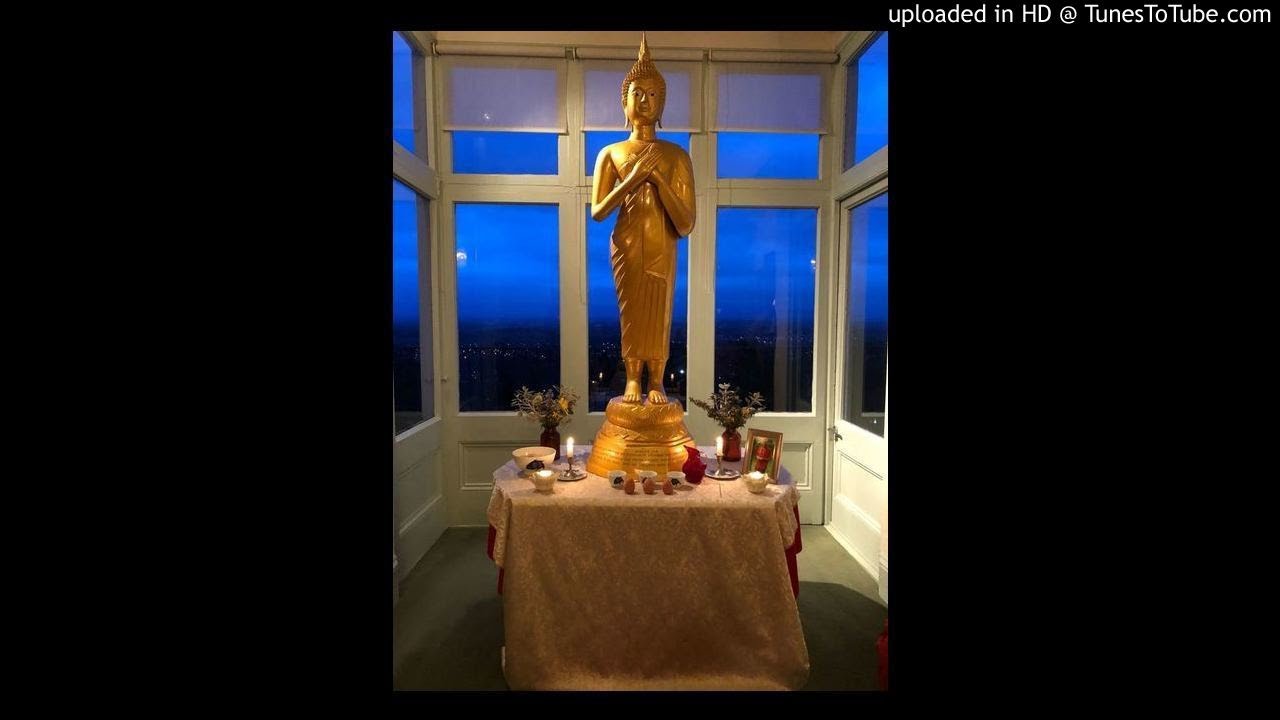
This content was created by Satya Robyn. This content was uploaded by Satya Robyn. This is a YouTube podcast episode titled "Kaspa's Podcast: Places of worship? What's the point?" (published Aug 20, 2018). The excerpt is a solo, reflective spoken-word talk by the host (a single speaker) addressing listeners about the relationship between wilderness experiences and organized sacred spaces. Topics covered include rainforests and types of wilderness as therapeutic spaces, ecotherapy exercises and a personal forest retreat anecdote, the role of teachers/elders and ritual/physical practice in integrating spiritual experiences, a retranslation/commentary of the Lord's Prayer (Neil Douglas Klotz), and M. Scott Peck’s typology of spiritual development. The speaker references other people (e.g., Caroline Brazier) and traditions (Buddhism, Christian mystical readings) but the recording is essentially a monologue aimed at an audience.
Chapters
Here's Casper's podcast, which I'm thinking of renaming Rainforest Mind, a phrase that came to me in a conversation a while back to do with reflecting the, uh, that a healthy mind reflects the complexity and aliveness of rainforests. And of course, we used to have rainforests in Great Britain as well. They're not just a tropical feature. So in response to my podcast about wildness, episode 3, somebody asked me if the, if the jeweled forest in the Lajjapurana Sutra is an echo or a call back to real forests. What do we need temples for? So I thought I'd take that as a springboard for this week's conversation— conversation with myself, but if you get in touch, conversation with you out there, listener, as well. N.J. Griffiths's book Wild, she writes about 4 different types of wilderness: rainforest, Arctic Circle, islands and the sea, and then I haven't got to the end of the book. I think the 4th one might be mountains, but don't quote me on that because I haven't read section 4 yet. But one of the recurring themes is is that as the native community's connection to the landscape disappears, incidence of addiction and mental ill health goes up, particularly in young people. And one of the most effective ways of healing these diseases of the mind, seems to be getting people back onto the land, particularly getting them back onto the land with elders who can still remember the old ways of being in connection with the land, still remember the old words, the old ways of describing the landscape, the old ways of inhabiting and interacting with the landscape. Much more effective than jail time or even ordinary community service, just according to the sort of, um, the experience of the people that she's interviewing and talking to. And some of these are running such programs, some of these people in the community, and so on. And I think a key feature of this is the fact of the guide, the teacher figure who's going out into the wilderness with them. If we just sent a townie, as some of my family that live in the countryside used to call me, when not, you know, after we'd moved from the countryside into the town, into the wilderness, not only would we struggle to to survive, I wonder how we'd create the deep meaning of those experiences, how we'd contextualize them. I don't think it's impossible. There's a Chinese koan that I read recently. Maybe I even mentioned it on this podcast. I certainly mentioned it in the Woodfield talk, and I haven't looked up the reference since then, but I can remember the koan. The, um, one Chinese master says to another, 'Do you think it's possible to learn from the spirits of the forest?' We could say, 'Do you think it's possible to learn from wilderness?' And the second Chinese master said, Yes, it's definitely possible, but we must see with our ears and listen with our eyes, which suggests a different way of learning. It's not not the Western style of dividing things up, of classifying things, of creating order, which is a good way of learning and important and has lots of benefits. It points to a more intuitive way of understanding, uh, an opening of the heart, uh, allowing our experience of being in the natural world to create deep meaning years ago I took part in an ecotherapy week facilitated by Caroline Brazier, mainly facilitated by Caroline Brazier, and one of the exercises was to go out into the, uh, the pastures and the forests of the land that we're on, which is the farmland that my teacher now lives in. I say farmland, it's fields that are returning to forest, so it's a mixture of scrubland and meadows and woods. To take a question that was important to us in our lives at that time, to go into a place and to ask the place a question. And the question I had was something about how to carry on. I guess this retreat was just before a period of transition. It was— it maybe arrived just as I was leaving the Buddhist community and about to live a more settled life in a couple, in a little house. I'm not sure whether that— I'm not— I can't remember the exact time, but there was certainly something of how do I go forward, how do I transition. That was something like that was the question. And as I was walking through the woods, I came upon the medieval road, which is just a track through the forest, completely grassed over. I sat down, I looked at the path going off into the distance, and a butterfly came and landed close to me. And was still for a moment and then flew off down the path and then up into the trees or wherever it was going. And for me, the experience of finding a path in the forest was the answer. I could put that— the words I put that around that at the time was something like, oh, just keep walking along the path, just keep putting one foot in front of the other. And now looking back, I might also put a meaning on it of something like, the path will appear when you're ready for it. It felt like quite a profound experience at the time, quite an easy exercise to do, and one that perhaps doesn't require much guidance. Yeah, but I've done that, um, since then, taking questions out into natural landscapes and had answers appear out of the dialogue, out of the conversation with the natural world. When I was much younger, before I was a practicing Buddhist, I also had experiences of being deeply at peace in the natural world, and even of experiencing, um, spiritual highs, bliss. To the point of wondering if I was a bit manic at some points. I think just really filled with this sense of joy, which was quite unusual and alien to me at the time. Um, so it's possible to have these experiences, but I think it's helpful to have a teacher and a tradition to put them into some context. There's You know, as a Buddhist teacher, part of what I offer, part of what I think the tradition offers, is a way of taking these moments of opening or awakening of faith, or experiencing the veil being removed, that are deeply embodied, experiential moments, often quite wordless, and providing a context, a set of teachings, maybe some practices, that allows the integration of that back into ordinary life. Because the experience fades quickly, and whilst we can make some meaning out for ourselves, for me at least, it's helpful to have the guidance of others in understanding what that experience means for me, how I take it back into the world, how I make sense of it, how I make space for remembering it in my own life. I've just started reading Prayers of the Cosmos, which is, uh, by Neil Douglas Klotz. Recommended by Andrew Chaffings, and it is a commentary and retranslation mainly of the Lord's Prayer and also some of the Beatitudes, looking back at the original Aramaic, understanding it as a mystical tradition. He talks about, or a number of different things that I thought I might mention this morning. But one of the things he talks about is— excuse this noise now, I didn't know I was going to mention this, so I shall have to flick through the book. Dum-da-dum-da-dum. In his translation and commentary on the second line of the Lord's Prayer, which in the King James Version is, "Hallowed be thy name," and he offers about 10 different translations that all have slightly different shades of meaning, from, "Focus your light within us, make it useful as the rays of a beacon show the way," to, "Help us let go, clear the space inside of busy forgetfulness so the name comes to live." Or, 'In peace the name resides, a room of one's own, a Holy of Holies open, giving light to all.' In the commentary, he mentions Jesus' recommendation to go into the heart shrine, one of the meanings of 'enter into the closet' from Matthew 6:6. He says, 'Whenever we pray.' So there's a suggestion in the text of the Lord's Prayer, if you explore the root meanings of the Aramaic words and consider it from a mystical tradition, that it's important to create an inner shrine. Buddhists talk about emptiness, emptying the self. There's something similar here, getting rid of what stands between us and an experience of being able to be open to the divine, or a better relationship with the cosmos, as Neil Douglas Cox calls it. We have to create a special place for that within ourselves that isn't full of our usual worries and cares about the world. And for me, it's helpful to have a special physical place to do that. That helps remind me that that's possible. So not only is it helpful to have a teaching and a practice and a context that encourages me to keep this space within myself that makes me available to receiving something from the natural world, from the whole cosmos. And remember, the natural world gives birth to civilization. So although I've had profound experiences of it in the wilderness, experiences of deep connection in civilization aren't necessarily excluded from this, although sometimes it can be more difficult. To experience deep peace or a sense of profound interconnectedness in the middle of a shopping mall as compared to in the forest. But I have experienced that in both places. But having a physical temple that is a reflection of the inner space, the inner availability to connect with personally, is really helpful for me. And I suspect some of the earliest religious sites were just that— reflections, dramatizations, uh, Don Mivica sometimes called them, of the inner spiritual life. A ceremony is a symbolic or a metaphorical reflection of the inner movement of the heart and the spirit. And not just a reflection, of course, because we are embodied creatures. At dinner the other day, Caroline said, 'Oh, when we come together and we're walking and chanting, we could almost be doing anything.' And she's right, we could be doing almost anything. But as we talked about in the conversation, the thing that we do also has a profound effect. We are physical creatures. When we put our bodies into one shape It moves our spirit, it moves our heart. When we put them— our bodies into a different shape, it moves us in a different way. If you don't believe me, um, sit hunched over with your head down and your eyes looking at the floor and see what feelings that evokes. And then, um, sit up with your chest out to the world and your head up and your arms And see what feeling that evokes. The body and the mind, the body and the spirit aren't just deeply connected, you know, that they are— they can almost be seen as the same thing. That's how close they are. So the things that we do, um, when we come together, in my experience affect me deeply. Not always. Sometimes I'm too preoccupied with ordinary life to allow the, the drama, the ritual, to, to have an effect. Um, so there's something anyway, there's something there about the reason for physical temples, which is to do with, I suppose, my own limitation, uh, that it's helpful to have these reminders, it's helpful to have these practices, and it's easier for me to, to keep doing it if I'm doing it with other people. Could I do that outside with other people? I guess so. You know, think of places like Stonehenge, or the very— some anthropologists and archaeologists now believe that the very earliest settled places were not places for farming or for safety, but were places for ritual and religion. But I guess as a late 20th, early 21st century person, my habit for most of my life has been to be indoors in buildings. That's the way that I was brought up, so I look for my spirituality in those places, or I found it in those places, as much as I found it in the outdoors. And the advantage of those places is that there were spiritual teachers available, and there weren't spiritual teachers available to me in the wilderness. Finally, I want to finish with, um, mentioning M. Scott Peck's book on community, which belongs to Satya, and, uh, I wasn't sure where to find it this morning, and so I don't have the reference. But in it, he talks about 4 different types of person that experience spirituality or that experience religious community, and I think this is really interesting, and I keep coming back to it. Particularly when I'm thinking about creating community. And the four sorts of people are— I think he calls the first strand, uh, chaotic. This is a sort of whimsical, in the sense of following our own whims. Maybe whimsical's got a slightly different meaning today. Following our own whims, childlike, maybe even a little bit hedonistic. Impulsive, I suppose, compulsive, maybe addictive. This is the first sort of person that he speaks about, somebody who's in chaos. And the next stage in spiritual development in this model is institutional. From chaos, we look to— for certainty, we look for safety, and we find safety in something that is known, something that feels solid, something that is clear. Uh, and he describes this sort of person as institutional and says that many spiritual communities are institutional, and this is what they offer to chaotic people: a sense of certainty, a sense of, this is what the answer is, do this and you'll receive this, stop doing this and you'll receive this. And my experience of some, many spiritual communities, religious communities, is that this is what they offer. And what I like about this model is it suggests there is a place for this. But there's a progression that goes beyond this. Uh, third sort of person is skeptical. They question the certainty, they question the teachings they've been given. They are looking for the deep meaning, which means the meaning in their own heart, in their own lives. And when they come through this process of being skeptical, they arrive at mystical. This is an experience of being comfortable with the unknown, of look— of inhabiting wordless experiences as well as worded experiences, of expansion rather than contraction of inclusivity, including the whole universe, including all beings, all sorts of people in their heart, rather than exclusivity, um, of unconditional love rather than conditional love. And a good spiritual community, a good temple, should be able to speak to people at all of these different levels. I also, I quite like it when in the book he says you can't necessarily tell the difference between a mystic and an institutional person because the mystic often thinks themselves, well, I have to do something, I have to speak some language, I have to, I feel like I'm moved to do something with this experience, so I might as well do the things that have been handed down to me, which of course, and use the language which has been handed down to me, which of course is what the people in the institution stage are doing. And the reality is that most of us on the spiritual path don't progress 1, 2, 3, 4, but we move through these at different times in our life. Sometimes we're looking for certainty and we're desperate for someone to tell us what to do. Sometimes we're deeply questioning. Sometimes we're comfortable with mystery, with unconditional love, with expansiveness. And I'm mentioning that because I recognize myself in each of those stages. And the place that was able to support me was a temple, was a community of practitioners that was not in a forest but was in a town. And maybe that's just a historical accident. I arrived looking for certainty, looking for answers. I had been— I had actually been through all of those stages before coming to the temple. I'd had mystical experiences and I'd been comfortable with them, but for various reasons I'd felt plunged back into chaos and uncertainty, and I wanted someone to tell me how to get out of it. I wanted some rules to follow. I went through a period of deep questioning that was allowed and supported and made space for. Space for. And I came to a place of, uh, being comfortable with not knowing, being comfortable and having a deep experience of unconditional love that holds the whole thing. So my personal journey was supported by physical buildings and teachings and context and ways of making meaning that were handed down from teacher to disciple. And that arrived in a bricks-and-mortar building. I don't know if I've particularly answered the question why temples, um, rather than just going into the forest. Many of the things I've experienced could be experienced in the wilderness. If there were communities of people and elders in those places that were accessible to me. So I suppose in my personal history, it's partly to do with, um, the history of civilization, where teachings have ended up, where, um, have they been preserved through the ages. And it's also true, as the Questioner mentions to me in their email that of course some people just can't get to the wilderness. In my experience, a temple, a good temple or church, a sacred space, offers a window onto the same thing that I can experience in the wilderness. And not that I always experience in the wilderness, but the deep meaning of the cosmos, if you like, to come back to Neil Douglas Klotz's work, which isn't necessarily available to everybody to experience in the wild. No, it's available, but depending on what we carry with us, it doesn't always break through to us. And the temple, the church, my Buddhist tradition has given me practices and teachings in a context that allowed me to create an inner space to become available to those experiences and a way of making sense of those experiences. So I'm deeply grateful for bricks and mortar spiritual communities as much as I am to the great spirit, the deep meaning of the cosmos that I experience in a forest, on a hillside, by the sea, when I'm looking up at the night sky away from streetlights and all I can see is the soft speckled path of the Milky Way stretching into the distance.









