Rainforest Mind: Searching for God, or something like it
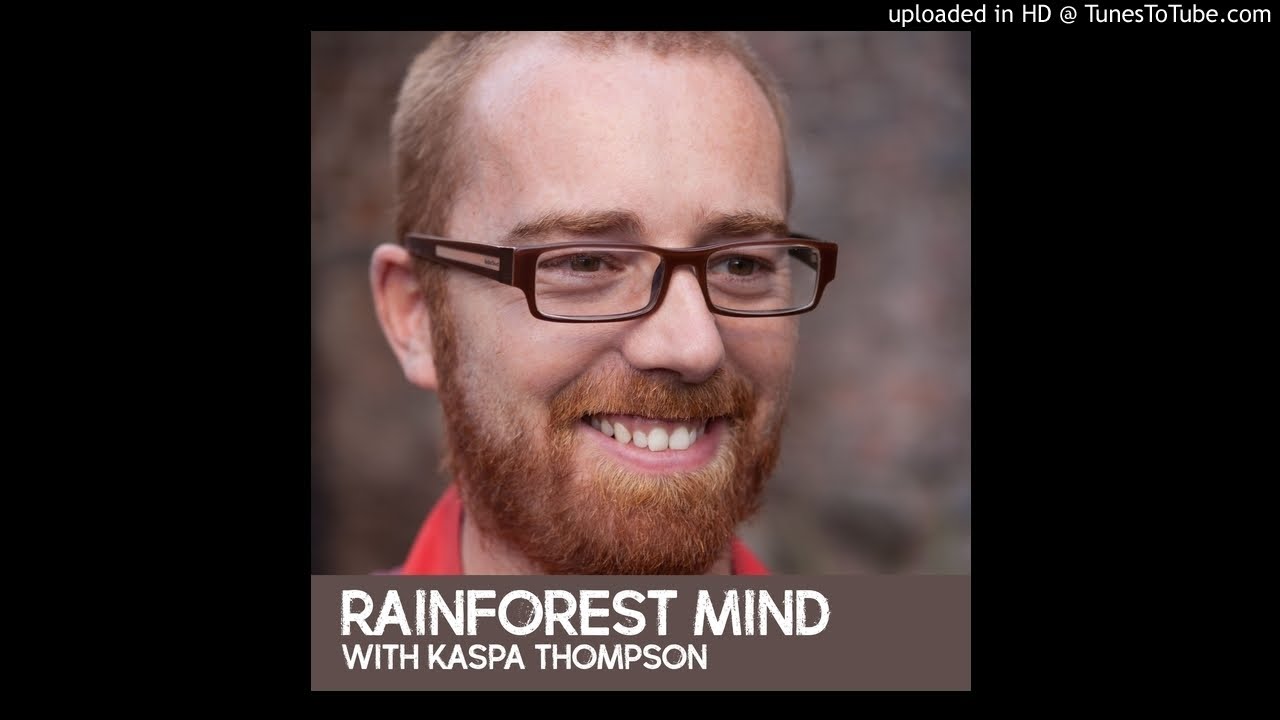
Casper Thomson recounts three spiritual experiences: in an Indian shrine room, a Welsh campsite, and a five-day chanting retreat. He explores what sacred presence feels like, questions doctrine, and considers different ways of knowing beyond the material.
Chapters
It's Rainforest Mind with me, Casper Thomson. I'm trying a different way of recording today, so hopefully the sound quality will be a-okay. I'm in my office. The rain is drumming onto the balcony above my office, and I can hear that providing a background to my words. Probably isn't audible on the podcast. Today's episode is called Finding God or Something Like That. It's inspired by a memory that came to me when I was sitting in the shrine room this morning. I was sitting there looking out at the misty, rainy view with the tall golden standing Buddha that stands in front of those big Georgian windows at the eastern edge of the shrine room. And there were just 4 of us in service this morning, and sitting to my right was my friend Jahme, who is heading off to India in 10 days to go and work with Savidya, an Indian, uh, man who's become ordained as a minister in our tradition. That we support financially and hopefully give some moral support with this visit as well. And the memory that came to me was of my first or second— well, it couldn't have been the first trip to India because that was quite short. Must have been the second or third trip to India that I took on behalf of the Buddhist order that I'm part of, to go and support Suvithya. And just before traveling out, I was having something of a crisis of faith. I can't remember exactly what had precipitated it, but I really just started questioning the teachings that I'd been given. They just weren't making sense to me anymore. I don't know if there were some internal contradictions that I couldn't work out, possibly. That sort of thing really troubled me in the past where I couldn't dot all the i's and cross all the t's. And of course, when you're dealing with 2,500 years of commentary, such a broad tradition as Buddhism, it's impossible really to cross all the t's and dot all the i's, because people come up with their own schemes, their own ways of explaining spiritual experience, spiritual progress, enlightenment, psychology, and not all of these things fit together, or they do, but not in the neatest ways necessarily. There's— in Buddhism understands there's a provisionality to all these sorts of schemes, but at various times in my life I have really tried to pin them down and find something that is completely true and will always be true, and nobody's ever going to come along and say they've worked out something better or a different way of seeing things. So I guess I was in that kind of state of mind, and I remember chatting to somebody about it, and they said, oh, so what about when you go to India? How are you— you know, you're going there to teach Buddhism, to support Suvijja. And I said, well, I'll teach what I've been taught. I'll transmit the Dharma as it's been given to me. I'll do my duty, even if I don't completely believe everything that I'm saying. Anyway, I arrived and I think during the first few days there was a service. This was, um, before we had our own center. We used to rent a flat on the top floor of a block of flats, the low-income group flats they were called. And we also rented a room on the roof that we used as the shrine room. This was usually hot even when the fans were going, and when the fans were going it meant you couldn't light any candles on the shrine because they'd get blown out really quickly. So it was a choice, either this kind of candlelit atmosphere or the fans on. I think this must have been an evening service because in my memory It's dark and the candles are on, so maybe a little bit cooler. And there probably would have been some noise coming in through from the other flats, television noise maybe, maybe some noise from the street, people selling things. And I led the service as I'd been invited to, so we did some chanting. We read some literature together, and then there was some silence. And in that silence, I looked around at the faces of the people in the room, and suddenly all my crazy thinking, all my doubts, all my wrapping myself up in knots dropped away, and I had a deep embodied experience of being in a sacred space. What do I mean when I say an embodied experience? I felt it in my bones, I felt it in my heart. I relaxed, I felt grounded, I felt lighter. It wasn't an intellectual experience, it was something that moved me, moved my emotions, and physically it changed me. My body changed in that moment. I became more settled mentally and physically, and I just thought, ah, this is what it's all about. Of course the Buddha is here. I had a real strong sense of presence. Of the presence of something beyond my small mind, beyond the minds of those that are gathered, something bigger than the 5 or 6 of us that were in that room. Their faces were lit up with something, with faith, with love, and I, um, that was a great gift to me. These days I'm content to let that experience be what it was, but there was a time where I would have put my mind to analyzing it and trying to work out exactly what happened. And there may be some people here who are wondering, well, what was it really? When you say the Buddha was present, what does that mean? Well, I don't know exactly. My experience is of something that isn't myself. Of course, the room, the candles, the other people, the atmosphere that was created between us also fall into that category. They are not myself. When Zen Master Dogen says, "To study the self is to forget the self, and to forget the self is to be enlightened by the 10,000 things," what are the 10,000 things? They are the world that is not myself. Is Buddha just the world that is not myself? That doesn't feel quite right to me somehow. Maybe it is. I guess it's because ordinarily when I see the world that is not myself, actually I'm viewing it in quite a mundane, ordinary way that comes out of a judgmental mind. Even in very minor ways, I'm coloring the world with my own experience. I wake up grumpy and nothing seems right during the day. I wake up in a good mood and the same things that felt difficult or wrong or not right, um, don't trouble me. So most of the time I'm not being enlightened by the 10,000 things. I'm not seeing or experiencing the 10,000 things clearly. I'm just seeing myself reflected back from the world. I'm sometimes perhaps not wearing rose-tinted spectacles, but I don't know what color you might say, dark spectacles that are of my own creation. When we see the world clearly, maybe that is seeing the Buddha because My experience in that room on the top of the flats in India that evening was that, oh, this is how it really is. Intuitively, this feels more real. This feels like clearer seeing than what had gone before, and this clear seeing has some quality of love about it. Some quality of intimacy with the people I was with, with the surroundings, with the rough plastered wall, with the shadows cast by those thin candles on the shrine. A sort of tenderness. This is how a Buddha sees the world, always with eyes of love. And maybe when we see with eyes of love, we're also seeing Buddhas. The candle becomes a Buddha. Suvijja becomes a Buddha. The still fan becomes a Buddha. So you can see it the Buddha in that very imminent way, or you can see it as something more transcendental— transcendental— something other, something that swoops in from another realm. I don't know, my intellect isn't big enough to answer that question. I'm not sure any human intellect is, but I do know that that was a very meaningful experience and it settled something inside of me. The second experience I want to talk about happened, I don't know, 15 years ago. Is that about right? I think it must be about 15 years ago. So this is, um, if my memory is right, this is the summer before I go to university, or one of, one of those summers. I worked for 3 years between, um, sixth form college, so from when I was 18 to 21, I worked. And in one of those summers, my brother and I went on a backpacking holiday in Snowdonia. And I guess I would have already been reading about Buddhism at this time. I was starting to get interested, maybe even practicing a bit of meditation. And the experience I want to talk about was at a campsite near Harlech Beach. Harlech has got a very long sandy beach The mountains of Snowdonia drop down to the sea there, so the town staggers up the hillside, and this campsite's at the bottom, very close to the beach. And the experience came when I was visiting the toilet block. Maybe I was going for a shower first thing in the morning, something like that. And I noticed a crack in the concrete, and suddenly again I had a moment of embodied— a feeling like I was in a sacred space in an embodied way, and I was in a toilet block. Concrete toilet block on a campsite in Harlech, staring at a crack in the concrete. I don't think I was crazy. That experience was something like Indra's net, which is the metaphor, the image of a net with a jewel at every point where the ropes are tied in the net, and each jewel reflects all of the other jewels. So it's also— that image speaks to the same kind of experience that William Blake talked about when he talked about seeing the whole world in a grain of sand. So it had something of that quality. To it. And it also had a great— or I experienced a great deal of gratitude in that moment. So what part of what I saw was not just the interconnectedness through space, that this toilet block was sort of made up of the stuff of the universe, so that it was mirroring something, it was mirroring the nature of the universe. It was even this crack in the concrete was manifesting something about the whole universe. It was an experience of seeing it in time and recognizing that this concrete toilet block was at the end of a chain of causes and conditions going back through time, right back to the Big Bang, I guess, and maybe even before then, in into those few microseconds that scientists don't know what happened in, and who knows what was before that, maybe something, maybe nothing. And here I was, needing to wash and being given fresh hot water in the middle of this field, in this concrete building that was protecting me from the weather. All the hands that had gone into producing the materials, producing the building, the plumbing, the natural cycles that allowed the water to appear in the environment, and the, the humans that created the systems that brought the water. It really just was a spontaneous experience of Wow, how amazing is it to receive all of this? And that experience felt like a real gift from the universe. It wasn't something that I cultivated. I wasn't doing a gratitude list. I wasn't doing a visualization of Indra's Net. Both of those things, those techniques, can help you get close to the sort of thing that I'm talking about. But this was a spontaneous moment of goodness me, how amazing the universe is. So it felt very profound. And again, it's tempting to analyze and to try and work out the right model to explain that. And of course, there are different ways of explaining this. Maybe it's a spiritual experience, maybe it's my brain just firing in a particular way, maybe I was just relaxed from being on holiday and that allowed my ego to relax and that I was able to let this 10,000 things appear again. Maybe all of those things can be true at the same time. We're very wedded to pinning things down in this Western materialist capitalist society. Making things understandable. Maybe that's just a human tendency, I don't know. But I get less and less interested in that. It serves a purpose up to a point, but it also destroys other possibilities, other ways of seeing and understanding, which can be just as valuable. That's part of the reason I like Chinese poems and things written in literary Chinese, because the characters. Each character has so many different meanings that you can write one line of poetry. You— I don't know if you can do that. I'm not sure I could do that, but it was done that people wrote these lines of poetry and there were several different meanings that could be gleaned from the characters. All of life is like this, several different ways of telling a story about the same event, and I think there's a value in holding them all lightly and allowing the possibility of all of them. The common thread of all these experiences is me coming into relationship with something much bigger than myself, and Well, let me tell you about the third one that I wanted to tell you about. So this third experience must be in the middle, I guess, chronologically. Took place— where are we now? October. So we're coming up to 11 years of being ordained in December. So this would have been just over 11 years ago. This is an experience I had during my 5-day chanting retreat, which I guess would have been maybe in the October-November, so maybe pretty much spot on 11 years ago, before I was ordained. So the setup for the retreat was that I was in the retreat hut, which is sort of a glorified name for the garden shed, although it was an insulated shed with electricity, so it had lighting and heating, so a bit more than a garden shed at the bottom of the garden. And the instruction is to chant Nembutsu continually from waking until falling asleep. Nembutsu is the Pure Land Buddhist practice of reciting the name of Amida Buddha, the Buddha of infinite light and life. So light represents space and life, time. So infinite time, infinite space, coming into relationship with the infinite through saying the name, coming in relationship with the 10,000 things through saying the name. And also for some people, coming in relationship with the personality of the Buddha. I'm reminded of the Paul Knitter quote that I mentioned back in the first episode from his book Without Buddha I Couldn't Be a Christian, where he says something like his experience of God is not as of— not of a person, but that it does have a personality. These experiences I'm talking about, I suppose, are not so filled with personality in one sense. That this, I guess we often think of personality as being something that speaks to us. I wasn't, I didn't experience communication in a form of words. It was more like being in a sacred place. That's the metaphor I'm using, like being in the Pure Land, I could say, rather than being in relationship with the Buddha. But of course places can have personalities. Too. And there is something particular about these experiences. So the practice of Nembutsu, I suppose you could say, coming into relationship with the personality of the Buddha, with the spirit of the Buddha, which you can take to mean something— spirit in the sense of from the spirit world, if you like, but also in that sense the word The spirit of our times, the spirit of the Buddha. What was the spirit of the Buddha? Loving kindness, wisdom. Anyway, I was doing this practice, chanting Nam-myoho-renge-kyo from when I woke to when I went to sleep, with a little break once a day when somebody, when my teacher would come and see me, just check I was doing okay. And this whole 5 days is powerful in different ways. I spent some time doing what felt like a life review. This chant was going on and memories from different periods in my whole life were coming up, um, allowing me to perhaps mourn things and let go of things that I'd been holding on to. And the memory that I want to talk about today came when I was sitting on the bed chanting, there was a poster of a golden Amida statue at the end of the bed, and a thought arrived, or a thought and a feeling arrived. Which was— well, the words were, 'Oh, maybe there's more in this universe, or to this universe, than I'm giving credit for.' So context to this is that although I'd been doing a very devotional practice for a year and moving towards that devotional practice probably for a year before then, beginning to incorporate it, so for a couple of years, The framework that I had in my mind was still very materialistic at this point. I'd explained the experience in, ah, like in very materialistic terms to myself when it happened, or I just discounted it. It's one of those things, you know, you flip out of different ways, in and out of different ways of seeing the world. And suddenly in this moment, the part of me that saw the world as something that needed to be explained and pinned down and be only to do with, with physics, if you like. Suddenly there was a question mark over that, and the experience of it was like, it was like a bell being rung. It was like receiving a tap on the head with a spoon, like someone cracking an egg. So there was a crack in my intellectual armor, and it was also like a crack appeared in the universe, in my way of seeing the universe. But I was so deeply rooted in it, it felt like a crack appearing in the universe. The crack appearing in me, in my self-defense, is the same crack that allowed the possibility of something else. This is perhaps the beginning of appreciating that there are different ways of speaking about things, different ways of experiencing things, and that not— that other ways of talking about the world might be just as valid as my reductionist way had been, and maybe that they were even more true. This crack allowed the Buddha to appear to me in a way that it hadn't done before. Of course, I say that, I question it, because the Harlak experiences before that, and I remember other experiences from my childhood where I'd really experienced being in a sacred place and, and a strong sense of presence other than self, in forests for example. In a park one time, by the sea, I remember feeling very connected to the infinite, and connected to the infinite in a way that went beyond my connection to the sea somehow. And yet I could talk myself out of all of these experiences. The experience in the meditation on the chanting retreat cracked something in that talking myself out of those experiences. I guess that was the, that was the thought pattern, that was the, that was the worldview that it cracked. I can go back to seeing the world in that way, but when I do, it tends to be provisional. I tend to appreciate that it is just one way of seeing. The world, and that there are equally good, if not better, windows through which to look through. So yeah, today I just wanted to share these three experiences of experiencing something sacred, something to do with interconnection, something to do with deeply being grateful for the causes and conditions that give rise to the gifts that I receive in the present moment, but also something to do with a sense of presence that goes beyond my usual way of experiencing things that are other than me. Is that simply because my ego has dropped away in those moments and I'm seeing things as they really are? Is it because something appears somehow and changes how I see the world? Or who knows? I suppose the idea of infinite life and life is that the Buddha is present all the time, and that there is a part of me that wants to go. Well, if the Buddha is present all the time, and what you're experiencing in that moment is the 10,000 things appearing, then surely the Buddha is the microphone, the Post-it note, the table the microphone is on. And there's something very profound about that, and there's also something appealing in the idea for me that the Buddha is also— isn't those things, is beyond those things. Both views useful at different times in our practice, perhaps. As I said, I try to be less— some days I really am less interested in resolving those questions. I think it's helpful to— for me to be a bit less interested in resolving those questions, and sometimes I manage it and sometimes I don't. I really hope those 3 experiences in some ways can just stand on their own and that I can let them in my own life stand as markers for something without having to explain them away completely. Markers for the world being sacred, for God or something like it to be available in any moment, in every moment. Thanks for tuning in and look out for another episode sometime soon of Rainforest Mind. Remember, you can subscribe via iTunes or other podcast subscription services, Stitcher for example. So goodbye from me until next time. I've been Casper Thomson and this has been Rainforest Mind.









