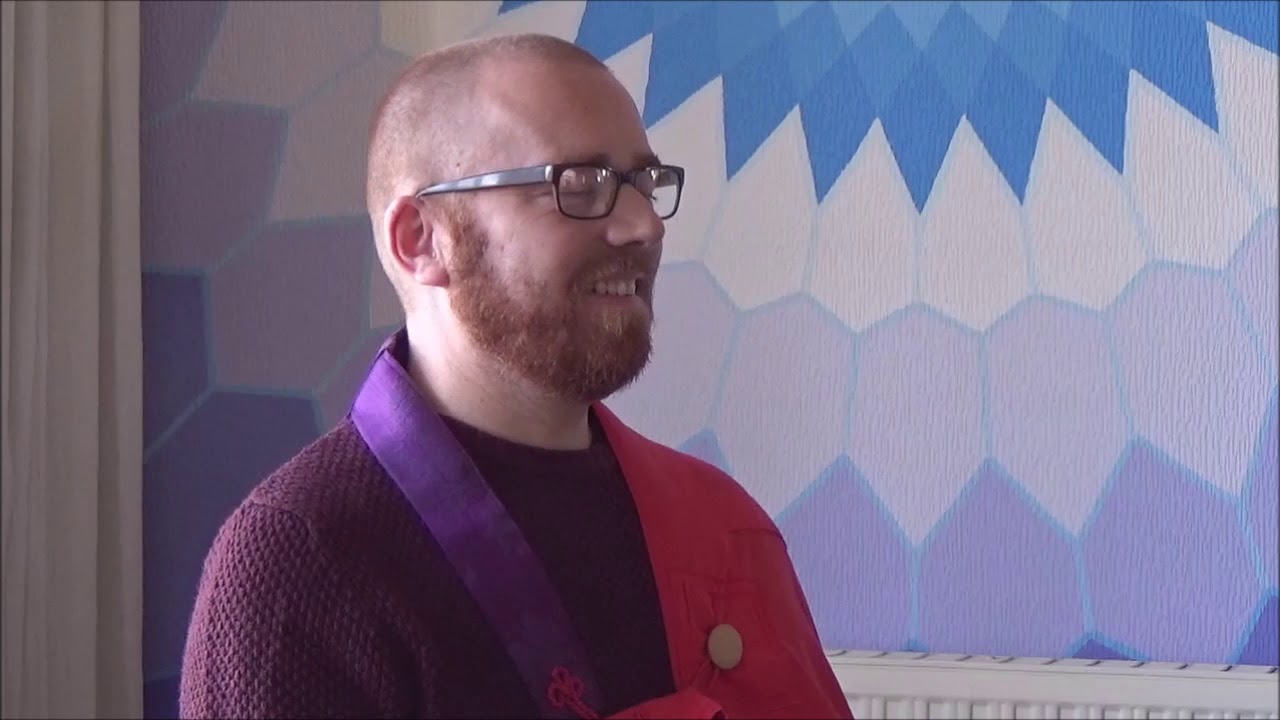
Satya Robyn teaches how Buddhist practices transform sadness through presence and community. She tells stories of Patakara and Kisagotami to show how trust, nonjudgmental listening, and support help move through grief, and introduces Nembutsu practice as a way to work with stuck emotions.
Chapters
So we'll just sit quietly together for a couple of minutes, just to allow ourselves to arrive. Maybe noticing how you're connecting with the ground through the chair, through the carpeted floor, noticing the weight of the hands. In the lap, beginning to notice how you're breathing. I'm just noticing what you're arriving with, any thoughts, feelings, or sensations that are present. And then maybe noticing sounds in the space. In your own time, cutting open your eyes, noticing your own fingers and toes. Maybe give them a wiggle or have a shuffle around if you need to. Make yourself comfortable. Maybe noticing other wiggling fingers and toes Welcome, good morning. So I'm going to talk for a little while, then there'll be an opportunity for you to ask a question if you need anything clarifying about what I've said, and we'll have some time in pairs or small groups just to feedback or discuss anything that's come up for you or that I've talked about, and at the end We'll do a little bit of chanting together. A huge white van has just pulled up. That's mine. We are— the temple washing machine died yesterday, and it's been repaired many times, and it was irreparable, or 2 days ago, so we ordered a new one, and the earliest delivery time was in the middle of this talk, unfortunately. There we are. So the title of the talk is transforming sadness. And you all came even though I didn't say what you're going to be transforming sadness into. It might be something much, much worse. It isn't. And I wanted to use two stories from the Buddha's time to illustrate the topic. Which one will I start with, Aranda? I guess I'll start with the story of Patakara, whose name means 'goes without clothes' or 'revels in nakedness.' But this wasn't a given name. It would be odd to give that as a name to your child. It was a sort of cruel nickname. That she developed after almost going out of her mind with grief. Originally her name was something like 'beautiful person.' I can't remember the, the Sanskrit word that it was, but that was the translation. But she became known as Paticāra, and her story is that she was betrothed to marry somebody from the same caste background, but she fell in love with a servant and she ran away with the servant, much to her parents' displeasure, because they'd arranged this wedding and they'd sort of sorted all the details out. It was a good home, all of that stuff. Anyway, she went and lived with the servant's family. Time passed, she became pregnant. There was a sort of argument about whether it would be okay to go back to her parents' house to have the child there, as was the custom at the time. And her husband thought that her parents still wouldn't be accepting of her, and she thought they might have softened over time. But in the end, she ended up having the baby before she reached her parents' house. And so she went back home, started to bring the child up. A couple of years later, becomes pregnant. Again they have the same conversation, and this time they decide, well, enough time has passed now, surely we can go back to your parents and they'll accept you, they must have gotten over this trauma. And on the way back, a series of things happen to her. The first is that her husband— there's a big storm at night and her husband goes to look for shelter in the forest and gets bitten by a snake and dies in the night. So that's the first loss. The storm has swelled the riverbank, so in this sort of grief-stricken state she decides, I'm still going to go and visit my parents, but they're on the other side of the river, which is Nan. Flooded. So I'll take my children across one at a time. So she, she takes the baby and lifts it above her head, carries it across the river, and a hawk comes and takes the baby away. She cries out. The toddler hears her crying out, thinks she's calling to him, runs into the river and gets swept away. So in the end of this 24-hour period, she's lost her whole family. Goes to the village where her parents live, finds that there's been a huge mudslide, um, and her parents' house has disappeared, and her parents are missing, also presumed dead. And she can't process this, understandably. And she also can't find a place to go with her grief. The community isn't particularly supportive of her, so she just withdraws completely into herself. She sort of shuts down, she stops feeling, She stops washing. Eventually she sort of discards her clothes. Those things cease to become important, and she gets this nickname, 'Patakā,' and she's sort of driven away from the village because what they see is a crazy person rather than somebody who's deeply, deeply suffering. Anyway, she wanders around for a while, some time passes, and she comes across where the Buddha is staying. And she starts to approach the campsite, if you like. It's not really a campsite, but where they're staying outdoors. And a couple of his disciples catch sight of her. And they think, "There's no way we're letting this woman to see the Buddha. She's not wearing any clothes, she's covered in dirt, it's not at all respectful. Let's just shuffle her out of the way." But the Buddha happens to see— this is the Buddha Shakyamuni who lived 2,500 years ago— he sees this interaction and he says, "Whoa, don't be silly, let her come." 'Come here to me.' And this is the crucial thing. He welcomes her as she is. He doesn't ask her to change. He doesn't ask her to put any clothes on. He just says, 'Come here, come and sit with me and tell me your story.' And he really means it. So the Buddha is sitting and completely without judgment. Let's just wait a moment. He's completely accepting, and that's the thing that makes the difference, so she feels, um, I can be myself here, and those— that shutting down starts to soften, those defences that have really been protecting her from her own feelings. Start to relax, and she begins to feel the sadness. And this is the, the beginning of the grieving process, in a way, for her, is that she begins to feel what she hadn't felt before. And she's able to do that because she trusts the situation. She trusts that there's somebody there who is saying, "It's okay to have these feelings, there's nothing wrong with them, I'm not going to judge them, you don't need to judge yourself for having these feelings." In the text, the Buddhist text, what it actually says, something like, in the commentary this morning, "The Buddha then explains the doctrine to her." And that wouldn't have worked on its own. Can you imagine somebody in this awful state coming and the mum sitting there going, "Well, let me tell you what the diagnosis is and how the philosophy works, blah blah blah." That isn't going to land on its own. What lands is the fact that he opens his heart and welcomes her just as she is, and then what these days we might call psychoeducation, you might refer to it anyway as a psychotherapist, giving her some context to what's happening and helping her make sense of the process that she's in. She's got a little bit of room to receive that because she's already started to soften and relax in this safe space. So that's one of the first things that I wanted to stress, the importance of trusting something, of having a safe space, a safe person, a supportive community. Or for us as Pure Land Buddhists, we have a trust in Amida, which is the sort of the continuing spirit of the Buddha that is available to us right now in this day and age. Even though the Buddha isn't physically present, there's still something that we can relax into and lean into and trust and take refuge in. Kisagotami's story is similar. I often get them confused because they're both stories about grief, but I was pleased to discover this morning that actually in the, in the very earliest written commentaries about these two stories, and they also get the names confused, and it actually isn't clear which story happens to which person. So I was pleased not to be alone in my confusion. Kesa Gotami's story is very similar. She loses— she's from a noble family, she loses a child, and she doesn't know how to process the grief. She's got enough wherewithal to know that she isn't processing the grief, that it's stuck in her, and to know that part of her is refusing to believe that it's happened. She's in denial. Another part of her can see, 'You need some help with this process.' So she asks around and somebody says, 'Oh, well, the Buddhists is staying not too far away at the moment, and he's pretty good with people. Why don't you go and see him and ask for his advice? So she goes and sees the Buddha, and he says, great, thank you for coming to see me. Your grief and your stuckness are both really welcome here. This is implicit in It doesn't say that in the text, actually. I'm drawing that out myself based on my own experience of working with people with emotions and stuck emotions. What he actually says to her is, 'Go back into the village that you came from. There's a magical cure for what you're experiencing, and the secret ingredient is a mustard seed from a house that hasn't experienced loss. Go back into the village and see if you can find me a mustard seed from a house that hasn't experienced loss. 2,500 years ago, medicine wasn't as advanced as it was today, and people of course tended to live all together as families. So what she discovered as she went from house to house is that there wasn't one. Every, every door that she knocked on and asked for this, they would say, "Oh no, we lost a parent, we lost an aunt, we lost a brother, a sister, a child." And through this process she realizes, "Oh, I'm not alone in my suffering." And that begins the process of relaxation that allows her grief and sadness to begin to to move through her and become something else. And again, I think if the Buddha had only said that to her, it wouldn't have made any difference. She'd have gone, "What are you talking about, mate?" But because of the presence that he had in that moment, because he welcomed her just as she was, because he accepted her completely, all the different parts of her, and because he was confident that he could do something thing to help her. Those two things together enabled what he said to matter. So again, it's the importance of trusting, of taking refuge in something, of having something that enables you to feel a little bit safer. Sometimes Satya uses the analogy of when you're in a cold room— this is a cool room today, it has been it has been cold. When you're in a cold room and you've got a blanket wrapped around you, if somebody comes and just takes the blanket off you, that isn't a helpful intervention. If somebody comes in and puts the heating on, as you warm up, you take your own blanket off. So this is about not forcing change, but just creating creating good conditions for change. And one of those conditions is trusting something beyond what you're experiencing in your small mind, in your ego, in your suffering mind in that moment. Whether that's trusting another person, trusting the process that things can be different in the future, trusting the teachings. The second thing that's important about this story is the movement from the personal to the universal. Years ago, when I was conducting my first funeral, my teacher said to me, the point of a good funeral is to transform people's suffering from personal into connecting with universal grief, the fact that we all share this experience of being in a world where there is birth, age, old sickness, old birth, sickness, old age, death, not having what we want, being associated with people we don't like, being separated from people that we do like. That was the Buddha's definition of dukkha, something that is inevitable in this world. And actually accepting, having some sense of, oh, this is the way it is sometimes, is actually a great resource and a great solace, even though there might be something counterintuitive about that. The end of Pattakāra's story is that she became completely awakened, and she became somebody who was really committed to teaching the Dharma. And Kisagotami also became a senior disciple in the Buddhist community, and the moment of Kisagotami's final awakening, where she sort of emerged from her grieving process, was when she spilt a bucket of water on very cracked, dry earth, and she saw that the rivulets of water were each different lengths. Some disappeared very quickly into the cracks, some of the streams went a little bit further before they disappeared into the cracks, and there was something about that that spoke to her about the nature of the human condition. Oh, there's some things that we can't change. One of the things that we don't have much power over is how long we're around for. And in that moment of spilling the water, there was sort of a deep acceptance of, oh, this is how it is. And surprisingly, with that deep acceptance of, oh, this is how it is, comes the possibility for other things to be true as well, for joy to be true again at some point, for the possibility to change things becoming true. Acceptance is a bit of a two-edged sword in the English language because of course the shadow of acceptance is, 'Oh, I can't do anything about it,' sort of falling into apathy. We can call that a kind of acceptance, and sometimes when we think, "Oh, he's just accepted it, she's just accepted it," that's what you see. Yesterday we had a guest for dinner who's been working with former child soldiers in the Congo and Uganda, and occasionally she said, there's the acceptance of the kind of positive kind that goes, "Okay, this is how things are. I've digested it." I've processed it, and now I'm available to the world again. But often there's acceptance of the second kind, which is, "Oh, this is how things are, I guess I can't do anything about it." And that really is acceptance mixed in with resentment and denial and frustration and all those things that are earlier stages of the grieving process. True acceptance Deep acceptance really is just seeing how things really are, which includes dukkha, but also includes the fact that we do have supportive communities, that there is beauty in the world, that there is things to take refuge in, that there are things to celebrate. Both of those things are true in this world. And I'm talking about loss and grieving rather than— I could, I suppose, because any example of losing something isn't necessarily it's necessarily a person, but usually we're sad when we've lost something. It might be something physical, it might be an opportunity, it might be a relationship. All of these can be understood in the same way as a grieving process. And actually, sadness is an appropriate response to many of these things. There are things which are deeply sad in the world. The danger with this process is like patsakāra and kisikitāmi, that we get stuck in it. And the way out of getting stuck is hinted at in their stories, having somewhere safe to go, having support, taking refuge. But also, when you trust that it's okay to allow your feelings to come up, whether because you've got somebody beside you who's very steady, or because you've got a sense of another power in the universe, like Amida Buddha, that's very steady, or just a sense of— Carl Rogers, the person-centered— founder of person-centered therapy, said the facts are friendly. This idea that actually being with the truth always leads to good results. Then we start to settle in and just notice, "Oh, this is how I am right now." And often that noticing is enough. "This is how I am right now. This is how I am right now. This is how I am right now." And as we do that, we notice subtle changes happening all the time. And in the act of noticing and moving into the witness state begins to allow things to shift and change of their own accord. The human mind, the human body prefers to be in a healthy state, prefers to be in a state of groundedness and acceptance and clear seeing of being relaxed. A relaxed body is the one that's using the least energy. So finding ways of supporting that natural process is a big key part of transforming sadness. Maybe I'll just touch on briefly what we do, the key practice that we do here, which is called Nembutsu. Nembutsu literally means remembering the Buddha or being mindful of the Buddha. And we do it through reciting the name of a particular Buddha, Amida, who is the red Buddha in the tanka, the hanging next to the mirror, and also is depicted on the peacock chest at the back of the room. And the Amida Buddha is really just the idea that there is a wholesome energy that is compassionate and wise, that inspired the Buddha, that is also available to us in this lifetime. And that through saying the name of the Buddha in various ways, we begin to connect to that energy. We begin to lean into something beyond our small mind. Beyond our egoic mind. And trusting that that is true, or remembering that we've had some experience of being received by that if we have, or trusting other people's experience of being received by that, steadies us and allows us to become more intimate with our own process. Process, and becomes easier to notice, 'This is how I am, this is how I am,' because there's a sense of, 'Ah, it's safe to do this here because I'm connected to something that accepts me just as I am.' So in the time of Shakyamuni Buddha, kisikata mi an Atthakara went to a real person who accepted them just as they were. In our practice here, we go to— of course we come together in community and we have real human teachers that we can go to, but we also have a sense of something greater in the universe that inspires us, that inspired the Buddha, that we can connect with. That's the primary refuge that we take. I suppose the last thing I want to say is something about just how it is to be human. It's not like we get to the end of a process and go, oh, I'm sorted now, I'm never going to be be upset again. It's more like something that's continually shifting and changing, like a river. And sometimes the riverbanks open wide and the waters become still, or it flows into a mill pond and there's nothing at all moving, hardly a ripple on the surface. And sometimes we go into a place where this big rocks, or the banks narrow, there's a waterfall. And that's how it is to be alive and be human. Taking refuge, having a sense of something supporting you, allows you to relax in that process. And of course, if you're relaxed, then you just float on the stream. And sometimes you enjoy floating in the still waters, and sometimes you kind of float down through the rapids. But if you're relaxed, you know, you might get a bit bruised on the way, but being relaxed is the position that you're least likely to break anything. And I'm not recommending going down rapids just floating on your back, literally. But there is something about that image which— that's what we're working towards, really, not becoming somebody who doesn't feel anything think anything or experience anything, but becoming more graceful in that process, more fluid. Maybe that's enough for me this morning. Thank you. So is there anything— I've spoken without notes, so it's been a little bit more unstructured than it often is, but if there's anything that I've said that you would like clarifying, there's an opportunity now to ask. Great. I mean, I'm always contactable as well if anything comes up once you've left here, but now I suggest that you turn to the person next to you or find a partner and just have an opportunity to take a about 10 minutes to debrief, just to share, and you can share, you know, as much or as little.









