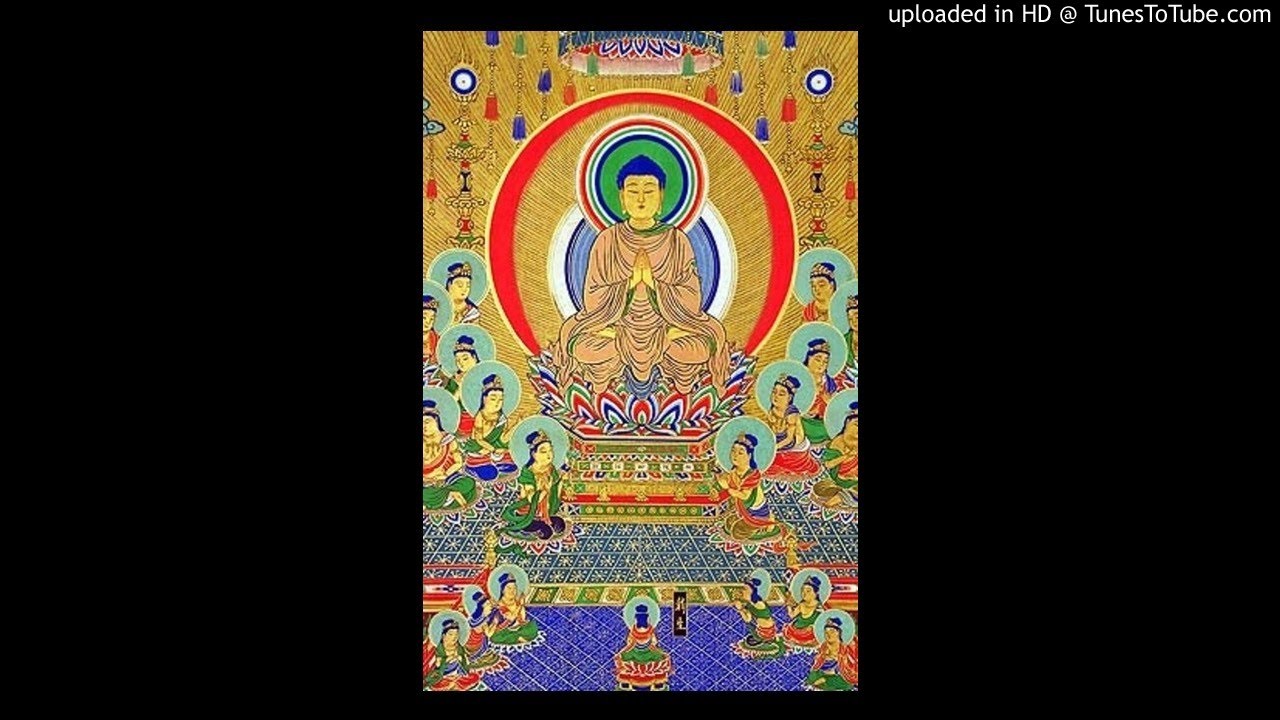
Satya Robyn explores whether Buddhism is about faith in Amitabha or moment-to-moment practice. The real question isn't what the Buddha wants you to do, but what compassionate action each moment asks of you. Faith and mindful action feed each other in a cycle that deepens both.
Chapters
Nam-myoho-renge-kyo. So a few of you were at the talk I did a few weeks ago called Buddhism Inside Out, where I talked about how the blossoming of faith leads us to act in kind ways and appropriate ways in the world. Like Dhammavicca talks about in the Feeling Buddha, how the Eightfold Path is the result of something we've been given, rather than something that we use to get something. Anyway, since then I've been thinking around those ideas, and partly inspired a little bit by Dhammavicca's new book on Doga, and partly some other things I've been reading, I just want to suggest just, or offer a couple of other thoughts to develop that model. So in that model, faith is primary. Faith is what comes first. Everything, in a sense, can be reduced to faith, and everything springs from faith. How we behave in the world is a result of the faith that we've got. And the focus on practice then is maybe not on developing faith, but being grateful for the faith that we've got. That's the essence of that practice, which somehow creates the space for it to blossom further. And we sort of don't worry about what comes next in that model. We don't worry too much about the actions that we take. Because they're led by this experience of faith, by something that roots itself in our unconscious mind, say, to use a psychological term. So this morning I just want to suggest that as well as that deep value of being grateful for the faith that we've given and fostering that, tending that flame, there's also some value in practice that focuses on daily life, moment to moment, more consciously. So if we say faith is like the big picture that we live our lives in, it's the big context, it's the big story, we're saved by Amitabha Buddha. In the talk the other week, as I say, the suggestion was that just keeping that, that sense of being saved in mind naturally leads you forward. But now I want to say that actually there's also a value in bringing your mind to the present moment and being interested in what practice is being asked of me, what response is being asked of me by the world. In this moment. And in the past we've talked about the precepts as being a description of what the Buddha does, how the Buddha acts moment to moment, and that we see ourselves falling short of that. And I know sometimes in the past I've had conversations with people, and part of their practice has been to ask, well, what would the Buddha do in this moment? And that's an interesting question. Often what that leads us to is an experience of contrition because we can't do what the Buddha would do in that moment because we haven't got enough faith or wisdom or whatever. So I encourage us to be interested actually is, what would the Buddha like me to do in this moment? Which is a slightly different question because it allows for the fact that we're limited beings. So look at me, a bomboo being with my limitations, with my learning edges that are opening up and being interested in new things, with this self that is changing and processing and growing sometimes and shrinking at others. What is being called of me in this moment? And sometimes it's as prosaic as washing the monks after service, sometimes it's reaching out to open the door for somebody, sometimes it's going out into the world to carry the Dharma. In particular ways. So this is a sort of an approach that includes our Bongbu nature, but also includes the idea that we are, we do have the capacity, we have some capacity for compassionate action and to be interested in that and to foster that, to make space for it, to open up a little space in front of us that we can step into. Not the— not that we push ourselves so far that we fall over, but just that we're interested in that, that interface between ourselves and the world is as valuable as focusing on the big picture. Or on the unconscious process of fostering faith. So we have these two sides to the same coin: the faith side, which is the unconscious, the big picture, the being saved by Amida, and the practical side— what is it that I'm inspired to do, I'm asked to do in this moment? And each of them feeds the other. I'm suggesting today it isn't just a one-way process, that our faith feeds our action moment to moment, but that if we take care of that edge between ourselves and the world that is taking action moment to moment, that can also foster our faith. So the whole thing becomes a sort of positive feedback cycle that allows our faith to grow, and over time allows us to become more compassionate, more flexible, more responsive in the world. Anyway, that's, that's what I've been thinking about. Namaste.