Business Growth Strategy: Strengthen Your Fundamentals | Ken Paskins of GCE Strategic Consulting.
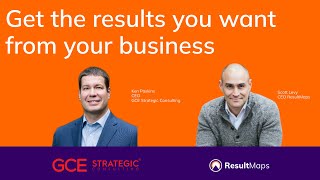
Podcast interview with Ken Paskins (founder of GCE Strategic Consulting) describing his transition from senior high-tech executive to fractional COO/Integrator and niche consultant serving primarily companies at or below $30M. He discusses implementing EOS-style systems to improve execution, common leadership failures (accidental CEOs, lack of systems/processes, wrong people), indicators that a company needs a true integrator/COO, and practical advice for preparing for PE/exit (know your numbers, tighten systems, build leadership). He also covers change-management risks (task overload, 6–9 month change cycles) and offers an intake questionnaire used for client engagements.
Questions this video answers
June 8, 2022.
Companies $30 million and below (primary target market).
About six years (GCE was formed six years prior to the interview).
About a $500 million P&L.
Approximately 400 people.
Chapters
Put the right foundation in place, systems, processes, right people, understand your worth, understand your business and go through the process.
So tell us a little about yourself, a little bit about Ken Paskin's background and how GCE Strategic consulting got started.
So I've got several decades in high tech and I'll get to how I started GCE and where that started. But towards a later part of my career, like a lot of guys that are traveling 150,000 miles a year, during that time I was managing about a half a billion dollar P and l. I had 400 people underneath me across North America and international as well, and determined there was probably a better way to make a living. So like a lot of folks, I looked for, looked for a change and I started sitting on social media, some different boards and did some advisory work, some consulting work, et cetera. And I bumped into a company that, long story short, they initially hired me to help build out their go to market strategy. And during that process, about a month in, they made me aware that they were looking to go out and get some funding. And I think at that time they really started to pay attention to who I was and what my background was. And they determined that I would look really good on their website to help them go get funding because I had some experience in that area and just, you know, to be on their leadership team. They asked me if I could join them, join their company short term and go do that. So I did. And initially it was their Chief Revenue Officer, which is a overly fancy title to be quite honest, because I went from managing and leading hundreds of people to leading three. There's about month two of that. I started beating them up a great deal on a lot of buzzwords that you'll hear out there around just lack of accountability, lack of direction and all this stuff, if you will. And the CEO at the time asked me, you sound a lot like this guy from the EOS that keeps calling me, why don't you go give him a buzz and talk to him? So I did. And there was this implementer out there by the name of Eric Albertson, he's out in Portland, Oregon. And he went through what EOS is and I was like, wow, that's great. You know, this, this helps me a great deal if this system comes in, can help these guys. This is really how I'm wired and everything, but all of this is just in a box. So we did that. So going from, I went from a consultant that had ended up a small sales team to suddenly, you know, running a $10 million business as the president integrator of the company, went out, then helped them get some PE funding. And then about a year and a half later, I exited. And upon the exit, I went out and started doing a lot of research. And I spoke to a lot of names out there that, you know, within that community you've heard, I'm sure, but Mark Winters, Gino Wickman, one of the founders of eos, and determined that there was this real niche, if you will, in the community and companies really 30 million and below. Not always. I mean, I've worked with businesses north of 200 million that needed additional horsepower added to the team, but didn't know what that meant, how to go about it, nor could they, a lot of times, even attract it. Right. Because good leaders want to work for good leaders. So a lot of times they couldn't even attract it. So six years ago, GCE was formed. And, you know, we're a niche consulting firm that works with companies 30 million below or our primary target market is EOS, but not always EOS. And we bring a variety of skill sets to the table. And one of the things that I do, my area of expertise is the coo. So a lot of times I'll drop in as a fractional COO or integrator and help companies break through whatever struggles they might be facing and, or, you know, rearrange and rebuild their leadership teams with some struggles, or just bring processes, systems and clarity to the table. But that's what I do, and that's what GC does.
So you're strong in the ways of the coo, the chief operating officer, what EOS calls the integrator. You've also got that revenue background, though. That's really interesting. I think that's unique.
That's a great question. I mean, obviously initially I started as a sales guy, and I forget the exact stats, Scott. But I looked at CEOs and backgrounds and everything, and a lot of CEOs actually come up through the revenue seats. I don't know if you've actually done that due diligence and looked at that. It's my perception. Yeah. Yeah. And, you know, I've had a lot of CEOs and owners ask me about, you know, CFO making that swap. And there's actually very few CFOs actually make that change. There's some interesting studies out there. And then just getting into positions where I'm managing PNLs and having more diversity under me, such as support streams and services streams and, you know, SES and biz dev and partner things. It's given me that diversity. But you know, that's a good question. I think what it does for me is it instills a, a greater focus on execution, if that makes sense. Right. You know, I understand. And really good sales leaders. Right. There's, I've got this theory that there's three buckets for sales experts, if you will. There's, there's bad carrying guys that are simply that salespeople and you know, and they'll be that way their entire life. There's, there's middle managers that can manage ground level troops and they're very good at executing. You know, if you give them the strategy, you give them the direction, you tell them what to do and everything and do that and you know, then there's, there's sales leaders and generals and really kind of that, that was what I, I was and, and moved up and I viewed the diff. I viewed the world really differently. I think that a lot of them, I look at it as a chessboard. Right. I looked at it, you know, just not just the short game but the mid and the long game. And I, that concentration and understanding that, you know, I pushed it more as a business person versus oh, I'm just a sales head. I think probably does add a great deal.
Right.
Because you know, I know what it, I know what it means to drive numbers and execute and get things done and on tight timelines and how to hit deadlines and you know, because you know, I used to be under the clock of end of quarter. Right. And getting to the number quarter after quarter, you know, year after year. So yeah, I've never actually looked at it that way, but I think it adds in those two areas or those areas.
So one challenge I've seen out there, both sometimes with our customers, often when I talk with leaders, is there can be a feeling of sales being at odds with a system like EOS in particular until it proves itself. Because the salespeople are often wondering, okay, but how's this going to impact me? How much extra work are you going to make me do and still hit my numbers? Can you talk about that a little bit? How does a system like EOS and this emphasis on execution, how does it empower and help sales leaders and salespeople?
Yeah, that's a, that's a great question. Look, what I'm hearing you say is don't get in our way, don't do this, don't do that.
Yeah.
Generally get that from more first level sales managers that are, you know, Leading the ground troops. And generally they may lack the understanding of the bigger picture. Right. And, or the strategy and how all those things tie in. But you know, if any system is implemented correctly and, and with the right amount of time, meaning giving people the ability to go through the change cycles and prioritization and planning, you know, specifically eos, since that was your question, it can definitely, most definitely be additive. Right. You would be stunned on how many times that, you know, I've dropped in the companies and even, you know, there was, I'll keep the name out of it, but there was a multibillion dollar software company that I worked for years ago and you know, senior sales management lacked the comprehension of planning for not just this quarter, but the next quarter and understanding truly pipeline management and forecasting and truly how to manipulate all those dials. They were more wired, very tactical, close the deal today, close the next deal tomorrow, et cetera, et cetera. So I think if you do, if you have the right person in that seat, they'll get it right. But I'd also say that, you know, it's a partnership and relationship because they also understand, you know, their, their feet on the, on the street, they understand the pressure that they're under. They understand that they are very tactical, driving to the number. And so it is a little bit of a give and take on when to implement that system, how to implement that system and that timing in a working relationship that way. And I don't. This may or may not have been in your question, but somebody that is just purely operational through the operations ranks has no comprehension of that and hitting revenue targets to keep the lights on and pay everybody salaries and everything, there can be some tension there because the.
Idea is with a system and a framework like this, you should be accelerating things, not holding people back.
Right? Yeah. Just real quick, it's interesting because I've dropped in as a fractional COO many companies, right. And they always have some sense of a sales manager slash leader. And the benefit that I've got is I can sniff through that bullshit really, really quickly where a lot of owners cannot. I've come into owners like, well, my sales guy is telling me this, my leader is telling me this, you know, and I'm paying them X. And they're, they're generally overpaying them over compensating them and their expectations have been lowered because quite honestly, the people in those seats are of lower caliber. Right. So, you know, I can sift that out and fix that. And I think a lot of times companies 3040 million and below. They have very tactical people in that seat, right? So when you have very tactical people in that seat executing, it's really challenging to implement the strategy from a vision and the owner all the way down to the field. And, you know your buying experience, and you know companies that come back and purchase again and again, 80% of that is driven from that experience, right? So if you drop a tactical leader in with tactical executors and you have that disconnect, right. You're not going to get all that you should as an owner or visionary. And I can address that in many ways.
What are some of the recurring patterns, the things you see get in the way of a CEO or a leadership team making that strategy crystal clear and getting everyone on the same page executing it at the same time? Would you say this that we've covered is one of those, what are other challenges you've seen?
I mean, that's one. But I believe that a lot of companies, it's shocking and stunning to me because when I, when I started doing what I'm doing, I had this perception that all entrepreneurs and owners and CEOs were just like Bill Gates, and they're not. They're human beings. And quite honestly, I have a theory that 80 to 90% of those human beings are accidental CEOs. My father was one, right. You know, love the guy, but he started all of us companies because he couldn't work for anybody. You know, he couldn't hold a job. Right. I literally worked with a guy, one of my very first clients, and I said, why'd you start this business? He said, I kept getting fired and I couldn't start a job, so I just started this and it took off. And now, you know, it's out of control, right? So. And the other 20% are great visionaries and have the business acumen, but 80% of the market, I believe, do not. So, you know, to your question, many of those companies just lack the basic building blocks, right? You know, they lack the systems, they lack the processes. Even if they have the strategy in place, they have a great strategy and a great vision in place. They often fail of executing against that because they, they lack all the. The basic building blocks and they focus a lot of times on the fun stuff, right? I worked with an owner one time, and all he wanted to talk about was a new service and a new, new this, and they knew that. And in the meantime, the CFO owner telling him, dude, you're burning through a lot of cash, right? You're burning through a Lot of cash. And you keep wanting to add headcount and everything. And he didn't understand that, Right. And the systems and processes and having the right people in place is, you know, is the protection that a lot of companies fail to put in place. So they duct tape through those things. They get really excited about all the fun stuff like that. And eventually I had to map out and I went through and I mapped out, like, if you can kind of imagine visually, it's like, all right, we spent in X amount of dollars. It goes into AdWords. And X amount of that translates into a lead, translates all the way through. Bam, bam, bam. All the way to your bank account. You hit your bank account, cash in the account. So, you know, went from marketing to sales to operations to finance, all the way through. And it took 180 days, right? In the meantime, this guy's spending all this cash and say, oh, we'll just crank up AdWords. We'll do this. We'll get more customers. No, it doesn't happen tomorrow. And they had to help him understand that. So eventually, a lot of these companies, and it goes in stages. I think I've seen it in one of your graphs even. It really becomes all about putting out fires versus, you know, they put aside all the things that they should have focused on, but. And it becomes, you know, it becomes, you know, putting out fires and whack a mole, as I call it, right? And the CEOs and these leadership teams will also just fail at the concept of learning to clone themselves, right? So, you know, you really have to learn how to execute through others and get things done through people. And that means not doing their job for them. That means not being the sole source of truth and solutions in place, but actually teaching them and helping them to do that. In order to scale, these CEOs and owners, they see themselves as. I must have all the answers. I must be the guy or the girl, right? I'm leading this company and I'm leading my team. A lot of times they may not have it because honestly, a lot of them, like my father and that first client I mentioned, you know, they gained their experience through themselves, right? The old saying of it's lonely up top, right? A lot of them, not always, but gain their experience by. I started this company by mowing grass, and then it became a landscaping company, and now it's a $20 million business. And, you know, I'm on a treadmill running 100 miles a day. And I thought when I got the scale and got people under me that it would get easier, but it's just as hard, if not harder than it was. Right. And I will tell you, I can't think of a company I haven't done this with even shockingly, you know, a company over a couple hundred million up in the northeast, big mechanical engineering company, been a multi generation, 90 years in business. And everybody looked at the CEO to make all the calls. Right. Because the people and it permeated across the organization lack the ability sometimes of what I call the thinking gene. Right. And how to problem solve and get to the root cause and solve things themselves. So you have to actually train that. Right. So I've been in experiences where somebody had come to me with a problem and just think of anything and the first thing I'll do is ask them, what do you recommend and why? Right. And at first that kind of scares them. Right. But you got to actually train that and then you got to teach your team how to, you know, you've got to clone yourself, inevitably teach your team how to think. And that's where you get the scalability and that's where you start to take more control of the company versus the company controlling you.
Absolutely. And I've seen that idea of cloning ourselves, as you put it, seen it, put it, it's giving away your Legos, giving those jobs to other people, that comes up again and again and again. And as one of the key must do's for every CEO to enable your company to grow past a certain point. And I think it's one of those things that it's its own skill set. It's hard, it's got a learning curve. It feels uncomfortable. Just getting people to take those baby steps and then start to accelerate. It can be hard, it can be uncomfortable. And I think that the frustrations that we feel can lead us to say, okay, wait, let me go focus on this other thing that doesn't feel so hard, something I'm good at. I'll come back to this later. You know, that's something I've experienced myself and I've talked with a lot of CEOs who've experienced this. And what are some of the pains that come up when a company starts to realize, hey, I need somebody in this seat, I need somebody in this coo, this integrator role. Can you talk a little more about that?
Yeah, I'll add to that. It's funny, I had a, a visionary maybe 912 months ago give me a ring and we were chatting and he just moved somebody into the integrator seat. And he wasn't 100% sure. And I will tell you that One thing that CEOs and visionaries have, even as we're talking about all the things that specifically entrepreneur ones may lack sometimes is it got this spidey sense, right? And he asked me the question, he's like, well, when do I know it's time to call you, right? And he had this spidey sense that he made this move and it wasn't 100% correct, but he wanted to go forward and move forward with a full time integrator internally. And I told him, and I'll answer your question, I told him, I said if something just feels off, it just doesn't feel right, call me. And then I got a little bit more specifically, but I said, look, if you're seeing employee turnover rising because of possibly the whipsaw effect of change in direction, all the things that you're tossing across the organization, call me. If you're seeing a lack of focus on executing, such as hitting your to do's, getting your rocks done, you know, hitting the scorecard metrics, call me, right? But you know, outside of the other stuff I said, it really is, does something feel weird, right? Meaning that why am I involved in every decision? Why are people leaving? Why do I have these problems and I can't get to the root cause in there? Fundamentally, why do we go into these meetings, we all agree that we're going to get these things done, but we fail to execute across to dos, rocks, scorecards, whatever you want to call it, execution, then it's, you know, in this case he had an integrator, right? And many times they don't. It's time to get an integrator. But I'd also say it's time to get a real one, right? And there's a difference there too. I was speaking with a lady yesterday and she said a lot of CEOs and owners that she has worked with and she did something around, basically she works with owners and helping them price the products and services, right? And maximize profits, price and engineering or you know, she'd do a better job at that than I would. But she said she knows a lot of people that will drop in. Just a project manager and the CEO or the visionary will use them.
That's super common.
And the PM will do all my stuff and I'll be the puppet master. You can do that. But let's remember that once again, great leaders report to great leaders that PM probably isn't a great leader, you know, and they follow Great leaders understand that the weaknesses across your organization are being amplified because whatever weaknesses and gaps that you have are translating down through that PM integrator across the organization. And guess what? If you're not executing on those numbers and other things, unfortunately, you got to look yourself in the mirror a little bit because you're really the integrator with the project manager under you.
Yeah.
So, yeah, it's really important to get somebody that's real, right. And been there, done that, and not just a pm.
I love that answer because it gets me thinking something that, that having the components of EOS does that I think you have to have, whether you're running EOS or not, if you have visibility into the to do's, what are we saying we're going to get done week, from week to week, your rocks, your big goals. Even if you're running objectives and key results, you have to have some visibility about what you're trying to get done in the next 90 days or the shorter term. You've got to have visibility into those things. And if you're not hitting them, you, you may have an execution problem.
Yeah.
And surfacing those components, making sure they're visible is a big part of knowing you have a problem. And then the other things you mentioned, I've seen that a lot and I've experienced it myself, again from multiple sides. Like, you're not being a great project manager is one skill set. Being a leader is a completely different skill set. And we're not really taught that. I feel like we kind of blunder into that when we try to make a transition and realize, okay, there's a lot I'm not doing right here. Super interesting. Yeah, I love that, love that answer. Yeah.
And we're talking a lot about eos, but really, you take EOS out of it. This is basic business and leadership.
Right.
And quite honestly, Scott, to even go back to that, some of those points tied to people, I had another really, I have, you know, just like you, I have some great, very interesting goals. And I had this owner one time, ask me, does EOS ever not work? Right. I thought about it. It's like, all right, well, let's look at it this way. You've got the best vision in the world. Right. You've got open honesty and transparency. Everyone's in the right seat, they get it. Wanting to have the capacity to do the job. You hire and fire and promote by your core values. Right. Your scorecard's green. You're hitting 90% of your to dos, 80% of your rocks. I mean, all your systems or core processes are defined. They're followed by all. You measure and monitor accordingly. Of course it always works. That's nirvana. That's a perfect world. But guess what? It's not a silver bullet. And guess where it goes wrong. It typically goes wrong when you don't have the right people. Right. And if you as the owner or the visionary don't put the right integrator in that seat, then that plan, you're not going to realize the complete fulfillment and execution of that EOS vision or perfection until those things are in place, until you have true leadership in place to execute against the company's vision.
That makes total sense. One of the things that drew me to EOS is just how well it aligns with these basic business principles for any CEO who's listening, that they're thinking about either getting ready for an acquisition, they're thinking about private equity, whatever the case may be. I know you've got some interesting experience there. What are some of the specifics you see in terms of these principles that you really need to have in place? I know it's all of them in the abstract, but what are some of the gotchas you see people run up against as they try to get ready for that type of transition?
Yeah, I, and I forget in our conversations, if you've got how much, what sort of depth that you have in that area. But so most people know that, I mean, VCs and PE firms are different, number one. Number two, they all have their sweet spot, right? And they're all very different than what their acquisition criteria are. Right. So meaning some pes will say, day one, owner exited, right? Payout, get rid of them, you know, some will say, you know, owner wind down over two to three years, right. Some of them look at what the buying criteria are a little differently. But I would say if you take it up to a very high level, right, you know, truly know your numbers and understand your valuable, your, your value, right? Have a very tight and dependable process and systems in place, because the due diligence and the rigor that you will kind of find lots of holes. These are really smart people that are about to give you money, right? So get ahead of the game and know your business better than they do, because it's easy for them to actually get in and understand your business better than you do really quickly. And I would say also a lot of times have the right leadership team. I mean, I was part of an acquisition one time and they wanted to exit the owners and One of the key things that they wanted in place, though, was a leadership team. And I was one of the members that was involved in that. And they saw myself and a couple other key players as a very valuable asset during that transition. Right. So understand those things. But, you know, they are a little different, you know, all of them. So you just put the right foundation in place. Systems, processes. Right. People understand your worth, understand your business, and go through the process. Yeah.
It's interesting, too. So you shared with me the intake questionnaire you use for your clients. And it's. It's very thorough, and I've seen a lot of those. I've had a lot of people approach me about, what do you think of this one and that one? There is not. There's not a T left uncrossed or an I left undotted. But what I found interesting is every one of them that I looked at and I thought maybe I could skip that. It's like, no, this is actually something I need to at least think about, have an answer for. And we need to surface so that we can discuss. I mean, it's very interesting. Like, it's very evident that you've been around this block a few times and have brought some lessons to bear from it.
Yeah. By the way, that intake I and we use for every engagement. Right. And it's funny, and I'm sure you did it too. But a lot of people get it in, their heads will start spinning and they're like, oh, my God. Right. But it is like a chessboard. Right. And you need to understand the entire board and how all the dials work and come together to get. To maximize your full potential.
Yeah. I mean, it reminds me of. So, I mean, I've trained in martial arts. It reminds me of a belt examination. Gotten really into cycling on a trainer we have here now. And you know, you'll do these functional threshold power threshold tests. And again, it's not that it needs to be comfortable. Right. But it gives you an accurate picture of where you are today so that you can calibrate and know what's next. And I think that that is a differentiator because a lot of times I think people come in, maybe they've read the book, they're going to go give it a shot and see how far it gets them versus, okay, this is something we're going to do so that we're truly ready and an attractive target. We've got the right optics, we've got the right health under the covers. I think that's something that it's very different in the approach, you know, and.
Honestly, I've never even thought of this, but I'm curious what your opinion is. If you take that intake, if you have a legitimate answer for every one of those things, the credibility and the valuation of your company has got to be much higher. Oh yeah, right. You've mitigated your risk. You've put a lot of control in the unknowns and you're Johnny on the spot with your answers. It'd be really hard to for somebody say they were looking at giving you a 3x multiple, you know, because you didn't have those things versus a 4 to 5 because your ship is tight.
I've seen the process with friends or customers that have gone through it, whether they're being acquired or going through a merger, selling to pe, raising the next round, it can be such a grind. I just, I think that having something like this, having this approach, it's so helpful because you get your ducks in a row before you know that that crunch time happens, you've got these things in place. So as we talk about that scope, it can feel overwhelming, I think for a lot of people. And I noticed that particularly today, everyone is very worried about the pace of change, the volume and just the speed of disruptions coming at us. So another change, a new system or getting our ducks in a row and changing the organization, that can produce a lot of stress for people. What is your experience getting a comprehensive system like this in place in a way that doesn't get in the way of day to day business, doesn't trigger people in a way that they aren't able to get things done because they're so distracted by the changes that are happening.
Yeah. So part of it's at intake. Right. But I'll get more to that. But the funny thing is everybody says the same thing. You know, everybody says that we change faster than anybody. Everybody says that our business is unique. Everybody says, I just say that.
Demanding.
Right. We are special. Nobody does it the way we do it. It's funny everybody says that. Right. And you know, it's when you bring in an outsider like myself and that doesn't have those blinders to be in the day to day, it's easy for us to get to the truth as well. But it's interesting. Years ago, what was the name of it? I think it's called Top Gun. I went through a training, I'm pretty sure Top Gun, I know that was a movie, obviously. I went through their training twice with two different companies. One, the company Brought in the second company I brought in, it was a group of baby fighter pilots. And they taught us how to go into a planning session, a mission or whatever, execute, debrief afterwards, apply lessons learned and do it again. But they also talked about this concept of task overload. Now, I don't want to give you or others any feeling that I'm a pilot, flew a lot, but I had never piloted a plane. Basically, if you're a fighter pilot, you're getting shot at. You got radars, you know, missiles aiming at you. All sorts of stuff can go really wrong really quick. And it makes your life and my life and business look really, really simple, right? There's this concept called task overload. And they teach you methodically to I3 or 4 systems. And that's it, right? 3 or 4 systems, got hundreds of dials across your, your, your cockpit and everything. Whole lot of things going on. And that concept also came out of. They showed a video of it in the early 70s. A sad story, true story, but a 730 or 7 or something like that going in for a landing and a light on the landing gear was flickering and they didn't know if the landing gear was down or if it was up or what was going on. All of a sudden the pilot, the co pilot, the whoever, the radar guy, there's four guys looking at this, like talking about it, talking about talking about it. And all of a sudden you can find this on YouTube. All of a sudden they ran out, they bashed right into earth, right? And they got task overloaded. They all got methodically focused on one little thing rather than staying dividing, conquering on their areas, right? And hundreds of people died, right? So that can happen in business too. Although fortunately we don't, we generally don't die, right? So when you go into implementing change, you've got to understand those concepts. You've got to understand task overload. You've got to understand capacity of your people. And I'll be honest with you, most visionaries, CEOs, owners of the business have no idea. They do not see their people are drowning. They cannot absorb anymore that intake that we bring people through as well. We will then methodically gant that out and paint the picture and allow people to go through change and absorb it. But you've got to methodically think it through. Major shifts, such as adding eos, or if you've ever done an ERP system, something like that, or a major CRM implementation. They'll talk about the concept of change cycles, major shifts and things like that in general take people six to nine months to go through. So that's got to go through your calculus. And you've got to have the capacity yourself to be able to paint the vision, walk the people through it, help them understand that it's not all being crammed through their throat, what the methodical approach is, and then just execute. And if you don't do those things, when you implement change, you know, that's when you get in a situation and feel like, I'm just constantly on this treadmill. I have no balance in life. I'm running as fast as I can. I ran fast at 3 million when the business was doing 3, 5, 15, 20, 30. When's it actually got up. Maybe if I get to 50, it'd be better. Right? And owners think that, but it does it. So when you do those back to your change, you got to think it through. And then people have that capacity if.
You allow them to do it, that really resonates. This has been great. Ken, thanks so much for your time. Is there anything else you want to make sure we add?
Yeah, I mean, look, I love to talk to owners and CEOs about their problems and, you know, and probably just like you, even though I've got a background in sales, I'm not. I'm not selling people. Right. It just happens naturally. But if anybody watching this, you know, has some questions, just once, I pick my brain. I always tell them, just pick up the phone or email me@kencestrategicconsulting.com get some time together, and if I can help you, great. If not, we'll walk away as friends. But anybody watches this, just love the opportunity to chat with them and listen to what their some of the struggles are and see if I can see if I can help add value.
What's up, everyone? Thanks for sticking around. I hope you got a lot of value out of this. And if you did, I hope you'll consider subscribing to our YouTube channel using the subscribe button below. So you'll be notified. Whenever we put out new content like this, Be sure to hit the like button as well. And if it was valuable, share it out. Get it to someone you think could benefit. We want to help as many CEOs and leaders as possible, and the more we all share this out, the more we can do that. That's it for now. We'll see you next.
More from Scott

Build a Self-Running Business with EOS - Entrepreneur and Implementer Explains


How to Create a Company Vision That Actually Inspires and Aligns Your Team | Leadership Guide
How to Create a Company Vision That Actually Inspires and Aligns Your Team | Leadership Guide

Company Vision vs Accountability: EOS Expert (750 Sessions) Reveals What Actually Drives Engagement

How to CEO From $0 to $30M: The Brutal Truth About Small Business Growth (w/5-Stage Framework)

Leadership For Entrepreneurs: A Proven Way To Level Up Results Without Corporate Fluff


What is Strategy? The Ultimate Guide to Strategic Thinking in 2025 for CEOs and Owners
