How company mission + values fast tracked growth to $20M + a strong culture | Matt Rosen of Allata
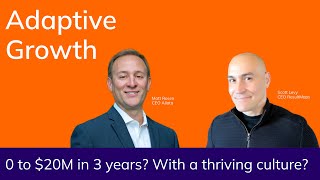
Matt Rosen built Allata from zero to nearly $30M in revenue by hiring complementary leaders and putting family and clients first. He recruits from his network, uses a structured onboarding program called Ascend, and tracks utilization and margins obsessively. The company hit $20M in 2019 with about 220 employees and 30+ clients.
Chapters
You've experienced pretty crazy growth, right?
It's been fantastic. I mean, we started it was myself and a developer back in 2016 and as of today, we're about 220 people, three continents, probably over 30 active clients and had a great finish of the year last year and looking to grow 20 to 30% in 2022. We're three years on the Inc 5000. We were number 40 the first time on it, then 52 and then the law. Big numbers caught up with us.
Yeah, but what's interesting to me is how quickly you guys got to like 20 million in revenue.
We hit 20 in 2019 and we started August of 16. So it was our third full year in business.
What does it really take to accelerate growth as a leader? In this episode, I'll go behind the scenes with a CEO who went from 0 to 20 million in three years. So they're one of the fastest growing companies in America right now. Matt Rosen is the CEO and founder of Alada and he's also one of the smartest people I know when it comes to putting together great teams that deliver great results even in challenging crazy situations. And then building for the long term with his people, with his clients, and with the community around him. By the end of this episode, you'll hear how he's done that to build a great situation for his family, his people, his clients around him. And by the end of this episode, you'll learn some of the principles he's used and and how he took his core values and scaled them out to a company that now he trusts to take and run with those values to deliver for their clients and their people every single day. I'm Scott, CEO and founder of Result Maps. This is our adaptive Growth series where I share insights for leaders to help you grow faster, more profitably and stay healthy in the process. If you are new to the channel, be sure to hit the subscribe button and the notification icon so that you'll be notified whenever we put out new valuable content like this. And if you're already part of our Result Maps community, if you're using Result Maps software to accelerate your path, welcome. It's great to see you here. So let's dive in and learn about the principles that Matt Rosen has used to create this crazy adaptive growth.
Hi, my name is Matt Rosen. I am the founder and CEO of Alada. Aleyda is a technology consulting firm. I founded it six years ago. We were founded with a SIMP simple mantra. It's family first, clients are king. We take great care of our people and what we do for a living is we are technology consultants. We help our clients achieve their most strategic goals. So it's typically helping with their technology strategy, with their architecture, helping them design new and innovative products, building custom software and doing integrations and then doing a lot of work with our clients data. We're based in Dallas with offices in Phoenix, Boise, Provo and Vidadra India.
Very cool. And you've experienced pretty crazy growth, right?
It's been fantastic. I mean we started it was myself and a developer back in 2016 and as of today we're about 220 people, three continents, probably over 30 active clients and had a great finish of the year last year and looking to grow 20 to 30% in 2022.
And you guys, I know you've appeared on the Inc 5000, but I'm guessing you've done it multiple times at this point.
We're three years on the Inc 5000. We were number 40 the first time on it, then 52 and then the law of big numbers caught up with.
Yeah, but what's interesting to me is how quickly you guys got to like 20 million in revenue or even 10, I think I've never, I've never known anybody to do it that fast. Could you share how quickly you did that?
We hit 20 in 2019 and we started August of 16. So it was our third full year in business.
And this, I think a lot of that speaks to the fact that it's not your first rodeo. You've been doing this for a while in different ways. I'd like to ask a couple questions about that as we go. But before we get to those, what are your three big biggest goals right now as CEO?
I think the biggest goal, I mean, is number one, to achieve our company mission. And that's to be the most sought after consulting firm in industries and verticals in which we serve. So we want people to be calling us when they have got their hardest and most difficult projects they need a partner on. Another big one is being able to attract, retain and grow the best people. That's a challenge for all of us in the technology space right now. Everybody needs talent. Everyone wants all sorts of software, machine learning algorithms developed yesterday. So it's really being effective in attracting and recruiting great talent. And I'd say the third is really building, you know, a sustainable company. For the first four or five years, I was involved in almost every sale. It's getting to where the company can grow without my hands constantly in business development. But it's still something I will always play a role in because it's, it's, it's my special power, it's what I do best.
That, that's one of the things I'm most curious about. I mean, we have our standard questions, but I gotta ask this. While it's top of mind, I think, you know, just knowing you, as long as we've known each other, there's a couple things that really interest me. One is your ability to spot people who get things done. That maybe the person doesn't fit all the superficial criteria, but you're able to pull out the greatness, get them into the right place and deploy them. And then the second thing is you're just willing to go outside the normal playbook for this is how you grow a company in terms of, you know, when we first were talking about this, you helped a client recruit, I think a CIO or something. It was. And you didn't charge them or anything like that. You just said, hey, when the time comes, I'd really appreciate being considered as a consulting partner.
Yeah, so I'll hit the second one first. We often do a lot of non traditional things. I mean, we do project based work that's paid for by time, material or fixed fee. Part of our management meetings every Tuesday that evolved from that CIO search. It was actually the second client of the company was a company called Animal Supply. And that was our introduction to them was I met their CEO, he was looking for a cio, he was about to pay a search company. I said, what are you looking for? I was like, I know a dozen people like that. And I ultimately ended up helping him find an IT leader. And after that we were considered for a big digital transformation they were undergoing. And we did business with them for about three and a half years until that CEO moved on and he's our client again at a new spot. But since then, we probably hired a good 50 people on behalf of our clients where we've literally just. We call it friend seeking friends. And it's part of our management team meeting every Tuesday where we go over who do we know that's looking and what needs do our clients have. And we don't charge for this. We just make introductions and wherever it goes from there, it goes from there. And hopefully our clients remember that we placed a friend and hopefully the friend that we placed remembers us and leads to future opportunities down the road.
And you've actually got. I know at least, I know of at least one person, but I imagine there's others who used to work at clients that, you know, reached out to you. And it's not like you poached them or anything. It's they were looking for the next thing, you're still doing business with their former employer. I think that's another interesting thing.
Yeah, so I'll hit on that. So, yeah. Whereas many consulting firms are made up of career consultants, especially at the management team layer, we've got across our 16 people on our management team of our website, half of them were either CIOs, VPs of app, dev directors. At dev directors of data analytics, we have a good number of industry folks that have sat in the very shoes of the people that we're trying to help. And so that adds a ton of credibility to both Aladda as well as just to our entire delivery methodology, because we've got a lot of folks that have had to live with the systems that we're building. And so for them, it's been a great experience coming over to consulting and learning this side of it, but also bringing that industry or corporate experience with them so we can better serve our clients.
It's super interesting. What revenue band are you guys at now?
We finished last year a couple dollars shy of 30 million.
That's outstanding. That's outstanding. What is the one thing you've seen hold CEOs back? I know you've been a part of a lot of different organizations. You've consulted to a lot of different organizations.
I think, you know, what holds CEOs back is they can't get out of their own way. They think they can do everything or need to be involved in everything, or they don't hire the right leadership team to take care of things and don't replace them quickly enough when they don't realize they're not getting things done. So, you know, I'm great at business development, but when it comes to operations, finance, hr, it, these are all things I'm not good at. And I can fake it, and I had to hustle and do it all when we were small. But as we've grown, I've hired leaders that their strengths complement my weaknesses, of which there are quite a few. And so what I do is I hire great people, I set a goal, and I get the hell out of their way, and I let them do things the way they want to do. It might not always be how I want it done. Things might not always be communicating the tone I would give it, but ultimately, I got to trust people to do what they need to do. And if they're not doing it, then we change the people. But I think that's been a huge accelerator for growth for us is me just handing off many of my data day responsibilities and really focusing on where the company is going and then getting involved with business development where I can. And where I've seen other consulting leaders fail is, you know, they make promises to investors, clients and people they can't keep at a later. Two things I value most are integrity and transparency. We do what we say we're going to do and if there's issues we call them out and we're very transparent in our communication. I find a lot of leaders have issues doing that and you know, with me there's no nuance. We're very direct in how we communicate. But we're all here to make ourselves better and make our clients better. Many times people lose sight of that. That's why we're in business. We've got a family to take care of, we have clients to serve and we got to make each other better. You focus on those things, the rest takes care of itself.
Yeah, that makes perfect sense. How do you make sure you're instilling that in junior consultants, for example? Because I know when I was coming up it was always very uncomfortable to say hey, there's a problem, there's a problem, everything's not perfect. Right. That's one of the biggest challenges people have in their youth.
Yeah, I mean we've got a saying bad news ages poorly. It is not a fine wine. In fact I even as people, when people start on the management team, I call them and I say I'm very easy to work with, just no surprises. If you like the client's building on fire, you call me. Then you call 91 1. I want to know the fire trucks are rolling. So they're junior consultant. It's part of our growth framework has a dimension around what it means to be inhalation and within there are the core values of integrity and transparency and professionalism and communication. And so we train them during our Ascend training program which is kind of for our brand new consultants. We put them through 90 days of training and it's part of their soft skills training is really focusing them in on that and then on projects on the job training. It's encouraging folks that hey, if you see a problem, bring it forward, don't cover it up and hope it goes away because it's only going to get worse. It's something that has to be reinforced constantly because people who say that they hope they're going to make it right or they can stay up all night coding and fix something instead of just calling out saying, hey, we're going to miss, or we've got a problem, and here's what the problem is. Yeah, we don't punish folks for breaking up issues. Where they get hurt is when they complain, complain and make excuses. But as long as they're bringing problems with solutions, we encourage them to do that.
What would you say in terms of being a CEO is the thing that was most surprising to you on this journey?
It's pretty lonely. Yeah, it's lonely at the top. There's a lot of things that go through your head on a daily basis, whether it's HR operations or sales that it's hard to. It's not something you talk about with your spouse or your kids. It's not something you talk about with your leaders. It's a place where many people haven't been, and so it can be challenging and feel very lonely at times. I mean, I've supplemented this by joining the Young Presidents Organization. I've gotten involved with a group called the Collective. And so I now have sounding boards and groups. But before I had those, you know, there's a lot of times I know to talk to about what I was going through or the stresses, you know, as the company was starting at its early stages, you know, I left a partnership gone bad, and I was kind of concerned that the majority partner in my previous company was going to come after me with a lawsuit at some point in time. I had a contractor try and take a project out from under me, and I was like, holy crap, this is really hard. But, you know, I kind of stuck with it and had a few sleepless nights during the time, but I just kept plowing forward and doing the right things and focusing on those core values in our mantra. And it has all paid off.
And it sounds like, you know, focusing on those core values and that mantra, really, we credit that for a lot of the success. I know that comes up a lot, you know, in the different literature I've seen that you guys have.
Yeah. In fact, you have to give people something to anchor back to. You have to give them a why. And so, you know, years ago, we printed off this booklet, and this is given to each and every one of our employees. It's sent to them Start. And it's got our different core values and what we're all about. And this is something that I take out and read every so often, just remember myself, why I'm doing all this.
That's very cool. That Reminds me of something else that I wanted to touch on. I think it's interesting that as long as I've known you, you've built by building communities and groups of interest. Like we first met through a roundtable that you set up for professionals in the Dallas area. Can you talk a little bit about that? Why are you so committed to building that way?
I know that I can't solve all the problems a client may have, and my client may need help with things totally outside of it. So I started a group called the DFW IT Roundtable with my friend Sean Paquette back in 2004. And the whole purpose, I only did CRM software at the time. And obviously, most clients have needs for lots of other things, from custom app development to data to cybersecurity networks, you name it. There's so many different disciplines of IT where IT leaders need help. And I wanted to have a network of people that, when they said, hey, don't need help with CRM right now, but I really need a new phone system where I really. We're having problems with this. We're trying to acquire a new company. We need to integrate their network, or our email keeps going down. I wanted to have a network of trusted partners that I could turn to and provide them with. And the criteria for entry were, hey, these are a players. They're people who you would trust with your children or your best client when you weren't in the room, and people that expected to give before they received. And so, you know, 18 years later, this group is still rolling and has probably created hundreds of introductions. There's probably been $100 million worth of business that's transacted through that group and through the relationships of that group over the years. A great example is I was at lunch today with a client who is really active in the nonprofit space, and she's got a nonprofit that's really struggling with fundraising. I've got a good friend who. That's what he does. He's an outsourced fundraising consultant that, for a small fee, will be your outsourced development group. I introduced the two of them, and that's not something that I would have thought would have come up, but it was, you know, introducing one of my clients as someone that could help a nonprofit that she sits on the board of. So I think Dallas and most towns are, you know, kind of small, small communities of business people that can help one another, both from a professional standpoint, but also, you know, personal or charitable. And so I think it's important to Always be meeting new people, understanding new perspectives, and connecting the dots between people. I feel like that's kind of what I do best, is connect people and get people together and try and connect people with someone I know can help them. And I believe universe has a way of keeping score. So I'm not so worried about somebody I connected immediately passing a lead back to me. I expect someone to do something for me that I wasn't expecting and maybe we'll never do anything for.
It's super interesting because as you're talking about that, and we were talking also about some of the things that you did to grow the company. Do you intentionally see those two things going together or is that just. It's so part of your DNA, you don't really think about it?
I don't really think about it. I mean, I figure you do enough good things for others, it comes back around. But I don't keep score, you know, I don't even remember. In fact, people remind me, oh yeah, you introduced me as so and so five years ago. And we're working together, we got married or we did business together. I don't, I don't, I don't keep track. I don't keep score. I just kind of do what I think's right and I figure universal take care of it.
That's awesome. A couple other questions I have, one I kind of skipped around, but how do you maintain accountability, say maybe on your leadership team, but also like throughout the company? Have you guys evolved some practices that help with that?
Yeah, something we're getting better at. You know, we set corporate goals from a revenue and margin and utilization and bill rate. Those are the four numbers that matter in a consulting firm. It's actually what we do is highly complex. The business model is actually quite simple. I mean, you hire great people, you got to give them a growth path, but then you need to keep them utilized and you need to keep them building and you need to consistently, you know, as they grow and they acquire, you know, a higher salary and package, you have to, you know, raise rates with clients commiserately. So what we've had to do from a leadership standpoint is review the goals annually, quarterly, monthly, see how we're tracking. We recently invested in a new time and expense system built for professional services automation. And so every week, looking at every individual, what they're working on, you know, what the profit is, how utilized are they. If we need to, we can run some what if analysis to figure out if we've got a team of people that could be utilized better. As a new project is coming down the pipe, we can look at the people we have available and figure out how to create the best team. And what it's allowing us to do is really plug a few holes. Because consulting hours are like bananas. Once they're on the shelf for a couple days, they expire. So for at the end of each month, if we haven't billed hours, they don't get billed ever. And so for us, it's really making sure people are utilized and engaged as much as possible, because that's what ultimately helps us be more profitable as a business.
I think that a lot of people struggle. I notice in particular when I got out of consulting, there's things that in a consulting environment, because you're so dialed into your clients needs, they will get called out immediately and you'll get called to task on. And a lot of companies, I've noticed, just have trouble with this. A leader will want to be liked or they won't know how to do it in a way that's respectful yet firm. And so that's something I'm thinking about and trying to get people to talk about as much as I can.
Yeah, I mean, we're always trying to solve problems that maybe our client hasn't asked or they have issues that they may not think are issues, and we bring them to their attention. Most of the times we do a great job of it. And sometimes there's things that don't go right. There's people that don't necessarily fit in or miss something in requirements and create a bug. And what I have to constantly remind my clients is, hey, we sell the world's most imperfect product, and that's people. We were all flawed in one way or another as human beings. But, you know, people are great. And when they're, you know, working on something they're passionate about, when they're working with clients that, you know, adhere and follow kind of our values, where you share values, we can really do some great things together.
And how have you kept that passion alive for your teams? I mean, you know, 2020 was a crazy year. Yeah, you know, I know you guys went from, okay, we're going to pause on our expenses, and the next thing I knew, nope, we're growing again.
Yeah, you know, it's, it's, it's, it's, it's a constant grind. You know, in consulting, you know, you're literally only as good as your last line of code, your last deck, your last email. You're always on stage. You know, and it's just constantly reminding ourselves. I mean, this business, it is a bit of a grind. I mean, you trying to resell yourself almost every day. And, you know, projects have limited lifespans. And so it's always reminding folks, you can't ever let up in this business. For me, a lot of meditation, a lot of playing golf when I'm not working to try and try and relax. But, I mean, consulting, while it's a very rewarding business, it is a challenging business because of the fact you're always having to find new clients, find new projects, new things to work on. There's always things changing, but that's also what makes it really fun. I can't imagine waking up and going to the same place every day, working on the same set of problems. I think that'd be pretty boring.
That's great. I think that's a great place to wrap it up. Thanks so much for taking the time, Matt.
No, thanks for the interview.
What's the best way if somebody's interested in Alada, whether a client or somebody who's interested in becoming an elation, what's the best way for them to reach out to you?
Yeah, I mean, I'm mattlada.com There's also numbers for each of the offices on the website. They want to leave a voicemail. There's also a careers page that's got all our open job opportunities that are listed as well. And it's just www.a l l a t a dot com.
Awesome. Thanks again.
More from Scott

Build a Self-Running Business with EOS - Entrepreneur and Implementer Explains


How to Create a Company Vision That Actually Inspires and Aligns Your Team | Leadership Guide
How to Create a Company Vision That Actually Inspires and Aligns Your Team | Leadership Guide

Company Vision vs Accountability: EOS Expert (750 Sessions) Reveals What Actually Drives Engagement

How to CEO From $0 to $30M: The Brutal Truth About Small Business Growth (w/5-Stage Framework)

Leadership For Entrepreneurs: A Proven Way To Level Up Results Without Corporate Fluff


What is Strategy? The Ultimate Guide to Strategic Thinking in 2025 for CEOs and Owners
