How to transform (remote) teamwork and execution: KD Deshpande on Simplified's High Growth.
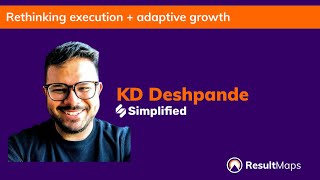
KD Deshpande, CEO of Simplified, grew the design platform from 100k to 300k users in months by shipping weekly, building in public, and treating people as the top priority. He replaced MVP with MPP (minimal payable product) and runs a 30-person remote team with radical transparency: Friday KPI posts, open Slack, and rituals that keep execution fast.
Questions this video answers
About 300,000 (KD said they were "touching close, like 300,000").
Official community ~5,000+ members with ~2,000 very active members.
Around July 15 ("launched 15th of I think end of like July").
Pricing was launched in the second week of October (KD's report).
Around 30 people total including contractors; engineering team <15; about 25 designers/creators.
Chapters
I'm kd, founder and CEO of Simplified. Simplified is one app for design and collaboration with a mission. We have a vision. We are not building a product. We are building a space where you can do more with less. As a customer, you can do more with less, collaborate together and unleash your creativity.
This is adaptive growth. In each session, we take you behind the scenes with CEOs and leaders who are navigating the the high growth journey for their companies Faster. I'm Scott Levy, CEO of Result Maps. We make software that accelerates strategy execution for high growth CEOs, leaders and their teams. If you're a Result Maps customer or part of our community, welcome. If you're new, be sure to subscribe using the button and the bell icon so you get notified each week when we put out new content. And in this episode, I'm really excited to bring you KD from Simplified because they've grown from 0 to to 300,000 in a little less than a year, raising more than 10 million in venture capital to continue that growth journey. I think you're going to want to listen to this one a few times. I'm going to let KD take it from here.
Hey Scott. I'm kd, founder and CEO of Simplified. Simplified is one app for design and collaboration with a mission. We have a vision. We are not building a product. We are building a space where you can do more with less as a customer, you can do more with less. Collaborate together and unleash your creativity.
Oh, I love that. I love that.
That's what we are building.
I've watched the growth from very, very early stages and it's been lightning fast by any definition. I'm curious, did you start from some type of vision? Like did you have like this something written out where you said this is what I want to build, I want to build this space? Or did that evolve as you went?
I mean, I had Thesis when I started moonlighting on this project last year at the start of Pandemic, I had Thesis and instead of building it in vacuum, we started experimenting. We adopted the culture of experimentation. Ship fast, fail fast. We ship every like every week since like day minus zero. Like literally since then. We ship every single week. We iterate product, we put it out there, come back, rinse and repeat, rinse and repeat. And I think that's become our culture and it evolved. There is a very little magic from early stage to mvp to actually let me scratch mvp. I don't think like MVP is a relevant term in 2022. Now there is a new term I have coined for our company is minimal payable product mvp. I love that because see when I was building my last company in 2011 12, the collaboration was not the thing. It was like oh, I can build this product. But now the world is different. In 10 years world is completely changed upside down. There are certain things people expect to have your customers expect to have in your product. Otherwise there is no product. So instead of building just like a basic mvp, we adopted saying how can we become minimal payable product? So that way there are certain table stake features. Unless and until those are there, the customers won't change like jump from the ship from which they've been using or used to or their existing tools. So at Simplified we are always optimizing towards building minimal payable product or like minimal usable product where customers will be like I can completely switch over or like I can bring this, this one app in my stack and I can displace this siloed tools. I'm clearly getting that advantages or everything I'm using right now.
I love that and it shows. It's been really interesting to watch because you've posted just these really short. It's like they're not produced videos of. Hey, I'm checking out this feature. I want to show you guys this feature we're working on. What do you think? Just getting feedback. It feels like right then while you're coding almost.
Yep, yep, totally. So one other thing as a builder, this is my third rodeo. So in the past we were building for yourself. You are building for. Please someone. You're building for fundraising. We are not doing that. And my co founder luckily is also his. This is his third company as well. And together we failed so many times. We are not doing it for anyone else, we are doing it for ourselves and, and for our community, for our users. So when we are building the product, what we are doing is like building in public, building together. We in our community, we always say everywhere like we are building simplified for you with you. So what we do is like we just build it, show it to people saying hey, what do you guys think? We listen to community really carefully, come back and iterate on the product. So I was trying to say is like from that MVP to MPP to probably product market fit, there is no magic. It's a lot of grind listening to customers and iterating the product, listening to customers, iterating the product and shipping fast. I think that's. We are, we are just doing it slightly efficiently because we did it like it's a 15, 20 years of practice and training so many times. So we are still in early stage. We are trying what we know best. We are also relearning few things as we are building the company culture, hiring people, all those things all over again.
So to make sure I'm thinking of this. Right. So you actually started, I mean you're coding the product from day one? Yes.
Yeah, myself. So when I was at. When I left Uber last year and joined Facebook, I was thinking about this idea idea. I mean I last four or five, six years since our last acquisition, I was always thinking like what should I be building next?
But.
And I had that burning desire. But it was like when I left Uber. At Uber I got exposure to a lot more like small businesses and entrepreneurs and who are like how they are operating. And I've seen and even at Uber I seen how the marketing team was operating. So that struggle was real. It takes village to produce content. And with COVID few things happened over last 12 to or like last now almost two years is like more people are remote, more people try to create more stuff Online. And with TikTok, Instagram and other stuff, barrier to entry for new creators is way lower. So everybody is becoming a creator. New modern marketers are looking like creators. So but the tools they've been using or the stack they've been using is like old. It's not meant for this new change. And that's how I started simplified it. It did not start like with this. I started building a simple product. Can. Why can I visually express myself in a light way, interactive like interactive way and started building product. I paid like literally for my first 25, 50 users just to interview them. Freelancers, marketers. I was like, I'll pay you 25 bucks. Here are the questions. Can you just help me understand like where are the challenges you are facing? I watch like hours of zoom recordings over their shoulders. Like okay, what, where exactly how they use it, the whole product. And we do that. Like I read every single inbound chat request, every single tweet by our customers, every single message on our Facebook community because that's where that's the fun in building with public and listening to them. And people appreciate that. Like when you as a user you face some issue or if you're like requesting some feature and next time when you log in and you are like oh my God, that feature is there, that customer satisfaction is unparalleled, they go and then share your product with like 10 other people like yourself, right?
I found so much value from Both using products that are built this way, like simplified. And then we found the same thing. Like if you, if you're really paying attention, if you're recording your onboarding sessions, if you're watching how people use it and what they say, it's just so much faster than anything that the traditional delivery processes can approach. How as you've grown the company now. So you're shifting from I'm in the trenches, I'm making this happen to kind of becoming more of like a field general or a general of all the troops. What's that shift been like for you?
Yeah, so we are still kind of in that mold where see, the one thing ODs I learned is like, if you carry all the burden on your shoulders, you will crash. So what I'm building is like, I'm over the years, I build the teams and now we are just like. There are three principles we are following in simplified. One, the number one is like people is P0. So bring people in and treat them like people, not like employees, like they are partners. They are your co founders. Treat them like that.
I have to say, for people that aren't familiar with that terminology, that's the top priority. P0, right?
Yeah, that's the top priority. Yes, that's the top priority for us. Second is show don't tell. We are not looking for rock stars to come and rock the boat. We are looking for people with right attitude, people who gel with the team, who play by like, who are more like passionate about it. In our hiring process that reflects we don't hire by resumes. We hire for your attitude. And our hiring process is we are trying to kind of reinvent is a big word. But I would say we are trying like different methodologies because we are 100% remote company. The way we are hiring is when we found someone or when someone inbound request come in, we just ask them to come and work with us for a couple of weeks as if like they're employees. Because it's a two way street.
We do almost exactly the same thing. That's why I'm smiling so big.
Yeah, exactly. It's a two way street. Because as a person, as a mature adult, you want to understand because many times you take that fat paycheck you get in a company and you realize that this is not a place I want to be in. So we want them to come in to see if they are culturally fit. We pay them like their normal salary. We respect their time. It allows us both to explore. Are we culturally fit? Are we Meant to be in this. And if things go well, we just make them offer other ways. Say, hey, thanks, we'll be friends. See you maybe next time. And there is no hard feeling.
I love this idea. It's like your first principle is accept what you can't predict. Go test and get a data point and learn. And like, it pervades the product, it pervades your hiring.
And the third one is keep it simple.
Yeah.
Because oftentimes we try to overcomplicate things. So we're like, okay, we are 100% remote team. We hardly met anyone. So my co founder, he was like, with this, keep it simple is super important because then this applies to how we build the product, how we treat our. Like, how we communicate in our customer, in our customer communication, how we treat with our employees. Like, all information in our Slack is 100% like, like fully transparent. People can just jump and get any information they want. And that's, that's the culture building. And now if you people RP0 show, don't tell and keep it simple. These are like only three principles everywhere. Like, we are applying the way we communicate. For example, I often say, when we are doing customer support and we are still a small team, all of us do customer support. The whole thing was like, treat others the way you want to be treated. Because if you are talking with customer support and if the other person is rude, the way you will feel. So you're trying to get things done. So that's kind of empathy. We are trying to bring in every touch point. Like we. The philosophy is like, come for product, but stay for like the experience and the culture we have created. It's still early, but I think we are. That's what we are. That's the foundation we are. We are building everything upon.
So how do you know off the top of your head or do you give out the numbers? How many people on the platform? How many people in the community?
Yeah, so last time when we published, it was like close to 100,000. Now we are touching close, like 300,000 numbers. Like the top of the funnel. And it just happened in like couple of months. Community. We have an official community. I mean, we have a couple of communities right now. Close, like 5,000 plus members in official community. We have like 2,000 very active members. As you are there, you know, the kind of momentum and the conversations are happening. Yeah. And that's kind of slowly growing day by day, week by weekend. We have traffic from like South Africa to like San Francisco and from like Bangalore to Bangladesh. Or like Boston to Bangladesh. It's like Malaysia when somebody, some entrepreneur across the corner says like sends you smileys and hearts and they're like hey, this helped me made my first dollar online starting that's like that. Or like we had this nonprofit out of I guess San Paulo or somewhere who they are. Or like a animal shelter helping like hey, can we use simplified for our day to day stuff. And that brings a lot of smile on our faces and it pumps our team to like okay, we are doing something, we'll continue doing it. We are committed. We are committed a lot more than ever. When you see that smile, you see when your customers are talking about this or like users are. They are obsessed with your product.
Yeah. And how, when did you launch?
We launched 15th of I think end of like July. So it's not that far. We are building it to build and we launched pricing. I think last time we spoke we not had even pricing. We launched pricing in October I think second week.
Yeah, right. That's fantastic. What are your three biggest goals right now?
I mean as you said like as we are growing is we want to hire. Right. People want to make sure that we empower them and get out of our like other way. The second is like how can we enable more creators? How can we be there when they need it and give back to the community? Like build this like that's where we are right now. And again people is P0 hiring making sure that we treat them as people. Build the diverse culture. Right now out of I would say 70% of our team right now is all women. And that was like really inspiring to just see our head of performance marketing. She's amazing. Community and product operations, all three departments are led by amazing women with like different color, different background ethnicity. So that's kind of the open culture we are building.
Yeah, I can't see how a company could iterate the way you guys are doing and not just focus on getting great people in. I mean because the. Because that mindset you mentioned is so, so important and we are not perfect.
I mean there is still. We drink from fire hose, we do fire drills, we work like with two young kids. I have like some last night late nights work also. But it's end of the global team. We have team in Mexico, we have team in India, we have team in now Poland like a small pods. So it's almost like 24 by 7. We are on right. So maintaining that balance. We are still learning the ways to work and prepare for those like next set of companies. But I Think over the years, one thing I have learned is setting up those rituals. So one is like we just set up rituals for like standups. Even if you are in marketing, if you are in like product engineering, anything, everybody has their own slack channel and they just put like okay, what I'm working on. So it brings transparency, it brings accountability. So like just rinse and repeat. That's the culture we are in.
Yeah, that I love that. That's super aligned and I know that that juggle of global teams and young kids very well. There's some pain involved with sleep and schedules, but that sounds like it's going to be very worth it for you. Let's see. I want to make sure I hit. What do you see in terms of you organizing this way? It's very clear that you had strong ideas. Are there things that you saw hold CEOs back when it comes to growing both at the speed and with what I mean, I think you have to call it success. The way you guys have gotten a community, it hasn't even been a year. There are companies that work for years to do this. So what do you see hold CEOs back from executing like that?
I think fear of failure even. I see the when as I said, like I built last two companies and I was doing it to please someone. I was doing it to raise more money. I was doing it to raise like other stuff. This time we are not doing that. It's like for us, we are doing it for more for our community. And when we decided like, hey, let's build it in public and put numbers out there, it is a double edged sword. It can work out in your favor. I mean if things go well, you almost become difficult to raise funding and execute on all those things. But we said it's okay, it's okay to fail. I mean it's fine, it's totally fine. And when you go to sleep, you don't want to go with that lingering feeling in your mind. So the way we like do business, the way we raise funding, the way we hire it, the third principle is like keep it simple, optimize for people. That's the thing. We just put it out there and we are not afraid of sharing our failures with others, with our others. And just putting it out there in public is just like, hey, this is what we learned. It inspires a lot of people. It also in some or other way, they also come back and help us in their own ways. I get a lot of text messages saying, hey, I have this friend looking for a job do you, do you have any openings or. Some of my, some of my friends, colleagues, they contact me and they're like, hey, I'm thinking about like starting a company or like I'm stuck into this limbo, what should I do? So and then the more is like we are product laid, product obsessed company and this is a long, this is a marathon. That's what we believe in and that's, that's how what we are optimizing for. So for, for CEOs it's like get your hands dirty, don't offload. I think when you are building team, oftentimes what happens is like more you as a CEO, you try to hire someone else. Let's say for example the mistake I did in my last companies as a tech founder back in the 2011 12, just like coming from, directly from engineering and building a company, I hired a VP of sales and said hey now this is your like next three months start producing the results. Then I was wrong because I am as a founder who is thinking like 24 by 7 about this. And if I'm not able to sell it in three months, you can't expect someone else to come in and perform at that level. So first you need to be like a player, then become mentor, then you become a coach.
Yes.
But if you try to become a coach, you are basically doing it all the way wrong. So my, the best part is right now me or my team is like we like there are certain areas we are not familiar. We go learn that area, be player. We are not afraid to reach out to like friends like yourself or other industry experts to just get advice, hey, what do you think? And do that, commit mistakes, learn from those mistakes, get someone else to take on that project and move on to the next challenge and then help that person grow in their own ways how they want it. And we all our team, we keep saying it's a small team. As I said, like hey, we are here to help. You are not working with us. Like you're not, you're not working under us. We are, you are working with us. We are building it together. So we are here to help. But at the end of the day it's your decision like if should we do a paid performance marketing or not or what should we do with the community. It's that person's decision in that seat and it's okay let them fail a couple of weeks. If they don't do it, you come, go back, we'll roll up your sleeves, get to. You should be able to as A CEO, you need then learn an ability to zoom in and zoom out. You need to know like at what point I need to zoom in and what point I need to zoom out. Certain point like you don't need to micromanage people. Like it often happens but it's more like the back in the days when I was hiring in different my job, corporate life, lifestyle like typical my corporate jobs, I used to say to my teams like when you if you want to hire a lion, hire a lion and treat them like a lion, don't hire a cat and ask them to treat bark or like a roar like a lion. Or don't hire a lion and ask them to act like a cat. It never works. So hire for what you are looking for and hire when you get a chance. Like get the right people, hire the best people. And frankly not all our team is probably best at let's say they're not necessarily the best communicators, but they know they are probably the best at their jobs. And it's our as a leaders, as their co founders, it's our responsibility to help them. And luckily my co founder comes from the same kind of ethos and thinking. So it's like one plus one becomes like three or like 11.
How do you guys. So you talked a little bit about doing daily standups and your cadence. Do you do anything to kind of evaluate your goals on a regular basis and then how do you once you do that get them out to the team to make sure you're steering in the same direction?
Yeah. So amazing question. So as I said like my job is to hire like get the right person and get out of their way as soon as possible. But be the player, be the mentor, be the coach, tell them what are the rules for the game. So what we do is like we have a channel in our. We use Slack for organizing it called as a weekly KPIs for everyone. Every single person who is managing even a small area. Those guys every Friday they just put together KPIs drop their KPIs like key performance indicators on those channels. So by end of Friday, every Friday, end of day, we exactly know every week how we are doing on marketing, how we are doing on SEO, how we are doing on product, how what is our like everything. And then we and it helps everyone to just all the functional cross functional people to just say okay, if I'm let's say I'm doing some design. Okay. How my thing is contributing people just in a friendly way. They nudge each other saying hey, how about this? So then at that point we know that are we steering? I mean are we going in the right direction? If do we need to change gears little bit or should we shut down certain project or should we double down on certain things? So every and that's all remote. We don't meet, there are no meetings. It just, it's just the hygiene. That's the weekly Friday cadence. We, we do deliver product on Friday. We track KPIs for last week on the Friday and then every Friday night. One of ritual I've been following is like I like to just put summary of that week and put it in our like just share that with the entire team saying hey, this is what we learned. Because I think documenting journey is like one of the thing when we look back, that's what these are. The notes will come handy. First hundred thousand users, first hundred thousand designs. Like first like all those things small things to celebrate.
Super interesting. How big is your team today?
Yeah, so we have. Our engineering team is still less than 15 people.
Okay.
And we have design close to. We have around 25 designers who are creating all these different assets and there are a couple of small other SEO. So we are like around like 30 people team including contractors and everything.
So I noticed you, you're. You talk about hiring and is that still something you guys are doing? Are you still actively growing?
Yeah, we are actively growing. We are, we are, we plan to grow signal like scale the team significantly next three to six months.
That's amazing. You've answered a few questions I was going to ask. You know, how do you maintain accountability on the KPIs? Do your, do those team members come up with their own KPIs? What's that process like for determining okay, these are going to be my numbers, right?
So initially we give them sort of like hey, just think about it like what. How do you do ROI on everything you are doing? So they come back and then we brainstorm like hey, maybe this might not be the right KPI to major. So we teach them like how do they think now as they will build teams for their teams, they will set the same culture for themselves. Like empowering people like hey, when you give them accountability, give them full ownership, let them think like okay, what is how everything I'm doing is contributing to the common goal or the common KPI we are going after. So there are and there are certain. And then there is another meeting. We have like a 30 minutes meeting is general go to market like where we all come and think about strategic Topics not like weekly like in those. The goal of that meeting is all of us zoom out and think like okay, what other things we are not doing which we should be doing now. So it's that way. It also gives them this team ability to think like okay, I'm way too zoomed in my day to day task. I don't know what's going to happen after a month or two months. So that meeting we have again every time zone friendly way where we try to get everyone, it's like okay, how you guys are thinking like this is the next big initiative which we are thinking to launch. How should we prepare ourselves? Because building product is one place. Taking it to market, getting in front of users, supporting it, making sure that they have enough things in place. It takes a lot of effort and it's a team effort.
Oh yeah, most definitely. Are you using any tools like video? We do a lot of quick video vignettes because we have people in different time zones and sometimes it's just so efficient. Are you guys doing anything like that?
Oh yeah, we are like we use all sorts of tools. We use, I mean Slack is our like primary medium of all communication. We use also like loom for a lot of like this video conversation. We Slack has like really interesting features. We use that we use notion. We use our own tools to do collaboration, whiteboarding, all those things. We use our own tools to even create videos. Like we are like eating our own dog food to just see where are the gaps and other stuff and then we're documented like we use I mean Google of course all the stack zoom. We probably believe and breathe on zoom to just have conversations and and then unfortunately we miss our off site Usually we are planning like every six months we are flying everyone across the world with their families to a common location so that way we can have like just get to know the stuff. Because as a startup company you are even though you are putting let's say 20, 25 hours every day like like that level, you can't do it without your family support.
Yes, that's very wise.
So that's what we said. Okay. If you have and people juggle with their kids people and being in being a parent of two beautiful daughters and working wife, I know that juggle really well. So I was like okay. Because of them I'm able to do this. So and my co founder is the same. So it's like okay, let's. Our philosophy is like whenever we'll meet we'll get all our family together in our off site it's a work plus fun. Sort of like all those things together.
That's amazing. You know, I didn't, I didn't anticipate going so much into some of these cultural aspects of the company, but it makes perfect sense that that's what's driving a lot of what you're able to.
Do and how you approach it as future of work. What is future of work? This is actually the future of work. It's not like giving, like treating humans like humans and like making more flexible, friendly because people put effort. You don't need to tell them like, hey, put efforts. People put efforts. Sometimes we have to remind each other like, hey, this is a marathon. Like, go to bed. Like you. It's like 1am or like 2am in the morning and you are still working. It's like, man, go to the bed. Like, go, go sleep. Come back. Don't worry, it's fine. Sometimes they remind me. Sometimes we remind each other. Like, hey, go sleep. Why you are still doing it? So we all, I think. And once you have that flexibility and trust, things become simple. Keep it simple.
More from Scott

Build a Self-Running Business with EOS - Entrepreneur and Implementer Explains


How to Create a Company Vision That Actually Inspires and Aligns Your Team | Leadership Guide
How to Create a Company Vision That Actually Inspires and Aligns Your Team | Leadership Guide

Company Vision vs Accountability: EOS Expert (750 Sessions) Reveals What Actually Drives Engagement

How to CEO From $0 to $30M: The Brutal Truth About Small Business Growth (w/5-Stage Framework)

Leadership For Entrepreneurs: A Proven Way To Level Up Results Without Corporate Fluff


What is Strategy? The Ultimate Guide to Strategic Thinking in 2025 for CEOs and Owners
