Rethinking Execution #1: Jason McCann (CEO Vari) on Vision, Values, Culture, and Resilience
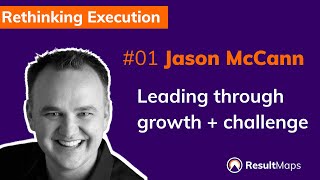
Jason McCann, CEO of Vari, started with a standing desk to fix his back pain and built it into a company whose mission is creating workspaces that elevate people. He talks about hiring for values, the meeting rhythms that keep teams aligned, and how the company responded when COVID hit.
Chapters
Hey everyone, this is Scott Levy, Founder and CEO of Result Maps. We're on a mission to help the world be its inspired best. As part of that, I share interviews with CEOs and leaders who've been able to scale companies from a few million in revenue up to 50 million and beyond. We talk teamwork, leadership and a range of other ideas. In this session I got to speak with someone I've known and admired for a very long time, Jason McCann, CEO of VARI. Jason's leadership is consistent within his company and externally within the wider economy. What I love most is how consistent all of it is with who he has always been as a person. Get the transcripts and session notes from resultmaps.com sessionnotes My first question to Jason was what role vision played in vari's evolution and how that vision evolved with the company.
Yeah, so in starting with the company Umbridge, we were called Baradesk. So we, my partner Dan was having back pain and staying at a cardboard box. So it was just one of those moments he couldn't find a solution for him. So he had a dream of what became the very first product. So we grabbed one of our heads of product design and the three of us sat around his desk and he described, could this product slide out of my box? Could I instantly be standing whenever I wanted to? And we said, okay, great. So we built a prototype and David was drawing and Dan was describing it. And over a two hour period, we created what became the first Veridesk. And so building the prototype, sharing the product, starting to use it ourselves, Dan was using it, David, other people inside of Jemmy, the company that we were incubated inside. And so once people started to use it, realized we're onto something. Well, we needed to show it to other companies and other people. As we were looking at the prototype, it came out that sitting is the new smoking was coined by Dr. Levine from the Mayo Clinic. So there was this momentum that saying, hey, there's a trend out there. Sitting is the new smoking. We're onto something. And so we were going around and looking for companies that we could share the idea with, because it's one thing when your team loves it. It's another thing if you can actually find true people outside your organization that love a product. So we showed it to Verizon with our first customer that we showed it to and we walked in and the night before the presentation, I was laying there and thinking about, what am I going to say? It's verified horizon. I'm laying there thinking about It And I said at the end of the day we're trying to create a happier, healthier, more productive workspace that's a win for the employee and a win for the employer. And that started our journey as we elevated our vision and we got going and started selling product out there. Our vision is now creating workspaces that elevate people. And so over that seven year period we've had quite a few steps in there that I'd be happy to share with you.
What stayed the same as kind of top agenda item or the top rallying cry if you will, from day one to now. And then how did you find you had to inflect things in that vision?
Yeah, I think from day one it's been a relentless focus on the end user. And so at first as I started down the journey, I grabbed the Tony Hsieh book Delivering Happiness and said we're going to focus on the fan and the customer. Customer was the term at the beginning. And so we're going to have a relentless if they don't love the product, we're going to take it back. And nobody at the time was taking back furniture. And this was seven years ago. So we would ship out a Varidesk and if they didn't love it, they would send it back. But less than 2% for a while there, even less than 1% would even send the product back. So there was this immediate reaction to they love the product. The other thing is you get all this great survey data by having that relationship direct with the customer. So when we entered the furniture industry, I didn't realize how the furniture industry worked. It's set up in a dealer network. So it's just like the automotive industry. You have a handful of manufacturers, a thousand plus dealers, they each sell their specific brand. So there's one brand, they only sell one brand of furniture. Just like the automotive world, you can't buy a Chevrolet from the Ford dealer, you can't buy a steel case desk from the Technion dealer. It's so antiquated. They also talk about pricing of list and discount. They have this fake opaque way that they price everything. And so we just sat there and said okay, this doesn't make any sense. If we focus on the customer in the same way that Zappos did, but really focus on that customer. If we have a direct relationship with the end user, the way that Tesla's come in to the automotive space, we believe in everyday value from a pricing. So if you look at Sam Walton's pricing model, the way Jack Bogle built Vanguard, or Jim Senegal built Costco with everyday value in mind, focus on people and culture the way Southwest Airlines does. And so you start to peel back and say, these are all the best businesses that are already out there. How do we take all of those and encapsulate them into our company? And could we build a company that can live beyond my lifetime? And so we started on this journey with Varidesk. We eventually got our product line so big now that we've dropped the term desk and have now elevated the brand to vary. And the company's now.
Barry, that's amazing. I love that you modeled companies you admired in doing this. I know we both read and admired a lot of Patrick Lencioni's work. Do you have core values? How do you make those into something concrete and tangible? Because I hear a lot of CEOs say, you know, vision. We know it's important. We know culture is important, but isn't that stuff kind of fuzzy? It seems like you guys do just an amazing job of making it very real and tangible. Can you talk about that?
Yeah. When we started on the journey, I would argue because I was hiring all the people I was looking for, people that would work hard, had entrepreneurial fire and grit to them that I believed embodied what I would argue are my core values of just being an entrepreneur and a hard worker. That's sort of where it started. Once we get to, like, 50, 100 employees. I had my marketing team come in and say, we. We need to define the core values. And I was kind of like, what are we going to say? And I kind of read all these business books, but I didn't know how to get through the process. I'd already created Barry University, so we had learning and leadership going on, so we were doing things right. So I asked the consultant, Karine, to come in and would she help us take me through this process of how do I define the core values? And so she said, give me the people that embody them. So I picked 17 people that worked for me. We had about 120 employees at the time, a little over 10% of the employees. And then along with Dan, and she sat down and interviewed us, and she just asked random questions. And what happened was these six core values came to the top. And she said, the beauty is you've been living your core values since day one. You just didn't realize it, didn't talk about it to define it. And I realized at that point, once you hit 50, 100 employees, you've got to really define those core values, because I can no longer interview every single person that's going to work for me. I need to make sure that I hire for those core values. And it just happened to be a blessing that the day that we had the first draft of our six core values come out, I was giving a coffee tour to somebody because we do tours here of our headquarters all the time. And it was Jeff Lamb. He was the former chief people officer at Southwest Airlines. And I'd always wanted to meet somebody that was a chief people officer because you read about them. So I'm giving him a tour. And I said, we just got this draft of our core values. Will you take this and just give me some feedback on it? And. And he was just on a coffee tour, and I was just networking, and it's amazing how God works. And eventually Jeff, now he works with me, and he's my president and chief operating officer. And what he defined. And he said the way that Southwest Airlines is you hire to your core values, your culture is then built on top of it. And the DNA actually changes over time as you hire people to that. They become the fabric of it, but they all embody those core values. So the culture is built on top of that. And as we went through this process and we realized that we're much more than a desk company, we went through the same challenge with our mission. And so are we creating a happier, healthier, more productive workspace? Is that what we're doing here? And we started to just think about that. And as we elevated our vision, we said, what we're doing is creating workspaces that elevate people. And what that becomes is a much bigger mission and vision for what we're doing about transforming cultures, through thinking about the future of workspace, being flexible, caring about health and wellness, from physical health to mental health, all those things around the workspace of the future. So now we create workspaces that elevate people, and that's our North Star that we're marching towards each and every day.
That's amazing how as you're going through these different points, were there particular challenges that came up that you found this North Star idea really helped you manage through or make decisions through or maybe get through some challenges as you're going from these different inflection points, from, say, 50 to 100 and on up in headcount.
Yeah. As you think about each level becomes a different challenge. So at 20 people, you know, everybody. And so we hit some roadblocks that we had a website crash and you get everybody in the room and we're going to fix it and we're going to roll up our sleeves and you literally grind through it. You get to 50 employees and you know everybody, but it's not the same team that you started with. And so it becomes a new challenge of just, you know, growing. Once you hit 100 or 150 people, you don't know everybody. You don't know if they have dogs or cats or who their loved ones are. You start to not be as connected. And so it's important to continue to hire and find people that get your core values and so that everybody's aligned to do that. And then as you get to now, we have over 350 employees. And so you think about the next tiers of everybody gets our core values, from the onboarding process to everything that we celebrate and talk about inside the organization is built upon these core values. And then we're always marching towards can we create workspaces that elevate people? In the beginning, we thought we were going to be an e commerce company and we were going to sell product and it was going to be this. Everybody flies to Dallas to see our headquarters. What we realize is by listening to the customer and creating a fan for life is what we is one of our core values. By creating a fan for life, I can listen to our fans and get product ideas, understand all their pain points, and it actually gives us new product ideas of how we can help them transform. So all of that has helped us grow our business.
I love that as you're managing these inflection points, as you're going through just growth challenges, how do you guys create structure of your time? Do you set up weekly meetings of different teams? Are people checking in daily both, you.
Know, in a normal environment, pre and during? Yeah, right. Yeah, we went through. It was interesting at 10 or 20 people were having daily standups and I just, we went to it. What I realized is once we got a little over a hundred people, I had lost my personal rhythm of having daily meetings. And I was not. I didn't know who Lencioni was two years ago until Jeff Lamb actually introduced me to him on that coffee tour. He's like, have you read any of Lencioni's stuff? And I hadn't. I was Jim Collins and all these other books. And so I started reading it. But when I read the Advantage, I realized, okay, I need to have daily meetings. And so they were kind of rough at first, not perfect with my direct reports to really focus on Building that relationship with my core direct reports. So I have a standing 8:45 meeting with my team today, it's Zoom. But that meeting happens with my direct reports every day. And then I have a staff meeting and I do it the advantage style. So again it's a non agenda staff meeting every Tuesday morning. I have an all company meeting at least once a quarter, probably every couple of months. What's happened? Obviously we've gone through this whole supply shock and demand shock that's happened with COVID 19 that's impacted the entire world. So we immediately deployed our emergency response team that we had already practiced. So we were 100% laptop. We were already set up to work remote since day one. And it was just the way that we had built the company because every time, every once in a while in capella you have a brown out. And so I had always set up everybody to take their laptops to Starbucks if we ever lost power, the building or heaven forbid something happened. We had always operated like that since day one. But we have a leadership team of about 18 people that are all function. So if we had had a disaster, this team would have been immediately deployed. So we deployed that team immediately the Friday that all of this came down and we said hey, we've got to shift to remote and we've got to deploy it. So we have the standing meeting. We were doing them twice a day, right now we do them once a day. I do a daily email to the entire company. I have an all company zoom meeting with over 300 and I think we had 370 participants. So even some of our suppliers are allowed to sit on these meetings every Monday morning at 10am So I sent everybody a coffee mug. I don't have one on my desk, which vary because we always have, you know, we normally have coffee and talk and whatever. So I sent everybody, my culture team sent everybody a coffee mug and we started every Monday we kick it off with a coffee with me and we talk about exactly what's going on and, and so doing all those things around, taking this crisis, it's really allowed us to focus and provide clarity for the things that we've got to do. But it's all about what lencioni everybody talks about is over communicating. So it is literally. Sometimes they'll get two emails from me in a day, but it's typically one email five to seven days a week that's going out. So definitely Monday through Friday, typically one on the weekend. The all company meetings. My daily staff meetings. I still have a 9am with my leadership team on this, this Covid issue and we're running through full steam ahead as the team has gone through it. And then the second thing we've done is adjusted our rallying cry. So while we had a 2020 strategy, I sat through one of Lencioni's talks and they talked about a short term rallying cry. And so I grabbed my team and I said, okay, so our rallying cry is keep rowing until the wind catches our sails. And it was a term that my dear friend Paul had told me 15 plus years ago during Stars and said, hey, we just got to keep going because eventually it's going to catch our sales and we can focus on opportunities to grow. So work from home has suddenly become a thing that we're good at, so we can now suddenly shift in our marketing and our sales efforts to helping other companies work from home. Second thing is continue to build relationships because people come back to the new norm of what the office is going to be like. And the third thing is we can grow. So our online learning, our TED talks, the book club, we're doing yoga here. I'm doing it right after this. So I got team yoga with my entire team. And so all those things, we can continue to grow our brand, our health, our wellness, our culture. Those three things are our short term rallying cry while we weather this storm and keep rowing out there.
Yeah. Do you feel that there's really an opportunity to strengthen your culture? Because whether it's sports teams or the military or what have you, it's getting through these challenges together often builds esprit de corps. What are your thoughts on that?
Yeah, so I think as a leader, your job is to now lead. And as a, as a, as both a team member and these leaders, all of us can lean in. So I would argue that at these moments here, we're actually leaning in. The culture is getting stronger and stronger. So even I noticed by having that daily talk with 17 or 18 leaders all on a zoom call, it's actually connected even tighter to a larger group of leaders out there. By having my daily email, and obviously the teams can email me back, I'm getting daily interaction with hundreds of my employees that are talking about what's going on by my breaking down from an authentic standpoint that, yeah, I'm stressed too and I'm trying to figure it out. And I got kids at home doing homeschool and I've got life challenges too, and I've been authentic about it, but I've also shared stories about like I was talking to my grandmother on the phone, who's 97. I talked to her the other day, and she's in quarantine right now in Tennessee. But, you know, she talked about being at 21 years old, going through World War II and having coupons before she could buy anything and sugar and whether you had money or no money, and just settling back and listening. And she said, everything's going to be okay. We're going to get through this. But I think our culture is actually getting stronger. The other things we've done is little. We've done an app called Duck Duck Goose, or the Goose Chase, and it's this fun thing. And again, it's connecting with our teams by sending out the coffee mug. Again, it's got the smoke, and we're all connected for these moments. We had some onboarding, so some of our team members we literally hired, and so we sent them a giant cardboard box with the onboarding kit, because it did all start with a cardboard box. The team all signed it, and they all onboarded remote. So, again, to learn our values and culture, and everybody's done it via remote. So I would argue that we're learning how to strengthen the culture, and then we're sharing it with other great companies out there.
That's outstanding. So we have some common root. So we grew up in a place that. That routinely the ocean tries to destroy, comes darn close, and then builds back, not to mention the different economic crises. Did any of that inform you?
Oh, yeah. I think growing up in Galveston and just seeing the impact of the hurricanes out there. So I would say there's two lessons. One, I go by a mantra. I personally always try to operate, like, on the eye of the storm. So I recognize that no matter how crazy everything is around me, I've got to remain calm, centered, focused, and I got to keep moving. So no matter what's going on, I've got to keep going. Also, you think back to the hurricanes that hit us when we were all trapped there. I think it was for eight or nine days without power. And I want to say it was 84, and we're waiting 83. Yeah. So we're wading through the water to go get food, and all the food in the kitchen's rotted overnight, like, all the stuff. But then we went out and we chopped down trees with the neighbors, and we pulled back and everybody rebuilt, and they raised some houses on the beaches. So to get through that, I think it pulls a community together. And so I. Yeah, I would say those are probably the two biggest takeaways, I think growing up in Galveston is you learn resilience and you learn how to be the eye of the storm.
I definitely relate. And you mentioned the challenges of working from home and family for different reasons. You did some different traveling at different times while the company was growing. How do you manage and run a company and have time for all these things while your company's growing and you're navigating? Do you have any aha's you care to share or any methods you've evolved that have really become what you tether yourself to to stay on top of your time?
Yeah. I described with Vari, if I had been 25 years old, I would have crashed this company into the ground because I wouldn't have surrounding myself with great people. I would have tried to do all the work myself. I probably would have levered up and gotten a bunch of debt. Instead, I focused really small, making small bets to get the company profitable so we didn't have to raise money. So I'm not distracted by outside investors. I think two dialing in of what exactly we're going to do. So we started with happier, healthy, more productive workspaces, but now elevating our vision to creating workspaces that elevate people, it's allowed me to sort of everything needs to stay inside those guardrails around as we think about the future roadmap from a travel perspective and all that. I think that's just the nature of it. I think the beauty of us being challenged to work from home right now is we're leveraging the power of Ms. Teams and Zoom and Skype and all these other tools. And it's just almost challenged me to think, okay, I couldn't, I can be more efficient. Maybe I don't need to make these trips all the time. A long time ago, I adjusted it to where I would be as efficient as possible. I will day trip to New York if I can, if I can knock out my meetings if for some reason and I have to be there. But I think if you can hire great people around you and they each have their own core competencies, again, aligned to your values, understand what you're trying to build here, and they're empowered to make decisions. It takes a lot of pressure off you as a leader to get through a lot of these hardships. But it doesn't come without grind and grit. And if you don't have that, you're not going to make it. So you got to decide too, how bad do you want it and so I think as a, you know, whether watching my mom in her hair salon as a kid, you know, decided she wanted it bad and she was willing to work for it. And so just thinking back to those roots, it's just been since day one, I want it bad. But I also recognize all the decisions I make are impacting 350 plus families, plus thousands of companies that we're associated with. We have over 3 million customers worldwide. So that doesn't weigh lightly on me. I feel the pressures of that, but I'm also honored to get a shot to do it and lead a great company and really build a great brand that can and live it all my lifetime.
When did you feel pressure to figure out to bring in people? Because I know early on, you know, you were out all around Dallas putting your desks in places to get people to try them out and give them a try. I still see you go out and do that, but presumably at some point you had to go, okay, I'm going to have to spend a little time in the office or make sure I'm working on the business. Did those things happen as the company grew? Were there specific inflection points there?
Yeah, I think at first, you know, I was in every sales meeting at first because again, having that conversation with the customer that you're trying to convert into a fan, you're getting all that great feedback. So Dan, David, the three of us, even Coco, the four of us would join these meetings. So we're listening to every little tidbit the customer said, and then once we've got the product just right, then we can train somebody how to go have that same conversation. Now I've got over 100 salespeople, we've got thousands of data points every day that are coming in from technology reviews that are online. But now I've got a team of four people in my data science group that all they do is aggregate the data so that we can look at it and see what's working. Where I used to read every review and I still read a bunch of them now I look at the data first and try to see where the red, green, yellows might be. Do I have a 4.87 rating or a 4.2 rating where they start and then where I can drill in and see where those pockets are. But initially somebody had told me early on, if a small group of people can love it, a large group of people can like it. So focus on getting the love right. And so I focus really hard on getting the love right. So the Ripple effect would be like once I got to this really large group, by just having a small group of people that kind of like it, it's pretty good. Ultimately, it's not going to be that big of an impact. So really focusing on that. And when my chief marketing officer joined and he was hired him as director of marketing, his first thing is he aggregated all of the reviews that were there and he did a word cloud. And the number one word that people wrote about the product was love. They said, I love my Varidesk. And at that moment I said, we no longer have customers, we have fans. And by taking that word, which is so powerful because you love your pets, your wife, your loved ones, your partners, your, the kids, everything. But to say I love a product means you're onto something. So to start tracking net promoter scores, and I wasn't tracking those or any of those things now to start watching all that because I've got all these employees making an impact, we've just elevated what we're able to do. But at first it's all you and you got to decide how bad you want it and you need all those connections so that you're getting it to the right decision so you can get that love right. So it could be a huge ripple effect out there.
Excellent. Well, I really appreciate you taking the time and yeah, we're enjoying watching everything you're doing.
Well, stay safe out there. And we're going to be excited to kind of figure out what the new norm is going to be as the world comes back. And I always look at it like we're definitely going to be stronger as a company, as a community, and really as citizens of the world. Once we get through this Covid storm, a lot of great learnings and a lot of great things are going to happen. A lot of people are hurting right now, so just leaning in with love and empathy to help. But Scott, it was great chatting with you and look forward to helping in any way, so stay safe.
More from Scott

Build a Self-Running Business with EOS - Entrepreneur and Implementer Explains


How to Create a Company Vision That Actually Inspires and Aligns Your Team | Leadership Guide
How to Create a Company Vision That Actually Inspires and Aligns Your Team | Leadership Guide

Company Vision vs Accountability: EOS Expert (750 Sessions) Reveals What Actually Drives Engagement

How to CEO From $0 to $30M: The Brutal Truth About Small Business Growth (w/5-Stage Framework)

Leadership For Entrepreneurs: A Proven Way To Level Up Results Without Corporate Fluff


What is Strategy? The Ultimate Guide to Strategic Thinking in 2025 for CEOs and Owners
