Team alignment, autonomy and resilience in entrepreneurial cultures: Jim Fitzgerald, CEO of Taradel.
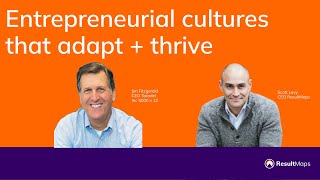
Jim Fitzgerald, CEO of Taradel, discusses building a direct mail and digital marketing company. He's targeting $28M in sales this year, up 25% from last year, with a long-term goal of $50M. Taradel uses Result Maps to align teams and hires for cultural fit to give employees real autonomy.
Questions this video answers
$50 million in sales.
$28 million for the year — about a 25% lift.
18 years.
12 times.
The best year ever and the most profitable year ever.
Chapters
If you interviewed some of the leadership team here, I think they would tell you that they've developed into roles that they've built kind of on their own. And that's, that's almost, that gives you the same kind of entrepreneurial juice that starting a business does. It's like watching these people develop is a blast. And, and they're just, they're, they're just happier because they're doing what they want to do. But everyone's got the common goals which we tied back, which we tied back to Result Maps.
All right, I'm excited to dive in. I always start by asking, what are your three biggest goals for the year?
I've always wanted to get to $50 million in sales. Specifically this year we want to get to 28, which is about a 25% lift. But we're feeling, you know, here we are late April, we're feeling really good about that. So we're on track. We also want to be known as the easy multi channel marketing company. And we're doing a lot, you know, in development. We've got a lot of things in our roadmap that will facilitate that and make the messaging line up with the actual technology. And finally, having said all that, we want to raise profitability by leveraging technology one way. Result Maps, perfect example. You know, we're, you know, we're leaning on that more and more heavily now. It really has been a colossal help and in not only helping me define what we're talking about right now, for instance, but also communicating that up, down, sideways throughout the enterprise. So everybody's aligned and on the same page and there's lots of other cool things. We're looking at some additional technology to help marketing and sales. So we're pulling, we're taking advantage of all the incredible amounts of data that are out there and using that to further append our own data, our own first party data and, and helping us segment and better define paths to more profitable customers, for instance, and finally bringing in talent and people that are obviously aligned with our culture first and foremost. But we've done, historically, we've done a superlative job on the acquisition side. But now it's time for us to really focus on retention and recurring revenue. Because, you know, selfishly from a valuation standpoint that's such a play such a huge role to where we want to be.
And one of the things I've noticed in watching you and the company is that it's your people who are driving that growth and that you put a lot of time and Attention into laying out a clear vision, setting the goals and the targets for people to hit, and then empowering them to get there. Is that a core philosophy of yours? Is that something you can talk about a little bit?
You know, sometimes things like that happen almost by default, but. But it's part of the vision. But getting the vision to reality is the challenge. And I think getting back to the technology thing, we have over the years made a lot of investments, some of them good, some of them not so good. But I think the driver here is we're always trying something new. And some people could argue that that's a distraction, and I push back and I say, not so fast, because I'm. I don't want to say inundated, but I get an awful lot of email from folks that are leveraging technology, I think the same way we are, and they've done their homework, or some AI has done the homework for them, but they're saying, hey, Jim, as the founder and CEO of a company that's doing approximately this in this space, we've got technology that could help. Well, that gets my attention. And, you know, it's just, I think, like a lot of entrepreneurs, I've got, you know, incredibly bad case or good case, depending on your view of add. And I go down these rabbit holes, and sometimes they pay off and sometimes they don't. But every time we do something like that, we create a data point and we learn something, we've got that experience to lean back on, and I think it's net positive. Absolutely. So result maps, again, another indication of how we've done that successfully. So we're always looking at things to help us be more productive. And one of the numbers I like to watch is our revenue per employee, and it's pretty high. And, you know, we're proud of that, and we want to continue down that path. But the only way you're going to do that is A, technology and B, getting back to your original question, bringing on the right people and the right talent that can execute on that and leverage that technology. And one of the things I found, and I don't know if it was vision or happenstance, is the importance of culture. You're going to have a culture. Whether you decide to have a culture or not, you have one. And it took me a few years to figure that out. And we got into thinking more strategically about how we, you know, we look for people and bring them in. And we learned that, you know, if they're not a fit, no amount of education, experience is ever Going to trump the fact that you're trying to put a square peg in a round hole. So, you know, you acquiesce to that. We've learned we paid some significant penalties for violating that in the past. And that's something I can say with some confidence that we will hopefully never do again, but probably will never do again because we have too many checkpoints in place. So you get the right people and right people here. Obviously culture, which is almost chemical, I don't know if I can describe it, I know it when I see it. And when we get those people, they're typically, they're smart and creative and you get people that are working above the norm on both sides of the brain is difficult enough. But one of the things that attracts them if we do a good job in the recruiting process and through the onboarding process, is if you get here, you're going to do it. Because as a leadership team, and me specifically, I'm about as hands off as you can get. If you, if you think you're capable to handle a project, knock yourself out. And once you've done it and done it successfully, watch out because you're going to get a lot more. And I think there are folks that would, if you interviewed some of the leadership team here, I think they would tell you that they've developed into roles that they've built kind of on their own. And that's, that's almost, that gives you the same kind of entrepreneurial juice that starting a business does. It's like watching these people develop is a blast. And, and they're just, they're, they're just happier because they're doing what they want to do. But everyone's got the common goals which we tied back, which we tie back to result maps. I.
Yes, thank you for that, for sure. And what's interesting about this though is, you know, going through the implementation over last year with you guys, I got to see that play out. It seems like half a dozen times at least. And it's interesting that you've got this mix of what people love about a startup environment in that you can take ownership, you can shape your future in a lot of ways. But at the same time, you guys aren't a two year old company, right? You've been doing this for 18 years. 18 years, yeah. Inc. 5000, what, 12 times.
Yes, that's right.
And you guys have really pivoted as the industry and the environment has changed. You've really been able to adapt and maintain your growth. I think you started with newspaper Inserts or menus.
It was actually newspaper inserts.
That's right, that's right, that's right.
And that was a, that was a viable business model 18 years ago. I mean, think about that, you know. So, yeah, we helped newspapers sell what we call it a print and deliver program to local advertisers. So a local landscaper or pizzeria could just hit the zones with an insert that were important to them. And so it was instead of doing the entire, you know, if you were the Washington Post, I don't know what it was, the entire million circulation, you could say, hey, I only want to target 20,000 homes in my local market. And that was successful. We built it a turnkey solution for that. Everything from building maps where the user could select just the territories they wanted to the printing and distribution back to the newspaper for insertion. Well, we all know without spending too much time on this, what would happen with newspaper circulations. So we, that that was probably the biggest pivot we made. We realized a lot of the strength in what we had as an operation was our ability to source and contract with printers, kind of strategically located to do what we call gang printing. You print multiple pieces on the same press run and you realize the economy of significant economies in doing so. We still had that advantage. So we said we need a new distribution vehicle. And that's when we looked at direct mail. So that was kind of the first major pivot. And the second major pivot was recognizing we're still very bullish in direct mail. By the way, direct mail marketing numbers have gone up the last two years, not down. And this isn't tarot, this is, you know, across the board.
Yeah.
Numbers published by USPS for marketing mail. And I think people are starting to recognize that it's a powerful, invasive, in a good way, invasive medium. It's something you've got to look at and touch. And you know, we've done campaigns for a landscaper with a pickup truck. Truck. But we've also done campaigns for Amazon and FedEx for recruitment purposes. So it works when it's done right. But we also know that we live in a multi channel world and direct mail is a powerful, important impression because we live in a world of impressions now with digital marketing. So we knew we needed to leverage that and amplify the direct mail impression with digital advertising. So in the last couple of years we've added Facebook display, even email solutions into our product, into the navigation and our product flow. So now our customers can do truly a targeted, multi channel direct marketing campaign. In under 10 minutes. And that's been, that's been powerful.
And in case anybody's thinking, like at the beginning of that, you thought, oh, print and newspapers and thought you were going to take a nap. Like, I've worked in technology my entire career with some of the very best in the world. This is a technology savvy organization that nobody's in there preaching dogma. Everybody's just, let's get things done, let's find creative solutions. And it's super interesting now. What a, what a fantastic range of people you have on your platforms. I mean, you've got kind of mom and pop businesses on one side and then you're supporting these huge name logos and brands as well. Can you share some of those logos with us?
Sure. So we go, that's a good point. We go to market under our own brand, but we also provide branded turnkey solutions for a number of quick and mortar businesses like Staples, FedEx, Office, Office Depot. We've also successfully built partnerships through those partnerships. So they have an existing, let's say, group of franchisors that they introduce us to and now we're co branding solutions for other names you'd all recognize. So yeah, that's been a huge part of our growth as well, is leveraging those relationships because at the end of the day, a small business solution. But there are many large businesses that have thousands and thousands of small business customers. So that's directionally been very helpful from a growth standpoint. And the other thing we do on the other side of the coin is we build terrific relationships with the folks that actually do the printing for us. And now we're actually helping them, particularly those that do a lot of reselling, helping them reach their customers with technology that enables their customers to sell more of the stuff that they do. So it's, it's pretty cool.
Yeah, I, I think that whole, the relationship part of it is, is a thing I see laced in. So we did a strategy session last summer. I got to go hang out with the whole Terradel gang. We got to go to dinner. Everybody's sharing like great stories of, you know, when they first started and the decisions that brought them. It seems like that's something that is in everything you do. Like it's not just this is how we deal with customers, it's how you deal with employees internally. It's everywhere. It truly feels like a cultural criteria or a cultural philosophy. Has this all shaken out exactly as planned in your head or what were some of the things that surprised you in your journey as CEO.
It's a great, it's a great question. I think, you know, it's, it's, it's good to have a vision and it's, and it's good to, you know, project into the future. And I think one of the things I've learned is have the vision and the projections, if you will, kind of high enough that you can understand them, but not narrow enough that you, that you're constantly tripping over yourself and second guessing. Those are tactics. And I think there's so much energy in the business world with people concentrating on the minutia, really, they really do. And this is hard, this is painful for almost anybody and I've been through it. But if you have, you know, your 30,000 foot view and it's somewhere in the future, but you see it every day, what happens almost metaphysically is things start to just kind of form around that versus saying, here's my list of, you know, 47 things I want to check off in my notebook now, now again, use technology. Get everybody focused on the end game and the details kind of take care of themselves. Sure, you need to get tactical and you need to make sure you're reviewing all the steps that line up to success. But it's that constant reinforcement of where you want to be and the other way you feed that, which really is not technical. And this gets back to the cultural thing is how you communicate it. So if we've got an important meeting, we were in New York Tuesday and had a great meeting. And what we do is we take kind of the focus of that. We always try to take photographs and try to get everything we can to put together a succinct email and blast it out to everybody on the team and say, here's why we went there, here's what we did, here's some of the people we met and here's why it was successful and here's what it means to you. And that I think more than anything it just gives everyone the sense that this is a team and I can see my place in the team and how this all kind of comes together.
And one of the things that's been really fun to watch as we were first implementing result maps and then checking back in on a lot of these calls was seeing that actually happen, seeing people experience that and lean into to it and build momentum along the way. Can you talk about the results you experienced this last year, 2021?
Obviously, one of the things that gets you out of bed in the morning, excited about what you do is what you've accomplished, you know, it's kind of this push pull thing. You know, it's. You don't want to, you don't want to sit on your laurels and you also, at the same time, when you have a tough time, you don't want to get caught up in any kind of negativity that you know belongs to something that you can't change. But having said that, last year was, across any metric, the best year we've ever had. And I believe in my heart that there were a number of things we did that all initiated or the catalyst behind some of them was the fact that we wrote them down and we revisited them and we had a piece of equipment to do that. That piece of equipment's result maps. So it's a tool that everybody here is using especially, and this is important, especially the management team and maybe more importantly for a technology company, the development team, they live in result maps. And it's just a lot of fun for me to just stick my nose in there from time to time and say, wow, this is cool. We have a roadmap and we're checking off the boxes and what's really neat is you can look at that as a management tool, but then we pull it over into the financial tool and we can start seeing how these things align. We worked hard on something we wanted to accomplish. It got done in the first quarter of last year and wow, look what happened in the second quarter as a result of that. That was not intentional. But the mapping of it in the first place and the results, it's almost reverse, right? Map results. Yeah. You know, has, you know, has enabled us to do some things that I'm thrilled about for 2021 and just super pumped about because, you know, first we've been numbers through the first quarter and yeah, we're on pace to again have another record year across any kind of measurement.
That's amazing. The best year ever, Most profitable year ever. Is that accurate?
100%. Yes, because it is. It has the added benefit of being true.
Hey there, thanks for sticking around. If you got value from this, please share it with a friend who could also benefit and hit that like button. It means the world to us here at result Maps and be sure to subscribe so you're notified every time we drop an episode like this. If you're interested in learning more about Terradel, especially if you're interested in maybe joining the Teradel team, I'll put a link to Teradel in the comments or if you're a CEO who is on the path of growth, who's trying to hit their first 10 million, their first 50 million. And you'd like to explore whether Result Maps is the right fit for you, you can book a free strategy call. I'll include the link below. That's it for this episode. We'll see you next time.
More from Scott

Build a Self-Running Business with EOS - Entrepreneur and Implementer Explains


How to Create a Company Vision That Actually Inspires and Aligns Your Team | Leadership Guide
How to Create a Company Vision That Actually Inspires and Aligns Your Team | Leadership Guide

Company Vision vs Accountability: EOS Expert (750 Sessions) Reveals What Actually Drives Engagement

How to CEO From $0 to $30M: The Brutal Truth About Small Business Growth (w/5-Stage Framework)

Leadership For Entrepreneurs: A Proven Way To Level Up Results Without Corporate Fluff


What is Strategy? The Ultimate Guide to Strategic Thinking in 2025 for CEOs and Owners
