Team Autonomy + A Complete Focus on Results | Jody Thompson talks ROWE
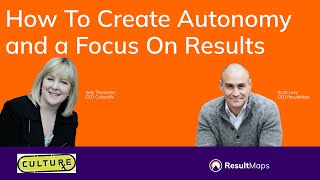
Jody Thompson, CEO of CultureRx, explains ROWE: a management system that measures results instead of hours worked. She defines 'sludge' as the cultural judgment about how people spend time, describes how managers become results coaches, and shares that pilots showed higher productivity and engagement.
Chapters
That leadership conversation with people that are doing the work has to change significantly. It's not talking about when did you get in, when are you leaving? And tasks. It's how can I help you? Do you need anything from me right now? Do you understand what the measure of your work is? If there's pieces of that you're not clear about, how can I help you?
Tell us a little bit about who, who you are and what you do.
My name is Jody Thompson and I am the CEO of CultureRx and the author of the book why Work Sucks and How to Fix it. Over the past 15 years I've been working with organizations to help them overcome the idea of flexibility and move into the future of work.
The results only workplace. Boy, does that resonate with a company called Result Maps. And then we rebranded this series to Adaptive Growth. And I kept running across this idea of adaptive change, which I think is spot on, obviously in this great book. So these books are all about a results only work environment. I've got my standard CEO questions, but this intense curiosity about how you've been able to get this results only work environment in place in very large companies. I'll set this up with. I entered the working world thinking, well, that would probably be the way people worked when it was little. 20 year old Scott and I found out that wasn't the case. And at some point I think I gave up on could a large enterprise with thousands of people really make that shift? And you guys were actually able to do it and do it multiple times?
Yep. So Scott, we've had success in many companies, all different industries, different sizes, exempt and non exempt employees, international. So we've been in a lot of different cultures with a lot of different roles. What's interesting about the results only work environment is once it incubates inside of an organization. So let's say I'm an organization of 5,000 people. I decide to do a pilot with 500 people. It doesn't make sense. Once you see the results of how people operate in a results only work environment, you can't say no because that would make no sense. Their productivity is higher, they're happier, they're more engaged. All of those measures of work that we have been measuring for the last 70 years all go up significantly. So it doesn't make any sense to say, well, that was fun. We're going to go back to tracking your time and watching when you come in and when you leave and all of those things that we did 50 years ago.
That resonates with me. So Much because for a big portion of my career now, I didn't understand what makes you fully a row, which is the abbreviation for results only work environment. But I had set things up that way because co parenting two small kids half the time were going between their mother and myself and I was managing really fast moving projects. But I got a sense at some point when I would start to go in for my days at the client office, it would feel like everything slowed down and people were running through molasses. We were going so slow. And I remember hearing a lot, oh, you're just a crazy creative or people dismiss it. So I also really like this idea of sludge giving a name to everyone's mental barrier and turning it into this thing you can talk about. Can you tell us in your own words what is sludge?
So first of all, sludge is part of the DNA of every culture. Anybody that works has this in their culture. And what sludge is, is it's judging people about how they spend their time. And it sounds like this, boy, I wish I could be like Scott and stay home and take care of my kids and do my work at home. Or boy, I wish I had a kid. They get all the time off that they want. 10 o' clock and you're just getting in. I wish I could come in late every day. It's all of those statements that people make who actually get the culture to snap back into that sort of traditional, I know where you are, I know when you come in, we all come in at the same time. It snaps it back. The organization is like a giant hairball. And anything different, like Scott, if you're different in any way or you're getting more than anybody else, the giant hairball will do everything it can with sludge to snap you back into place. So actually, getting rid of sludge in an organization is extremely powerful. It's powerful for leadership, it's powerful for the people. It gives them a voice to say, we're just going to focus on results and we're going to communicate better and we're going to support each other and we're going to trust each other and be clear. And nobody needs to know what I'm doing at 3 o' clock in the afternoon. If you need something from me, reach out and ask for it. You know, here's this funny thing that we always see. People will say things like, so when are you going to be in tomorrow? Well, I don't know because. Because I don't know what you need. If I knew what you needed I could decide where to be. And that's how it works in a results only work environment. So if somebody said to me, I see you're leaving early again, I would eradicate that instantly. I would say, is there something you need? That's all I need to know. And so we're getting rid of that first statement and following it up with, we focus on results here. So what do you need? You don't need to know what I'm doing at 3 o'. Clock.
I'm thinking back to my first leadership role. I was working with a partner and a mentor who was very into. You need to show up at this time as a leader. You need to walk in at this time, need to keep people in line. That was the way he came up and it never felt right. And what did end up feeling right for me was as my teams were distributed, if you're on the other side of the world, I don't have visibility into what you're doing. And while some there's tools out there where you can record people's desktops, really don't care, in a software world you can easily see is it getting done. You start to develop a sense of is this reasonable? And, and so you develop trust for people. I have people tell me, well, I need to be out at this time of day or that time of day. I'm like, cool, it's fine. One thing I'm curious about with this, and I think kind of the reason I'm bringing this up, there was a real clear, in the book, be careful of focusing at all on time, even tracking your time. I'm someone who's really benefited from, I track my time so I can figure out where am I getting hung up, how can I improve? And our teams, like, our teams internally track their times. But we like never, I never look at it, but again, it's a self reflection exercise. Does that reconcile? Can that reconcile? And you're free to tell me no, no frigging way, or stop, stop tracking time.
You know, it's so interesting because we work with both exempt and non exempt employees. And so why would an exempt employee, a salaried employee, need to track their time? When time comes into the equation at any point your brain goes into I have to fill time, not how can I do better. It's well, the expectation is I'm at this level, I need to work at least 50 hours a week. And I go right back to that DNA of you pay me for my time. Now there are organizations that do billable, billable hours Right. And it's very difficult if you're doing billable hours to kind of move into where you're doing value based billing, like here's the project, here's how much it costs and we'll do the stuff to get there. But there's a point where people feel uncomfortable if they think they're working less hours than somebody else or they're not going to get promoted because they're not showing themselves working all the time. There's an interesting thing there, Scott, and it's this. There's a great resignation going on right now. People are fighting to not have to go into an office when it doesn't make sense. Right. And so that idea that now you're back to command control, you're back to policy, you're back to programs, you're going to manage me again, not the work, you're managing me. People, when they get into that command control conundrum, flexibility doesn't fix it. It's still permission based. What I really want is, I want autonomy. That means the freedom to do what I need to do in every aspect of my life without asking permission or getting permission or any of that. It makes me feel like an adult. It makes me feel like I can take care of everything in my life. When you start trying to equalize the work environment by doing hybrid or four day work week or any of those flexibility programs, you're trying to go to an average and nobody meets the average. It's not equitable. So what we do when we work with organizations is we flip that on its head. It's not where I am or when I'm working. It's did I achieve the results, the measurable results that we talked about and that you've coached me on over the last six months. It's a continuous performance management system. We're always talking about the work. Yes, we were friends, we can talk about our kids and stuff, but we're not getting judged on it anymore. No judgment about how I spend my time.
Yeah, I like that a lot. I think that really resonates. Like I said, for us it was more of a. And the people I've recommended it to, it's more like, hey, if you're feeling stuck, examine as a self reflection exercise, not as a reporting exercise.
Yes, that's good, Scott. I mean, it's the reporting of time that really digs people into time. And at least your people are using it to reflect and bring to you so that you can coach them and help them through it. That's the role of a leader. It's offering support and offering coaching.
So one other thing that really jumped out. I mean, it's no, it ought to be no surprise, right? You guys have done this. It was so resonant to me because I've kind of blundered through this on my own. There's such a focus in a results oriented work environment or that focus on results. There's such a responsibility on the leader to be very clear about the results they need. And that's. I know for me that's been a learning curve and a process and for people that are. That we've got in our coaching programs. We're a software company, we do coaching programs also. That's a big part of their just embracing that learning curve of how can I get better and better and better at defining results? What do you see hold, I'd say the CEO, but also leaders back in embracing that idea. Do you see hang ups that are common?
So yes, I see hang ups that are common across all leadership, no matter where we are. And one of the things that is glaringly apparent is that managers are looking for things that look like work to feel like people are working. So you're smiling. You know what I mean? I see people. Yeah, right. If I see people in a cube coming into the office, that looks like work. If I see people's calendar full of meetings, that looks like work. And so without that visual cue every day of everybody coming in at the same time and leaving at the same time, you feel as a manager like you're sort of lost because you're not getting those visual cues. What managers do, or they're called results coaches. And the results only work environment is.
Oh, I like that.
Yeah, Results coach. Think about the word manager. A manager manages me. A results coach manages the work and helps me through that. So it's a difficult flip of a switch or a mindset shift for managers because they're not in charge of when I do my work, they're in charge of the work. And so they have to get together with me and my team and align us to the mission and the vision of the organization. How does my role matter and how do I measure what I do and what the team does against the ultimate outcome of the organization? I go into workshops and I ask the question, how many of you are crystal clear, like clear about the results you need to achieve and how to measure it? 3/4 of the room will keep their hands down. People aren't clear, but they're clear about how many hours they need to work. And when their vacation time is and how many days last week, Scott came in late. That's what they're focused on. So flipping that mindset to all of us working together in a. Not a vertical hierarchy, but a horizontal hierarchy over all adults. And we're all trying to get to the answer, and we want to do something that makes us feel like we have a purpose. I'm sure you've read Drive by Dan Pink. Or you should.
I'll put that on my list.
Yes. He talks about autonomy, mastery, and purpose as the secret to motivation.
Okay.
Not flexibility. Autonomy, where I control all of my time and mastery of my. My job. Like, I know how to do it and I feel purpose. Let me give you an example. I'm a bricklayer, and somebody walks up to me and says, so what do you do? I just lay bricks. Now, in a results only work environment, you would say, I'm building a cathedral. That's not an easy shift, because how we're conditioned to look like what work looks like. And we watched our parents and we saw how they went in every day and they stayed with the company and they got their pension, and all of that keeps rolling through generations. Even the millennials will think, well, I know it's kind of dumb to have to drive all the way in or whatever, but that's how I get promoted. Because part of the cultural artifact is how I show up and how many meetings, all that kind of stuff. I'm competing with everybody inside the organization. Instead of us all competing together to delight the customer, we're in competition with each other.
Yeah, I really like that. I like especially the. The thrive idea, the autonomy, mastery, and purpose. And what I've seen is in the CEOs, I talk to the ones that I tend to resonate with, the ones that inspire me, they'll continually call out that they put effort into making sure that people on whatever their equivalent of the front line is, are appreciating some of the big results that maybe a customer has reported or, you know, your work enabled this. They talk about that in their culture. So it's interesting that you've identified that as such a key thing. Show me. I'm building a cathedral. Let me see the cathedral. And think about it in those terms versus just tell me what you want me to do, which is showing up to not get fired.
Right. That leadership conversation with people that are doing the work has to change significantly. It's not talking about, when did you get in, when are you leaving? And tasks, it's, how can I help? You do you need anything from me right now? Do you understand what the measure of your work is? If there's pieces of that you're not clear about, how can I help you? And it changes the relationship significantly when leadership truly wants to hear how they can help.
That's super interesting going into that much detail on the results, on coaching for results, and maybe a set of questions. Do you guys have another work that does that? I'm sure that's part of what you do when you go into companies.
Yes. Some of the things that people think when they read why Work Sucks is it's an implementation manual. And so we leave out some things. Not everything's in there because it's an adaptive change process. And you've been looking into adaptive change more. It's beliefs and behaviors that require a deeper dive into sort of how people think about themselves in the world, which is facilitated. So in terms of management, we do a lot of coaching to help them adopt new behaviors and language so that the culture doesn't like go flip of a switch. It's a process of evolving and shedding those old ideas that we've been thinking about before. We did put out the book why Managing Sucks and How to Fix It. There are some more tips in that book about how managers can think differently about how they manage work versus people. But it's not an easy shift. People like to take little pieces of the results only work environment, but that's leaving a wheel off your car. There's many things that make it successful based on the mindset shift of everybody in the organization together.
That makes a lot of sense. I think back to different experiences. I had my first leadership position. I remember attempting to do this, laying out a vision, not having quite enough detail or how we're going to measure success. And it was kind of like, okay, we'll figure it out. Let's figure it out together, guys. I found there was some level of needing to lay out enough structure that people could have things to push off on traction points in the vision. Is that something that you found as well or that you walk leaders through? Like how much to lay out, how much to let them define the results? Or is it co creation all the way?
There's a lot of co creation and the bigger organizations, obviously they have a strategic map already. But what we find in organizations is there's a lot of business scaffolding going on. So I might have eos or I might have Lean Sigma or there's processes that help people get to what exactly they're supposed to be doing smart goals, you name it. Here's the difference between RO and a business scaffold. Results only work environment is a mindset shift that actually makes people want to use the business scaffold instead of have to. It's finally, it clears up for them that, oh, I see how this helps. I see how this helps my coach, coach me. I see how this helps everybody see what's going on in terms of the results instead of, oh, this is another task I have to do or another.
Program that's rolling out or another thing we're going to do different this year. I hear that so much. Oh, here comes another. Here comes this year's shiny object.
Yeah, Flavor of the month, we used to call it. And people are exhausted. It's not that they don't want those things. It's that what they truly want is autonomy and to be treated like an adult and be excited and enthused about what they're trying to do in terms of why the organization exists. I want to be part of that. And when I'm being treated like a child who stole cookies, you know, off the plate, I don't feel very good about my job or the organization.
You know, what's interesting is several of those business scaffolding systems actually tell leaders to think of yourself as a parent and these are your children and like, that's how to handle it. And I see you shaking your head. I'm with you. I always found that that's not the culture I want. The autonomy idea resonates. That idea of autonomy I think we all wanted at work. And what I like about what I'm hearing, what I've been reading is this is a framework for creating that system, but then also solving the challenges that come up along the way. Because there are challenges, but there are challenges. With any way of thinking. This is just this move away from command and control. I just really like, is there a cadence or anything you guys recommend of checking in on? Are we aligned or is that something that comes in as you are training people how to be result coaches?
Yes. The way to look at it, Scott, is most of the time organizations want to check in on performance either quarterly, by yearly and yearly and in a results only work environment. You're always talking about performance. I've had performance appraisals where the things I wrote in my what I was going to do for the year. I was like, I didn't do any of that. You just kind of make some stuff up and then you have to go talk about it and you didn't talk about it all year. That would never happen in a row is continuous performance management. And it's not exhausting. It's liberating. Because now I am clear and I can deliver, and I can show that I delivered and I didn't deliver. I gave you my hours. I delivered what we agreed on, and I feel really good about it. And sometimes it takes me an hour, and sometimes it takes me three hours, and sometimes it takes me 20. But I know the deadline and I know what I'm supposed to do. So I do everything in my life, including work, so that I can maximize my life. You know, we like to say this. It's very scary for people. No results, no job. Not no results. You need to come in the office every day. No results. What have you been doing with your time? It's the idea that I'm getting hired to actually produce something not put in time every day.
Yeah, totally. That totally resonates.
It's tiring for people. It's stressful and it's exhausting.
I think once people experience it, you understand it's liberating. Right? There's a little. It's not quite as bad as you think it's going to be. And it's actually much. You have much more control over that as an individual than you do over the alternative, which is the politics and all those other things that are normally in the office. So this is fantastic. What are your three biggest goals right now as. As CEO for CultureRx?
So I'm gonna give you my one goal, and that is. Cause that's what I have. We like to say we're gonna make ro the status quo.
Love it.
So what that means is everything that we do every day is aimed in that direction, and we see what kind of progress we're making to bring more awareness, get clearer about our message, you know, have different conversations in the sales pipeline. We're always looking at that, looking at our marketing, everything to understand what's working and what isn't. And we quickly shift. So to make. Grow the status quo. All of us at Culturerx, that's our goal. And everything we do as a salesperson, a business development person, a trainer, we're all going in that direction. So that's my goal.
That's a great goal. That's one we definitely support. If people want to reach you, what's the best way to reach out, to learn more? Maybe to engage Culturerx to help set up a row.
People can get ahold of us or see what we're doing on gorow.com G-O-R-O-W e.com and we have a Contact Us page. We'd love you to reach out. There's some goodies on the website that you can download. That's a good way to start learning more about the results Only work environment.
More from Scott

Build a Self-Running Business with EOS - Entrepreneur and Implementer Explains


How to Create a Company Vision That Actually Inspires and Aligns Your Team | Leadership Guide
How to Create a Company Vision That Actually Inspires and Aligns Your Team | Leadership Guide

Company Vision vs Accountability: EOS Expert (750 Sessions) Reveals What Actually Drives Engagement

How to CEO From $0 to $30M: The Brutal Truth About Small Business Growth (w/5-Stage Framework)

Leadership For Entrepreneurs: A Proven Way To Level Up Results Without Corporate Fluff


What is Strategy? The Ultimate Guide to Strategic Thinking in 2025 for CEOs and Owners
