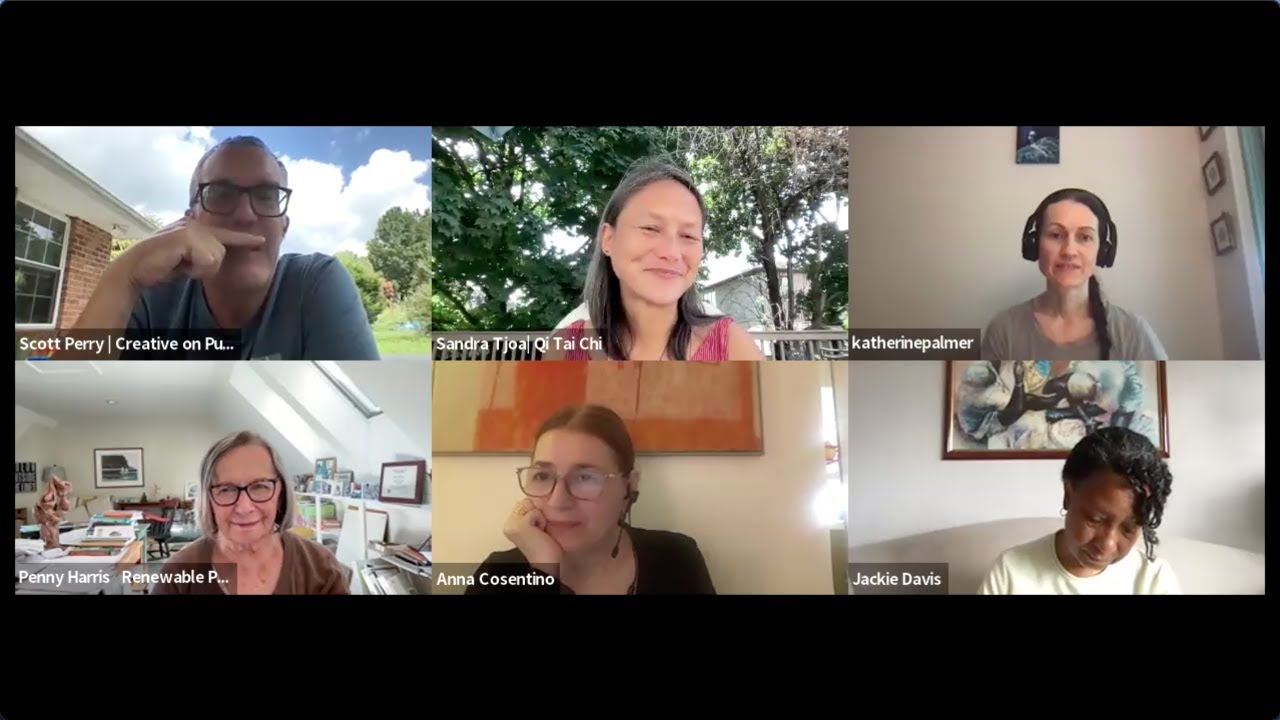
Scott Perry leads a group coaching call with community members working through hot-seat coaching on business growth. Topics include defining a perfect day, building a marketing system, raising your business floor, and taking small iteration steps to scale a service offering.
Chapters
Welcome to today's bonus Catalyst coaching session. These Catalyst coaching calls are calls that are normally reserved for current one-on-one clients or Close the Gap coaching program members. This is an opportunity for you to get a hot seat to identify, uh, and, and try to navigate through your most immediate obstacle or constraint to your progress in achieving, um, the, the lifestyle that you want to live by building a business that fuels and funds that, that endeavor. Uh, today's is kind of a unique session. Normally one-on-one clients are the people that get the hot seats and the rest of the paid subscriber community get to watch and learn over the shoulder. Today, because we already conducted the usual Catalyst coaching call this week. This is a session that is open to all subscribers to attend. Free subscribers can watch and learn over the shoulder, and paid subscribers not currently enrolled in a program can volunteer for a hot seat. So we have a couple of folks here, Catherine and Sandra, that are members of the Catalyst Club community of paid subscribers. And so we're going to open up the hot seat to them in just a second. We do have a very specific kind of format that we use. This is going to be new to you, Sandra and Katherine, so we're going to be very forgiving if you stray from the format. But one of the things that Penny and others that have been coming to these pretty regular have learned is that the, the more concise we can be, with articulating, you know, what we're doing, what we've tried, what happened, and, you know, and learning to ask better and better questions, the more effectively and efficiently we can actually determine what the next right thing to do is, which means that week after week, folks are continuing to catalyze their progress and collapse time, reduce effort, reduce stress, maybe even increase fulfillment and joy along the way. So here's the format. We normally don't ask for a lot of context. I am familiar with Sandra's project because we've worked together a couple of times now. Katherine, you and I have had some conversations, so I know a little bit about what you're up to. So there's no need to provide a ton of context about like what you're doing or what you're trying to accomplish. I will ask clarifying questions for context if I need it. What I want you to try to do is name the resource that you're using to inform and inspire an intentional action that you you've taken. So if— and that can't— that I prefer that it be something that we talk about in our community calls. So Be a Blessing Marketing or Get Clients Now, or any of the, you know, articles, principles that we talk about. You're also welcome to weave in Guardian Academy or Man Bites Dog ideas because I'm in those programs and I weave that quite a bit of that into what we talk about. If you cite a resource outside of this ecosystem, that's fine. If I don't know anything about it, then I'm not going to be able to be very helpful. But if I— but I've, you know, someone that's done almost all the things, there's— I'm familiar with a lot of the other programs out there. So once you've named your resource, then tell me what you did, what's the action that you took, and then tell me what happened as a result of taking that action. And then if you already have formulated a question or identified a challenge, tell me what that is, and we'll help you kind of identify either how to unstuck, unstick yourself from the thing that you're still working through. Or if you've worked through it, what the next might, uh, best step might be. Does all of that make sense to everyone here?
Cool.
Awesome. All right, Sandra, you were actually the first in the room, but I'm going to give it to Katherine because she asked first earlier this week. So Katherine, go ahead and share your resource, what you did, what happened, and what you could use help with.
Okay, so I just finished reading, um, the book that you sent us, The Art of Encore Living, and went through all of the exercises, and I got stuck at the point where you talk about playing it full out. To me, that meant that I would be putting my all into what I was doing, and so then I went down this little rabbit hole with myself of, well, I've been playing it full out for the last year and haven't found an audience that will pay me to do the work that only I can do. So my questions are, what if people won't pay me to do this work? Like, do I have to compromise and do it part-time? Have to get a part-time job perhaps? And then will I still be playing it full out because I am now only doing it part-time? And so that's where the point that I'm stuck at the moment. Everything else in the book was wonderful, and I was able to use a lot of it, but that was where I found myself stuck.
Awesome.
It's a very good, uh, sticking to the format, by the way. Um, so just to provide a little bit of context for this idea of playing full out, it's language that I borrowed directly from my friend Stephen Cope, who wrote The Great Work of Your Life. It's a book about vocation and calling based on the Bhagavad Gita. And so Stephen is a wonderful human being, a very deep thinker, but also able to articulate ideas in a way that's very accessible and actionable. And so this idea, you know, the The premise of The Art of Encore Living is that our life is speaking to us always because it wants to speak through us. We, we are born sufficient and whole and possessing everything we need to live into our life's true calling. What, you know, in the Bhagavad Gita they call it dharma, which you could think of as the sacred path or your sacred duty or your soul's true calling. And playing full out is not— it doesn't— here's what it doesn't mean, and this is— this, people can get hung up on this. It doesn't mean like abandon your family, sell all your possessions, and, you know, go live your best life, you know, um, in rags, or, you know, to just burn the ships, burn the ships and go all in on conquering whatever destiny you're, you're, you, you see yourself pointed toward. It's the idea of kind of that idea of going all in and fully embracing um, the path, the journey, right? The process. Because one of the things that Stephen articulates that I really agree with is because our life is always speaking to us, um, it— because it wants to speak through us, we generally can't avoid getting pretty close to the work that we're meant to do, to, you know, heating We generally arrive somewhere pretty close to, you know, what our life's true calling or destiny is. The problem is that we can just be a degree or two off and it will feel like we're completely off the path and missing the mark. So it's this idea of like embracing fully, you know, Sandra was just kind of joking about this before we hopped on the call. This like, you know, what's your weird, what's your, you You know, what is that difference only you can make? And embracing that fully and leaning all the way in. That doesn't mean that you have to do it for a living. It just means that that is the work that your life is going to help you speak through. It's how, you know, in my language, we live our legacy. So it is possible, Katherine, that maybe it's, it's more of a hobby or a side hustle that you do for your own personal fulfillment and to give you some meaning and purpose in your life while you do what you have to do to take care of your financial obligations. Um, it can also, um, it can also, like, I'm one of those people that feels like I've been very, very lucky. Life has called me to do, uh, many things over the course of my 60 years. You know, at the beginning it was being a teacher, and I taught at some of the finest private institutions in the country. Uh, when I moved on, um, and, uh, into, into music, you know, I was able to do that for a really long time. When it— when I felt called to, um, teach music, you know, I was able to do that for a very long time. So, you know, that speaks to the idea that things are generally not fixed. But the other thing about that Share Catherine is like, when I moved from, you know, working a day job to becoming a full-time musician, I didn't like quit my job, you know, stick— I didn't stick it to the man and then just like started performing on stage. I built my music performance business on the side until I was able to reach my level of security and, hey, this is working out. I can actually earn enough every day to be able to do this again tomorrow. And that's when I left my job. And then I did the same thing when I, when I went from performing to teaching. And I did that, you know, and along the way I was a head coach in Seth's programs. That was definitely a part of how I built a bridge. So we talked about this on Wednesday's call. The three, the three principles I would encourage you to embrace as you're, as you're finding your way to your destination are receptivity, restraint, and responsibility. Receptivity. That there are many ways to get where you want to go, and there's no right or wrong way. There's just kind of the way, the way that you're currently on. And part of the process is course correcting and refining your, your path so that it becomes clear and you have more confidence that you can get closer to what you want. And that, you know, if you had all the answers, you wouldn't have questions. So, you know, just that remaining open to possible, like when you decide, hey, I'm going to build this business and I want this business to be how I earn a living, you can't possibly know what other opportunities are going to come across. And you can't possibly know all the obstacles that are going to come across your path as well. So receptivity helps us identify better opportunities that might take us in a slightly different direction and end up somewhere slightly better than where we anticipated. Obstacles provide beautiful constraints that force us to think about new ways to navigate where we want to go. Obstacles oftentimes are often thinly disguised opportunities, right? We can flip obstacles and turn them into something else. Restraint. Restraint is our ability to, you know, be discerning and judicious about what we do and what we don't do, who we do it with and for and who we don't do it with and for. Who we let in and who we keep out, like all these kind of things. Just because we can doesn't mean you should, right? So, you know, restraint for me looked a lot like, hey, I have to stop doing all the things I'm doing and just do the few things that are actually giving a return on investment and getting me closer to what, to what I want, because everything else is just slowing me down and creating a more difficult path. And then responsibility is taking responsibility for what is yours to be responsible for. You are responsible for your decisions and what you decide— for what— I'm sorry, you're, you're responsible for how you see things, yourself, your situation, other people, and what you decide and do next. Then, you know, since we've had You and I have talked about Stoicism before. That's, that's the whole— that's the Stoic fork. There's two things. Everything's outside of your control except how you frame yourself in your situation and what you decide to do next. That's it. Additional reflections. I know from previous conversations that You have been paid for doing what you've done, what want to do. The best resource, the best, uh, strategy is always to do more of what's already working rather than try to figure out a brand new way to do a thing. And at the same time, it's about refining and optimizing a process that has demonstrated viability and turn it into something that is more sustainable, maintainable, and optimized. So most of the time, like, You know, so that story that I was hearing you tell yourself, like, nobody's going to pay me to do this, is not true because people have paid you to do this. And so really it's, it's more about, okay, well, when people paid me to do this, how did I, you know, how did I get that? How did I turn that prospect into a lead? How did I turn that lead into a client? What's, you know, what's one thing about that that I could test and try to iterate and improve so that it happens a little bit more efficiently and effectively the next time. That is huge. And just to circle all the way back to what I said at the beginning, you can be 1 or 2 degrees off and it feels like you're a mile off. The worst thing that you can do is overcorrect. Like, if you're 1 or 2 degrees off, you don't stop and go and do the exact opposite, because all that does is puts you that many more degrees off in the other direction. Like when you're flying a plane and it's off course, you don't like turn it 10 degrees, you turn it a degree and you go, and you turn a degree and you go, and you eventually end up back on the path. So it's always, you know, we talk about smallest viable steps and micro stepping and all that sort of thing. Um, So take a look at what's worked in the past. Take a look at, you know, take what's, what's your best guess at what, what element of that could be repeated and iterated and improved. And then, you know, we talked about this, you and I and others in the case workshop, collect the data. Analyze the data, strategize based on your analysis, execute that strategy as part of your iteration and improvement process. Last thing I'll say, and because I've said this to you before, there is no shame in doing the work you have to do to take care of your responsibilities, as long as that work doesn't suck the soul out of your body and leaves you enough discretionary time to work on the work that you get to do.. And that is how most of us have, who are lucky enough to be able to do the work that we get to do to, and make a living at it, got there. Does all that make sense? Any of it helpful?
Definitely. I know it is stuff that I've, I've probably, I know I've heard you say before and I probably asked before, but for me it often just takes one time of making it click. So thank you again. Yeah, yeah.
Well, that's, that's the different person, different river thing, right? No one steps in the same river twice because they're not the same person and it's not the same river. That's why I read the same books over and over and over again. Every time it's like it's a brand new book because I get a brand new insight. So when we, you know, Everything that we talk about in this community and in the coaching programs is very principle-based. They are fundamental things that have never been proven to not work. Doesn't mean that they're not falsifiable, but they haven't been falsified yet. So, one of the reasons that I repeat myself so often is just because of what you experienced. It's like the first 6 times I said this to you, it didn't hit you at the right time on the right day in the right way. And then suddenly it does. Awesome. All right. So Catherine successfully worked through her thing. So we've got Sandra, you're up next. Jackie, I don't know if you're here to volunteer for a hot seat, but I'll walk you— if so, I'll walk you through the format before you go. But we're going to get to Sandra next. Thanks, Scott Perry.
So, um, my piece is from Bumpers, outlining my perfect day. And then I can't remember what chapter it is, but going through your time allotment on how you spend— how to spend the hours in your day towards the areas in your life that you want to be part of your day, to put an emphasis. Um, making small steps with that. So with that, I've been just kind of doing what— something that I didn't do the day before so that I'm making those baby steps, inching forward. So what I did is I offered a redo of the workshop that I ran in April when I was in the coaching with you. And the reason I'm Offering it again is because I goofed up the recording and I didn't have a speaker-only recording that I could use publicly. So it was only available for a short time for the participants who attended or signed up. And now I want a recording that I can use publicly and use for promotional purposes, but have me just a speaker view. So I took a short— well, took a shortcut. I approached it differently this time on purpose because I wanted to see— I didn't go through the sequence that we covered in the coaching. One, I wanted to see just what numbers would come in. Two, I hadn't been in touch with my list on email for months. Some parts of my list had not heard from me since that workshop. And the follow-ups to that. So that would be probably mid-May or so. And so I just wanted to get a feel. So I learned, and I love that I have a small group because the purpose of me running it is purposely for this recording. So it doesn't matter to me how many people are there or not. So I did learn that I, my audience, my list likes to hear from me regularly, uh, which I hadn't been doing. Uh, and I do have a plan for workshops and stuff. So my hiccup comes in planning my perfect day and inching towards things. I plan a block in my day where I want to focus and concentrate on my work for 2-3 hours a day, and if I spend more time on my work later in the day, that's completely fine. That's open to me. That's my choice. But I'd like a concentrated 2 or 3 hours each day. However, I find that most of my time is spent on maintenance, Scott Perry. Like, you know, I'm responding to people who are in my current classes. I'm also raising the floor on what my current programs and offers are. Almost feels like getting ready for future whatever's coming. So I've been doing that. But then anything that I'm putting in in that time doesn't feel like onwardness. So it feels like, well, no, I guess that's not true. Maybe I'm answering my own question. So it feels like maintenance. Which is— and, and part of that maintenance is raising the floor because I'm seeing things where I need to, you know, where I've tweaked things and that for my students and for my program participants. So that's working, but it just feels like, yeah, the onwardness is, is not— I'm not getting a sense of onwardness. It's maintenance and And like, where's the vector? You know, it doesn't feel like there's speed. The speed component of the vector doesn't feel like it's there.
Great, great share. And thank you for sticking to the format. I put in, before I get to Sandra, just Sandra referenced the Bumpers book. You can get a free copy by using the link that I just dropped in. Um, Bumpers is a great accompaniment to all of the coaching that I do. And people that have signed up for the free Onward book, which is my book, and, uh, Sandra was referring to onwardness, um, you can get a free, um, digital and audiobook copy copy, uh, by just— it's all over my, uh, Substack. I'll, I'll try to get that link too. But those two books I'm hearing over and over and over again are— work really well together. Um, okay, so Sandra did a great job of kind of highlighting the process that Close the Gap— this idea of closing the gap and the Close the Gap program is built on. We need to know where we're going. You have to have a destination that is clearly enough defined and that you're not clinging to close-mindedly to, right? Just like I was saying to Katherine, like, we have a destination on the, on the horizon that we're heading toward because we need to have a destination that we're heading toward. But if we cling to that, we may miss all the other opportunities to actually get there faster or get there more effectively or efficiently or tweak our destination to actually arrive somewhere even better. In general, people that I work with seem to be pretty— it takes a little bit of time, but generally people can arrive at where they are heading fairly quickly. The danger is when people come to me and they say, I need to make $10,000 a month, or, you know, it's a revenue number. It's like, Really? Like, why $10,000? Like, every month? You know, can you come up with an annual figure so that we have more options for how we arrive at the overall number? But the other thing is, I mean, people generally say, I need more money or I need more time. And number one, time and money are both stories. They're made-up things that human beings created. So they're not great destinations because you're heading towards something that's actually a mirage. It's actually— it's not— I'm not saying that time and money aren't important, but they literally are human constructs to help us make sense of the way that we're living our life and as a medium of exchange. The better destination is, and this is what we're talking about when I say like, what's your dream lifestyle? Like, what is it that the time and money gets you? What do you— Sandra mentioned the perfect day exercise, the best exercise anyone can do to get started, because all of us in some way, shape, or form are trying to optimize our business to fund our dream lifestyle. And I think it's chapter 6, page 50 in Bumpers. It's the exercise that I did that changed, that became the forcing function that helped me develop a business where I make a full-time living working very, very part-time hours. That provides, that helps provide the destination. Now it's a forcing function, right? Now we know what what, where we're heading, what we're trying to, to, to bring into the world. So we have a destination. Perfect Day exercise is a great way of, of trying to arrive more at a more clear destination. We also need to know where are we starting and what are we starting with? Generally, this is where people are not very clear. They haven't taken— they haven't really accounted for all of the assets they've already built, all of the activities that they're already invested in, all of the content they've always created, all the resources that they actually have. And they don't, and because they, they don't really, haven't really taken that audit of all their resources and assets, they don't actually know where they're starting. And so if you take the time to dial in a clear enough destination and dial in a clear enough starting point, then we get to what Sandra was talking about in terms of establishing a vector. Now we are, are moving somewhere with direction as opposed to what most people do, which is have, I don't really know where I'm going. I just want more. And they just go really, really, really fast, usually in circles, sometimes in the entirely wrong direction, sometimes absolutely backwards. And most often they are going really, really fast in circles, burning themselves out and getting ready to blow themselves up. You have to have direction. That's how you have increased velocity, speed to target. The way that you optimize your path is to— it's now we're into the system thinking, system reliability piece, right? We have to identify the 2 or 3 things that need to go right enough to start making progress towards our destination, and we have to stop doing everything that is not one of those two or three things. If you have no, no data to show that, you know, you're— the podcast that you work 8 hours a week on, or, um, the blog that you, you know, agonize over for, for 6 hours a week, or the email, the funnel that you build and rebuild and hack and fine-tune for, you know, hours every day is working, then you should stop to like look in the rearview mirror. If you have sold something, how did you sell it? How do you repeat that and maybe do it a little bit better the next time? So the thing about velocity that you're speaking to in terms of not feeling like the onwardness, like I don't see and be like, okay, totally get it. Like I don't have much hair to have the breeze blow through, but you know, I'm not going fast enough for the breeze to be blowing my hair back. Right. Yet, because velocity is something that increases over time as you continue to eliminate the things that you don't have to do and therefore shouldn't do, and as you optimize the 2 or 3 things that you need to do. And now we're at the process, right? The process is the shortcut because it's that trusting the process and optim— and, and paying attention to the, like, where am I in the environment that I'm in, where I am trying to optimize my, the vector, the velocity of my vector. Where am I now and what is the next right thing to do now? A lot of what you—
I—
what a lot of what I'm hearing, and when, when you say it feels like I'm just in maintenance, is more about the raising the floor. Like, you— I think you kind of arrived at this on your own as you were speaking. It's like, I'm actually, I'm actually at the raising the floor piece. The raising the floor piece isn't sexy. It isn't necessarily like the fun part, but It becomes really sexy and fun when it starts working. Like, if you can optimize the least efficient and effective element of your 3-part system by just a couple of percentage points, the, the result on the overall efficiency of the system is pretty remarkable. So just for people that are listening, and I'm doing a lot of overexplaining because there's people that are here and people that are going to tune in that don't have all the context that we all have because we've been together for so long. When you're looking at system reliability, this, that's the, that's what I'm saying is your process. That's the, that's the, the system that you've developed to get from where you are to where you want to be. And if you can eliminate things that are unnecessary, you're— that's the first step because you automatically are optimizing the entire system because the system is not the sum of all the things that you're doing. It's the product of the efficiency of all the things you're doing. So the example I always use is business. And this is maybe speaking directly to what you're working on, Sandra, like your offer is really clear, like what you do, what the problems that you can solve and the deliverables on what you do are very, very clear. The audience for those is very, very clear. You have identified, you know, an audience that you are really wanting to do this work with and for. And what you're currently working on is the sales success system. Like, how do I boost my sustainability and optimize my, um, my revenue? And that's a process of marketing and sales. Marketing— how do I earn the right people's awareness, attention, permission, and trust so that I can have, uh, so that I can share anticipated, relevant, and personalized information with them that helps them, helps earn their interest, enrollment, and investment in the change I can help them make. Awareness, attention, permission, trust—marketing stuff. Can do it on social media, can do it on Substack, you can do it on YouTube, you can do it on a podcast, you can do it through ads on, you know, to your website or to your content or whatever. But that's all awareness, attention, permission, trust building. You cross into sales when you're starting to earn people's interest, enrollment in the journey you can take them on, and willingness to invest in the change you can help make and the bridge between the marketing and the sales, most of the time, is this process that we're talking about, right? How do we, how do we get them into, how do we get them into conversations or communications where we can share anticipated personal, relevant personal information with them? So that's permission marketing, right? So I'm gonna not speak directly to your situation, um, Sandra, but just like, in, like, the first thing to do is choose, choose the means, right? So I use Substack. Substack is how I share brand marketing materials, posts, emails that build awareness or cult— encourage awareness, attention, permission, and trust. And then I use either two-step kind of processes in those posts or other calls to action to start conversations in the comments or by direct message with those people. Um, so My, my sales success system is share 3 pieces of content on Substack a week with calls to action that engage some prospects into having a conversation, a direct conversation with me. That I can then leverage to, um, you— to earn their interest and enrollment.
Okay.
Catherine was asking about raise the floor. So I'm, I'm posting 3 times a week. What I'm— the data I'm collecting is how many conversations are those posts generating, and how many of those, um, comment conversations do I turn into direct one-on-one conversations or phone calls, right? That's kind of like the 3 components of my sales success strategy. Raising the floor means which of the— if so, obviously I do all of that well enough to build my programs and fund the lifestyle that I want to live, right? My dream lifestyle is built around my grandson's nap schedule, which I am not able to enjoy today because I'm here with you. But, you know, I literally started with that perfect day exercise, perfect week. And I said I'd want to work 2 hours every morning. Monday through Friday in my business. That's it. After I work those 2 hours in the morning, which is when I'm answering emails, generating the content, um, having those conversations that I'm talking about, I spend the next, uh, the next 5 hours exclusively with my grandson. And then, so that's from 7:00 AM until noon, and then from noon until 5:00, I can do whatever I want. If I have client work, I do— I meet with clients. If, um, I don't, I'm hanging out with my wife in Jasper, going for a walk, doing, you know, taking a nap, whatever. Um, that's what I'm opt— that's, that's the lifestyle that I'm looking for. I've got my offer and my audience dialed in, and I've got the sales strategy working well enough that I have some traction. Now, when I'm optimizing, when I'm raising the floor, Catherine, I'm looking at those 3, I'm collecting the data on those activities and I'm saying, okay, I got, I post 3 times a week. I'm going to use round numbers. And let's just say for the sake of argument, I start, I start 100 conversations a week. And out of those, 10 people get on a call with me. A week. So in terms of efficiency, my 3 posts a week earn me 100 conversations that get me 10, uh, 10 calls. So my, my, my 10 calls going from conversations to calls, that's 10% effective, right? And if I'm 10% effective at converting a call to a client, that's 10% effective. As I look at the efficiency and effectiveness of that system, it's like, okay, I've got a system, it's working. So if I double the amount of posting I do, everything should double, right? Yeah, theoretically I could test that. Do I I want? Because what's the most labor-intensive part? It's creating the content, right? So do I want to spend twice as much time generating content, which gets me twice as many conversations, which gets me twice as many calls, which gets me twice as many clients? Maybe. But it probably is more effective to say, if I— if what I'm doing is working and I'm getting 10 calls and one of them is and I'm closing one of them. What if I got better at the calls? What if I optimize that? Because then I don't have to create more content. I don't have to have more conversations. I just have— I, if I simply get better at the calls, if I can double my efficiency on the calls, if I can raise the floor on my closing process, it doesn't cost me any more time to get an exponential return on that investment. So that's what we're talking about. So getting back to your particular question and situation, Sandra, it's, it comes down to, um, you know, you and I have talked about this in our coaching many times. It's what's the next right thing, like right thing, right time, right sequence. And so if you look at your current system and your system is very similar to mine, what I just articulated, then, you know, what's the piece like? Is there an element of maintainability? Yes, kind of. You have people on your list that are not a good fit. You have people that are a good fit later, and you have people that are a good fit right now. The most efficient and effective use of your time is how do I convert more of the good fit now people? But you can also be thinking about how do I turn good fit later into good fit now? And how do I convert not a good fit into a good fit later person? And just a couple more reflections because you, your case here, your case in point is really rich because you're at a point that a lot of folks that are here and tuning in are at. You can optimize for more than one thing at a time. Like, you know, so you did this workshop that helped fill the program that you and I worked to fill the last time we were working together, and that was fantastic. And you didn't get a good recording, which sucks. Or what a great opportunity. This obstacle, this thing that looked like an obstacle or an impediment, is actually an opportunity in disguise, because now I can do it again, which means you could probably do it better, which probably means you'll reach more people, and you'll give them a chance to be a different person stepping into a different river, even if they did come to the last one. And you'll also get content that, you know, you can chop that up into content that becomes your social media posting or your email posting or what have you. And, um, I, I lost, I lost a thought there, but, um, you know, the thing about— so the work that the kind of workshops that Sandra did is, are very much like the ones that that I do, that most of you have been, you know, on one or two of them. We've got one coming up a week from Saturday, uh, and another coming up in the middle of September. You know, this— these are just part of the Be a Blessing Get Clients Now processes, which— where you're actually really optimizing what feels like maintenance, Sandra, because when you do the next workshop. Some of those people that were not a great fit suddenly start to feel like they're a good fit later. Some of those people that were a good fit later last time suddenly are a good fit now. And so you're actually optimizing your buckets. You're also optimizing the way you, you're getting skill and developing continued skill and expertise and, and becoming preeminent at doing what you do. By doing what you do as opposed to trying to become a funnel hacker or a YouTube channeler or what it like, that's, that's the biggest danger for everyone in this room is you started your business to do a certain kind of thing. And then, and you're really, you're good at it, but you spend all day trying to market it and you're using whatever guru's program you've signed up for, and I've signed up for all of them, but that's not helping you get better at what you actually want to do. The whole point of Be a Blessing Marketing is doing, is doing the work that you do out loud and in public and letting that be your marketing and sales system, which allows you to develop continue to hone your, your skill, develop your expertise, and become preeminent in your domain, which makes— sooner or later makes you the one and only choice when it comes to anyone that wants to get the result that you can give them. Um, so the raising the floor happens obviously over time, so it feels slow. It feels like maintenance, but it's actually not. It's just, it's, it's, it's, you know, the wind's not blowing through your hair, but you are pressing on the gas a little bit without pulling the handbrake at the same time, which is most of the time what we're doing. Like we're stomping on the gas, but we're actually cranking the emergency brake at the same time. Which is only gonna burn us up, burn us out, and spin us out and blow us up eventually. And so velocity increases over time. You know, at some point you will feel the, the wind kind of starting to blow your hair back a little bit, and then it will happen in increasing, you know, amounts, but it happens kind of slow and steadily over time. And so most of the time what we need to be doing is stay the course and paying attention to what's happening and doing our best to make decisions better to do the next right thing, which is not an absolute. It's like anything you do can be the next right thing because the next, there's going to be another right thing after that. There's no one way to do this. Um, and the worst thing that you can do is try to create this rigid strategy or plan and stick to it. And when there's no evidence that it's increasing velocity at all. Does all that make sense? Is any of that helpful?
Yeah, thank you. I was told yesterday, cuz I described it to someone as I feel like I'm going at a snail's pace, but my snail is actually in slow motion. So it's like extra. And I was told I was being judgy. Yeah. So yeah, thank you.
Yeah, well, I mean, that's, you know, that's one of the reasons why this program, you know, the Catalyst Coaching is so effective, because oftentimes, it's not like, we're oftentimes not the best judge of looking at how well things are or are not going and what should or should not be done next because we don't see it with the kind of, you know, the whole— the Onward book essentially is a book about making decisions better, not making better decisions because that's— there's no such thing. You can make the best decision in the world and get a really bad result. You can make the worst decision in the world and get a really great result over time. Those two, the cognitive dissonance caused by those two dynamics will, will, will really destroy you. Making decisions better means how do I objectively frame my situation? No adjectives, no adverbs, no narrative fallacies, no value judgments. What's happening now? That's it. The facts. Nothing but the facts, man. Then when you do that, suddenly there are a lot of choices, a lot of things that you could do next. And that's when you start to— now it's— but anytime you do a new thing, it has risk. There's an upside and there's a downside. Which of the things had the greatest asymmetry to the upside? How, what's the best way to mitigate the downside? And when you kind of do that audit of your choices, you can arrive at the, the next right thing, which is just the next right enough thing based on the information that you have and based on your, and the thing, other thing about velocity, Sandra, is is that your gut instinct and intuition, which is actually the thing that we ultimately want to optimize for, gets better and better and better. Pretty soon you just start making the right decision without consciously thinking about it. But then once you've chosen the thing, you know, what you had determined is the, the next best right thing, the next best step, then it's about making sure that you do that in a way that takes the smallest next possible step into possibility. We talk a lot about what's the step before the step, right? It's not, oftentimes it's, this isn't working, I'm gonna blow it up and I'm going to create a brand new way of doing things. That's like the worst possible thing you could do. 'Cause it's all, risk to the downside. You might get lucky. Um, that's not a great strategy. Hope, hope and dreams and, and luck, it's not a great strategy. You know, I'm gonna do this and then a miracle will happen and everything will work out. Well, that's that a miracle will happen part that usually doesn't pan out so well. So, um, before we wrap up, I'll just quickly, um, for anyone that has not yet taken advantage of the Onward book Um, whoops, I'll drop that in here as well. Um, is it here? All right, this is, um, it's, it's in the, uh, it's at the bottom of this podcast episode, which is— oh, okay, this is actually what I'm giving you is the, um, the complete audiobook as a— I just gave that to you, Katherine. Hold on. Um, this, this contains the complete audiobook, but there's a link that you can download both the audiobook and the, um digital download. All right, well, we've successfully chewed up an hour just, um, helping two of you, and Jackie has had already demurred and said that she was just here to, uh, to listen anyways. Any, any, um, closing reflections or questions before we adjourn and get on with our day? It was very great to have you with us, Anna. Is it Anna or Anna? I'm— I get really hung up on this.
Don't get hung up. I'm not hung up on it. If I'm in Italy, it's Anna, but here it's Anna, Anna, you know, whatever, my friends.
Because we're Americans and we say what we want. Don't even get me started. No, we won't go there. Awesome. Anybody else with a question or reflection before we take off?
This was helpful for me. I was kind of caught between Katherine and Sandra, and your discussion has helped.
Yeah, I would, I'm glad you said that, Penny, because I will reach out to you and the other current clients that are sitting on these calls because the comments that you've all been giving over the last weeks in these sessions, has been very reaffirming about this, this process that we are engaged in. But I would love to get like a literal, a little, literally a 1-minute testimonial from, from all of you regulars. And then, you know, for you, Sandra and Catherine, and I can't remember who was on the last one, I'll reach out to you too. But if this has been helpful, number one, we would love to have you join us if you want to consider joining us in the Close the Gap program. But even if now is not the time for that, if you were willing to give either a 1-minute video testimony or a line or two, it will really help more of the right people at least try, try out the, you know, the next time that we do an open session or encourage people to, you know, make a very small investment in becoming a paid subscriber, which will give them a very outsized return on investment by being able to do what Penny just said and, you know, learn over the shoulder from other people.
Also, so am I— I'm signed up for that 90-day sprint thing. Yes.
Learn that. Okay. That Catalyst— Arena Catalyst members are getting this as a bonus to your program, and I will be in touch. I've written it on my calendar to reach out to you all on Saturday.
I just want to make sure I'm on the list. You're all—
you're on the list, Penny. You get everything. I am going to break this.
I'm going to do this. It's taking me forever. No, no.
All right, gang, I'm letting someone in that got here late just to let them know that they are late. And then I'll see you all on Friday or wherever I see you next. Take care.
Thanks. Thank you. Thank you.
Hey, Juan, you actually arrived at the— just as we're wrapping up. The call was from 12:00 to 1:00 PM. So I'm sorry that you missed out on the open session. I know that time zones can be challenging, but we do these open sessions from time to time. We just had a great session. It was recorded and it will be shared through the Substack podcast and on the Facebook and LinkedIn broadcast sometime next week if you want to tune in. If you have any questions, you can pop on camera or just ask. Otherwise, I'm— it's time for me to shut down the room and get on with my day. Yeah, time zones, time zones are tricky. The bane of my existence. No worries. Um, tune into the replay if you can. I think you would find it, um, very illuminating and, uh, have
More from Scott



Stoics Don't Suppress Emotions, They Do This Instead #stoicism #emotionalintelligence #mindset







