Forget Amazon KDP | This is How Successful Writers Publish Now
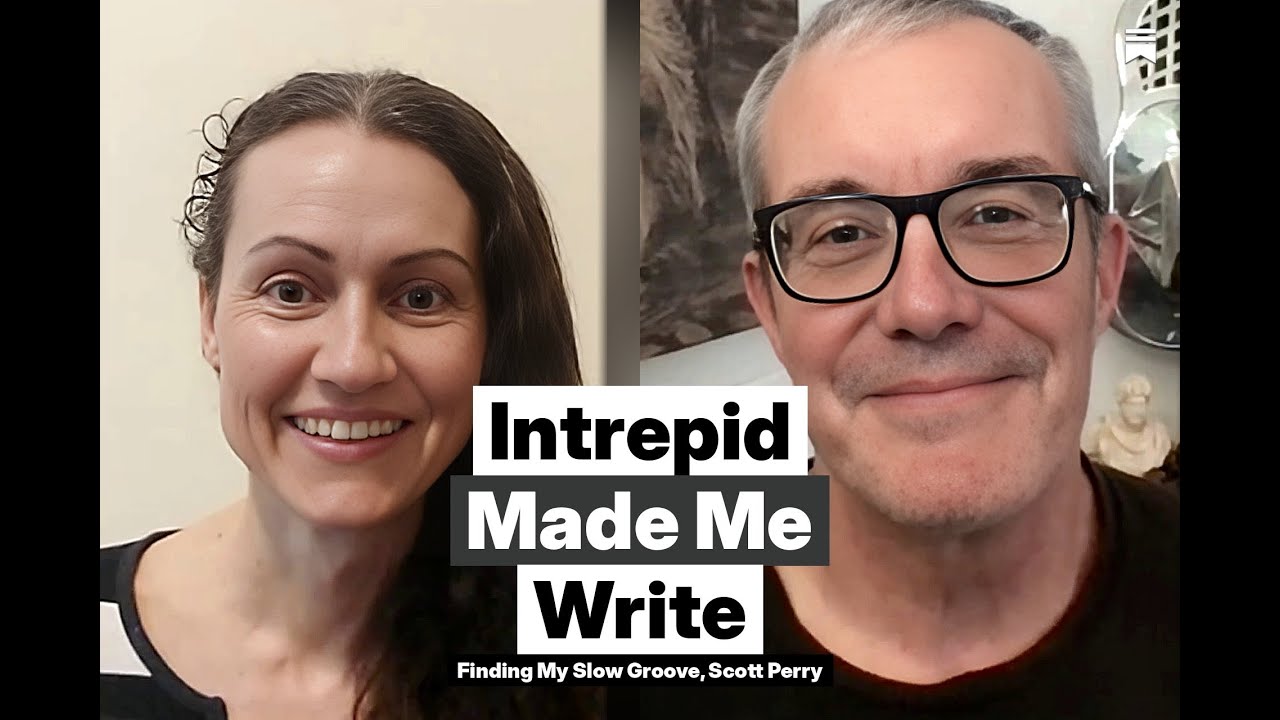
Scott Perry discusses his book Intrepid and how to publish without Amazon by shipping early drafts to trusted readers, building a street team, and using Substack and print-on-demand services. Katherine shares how reading it helped her write a book in two weeks by confronting sunk-cost thinking.
Chapters
Welcome everyone to my very first Substack Live, and to celebrate this momentous occasion, I have invited my friend Scott Perry, who is with Creative on Purpose. I have known Scott for 2 years now and I'm a part of his Solopreneur Success Circle. Loving it. It is, uh, one of the best groups I've ever been a part of. Super, super wonderful people. I really look forward to going every week. And also Scott is an author and he has written many books, all of which I have read and loved, but especially the latest book, Intrepid, because Intrepid has been a real game changer for me. And I would love to ask you some questions about your creative process, Scott. But first, if you don't mind, I'd love to share my experience with Intrepid and how it's really changed the way that I'm working.
Yeah, let's do it.
Welcome, Scott.
Well, I just want to say before you lavish any more praise on me, uh, that the Circle is the best thing that I do. It's my favorite thing, and it is largely because of the participation and contribution of people like you that show up every Monday, participate, contribute, laugh at my bad jokes and share your own nuggets of wisdom. So I appreciate that.
It is an awesome experience. So my experience with Intrepid, since that's what I'd love to talk about today, is the book. Is the first time I read it, I went through with the lens of my business. So I had this business that I was working on that I was trying to get off the ground, hadn't really made too much progress with it. So I was excited that Intrepid could help me, um, figure out where maybe I was going wrong. I went through all the questions pretty satisfactorily. It wasn't, uh, you know, the, the answers were coming to me. And then I got to the last section and I read the question about, um, What are you gonna do about sunk costs? And do you know if it's time to quit? And that question hit me like a sucker punch to the gut because suddenly I had this, well, all the way through I kind of had this little niggling that maybe I wasn't on the right track, but that was like the big signpost that said, you are not, you're not on the right track for right now. And so I went away for a while and I came back to it with a new outlook, with a new path that I wanted to try. And for the longest time in my life, I've wanted to write a book and I feel like there's one inside me that just is dying to come out, but I've never taken those steps because there's always been something else in the way, usually me trying to build a business or get a degree or do something external like that. And so I went through Intrepid again. Through the lens of me writing this book. And the questions, they were just, as I was answering them, the answers were making my heart sing. I was like, yes, this is the thing. I can answer these questions so easily. I get to that part at the end about the sunk costs and the quitting. And I'm like, maybe no, this is, this is the thing. I'm, I'm not even worried about sunk costs. I'm not worried about making money off of it or anything like that. I just feel like it's something that I want to put out in the world. So thank you. This book has been a huge help to me, and that was in like the span of 2 weeks. So I wasn't even like deliberating over this for months and months. It was a quick 2 weeks, and I'm already on a new path. I've already got like a chapter written, my, uh, introduction's almost done. I've got a collaborator, so Yeah, the— it's moving forward at a much faster pace than I could have dreamed.
Wow, that makes me so happy. It really does. It's— there's so many little nuggets to dwell on just for a minute. The first is that you did all this in just a couple weeks, which is so interesting because the book only took me a couple of weeks to actually produce. It's one of the quickest writes I've ever done. I've done a book or two already in like under 30 days, but to do it under 14 was, um, it sounds similar to your experience. Like once I kind of figured out what I wanted to do, it just kind of emerged, uh, almost fully formed. So I love that part of your share. And the other part of your share that just really is validating is that's the way the book is designed. It's designed so that if you are— have like a sneaking suspicion that there's something you should be working on, that you can start at the beginning and kind of work your way through, and it will give you some insight and some inspiration for, you know, how to start, if you should start, uh, you know, what you should start on and, and what you should do to get started, to craft your path, and then to maintain your commitment. But the book, at the very end, the conclusion is now that you've completed the book, the best thing you can do is go back through the book again, because you, by the time you've read it the first time, you are a completely different person. Uh, you have new insights, new perspective, new ideas in your case. And going through It's— I cite my favorite pre-Socratic philosopher, Heraclitus, and his famous quote, "No one steps in the same river twice because they're not the same person, nor is it the same river." And the book is super designed for that. And it's also really intentionally designed for people to take intentional action. So that that all landed with you that way is just so validating and just makes me so happy because the book worked just the way I intended it to. So thank you.
Yes, and I imagine myself going through it again, let's say in a year's time, seeing how my answers line up, seeing— because I will be so far along on the book— seeing, you know, how, how much more it can help me in the future and future projects as well, because I can see this being useful for a very long time.
Oh yeah, well, just, uh, 2 more quick things. One is I was on a call with Sandra Joa, who is also a member of our community and a friend of yours and a friend of mine. And she had the exact same experience. She read the book through once and got a lot out of it. But then she went through a second time and like major revelations and epiphanies arose that really just completely reframed the way she was thinking about herself and her business. And I had a call with Claudia Faith yesterday, who is a, you know, kind of a big deal on Substack. She's got a huge following and a huge subscribership, uh, and she was asking quite a few questions just about the nature of how the book, you know, the process of how the book was written, but also how the book was developed and promoted through Substack as I was writing it. So for you and other members, I just saw Judith and Claire pop in, and I know Judith has already signed up, and I think you, you've just signed up for a workshop next Wednesday, which is open to the public. I'm gonna basically pull the curtain back and say, for all of you who have been paying attention to how this book has been published without Amazon, without any social media, without any online course or help from any online guru. This is, this is how, you know, this is what I did, this is how I did it, and this is the result I got. And we'll follow up with members of the community like you and Judith and Claire, um, to talk a little bit more about process, like, like how can you write a book that maybe you've been sitting on for a long time and get going very quickly and spin it up and test it, you know, validate the idea, validate the concept, validate the interest, and build excitement and help spread the word before you even hit the publish button, whether it's on Amazon or self-publishing in some other way. So just some things that are coming up.
Yeah, those are sort of the questions that I had for you today were around that creative process. For example, I started the first time I read Intrepid as a solopreneur and the second time as a creative. So I feel like this book is for all those people. You're building anything. And, and we've talked before in the circle about how solopreneurs are creatives because what you're doing is a very creative act, but perhaps an author or painter or person that does pottery doesn't see themselves in as a solopreneur, so maybe wouldn't think the book was for them. But I would say absolutely, it, it certainly helped. Do you think there's any way that a creative would approach it differently? Or because as a solopreneur, I went just start to finish, but maybe there would be a different way to look at it or a different way to approach it as a creative?
Well, I think the— I do work with a lot of people who do self-identify as solopreneurs, meaning they are independent business owners. They are the product development team, they are the marketing team, they are the fulfillment team, and they are the customer service team, and on and on and on. And as you already kind of pointed out, I don't really distinguish solopreneurship from being a creative. I mean, if you are bringing forth a product or a service into the world that intends to make a difference, then you are a creative solopreneur, or what I like to call a purpose-driven solopreneur. And so the short answer to your question is I don't The book is written for human beings. If you identify as a human being that would— has this sneaking sense that life is speaking to you because it would like to speak through you in some kind of more meaningful and fulfilling way, the book will help you. If what emerges turns into a business, a product, a service, great. If it turns into a creative enterprise like a book or a painting career or, you know, musical life or whatever, great. And if you're just a person that has a, a cause that you're promoting or an idea that you're trying to promote in the world that will help make things better, I think it will help you as well. I mean, creativity, but mentally, I've written about this in previous books, my definition of creativity is bringing forth something into the world that didn't exist before You brought it forth. This conversation is a creative act. Is it the first conversation that's ever happened? Of course not. But there's never been one like this before, and there won't be another one like this afterwards, because we are making this happen through, you know, a connection, a collaborative exchange, uh, a creative, creative exchange, and, um and with the intent of helping other people. And those are fundamental things about any creative enterprise.
Mm-hmm. Yes. One of the things in Intrepid that I found super helpful was the whole ship before you're ready. I know Seth Godin talks about this a lot, and I've read about it a lot, and I still have a very hard time with it. When you're writing Intrepid, how did you ship before you were ready? And like, how did you work through that? Because I'm sure it wasn't easy.
Well, I definitely shipped early versions of the book. You read one of them that, you know, were not perfectly— I hadn't completely dialed in the structure. I hadn't completely dialed in the, the absolute result or outcome I wanted people to have. In the book, but I, I wasn't going to be able to— like, I can't figure that stuff out until I get feedback from people. And shipping before you feel ready, uh, which yes, Seth Godin talks about a lot, is, is not— doesn't mean ship shit and see if people like it. Like, that's not the point. The point is If you have a feeling, an instinct, a call to get this idea out, the only way to test it for resonance and to validate whether it's— people are interested and validate that the change you seek to make will work is to get it in front of more people. I think the big mistake is people confuse shipping with like put it on eBay or put it on Amazon or, you know, put it for sale on your website or what have you. Like, I don't— or, or even worse, like, here's two cover ideas, Facebook friends, tell me which one you like best. Asking a bunch of random people that barely know you or don't know you at all but definitely have opinions whether they understand or know you at all is a really bad idea to valid— a bad way to go about validating an idea. So when it comes to shipping before you're ready, one of the things that we'll talk about in the upcoming workshop is, yeah, you should write a book for people whose permission and trust you've already earned, who are already interested in the things that you talk about or the difference that you're trying to make in the world. In the world. And you should earn their enrollments, get their permission, and say, here, I made this. I made this actually for you. Would you take a look? Would you tell me what you think? Would you, you know, is this something that you would buy if it were for sale? Or, you know, in some cases in the past, I get an idea for a book and I actually build the sales page and I put it out there for early bird pricing at $10, and if I sell 10 of them, I— then I say, okay, valid idea validated. Gonna write the book now. Gotta write the book now. People already gave me their money. Like, that's, that's the way that you can ship before you're ready without risking setting yourself up for unnecessary criticism and trolling and all the things that are terrible about, you know, doing your work out loud and in public in an online anonymous environment. Um, so yes, ship before you're ready, but do it strategically. Do it in a way that helps protect you and your process and your sense of well-being and your peace of mind and your sense of prosperity and your, and the, your purpose, you know, to, to do this and see it through. Because that's another part of the book is don't, don't decide that you're going to make this thing unless you're actually going to see it all the way through. Like, the best time to quit is at the beginning before you even get started, because it's going to be harder than you think. You know, you'll find this out very soon, Katherine. Like, if you're writing a book, it's always amazing at the beginning. Oh, I'm so excited! I wrote the introduction, I wrote the first chapter, this is going great! And 2 weeks from now, 2 months from now, you'll be in the dip. You'll be slogging your way through. You'll be sucking guessing yourself and doubting whether this is worth your time or whether anybody's interested. Um, you have to decide at the beginning that you're going to— that you understand the dip is there and that you're going to do what you need to do to ship through the dip, because that's the way that you create work that stands alone in the marketplace. That's idiosyncratically and uniquely yours and makes the difference. Only you can make it the way you can make it.
My idea of writing a book is, you know, me sequestered in a room typing away, and then it's done, and I maybe get beta testers. Like, to me, that would be shipping before it's ready. But as I'm listening to you, a thought popped into my head that maybe dripping it or, or teasers, I suppose, like bits here and there of what I've written to see if people are engaging with it or if there's like actually the audience that I think. So that's some thoughts that I think I'm, I'm going to challenge myself to do because it would be a challenge. I would love to just sit in a room and write, write it all and then ship it away and be done with it. That's my introverted way of writing a book. But I think for the book's sake, it would be better to let my audience know in advance that it's happening and this is what parts of it are going to look like or could possibly look like. And then that if I do strip out a piece and turn around in a month and don't like it, it's— I'm not like writing it in blood, you know, it's not there forever. It's— everything's subject to change.
Yeah. Well, I've, I've written several books that have literally been blog, blog my way to a book where I've blogged chapter by chapter and sometimes just blogging a bunch of random ideas that turn into a book because I find the connect the dots after the dots are already kind of out there. Um, so I think that's a great idea because, you know, one of the things that you had that you're doing as a as an author, as a creative, as a purpose-driven solopreneur is you're trying to be generous and help the people that you seek to serve, but you're also trying to be generously polarizing. You want the wrong people to say, no, that's not for me, and move along. Because the worst thing in the world is to try to make your thing for someone that has really no interest or doesn't align with your core values or your guiding principles. So I think doing some of, at least some of the writing out loud and in public is a great way to get more comfortable with shipping before you're ready and to, uh, build the muscle of, of, of doing your work out loud and in public, but also a great way of creating insider-outsider status that will actually help make the book stronger as you're writing it, but actually build a demand for it before you even finish writing the conclusion.
Yes, I'm excited about that workshop next week because I think now is a great time to get started with promoting it on Substack.
I think, well, it, it's spring, like, this is the time we should be birthing things, right? So it's a great time to get started on a book. It's a great time to put a goal out there and a point on the horizon and start making your way there, there for sure.
So you self-published Intrepid, which means that, um, and, and I believe you did not put it on Amazon, so you've gone through Substack and your website and Lulu. Is that correct? Yeah. So Having done that, is there any advice you could give me on how to go about self-publishing? Because I, I'm under no delusion that I'm going to have this published by a big house publisher. This is going to be me publishing this because I want it to be in the world. But were there like some pitfalls or traps that, you know, could be avoided if you had known in advance?
When I published my, my first book, I was lucky enough to already be connected with Michael Bungay Stanier, who is the author of The Coaching Habit, his most best— his bestselling book and most— the one he's most well known for, which was his second book. And he was forced to self-publish because nobody— his publisher didn't want it and nobody else wanted it. Which is insane now that we know how well it's done. But he wrote a great article that I recommend to anybody that is thinking about self-publishing. And basically his, you know, there are all the— you can self-publish on Amazon, you can self-publish on lulu.com, there's other platforms. But you know, in this day and age having kind of a publish-on-demand, or you could create an EPUB doc and just put it on a landing page on your website and sell it that way. There's— it's, it's very easy to self-publish. The harder part is getting the word out to enough of the right people, which again, you can do that as you're writing the book is a great way to get started. Um, I chose— I, I've released at, I don't know, 9, 10, 12 books on Amazon. It's super easy to do. Almost all of them have been bestsellers because it really doesn't take that many book sales to get a bestseller status on, on Amazon. Um, and you don't have to buy it the way you have to buy your way into the New York Times bestseller, Washington Post bestseller list. Um, I chose not to— I, I part of the incentive for me to write the book was I just finished reading the book Enchidification by Corey Doctrow. And like, you know, you know my story with social media. I've deactivated all my legacy social media accounts last year, getting ready to delete them entirely actually right now. And Corey's book just like highlighted all the things that I don't like about platforms like Amazon that initially started off being very user-friendly and now— and then moved into being kind of, um, more friendly to the, to the platform or to the business and, or the shareholders, and now are just about grabbing profits at any expense. So self-publishing without Amazon definitely was a little bit more challenging. Not challenging enough to dissuade anybody from doing it, but just, you know, I didn't have as much ease. And I hired someone at Fiverr to do the formatting for me. Um, cost me like $150 to get the book properly formatted to self-publish on, on Lulu with paperback and ebook editions. Um, the big thing about the self-publishing piece of it is knowing that it's very easy to get books published. How are you going to get them in the hands of the right people? The thing that I did that you were an instrumental part of was I reached out to my warmest market, the people that have already read a bunch of my books and are already members of my community and said, hey, I'm doing this thing. Uh, I, in exchange for just some feedback on the initial draft and boosting a couple posts on Substack promoting the book, I'll send you a free copy of the book.
Book.
And I thought I, I was shooting for 9 people, Fellowship of the Ring style. I ended up almost doubling that number. And that— I, I've done almost no real promotion of the book because people like you and Sandra and Alice and Bree, who are members of the community and supporters of mine already, some of them are clients they went live with me. They helped me get the word out with, you know, spread the word to their audience. And, you know, that's, that's the thing that I think, uh, the magic trick is not— I mean, it's hard to write a book. It's like running a marathon. You have to know where to put the tired, to quote Seth Godin. The thing nobody tells you is that after you finish the marathon of writing the book, the second marathon begins, and that's the marathon of promoting the book. And if you're gonna again do that all by yourself, it's gonna be really, really hard. But if you get yourself a street team, or I called it Team Intrepid, I— the lift for getting the word out has been very small and I'll share more details on next week on the free workshop, but I sold more books without using Amazon than I ever have with Amazon. And I definitely have sold them to more of the right people because the— based on the emails I get and the reviews I get and the feedback that I've gotten, it's just easily 3 times the amount of feedback that I've gotten on any book just in the first couple of weeks since the book was published.
I have to say, I appreciate that you don't have it just on Amazon because I don't use Amazon, and so it has made it easier for me to write reviews and direct people to the site and things because I won't go to Amazon. So So it's nice that there's an alternative. So I think when I self-publish mine, I'm going to go with that alternative. I like the idea with the Lulu, you can do print on demand, so therefore I can just print as many as I need and the rest can be through ebook. So I'm glad there's lots of options, much more than there ever used to be.
Other people can also buy the book paperback through Lulu. You can, you can just but, and have them shipped to you and you ship them out. But you can also put it up in the— Lulu has a store. It's obviously not as big as Amazon's, but you can publish, um, on Lulu store or retail. I can't remember what it's called. And, and people can go to the site and purchase the book there themselves.
Awesome, that's good. Yes, good. I'm excited to, uh, really get moving, not just on the writing it, but on the sharing it. And I'm gonna consider it sharing it as opposed to promoting it, because promotion for me is uncomfortable, but sharing is fun. And so I'm going to work on sharing, sharing my book far more with more people. And so, yeah, thank you so much for helping me see that there is another way that You know, sunk costs are not the end of the world. It doesn't, doesn't matter how much time and money I spent on that other thing. If it wasn't working, it wasn't working. And, and I never would have come to that conclusion if I hadn't read Intrepid.
Well, I really appreciate that. And I know that I'm not the only one in our community that's excited to hear that you're writing a book and getting ready to start sharing it with us. So. I really am looking forward to being a witness to your journey as well.
Well, thank you. You'll be, uh, I will definitely be asking for similar things with this community and my other communities that you have been using your journey through this, uh, sharing this book as my model. Steal, steal like an artist, right?
Yeah, steal like an artist, learn over the shoulder. That's, that's, that's all.
Well, thank you so much for joining me on my first live, Scott. It was fun. It pretty much went off without a hitch. So I'm, I'm still glad the first one under my belt.
Yeah, it's always a privilege to, to speak with you, Katherine, but, uh, to be, to be part of your inaugural live is super exciting. I'm gonna put it on my, my resume.
Oh, me too.
And yeah, really appreciate your time and your generosity in hosting today. Thank you.
Okay. Thank you, Scott Perry.
All right.
Take care.
Bye-bye.
More from Scott



Stoics Don't Suppress Emotions, They Do This Instead #stoicism #emotionalintelligence #mindset







