How to Get Clients with $5/Day Facebook Ads (Without Funnels) | Laurel Portié
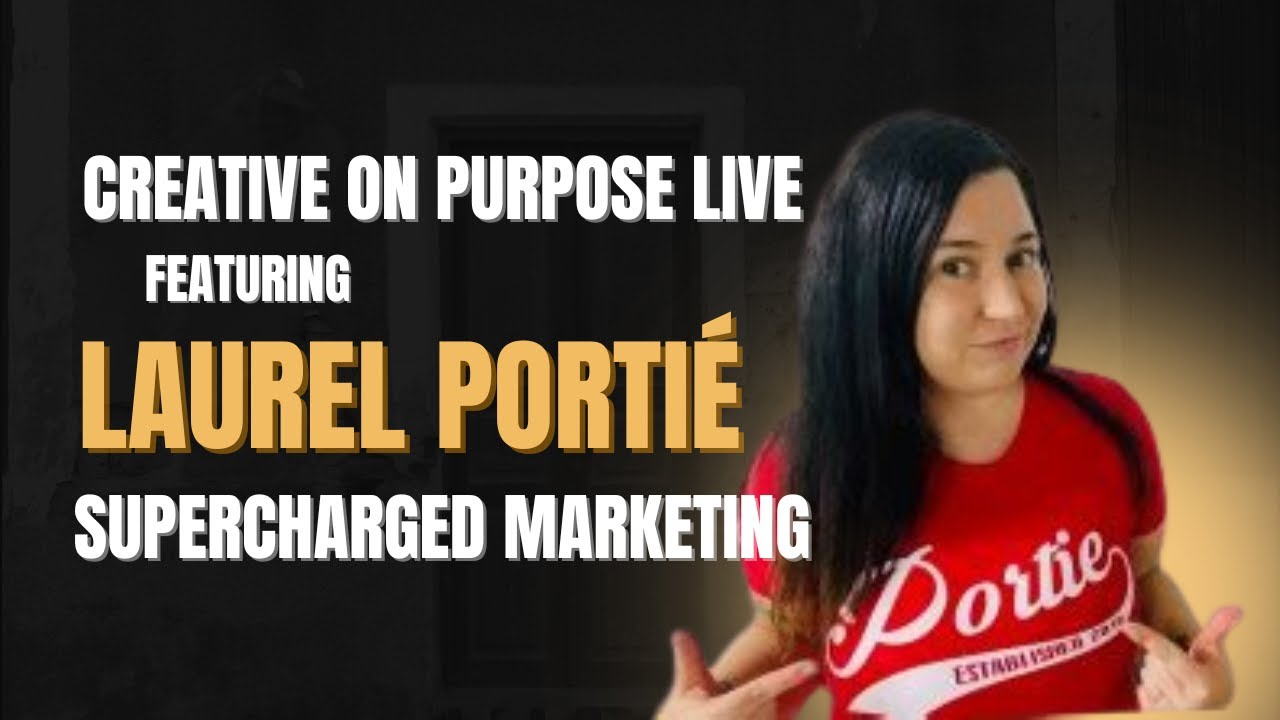
Laurel Portier teaches service-based entrepreneurs how to get clients on $5 a day with Facebook video ads, skipping the funnel. She uses Messenger conversations as the main sales channel and aims for 100 chats in 90 days. Her clients close deals on under $500 monthly ad spend.
Chapters
Welcome to Creative on Purpose, a show about defining, developing, and delivering the difference only you can make. I'm Scott Perry, Encore Life Coach and author of The Art of Encore Living, Chief Difference Maker at Creative on Purpose. You can start playing your game and living your legacy by visiting creativeonpurpose.com and get started right now. Let's meet today's guest. I'm super excited to have my friend Laurel Portier here. Welcome, Laurel, to the broadcast. Please tell our viewers who you are, what you're up to these days, and where can people go to learn more about you and the difference you're making?
Yeah, absolutely. Thank you so much, Scott Perry, for having me. So, uh, my name is Laurel and I'm actually the founder of adcoachingforseven.com, where I am now proud to say that I have now taught over 6,000 coaches, consultants, and service providers how to launch budget-friendly ads, um, in order to grow their business. And, uh, it's been just a wild ride because I, uh, got my start in television about, you know, 2 decades ago where I just aged myself. And so I do things a little bit differently. I know a lot of you guys are probably used to hearing that, you know, in order to get any traction in your business, you have to spend a ton of money. And I am living proof. I am, uh, close to the $2 million mark, and guys, I still have not spent $100,000 in ads. And so that is kind of like my claim to fame, and that's what I help other coaches, consultants, and service providers do as well, because I know, you know what, not everyone has deep pockets, right, Scott?
Yeah, well, and just in full transparency, I am one of those couple thousand people that have been through Laurel's program. I worked with Laurel for 6 or 7 months last year. What I love about our connection was I connected with you when I was like actually on the verge of getting out of social media altogether. I was one of those people that, you I didn't have a love-hate relationship with social media. I had a hate-hate relationship. And I also recognized that it was a tool that some people were using to get their message out there to the right people that was able to connect their content with the right people and able to fill their program. So I watched, I think I only watched you for like a week before I just decided to pull the trigger and jump into the $7 program. And I was probably there for less than a month before I jumped into the Lean on Laurel. So I'm really pleased to have you on because you are just really the best at what you do. And you do it in a way that enables people to maintain their integrity and have like an ethical, empathetic approach to how they're creating content and share and who they're sharing it with. The other part of your story that I find really fascinating is You actually built your business by really playing your own game, doing things in a very unconventional, up to that point untried or untested way. Got a lot of flack for that. And, um, and now suddenly everybody's starting to do things the Laurel way, even the people that were the naysayers at the beginning. So I'd love for you to just share a little bit about that journey, how you decided to, to build your offer the way you did and what it was like to, you know, to persevere in the face of all that criticism, but then come out on the other side so successful.
Yeah, absolutely. So as I was saying before, my background is actually in television. I started working in television in 2002 and, you know, I had one of the hardest jobs in television, right? Getting people to watch the 11 o'clock news. Now we're talking 11 PM news. And so I am a sophomore in college. I just started my first TV job. And of course, they put you on like the worst possible spot, right? The newbie always gets the worst job. But because I got put into that spot made me the person that I am today. Because, you know, back in 2002, there was no social media as we know it today. But it helped me learn how to get really good at two things and two things only. Only. One, getting people's attention, because it was my job— literally, back in the day, you know, it was like Cold Case, CSI was kind of like the big CBS shows at the time— and it was my job that once those credits stopped rolling, I had to do two things. One, I had to get people to not pick up that remote. That was the first thing, right? I had to immediately grab their attention in the first second or two as those credits were rolling. And then the second thing was even harder— getting people to stay 3 minutes through boring commercials to watch an even more boring thing, the 11 o'clock news, right? So I had to do two things. One, get people's attention. And two, I had to make whatever was coming up on the newscast relevant to my audience so that I could hold their attention. Does that sound familiar? Right? And so as social media started to become a major player, I never forget this. Back in 2008, I was working at CBS in Dallas and Facebook was starting to become like this thing. And my boss came up to me and he's like, hey, he's like, I see that you're on Facebook promoting your band. At the time I was in a band. And so during my lunch hour, I would create all of my band's events. I started, you know, running some ads and he's like, how would you feel about doing that for the station? Of course you're still gonna have to do the 11:00 PM, you know, topicals and stuff like that. But he's like, I think this would be a fun job and you could basically make the job whatever you wanted on the side. And so basically I just took what I was doing in television and translated it onto social media. Fast forward here, it's, you know, 2018 is whenever I first started my business. And by this time, I had worked at several CBS stations, had gone through so many transitions. I was the, the social media director, where now social media was actually one of the biggest things in order to grab people's attention. Because it used to be that the biggest competition for TV stations was the television station down the street, right? Well, back then, into— in, in the, in the late 2000s, the biggest competitor was actually people's smartphones. And so I was no longer trying to beat out the station across the street. I had to fight to get people's attention off of their phone and onto the television. And so I— it was all of these moving pieces that I really had to learn how to create compelling content. And one of the things that I figured out is that whoever won social media actually won the ratings for that night. And so I literally, whenever I decided that I was going to start my own business, which, by the way, just kind of happened by accident, I just started going live on Facebook and teaching people how to do Facebook ads because a couple of my friends had asked me, hey, can you do Facebook ads for such and such business? And I was like, I'm just going to go have fun and teach people how to do Facebook ads. And the same ad strategy that I was utilizing to hook people to watch my news programs or my new television shows is the same strategy that I'm teaching you guys. And the cool thing about it, the cool thing about it is, is that it is the most budget-friendly way in order to get eyeballs. When all of these coaches are teaching conversion, conversion, conversion, I learned how to utilize the ad platform in order to rig the game so that we can utilize low-budget ads and get a better result if you're willing to play the long game with advertising, right? Because Scott, I'm sure you've heard so many times, and maybe you've even said it yourself, Facebook ads don't work, right? I always have to laugh when people say that because that is equivalent to saying that a commercial doesn't work. People are about to spend next weekend millions of dollars in one of the most expensive, right, television spots like ever— Super Bowl, right? People are paying millions of dollars. And so to say that Facebook ads don't work is equivalent to saying that commercials in the Super Bowl don't work, right? And so I always tell people, if Facebook ads don't work, And it's not the Facebook platform. It's actually you. You chose the content, you chose the audience, you told a machine to do something. And so the machine just did what you did. And so I knew that like I had something whenever I started utilizing these $5 ad strategies and I started to see better results utilizing the platform in a way that the social media platform was built to do, right? Social media was built for people to have conversations. All we're doing is rigging the advertising platform to have more conversations with people, not sale, sale, sale, sale, because that's actually what costs a lot of people money when it comes to advertising, because they're so focused on conversion, conversion, conversion, which is the most expensive and the hardest thing to do on social media.
Yeah. Oh, I love that you referenced Dan Nicholson's book, Rigging the Game. And you also just actually really demonstrated beautifully. You demonstrated beautifully one of the ideas he shares in that, which is T-learning, right? So you took something from the television domain and made it work and go deeper in the social media advertising vein, which is super powerful. It's a great way to get insight and new ideas, you know, when, when you're an expert in something. Um, and the other thing is, you know, when we're talking about rigging the game, you're rigging the Facebook game so that you can play your game. So it's— I, I love what— yes, I am a person that has said Facebook ads don't work because I tried them and probably spent $1,000 or more with no result. But, um, when I started working with you, I realized, oh, social media is actually just a tool that I haven't understood how to use. And if I understand how to use it properly, it will work for me, because every tool has a function, and if you employ the tool correctly for its function, you'll get the results that you want. How about the, the other element that I'd love you to touch on is just, you know, what kind of feedback were you getting from the industry? Other people, you know, the gurus and the experts and the, uh, and well, let's face it, a few of them are charlatans as well, um, were giving you a lot of crap, uh, as you were building out this, this new approach using low, low, um, ticket ads. How did you navigate that and how did it all end up?
Yeah, absolutely. As a matter of fact, back in my, back in my early days, I actually lost a lot of agency clients because having the television background, you know, I love going all in on video. I've known for a very long time that video ads will most often beat text ads because it accelerates the process at which people trust you. They can, they can get a feel for who you are. And so whenever a lot of my clients were going to Funnel Hacking Live, they were talking to all of these other people who were trying to recruit them so that they could do their ads, right? And so truth be told, I lost a lot of clients because all of these gurus were telling my clients, she's wasting your money by doing video ads. You should be going after sales right now. And, you know, when the iOS update happened back in early 2021, the clients that I did have were actually super excited that we didn't have to change a thing about our strategy because my strategy, which relies on an on-platform action, not necessarily conversions, we were able to literally still execute the strategy without losing any data because we were utilizing video ads. And so all of these people who knew better than I did, right, they had to go to their clients and say, hey, we, we have to stop the ads for several months. Like so many people, like, I mean, there were businesses that got shut down because of it because they were relying so much on, you know, the Facebook ads platform. And my clients just sailed right on through because they understood the power of video and being able to retarget not only based off of video views but following their audience around on a day-to-day basis through different types of content. Because so many people are focused on sale, sale, sale. How many of you guys have those people in your newsfeed? You don't even stop to read their post even organically anymore because you know it's a pitch, right? And that's what's happening in the ad space is that so many people are, you know, just posting ads that sell, where my system works on something that's called pipeline equity. Total transparency, I did not come up with that. I think I've heard Cole Gordon, um, coined the term and I loved it so much. But he talks about how you have to build up pipeline equity. It's like you want this much value and this much sale, because every time you post a piece of sales content, goodwill with your audience goes down because they put their guard up, right? And so my system is built on creating a ton of goodwill and a very short sales— like a very low minimum sale, direct-to-sales ads. But the goodwill content is stealth. It has a system built into it that will allow you to sell once you get people into the Messenger, right? So we're basically rigging the game, telling the advertising platform, put this piece of content in front of this person with the intention that I'm going to give this person some value, and in return, I'm going to have a really awesome conversation. And conversations are the fastest path to cash. And so that's why my system works not only with a low budget, but it works fast, right, Scott? Like, I mean, within the first couple of weeks, you had already sold your, your first coaching package because of this whole idea of like, okay, cool, I'm gonna put this out along with this, these other pieces of content, and they all have to work together.
Yeah, well, that's exactly right. I, I, I hit a home run right out of, at my first at-bat, which surprised nobody more than it surprised me, but I think that one of the reasons why I had that success is, um, you know, one of the things that I, I, I also am a person that has had kind of a hate-hate relationship with marketing in general. Lots of people are hung up around this idea of marketing because we associate marketing with scammy, slimy, tricky tactics that, you know, just get you to part with your credit card number as quickly as possible because that's how so many people are doing it. But that's not marketing, that's just really bad marketing. And when I was coaching in Seth Godin's marketing seminar, I kind of realized that, oh, marketing is like, if you're going to do it with integrity and have, you know, some empathy and employ it ethically, marketing is actually just telling true stories to people that need to hear them so they can collide with you and your offer so that their lives will be enhanced and they'll get what they want. Out of life. And one of the things that you helped me with, you know, I mean, Facebook ads are Facebook ads. It's all about pushing buttons, right? But you're pro, really, really helped me dial in an offer that was irresistible, an audience that was eager and engaged, and provided me with a system of, for getting that offer in front of the right people at a frequency that would allow me to, to your point, you know, it's all marketing at its best is not business to business or business to customer, it's human to human. And this whole idea that you've shared about initiating conversations, like, can you get a comment? Can you get a conversation going in the comments? Can you get that conversation moved into a Messenger conversation? Can you convert the right people in those conversations? To a discovery call. And it sounds like a lot of work, but it's actually, I, you know, because I share this same process, your process, with my clients, and, and they say, well, that sounds hard. It's like, it's just talking. It's like what you've been doing ever since you exited the womb. It's communicating with people and building connection so that you can collaborate and create a solution together.
Yeah, like, we're, we're at a time right now, and there's the The biggest opportunity is going to be this year, I guarantee it, because there are things like AI that's coming out, right? More automation. Like, everyone is, is going crazy over more automation. We're all like, if you guys are gonna follow what I do, we're gonna go the opposite. We're gonna go at the least amount of automation as possible, and we are going to win. Because here's the thing, Everyone needs, especially now, because especially the coaching and online space, they have been duped way too many times. Like, you know, I told all of my clients who have webinar funnels, we need to create personalized touchpoints. I had one client in the $7 program and he, he had put a question. He's like, hey, he's like, how could I automate the process I want people to register for my webinar. I'm using a lead form and how do I zap it so that my email— and I was like, as a matter of fact, I said, you can take this advice or you could leave it. I said, here's what I would do. I would change that lead format into a Messenger ad and I would personally deliver that Zoom link to every single person who opts in. And he's like, but that's going to be— I was like, I guarantee you you will have a better show-up rate and you will likely close people before they even get on that webinar because of those touchpoints. And, you know, people want to push back on that, but that's the reality. Like, even, you know, I follow a couple of people like, you know, Cole Gordon, Brian Mercado, a lot of people who are, you know, they are like awesome at running VSL funnels to high-ticket offers. I mean, these guys spend $50,000, $60,000, $70,000 a month in ads. And guess what they're doing? Exactly what I've been telling people to do for the last 4 years. How can we have an instant connection? They're not looking for more automation. They're actually going backwards from automation and putting in call centers and, you know, client success coaches in, in place of the funnel because they know that automate— that the more automated, the least, the least amount you're going to get your return on ad spend. Like, they are already seeing, like, even, even with my clients, we've had to restructure the way that we're doing webinars and VSL funnels because there's too much friction because of just— that's just the nature of the game, right? Like, and so the way that I teach you guys how to do this ad strategy is with at least amount of friction as possible, like micro steps. It's like content, conversation, content, conversation, content, conversation. We're getting that conversation as fast as humanly possible. Everyone who's watching this right now, you have an opportunity. Your competitors want to put this big old funnel in front of that, that conversation. You have an opportunity to beat them at their game by having that conversation as fast as humanly possible. And all it takes— it doesn't even take a $5 ad. You could do this with a dollar. And it works on Facebook, It works on YouTube, works on TikTok, doesn't matter the platform. And that, and that's what's cool about this strategy is it's— you can do it whatever platform you want.
Yeah, well, it's because what you're advocating and teaching is what has always worked. You know, before there was social media, you bought from people that had earned your awareness, attention, permission, and trust. And got you interested and enrolled in the journey that they could take you on so that you would invest. Um, and, you know, you have to have skin in the game. They have to have skin in the game. And I love— you're absolutely spot on with leading people, again, leading the right prospects through this process. Because what I noticed is by the time I graduated from your program, my discovery call close rate was 100% because the conversations that I was having leading up to that point, I had earned buy-in, lock-in enrollment long before they asked me if we could get on a call. And so by the time the call happened, it was just, which thing are you going to buy? What's the best, you know, what's the best vehicle for you to succeed, you know, the best vehicle that I can offer that will get— help you get from where you are to where you want to be with the least amount of friction and fuss. So it's really super powerful. The, the other thing that I just want to highlight, um, is the simplicity of your approach is really powerful. And, you know, you— your mentor Nick Peterson is someone that you, you shared his work with me, and I, I've learned a ton from him, but this idea of systems reliability. The more components you have in your funnel, the lower, the lower it will perform overall because it's each component only has a certain percentage of efficiency. And when you multiply all those, those efficiencies or inefficiencies together, you get a very low number. If you can You know, basically the way I see your approach is get a, get a comment, start a conversation, book a call. And I could work on just raising the floor on, you know, each, whatever piece was performing at its worst. And I would improve the overall efficiency of my system. And, you know, I'm not ashamed to say I went from struggling to make $3,000 to $5,000 a month. To making easily double that every month. And I did it in less time with less effort and I spent less money.
Yeah, I think your ad spend was what, under $1,000 a month?
I'm still at $500. I'm still at $500 a month.
Yep. And I love what you said too, because you were the one that showed up to the calls with your grandson And you know, that is why, you know, there's so many people that are like, Laurel, like, you know, you're really good at ads, you've had some amazing, you know, agency clients, you're able to help them, you know, scale 7, 8 figures. But your story, like stories like yours are why I play in the space that I am because I would rather take someone from like, you know, from going from like, you know, selling 1 or 2 things to being able to spend all of your time with your grandson, right? Like, how freaking awesome is that? And that is why— that is what brings me joy. It's not about helping someone else make an extra million dollars. And so that's why when everyone is like, well, you know, you could, you could sell so many more of your programs if you, you, you marketed to the people who wanted to make, you know, go from 7 to 8 figures. I was like, but yeah, but like, there's so many people who don't realize that literally with a $500 ad spend can change their entire life. Like, if they just learned the process of just how to have a conversation, that's what most people just are too— they either don't want to do it or they're too afraid to do it. But honestly, like, that is going to be the skill, like, in 2023, is to, like, being able to have those conversations. Like, so many people I mean, I get the question all the time, like, you know, how do you, how do you do those Hormozy style videos? You know, like those short form videos. And I always tell people, forget that. Like, that is like the last thing that you need to do. Like, if you are not making $15,000, $20,000 a month, forget that. You need to learn how to make something that's called prolific content. And that is the long form content that is going to give your audience clarity. I guarantee And I'm going to be bold right now to your, to your audience right now. Like, if you are not where you need to be, I guarantee if you make your one solvable problem to have 100 conversations in Messenger, 100 conversations in Messenger, and all you're doing, you're not worried about getting people on a phone call. If you just have 100 people in Messenger and you help every single one of those people solve one problem, I guarantee you will never struggle for another client again. It is that easy. It is not— what do they say? It's simple, but it's not easy to do. But that is literally the game. Like, if you literally just 100 people solve 100 problems in the next 90 days, you will never have to worry about where your next client's coming from ever.
I love that. Well, I was actually— as we're coming to the end of our time, I was going to ask you to share one last final tip or piece of advice, but That's it. Because I think everything that you teach, Laurel, it's their skills. And the thing about skills is anybody can learn any skill, but you can't learn it until you actually start doing it. So if you want to get better at human-to-human selling marketing that feels good, that feels like you're presenting yourself with, you know, ethically and with empathy and with, you know, real integrity and investment in helping people solve their problems, go out and solve 100 people's problems.
And let's leave them with one tactic, right, that every— that everyone could do. It'll take 30 seconds to do one thing, okay? Like, just exactly what Scott and I were just talking about. All you have to do, okay, make one 5-minute video explaining your methodology, okay? That's it. Offer a freebie. Do not ask people for a name or email. Make a Google document of some actionable thing that people can do with your methodology. So in my case, right, if I'm doing a 5-minute video on my power content strategy, I would give away my power content template or I would give away the instructions on how to place the ad from start to finish, right? Everyone just do that one video. Think about something that you can get people to raise their hand saying, yes, I want that. Put $5 a day, let it run for 90 days. That will accelerate the process of which you're having those 100 conversations. That's all you need to do.
Beautiful. I love it. All right, there's a challenge for everyone. I encourage you, number one, you should follow Laurel on Facebook, Instagram, TikTok, everywhere she is. She lives and, uh, just represents her methodology so beautifully. I have all of my clients following her. Many of them are going through her organic content strategy and they are getting great results. So just want to really thank you, Laurel, for sharing your wisdom with us. We want to thank you, the viewers, for tuning in. Laurel and I really appreciate your time and attention. We hope today's broadcast motivates you to take a bolder step into possibility, to keep go-go going with finding, developing, and delivering the difference only you can make. Visit creativeonpurpose.com. If you're watching on social media or YouTube, please leave a comment. Tell us what your biggest aha lesson, takeaway, or question is. And if you're watching or tuning in on a podcast, please leave a 5-star review. It helps more of the right people collide with this, these kind of conversations. Now, take the insight and inspiration from today's show and play your game all in and full out. Laurel, thanks so much for your time today.
Absolutely. Thank you for
More from Scott



Stoics Don't Suppress Emotions, They Do This Instead #stoicism #emotionalintelligence #mindset







