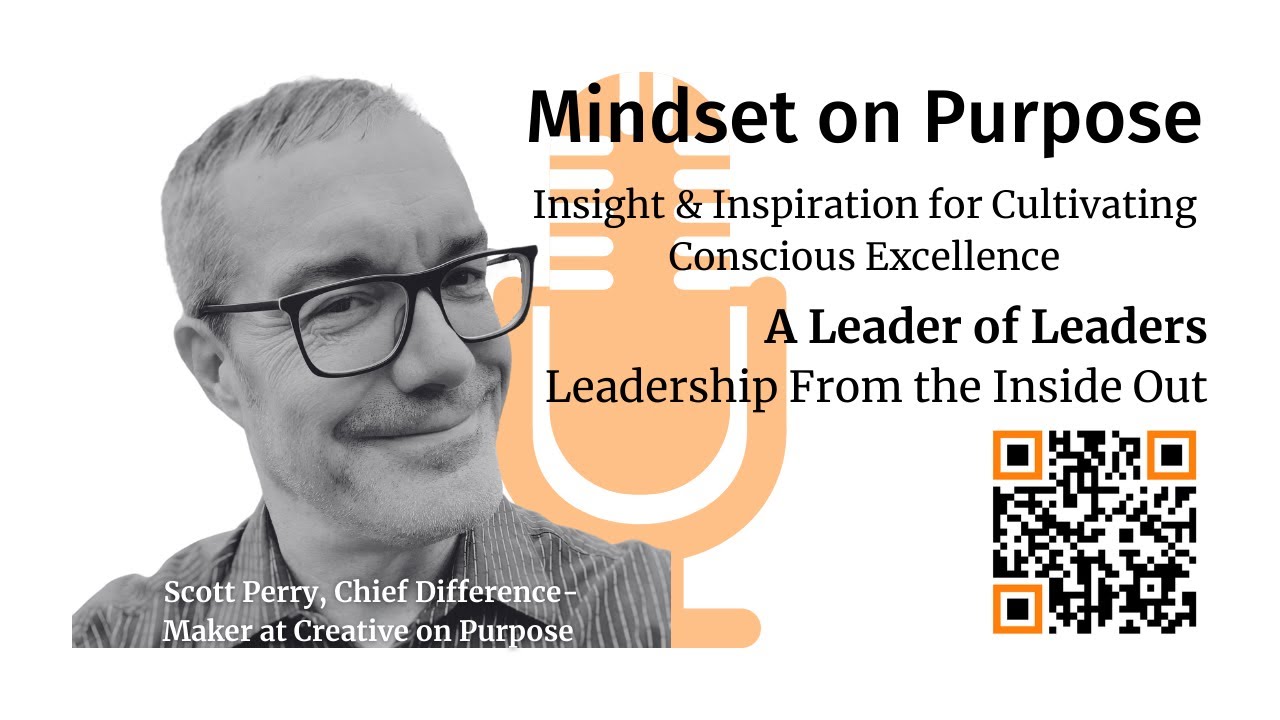
In this motivational insight, Scott Perry challenges the common misconception that leadership is tied to expertise, authority, or formal titles. He defines a leader as someone who earns trust and permission to guide others, especially when the path forward is uncertain. Perry emphasizes that leadership is a personal choice rooted in inner authority, not a role bestowed by hierarchy. He introduces the concept of a "leader of leaders," highlighting that true power is renewable and grows when leaders empower others rather than hoarding influence. The talk concludes with reflective questions urging listeners to recognize where leadership is needed, to embrace their agency, and to lead in ways that uplift and activate the leadership potential in those around them.
Chapters
Too often, I believe, we conflate leadership with expertise and authority. We assume others must have more knowledge and power than us and therefore look for leaders beyond ourselves and our circle. But what do great leaders do really? Hey, I'm Scott Perry, Chief Difference Maker at Creative on Purpose, with today's Mindset on Purpose insight and inspiration. A dictionary definition of leader is one who guides or directs. Leadership, it seems, isn't about having the jurisdiction to demand people follow roadmaps. Rather, leaders earn the trust and permission to provide a destination and a compass. A leader is merely someone who sees, steps into, stays in, and shares their power to frame the choices within a situation. They then simply make the best decision they can and take a next step into possibility. Leadership has nothing to do with certainty and overconfidence. If the destination and path are clear, who needs a leader? Simply follow the directions to the destination. But when the destination lies at the edge of our understanding and abilities, when the, the way is fraught, which is an indication that it's worth it, then we need leadership. Leadership isn't a job title or role bestowed upon a few. Leadership is a choice available to anyone willing to trust themselves and engage their inner authority over their perceptions and actions. And great leaders, great leaders are leaders of leaders. A leader of leader acknowledges their own power and sees and encourages it in those they seek to serve. A leader of leader recognizes that power isn't a finite resource to be hoarded by a few, but a renewable resource that increases as you empower others. Where do you see the need for real leadership? When will you embrace your agency to make change worth making with and for others? How can you lead in a way that empowers others to engage their inner