Motivation Gets You Started, But This Gets Results | Scott Perry
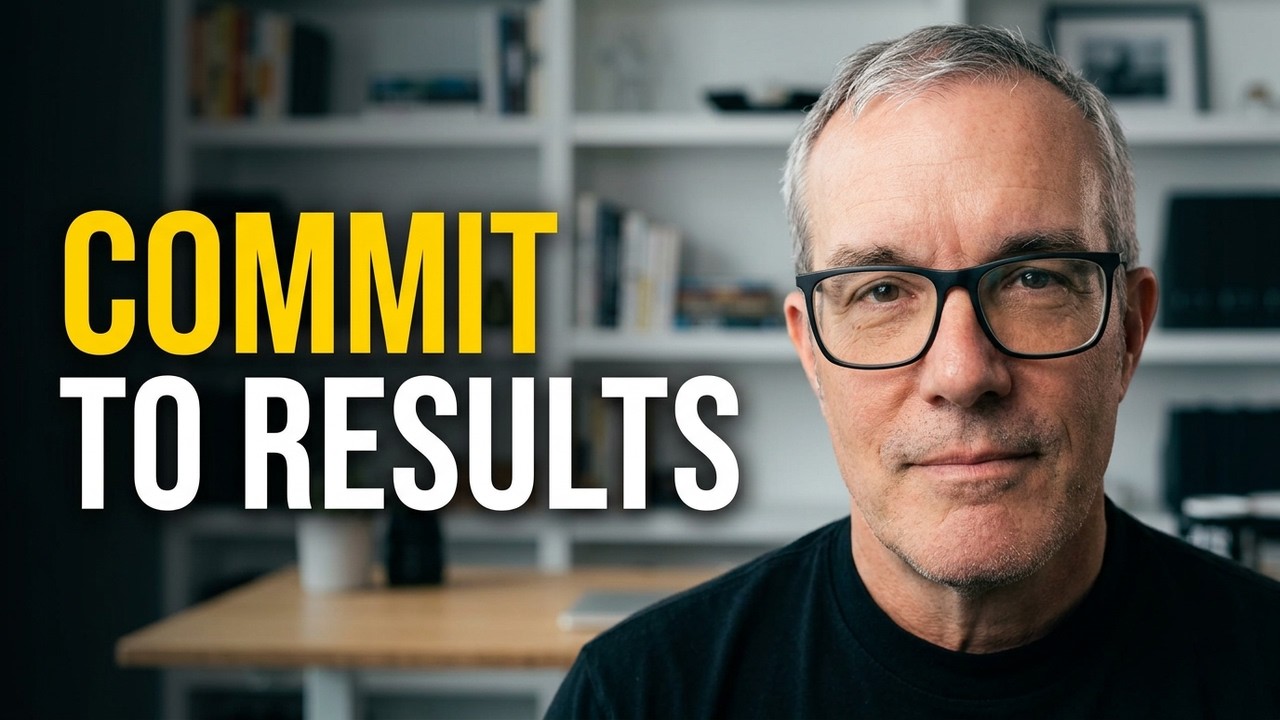
Scott Perry argues that commitment, not motivation, drives results. Your posture shapes your mindset, and taking small public steps builds momentum. Pick a solvable problem, validate your audience, and let action generate inspiration.
Chapters
Hello everybody, welcome to this live where we're joining with Scott Perry from Creative on Purpose. Thank you, Scott, for coming in. I'm looking forward to you introducing yourself and the ebook that you have launched, Intrepid: Dare to Make a Difference. Could you please talk more about that and yourself? Sure.
Well, first I want to thank you very much for hosting this call and for, um, all of your support, but most importantly, I so appreciate the work that you're doing and the difference that you make. And it's, it's always a privilege to spend some time with you, Patricia. So for anyone that's joining that is not familiar with me, my name is Scott Perry. My publication on SubSec is indeed Creative On Purpose, and I am getting ready to launch another book. I can't remember which number this is for me, 11 or something like that, but the book is called Intrepid: Dare Care to Make a Difference. And the fundamental question that it asks of folks that are ready to make the difference only they can make in the way that only they can make it is, are you— do you care enough to commit? And it's a series of 27 questions that will help you move from aspiration about making a difference in the world, doing work that matters, finding, building a better— making a bigger difference while you're making a better living and move you to the kind of person that is advancing and closing the gap between where you want to be, uh, and where you are, and the difference only you want— you can make.
Well, that sounds great because I don't think anyone out there is not in that position of closing the gap between where we are and where we wish we could accomplish all these dreams that not only we want to walk toward, but they want us to walk toward to them as well. So it's— I think it's a very important work. Thank you so much for sharing that with us today. And I have a few questions about it that if you could please answer for our audience. And first one is, you say people don't have a motivation problem. They have a commitment problem. So what is the difference?
Well, I think again, anybody that's watching probably has this sneaking suspicion that they are here on Earth to do a little bit more and a little bit better than what they've currently been doing. And We are kind of programmed by biology and evolution, but also it's reinforced by our conditioning and institutionalized education and occupation to wait for motivation to hit us. If you are listening to this, if you're interested in the kind of book that I've written, you don't have a motivation problem. Motivation fundamentally is just a mood. Commitment is a decision, and you will start to realize the work that you are here to do and make the difference that you know you are capable of and want to make when you simply decide to start stepping into possibility and your potential. So another way to frame it is sometimes we think that, oh, I'll be able to get my posture right, the way that I stand in the world and the way that I approach my life and the difference I want to make, as soon as I get my mindset right. And that's actually fundamentally the exact opposite of the way that mindset and posture work. Your posture informs your mindset, not the other way around. You will develop the mindset of a person that can become what they want to become and do what they want to do by starting to do that before you feel like you're ready. And so fundamentally, motivation follows posture, or mindset follows posture, motivation follows commitment. Once you decide and start doing some things, you will find that you are motivated to continue to step into your potential and possibility.
That is a wonderful insight because it really makes such a fundamental difference because when you're committed, then you feel you do the thing whether you may not sometimes feel like doing it or not. You just are committed and then you just find a way to, to just do it. And nothing happens without action, right? We know that. So, so thank you for that. It's very important that we find what it is that we want to be committed to, because then it doesn't really feel anymore like it's like an obligation, or like it's something that you must do or should do, but rather something that is really purposeful, meaningful to you. Thank you. So how about if you could please tell us, what does it mean to pick the problem? And why do most purpose-driven people skip that step?
Yeah, so oftentimes people like the people that are attracted to your work and attracted to my work, I mean, they, they have this fundamental desire to be a force for good in the world. They want to make a difference. They want to do work that matters. They They care about the kind of world that they're going to leave behind. And so we tend to tackle big situations that fundamentally are so far beyond our control that we really are challenged to find a place where we can get a foothold and have some influence in bringing about the kind of change that we want to break. Instead of, instead of focusing on a humongous situation that where we really have very little leverage, my challenge is what if you picked a solvable problem, something that is clear and scoped and specific where you can name what the transformation actually looks like, the change that you seek to make so that you can measure how close you are getting as you begin to step in possibility. And so that idea of making small promises that you can keep around resolving or solving a problem that is actually solvable is how you gain greater clarity about the bigger change that you want to make, but also how you get confidence in your ability to continue to close the gap towards those bigger aspirations and goals. And So the challenge is get specific, get clear about the problem. And the problem that that raises for most folks is that when you declare your desire to solve a problem that can't be solved, you are now putting yourself— you're putting yourself on the hook to show up and do that work. Usually doing that work out loud and in public where your procrastination or your, you know, missteps, mistakes, which are all inevitable, will be on display. And we think that— we have this idea that everybody in the world is watching, and somehow if we fail in public, that it's going to create embarrassment or it's going to help us decide that We're just not capable of doing what we think we want to do. And again, fundamentally, that's, that's wrong. What I encourage folks to do is just keep working backwards from the situation to the solvable problem to what's the very next thing I can do that will create a little shift, a little bit of progress, because those little incremental microsteps into possibility compound over time and we actually move with greater ease and velocity toward the change we want to make by taking those small microsteps instead of tackling the big problems or situations that we can't actually resolve by ourselves on our own or in the amount of time that we want to make a change. And that just gives us an excuse to stop. But put yourself on the hook, create a problem that you can solve, solve that problem, do it out loud in public, find the others, enroll them in the journey that you want to take them on, and that creates this collective momentum that benefits everyone. The problem gets solved, you get clearer and closer to what you want, and other people are able to witness that this— what the change that they want to make is also possible.
Yeah, that is so important to be able to get that support from the community, and it gives you not only the, the oomph to keep on going, but it's the accountability that most of us really need in order to continue and to just feel the commitment. So if you could please give us— first, I want to reply to Elizabeth, who says, this is so emotional. And it is, right? I mean, we— our emotions are always there to help us, or sometimes even hinder us, and we really need to be able to regulate those emotions as well, right? So that's very, very important. Is it— that's part of the work that I'm committed to do. I, I love about how to make something that is maybe uneasy, make it so that you can tackle it with ease. So it's not really tackle anymore, but just rather just let it flow. But anyway, I wanted to ask you if you could please give us an example, because for scattered minds and nonlinear brains like mine, I learned so well with actual examples. It just kind of brings it home. If you could give us an example of the situation, the solvable problem, and how, you know, you would advise your audience to do those micro steps in order to, to pursue this.
Sure. Well, let's, let's, um, if you don't mind, Patricia, let's, let's use you as the guinea pig. What's, what, what's, what's the, what's What's the change that you want to make in the world? What's the difference that you want to make?
To me, I have— looking back in my life, I think I have always felt like I wasn't doing enough, like I wasn't measuring up. Like, it was hard for me to— we talked about gentle productivity a while ago, and it was something like it was always, no matter how much or I did, I felt like I always was behind. So the, the— what I would like to solve, or what I would like my, my little golden nugget to collaborate with the world would be letting people know that that is just a feeling and that we can put those emotions, manage them, regulate them, and just continue to do the best that you can because that's the only thing that you can do anyway, and let that be enough. Feel that that's enough. And with that feeling of, of feeling satisfied about what you can bring to the table, then like you said, it's a matter of mindset. That has to come first. Your posture dictates what you see in the— you're out and you're other world. So with that posture of feeling complete, feeling like you are doing what you can and, and being satisfied with that, then everything really changes in how you interact with that and how you view yourself in it changes as well. So that would be for me my— the way that I have discovered how to manage those emotions and manage that overwhelm be able to share that and have others feel at ease and happy with themselves. So trust and self-love. Yeah.
So what, what I'm hearing is the, the challenge that you want to help people navigate and embrace is the— their inherent sufficiency, defining what enough means to them. And instead of playing this game that we're taught by social media and traditional digital marketing approaches where we have to have a big vision and we have to have a power offer and scale and grow an audience and growth hack and all that sort of thing. What you're saying is, no, what I want to help people do is define their vision and their version of what enough looks like and then tap into that inner sufficiency and and accept their enoughness as they continue to move forward and grow into the person they want to become and make the difference they want to make. Is that fair?
Yeah, that is fair.
Okay. So one of the things that I'm hearing is that you're solving a problem that you've solved for yourself. And I know from our past conversations, like, you had a very successful YouTube channel, basically teaching somebody else's methodology.
Yes. And it—
you achieved everything that people normally think they want to achieve. You, you had scale, you had a huge audience, you had everything that most people think they want. And you've discovered that it wasn't enough for you, that it wasn't the game you wanted to play, that it didn't actually reflect the person that you are and the person that you want to become. And so you, you did something very brave. You said, I'm going to walk away from this and I'm going to start my own thing and define the game that I want to play and define a vision of success that is achievable and matters to me. And you started on Substack and you started having— posting content and attracting an audience and growing it. So when it comes to the step before the step and defining a problem that can be solved, the first, the first thing that you had to solve was what is it that I want to talk about? What's— what does it look like and feel like when I'm playing my game, when I'm talking about the things that matter to me? And you started a Substack where you started to talk about the vision that you wanted to help people accomplish, the vision of what you wanted to accomplish. And the first step was validating that maybe other people would be interested in this too.
Is—
do you have— do you currently have an audience for your Substack around the difference that you're trying to make, Patricia?
Yes, it's a, it's a small growing audience, and it feels very aligned with— I mean, the, the, the content that I've been writing, it really has been coming from my heart and from my lived experience, from what I've— what has been working for me. And yes, that has been attracting an audience that finds it, you know, compelling in some way, right? Definitely.
Right. So the first step is what is it that I want to offer the world? What is it that I want to offer the people who resonate with my values and the direction that I'm going? So you validated an offer. You validated the audience that there are people that want to do this. You found enough of them that are interested in going on this journey with you. So you already have, you know, just to go back to providing an example, you had a situation you wanted to resolve, you crafted it into a solvable problem. The first solvable problem are, am I talking about something that people want to listen to? You did. Are there other people that want to talk about this? You define that. And so now your next solvable problem probably has more to do with just optimizing how you put that offer in front of the current audience to get them more enrolled and invested in the journey that you want to take them on? And how do you leverage the audience that you have, the asset that you've already created, to attract more of the right people? And those become very solvable problems. I mean, we have some folks from my community like Elizabeth, and I saw somebody— oh, Claire. Is also here. These are folks that are working with me around these very things. The first thing is, what's the promise that I can make and keep? Who are the people that are interested in the promise that I'm making? And then how do I craft the system for attracting, getting the people that are interested to become more enrolled in investment and invested in the day change I can make them help them make? And how do I leverage that permission asset, that enrollment asset, to get more of the right people to enroll? So it sounds to me like you're almost at that— like the current step before the step now is, now that I validated offer and audience, how do I leverage those two assets to get the people that are already enrolled, interested and invested in working in a deeper way with you? And how do I also leverage the content and audience asset to get more of the right people to also become interested and enrolled in this, in this endeavor that I'm trying to build?
Right. And it's something that continues to get to evolve, right, Scott? I mean, it's like you may start with an idea in mind. This is what I want to share, to put out, and then it may actually kind of meander. And because you you keep finding as, as you write and share this content, maybe you'll, you'll discover something else that keeps pulling you. So you go this way, maybe a little bit toward this side or to the left toward, you know, whatever it is that, that is, that is helping you become this evolved version of you that you're working toward. Like I always have this in my mind about working toward my future self. What is it that you would want even your 89, 90-year-old to be living, or not even that far away, but maybe, you know, a month from now or a week from now? How is it that you want to have accomplished in this week, say? And how, how do you want your future self to feel at the end of the next month or whatever? And that keeps pulling you. So it's definitely not always just set it and forget it, but continues to evolve and being polished and being molded, like molding the clay. I used to— Abraham Hicks, the, the teachers that I used to translate into Spanish, my YouTube channel that you mentioned, she would always say— Esther Hicks would always say, you're always molding this clay and giving it shape, and the shape may may morph and change and adapt, right?
So what you named, something really, really important. You had a great insight that I just want to highlight, which is when you set that point on the horizon that you're aiming for and you start to take these small, committed, thoughtful, deliberate steps with intention, with integrity, Clear, continued clarity about where you're actually trying to get to just happens, right? And so it's not the way that we're often taught to pursue goals is set a goal, put it 10 years in the future, put the blinders on, and then grind and hustle your way there. And how many times have we done that or know people that have done that that maybe even accomplished what they set out to accomplish and found themselves totally unfulfilled, profoundly miserable, or still feeling a little empty and lost, even though they accomplished what they wanted to accomplish because they didn't pay attention to the other opportunities that came— that come from doing work with commitment, with deliberation, with thoughtfulness, with intention, with integrity. And so, yes, you're exactly right. As you, as you step along the path into possibility and your potential, you will become a different person. And the things that you wanted to achieve based on the old you may not be the things that you want to accomplish as the current version of you. And so we have to be open to other possibilities, and that we may want to pivot or sometimes even totally abandon old visions of success in search of the, the work that we're actually meant to do. And I think that oftentimes what I see is we, we are often going along a path that's, that's in the right direction. It's just not exactly— it's not a straight line, as you said. But it's also even when we're 1 or 2 degrees off, it feels like we're just miles away from being on the path. But life has a way of getting us going. And if we pay attention to what life provides in terms of opportunities and obstacles, that sometimes are opportunities in disguise, we end up course correcting as we go and we end up somewhere really great, even if it's not exactly or at all what we intended necessarily. So we have to be open to that. Success is living a life that's worth living, doing work that matters, having a sense of fulfillment, leaving something behind that's worth leaving behind. Nobody cares whether or not you achieve the goal of making a million dollars or having two homes on either coast or a Ferrari in your driveway. Life wants you to live into your potential and make the difference that you were put on this, you know, in this world to make.
Oh, I love that, that you said that because it is so true. I mean, to me, success is the quality of time that I'm spending my days really. I mean, the more I live life, I, I, you get to this point, this realization that those little moments is really what my life's all about. And, and it's the journey, not the destination, because the destination can and will change. It just, it's inevitable because we're a dynamic beings, there's energy always flowing and, and circulating. So it has to be meaningful, it has to be purposeful in the day-to-day. And, and that may not include a Ferrari or, or the two homes in, in the both coasts, but you know, how, how you are really— how much love you are really living with in your heart. That really comes down is to that, because everything stems from that, right? If you're enjoying the process, it means you're somehow loving the process. If you're enjoying the company of your family, your friends, it's because you're loving them too. I mean, it's all— it all stems from that. So thank you for, for saying that. It really, it really is meaningful, and I think it is even more meaningful nowadays that we're so called by the noise. The world is— the world has become such a noisy place, and it's so easy to let that energy of, of not enoughness, or, or having to do more and having to produce more content, it's easy to let that pull you into that, whereas that may not even be what's needed to really have a beautiful life and build something worth leaving behind, like you just said. So perfect. Thank you so much, Scott Perry. And so now to wrap it up, I'm gonna ask you the last question. If someone finishes this conversation and wants to talk one— take one honest next step What do you suggest?
Well, I think it circles back to what we started with, which is, uh, you know, you can't do everything, and what you're doing is not for everybody. Uh, so, you know, for those that are, that are interested in the book, the book has 27 questions, and you don't have to answer them in order. You should answer— you should start with the one that creates the most tension or friction or challenge to you and start where you are, start where you are with what you have, do what you can with and for whoever is around you. As you were just saying, clarity comes through taking intentional action. It doesn't come when you get— because you waited for inspiration. Inspiration doesn't come to people that wait. Inspiration visits people that are actually leaning in and doing the work because inspiration wants to be— have expression, and it's not going to be expressed by someone sitting on the couch waiting to be inspired. It's going to come through someone that is leaning in and is being intrepid. Intrepid doesn't mean fearless. Intrepid means leaning into a challenge before you feel like you're ready, before you have the perfect answer, before you have absolute clarity. It means leaning into a challenge even though you have this uncertainty and maybe a little bit of fear. Fearlessness is something that you build through doing meaningful work without any guarantees, because there are no guarantees. And so that whole idea of being intrepid, of doing what you can with what you have, with and for the people that are around you, and trusting yourself enough to trust this process and to trust that you'll figure it out, because you will. I'll just— I'll close with this. Right before I was on this call, I was playing with my 7-month-old grandson and my 4-year-old grandson. And these are the two most intrepid people in my life right now. My 7-month-old grandson is not waiting for permission before he starts talking. He's not waiting for— to have certainty that he's going to be able to articulate wonderful sentences. He is doing a lot of gurgling and goo gooing and gagaing and trusting that he will figure it out as he goes, you know. And my 4-year-old is doing the same thing. He's done it with walking and talking. Now he's doing it with reading and writing. He's not waiting for permission. He's not waiting for perfection. He is doing the work. He is practicing out loud and in public every single day. And there is intrepidness in what they're doing because they are not letting fear— they don't even have any fear that's stopping them. They are trusting themselves enough to know that they can figure it out. And doing it a little wrong today only helps them get— do it a little bit better tomorrow. And that's the actual promise that's available to anybody that's listening to this.
I love that.
You are, you are more limitless and more capable than you can even imagine. And life is just waiting for you to get brave enough to take that first step. And the next step will actually just avail itself, and you can continue to make those microsteps into possibility. That is how you realize your potential. That is how you make and keep promises that help you deliver the bigger promise that you're actually on Earth to make.
I love that so much. I love that you gave us the examples of your grandchildren. I think children are phenomenal teachers, uh, we— and we should really heed the advice or the, the insights that come from them. I wish I had more opportunities to, to be around children more these days, but, uh, it is so true that they are not waiting for permission. They're just doing, and they just, they're so transparent and they're so present in the moment with what's happening. There's nothing else but just this moment and making absolutely the best out of it. So that's, that's wonderful. Congratulations, and thank you for sharing that, those examples with us. And I also liked very much what you said, microsteps, because for us people who are not linear thinkers It is so very important to have even sometimes minuscule steps in order to continue, especially when those days of low energy when your brain tends to, you know, feel like overwhelmed and wants to procrastinate. Minuscule steps save the day, you know, because keeps you in motion. And I think that's the key. Just keep doing, even if it's a little bit, tiny little bit at a time. And I also would add, to me, that something that really was a life changer was being kind to yourself. Extremely kind, extremely loving, extremely compassionate and respectful for, for your capacity, what you're doing. Because you tend to forget sometimes what you've done and accomplished and focus only on what you haven't yet done, what you haven't yet figured out, or, you know, or know exactly what to do, instead of celebrating your trajectory, your journey, your path of how much you have done already. So just if, if you approach yourself with that kindness and that self-respect, I think it works wonders because then all of a sudden then you're like in this place of, of openness and possibilities, and actually you can get to move forward.
So I couldn't agree more.
Yes, thank you so much. Elizabeth says two homes equals more to clean. Yes, definitely. I just posted about a month ago an article on my Blissful Daily, uh, Substack here about decluttering. And there is this theory of Mary, one of the ladies that I was following this decluttering challenge. She has the string theory who says, imagine everything that you own you have a string attached to that thing. So in that, you're cut, you're walking around in life with all these strings pulling. So if you have a lot of stuff, you obviously are pulling a lot of weight, and it drags you down, and it even can drain you, drain your, your energy. So it just, it's, it's exactly what kind of Elizabeth is saying. To homes equals more to clean. Yes, everything equals some sort of maintenance on your part. So decluttering not only physical stuff, but to me, decluttering those thoughts and those limiting beliefs is so crucial because then it helps you to be more, like you said, more intrepid, but taking those micro steps, taking those steps that move you forward with more ease and be more limber, more, more, more letting it flow more. So that's very important. Anything else you want to add before we—
No, it's— I mean, it's always— I think your closing comments about kindness and being mindful about what we leave behind and what we're taking with us are— I think those are perfect closing points. I just really appreciate I appreciate your generosity and your kindness and your, your just willingness to spend a little bit of time talking about this. I, I couldn't be more pleased and, and feel like it's more of a privilege to know you and to be able to spend this time with you, Patricia. So thank you so much.
Thank you so much, and likewise, I feel the same way. Thank you for sharing your wisdom with us, and I wish you a successful launch, or maybe relaunch. You said you, you've already written many, many books, so congratulations, kudos to you, and best wishes for a successful continued, uh, intrepid launch. Thank you so much for coming today.
Thank you, Patricia. Bye-bye.
Bye-bye. Bye everyone. Thank you for coming here today.
More from Scott



Stoics Don't Suppress Emotions, They Do This Instead #stoicism #emotionalintelligence #mindset







