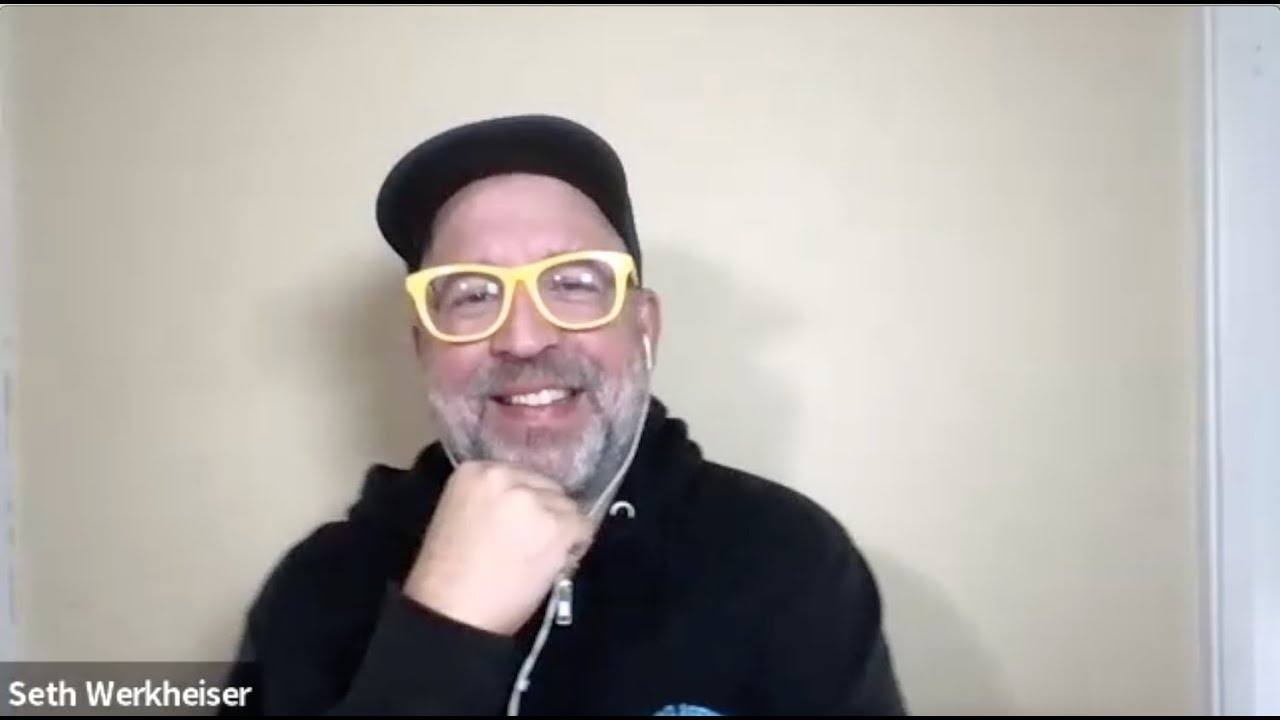
Scott Perry coaches Seth on building an audience and revenue through newsletters and content strategy. They discuss Substack paywalls, sales conversations, and converting creators into paid coaching members in a live demonstration.
Chapters
All right, so it's Thursday, September 28th, group coaching. Seth is in the hot seat and has just, uh, before we hit record, relayed a situation. I'm gonna, I'm gonna reflect it back to see how close I am, or how far away I am, more likely, um, and then we'll unpack a little bit. So what I'm hearing, Seth, is that there's, um, there's kind of, uh, the work that you would like to do, which is with a smaller audience of smaller audiences whose challenge is to get ears on their music and eyeballs on, you know, their, on their platform, what have you. And, but you also have access to an audience of industry movers and shakers that, you know, you're, you're less invested in, in terms of, you know, it's not where your heart lies. And it's, this is all around how to leverage your, your newsletter. Am I in the ballpark?
Yeah. Yeah.
Awesome. So And, and, and just some clarifying questions. So the primary goal, aside from doing and serving the— doing the work and serving the audience that you really care about, you know, it's the ultimate end in mind is to get people to to purchase some sort of offer around how to use, how to leverage email marketing. Is, do I have that right?
Yeah. Yeah. Whether it's to start with the subscription, like a, on Substack or to move on to like, like a course or one-on-one coaching kind of a thing. Yeah. Try to, try to move them along that, that route.
And so if you were, if you were doing, a course or one-on-one coaching with the audience that you really want to serve, what would, what would be the problem that you would be solving for those smaller— and by smaller artists, I mean just less well-known.
Probably content. I run into that a handful of times with people I talk to. Oh, I don't even know why I would put in an email newsletter. No one, you know, I— busting the myth that all email is spammy. Who would even care? Or, you know, dispelling the myths of like, you know, oh, everybody has a newsletter now. Trying to reinforce of like, the work, like the content building, the store, like helping people become more of a story and less of a product.
Gotcha.
Here's the art I do, here's the magic I make, rather than, hey, I have an album for sale, buy it. Because you and I both know no one's opening that email, right?
Okay, so that's, that's helpful. So it's, it's helping small, um, less well-known artists, um, earn awareness and attention permission and trust to build an audience for their creative output. Okay, so I'm just gonna share, like, this is gonna probably just be scattershot firehose to the face stuff, and then somehow I will sort it out. So One of the most powerful— excuse me, they might be coming to get me. Hold on.
Uh-oh.
Nope. It's good. It's going away. So social media, well, regardless of your message delivery system, it's hard. And we can blame the algorithm on social media if you want, and we can blame all the spammers and scammers, you you know, an email if you want. But the bottom line is, we live in a world that's just full of noise and distraction wherever you go. And, you know, nobody's paying attention to anything. The only question they're ever asking themselves is, what is this? You know, what's, what's this gonna get me? So There's what my— the first thing that leaps to my mind is how can you— well, the first thing that leaps to mind is in terms of your kind of two audiences, if you, if you feel like you could do something for that, those bigger industry professionals that, you know, that can afford and would pay for something.
Mm-hmm.
Um, and do that, deliver that in a way that is, um, just really low maintenance in terms of your time, attention, effort.
Mm-hmm.
And, and that gives you the funding that you need to invest more. Oh, yeah. Right? I, I'm a big fan of like, If the work that you have to do doesn't suck the soul out of your body and it gives you plenty of time, it provides you with revenue and time, and you have plenty of time to do the work you get to do. Nothing wrong with that. You know, I quit playing music, or, you know, I didn't stop playing music until I was— until my coaching program was, you know, I wanted to stop performing, but I, I just couldn't. And so I kept doing it until I could afford to stop doing it. And that was fine. Because it's not like I hated performing all of a sudden. It just wasn't where my heart was.
Right, right.
So that's one thing. But oh, go ahead.
To that point, I have gotten clients of that from that group. And I have ongoing clients, and I'm— more work is starting to come in from that. I'm not shying away from that. I'm not like, no, go away. So that, that is building, that which is great. I'm not trying to turn that away.
So awesome. In terms of, um, helping this audience of less well-known artists, um, build, you know, create content that, that, that builds connection and helps them build their platform and helps them sell. I am my— I'm a huge fan of over-the-shoulder. So what you want to do is teach these people how to create content and create a newsletter that helps them create connection, engagement, and investment in their art. And you are thinking about how can I leverage my newsletter to connect with more of the audience that I really care about and want to serve. So I'll send you some resources from, like, there's some things from my friend Sam Ocean. He's on Twitter. He's worth connecting with. He's a kind of a young hotshot that's doing, working with kind of person, you know, helping people build personal brands so that they can monetize, you know, whatever they're off, you know, sell a monetized offer. Yeah. And he has a very specific approach around, like, how, you know, how you would do this. And also, if you, you're both on the Success Finder platform, and This is like how Nick Peterson, if you look at his community, join his community and watch some of his stuff, that's like how he built his entire empire, which is not like, like he's not trying to be Tony Robbins or Michael Hyatt or, you know, he's not trying to be an influencer. He, he's targeting purpose-driven humans that understand that in order to build a better business, they have to become better humans. And he does like his, his stuff is nothing but over the shoulder, gets on Zoom, shares the screen, walks people through stuff. So content like that can, can teach. So number one, you can teach your audience about how to do like how to, how to create this newsletter. How to create content that connects. You're demonstrating expertise and earning authority by doing it out loud and in public. And you could also incorporate, like, if you look at some of my content, you'll see I do this a lot. Like, Nikki gave me permission to use a clip of our coaching, a recent coaching call where I taught her The 4 fundamental questions that every piece of every communication must have. So it's a dynamite-like piece of, like, it's knowledge that could be really useful if anybody applied it. It also demonstrates my ability, like Nikki throughout the conversation is going, oh my God, oh my God, you just solved a huge, right? And so I'm like demonstrating my authority.
Yeah.
And that, um, so I feel good because I'm sharing content that has value for an audience that I know cares. And then I use like a two-step, like, are you familiar with that term?
No.
So on that, on that social media post, yeah, I'll say, um, you know, in this, in this clip, you'll see me demonstrate, um, the 4 allegiance capital questions that I learned from Nick Peterson. If, you know, if you'd like to hear the 3 fundamental statements that earn you instant permission and trust, drop an I'm ready and I'll send you a link. And so people drop an I'm ready. Yeah, I send them— I, I reach out to them in Messenger and say, hey, thanks so much for raising your hand, and now we're having a conversation. Now there's, there's a lot of strategic stuff that happens just in the Messenger conversation. I'm happy to go into that a little bit too, but what I'm doing is I'm, I'm, I'm building real connection with real people. Yeah, that end up And so if you look at my, if you look at my Substack, I started off with, I don't know, 720 subscribers or whatever. I've only been on there for like 30 days. And I'm, I'm really close to 800 subscribers.
Sure. I bet. Yeah. Yeah.
That's been, you know, one conversation at a time. But when I say conversation, it's like somebody raises their hand. And I say, fantastic. Just to make— like, I always start with, let me clarify, you know, that this is what you're looking for, because if you need something different, I have a shit ton of content.
I can—
I'll send you something that will help you with your specific situation. So I learn, like, what they do, what their biggest challenge is, where they want to be. And if the thing that I was offering is relevant, I'll say, you know what, this will be perfect for you. Here's a link. And it's a link to my Substack article that illustrates this thing that I'm— and so, you know, then they get value, they sign up for my newsletter. And we continue the conversation. So my whole thing with these conversations is I'm trying to sell coaching and community. So, and we might have even started this way. I can't remember, but, you know, I go back and forth usually about 3, 3 times.
Yeah.
At which point they say, can I jump on a call with you to see if there's, you know, a way that we can work together? Or, you know, could you tell me about your, your programs? Because I don't, I don't share that anywhere on my site. Like, you can't, you can't find out how much the community costs, or if it's open and you can't find out how much coaching costs or if it's even available, you have to have a conversation because while you think that you're vetting me, I'm going to vet you.
Yeah.
Yeah. And, and here's the magic of that approach. By the time someone jumps on, asks to jump on a call or says, tell me about your programs. And I say, well, It would be a lot easier if we just jumped on a call. I can share, you know, the relevant, uh, there, that discovery call or sales call is now a decision call. They already know. They already, I've earned their awareness, attention, permission, and trust and interest. As soon as we hit interest, we're in a sales situation now.
Yeah.
Awareness, attention, permission, and trust is, that's all brand marketing crap. That I can't measure and I can't know if it's resonating or not. Well, there is, there are some metrics I can measure, but once they ask for that call, now it's, are you enrolled in the journey that I can take you on? And are you ready to invest in closing the gap in less time with less effort and with less risk by working together?
Yeah.
And so then it's just a matter of which thing are you going to buy? And I have a, a whole menu approach to all that. So that over— like, so over the shoulder is one part of it.
Mhm.
Creating content that delivers real value, succinct, like one thing, teach them one thing. Um, two-step it by in inviting them to start a convers— or to leave a comment that will get them the next step and then use those conversations to build the real connection necessary for you to earn the allegiance capital that gets them to raise their hand and say, I'd like to talk to you.
Yeah.
The other— if, if you, you're thinking about leveraging Substack as like your primary, um, like the place that you want people to go because that's where you have their permission to reach— to speak to them directly. Yeah, I recommend this. Oh yeah, I use what I call the spiderweb strategy. Um, I don't know where it comes from. It's something that Nick also talks about, but I don't think he has any training on it. But, um, basically wherever you— whatever outpost you happen to collide with me on Facebook, Instagram, Twitter, YouTube, whatever. The only place that you can— so number one, if you connect with me on YouTube, I'm going to keep you on YouTube because I want you to just binge my crap on YouTube. And, and if you like it, you will find me.
Yeah.
But if, if you want to go from an outpost to where you can learn more about me. The only choice right now is Substack. I don't do lead magnets. I don't do any opt-in type of thing. It's the only opt-in is do you want to subscribe to the Substack?
Right, right.
And then when they get on Substack, they can really dive deep. And then I have, and I'm gonna do a full training on what I'm doing on Substack and, you know, what's working and what's not. But what I do is, you know, because everybody signs up for free.
Oh, yeah.
And then, but what I do is I deliver my best email, I think I try to make all my emails really good. I do 3 emails a week. Monday and Friday are just Insider Inspiration to help you level up in whatever whatever endeavor you're engaged in. But Wednesday, it's my, you know, one of my best principles, practices, whatever. And then there's the, you know, subscribe to keep reading bar.
Oh yeah. The paywall thing. Yeah.
Yeah, exactly.
Yeah.
But I make it like you really want to get to that next piece.
Yeah.
And I don't have a ton of success with this yet, but I mean, I've got like, I don't know, $400 a month coming in.
Hey, all right. Yeah.
You know, that's something. I mean, I've been writing for 7 years. I haven't made a penny off an email or off my blog.
Yeah.
So I'll take that. And it's only going to continue to grow. So, you know, I could, I could riff on this forever, because there's lots of other, but the key is define what success really looks like for you. What's, what's the goal?
Yeah.
What's, what are the, what are the, you know, and then reason from first principles, what are the things that have to that are essential for me to achieve that goal. And you can only work on those things. Yeah. Because if you can get those things dialed in well enough to get some, to prove viability and then start to build traction, you can get to sustainability just by improving I always challenge people like, what are the 3 things that have to happen for you to get from where you are to where you want to be? Just 3. And like, for me, I have to have a compelling offer. I have to have an eager audience, and I have to have a sales strategy that gets, that puts my offer in front of that audience. And so everything is about— everything I do is just about those 3 things.
Wow. Yeah. Yeah, I had put together kind of a course and I was running it by some people because I set one up through Maven and it does the survey thing where people can sign up and then it says, oh, reach out to people and ask them to clarify what they're asking about. And a handful of people I talked to were just like, so I don't want to say scared, but just so apprehensive of like, oh, is this another thing I have to get into? Is this, you know, is this another thing? What if this doesn't work? And like a lot of what I found was just like, not that I went into it thinking, oh, technical, here's how you set up Mailchimp or whatever, you know, here's a landing page. No, like most of the people I talked to were just like, I'm scared to death to get into this. There's a lot of fear in it. And that made me like my whole course thing idea was like, whoa, maybe, maybe there's something here. Instead of going like, because honestly, I don't want to go the technical route. I don't want to like, let me build your landing page in Mailchimp. I don't want to do that. I'd rather, and I have talked to people about this already, like I've had some Zoom calls where it's like we're talking about this and have those moments where someone is like, oh my goodness, I never thought of that. And I'm just, you know, hey, maybe, maybe that thing that you wrote about on Instagram, that personal whatever thing with a picture and like a heartfelt caption, maybe you could put that in your email. And that just blows some people's minds. They did. They don't think like, oh wait. And then I tell them like, your hard work is already done. You're already a professional mountain biker or a musician. You're touring, you're recording, you're making art. Now we just need to put that into this, this vessel. And, and I don't know, I just, I'm excited by the prospect of helping people just get over that. That hurdle. And I don't know, I think I— offering-wise, I don't know, I think it's something along those lines.
So is the fear that they have around like just, you know, the resistance, imposter syndrome, that sort of thing? Or is it fear about how hard it's going to be? Or is it fear about, um, you know, they've, they've tried other things with, uh, you know, with other people and it's, you know, ended badly or not worked out or been a waste of time and money or whatever? Or is it some combination?
Well, I think it's, I think it's along the route of— because so many artists have just like gone fully into social media and then they've just been banging their head against the wall these past 3, 4, 5 years with that. They've built this audience that they can no longer reach unless they pay for it. And they're just like, I don't know what to do. Like, oh, I, you know, with Instagram, oh, I started making reels and wait, no, it's not reels anymore. It's video. It's this, it's that. Like, and I talk to bands, they're just like, I don't want to make dancing videos. I don't want to do that. Like, and so a lot of it is just this, like, uh, what, what sunk cost? Is that the word? Like, I put all this work into, oh, I have 10,000 followers over here. And so, oh, thank you. No, shut up, watch. Sorry, my watch likes to chime in every now and again. The sunk cost idea that like, oh, I did all this work over here. Now that's all going to be gone. And then for me, I'm like, no, no, no, no, no. You can get some of those people. You don't have to like delete your account. You can get some of those 10,000 people on your email list. Like, so it's, it's just a lot of like, I think burnt-out artists that are like, but there's some that are curious enough because I also know that there's a handful that are just like, emails don't work, they're stupid, that's old school, no one opens emails anymore. Not my job to convince you to do it. Like, I'm not in that game.
So, well, this is, this is the thing that, that you're speaking to. Is that we're hardwired to chase more, and we love tactics and tools. The problem is, so it's a— in terms of what you're offering, when I say what are the 3 essential things, what I'm talking about is system reliability. So there's this great Edward Deming quote that I love. Every system is perfectly designed to get the results it gets.
Okay.
So what system reliability teaches us is that the more that we, we think that systems are improved through addition. If I add this, this, this tactic and this tool and this widget and this autoresponder and that, that somehow it's going to become a more efficient system. But that's not how systems work. Systems are multiplicative. They, they're— because no component of the system operates at 100%. They all— it doesn't matter how, like, you could even look at your, your turning on the light every day in your office. It depends, you know, Did the elect— is, is the light switch still operating? Um, are the wires still good? Uh, is the light bulb, you know, still, still working? Um, did I pay my electric bill? I mean, that's— so the thing about systems is every component only works a certain percentage of the time. And, and when we're talking about this kind of thing, those percentages are really low. Which is why you have to dial in the 3 essential things and then raise the floor on whatever is the least efficient. And the least efficient component of every system, you know what it is?
No.
The human operating the buttons and levers behind the wheel. Yeah, exactly. So, um, so there's another layer to over-the-shoulder type of stuff and what you teach that might be helpful here. My friend Lucas Roszczewski has this frame that is similar to something that I wrote in— I have this book called The Process, How to Do Work That Matters Better or something like that. And Lucas's frame is actually really resonating with me more recently. And so he says everything that you create falls under 5 categories. One of 5 categories is it, it's philosophy, principles, strategy, tactics, tools. Now, Philosophy and principles are perennial. They're timeless. And they're wicked hard to sell because they're not sexy because they're philosophy and principles. And, you know, what's sexy is the tools and the tactics. And maybe if you promise that there's a 3-step process or a program or a checklist or a blueprint or a roadmap or whatever it is, you know, because, you know, but the thing about, the thing about strategy, tactics, and tools is they are prescriptive. Here's what worked for me in the past. I'm assuming that it still works and it could work for you. Just do these things. Buy my, you know, buy my program. Philosophy and principles work because they've always worked. They worked You know, before the internet, they'll work after the internet. And so that's like one thing that, um, you could, like, if you frame what you're teaching to help artists see, like, here's, here's, here's what's all like, here's what's always worked. What's always worked is create something worth paying attention to. Yeah, and find the places where people that are looking for this kind of thing already exist and like helping them figure out how to create content that takes what they, you know, their— puts their great work in front of an audience that's already looking for it. And the other thing that leaps out to me about what you were sharing is so again, with like chasing the tactics, And being like, what it sounds like is most of these artists are burnt out because they are putting so much energy. And I mean, this is the thing, you become a musician because you want to play music.
Yeah.
And before you turned it into a business, you spent 80% of your time playing music and 20% of your time, you know, getting the occasional gig or, you know, getting yourself to an open mic. You turn it into a business and now you spend 20% of your time— actually way less— on stage making magic, and 80% of your time with all the bullshit around booking gigs, marketing gigs, getting paid, blah blah blah blah blah. And so Again, like if you look at the Coaching Business Prescription, these things that I talk about there work for every business. What's the offer? Where's the audience? And how do you get content? Good, you know, content in front of that audience in less than 30 minutes a day. How do you build connection with, with that audience in less than 30 minutes a day? And so one of the things that I do with clients at the very first call is I audit their offer, their audience, and their sales strategy. And when— so, and here's the thing, 90% of the time the offer is good enough, the music is good enough. The artwork is good enough. Yeah, 90% of the time they have a clear enough idea about who, who the audience is and where they, they can find them. The thing that they're totally off the rails on is how do I get that, how do I get my work in front of that audience? And that's because if when they list, I, I, I make them, I break it down into marketing, brand marketing, and, uh, sale and direct sales. And I go through like, where— tell me all the platforms where you're posting content, not just social media, you know, are you using email? Are you using YouTube? Are there any apps or tools, apps or software that you're using? You know, what does that cost on a monthly or annual basis? You know, are you using a podcast? Are you you know, paying for lists, blah, blah, blah, blah, blah. So they, I go through everything that's a part of their, what they think is their marketing and sales strategy. And then we go through, and it's almost impossible to do with the marketing piece, but like, okay, so now tell me what's the return on it? Like how much, like, Here's how much time you're spending and how much money you're spending on all this. Tell me how many sales it's generating, ballpark. And sometimes the answer is zero and some, the answer is always very, very low. Okay, so let's recapture some time and revenue. Let's get rid of all the shit that just isn't working and let's put that money back to your bottom line where it could be better spent. And oftentimes I will recapture enough revenue that they can actually pay for a coaching package, which is how we can catalyze the process. So that's a tool that you could use. Yeah. And then they also— I also teach like, how can you, how can you repurpose? Like you were saying this. You, you've got some good stuff here. How do you repurpose it across the places where you need to put it? And it's, and nobody really thinks about that. But when I do, when I do a broadcast, I'm hitting 5 platforms.
Yeah.
I extract the audio, I hit 5 more platforms with a podcast. I take a clip, create another piece of YouTube content.
Yeah.
Create an email around that.
Mm-hmm.
Have another piece of— now I have another social media asset that I can post around and it goes to my— it gets repurposed to my email and it's like one 30-minute conversation gives me content for that is repurposed 12 times. And it takes me less than a half hour to create all that.
Oh yeah.
Allison, I saw you raising your hand. If you have a question to ask, that's great. You're here as a guest. So you're, you're mostly, you're, you're here to sit in, but if you have something that you're just dying to say, let me— No, I was just scratching my head. I was waiting.
Okay. Gotcha.
I was, I wasn't sure if you were trying to chime in. Um, so, you know, hopefully all that, you know, that's a fire hose to the face, but I mean, when it all comes right down to it, you have to, you have to focus. You have to apply first principles reasoning and say, where am I? Where do I want to be? And what are the, what, what are the essential things that are going to get me there? And then, um, and then basically don't allow yourself to do anything else.
Oh yeah. Yeah.
That doesn't, you know, until those things are dialed in well enough and you're getting some traction. And then, you know, again, system reliability, like you only add components if the friction is going to deliver a return on investment that's worth it. And it almost never does. Like in that conversation with Nikki, Yeah. One of her big ahas, if you listen to the whole thing, was she was like, I want them to watch this video and I want them to buy something. It's like, well, people are not gonna buy a $1,000 course with— there's an expectation that they're going to have a conversation with you. Yeah. So instead of, you know, I've listed all the features and benefits and I've told you how wonderful all this is. You know, this is when you buy, have them give you a call, make it a 15-minute call, but, you know, help them, help them, help direct them to the, to the thing that they need. You also have the opportunity to let them know that there's an opportunity to catalyze that, that, that learning with one-on-one work with you or, you know, with the community. Because the fastest path to cash is always conversation and that any obstacles that you put between you and direct connection with people are— you're going— is going to cost you money. And everybody then says, I don't have time to talk to everybody. It's like, really? Because you're spending 8 hours a day on content, grinding out content that we just decided you don't have to spend spend time on.
Yeah.
And if you took 30 minutes a day and had 2 conversations a day with, with, with people that are interested in what you do, you're going to. And so sometimes this is where the real problem shows up. Because some, like with creatives in particular, what I have found, and you tell me if this is your experience or if it doesn't resonate, but You know, they love, they, they love the creative process. They love to, they love to create. The business end of things is kind of dirty. Oh, sure. They don't want to spend much time there. So if I spend 6 hours a day making reels and, you know, doing all this content crap, it just kind of putting it out there with no strategy. I feel like I'm doing what I'm supposed to do business-wise.
Oh, yeah.
But it's really just a seductive way of hiding because all you're doing is meaningless, mundane, unnecessary work that's taking all of your time when what you— where if you got a little bit more diligent and intent and intentional about who am I putting this out in front of, and what am I putting out, and how am I putting out, and why am I putting it out, then you're going to, you're going to just automatically get more sales, more, because you're going to build stronger connections. You're going to, going to build, um, more permission, trust, and interest.
Yeah, I've definitely been thinking of more video, more Zoom, like some offer of some sort just to get, just to get talking to people. Again, too, of like any, not anyone, but like anyone can write a newsletter. It all looks the same. It's black text on a white background with ChatGPT. Like, I mean, there's a degree of course of actual talented writing and not, but like there's, there's no faking this face-to-face. And I, I'd like to usher it more into that and talk to more people in, in what I do with my Substack, um, just to get that across. Because again, too, I think especially, you know this as well, in the music business there's a lot of, uh, characters in the music business world, um, and I, I hope I don't come across as some of the snake oil salespersons in that world. And I want to convey that. I want to bring that across more.
So, well, and that strategy will help you do that because what the gurus do is, and, you know, I define guru as someone who is selling a blueprint, a roadmap, you know, something again, it's not like malicious, like Here's, here's something that, well, sometimes it's malicious, but oftentimes it's just, here's something that I've, I've tested myself. This works. And, and I've packaged it into this program that you can buy for $297, $997.
Yeah.
$9,997, a mastermind or whatever.
Sure.
The problem is that's a prescriptive approach. I'm teaching you something that worked for me in the past and assuming it will work for you in the present. And that's, that's just like, I'm going to give everybody that comes into the doc, my doctor's office, the same pill regardless of the, you know, all the, the, the context of their like, sure. Yeah. Okay. You have the, you have a cold. You know, how long, you know, there's lots of things that, that you need to consider. You don't just give one pill to everybody and you certainly don't give one pill to an infant and then the same pill to, you know, someone in their 20s and someone in their 80s. So it's, and again, the, the kind of process that leads to that call and the kind of content that I'm— and you're, you know, the kind of content that you're already talking about doing. Because what will happen is, yes, you are, you are swimming against a tide where everybody feels like they're just getting manipulated, distracted, and spammed and scammed because a lot of people have— like, we've all done it multiple times. Yeah, but when you show up and deliver real value and follow it up with more value, And like my friend Laurel said, talks about like, if you can solve 100 people's problems in 90 days, you'll never lack for a customer again. And what she did is for, for 100 days, she went on, she went, did a video demonstration. She's a kind of a social media ad specialist, demonstrated like giving everything away. Yeah. And, but two-stepping, like, hey, if this was helpful and you want the next step, drop an I'm ready. She would start these conversations and she would solve additional problems. But the thing is this, you know, again, creatives are worried about intellectual property. I don't wanna give all my IP away. Oh my, yeah. My, my precious signature framework, you know, my bespoke process. And it's like, well, you know, I hate to break it to you, but there's nothing new under the sun.
No.
I mean, I'm, you know, congratulations on offering your perspective on, you know, this approach that, you know, you've woven in your experience and your skills and all that. But ChatGPT will tell it to me for free.
Yeah, for sure.
So yeah, give it all, give all the information away because here's the thing. This is the diffusion of innovation curve. Are you familiar with that?
No, no.
Okay. So the diffusion of innovation actually comes from a book about ecology, but it's been applied to marketing for decades now. Yeah. Seth talks about it in the marketing seminar and in his book, This Is Marketing.
Yeah.
Any innovation goes through a similar curve. There's the early adopters that will buy anything just because it's new. Then there's the early majority, then there's a late majority, and then there's the laggards that only buy VCRs after— or DVD players after VCRs have gone extinct.
Right.
So, but I can't remember who developed this piece of it, but in marketing between the early adopters and the early majority, there's a chasm. There's a, and because the early majority won't buy innovation, they're not gonna buy it just because it's new. And so the challenge is turn your innovation into information because You know, information spreads. Innovation scares, scares most people out of their wort.
Yeah.
So when you give everything away, all the information, what's left to sell? Access, accountability, implementation. Yeah. You know, working with a trusted guide that will help you save time, save effort. Reduce risk, all of that kind of thing. And people, people, people like you have a great offer because what you're really selling is I'm going to help you do less of the work you hate so you can do more of the work you love by helping you do the work you— by helping you do only the things you have to do about the work you hate. And it's actually going to be more fun. Because you're going to be sharing what you love to do and it's going to save you time, money, effort. It's going to be far less risky and you're going to compress time. We're going to get you from where you are to where you want to be in a fraction of the time it will take you to DIY it to success.
Yeah. Oh yeah. Because going back to your point of like, there's nothing new under the sun, everything I'm talking about, you can find someone talking about on YouTube. How do I set up Mailchimp? How do I set up a Substack? There's a million videos out there. But yeah, you can come to that one person, that one trusted source of like, hey, here's how we're going to do it. Like, we'll walk through this and get this done together because a week from now when you're like, oh my goodness, I just did this horrible thing. No, no, no, no. Hold on. Hold on. Let's get on a call. Let's— yeah, that's that. I'm game for that. I— that is where I want to be. I, I was telling someone earlier, like, and I say this with a, a grain of salt, like, because I, I saw it a lot at this music festival, like these big giant bands doing these big giant things. And I see it all the time too, Billboard top this and this record went gold. I feel so much more that I want to help people just like figure out a way to pay their phone bill with their art Like, I would— it would like warm my heart more, I think, to do that. Oh my goodness, I paid my rent this month with my music. That like— I would love to be a part of that more so than being a small little part of the team of 800 people that made a song get number one on the radio. Yeah, that's right.
Yeah, yeah. Well, and the, the other thing that's really beautiful about what you're saying is it's all like when you— when, when a band says top, you know, Billboard Top 100, it's like, look at me, look at me, it's about me, me, me, me, me.
Yeah.
And when— but, but people don't like care. Like, they want to know what's in it for me.
Oh, absolutely. When's the new album?
Exactly. Well, yeah. And so by focusing on, on the, the, your market, your audience.
Yeah.
And addressing the things that concern them and challenge them and giving them real solutions to real problems that give them the, like, because we all value different things. We talk about money most often because it's so easy to measure. But, you know, there's time, there's effort, there's energy, there's reputation, there's identity, there's all these things that we consider, you know, They're all assets and some we value much more than others. Most we value really much more than money. We just talk about money because it's easy and it's what everybody talks about. So when you start speaking to your audience about, you know, their dreams and desires, their challenges and their problems, and provide real solutions to those things that take less time, less effort, blah, blah, blah, blah, blah, then you will, you know, it's a longer game.
Yeah.
Than some sort of clickbaity, hooky, you know, whatever. But, but I would, when I'm like working directly with people to go through the system that I give away for a dollar, Most, most of my clients will see, number one, most clients will, will be able to afford my, that coaching just through the thing, just through the revenue that we recapture by getting rid of all this stuff that just doesn't work.
Yeah.
Then in 90 days, they are usually already had boosted their revenue to, to a point that now that they, now it's, you know, they're moving from, I have some traction in terms of success, in terms of my revenue generating system and now I can optimize it.
Yeah.
Right now it's about momentum. How do I, how do I do this better, faster, easier and, you know, and, and gain, gain, you know, get closer to what I want, which is, you know, And most of the people that we work with, they're not looking for like, I'm not trying to earn 6 figures a month. I'm not trying to earn 6 figures a year. I just, I just want to make $5,000 a month.
You know, I would be very happy with that.
Yeah. Yeah. Yeah. Yeah. Yeah. And that's, it's, it's way easier than you think it is.
Oh yeah. Yeah. Yeah. Totally.
Totally getting there.
It's all right.
Yeah. Cool. I hope that was helpful.
I'll, uh, super helpful.
We didn't get to any of the AI stuff. I'll figure out a way to, to get that to folks. But, I'm going to post this on YouTube as a, as a coaching demonstration, and I'll send you the link so that you can revisit it. And, yeah, I hope that was, this was helpful to you too, Allison.
Thank you for allowing me to be part of it.
Of course, of course. Happy to have you here. All right. All right. Talk to you next time.
Awesome. Thanks.
More from Scott



Stoics Don't Suppress Emotions, They Do This Instead #stoicism #emotionalintelligence #mindset







