Souha’s Journey: Building a Sustainable Dog Training Business
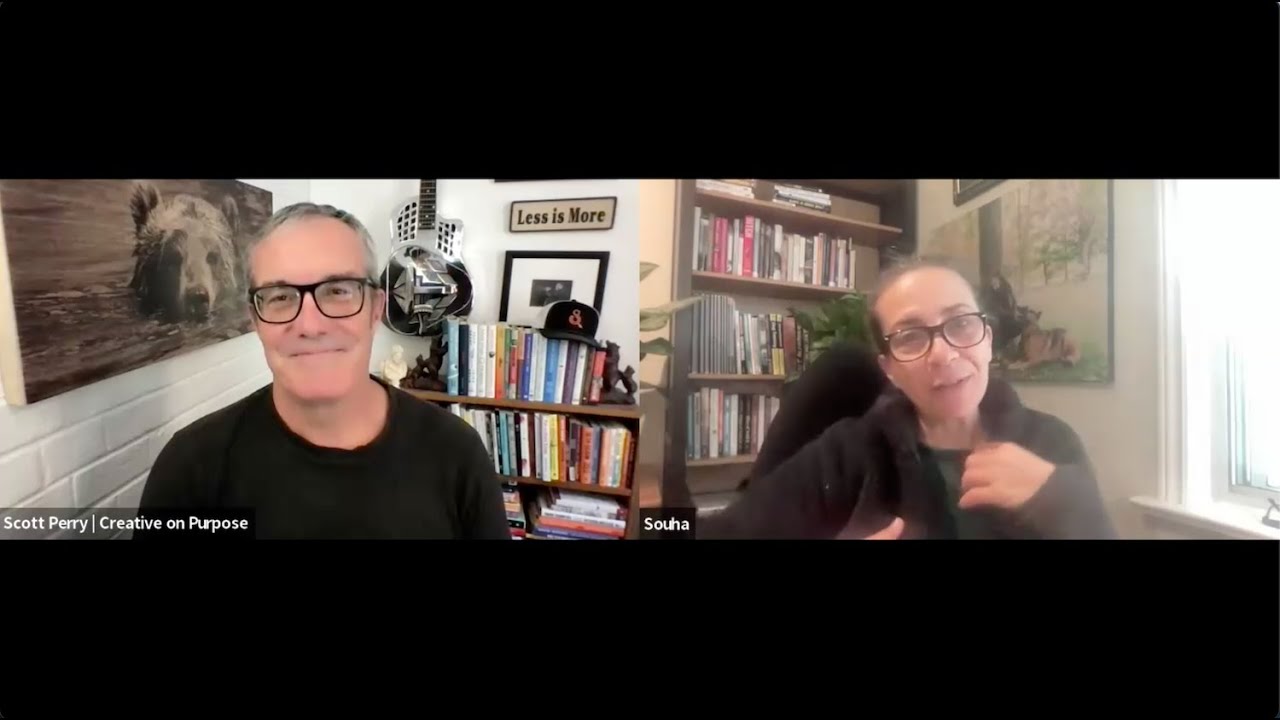
This content was created by Scott Perry. This content was uploaded by Scott Perry. This is a YouTube coaching/interview video titled "Souha’s Journey: Building a Sustainable Dog Training Business" (posted June 15, 2024). It features Scott Perry hosting a Catalyst/Creative on Purpose coaching session with client Suha, who describes her background as a business school professor turned dog trainer (founder of Way of Life Dog Training), her recently published book (October 2023), and the ways coaching helped her clarify offers, product/service structure (events, group coaching, 1:1 coaching, digital products), copy and positioning, and work–life balance. The conversation reads like a case study/testimonial covering business strategy, curriculum design, group vs. private coaching, and practical next steps for scaling her dog-training practice.
Chapters
Welcome everyone, it's Scott here at Creative on Purpose with another one of my rockstar Catalyst coaching clients, Suha. Welcome. I'd love for you to tell everyone a little bit about yourself, your business, and what it is that you do.
Excellent. Thanks for having me, Scott, and welcome everybody to the Scott Perry Creative on Purpose community. Great to meet all of you. So I'm just delighted to tell you a little bit more about who I am and what I do, because who I am right now and what I'm doing right now is certainly not something that I had ever imagined or ever anticipated that I would be doing in my life. Essentially, I started off as a business school professor. I am still a business school professor, and I teach in the areas of management and organizational behavior. And I'm also a huge dog lover, and I've shared my life with dogs for 20 years now. And about 20 years ago, when I was fresh out of my PhD program and just anxious to share my life with dogs after having been you know, living as a graduate student with very little time and money. Once I was done, it was the time to, you know, to jump into that life with dogs. And those dreams were very quickly dashed with a problem dog that I had no success helping for several years. And then things started to happen in my life where I understood what it takes to have wonderful dogs, and I wasn't pleased with just having fun with my own dogs. I just wanted everybody else to have what I had, to have this joy, to have this freedom, to have the 5 C's that I talk about, if I could remember them: convenience, confidence, connection, communication with us and our dogs. And so I started Way of Life Dog Training in 2019, started to see clients actively in 2020, the middle of the pandemic, which was in many ways not a bad thing because it taught me how to work with people in an online format and With my approach, there's so much that can be covered doing things online. And so what Way of Life Dog Training does is help people who are in situations just like the situation in which I was. They have dogs, they're passionate, they're, uh, and they're also struggling, and they're not getting help in the help that happens to be available in the mainstream, or when you Google questions, or when you go on YouTube looking for answers. Um, so, uh, soon as I started my business, I decided it was time to write a book. I did. Again, one of the benefits of the pandemic, lockdowns and all, getting work done on these drafts. And, uh, my book has been out, uh, few months now, uh, October 2023, and we are in June 2024. So under a year, and already it has changed my business in countless ways, and it has also created challenges that Scott has been so incredibly helpful with. So I'm sure you will ask more questions, Scott. This is—
yeah, absolutely—
an introduction.
I, I highly recommend, uh, Suha's book for any of the dog lovers out there. And you mentioned already that you had some challenges, you know, coming into our first round of working together, but then after the book, a new round of challenges. So tell me a little bit about the challenges that you had before we started working together this last time around.
This last time around. Very good. That's, that's good because actually I felt that both times that we worked together were extremely helpful, but this second time around was, I would say, even more helpful because my business had matured in such a way that I had a better understanding of what I needed, um, in a way that I did not the first time around. Um, so I was in a situation where I was trying to do a million things at the same time Um, and I needed to better streamline what I offer and be clearer about what each offer brings to people. And that's just invaluable because everything that I offer is designed to help people in deep and, and long-lasting ways. But there's different ways to reach that goal that might need different types of clients with different price, you know, preferences. Um, I have clients that are not located where I live, and so I support them virtually. So that's another, you know, kind of a, a value that is offered over there. And even though I could tell intuitively what every offer entailed, it was just so incredibly helpful to be able to not only verbalize all of this and be prompted into verbalizing all of it through the coaching, but also that organically in conversations with ideas coming up, Scott Perry being able to comment on the value of this or that, for example, you know, thinking about offering webinars and talking about the value of webinars versus doing something it a little bit more off the cuff, like a Facebook Live. Um, better differentiating between one-time events where people get introduced to my method, which is quite different than what's available out there. And for those interested in the book, it is called The Way of Life Method: How to Heal Your Relationship with Your Dog and Raise a Sound, Strong, and Spirited Companion at Any Age. So there's one-time events like online workshops or in-person seminars where people can get introduced to the method. So those are classified as events, which helps my mind that likes things tidy and organized. Very, very helpful. Um, and then there's the more continuous coaching services of 6 weeks to 6 months. Um, where I'm, I'm working with people in a more continuous way, uh, you know, so just organizing those was very, very helpful. And then within the services, uh, where people can learn either independently by reading the book, downloading my available digital downloads, accessing all the freebies on my website, um, You know, streaming the audiobook. All those are independent ways of learning or learning privately in one-on-one, which is evidently the, the method that, you know, brings the, the, the fastest results with the most confident sense of, of doing what's right to learning in groups, which again, working with Scott Perry, it was very helpful to get to a place where I'm convinced that group coaching takes— it needs to take precedence in my business now because of how valuable it is, uh, for people that are dealing with reactivity or anxiety or fear or whatever. To have people around and dogs around and whatever is, is just invaluable. But also, even if we're doing it online, it's also invaluable to do it in groups so people don't feel alone. People feel supported, people feel they have a group with accountability. So the, the group format is certainly the way to go with my kind of dog training that interests me, my kind of dog coaching and training. But also, I will continue to coach people privately, no question. But there's so much room for opportunities for continuing to work with Scott on firming up, you know, the Way of Life curriculum, how people get in through events, get warmed up through a 6-week coaching, and then finally decide they want to go all the way with a premium one-on-one multi-month coaching. Whereas I tell the clients who do that, you know, it's, it's expense and time and commitment that ends up paying off over years and years and years. You know, it would be the gift that keeps on giving, is this gift they would have given themselves, their dogs, and their families. So, so yes, it was incredibly helpful. That second round was incredibly helpful, and I really appreciate Scott Perry taking a quick look at my copy. Even though he's not a copy guy, he still was able to give me a sense of what I might want to tell my copy person that they need to do. In particular, we got into the allegiance capital questions. Why am I here? What do I do, etc.? Am I a good student, Scott Perry? Done well.
Yeah.
So my copy person has worked on all of this and her email with Her feedback is in my inbox as we speak, waiting for me to look at. So it's been, it's been wonderful and very productive. Thank you very much.
Yeah. Well, you, you came in so thoroughly prepared and it was really fun to, to kind of organize and integrate all the things that you had already, all the work that you had already done and streamline and simplify along the way too.
Yeah.
Just curious about, I do recall it very specifically. Uh, especially the first time that we worked together, that, you know, there were other choices that you were considering. And of course, because there's lots of choices out there, I'm just curious about, is there anything specifically that, um, led you to decide to work with me the first time around and then continue to do so?
Okay, very good. So the first time around, Scott Perry, how did I even find out about you? Oh, I know now. I know now. I remember now. Good memory still, thankfully. Um, I had seen you on a podcast with Conscious Marketer and I subscribed to your newsletter and followed up with you and your mailings and found you intriguing and then reached out and we did that first coaching that we did.
Yeah, that was really fantastic. And I think I had just recently graduated from that program and was thrilled to have that opportunity to talk with those folks. Was there anything particular? Well, you've answered a lot of this already, but anything—
Let me answer very quickly, if you wanted to, about how I decided to come the second time around.
Sure.
Yeah. So the second time around, time had passed. I'd written the book. The book had come out. My business landscape changed as a result of this book being out. And people finding out about it. It's kind of like a very, very long business card in many ways. And so with the maturation of the business and with the prior work that we'd done together, because that's another thing I think you learn when you're, when you're in business for yourself, you get stiffed a few times, you know, you get this really disappointed a few times. And you had certainly not disappointed me the first time around, and I felt that you could certainly help with that because we'd worked together on crafting my premium offer. And so it was a natural extension that you would assist with refining this crazy jungle of services and events that I had going on and getting everything organized with a clear understanding of the value for each.
Yeah, fantastic. Well, you, you, you've actually addressed some of the things about what was effective and, and, um, things that have have changed. I'd love for you to speak a little bit just to, you know, in addition to the way that your business and your offers have been organized and your copy and your website has been, you know, a little bit more organized and designed. Is there anything about all that work that— and all the hard work that you put into your business and our work together that has, you know, impacted other areas of your life or just your way of being, around your life and your life in your business?
Great question. Anyone who works for themselves knows that it's— this, this business is a living thing that needs your constant nurturance. Um, I'm of the view that if it's not growing, we have an issue. That doesn't mean that I— that the growth has to be unbridled and without conscious thought about what's behind the growth, but I'm at least evolution, which means you have to be around and available and to be able to have a better sense of what I offer, how often, why, and to whom. And to start creating some kind of a curriculum, like I said, that way of life curriculum. And I'm a university professor, so I'm drawn to all things start of the school year, end of the school year, first year in the program, second year of the program. I get all that, right? I mean, I've— that's in my— it's in my blood. So to infuse the business with predictability would make it a lot less challenging to have to constantly hold the hand of that business, that there be cycles, that there be starts and ends. I've made the decision already that I'm not doing group work December, January, or February. I see people privately and I write books, and I'm still a university professor. You know, um, so, and I would like to keep my option open to continue to be a university professor because I think universities need their professors right now at this point in time with how they're being treated. Um, so I, I can see the work-life balance impact hugely. To be just very clear on what I offer. And that is one of the things I intend to work with Scott Perry again in the near future, in all likelihood— more likely near than not so near— is being clearer about those offerings. In other words, establishing the, the, the program for the school year, because I have levels, I have online versions versus in-person versions. And I don't want to burn myself out. I did a 1-day seminar this weekend and I'm pretty tired right now. It was super successful, very challenging, but dog training takes out a lot out of people, whether they're teachers or the students. You know, you're engaging with those animals that are a whole other species. Our best friends, yes, but a whole other species. Um, and it, it can be very taxing emotionally and psychologically. So to make sure that I am nurtured and my clients are getting my level of energy that they deserve, I would really value someone helping me decide what sounds reasonable to offer XYZ programs in the course of the academic school year, you know, or the school year, or the calendar year, whatever, uh, you get my drift. Um, but you know, so that's the plan.
It's, um, it's so—
what do you think, Scott? Do you still need— would you still think we need an onboarding session? I think we can dive right in.
I think you're right. It's so important to me when I'm working with people like you that are so dedicated and committed to the difference they make, and they are obviously putting in lots and lots of hours and effort and energy, um, that, that we do everything we can to craft that business so that it supports their overall life, and, and that you're not living to work, but you're working so that you can also live. And so I look forward to continuing that work with you, Sue. You've been very generous with, um, everything that you've shared about your work and our impact together. I would just love for you, you know, for anyone out there that's combing through all the testimonials and case studies to decide whether or not they want to hop on a discovery call, Catalyst call, whatever you want to call it. But, you know, they're thinking about working with me. They're thinking about reaching out and having a call. What would you say to them in terms of whether or not they should go ahead and take a chance on that 50-minute discovery call?
Okay, very good. Do people who come to you generally seek out what I've been seeking out from you? Being clear about what they're offering, being clear about their value proposition. Is that— that is much what people come, come for?
Yeah, people are coming to me mostly for greater clarity about what their business actually is about, as what it looks like, what the, what the primary offers are, and the strategy to drawing clients, for sure.
Yeah, very good. So I would say that your level of experience your level of capacity to listen. The preparation that you do beforehand is so helpful. I won't lie, having to complete a form before we're even able to hop on a discovery call could feel frustrating sometimes, and it took me a month, I think, before I actually filled out the questionnaire, and then we were able to hop on that call. I needed to think about the questions, which ultimately ended up being helpful. So the degree of care that goes into the preparation for a work together, uh, can only mean that you will be successful once you work together. And if not, you can stop right there, right? You can decide after that onboarding call or that discovery call or whatever, whatever point that Maybe we're not an optimal fit, right? But in between your experience, your listening capacity, how quick you are to interject if somebody is going on in an unproductive direction, because our time is limited and valuable, um, And I would say also you're just a very smart person, Scott Perry. You're very smart, uh, and I feel you care genuinely about people getting their, their voices heard, you know, um, that we live out our purpose. Mm-hmm. So I'm very grateful for that. You know, even if two or just one of those reasons resonates with someone, I think it's enough to go ahead and give you a call.
Yeah. Well, you nailed it in terms of having a general commitment for wanting people to dial in the difference only they can make and make a decent living at it. That is at the heart of everything I do, for sure. Well, Suho, thank you so much. Thank you, Scott Perry, for letting us do this case.
Thank you so much. I look forward to reconnecting.
Me too. And soon.
Bye, everyone.
More from Scott



Stoics Don't Suppress Emotions, They Do This Instead #stoicism #emotionalintelligence #mindset







