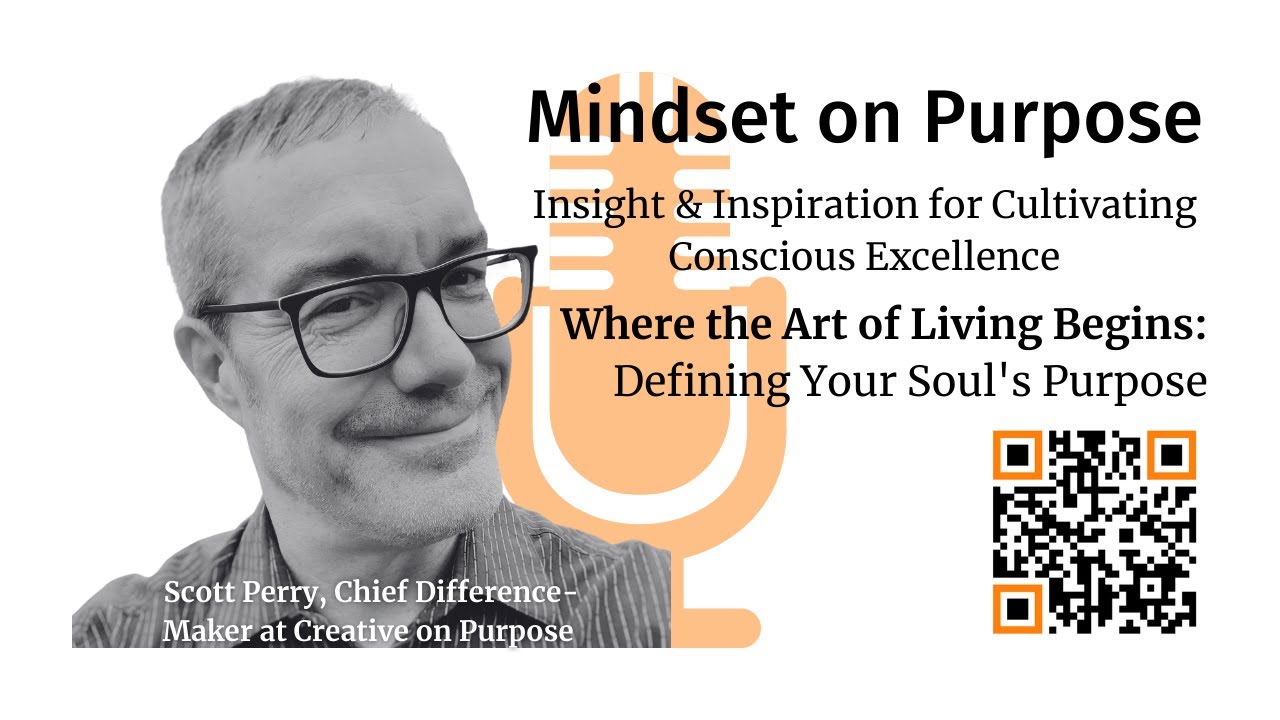
In this solo talk, Scott Perry reflects on why ancient philosophical and spiritual traditions devoted themselves to the "art of living" while modern education and work cultures largely ignore it. He argues that contemporary life is filled with distraction and "quiet desperation" because people chase fame and fortune instead of meaning and mission. Perry attributes the ancient focus on purpose to their direct experience with existential threats such as famine, plague, war, and natural disaster, which sharpened their awareness of life's brevity. He invites listeners to discover their own "soul's purpose" by answering three foundational questions: (1) Who are you? – identify core values, guiding principles, and a vision for a better world; (2) What are you good at? – recognize innate talents, hard and soft skills; (3) Where do you belong? – find the community or "scene" that shares your values and needs your abilities. By aligning with these answers, individuals can define the good life, articulate their life purpose, and let their lives speak meaningfully.
Chapters
The art of living is the central concern of most ancient philosophical and spiritual traditions. And yet we rarely discuss how to live a good life in our educational and occupational institutions. Why is that? I honestly don't know. Yet these questions have been my life's most consistent preoccupation. Yeah, I know, I'm a weirdo. I think the reason ancient peoples were so keenly interested in figuring out what it means to be human, what it means to be happy, and how to be more of both were the daily reminders about the shortness of life. Hey, I'm Scott Perry, Chief Difference Maker at Creative on Purpose, with today's Mindset on Purpose insight and inspiration. In the ancient world, it was likely you would have a direct and personal experience with famine, plague, natural disaster, war, or enslavement, often in combination. Existential threats do tend to sharpen one's focus. And while you and I certainly are aware that these threats are still present in the world, it is unlikely that we will ever directly experience any of them. And so many experience what Thoreau called "lives of quiet desperation." We live a life filled with distraction and empty pursuit. Why? Because we have not been taught or figured out that the meaning of life is not in chasing fame and fortune, but in pursuing meaning and mission. Where do you find your meaning and mission? It begins with defining the difference only you can make. Again, the ancient traditions are very clear about what that is. The art of living begins with identifying and living into your soul's purpose. Where can you begin to dial in your reason for being? I encourage you to begin by answering these 3 questions: First, who are you? What are your core values and guiding principles? What vision of a better world are you working toward? Second, what are you good at? What are your innate and inherent talents? And what about your hard and soft skills? And third, where do you belong? What's your scene? Where are the people who share your values and need your talents to enhance their lives? How do you define the good life? What is your life purpose? Where and when are you letting your life speak?






