Why Solopreneurs Need to Ditch the Funnel Strategy Now
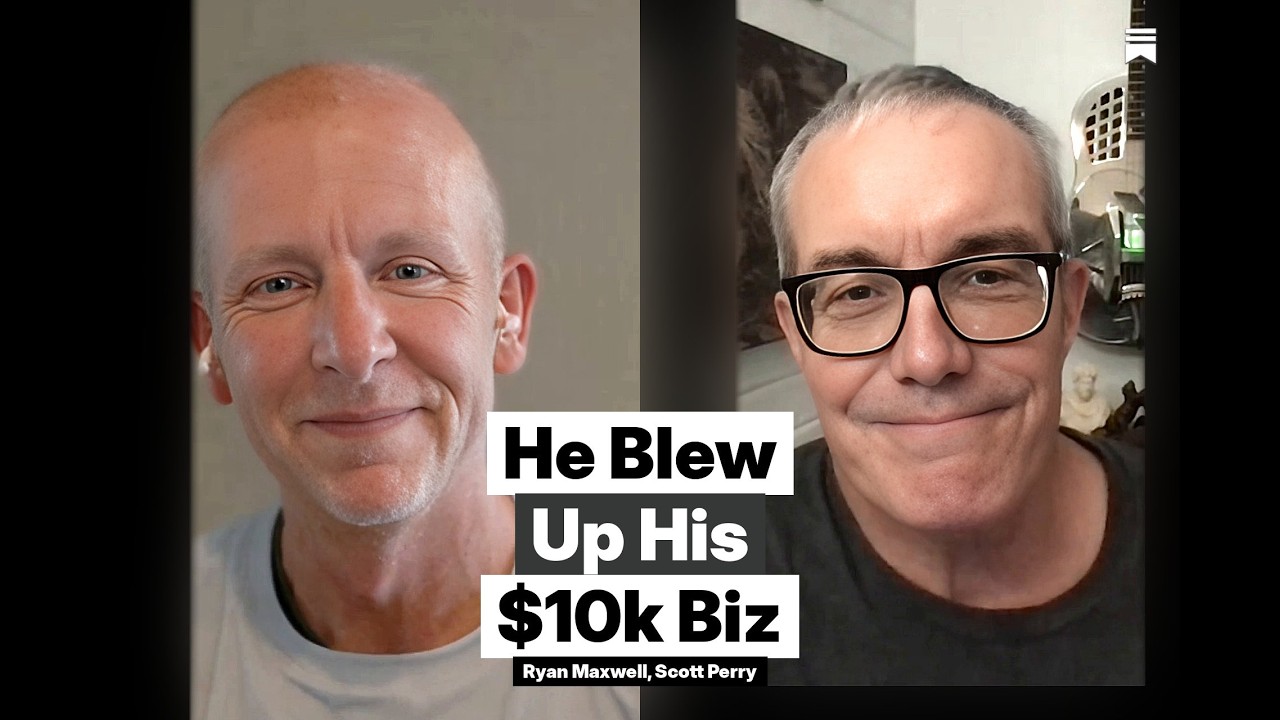
Scott Perry, a solopreneur coach and former Seth Godin student, ditched the funnel strategy that built him a hollow $10,000-a-month business. He now argues solopreneurs should abandon lead magnets and content schedules, focusing instead on one-on-one conversations to attract the right clients and close what he calls the gap between current state and desired outcome.
Chapters
Looks like we are live, man.
Let me check my pulse.
Yep, right on. Well, Scott, thank you again, uh, for joining me. Uh, this first time we've had the opportunity to chat, and so just spent just a couple of minutes just, uh, doing some pleasantries, and I'm really looking forward to this conversation.
Yeah, likewise. I'm, uh, I really love following— you appear frequently in my notes feed, and I love your notes, really thoughtful and insightful and frequently inspiring. So I'm looking forward to getting to know each other a little bit better and seeing what kind of ruckus we can make here doing Substack Live.
Awesome. Yeah, I think, um, I think you did a live with David McElroy, um, a couple of months ago. I think I might have been on vacation and that popped up, and I listened in for a few minutes and I was, was very intrigued because there's a, there's a lot of overlap between, um, your work and mine and, and some of the language that you use. Um, and then after you got off the call, you reached out to me and, and said that David sort of recommended that we get together, and so I've been following along ever since, and I'm glad that we got the opportunity to get together here, man. So can you— you want to share? Would you mind sharing a little bit just about your Substack journey?
Sure. Yeah. So I am the publisher of Creative on Purpose, which is a Substack that is dedicated to where the art of living meets work that matters. Some of that language comes from my 7-year association with Seth Godin. I was a participant in the Alt MBA and the very first Akimbo workshop, which was called the Marketing Seminar. And then I was invited to become a coach in those programs and eventually a head coach in the Akimbo programs. And that journey, that 7-year association with Seth Godin, helped me transition from a 7-year successful career as a performing guitarist and guitar teacher to what I'm doing now, which is just being in the corner of anyone that wants to get a little bit clearer about, closer to what they want in the next chapter of their lives. And so Creative On Purpose explores all things related to the art of living, all things related to work that matters. We have lots of frameworks for helping people get clearer about and closer to building a business on their terms that funds and fits the life that they actually want. And we also just really— and the community just got off a call where we were jamming on the difference between things that are complicated and things that are complex and trying to distinguish the difference between situations and problems and how when we don't pay attention to the difference, we can get stuck or end up spinning our wheels and getting nowhere even though we feel like we're working hard. So that's, uh, that, that's a, that's my long-winded non-answer to your very direct question.
Awesome. Well, I'll tell you, you have, um, you have really opened my, my eyes, my mind to something that I was stuck on that I didn't realize I was stuck on. Um, just sort of paralyzed with this whole idea of figuring out how to create a, you know, a lead magnet and a funnel and a landing page and all of that just seemed overwhelming. And so really, you know, getting to know your work and listening to your methodology has really, really changed my approach and the way I'm sort of looking at it. So I want to thank you for that because it's it's clarifying and it takes a lot of the pressure that I was feeling off to try to become a marketer or an advertiser or something that's really outside of my wheelhouse and my overall comfort level in general. So I appreciate that very much. I've heard you say a couple of times that you went through that phase of doing that yourself and burned yourself out pretty quickly. Where was that in the journey there? Was that before you found Seth or after, during?
No, it was definitely after. When I started in the Alta MBA in August of 2016, I thought I wanted to take my online teaching, you know, or take a very successful brick-and-mortar teaching studio and bring it online. And by the time I finished the 4-week program, with Seth, I, I didn't even really necessarily want to be a professional guitarist or teacher anymore. Um, I didn't really know what I wanted to do. I just knew that life was calling me to do something different. And, uh, like a lot of folks, I figured it out by just doing a lot of talking out loud in public and having conversations like this. I think conversation is the fastest way to connect with the right people and to try to get clarity around your ideas. And so it took, it took me a long time. It took me almost 7 years before I actually landed on kind of a brand and an offer and all the things that digital marketers love to talk about. And then once I did, I definitely fell under the spell of all the online gurus and digital marketers that talk about ideal customer avatars and picking your niche and creating power offers and funnels and, and content strategies and schedules and all that sort of thing. And because I am, you know, I'm not the brightest bulb on the Christmas tree, but I'm not too dim, and I work hard, and I was able to master a lot of the digital uh, marketing theatrics and gymnastics. And through spending a lot of time and a lot of money and a lot of effort, created a business that I didn't really like that much, working with people that I didn't really care about that much. But, you know, because it was all powered by digital marketing BS, it, it kept things going. But just kind of what you were alluding to, like Most of us that are purpose-driven people that want to make a difference in the world and just want to make enough today to do it again tomorrow, most of us don't have aspirations to be expert digital marketers. But when, once we kind of figure out what it is that we have to offer and who we want to serve, it feels like that's what we have to do in order to connect the offer with the audience. And in the process of doing that, I feel like I just completely lost my way in terms of what I was really wanting to accomplish and what I really found fulfilling and meaningful in terms of the work I was doing and the kind of people that I like to do that work with and for. So I ended up with a business that was consistently earning me the coveted $10,000 a month, month after month, but I was spending 80 to 90% of my time on digital marketing BS that felt like it was literally sucking the soul out of my body. Doing work I didn't like with people I didn't care about. And within 9, you know, somewhere in that 9 to 12 month mark, I just, I literally just burnt out and blew that business up out of desperation to, to get away from it. And the recovery for me was building myself from the ground up again, and just with the intention that I'm not going to, I'm not going to play any of the digital marketing games. I'm not going to make an ideal customer avatar. I'm not going to create it. I'm not going to try to find a niche. I'm not going to create a power offer or create an online funnel. I'm literally just going to have conversations with people. I see Nick Peterson just joined. He's instrumental in helping me build the business that I have now. One of his protégés is a woman I worked with, Laurel Portier, who is kind of the one of the best online marketing strategists when it comes to online ethical marketing. But one of the things that Nick says is that conversations is the fastest path to cash. I don't necessarily chase money as an end in and of itself. I find it to be like a natural side effect of doing meaningful work with the right people. But conversations have been a big part of it. And, you know, which is why I was so eager to talk to you. Like, this is just how you and I are going to be able to get clear about and closer to what we want and get better at talking about what we do, but also better at doing what we do. And, you know, just to come full circle to the, the full antidote to the digital marketing approach is rather than try to use pressure and force to jam random strangers that you don't know and don't really care about through a process. I mean, who wants to be processed? But, you know, we don't like to be processed. We don't like it when digital marketing is, is being, you know, implemented against us. Why do we decide that that's what we have to do in order to work with people? What if instead of all that force and pressure and behaving in a way that you would never want to be or become, what if you just became the best in the world at doing what you can do and the way only you can do it and allow that preeminence to create gravity that naturally draws more of the right people to learn about you and to want to increase their level of proximity and access so that through the process of helping them get clear about what they want and defining a path that will get them there, they'll naturally raise their hands to work with you because once— because you've already helped them get clear about what they really want. You help them get clear about what they're— where they're starting from and what they're starting with. You've shown them the path, it's right there, and they already possess everything they need, why would they not hire you or buy your thing if it helps them close the gap with greater ease and velocity? And that, that whole approach, which is really pretty simple, my whole approach to marketing is, um, show up as you are with what you have, do your thing with whoever's around, and your people will find you. And that's literally how the business that I have now has, was built. And it's been, I've earned my month, my annual revenue number within the first 6 months of the year, 3 years in a row. And, you know, I get to spend 9 hours a day with my grandkids. I get to spend 2 hours a day doing work that I love. So again, long-winded answer to a short question. Yeah.
No, that's great stuff. I mean, and really what you're describing, I think, For me, how it hits me is, you know, the whole marketing funnel and the part that you were doing that you really burn out from, that's the performance side of it, right? So you're performing this version of yourself that you think you need to be, right, in order to draw people in. And now you're just showing up authentically as you. And yeah, like you said, though, you'll repel the ones that shouldn't be there, and you'll attract the ones that should. And yeah, you know, that's, that's a good foundation to build your life on right there.
Well, I think that what you just shared is really brilliant, needs to be highlighted, is, you know, polarization has a bad rep right now because we live in a polarized world where people are intentionally and provocatively and performatively polarizing. But there is a generous side of polarization, like when you show up as you are with what you have and do what you can with and for the people that you care about, you are also at the same time letting other people that are not your people or that you don't have something to offer know that they need to move along and find what they need. Or maybe you can even help them find their way to someone that can help them. And that there's generosity in that. There's— because you're, you're saving yourself time and, and heartache, and you're saving them time and possibly money and effort and heartache as well.
Yeah, right. And it's not that you don't have something to offer necessarily, but there's maybe there's just something about your way, your process, your methods, your personality, right, that, that doesn't fit. And yeah, helping them find a good place to land if you can. Yeah, that is— I love everything you just said there, man. It's hard though. You know, I think for me, my whole life has been a story of performances that I didn't even know I was performing. You know what I mean? And slowly but surely you begin to wake up to that and realize there's a better way, you know. You know, that's the other piece of the marketing funnel that just drives me bonkers is there's no single path. For somebody to claim that their product is the product is— there's, there's no single product. There's an infinite way of getting where we all are trying to go. And maybe someone's path is totally different and they're not trying to get where you're going, right, or want to lead them. So yeah, all that is great stuff. You— another thing I think I learned about you was that you got introduced to a couple of very important topics at a very early age in your life. I think you mentioned 7th grade, right? Stoicism and, um, and some ancient teachings, right? That's, uh, how did that come about?
Uh, this— I really appreciate the question. I, in my— as a, as a young person I was born in a military hospital, and after my dad got out, he went to work for AT&T back in the good old days when it was a full-blown monopoly, and we moved around a lot. And so I was— I never spent more than 2 years in any given school for the first— for all of elementary school. And by the time I landed in junior high school, I was a you know, a pretty screwed up kid. It's a, it's a, it's a hard time in a young person's life to try to find, you know, belonging and identity, uh, in a brand new environment. And so I, uh, you know, I became a little bit of a, uh, of a juvenile delinquent, and it was pretty clear to my parents that I would, um, either end up dead or, or in juvie before I, I became a teenager. And They, uh, just so happened that the person across the street was the headmaster of this little private school, and they went across the street, said, is there anything you can do to help us and our kid? And, uh, he found a scholarship that let me go to this really amazing school where in 7th and 8th grade I was one of 7 kids that had 2 really fantastic teachers, uh, that completely turned my life around, that whole experience. And one of them introduced me to Marcus Aurelius' Meditations, and the other introduced me to the Bhagavad Gita and, uh, the Tao Te Ching. And those three books, um, became instrumental in just helping me navigate all of my adolescence, the rest of my high school and college years, my early career as a teacher, my marriage, being— becoming a father, and, and, uh, you know, having a 30-year music career as well. Um, you know, the thing about ancient wisdom is that it's, it, you know, the stuff that we still pay attention to is completely time-tested, and a lot of it now is scientifically vetted. Stoicism is now the, the, the foundation of cognitive behavioral therapy and Logos therapy and rational emotive behavioral therapy. There's a lot of positive psychology, that they all have roots in, in Stoic philosophy that have now been kind of proven through neuroscience and the scientific method. So I found those things really early on, and they completely informed and inspired a turnaround in my life at an early age, and they just continued to do that as I continue to navigate my way through, you know, this phase of my life as a grandpa and, uh, a corner, corner man, corner person, coach, etc.
That's awesome. Yeah, and I'll tell you, man, the similarities just keep stacking up here. So, so my dad worked for AT&T. Oh wow. For, um, right around 20, 21 years, and then he got caught up in the, the first downsizing, uh, which was— I think I was in maybe a freshman, sophomore in high school. And so that was, uh, terrifying, you know, to see all of that sort of come together. Um, and yeah, at 7th— in 7th grade, I can relate. I was— I had lost my way pretty significantly, uh, in the 7th grade. My parents were divorced, so I actually got kicked out, uh, of my mom's house and sent to live with my dad after I flunked 7th grade, uh, my first go-around. Which is a whole other story that we don't have time for. But yeah, I wish I could have had someone step in and introduce me to those types of things. But, you know, it was a big shift moving schools and transitioning and trying to find my way there. So yeah, very interesting. You know, another— One of the things that you say quite often that really got me is— it's word for word what I use, and I think it's a pretty common term— but this whole idea of closing the gap. Mm-hmm. What does that mean to you? I know you use it— I've heard you use it a few different ways, but where did that come from for you? And what does that mean, if you don't mind?
Yeah. Well, again, I'll tip my hat to Nick Peterson, who's— some of his frameworks and principles have helped inform this. A lot of what I learned from Seth Godin and a lot of what I've learned over the years from Stoic philosophy and the Bhagavad Gita and the Tao Te Ching. The gap is a way of talking about a solvable problem. And the words solvable problem are kind of redundant. Like, a problem has a solution. By definition, every problem is solvable. The problem is that most of the time what we are calling problems are situations, and situations are not easy to solve. They don't have a clearly defined outcome or, or path to resolution. And, and because we conflate problems and situations, oftentimes the things that we call solvable problems or problems are not. And we spend endless cycles. And this is part of the reason, you know, some of the reason has to do with our default human programming and conditioning, but You know, we spend a lot of time looking out the window for solutions like, oh, that guru must have the solution, or that digital marketer must have the software or the app or the framework, uh, or, you know, this, this religion or this philosophy has all the answers that I need. Uh, the problem— I wrote about this recently in my book Intrepid, uh, that just released a couple months ago. I guess about a month ago. Um, the, the answer almost never lies out the window. It almost always lies in the mirror, because we are all born sufficient and whole, possessing everything we need to succeed in anything that we want to succeed in, in life. Uh, you and I experience this with our grandchildren. We, we get to revisit this, you know, that Like, if you think about what it requires, the physics and the psychology that it takes to learn how to walk and talk and read and write and ride a bicycle, it's, it looks impossible. And yet every able-bodied child is able to accomplish these things in a very short period of time with almost no instruction. Like, I don't know about you, but I don't sit my grandkids in front of a YouTube video to learn how to read or write or talk or anything else. So when we're talking about the gap, oftentimes there's the gap between, you know, our current state and the, and the experience we want to be experiencing, between where we are and where we want to be. The gap is, is usually in some way, shape, or form that solvable problem. Like, if we, if we can get clear about what we're actually trying to accomplish, or the problem that we're actually trying to solve, and we can get clear enough about where we're starting and what we're starting with, we will define the gap. And the fastest way to start closing the gap is stop doing all the stupid shit that you're doing that you don't have to do and shouldn't be doing anyways? Like, stop spending all your time looking for answers in the YouTube videos of gurus and digital marketers. Like, what if, what if you just— I'll just take a business example. Oftentimes when I'm helping someone reclaim their business so it actually funds and fits the life they want, when we look at all the things that they're doing, they're 90% of it, 80% of it can just— they could just stop doing it and would have no appreciable different, uh, impact on how close or fast they're getting to their target. Which means that simply by stop doing the things that you don't need to do, you are going to recapture an incredible amount of time, bandwidth, attention, energy, effort, and money. And that means that you already got closer to the life that you want. You could take that, save time and money and effort and, and do the things that you want to do in life. And if you want to carve off a little bit to do the 2 or 3 things necessary to actually close the gap, you could do that. Because if you look at what is actually required to have a successful business, none of it has anything to do with guru frameworks or digital marketing BS because I mean, I ran a brick-and-mortar music store before there was digital marketing. I didn't need a funnel. I didn't need an ideal customer avatar. I didn't need advertising. I needed to set up shop in a place where there were people that wanted the kind of things that I could provide and I needed to have enough conversations and delight enough people to spread the word for me that this resource was available in town and they should check it out. And so what do you need for a successful business? You need an offer that is irresistible enough for an audience that is eager enough to achieve that aspiration or solve that problem through your offer. And you need a way of putting that offer in front of that audience. Now, just to bring back in, you know, the whole idea of funnels, like you can do that with a funnel. I know that you can make that work because I've made it work, and if I can make it work, anybody can make it work. But it's not the only way to do it. And if you are not the kind of person that likes to spend a lot of time refreshing your Facebook Ads dashboard or generating content for social media platforms that won't show your content to 98% of the people that have signed up to be your friend or follower, that's, you can overcome that with ads. You can make that machine work if that's what you want to do. But if you don't, conversations again are the fastest path to connect your offer with the audience that is eager for the solution that you have. That's a gap that you can close in very short order. The only other thing I'll say about all that, Ryan, And I'd be interested to hear what your experience is with this, is once you actually define the gap, that's when you can get really, you can get really creative in how you're going to remain humble and hiding and remain stuck and not pursuing the things that you've just revealed are totally within your ability to accomplish. Because once you've actually named the problem and you have put yourself, named it in a way that's solvable. Now you're on the hook.
Yep.
And now your identity and your worthiness is tied to whether or not you actually accomplish the thing that you just articulated as a thing that you can accomplish.
And so— Another gap. You've just created another gap.
There's gaps within gaps, for sure. So It's, you know, this is why people like you and I get to stay in business is because, you know, we can talk about this. And, you know, I think there's probably people on this call that are like, holy cow, like, I just got this insight that now I can actually apply to my business and I'll save some time and I'll save some money and some effort and I'll make the gap a solvable problem. And then, but who's gonna help you hold yourself to account? Who's going to help you stay the course? Who's going to help you see the things that you don't see and peek around the corners at the missed opportunities and the missed leverage and, you know, provide the reminders? You know, that's, I don't think anybody that pays you or I is paying us for our information or insight. There's lots of people., that have insight and inspiration. I'm looking at the feed right now, and I see Alice and Edgar and Maya and Mariana and Nick, and Duncan. These are all people that I, I follow on Substack, and they're all— they all have plenty of insight and inspiration. Um, so there's no shortage of insight and inspiration, but, you know, the way that the people that I can help are going to be different than the people that Ryan can help, and they're different than the people that Maya or Mariana or Nick or Alice can help. And so people will pay you to help them implement whatever insights and inspiration you provided them with to close that gap with greater ease and velocity. That's the offer.
Yes. Yeah, right. It's not a knowledge problem, right? You said it. I mean, especially in today's world. I mean, Google's been around long enough to know that you can get pretty much anything, any information you need relatively quickly. You throw in Claude, ChatGPT, Gemini, you know, the host of AI tools. Knowledge is not the problem, it's the gap between knowing and doing.
Well, Nick Peterson has a great, uh, Dr., um, uh, what I— Nick can, if he's still on here, can drop the name in. It's Todd Snyder, I think, is a child psychologist who says intelligence is the— is your ability to get what you want. That's, uh, and, and I know that I've heard something similar to that from Nietzsche or some— someone like that. But if intelligence is the ability to get what you want, then the next step that Nick takes is learning is the ability to change your behavior when a situation— in, in a similar situation. So if you wake up today and do everything that you did yesterday, you'll get the same results that you've been getting. And You should not be surprised when you're not making any progress. If you want to— if you want things to be differently, you're going to have to see, be, and do things differently. And so if you're going to improve your intelligence, you're going to have to apply learning, changing your behavior to close all of those gaps. And you are absolutely— I think you're 100% right, like Nobody is paying anybody for information because ChatGPT or Claude can scrape the internet and, and they can share your bespoke framework, you know, blueprint, template, whatever it is. Um, it— that's freely available whether you put it behind a paywall or not. Um, what people can't— what they can't replicate is what is it like to sit in a room with Ryan and be seen, heard, and understood by someone like Ryan, who— and be, um, be forced to, to remain uncomfortable and on the hook and to sit in the tension of all the blind spots and missed opportunities that Ryan just revealed.
Yep.
You know, and, and have Ryan's assistance in becoming the kind of person that can become the kind of person that accomplishes what you want to accomplish. AI is never going to replicate that. So that's, that's ultimately what people are paying for, paying you or me for. They're not paying us for our information. So why not give the information away for free?
Yeah, absolutely. Yeah, I call it challenging your BS, you know, your belief systems, your blind spots, and the bullshit stories that you tell yourself. You know, and what I found consistently is that the belief has been a bullshit story that lived in my blind spot. And, you know, the unraveling of all of that stuff is, is where you find the opportunities. That's how you close the gap, right? Um, it's putting that into practice.
Like, have you read, um, Kevin Ashton's book How to Fly a Horse?
I have not.
It's a great book about mostly about creativity and innovation, but he has this great quote, um, trust is belief in yourself, certainty is belief in your beliefs. And the, the extrapolation is, um, certainty is a barrier and trust is a, uh, is a bridge. But, you know, to your point, like, we all believe what we believe mostly just because we believe it, because there is no absolute Like, what are the absolute truths in life? Death and taxes? Well, I don't know. I, I see a lot of people bragging about how they don't pay taxes, and I see lots of people trying to figure out how they can live forever. Uh, who knows, they may crack that. And who knows if even when we release this mortal coil that, you know, there isn't something ongoing and better than, uh, what we're experiencing now. So in a world where there is no certainty no absolute certainty. A big part of this, you know, again, to quote you, the gap within the gap is how do we sit in the tension of all the uncertainty and yet still make decisions better and act on those decisions so that we can get closer to what we want in life without blowing ourselves up or burning ourselves out in the process.
Yeah, yeah, well said. You know, to me it all goes back to this— there's a quote that I absolutely love by Carl Jung. It's— I'm sure you've heard it— but until you make the unconscious conscious, it will rule your life and you will call it fate.
Yeah.
And you know, so much I think of what we're talking about, you, um, I think this ties back to your, you know, this idea of your grandkids. I certainly have seen this, you know, with, with with what I've learned is you see them in a very natural state, right? Very curious and kind and loving most of the time. I mean, they can be violent little creatures at times when they don't get their way, but we, you know, this longing for belonging forces us to adapt and change and become, you know, what we must become to stay connected to those who are caring for us. And all this is happening before language is online, right? So you— this is feelings and sensations and, you know, the language of the body, not the language of the brain. And by the time language comes on, a lot of those beliefs, you know, about ourselves, about others, about the world we live in, they're, they're already established. They're just not established in language. And then we begin to build the language around that. And the bullshit stories, that's where that comes in, right? We, we begin to tell a narrative And, you know, at least for me, that is sort of how I lost my way in life, you know, going off the edge and being a rebellious kid, and then also locking into this idea that my path to acceptance was through achievement. Mm. And so, you know, when I got my corporate job, it was a summer job that turned into a career that, you know, I was hell-bent on getting to the top. Not realizing that, you know, it was all this— the whole, the whole drive was this need to be accepted.
Yeah.
And to your point earlier about the window, everything that I was— I was trying to fill this hole of not being enough, of fearing that I wouldn't be accepted unless I proved that I was worthy of it. You know, you fast forward to today and I can look back very clearly and go, well, the only acceptance I needed was mine.
Yeah.
But I was trying to fill it with, you know, titles and promotions and houses and cars and stuff. And man, you get sucked into this trap, right? The— I call it C4 because it really does blow up your life. The compare, consume, compete, conform. Um, you know, that's sort of the the indoctrination of society that we get sucked into, you know, from a very early stage. And so we spend— I've spent most of my last 10 or 15 years trying to undo that constructed self, you know.
Yeah, I call it the identity trap.
Yeah, yeah.
You know, we, we, you know, again, just watching my 9-month-old and 4-year-old grandson be who they are because they don't have, you know, they're not yet fully capable to buy into any of the games that we are forced to play through institutionalized education and occupation. But then, you know, when you reflect back on your own journey like you were just sharing, like, we realize that we ended up playing a game that we never signed up for, chasing a finish line that we never picked for ourselves. And, you know, and then we wonder why we are so profoundly unhappy and dissatisfied even when we get all the tokens of, you know, associated with success by, by somebody else's definition that, that come to us through the scrutiny and expectations of other people. And I think, you know, one of the biggest, most important things about your work and, and what I try to do as well is helping people wake up and see, like, are you playing a game that you never signed up for? You can't win a game you don't want to play.
Is this—
do you want— you know, like, it's one thing to, um, it's one thing to unconsciously keep doing what you're doing, but when you've woken up and, and seen it for what it is, to continue to just invest in that sunk cost of an identity that you never, never fit and never made you happy. Um, that's a, that's a tragic thing. Um, yeah, you know, it's also filled with trauma. And so it's, it's, uh, it's an interesting tightrope to walk to help people, to help reveal blind spots, uh, and to help people see around corners and um, in a way I call it empathetic antagonism, you know, to, to, to help people get under, get underneath someone's skin just enough to help them see that there are other doors and light switches in the room, and, and to, to engage in them in a way that helps them empower themselves to turn the light switches on and open the doorways and cross the threshold.
Yeah, well, and you know, so many— I think so many people, myself included, you live in this gap, but you don't realize you're living inside that gap, you know. But it manifests itself in a number of ways, but I call it the ache. This, for me, it was this low-level ache of feeling like I'd lost purpose and meaning, even though I had a career I was chasing and a goal I was going after. You know, I could articulate my career goals, my drive, my ambition, where I wanted to end. I had salary, stock options, bonuses, all that stuff mapped out on spreadsheets. Like, I could tell you where I was going to be 5, 10, 15, 20 years down the road, all of that. But yet I still felt like something was missing. I guess it was the best way to explain it. And, and then you start to feel guilty about that. Well, you know, I'm, I've got a good job, I've got a good marriage, I've got healthy kids, I've, I'm living in a nice home, I'm doing the things I want to do, got all the stuff. There's so many people who are less fortunate than me. Why do I feel the way that I feel when I'm, when I'm checking all the boxes I've been told I was supposed to check? You know, um, and I think that takes— it takes a lot of— for me, I'm hard-headed, so sometimes it takes a 2x4 right side to the side of my head to get me to wake up and pay attention. But it took several of those 2x4 moments, you know, to soften me up and get through that arrogance and ignorance, you know, of all of it. So how do you see that for most of the people that you work with in terms of how it manifests in their life?
Well, I think, you know, just to circle back to, uh, ancient wisdom and the insight that it has for us, one of the messages from the Bhagavad Gita, uh, and it's not articulated this way, this is my articulation of one of the, the primary messages of the Bhagavad Gita, is that your life is speaking to you because it wants to speak through you. Our life is constantly speaking to us. One of the reasons that we oftentimes end up so close to what life is calling us to do is because even when we're not listening, it just has a way of getting us on that path. Um, the problem is, you know, my friend Stephen Cope wrote a great book called The Great Work of Our Life, which explores the Bhagavad Gita and the call to vocation. Uh, he talks about how you can You can be off of your life path by just 1 or 2 degrees and it'll feel like a mile. And, you know, a lot of the work that I do is to help people cultivate enough presence and stillness to like actually hear what life is, is calling them to do, to, to, to see, um, how they are complicit in their own suffering, uh, and then, um, you know, and then to also look in the mirror and, and recognize that while they are the cause of most of their suffering, they're— they also possess everything they need to alleviate that suffering. Because, you know, what Stoicism tells us that— talks about the dichotomy of control. Epictetus opens up his handbook with, um, the revelation that, um, some things are up to us and others are not. And then he lists everything that's not within our control, which is basically everything. It's like our bodies are not within our control. Like, you don't— if you were in control of your body, you wouldn't age, you, you wouldn't have joint pain, you wouldn't catch colds, and you wouldn't get COVID because you, you know, right, controls your body. You would not want any of that. We don't control the weather, we don't control the geopolitical situation, we don't control the weather. Like, everything's beyond our control except the two things that are necessary to live a life of equanimity and purpose, which is you control how you see yourself in your situation and other people, and you control what you decide and do next. Again, if you are an able-bodied person in possession of all of your mental, uh, faculties. So if that is all that's required, then it comes down to what we were discussing earlier, which is what are the stories that you're telling yourself? Like, if you tell yourself a story that you're not capable or worthy or any of those things, then that's the story you will live. But it's very easy, it's very simple to just switch Flip that, flip the script, uh, you know, and, and the— by revealing the gap, you reveal that the gap is, is a solvable problem, that you possess everything you need to close it. Now what are you going to do, right? Are you going to invent more stories so that you can stay stuck and humble in hiding, uh, and, and— or are you going to step into possibility and your potential to, to get everything you want in life and, and make the difference that you want to make? So I think the first step is always awareness. Like, you don't know you have a problem until the problem is revealed. You don't know that you're unhappy until your happiness is revealed. Uh, and, and I can't tell you that and have you understand it. I can only help you experience, uh, for yourself that you, you are you know, you are not living the life that, that of fulfillment and meaning that, that you want to be living, that you are not living into your potential, even if you're, you're winning the game of life by all the markers of society. Um, once, once you have achieved that awareness, you know, self-awareness, then it's about cultivating self-efficacy. Can you become the kind of person that can stop doing all the stupid shit that you're doing and start doing the 2 or 3 things that are necessary to be done better to get you clearer about and closer to what you really want. And then it becomes, uh, an effort in self-actualization, like helping you close that gap between the person you are and the person you want to be, and the things that you have and the things that you want to have. But ultimately, you know, just like Maslow's hierarchy eventually understood, like the at some point you transcend self altogether. Self-transcendence is when you realize that it really has nothing to do with you, that the, the, the true meaning, uh, and fulfillment of your life is— it comes through service and kindness and, and fairness to other people. That's the Stoic virtue of, uh, justice. Doesn't mean give everybody what they deserve, or, you know, it's not a legalistic thing. It's— justice is treating people with fairness and with kindness, the kindness and fairness that they deserve, because they are also human beings, fellow human beings, just like you. Are they perfect? No. Are we all confused and conflicted? Yes. And that doesn't mean that we are not worthy and that we are not, uh, entitled to be the stewards of our experience and the shepherds of our destiny.
Yeah, I mean, that— you reminded me of a quote that I heard when I first found Eckhart Tolle, where he says, "We suffer the consequences of our unconsciousness." And that really pissed me off the first time I heard it, because it didn't make sense to me. I really felt like it was, you know, shifting This blame, uh, to me. And but man, I'll tell you, the, the depth of that statement is, is so real because we just, because of our unconsciousness, we just continue to recreate, you know, our yesterdays into our todays and into our tomorrows.
Yeah, I, I really love his stuff. Um, I've read His, uh, what is it, The Power of Now and A New Earth are two that I've read many times. And I, I love watching his YouTube videos just because his, his presence is just palpable. Like, you can really feel, um, his energy and, you know, the depth of his—
and he doesn't use notes. That's crazy. I mean, everything he does is sort of at home. You and I are amazing too, right? Come on.
I mean, that's true, that's true. We don't— I'm not giving myself enough Well, tell me a little bit more about, um, tell me a little bit more about what, what you're working on and, and like where does all this show up for you and your work? I mean, I definitely understand the audience that you're serving, um, and the, the, the gap that you're helping them identify and close, but how does, how do all these things show up in the work that you're doing and, and what you're building on Substack?
Well, yeah, I think the, the whole premise here for me is, is to wake up to the life that you have, to notice that you drifted, right, away from yourself. Um, and Chasing Maximus, uh, it— Maximus was a nickname, and I've got this strange connection to nicknames. I've got several throughout my life that seem to define me. This one was more of a joke by the guys I worked with at corporate. But, but Maximus is the greatest, right? So chasing the greatest version of, of yourself, which already exists. So I use it as this frame of— for me, it's been very helpful too. I, I like to journal, uh, and so my best journal journal entries are when I'm arguing with myself. And then at some point, Maximus enters the conversation. So this future version of me who already has it figured out then tells me exactly what I need to do. And the first time that happened, the first time that I actually caught that, I was like, holy shit, I already knew what to do. That answer didn't come from someone else, it came from me. It took me getting just far enough outside of my current frame of reference to see it from a different perspective. And so that— I became very intentional about that. But what I've realized through the process of that is that finding my way is trying to become this version of myself that I want to become, closing that gap between where I am and where I want to be. But at the same time, it's reconnecting with this version of me who's always been there, has just been buried underneath all the BS, right? And so, yeah, I'm very passionate about what you described, right, in terms of being able to sit with people and have the hard conversations, to say the thing that needs to be said. Uh, even though it, it's tough to say, right? There's a big difference between being nice and being kind. And, you know, I heard, I heard the acronym NICE means nothing inside cares enough, and I latched on to that, right? Because there are a lot of people who are just nice for the sake of being nice, but they're just protecting themselves. And I prefer a 2x4, like I've mentioned. And so I like to dole those out sometimes. In a, in a kind, caring, loving way. But I just, I believe that people need to hear, um, what we can see that they can't see, only because they're too close to it. And so getting people to expand their perspective, right, changes their perception of things. Uh, and, and really just trying to get people to, to challenge their BS, right? To, so A, wake up to the life that they have, to unravel this constructed self, right? The identity trap that you talk about, that you've, you've constructed this version of yourself that you think you need to be, that who you've needed to be to survive, right, has gotten you here. But, but a lot of those things have just become habituated and they're, they're automatic and they no longer serve where you're trying to go. And so identifying those things so that you can rewire your brain, right? I like to say, remind yourself that you are reminding yourself. So this process of reminding yourself is the repetitive part of learning new behaviors and habits. And that's a very hard and difficult thing, at least it has been for me. I've got this— my story, man, is just this story of not enoughness, uh, and it started early, probably way earlier than I'm giving it credit for, uh, but I grew up in a very chaotic environment. Um, I got— I was pretty emotional, and so I got the nickname Crying Ryan, uh, because I cried a lot. Well, you know, as a, as a, as a kid and as a boy, I mean, that's shameful and humiliating. And so I found ways to to not cry, at least not in front of other people. And then eventually got to the point where I just disconnected with most of my feelings and emotions and charged forward and tried to be tough. I was anxious and angry most of my life. Um, not— I, I was— I think I was a good person, just anxious and angry. So I could get pretty ticked off if you tried to pass me on a roundabout or cut me off, pull out in front of me, things of that nature. That really reared its head. In those scenarios. But, you know, I'm getting a little off track here. I apologize for that. But, but one of the things that I think I'm really starting to see through, through the message that you're teaching is I've been really struggling with this whole idea of an avatar, of, of limiting my message down to, you know, a person. Which the only person I could figure out to put in that box is me 10 or 15 years ago, this high-functioning, self-rejecting person who on the outside has got it all together and looks like they're winning, but secretly struggling and no one to talk to about it and confused by the whole thing. And so really just helping people identify that and closing the gap between what they know and what they do, between who they are and who they want to be. And you know this, the hardest habit to overcome is the habit of being you. Yeah, uh, it's, it's my number one struggle, you know. I, I left my corporate job, uh, going on 10 years now, and then we started our own businesses, and then I recreated the whole massive chasing after all the external stuff in our businesses. And then I decided that I wanted to be a coach again, because I love it so much. And I've been spinning my wheels for the last 3 years, instead of, you know, getting out and doing the work. And I finally, within the last 12 months, have done that. So, you know, I'm, I'm in the middle of still trying to close my gaps. And some of them are much wider than I would care to admit out loud. Yeah. And so, you know, how do I do this? A, for me, but at the same time to help others and to show others that, I mean, the work is never done. I mean, you talk about do the work, it's time to do the work, do the work, do the work. Well, the work is never going to be done. And the more we learn, the more we grow, I think the more we find out about ourselves, that there's yet more work to do.
Yeah.
So really just walking along people to help that journey.
Well, I love the point, well, several things that you said that we could spend another hour talking about. But one of the things about becoming that you alluded to that I think is often neglected. Like, I hear people talking about reinvention, uh, and in my experience, that's not true or necessarily healthy. Like, people are— like, who you are becoming lies mostly in being more of what you've always been. Like, the more I spend time with my grandsons, the more I realize that I am actually becoming more and more like the, the young kid that I was— more kind, more curious, more creative, more, uh, more willing to take risks because I don't see them as risks. I just see that— see them as little adventures that are worth exploring. Um, I have this idea of conspiring with your future self, like If you want to become a different person, yes, you're going to have to become, you know, see, be, and do things differently. So why not get with that person that you want to become and, and figure out the roadmap together? But oftentimes it does come down to being more of what you've always been. Like, as a kid, you didn't— you weren't chasing— before you went to school, you never thought about chasing grades or sitting up straight and doing what you're told or being a good kid because, you know, you're, you're able to stand quietly in line and wait your turn. Um, you know, we as kids, we, we see things that we want to accomplish and we simply figure out how to do it until we figure out how to do it. And I think that's a lot of— and It's not so much— I don't even think you have to, to, to be helping the people that are, that, that are like you were 10 or 15 years ago. When I, when I first started teaching guitar, I had students that wanted to learn how to read music, and I didn't know how to read music. So I got a book, uh, a method book that taught how to read the notes on this, the, the strings of a guitar. And I stayed 2 weeks ahead of my first batch of students, and I taught myself how to read as I was teaching them how to read. And, you know, because my real skill wasn't knowing what the notes were. My real skill was being a teacher who could help people figure out, like, why do I want to play the guitar? Why do I want to learn this melody? Like, and then close that gap as quickly as possible. So, you know, when I think about all the different things that I've done, it's all been one thing. It's always been about helping people get clear about what they're trying to accomplish and find the fastest path to, to getting there. Um, it's just been in a bunch of different domains over the years. Um, anyway, we've, we've, we've managed to ramble for a full hour, and I need to go relieve Grandma, who is juggling both grandsons at the moment.
But super important you get that done. That done.
Yeah, yeah, yeah, yeah. Well, and I, as I told you before we got on, it's almost nap time, so You know, perfect, perfect.
Good for you, man. Well, I thoroughly enjoyed this, man. We, uh, we should do it again because I do think we could go another hour or two.
Oh, easily. Well, I just— I, I— it's a privilege to meet you and to spend this time with you and to talk to you. I really love the, the difference that you're making and the work that you're doing. I love the way that you talk about, um, the things that you're talking about, uh, you know, as I see them on notes and so forth. So I just— I really appreciate you, and I appreciate the invitation. Thanks for reaching out and making this time today.
Likewise, man, very much so. I, uh, I'm gonna continue to follow along, man. I'm learning a lot from you, so thank you for that.
Speaking of, here's, here's the grandson now. You want to say hi real quick?
Come here, big boy.
That's not your papa, that's Ryan. Say hi, Ryan.
Hi there, how are you?
Get off the Zoom. Yes.
Okay. Yes. Yeah, that's your cue. Have a good day, man. I enjoyed it.
Take care. Bye-bye.
More from Scott



Stoics Don't Suppress Emotions, They Do This Instead #stoicism #emotionalintelligence #mindset







