Sean Everett proposes a zero-fee, token-based marketplace that matches global supply and demand without the high take-rates of Airbnb or Apple. He built a prototype called Publish to the Planet where users list skills and needs to find matches, grounded in Web3 incentives and what he calls Pareto efficiency.
Chapters
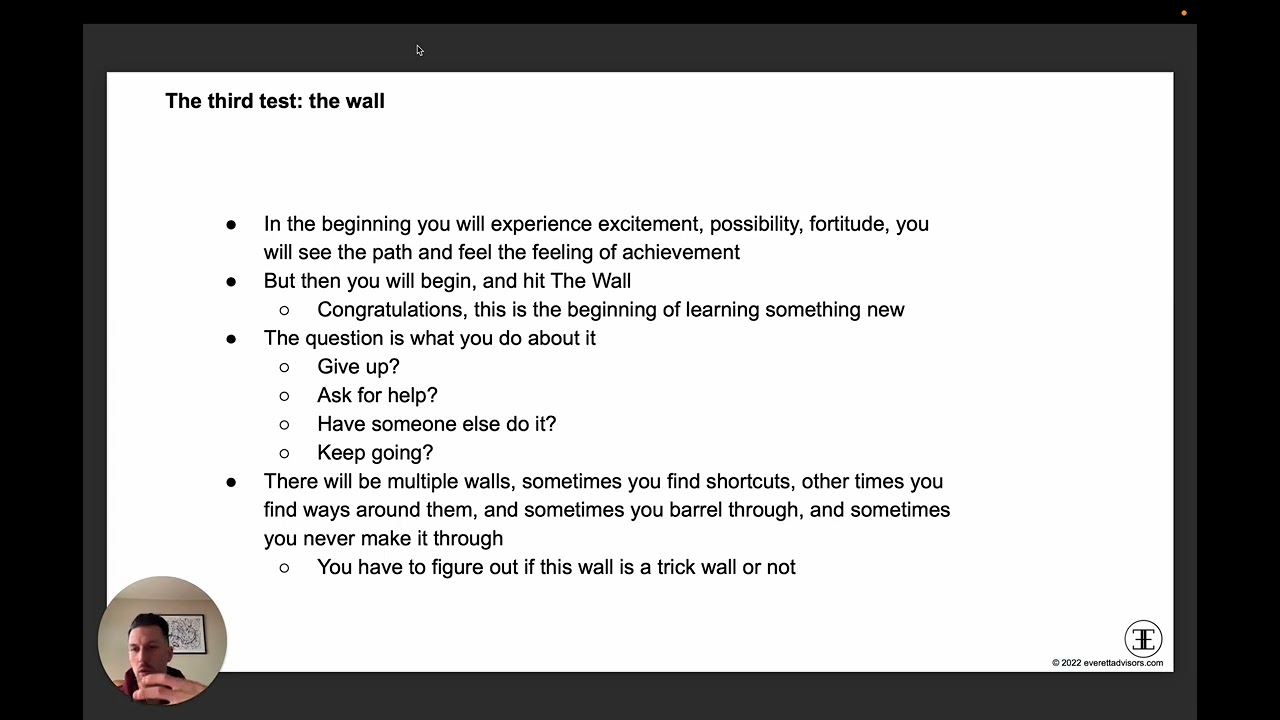
Welcome back, everybody. Where do we find you today? Hopefully the present moment. That seems to be the new tagline, so we're just going to go with it. So today, next episode, we're going to talk about crafting a vision. So this one should be a little bit interesting. What do we mean by vision? Not necessarily a kid sitting in the optometrist's chair and needing eyeglasses, but rather Seeing the future. You may have heard some quotes, you know, you can't build the future until you see it. And so the question is really, how do we find it and get that visionary mindset so we can go get it? A couple examples of visionary futures that people imagine— SpaceX is pretty famous in the tech world. Obviously their vision is to get people on Mars, so big audacious vision. Coca-Cola has a little bit different vision, not about building technology, but rather how they make people feel, which is happiness. And that's how all their advertisements are positioned. So that's pretty cool. As always, are your decisions moving you closer or further away? And a little bit more about us. And then here's a blank piece of paper for you to jot down notes. Okay, cool. So let's go to something else I want to share. So we've talked about some top-down stuff. We've discussed different industries, different markets, healthcare, all of that sort of thing. Now, as I've been thinking about this, I've become sort of fascinated by planetary-scale technologies. There's only a couple. The internet, that's a planetary-scale technology. It's used by 5 billion people. There's not that many access gates. You need obviously money to pay an internet provider. You need a machine, and then you need it not to be blocked by the country that you live in or the geographic location that you're accessing it from. Other things that have reached a tipping point above a billion people would be Facebook's products, Meta products, SMS, electricity, obviously food, water. And as I've thought about the internet, Google for instance, a search engine, I've thought about this idea of an internet-wide marketplace. What has the internet really done? What it's done is it's actually connected more than one person together across a variety of different needs, wants, desires, and it really has represented a place of transaction. Google is a marketplace. What's the definition of a marketplace? Marketplace is somewhere where a demand and a supply can come together and an exchange can happen, some exchange of value. I'll get to that a little bit more detailed, but I've been having these thoughts, so I put together, uh, just these thoughts in a slide deck. It's going to be a little nonsensical and a little out of order. And I think as you think about what you do for yourself and the idea that you have, I think if you have this thing that's gnawing in the back of your mind, it's worth firing up a text editor, a document, a slide deck. You can use Google Slides, Google Docs, they're free, a piece of paper, anything that you want to take some notes on. So Peter Thiel has talked famously about zero-to-one products. I've sort of specialized in that area, building something from nothing. And one of the things he talks about— well, there's 2 main premises. One is competition's for losers. The more competition that enters a market, the more profits tend to zero and it becomes commoditized. Maybe one winner takes all or most. The other side is to study endgames. What he means by that is Google was the last search engine, not the first. They figured out a better algorithm that produced higher quality search results. Google figured out the endgame. They weren't first, they were last. Same thing with Facebook. They weren't the first social network, but really they were the last one that won. So I was thinking, if we're thinking about a marketplace on the internet, what does the endgame look like? What happens? What was the mechanics, the system mechanics of the group that won? The reality is that every marketplace has a take rate. They take a transaction fee. Some take more than others. Apple and Google take 30%. Airbnb, I've noticed, you know, you buy a single night stay for $180, The fees on top of that equal $150. It's almost the same amount of money in fees that it takes to get the internet, get the room booked. The federal governments take a take rate. It's called taxes. So everyone's got to get their pound of flesh. And I thought, you know, wouldn't it be interesting if there was a marketplace that didn't charge you anything to use it? Perhaps many people would be attracted to that and the incentives would be aligned with the users. So let's explore that concept. So here's the idea: nobody pays anybody. It's an exchange of time and service, so it's back to a barter model. Bartering becomes very difficult when you have grains of sand and you need oil, let's say. The reason is because it's hard to go find the person who has oil. On the internet though, you have 5 billion people. If you have a sufficiently advanced enough technology, you could match the people who want something and the people who have something together. And then of course you ask, how do you monetize this? Well, I wonder if what you earn or exchange are just tokens in the network, down to this like Web3 thing. Obviously these are very preliminary thoughts, but we'll keep going. I've got some other ideas as well. So here's the problem. I mentioned the Airbnb thing. I'm sick of paying $150 in fees for a $180 night's stay. It's ridiculous. I'm almost paying 100% of the price to somebody else for something I'm getting no value for. Where's all that money going? It's ridiculous. There's this idea of direct-to-consumer. So direct-to-consumer, kind of, but who are all the middlemen and middlewomen that are taking their cut? Same thing with like home services. I need to get something fixed. Pipe breaks, toilet goes out of whack, washing machine is dead, you need somebody to get help really quickly, but people are always going to take their cut. Let's keep going. How it works, what you get. So I wondered about, and I've talked with my wife about this, but your skills and your values. So you may have a particular set of skills that you're good at that other people aren't, which means you have value That others don't, that value could be translated. The other thing is you have a certain set of ideals, principles, belief systems that perhaps you would want to connect with people that have similar sort of values as you. You know, trustworthy, transparent, ethical, honest, things like this. So maybe if you could find a better fit between skills and values, then you would have better long-term relationships that are created, more trustworthy relationships and stronger fits ultimately. Which provides network lock-in and more value between all members of the ecosystem. Okay, so the first test. Here's the atomic unit. This is more philosophical, but what do you want out of life? This is a big question that not a lot of people can answer clearly. What do you want? You have to ask yourself this, and you need to be honest with yourself about it. If you don't know what you want, you don't know where you're headed, and you might end up somewhere that you don't want to be. So it's an important Important question, not easy. We're gonna skip past it, but you should spend a lot of time on this one. Free time. This is a big deal. Every single human on the planet has the same amount of time in a day. It really just depends on what you do with it. So there's a lot of people who have done a lot, a lot of people have not done a lot, and in some situations there might be issues where you just can't do something because of Either the situation, environment, perhaps some situation just with yourself where you're physically or mentally not able to cross a barrier. Put those things aside. Is, um, can you carve out a couple moments a day, every day, for the next 10, 20 years of your life? If you can, then you can do something productive with that time. Then this one, ah, the wall. So you've probably hit the wall if you're in this course with me. You've hit the wall multiple times, like, I can't break through, this is too difficult, I don't have the skill set. I mean, this is where you need some help. You can reach out to me. In the last lesson, I've provided my contact information as well as in the Magic Castle. Reach out, let me know what's going on. Uh, I'll be happy to help if I can. Your support system around you can help, but I think ultimately it comes down to a couple things. One is you could just be super pissed off about where your life is, or somebody else, that they're doing something and you aren't, and it just pushes you through that wall. The other one could be like you're not happy with where things are and you want to change that. And then the other one, which is a more pure form of energy, Is, um, you have this internal drive, or you have this internal feeling that doesn't quite go away. It's this voice, it's this like pull that is pulling you in a certain direction. Um, if that's the case, you should listen to it. And it doesn't have to be an aggressive sort of thing, but it could just be something that in a quiet time or a quiet space, um, you really need to listen to and just kind of try to directionally align yourself on that path. I think if it's a positive space, good things will happen. Obviously, you know, sometimes it could take us down dark roads. So I think the real lesson is the Golden Rule. You have pure and utter freedom as long as you're not violating the freedoms of others. So if you go in a forest and you're by yourself and you do things that make you happy, hey, I'm happy for you. Just gotta get through the wall, find a way. Everybody hits the wall. There's a lot of them. You'll keep hitting them. Just get through them. Um, we talked about this last time a little bit, but I just put it in here because it helps as a reminder to me to just keep remembering, you know, magical products, healthy. I haven't really heard people talk about this a lot, but I think as we move into this, um, the 2020s and the 2030s, it's not just so much that they make money, but like they're good for us. Like, um, it's what you eat, but also the things that you use and the things you read and the things you interact with are also healthy for you. Spiritually, mentally, physically, work life, relationships, personal life, all of that. So I think these are some core tenets that, you know, we'd want to keep in mind as we build our product out, set this vision. I thought this was interesting. This is some, some other inspirational stuff, um, on both sides of the coin. One is really just, you know, an ETF on disruptive innovation. Might be interesting to see like how they make decisions on what investments come into or out of that exchange-traded fund. The other one I came across on YouTube, very interesting. I, I'd say give it a, give it a watch. It's like 10 minutes, but, um, it's, uh, I think an Asian gentleman who was maybe 5'8 in height, and the preceding or prevailing wisdom was that you needed to be tall with long legs and long stride to be able to compete at a world-class level. At the Olympic level in order to, um, be, you know, a contender for the 100-yard or 100-meter dash and win gold. Well, come to find out that this gentleman— I won't ruin the story for you— but, um, he flied in the face of that wisdom and, um, achieved something pretty spectacular. So I think it's worth looking at that. And he was already very good, and he completely ripped everything apart, threw it all away, started from scratch. Rebuilt himself up in the way to achieve this goal, broke through various walls, achieved it, and now he is a visionary leader and a shining example, a lighthouse for other people like him to achieve anything. So pretty cool, give it a look. Master plans are interesting. This one is interesting. The world we live in, people talk about products at this point, you know, a beautiful product. It's easy to use. It looks nice. It feels good. Everyone sort of said, that's okay, that's fine. Uh, the beauty industry often has a stigma, right? Like maybe it's bad to want to be beautiful or, um, invest in things like that. I think even the words that we say, the presence that we put out, I think there's something there. You don't want to be disingenuous on any of this, but there's something about like gravity. Gravity is attractive. What are humans drawn to? I think just by definition, understanding human behavior, it's an interesting thought experiment and exercise as you, you know, sit and watch, scroll through the internet, social feeds, sit in the airport, watch how people are attracted to different stores or different people, different ideas, different words. Different images, understand why, and maybe use some of those things to your advantage. That earns you attention. And then there's some other things in here which I think— message on outcomes, on the return that people will get from interacting with you or your product. If your product doesn't give them some sort of value, then why would they even use it or spend their time? And this one I You know, I've become— I like— I've become a fan of. I think if you can spread your wings, that's great, and you teach other people how to spread their wings, that's even better, because then we get into like this flywheel, and the more people that are doing this, the better the world becomes for everybody, you know, from every metric. Um, and then this was an old, old company that I had, but one of our taglines was build apps that save time or make time fly. So this would be like an enterprise app, saves you time, it's efficiency, that sort of thing. This is more of a consumer app, entertainment, makes time fly. So that's kind of cool. This comes from the Bezos gentleman himself. So he said focus on things that don't change, right? So for Amazon, it was cheaper prices, faster shipping. At no point in time is any human going to go, you know what, Jeff, I want you to charge me more money And I want you to deliver my stuff slower. So it's, uh, it's an interesting thing to place investments on and bets on, on things that you know won't change. So here's a couple things that I just wrote down. Um, I just don't see people wanting less of this, um, or time. It's a— it is the most valuable commodity in the world. You spend it, you can never get it back. Money can't even buy it. People want to have fun. And then I think this is really interesting. So Pareto efficiency is this line that says, for you to be better off, I can't be worse off, or for me to be better off, you can't be worse off. So when we have like, let's say, 100 people in a network, in order for it to be Pareto efficient, everything that everyone does Benefits everyone else. Doing that at scale means that the thing just skyrockets. I mean, could you imagine like the amount of compounding that would occur rapidly if you were able to develop the mechanics around a Pareto-efficient system or product or app? Oh my God, 5 billion people on the internet, everything they do at every moment benefits all 4 billion, 999 million, yada yada. It's a crazy thought. Okay, resilience optionality. So hard times will come. Are you resilient? Do you have the ability to adjust and adapt? So this is interesting. I'm not going to go too much deeper into this. Starts to get a little bit more mechanical, but reach out to me if you want to chat about it. Some principles that I've learned over the years: the internet compounds its ability to Find and exploit inefficient transactions. So here's an example. You want to buy a pair of shoes. You go online and you search for a coupon code, or you search Nikes and you're trying to find the retailer that has the cheapest pair of the one that you want. That's you using the internet to exploit inefficiencies. You are an arbitrage machine. Pretty cool. So for us, I think what that means is like 100% match accuracy, 0% take rate, Optimal price points. And the more you can do that, the more liquidity you have, the more transactions you have, the more energy flows through the system, the more people that are attracted to the system, the more valuable the system becomes for everybody. And then I got into what are transactions in the universe, and ultimately it comes down to an exchange of 4 things. Time, attention, money, and energy. And what these are, they're actually all the same thing. They're all the same thing. Different words, different doors into the same house. The same coin, different sides. The same elephant, just a hoof, um, you know, a tail, uh, all of those sorts of things. Growth loops are interesting. Just playing around with some ideas here. TikTok recently was reported that now has more engagement and views than Google itself. So number one on the internet, that's pretty crazy. So you can go viral on your first post without an account. That's nuts. So seems like maybe we should use that as an acquisition channel. You can register your profile. So this would be like a user flow upgrade, yada yada. You could like use this course, um, earn the ability to earn money, tokens, achievements, status, trust, whatever that is. You could spend it, you could trade, and then you could post that back to TikTok, which then gets more people interested, and it's just a recurring cycle. It's a loop. Um, products, talk about a little bit. Um, so I thought about, okay, if we really were going to open this up, that means that everyone could build a product on top of a product, which is creating even more tremendous value, not just listing a skill or a need or a want. Um, and I thought about, you know, at scale, billions of people, what if it was just this massive task app which says, I have either this small thing or this large thing that I need to get done. I publish it to the planet. Someone says, I'll do that for you and I'll pay you this amount or do this amount or trade you for this amount. And it gets done rapidly. And you could just literally post your to-do list and boom, it's done like in a day for, you know, pennies on the dollar. And the speed at which things would get done The efficient pricing that would happen across the world and the ability to bring the rest of the world up from poverty into a standard sort of status of life could be really, really compelling. And that could be in location, out of location, could be very interesting. I, I'm really fascinated about that concept. I think it has a lot of merit. So here's an idea of that, right? Like, 3 high-level concepts. So things that I need to do, here's things that I want to help my friends and family do or get done, here's things that I need to accomplish at work and school. And then it's just a task under each one. Each one has a dollar value and a time commitment, and somebody else sees it, comes in, checks it off, transaction occurs, boom, deducts your crypto account maybe or something like that. Pretty cool. Okay, core marketplace principles. So really it's about matching demand with supplies, 2 sides of the market, right? And you have to meet them together at a clearing price point. And I thought about different ways to do this. There's search, you know, you can search, you can use manual tagging system, you can do automation like machine learning. And then I thought about what is the transaction or exchange of value. There's really 3. It's currency. That's the reason currency was developed to exchange goods and services between people. That's back to our GDP conversation. So it's basically I'm going to trade you dollars for euros or pounds or CNY or whatever it may be, or like Bitcoin. I could also say I'm gonna I'm gonna spend a dollar on a loaf of bread, let's say. And then here's the barter one that nobody's really doing on the internet. And as I looked at, okay, what are transactions and exchanges of values, I realized that this happens a lot, this happens a lot, this one doesn't really happen. I thought that was very strange, so I thought that was an opportunity. Value assignment. How do you know what something's worth? I mean, it's really whatever people are willing to spend. That is actually the definition. Like, this pencil to me, because I have a million of them, may be worth a penny, and I can get them, and I don't need it. I don't need a pencil today. To an artist who's just starting out, who's penniless and homeless, that pencil may be worth their life, right? So they're willing to work cleaning your house for an entire day to get that one pencil, because that one pencil unlocks the rest of their life for them, and that is the one blocker that they need. So they're willing to do a lot in order to get that small thing. So, um, you know, you bring those 2 things together and it basically means that, you know, maybe I'll get a little bit more than a penny for my pencil, and the other person doesn't have to spend an entire day working their butt off just to get a pencil. And so they kind of meet together in the middle, and maybe it's 5 cents, and the guy just says, well, maybe I can write a couple emails for you. Great. Um, or gal, whatever. And then incentives. Incentives rule the world. Incentives rule humanity. We are nothing if not Status-seeking monkeys. There's a blog post about that from a fellow product person. And I spent about 5 years of my life designing incentives for the boards, executive teams, all employees of like Fortune 500 companies. And humans are computer programs. You say, I will pay you X to do Y, they will do exactly Y and expect X in return. Computer programs. But be careful because they're going to do exactly that, and you may not want them to do exactly that because there's unintended consequences. So you just have to be very careful with incentives. Okay, what users want. They want to get paid 90th percentile for their work. Their time is very valuable. They can't get it back. They want to work from anywhere. They don't want to be penalized. They want a good work-life balance. They want a chance. They want the ability to like do something they want to do. You can't get the experience without the experience. That's opportunity for us. And then buyers, you know, this is the other side of that. They want something very high quality for their money, and they want it to work. They want it to be done right the first time. They want to deal with professionals. And so really it comes down to how do we bridge this gap between these 2. And then they also don't want to spend a lot. So there's a golden thread that floats through here somewhere, and if we can build the bits around that energy space, then good things will happen. I thought this was interesting. Where we sit today at the beginning of 2022, crypto has kind of taken another big spike up in attention due to NFTs. And there's a network called Braintrust who did a survey of their community And Braintrust is just a talent network. Um, and they asked everybody, do you want to get paid in cryptocurrency? The vote was 30,000 to 0. 30,000 said yes, 0 said no. That's insane. Could you imagine a presidential election being 100% for one person and 0 for the other? Like, I've never seen a result like this in my life. So it's for real, it's here. Um, might be a part of the internet marketplace, so that's cool. And then I think, you know, an initial idea floating about what Web3 is— rebuilding the internet around healthier products, more sustainable, more selfless, becoming a part of it— sounds a lot like a food brand, doesn't it? Uh, I think it's really where human consciousness as a species is going. So I think that impacts everything from money to work to relationships to products they interact with, um, to time, how they spend their time. So yeah, that's that. All right, so let's switch to a prototype. So I built something called Publish to the Planet. So we're gonna get started here. So I created a prototype on Bubble. I'm calling it the Planetary Marketplace. It's very simple. There's an input over here where you can put your information in, your avatar, your name, your contact information, the skills you have, what you can offer to others, and then what you need. And so the idea is this: you both have a supply and demand for you, and if we publish both of those to the Planetary Marketplace at the same time, Then other people can discover them and maybe, you know, there's a good fit with one, a good fit for another, and we can start to exchange and transact with each other. And so here's an example of an output right here. Obviously, this is really messy and dirty, but let's go ahead and try it out. So here's my profile pic. It's uploading. There we go. I'm going to enter my name, last name. I'm going to do a unique email. I haven't added any other things in here. So what do I offer? Let's say I have skills in product management, operations, Teaching others and being supportive. What do I need? I need good people who want to build good things together and improve The lives— uh-oh, oops. All right, let's publish. Boom, there it is. Cool. So look, we've published to the Planetary Marketplace. Here it is right there underneath. And then, you know, you could imagine that this feed gets really, really large, so we need to do a search here, um, for needs. So this is the needs section over here. So I could do Like, I wonder if cash— people need cash. Oh, that's interesting. So that pulled that up. I wonder if people want to build— oh, there we go. Cool. So we're actually displaying answers dynamically as we type from the Planetary Marketplace. So that's it. We've gone through some ideas, we've gone through some principles, a vision deck, and we've built a prototype. Um, as we move forward, we might build this out even further, get some more people on the network, and, uh, you know, maybe if you want to be a part of it, give me a shout. Cool. Talk to you later. Peace.









