Sean Everett walks through how to identify and size a niche by working backwards from market to industry to niche. He uses the US Bureau of Labor Statistics and industry research to examine the "other services" sector, covering market size, volatility, and how a tight niche can grow into broader markets.
Chapters
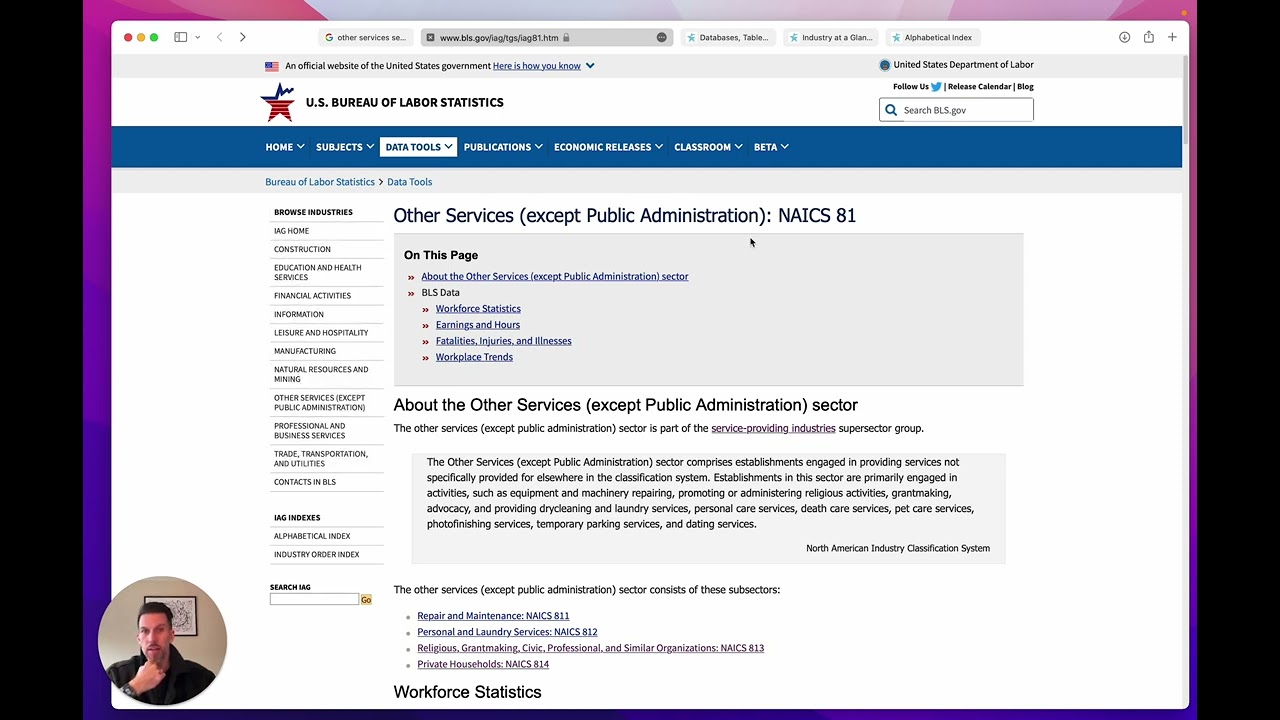
Hi friends, where do we find you today? Hopefully in the present moment. Welcome back to Building Magical Products. Today we're going to talk about finding a niche, finding your niche specifically. But before we do that, let's first talk about industries. So last time we spoke about, uh, selecting a market. This time we're going to talk about an industry within that market and then eventually get down into the niche within that industry. So the best that have ever done it work backwards in this way, and they line up the dominoes. So first they start with a giant market with tens of trillions of dollars, let's say. Then they move into an industry which is maybe a trillion down into hundreds of billions, tens of billions of dollars. Then they select a niche, and the next niche could be $100 million, $10 million, $1 million. Then even a niche within a niche which might only be as small as $10,000. The reason for this is very simple. It's about getting enough energy to topple the first domino, which then topples the next one and the next one and the next one. So if you can go into a niche within a niche, you can capture that market by building a better mousetrap, a better product, a more magical product. Then that gives you enough of a customer base, a community, and cash flow to go after that next one. And then what you've done, because you've designed this well from the beginning, is that you don't have to do course corrections in the future because you know where you're headed. You're headed from the niche to the industry to the market. And that's what we're going to talk about a little bit today to help you find that. Okay. And as always, a reminder about magical decisions. Are you moving closer? Are you moving further away? And a little bit about us. And of course, a blank piece of paper here, either digital or physical. You can print it out, jot down any notes, any ideas you might have. Okay, great. So let's go here. Excuse me, go in here. Okay, so what I've done, uh, last time, if you remember when we were going through the, um, press release from the BEA, one of the callouts I had was the other services sector. And the other services sector was interesting to me because I didn't quite know off the top of my head what that was. So I think the lesson in that is if you find something that tickles your brain, you don't quite understand, that should be a sign to you to basically go out, do a little bit more research. That's this art of discovery and the mystery of unlocking new information. Follow the white rabbit down whatever rabbit hole you want to go down. So this took me to other services sector, and then the first thing that popped up was bls.gov. Now I've been here before, and just another reminder on we want to make sure we get our information from sources that are trustworthy. So go ahead and click on that. That takes me to the US Bureau of Labor Statistics. This is another federal government program in the United States that basically categorizes mutually exclusive and collectively exhaustive every industry and sector that exists in our economy. You can see some of the broad markets here And I was especially interested in other services. So this is my entry point. And so I scroll down a little bit and I see what's in here. Oh, okay. So repair and maintenance, personal laundry, religious grantmaking, private households. Oh, that's interesting. I don't know what that is. So let me click on that. That took me in here to the definition. Oh, okay. So I get it now. So basically private households employ cooks, maids, butlers, etc. That was interesting. And then I looked at, you know, what is the reliability of this as an industry? How much change is there? Is it very volatile where it goes up and down in terms of employment, which means the amount of money flowing into the system is also volatile, which means it's a tougher market to crack or could be volatile for you? In this case, it was relatively flat even in the pandemic. So that to me says it's a consistent industry with a trend line that you know, is going to be there for a long time, may not have a lot of growth, but it's sort of steady eddy, if you will. Okay, so let's go back up. I want to explore more. So what I did is I go into the navigation bar here, I look at data tools, and I find this one, Industry at a Glance, because I really want to know what are the industries within these markets. Okay, so I come in here. Oh, this is interesting. 100 industry pages. Great. They're classified. Obviously this is North America, detail state, county, metropolitan areas. That gives me potentially localized niches, not subject niche, but maybe in your small community, which is a place where you can start very easily and cost-effectively because you don't have to go anywhere. You know the people there, you know the environment, you know, you can walk around and knock on doors for, you know, lack of anything better. You need no money to do that. And then I found this alphabetical index, so let's go ahead and go there. Okay, so this is like a gold mine, right? This tells me every industry: agriculture, healthcare, amusement, arts and entertainment, construction, education, fishing, food service, gasoline, leather, leisure, retail, oil and gas, petroleum, real estate. I mean, it goes on and on. Utilities, water, transportation. Wood product manufacturing. I mean, it's totally deep, right? So go here, you'll see this stuff in the show notes, but just explore a little bit, find something that maybe sounds interesting to you, and then cross-reference that with the amount of money that's going there and then how flat or volatile that industry is. So next up, we're gonna drill down into one, and I've selected one. So it might be kind of surprising to you. It was for me. We're gonna push ourselves a little bit here. All right. Thanks. We'll talk to you in a bit.