Sean Everett shows how to pick an industry niche using GDP data and local economic reports. He walks through choosing healthcare combined with professional services and software as a strong niche, weighing market size, local strength, and personal fit.
Chapters
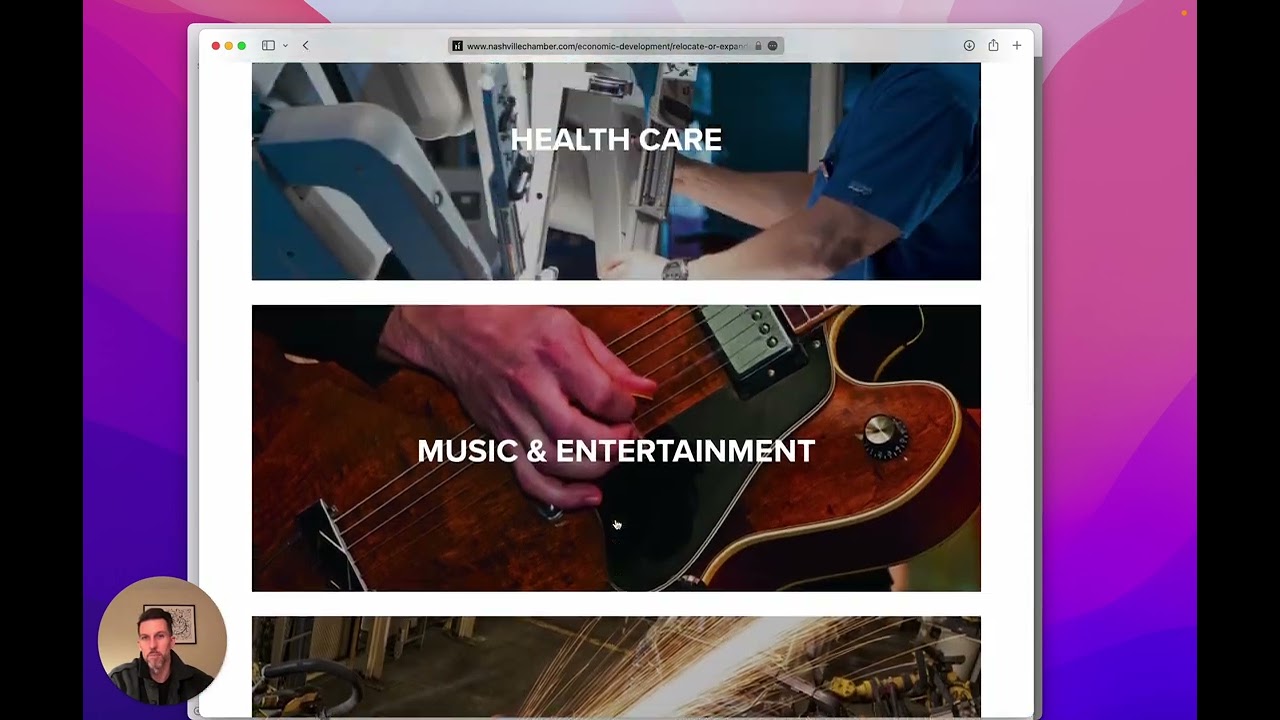
All right, welcome back everybody to part 2. So the next step obviously is to choose the industry that we want to focus on, and so what I did after going through the whole list is take another look back at the original lesson plan that we had where we pulled out from the US gross domestic product some of the highlights here. And so remember, if you go back to the original discussion of this, the ideal state is where we can find something, one, that we're interested in, two, have some expertise in, and three, represents a big market or a growing market, you know, because that will beat great operators 10 times out of 10. So I went back and looked at this, and at least for me, you're going to have to do your own analysis on it and what works for you. I thought about it, spent a couple hours thinking about it. You may need some more time. Take your time because this is such a critical decision. I mean, this is the vector upon which you're going to spend potentially decades of your life. You know, it doesn't have to be that ridiculous, but you're going to spend some time on it. So you want to make sure that you get that vector right. Vector is both direction and force. So for me, at least, if you remember, so we looked at the largest increase. I have some expertise and some background in this. So that one kind of jumped out at me. I do have some here, but it was a decrease. I've obviously got some here, but that was a decrease. A little bit here, but more on the personal level. Goods, personal consumption. I was really looking for services. So a huge amount out of total personal consumption, right? 16. So basically 2/3 of personal consumption in the United States is based around these services. So then I was looking housing, healthcare, financial services. I'm not— I don't want to be in the food industry. Financial services is heavily regulated, not a great place. Housing and utilities, this is federal government, this is mostly real estate, not a great fit for me. But healthcare, um, I think it is one of those things that touches every single human on the planet. Obviously, the older you get, the more apt you are to need it, and it's kind of like oxygen where if you don't have it, it's the only thing you care about. And obviously, as we all get older, we're going to need more of it. And so, you know, as I sat there and thought about it, both for myself as well as for my family and my friends, healthcare basically is the thing that could provide a huge impact. And then I also looked down here at fixed investment, intellectual property, software, R&D, entertainment, got some little bit of expertise and some industry relationships in some of these areas. So then I thought, okay, let's go back to the community I live in, as I, as I mentioned, right? So I've lived— we've lived all over the United States. I've operated kind of all over the world at this point. Um, and where we chose to live once the pandemic started was in the Nashville area. So I went to the Nashville Chamber of Commerce, as one does. So your local area, right? So what industries are good or prevalent in the place that you live? So this is interesting. So they have something here called target industries, and most cities, larger cities, even states will have some of these because their idea is to get companies to relocate to the state because it generates tax income, generates more of a growing population for them. So for the Nashville area, there were 5: healthcare, music and entertainment, which you're probably familiar with, manufacturing, corporate operations, supply chain. So some of those might be, um, not so familiar, but we mentioned healthcare. Okay, so let's click on healthcare. Let's look at this. This is interesting. $1.6 billion in VC in the last 10 years alone. 95% of CEOs in the Nashville Healthcare Council have Nashville headquarters. $13 billion in personal income from the healthcare industry here. And I kind of knew because before we moved I looked at sort of the economic, um, I guess landscape of the area because I was curious. Um, and then obviously hospital. Look at this though. Nashville's healthcare industry contributes to an overall benefit of $67 billion and 330,000 jobs. Interesting. Um, okay, so then here's some example of the workforce, number of employees compared to other major metropolitan areas. All right, so I go back and I'm thinking, all right, healthcare. So obviously a lot of people in my family have been in the healthcare industry. I've never operated or worked in the healthcare industry. It's a giant business in our backyard. It's going to be something that impacts me personally, whether I like it or not. It's going to impact the world. It impacts all 8 billion humans on the planet. So I'm wondering, is there a way— and this is where some of the magic comes in— to take this industry, which is in my backyard, combine it with one of the largest increasing industries, which is this professional scientific technical services, as well as fixed investments in software, R&D, entertainment. Could you combine those in an interesting way to actually help people and address some of this $2.6 trillion market? So I think yes, and this is the part where it gets into stretch for you. So healthcare would be a stretch for me. Um, I don't find myself, um, you know, sitting around and researching the healthcare industry, but I think in the future if my friends, family, people I care about, co-workers, you know, have an issue, it would be really great for me to have already had the institutional knowledge and have built a product that could potentially help them. So take all those things into account, and I think it's probably a good exercise as well as, you know, a good use case for what we're going to study through the rest of these classes and courses. So if I can stretch, then you can stretch. And I think what it really means for you as you look down that list Is you're probably going to find an area that maybe you don't feel comfortable with. That means growth. Growth is good. You're going to learn something new. That learning is going to be valuable. And you know, if you pick it correctly based on this data, on the financial data, it will not be for naught. Like, you will create value. You will get some kind of value out of that investment in your time. Okay, so we're going to pause there, and then the next part is we're going to dig deep. So this is going to be our industry. For me, at least, you choose your own. And then the next step is going to be, can we find an atomic unit niche within that industry, within that larger market, that we can address and capture some value and create some value? Okay, that's it for part 2. Thanks a lot. We'll talk to you soon.









