Global Value Creation Part 1, Introductions & Tech-Based Opportunity
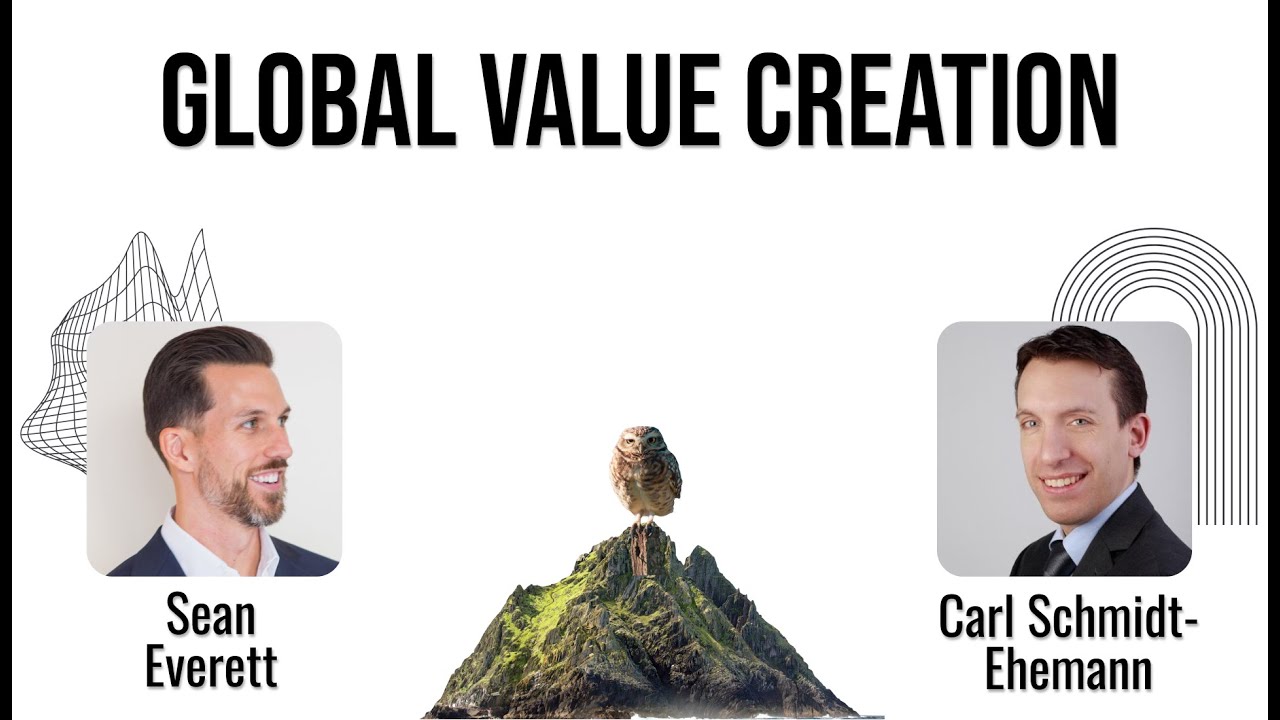
Sean Everett and Karl from SEP Consulting discuss how businesses can free up energy capacity for AI workloads through efficiency gains like LED retrofits and thermostat adjustments, which typically save 5% of energy costs in 6-12 months. They frame AI as a fuzzy-matching tool that cuts analysis time from weeks to days, arguing adoption is now essential for survival.
Chapters
Our goal is to have the highest value per second possible of any podcast. And we're going to be focused on global interactions. Uh, Carl's in Europe, I'm in the Americas. And so we'll have different perspectives on that. And so what we'll be talking through is how the world has changed in the world of business these days. So new political appointments, the most ever at one time across the globe. Emerging tech is now table stakes. There's exploding energy and resource demands on our infrastructure, aging populations and dwindling workforce. Energy and computing needs are accelerating. So, um, with that, I will kick it to Karl and have him do sort of a brief intro on his background. We'll do myself and then we'll get right into it.
Well, hi, Karl. Sean, thank you very much on that. Hi everybody. Uh, thanks for listening to that perspective. Yeah, I'm the, the founder and the CEO of, of SEP Consulting. And what we are focused in is to support companies for their maintaining and increasing their future readiness in terms of efficiency, profitability, and sustainability solutions. We provide services to increase the lever through their energy optimization, From basic consulting to larger scale things around product carbon footprint, supply chains, and these things that can either span more locally or also from a global perspective. Sean has mentioned the regards of the soaring demands of energy and rising costs, and we live in basically disruptive times where nobody knows what to expect in the next 6 months, not even talking about 3 years. And the, um, yeah, challenges that lie ahead of us, uh, in the regards of business development are tremendous. Great.
Thanks, Karl. Uh, yeah, briefly about myself. Got 2, 3 decades of experience at this point at the intersection of capital computing and global business. Started my career advising the boards and executives of Fortune 500 all the way up to Fortune 1 companies. Have been a founder, have built emerging technologies across the board. For the last 10 years or so, I've been operating within the private equity industry, both venture capital-backed firms as well as PE-backed, both doing due diligence for buy side and sell side and post-close value creation services. And then also working with a number of Fortune 500 companies specifically on Productizing emerging technologies and growing the business profitably to drive key metrics in their incentive comp plans like TSR, ROE, ROA, you name it. So I'm the founder, chairman, CEO of Avergence.team. We build experiences and products. And yeah, we're coming to you today live from 2025, the first part of the year with Carl and We're going to be talking about this idea of agility. So maybe I'll kick it to you first, Karl. You've been working, I mean, where did we meet? We met in Silicon Valley about 7, 8 years ago. You were working for Lufthansa. I was working on leading-edge generative, well, let's call it artificial general intelligence. That's where our paths crossed. We've stayed in touch for a number of years.
Yeah.
You've gone really deep in sustainability operations. You're based in Germany. Tell us a little bit about some of the recent work you've done in, let's say, the last 6 months in that area for your clients, both in Europe and Americas and sort of that sort of thing. Give us a little bit of a background and where the value creation that you've done, you've seen that lever exist in the recent world.
Absolutely. Also, thank you on that. And, uh, definitely, uh, usage of AI is, is only one of the parts that, uh, let's say, can drive profitability. Also, in a kind of consulting work I, together with my team, uh, are doing for our clients, I would first— I would like to use the opportunity for, for our listeners and watchers to, to get rid of one of the, the, uh, urban legends that sustainability only costs money. Um, because if you, uh, if you do sustainability solutions Then it's always about increasing your efficiency, net gains, and providing increased profitability for a company. Of course, there is always in this disruptive world and the changing business transformation the kind of idealism where we are talking about. But nonetheless, if things don't play out in the regards of a return on invest in a short-term, midterm, and long-term period, then it doesn't make sense, neither from the economical nor from an ecological perspective. And so what we've done quite successfully over the last 6 months in these regards and extending our track record here is to support companies both in Europe as well as in the Americas in that regard. First, writing usually feasibility studies and analysis in their energy consumption, usually focused on 2 aspects. One is the buildings, both like for the office world as well as then for production and manufacturing halls. And the second part is then focused on the production itself. So therefore identifying the main drivers of energy consumption in the production process as well as in the building operations. And from that, of course, deriving, as I said, short, medium, and long-term measures for investment decisions and to see, to deliver value, quick wins as well as long-term gains over time. But we're not only writing the kind of feasibility studies, but rather supporting clients both sides of the Atlantic in delivering and getting the job done.
Yeah, that's great. And when we were talking about some of this, you know, we went through some of the metrics, like key metrics of growth improvement. Do you have some of those at hand you could talk through in terms of like what actual value, like the hard numeric improvements that you created? And even, you know, I hear people, people say like sustainability, they think, oh my God, this is like 1, 2, 3-year projects. Like, The compliance and regulatory requirements in Europe is crazy. Like, how do I even get out of the gate in 3, 6 months and actually improve my structural EBITDA for the business? And that's one of the things we talked about. So maybe you could just touch on that briefly, like short-term packaged, like how in a single year you can actually drive value that shows up on the income statement for some of the executives that are managing a P&L. Absolutely.
So let me start with the general overview on that. When I was referring to, to the 3, 3 tiers of improvement measures in the regards of quick wins, medium and long-term issues, then our general experience shows, and this is kind of interesting, that it's no matter kind of regulatory independent from either Europe or the Americas that we have about we see an effect of up to 20% of energy demand reduction possibilities, mainly, of course, in the building operations, but also when you're not talking about process industries like food processing or chemical industries, but rather pure manufacturing, then you still have a lot of leverage in getting your energy consumption down. And therefore, of course, it's just pure math. When you think of the energy consumption, then you have, no matter what the pricing is eventually, then you have the reduction of your energy costs and therefore direct improvement on the EBITDA. So quick wins that can return on invest within 6 to no longer than 12 months should usually show up to 5% of energy cost savings. Costs in the first year with no problems. And then you would have about another 5% on the medium term. And for the long term, what we are talking about, 3 to 5 years, then you have this combination of up to 20%, which is the rather conservative approach on that in the regards of energy demand reduction. You could definitely see the leverage even within the first 6 months.
Yep. That's crazy. I mean, the thing that stuck out, I mean, first of all, 20% is insane, especially when you start thinking about AI data center needs. I mean, they're spending billions of dollars on data center buildouts. We're re-enabling nuclear plants. We're working on fusion. Like people don't take it, they take it for granted, but the big bottleneck for big tech, which you add up the top, like Magnificent 7, you're talking almost $10 trillion. 20% of $10 trillion. I mean, granted, that's not one-to-one, but you're not talking about 20% of like $1,000 here. You're talking about a lot of savings, which increases capacity. It's not just cost saving, it increases capacity of compute units on a global basis, and that's non-trivial. So then the other thing that got me with when we were talking about this stuff was in the first, you know, like you said, 6, 12 months, 5% savings. The actual investment required for that was almost negligible in order to do it. I mean, it's like you're taking what's already there. It's mostly like a lot of your time and some other folks' time, but it's not like you're doing a huge CapEx investment or something. You don't need to go build a new factory in order to like carve out that new 5% of savings. Is that right? Do I have that right?
That is correct. I give you 2 examples that are quick wins somebody can, especially in a manufacturing environment, without even using or tapping into things like artificial intelligence algorithms and stuff to get a more profound analysis and operations going. When you think of a building, and also that goes for the manufacturing part of a building, it's about the lighting, replacing light bulbs and stuff like that. with LEDs, it's like a boom. Sometimes 90% of energy demand reduction due to changed lighting. And then even more—
Crazy.
It's just about changing the steering of the automated parts of the building. So either think of wintertime right now in the Americas, winter storms coming. We have a rather cold winter in Germany this year as well. At least compared to the last couple of years, when you just lower the heating amount in the building to a still very convenient rate of about 1 or 2 degrees Fahrenheit, so about 1 degree Celsius, then you have a tremendous gain. And especially when you think of how long do you heat a building to a certain extent, also depending on the demand. So it's just about adjusting the steering mechanisms of a building. Or thinking of manufacturing, it's rather the same in how you put together your work, workload preparation, and which tooling and equipment machine you're using at what time can, let's say, leverage and let's say level your energy spike demands. And sometimes companies have to pay the amount of energy units they're paying for in the regards of their peak demands of capacity. So what you're mentioning with the data center, so as much as you can level your energy demand over a certain period of time, it even gives you lower energy costs without even decreasing consumption in the very beginning. So a lot of things that don't require much attention, it's rather just do it.
Yeah, it's wild. Yeah, it makes sense. I mean, from a product management perspective, I mean, what you just described is like the holy grail, which is low effort, high impact. It's like you, you push, there's a huge lever, you push slightly and like you get this massive gain. So I get it. And then obviously things compound over time and then there's more complex things that require a little bit more time or effort. But then your impact might be higher as well. So super interesting. Should we switch into some of the AI stuff that I'm seeing at this point?
Yeah, I would, I would say, because then I can contribute to, to some of the things where AI also can, can support the analysis in additional energy optimization. And we can also focus due to some aspects in Europe, especially in the regards of data centers and the requirements of energy efficiency and heat recapturing and stuff like that. So because just off the record right now, just for your information, for some parts, people complain about regulation, but riding the tiger can help you in riding the wave and therefore potential gains. So I would say yes, give it a go.
Yeah, I think I saw too, the UK had issued a, call it an executive order. I may be getting the details quite just a little bit wrong here, but that they were investing heavily now in AI because they felt like they were a little bit behind. And obviously the United States is pushing. I mean, I've never in my career, and I got started in the mid-'90s in computing. I grew up in Sioux City, Iowa, where Gateway 2000 Computers was founded. It was about an hour down the road from Berkshire Hathaway. So like I was doing GeoCities and making websites and building internet products back in the mid-'90s. So I'm like 30 years in at this point and I've been on the edge, like AR, AI, VR, spatial computing, robotics, right? So I've never seen anything push as hard, anything adopted as quickly. It's because all of this stuff and this infrastructure is compounding. So Like we've started saying that emerging tech is no longer emerging, it's table stakes. And every, so I have information, let's say, through a lot of networks I'm involved in where I see what's actually happening in industry across startups, across the middle market and private equity, across Fortune 500s, and then just general practitioners are the folks that build this stuff. And I've seen AI cross the chasm. From, okay, this is cool, right? Like cryptocurrency had a moment a few times. It like starts to seem like it's peaking, then it comes back. It's coming up. AR, like the Apple Vision Pro starts to peak and then it comes back. AI smashed through it and it's still going. And I think the reason is because it is a horizontal paradigm. It's both enterprise and consumer. It can impact and interact with absolutely everything in the digital world, ones and zeros. And like, should you believe what I say in AI? And I'll, like, I'll give you a background. So I studied theoretical math as an undergrad, was formally trained as an actuary, studied linear algebra in college, which is essentially the foundation of large language models and transformers. So You know, a regression line is artificial intelligence. So if you create a scatter plot in Excel, you right-click, you add trend line, you right-click again and say add equation. That's the most simple artificial intelligence algorithm on the planet. It's a line of best fit through all of this information. Now, the AI industry calls these things lots of parameters and stuff, but we're building AI agent tools, large things for private equity firms. And basically what this is, if you take all of this, all of the fancy terminology away, and what is the actual difference that this large language model has impacted? And it comes down to one simple thing. It's a fuzzy match. It allows much more accurate fuzzy match. So traditionally in software engineering, you have to do a one-to-one match, like 1 equals 1. Word equals word, like house equals house. But for the first time, we can at scale say home equals house. And that's the key point that this enables. And so because of that, you can start to chain a lot of these things together and it's all just based off a probability curve. So why is this valuable? It's valuable because I no longer have to do every single thing manually on my computer. And when I've done tons of customer interviews, user interviews over decades, the thing that always comes up is, is 2 things. 2 things. Software does 2 things. It either makes time fly, or it saves you time. Make time fly is entertainment and consumer use cases. Save time is enterprise use case. And a lot of times, it's consumer use case. What does AI do? It can make time fly and save time in one, create creative content. It can automate things. And it can do it in a digital world. But very soon, it's going to be in a physical world with robotics. So you can tell it something, it can process those words into ones and zeros, process that into a robotic system. And all of a sudden, it can make you coffee, it can wash your dishes, it can do your laundry. can walk your dog, it can clean your house, then it can buy you groceries, it can run errands for you, it can order things for you on Amazon. And you can't tell me that people wouldn't buy a $1,000 a month appliance that will do everything for you. So you can spend more time on like entertainment, taking care of your family, playing with the dog, whatever you want to do, learning a new subject. So in business, though, what's happening is Software has become very bloated. All these companies are using 1,000 different software tools, but there's no tool that runs over the top of everything. So wouldn't it be great if I could just say, hey, algorithm, can you do this outcome for me? And it can manage all of these individual pieces that when you sit down in front of your computer every day to go to work, it's doing all of those keystrokes, it's doing all of those tab switching, it's doing all of this logging in. It's pulling data, it's analyzing it, it's doing research, it's communicating with people, it's signing contracts. There's a human-in-the-loop element there, which means that you would validate certain sensitive things to make sure it's not running off the rails. But in essence, that's the core of all of this value. So I'm curious what you think about all that, Carl, because I haven't explained it to you in that way before. And then perhaps how you see that playing into some of the stuff that you're Um, involved in?
Absolutely. So, um, from me, both as a business as well as a private leisure user, uh, AI is always about pattern recognition. Our work in the past, and one of my executive vice presidents, he has been in the business also of consulting and, and energy savings for more than 30 years. He's had a long business career also in the industries, uh, being CEO of, uh, mid-sized companies, stuff like that. And he's a very smart brain, has tremendous knowledge that we can tap every day, our younger colleagues as well as me personally, and lots of other things. And he often says in the regards of what AI also in the ways we are already using it from minor tools available to the public as well as then when we have a more broader insight in solutions that are sometimes created by big tech, also in Europe. It's about pattern recognition and the productivity gains that you get out of it. Giving you an example, together we put together an analysis of a feasibility study last year, and it took us about 2 days of 2 people in the support of AI to gain something out of it Which without that support would've taken at least 4 people a work of 4 weeks.
Yes.
So a tremendous increase of productivity and the potential of recognition as well as comparability without digging what you said, house equals house, dog equals dog, and all the things that you would have to put together in your head and in your brain by experience over a long, career track record. Of course, we flew to the moon in the '60s. Of course, we built nuclear energy. But think of the Manhattan Project or Apollo or other things done in Germany and other countries around the world, how many folks it required to make these dreams come true at these times. Of course, it provided good-paying jobs. But in the regards of productivity gains, we are just in the very beginning of what AI can do for us. And it is always for us because sometimes people, sometimes for real, sometimes because they're just complaining and being grumpy around, complain about the requirements in terms of regulation from corporate sustainability reporting directives or other issues they need to take care of in the regards of energy consumption. And of course, if you're just putting up these reports and putting them on the shelf in your factory or in your office, then they're a waste of time, waste of resources, waste of money. But if you think of them as a baseline, then to start the real work in improving the whole organization, either of course brain-based at some parts, and then supported through AI algorithms in the comparability with other feasibility studies, with other reports, and especially when it comes to the implementation that you mentioned for proposals. Of course, doing things in a manufacturing environment will always require craftsmen and hard work of people with their hands, obviously. But nonetheless, to get to that point, as I said, productivity gains and the potential is huge. Yeah.
I mean, I liken this back to when email was launched in the world of business and when the mobile phone was launched in the world of consumer and business. Before that, things were slower. But the companies and the people who adopted email first pitched up their capability set, they were able to capture more of the market, do more with less, and they were able to win. And so it's the same thing, those who adopt email, those who adopt SMS, those who adopt mobile, those who adopt AI will be able to compete in the new world. And if If you don't, you can still send faxes. Faxes still exist. You could still handwrite a letter and send a letter. But, and in certain ways that has a more personal touch to it. But to compete in the new world, you have to stay agile and you have to use the new hammers that were invented by our species in order to produce more with less. And ultimately this whole thing is a race to value and value creation. So, you know, I think this whole conversation about, are you competing against AI? Will they take your jobs? The answer is, well, yes, in some ways, which is a lot right now. It's a lot of the rote mundane tasks that don't use your brain. And so the question is like, what do you want to be good at? Because I know companies that are working on AI tools and AI agents. In order to displace external vendors. And that's where the cost savings is coming. So I no longer spend money on the external vendor, I'm spending it on my own internal system. And even if it's breakeven, now all of a sudden, I own some of that intellectual property. And over time, as more people use it, which they're clamoring to use these tools now, and it only took a couple years, it just makes your work faster and better. And I use AI all day, every day. And so, you know, building products on top of it as well. And I think it's an efficiency gain. So we're, we're at about 30-minute mark. So we talked through some AI, some energy costs. We touched on briefly workforce productivity, potentially skills gap. We haven't gotten into data overload, inefficient decision-making. regulatory, ESG pressures, or the pillars for a sharp AI and energy savings wedge that I think we may cover in the next couple sessions. To you though, Carl, any final thoughts that you want to leave our listeners with before we do a to-be-continued second part to this that you feel like is a key takeaway that maybe they should take back to their business?
Absolutely. So what I would like to, to emphasize here is to encourage our listeners saying it's worth doing in any potential way of doing. And if you don't know how, there are a lot of folks out there who can support. To ask questions is not a failure, but a tremendous success on that. And then making your business even more worth. Then, uh, as of today and the future can be ours.
It is well said, really. I think mine would be, and I apologize for the directness to the listeners here, but wake up. I found myself waking up multiple times and saying, what am I doing? Because I wasn't doing enough to build on top of these new AI innovations. And you're just sitting there and it's wake up, start acting. It's a steamroller coming for everybody. And the sooner you jump onto this train and hang on for dear life and start figuring out how the train works, working with the train, the sooner you won't get rolled over by that train. So I think it's Wake up. The world has changed. New innovative technologies are disrupting everything everywhere. New political regimes are disrupting everything everywhere. New energy and sustainability demands are disrupting everything everywhere. And unless you stay agile, it's going to be a difficult decade ahead. So my thing I think is Is allow this message, this podcast, this thing to shake you and wake you up from your slumber because it's here and it's happening and it's happening everywhere I see and I've never seen anything like it. So, so wake up, but we'll be here to help you if you need the help. So yeah, back to you, Carl. Any final thoughts?
Um, totally with you. Wake up, go ahead, just do it.
Just do it. The infamous words of Michael Jordan and Nike. Um, and he's got a resurgence on their hands too.
He was damn right almost 40 years ago, and he's even more right as of today. And, uh, the tides of time will crush over us if we don't use, uh, use the opportunities. Then others will use them, they will seize them. And then history will go over us. And so therefore, either manage or perish.
So that's right.
So my choice is clear. I'm always here to help and looking forward to dig deeper into our thoughts as well as the, let's say, case studies in many of the subjects we just scratched the surface as of today.
Yeah, what's your strategy in the age of AI? And if you don't have one, now's the time. And if you need help, we're here to help. So thanks. That's part 1. We'll be back shortly with part 2. So stay tuned, to be continued. Have a phenomenal year ahead. And let's go kick some butt out there. All right, here's to the crazy ones and all that. Bye, everybody. Thank you.
Bye-bye.
Okay.









