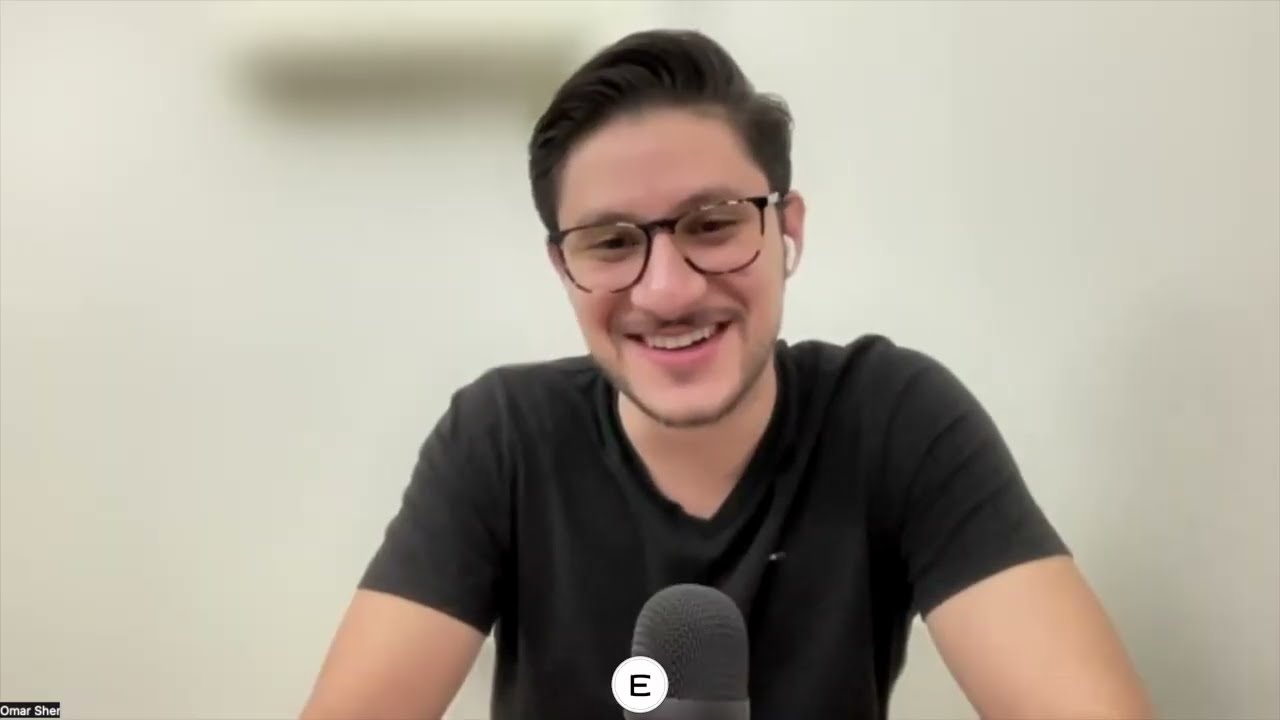
Omar Sher is now Head of Strategy at Resync Technologies, which uses AI and smart analytics to cut building energy consumption. He discusses the company's Series B stage and expansion into Australia and Dubai, plus broader reflections on fear, purpose, and why sustainable work matters.
Chapters
Hey Sean, can you hear me?
I can. How are you?
I'm good. Hey, awesome. Seems like we've got video.
We're good, man. How you been?
Yeah, I've been good. It's been quite a while since we've spoken. I think the last time we spoke, it was an hour— a year ago or something like that, right?
Yeah, I was thinking about it this morning. I think it was, it was like the holidays. last year. So when we, when we connected and we're talking about techie stuff and the state of the world. So yeah, been a, been a crazy year for you, like big move, big, big relationship change, and how everything seems to be like up and to the right for you.
It, um, it truly has, and I really can't be more thankful for, um, Just how how nice the universe has been to me. Back when we spoke, I was you know trying to do different things. That's how I came across your profile. I failed the the assessment for Top Tile. I got through the initial checks, and then I reached out to you, and I said, you know, let's see what I can do. You know, I was trying to. I was just trying to. You know, I was like, this is it. I'm going to make sure I get this test right in the next six months, and I. And that's how we met. So yeah, I guess we have a lot to catch up on.
Yeah, that's great. And congrats on, on the wedding. It looked, looked incredible. And then I need to hear the update on Singapore too, because you were— oh yeah, you were like a week away last we spoke from like that big decision.
Yeah, yeah. Um, and that's sort of the reason why we, um, had to put this on hold, because It took 8 months to get the Singapore offer. Over 8 months, it took about a minimum, yeah, 8 months. I got in touch with them in December and then, you know, we just kept rolling the ball together, keeping in touch. They knew about my wedding as well. And yeah, it's, there's just so many things, you know, so many things. So where's a good place to start? What do you suggest?
Yeah, I mean, we— the state of the world these days seems a little crazy in the, in the technology world with crypto and layoffs and everything. And I kind of just been feeling this very weird vibe of like, can a single person or a group of individuals literally shift the global consciousness away from fear into like abundance. And I'm just, I feel like it's totally possible. And the only thing that's missing is you need to show a proof point. And the proof point that I've come to realize is like when you have invested a lot of time and energy into something that's quality, whether that's a relationship, an asset, a home, a business, a product, a service, just putting that out there and seeing people react to that in a positive way can like switch that gear in people's minds. But we're in this like weird human behavior psychology experiment on a mass global level after COVID and it's, there's no playbook. Like I was talking to some strategy people this week and technology and It's just kind of like there's no playbook. I mean, what do you— how— what's your mental space like? Because you're— I'm in America, you're operating in a different market and environment. So like, what do you feel out there?
I think you touched on a very good point, and it's important that we talk about it because, um, fear is— it's— there's just so much fear nowadays everywhere. There's so much polarization, especially in America. And everything that, you know, social media is just so ingrained in everyone's lives. I was listening to like a boardroom meeting, it's called Future Investment Initiative, and they had big speakers like Ray Dalio. And he has a great book, by the way, which is also, there's a lot of parallels we can take from that as well on the current state of the world. But he basically said that, you know, instead of social media, you know, controlling people's minds and, you know, perpetuating fear and all of that, you should say these are the algorithms we have. I think it was Jamie Dimon, the hedge fund CEO. He was basically saying that they should actually tell people that these are the algorithms that we have. This one promotes this, and then the other one will give you this kind of content, etc. Which one do you want? So you let the users pick. But my mindset on this whole polarization situation nowadays is that the more we talk about it, it's better. And human beings, I feel we have this fight or flight sort of response, and it's trying to find that middle ground where we have the capacity to at least have communication, which could lead to understanding. And that's essential. I mean, I've lived in a different country. I think I've already mentioned this to you, my whole life, every 3 or 4 years growing up, I've struggled with communication, different cultures, even at my previous job. And I know when I go to Singapore, there will be different things I need to adjust with as well. But it starts with having core communication, having that willingness to at least understand each other and understand how we operate. And, you know, that's very essential. Cultures, man, it's very important to understand other people's mindset and cultures. So Communication, definitely, that's a big theme. And, um, just more understanding and empathy. I mean, the other thing is it's very economic related as well. Um, there's so many wars going on. Um, and this is what Ray Dalio talks about in his book, um, which is, uh, The Principles for Change: Why Nations Fail and Succeed. It's one of my favorite books. I'm on the last 100 pages. And at the end, he talks about these 7 different types of wars.
Yeah.
And there's culture war, geopolitical war, trade war, capital war, etc. So we're definitely having a culture war. I don't want to ramble on and on, but yeah, there's, there's a lot of interesting insight into even the US-China relationship as well. I tend to stay away from politics. I don't tweet anything political on my social media, on my Twitter or Instagram, because I have chosen the private sector for this reason. So yeah.
Yeah, yeah, it's, uh, it's definitely belief systems are supercharged emotionally. And I've, um, I've been working with a very experienced psychologist since, I don't know, earlier this year because I've wanted to make sure that, like, my mental space is clear. Like, am I— and, and one of the, one of the words she used this week was distortion.
Okay.
And I was like, wow, okay, I had never heard this. And I'm pretty well read, and I've talked to people, you know, quite a bit over my lifetime. Um, And so that one kind of hit me back because it's also like, I feel that, but I also see that exist out in the world. And the definition of this distortion— and I may not be perfectly accurate, I'm not a psychologist, I haven't practiced for like 40 years like she has, no PhD, right? So, but essentially, I think this core idea is it's like this rose-colored glasses or this blinding where you think that this idea or something is real. but it's different than how reality actually is. And then having an ability to bring those things together is very difficult. And so I think as I've been talking to people, and a friend who lives down in the Texas region, and she's telling me about a lot of the things happening around, it's like release valves are needed because people are starting to like act out in, in negative ways that impact other human beings. And I think part of it, maybe, I mean, all of this stuff is connected. So it's like this frustration, this like constant roller coaster of economy, politics, war, like to the Dalio point. I've read his stuff as well. And like his post this week on LinkedIn is like, yeah, pretty scary. But then he's like, there's nothing to be scared about. But it's like, um, so, and he's trying, I think, with his books is to get away from this distortion, which is like, Yeah. Here are these big cycles. We've seen these play out over and over again. Be aware of them so when you're confronted with it, you don't have an immediate visceral reaction and go into like a child mind state, and you can still stay in a healthy mental state and figure out what do I need to do in order to healthily deal with this. And I see this come in, in business situations as well, especially In startups and in founders because as a startup and founder, your entire job is to like find this new way of being and like bring everybody else along with you. So it's like you have to distort reality. I mean, Steve Jobs, reality distortion field. Is that a good business idea or do you have a mental health problem? Maybe both. And so the question is like, does it serve you or does it not? I think. And so to your point on politics and everything else, it's like, I don't have it all figured out, but like, this is the stuff that's kind of like percolating in my mind. I don't know, what do you think? What do you think about all of this?
I think, no, I think you hit it on the head, you know, with the Ray Dalio point. I mean, he's basically through his learnings as a hedge fund manager, as a macro investor, he's analyzed all these trends and the world is constantly in cycles, right? You have these big upswings and big declines and stuff. So he's basically telling us, look, this is fine. This is just another part of it. Maybe this time because, you know, we're 8 billion people now on the planet, we have such advanced technologies, tensions are so high, et cetera, et cetera. The principles are still the same. We're all human beings. It's just manifesting itself in different ways. So this is fine. And going back to the startup world, I mean, we're seeing it right now with the big companies doing all these massive layoffs. You know, they were spending all this money, money lines, credit lines, everything that, you know, and I really love this book. This book is the highlight for me in 2022 because everything that he's mentioned makes a lot of sense and you can relate it at an individual level, team level, societal level, et cetera. And we look at these companies by after learning his principles and it makes sense. They had, you know, overextended credit lines, they spent a lot of money, they went into massive hypergrowth. It's very impressive right now, but it's going down as fast as it went up, right? So I feel like now in the next phase, we're gonna have startups that are gonna be very, very cautious, very careful and very strategic with how they spend their dollars, even if they manage to raise a lot of money. And I also think some of these companies that are raising so much money, it's nice, you know, investors like, you know, we all know they're like birds that, you know, they flock in the same direction, but it gets a bit too much, you know, it's a little unsustainable, right? Like you're raising billions of dollars in valuation or whatever and then it's like, you know, you know what I mean?
Yeah.
So that's my take on it, but I find myself very lucky to be in the energy field. It's definitely gonna be a hot topic for the next 5 to 10 years. And I'm gonna continue on in energy. I'm going to be joining as the head of strategy and business development. So I'm moving away from business development a little bit and I'm gonna be helping them with raising the next round of funding as well. And we're gonna be focused on converting buildings, which are some of the biggest contributors to carbon, like I think 60% or more, it's completely ignored.
Wow.
You know, so we're gonna focusing on turning them into smart buildings through IoT and AI based out of Singapore and then hopefully into other markets like the Middle East, like Dubai as well. So that's part of the plan, high level. And I don't know, what do you think, man?
No, that's fascinating. I mean, we could keep going on the other riff, but I want to get into the energy thing too because that's super fascinating. So let me make sure I understand first. So I'm gonna use an analogy and you tell me if I'm like way out in left field here or if I'm sort of close. So, you know, we've heard a lot about this like smart building, all that stuff for a long, long time, like digital twins and yada yada. And people, I feel like when people hear that stuff, they just go into like, oh, it's like super sci-fi self-driving, like see you in 50 years. But I think what I hear behind the scenes is it's like buying a Nest thermostat for your home. And by doing that, it has a simple algorithm which regulates temperature, regulates like the time of day, and says we're not gonna put that air conditioner or heat on full blast at midnight when no one's been there for 5 hours and no one's going to be there for 5 hours. And so that doesn't make sense. So let's be smart about how we use our energy.
Yeah.
And that's like a first step. And then you can do things with the building itself, like insulation. You can put solar panels on the roof. You can like put vegetation up top to do water capture and help with cooling. So is it like that kind of situation or like, help me understand more of like the track that you all are running down?
Well, based on what I currently know, I'm due to join in January of next year. So the— so we're not just focused on smart buildings, and I'll tell you a little bit about that as well in a sec, but it's microgrids, it's decentralized, you know, energy generation units, could be like solar, wind, whatever. But buildings is definitely a main part which is quite ignored. So the difference here is that we are using an algorithm called a non-intrusive load monitoring algorithm. So a lot of these old buildings have you know, one or 2 points of metering. And the point of having this algorithm, why it's called non-intrusive load monitoring, is because you don't need to put a lot of monitoring points throughout every floor, throughout every room. And by using AI, the data that the meters are, you know, collecting and ingesting into the algorithm, every device has its own electrical signature. like your toaster, it has a different current and voltage setting, like compared to your fridge, microwave, et cetera. So that's basically giving you more granular insight into, you know, how smart your building is. We're literally, you know, how I see it is it's like taking your building and putting it on a weighing scale. And then we are coming to you with, you know, with a, if you're a building owner, we tell you this is how You could, you know, trim some fat off. This is what you could do throughout different times of the day. And this is basically an ongoing way to make it smarter for everyone, make it smarter for your tenants and for your, even your property value. So based on what I currently know, that's the situation. When I know more in January, I'll, you know, or next year, we can, I can share more.
That's amazing. Yeah. So in terms of like the market then, Are you all focused at home, i.e., like Singapore first, or like what geographies are you going after? Or are there already some like relationships in place? I mean, some of this stuff's crazy. Like it wouldn't surprise me if you're like, oh yeah, the first one's in Australia.
That's, Australia is part of the company's plans. Dubai, as I mentioned as well, but I'm supposed to spend about a year or so in Singapore, work around local market, figure out how things are done in the company, how people do business there, and then expand it towards Dubai. So that's the plan. Plans do change, plans do take longer than they expect, but it's good to go in with a plan. So I'm excited. That's great.
That's great. That's good stuff. How big, how big is the company? Like how many people?
I think right now we're about 35 or so.
Nice.
And we're gonna go on for Series B. So we've kind of like crossed that valley of death in the startup world, right? And let's see, you know, it's definitely very different compared to what I was doing here with utilities and smart grids and stuff. This is like moving away from clean energy generation, which is still a very hot topic as well, but this is focusing on what the consumers can do and I'm very passionate about it. I mean, energy is, to me, it's like if you solve this, you're literally solving climate change.
Right.
So you got to get energy right to fix the climate, right? And if it's not happening from the higher level, which is the generation guys and the utility scale people, which is a very politicized, bureaucratic, and very government-dominated part of the whole energy value chain, it's not going to move as fast as the consumer side, which is most of the times very exposed to the private sector, very exposed to innovation. And these are great things. So, so I expect things to move fast. I expect people to have a certain level of maturity when we come to them and pitch to them that, you know, this is, this is what you can do to cut your building's energy usage or your costs by 20-30%. Efficiently.
Yeah, yeah, that's a big, that's a big number. That's people's jobs right there, you know, that's profit, that's straight to the bottom line.
Yeah, and you could look up the company, it's called Resync Technologies. They've been featured in a popular Singaporean news outlet, it's called Channel NewsAsia, it's all in English, and they did a case study with certain homes for about a month or so, and then they came back and said, how, by how much percent did you manage to reduce your energy usage? One guy completely suffered. He completely cut his energy usage by like 40, 50%. He wasn't like keeping the aircon running. But the point is, I feel, you know, in any technology, whether it's energy or not, even when you're driving a car, right, it's, you know, if you don't have data, right, like, like we all, you know, we stand on scales, you know, we, we, we need to have a certain measure, otherwise you're just driving blind. And with energy, it's the same kind of thing, you know, when you present it to people, This is how bad it is. These are the numbers because the numbers don't lie. Then people are incentivized to take actions.
Yeah, true. So true. How, uh, how did you get into the energy space anyways in the beginning? What's the origin story?
Uh, good question. Um, the origin story starts when I had quit my first startup job in Malaysia. in 2019. And at the time, I had also met my wife, Catherine, in Kuala Lumpur, Malaysia. And my plan was to join the diplomatic service, the Foreign Service, following in my father's footsteps. So I was like, you know, I just kicked the startup side, the private sector away. I was like, yeah, I got it sorted. I'm gonna be a government guy. I wouldn't need to worry about anything.
Yeah.
When I went, I came back to Cambodia for a little bit. My dad retired, And then in January, February, I was supposed to take the exam in my home country of Pakistan, and I saw the government situation. I saw the country situation as well. I hadn't visited for eight years, and also met some people that had passed the exam and stuff, and I just did a U-turn. I just decided, you know what? I'm just going to be happy in the private sector. It's going to be tough, but I guess there's. more merit to it. And, you know, I guess the more work you put in, you should get something back, right?
Yeah.
And I'm a big believer in energy, right? I mean, this is like, look at how well we jive, you know, even in this conversation after so long. Like we started the podcast, I heard the boop, the record button, and off we go with our conversation. I mean, we're in so deep, you know, but anyways, back to the story. That's what happened. And then I came back to Cambodia literally a week before the pandemic, before global lockdown. And I had applied for some jobs, 3 or 4 interviews, they all went under. Some offers weren't great. And I saw this company that I've— I saw their advertisement for business developer for Head Off and I applied, got interviewed the next day and I got hired on the spot.
Wow.
And that's how I got into energy. And I literally had to like learn a lot of things on my own because it was a totally different language, totally different culture. But safe to say it was a good ride. Learned a lot of good things. And I feel like I did whatever I could, but it's on to new things now.
Well, I think as a testament to you, because, you know, you said the whole like shift from public to private sector, it's like, it's more of a war and competitive. out there, but you write about skills compounding. So like the fact that you had to learn, you know, not just new nomenclature, but new language, new skills, new cultures. Like it's one thing to read an income statement, which is sort of the same across companies in America, but accounting standards are different all over the world. It's another thing to like, how do we even communicate? Like, what is the culture? I mean, I used to have partners in Japan and just expectations, like the unsaid expectation in different cultures is totally different and the way of being and even like starting conversations and like how long is the warm-up period before you get down to business can be very, very different. I mean, it can be 2 seconds in America or it can be like weeks or months in other places, which is like we really need a strong relationship before we ever even get into anything about business. So I think that's a testament to you and I think that's one of the things about being worldly and global is you, you just kind of like pick up these things that you don't realize. And to the whole skills compounding thing, I definitely am a huge believer of that. Like, It is, if you think about your skill and expertise almost as an investment in a stock or a bond or real estate and every single interaction you have is like pouring more investment into that. Over time, that flywheel picks up and like, it's like nothing happens for a long time and then everything happens all at once, once it tips and then it just keeps going. And so, If you can maintain quality and like that speed of learning, and that learning can be not just technical skills, but this like softer cultural skill as well.
Yeah.
Like good, it's just good things happen. And like we're so connected now with the internet, like we went from 6 degrees of Kevin Bacon to 3 degrees and like to everybody in the world, 8 billion people. 3 degrees away, which means like me to you to somebody else both ways is like insane. So I mean, it's— you don't know all the stuff that's happening behind the scenes. And it's like one thing 8 months down the road or 2 years down the road can trigger and then like do this and boom.
It's—
I mean, it's happened to me honestly like so many times I've lost count where it's like one window closes and then another giant door opens like at the exact same time. And it's weird, man. It's so weird.
Exactly. And you got to put yourself out there, right? I mean, what's the point of living in this time right now if you're not putting yourself out there? Yeah, I mean, my sisters, I have 3 younger sisters and they tell me, why is your Instagram profile public? I'm like, why shouldn't it be?
Why not?
Why not? You know, I mean, I'm not gonna post anything personal or anything, but This is purely just to put myself out there, you know, because if so, if when you said the investment thing, I wouldn't have asked you to invest in me. I'd be happy to take any investment right now, you know, very with a lot of humility, but I wouldn't take it back then because when I shifted over to the private sector, I was more focused than ever. I was more determined than ever because like you said, that door closed and then everything that I did, no work was too small. And energy is a very interesting sector. I had no expectation, no plan whatsoever to land up in this sector. It was just one guy who happened to interview me, liked the previous experience that I had done and said, you're hired. AI, you have AI on your thing, you're hired. And from there it was working in a lead role. And then eventually after a year, I got promoted to a head of role and then, yeah, it's just interesting. I mean, yeah, lost for words, I guess. So things happen. I do believe in energy and if you're able to, and it doesn't lie. I mean, just like when it was with you or I feel when I speak with other people, it's like the kind of energy that can punch through a screen, you know.
Yeah.
When you're talking to someone, it's It's, uh, it's undeniable, you know. And when someone really doesn't care, it's— the vibes are just off, you know. It's just, you can feel it. So, so yeah. Have you heard of this, um, concept, uh, Japanese concept called shokunin?
Uh, oh God, this is weird. Okay, explain.
So shokunin basically translates to craftsman or artisan. And this guy, basically in Japan, it's a big thing. Basically this guy came across it. I was, I found out about it on Netflix. I was watching something about the greatest Asian cities in the world or something and they were doing a showpiece on a bar and this guy was working at a bar and he was explaining this concept and how he ended up owning this top-rated bar of all in all of Asia, like top 5, top 10. And he said that when he went to go to this bar, um, you know, um, he sat around the table and they put the chopsticks or whatever it is that he needed, um, uh, on his left side. And he said, how did you know, like, I was left-handed? And he said, when you went to pull out your chair, you, you used your left hand. And then at that time, at that point, he was like mind blown. And then he explained the concept of shokunin, that no job is too small. Every job that you take, you should find every way to do it as better as you can or find every way to explain it as better as you can. And that's, you know, I'm kind of trying to be a shokunin, you know, that's, I'm on the path of being a shokunin. I think we should all be, no job is too small.
Yeah, a couple things in response if you haven't. So yes, agreed. The craftsman Master apprenticeship model. I am a huge fan of. There's a show on Netflix called Jiro Dreams of Sushi. Have you seen it? No, no. Okay, you should write.
These things are hidden in Netflix.
I need to find it. Yeah, you should. You should watch it. You would really appreciate it. And then I'll send you some links afterwards if I remember. If not, just remind me. So Jiro Dreams of Sushi. And then The Knife Maker on Vimeo. It's like a 10-minute video. Both are about craftsmanship and extreme craftsmanship. So Jiro Dreams of Sushi, the guy has been making sushi for 70 years, like his entire life. In order to work at this restaurant, which is like the highest rated sushi restaurant, people pay $400 for a single plate, like waiting list is like a year long. Don't know. I mean, this show came out maybe a decade ago, but in order for an apprentice to join there, you spend a decade just learning how to like make this egg dish right, or like roll sushi correctly, like the basics. You spend a decade. Before you even start, you spend a decade. Like, think about that, right? And then there's this other one, this, um, The Knife Maker, which I really love because it has a cool vibe. It's this guy in Brooklyn who I think he wanted to be a novelist, and he just got fed up with the rejection, and he wanted to make something with his hands, something physical. And so he went and he started learning how to make knives. And so he literally got pieces of steel and he like hammered them down and he kiln fired them and like stuck them in the water, engraved them. And he was around this community of other people making craft, like craftsmanship with their hands in Brooklyn, New York. And it's just this voiceover of him talking about it. And he's like, and the knives ended up like blowing up, right? Like famous chefs in New York City.
Yeah.
Like just clamored over his knives and he like hit it perfectly where it was like this acceleration of like craft knives and craft food. And so it was a big, big deal. And then it's funny because it was like this morning I found myself on my hands and knees with a tiny, tiny paintbrush painting the bottom of trim in the master bath because like I saw a little like paint issue. I've been doing a renovation. We've been doing a renovation for like Oh cool. 3 years on this home. Um, and so I'm at this like detail phase. And then I'll leave you with one more thing. So this is very personal, but interesting. I got— and this will bring it all the way— so this bracelet right here is like this piece of metal, and it's called Studebaker Metals. You can find them on Instagram or whatever, and it's like $58 US dollars. So it's not expensive in the grand scheme of things, and I wanted it for like 3 years and I haven't bought it. And I finally bought it like a week or 2 ago and had it shipped and put it on, and I haven't taken it off since. And the reason is because, I don't know if you can see this in the camera.
Yeah, I see a little, uh, I see some X's.
Yeah, yeah, like a hammer and a chisel kind of thing. Yeah. And the reason is because I've been so in software and like business and like digital things almost my entire career that it's like this house was a physical representation of like work and like crafting something that's real. And like, so I wear a piece of metal because I like unlocked it, you know, like completed the renovation.
Yeah.
And it's like reminds me of the knife maker, reminds me of craftsmanship, like reminds me of like the toughness of steel, the value of physical things like buildings, right, that you were talking about and like energy. And like what people value in the world and like cars and like cups and, you know, like somebody made this, right? Like the iPhone, all the objects we see around us. So suffice to say, I'm like completely in agreement with you. And then the last thing I'll say is there is this other concept and I forget the name, but it's 3 intersecting Venn diagrams circles.
Okay.
It's like, what are you good at? What do you, what do you love doing? And then what can you get paid for because people want what you have? And if you can find that thing in life you're good at, people need, and you can get paid for, right? Like that whole thing, then like life sort of unlocks and just the process alone gives you benefit. And then You get secondary benefit if there's like something else comes out of it. So anyways, long story short, I agree.
Yeah, no, I it's that that's why cultures are so interesting to me. You know this Venn diagram that you're talking about? I think it's called ikigai.
Yes, ikigai. Yes.
Yeah, yeah. It's I just don't know, man. What what's in the water over there? Like what are they drinking? How do they come up with this stuff? But it's very impressive and I mean.
Yeah, it's—
yeah, I mean, um, of course there are also some things in every culture. I mean, no culture is perfect, no human being's perfect, but they definitely have gotten a lot of things right. And when I, um, you know, look at, look at how they approach work, life, and play, I think, I think we can all agree, um, on the fact that work is a large part of a lot of people's lives.
Yeah.
Um, it is a lot of It's in work is purpose, you know, and I do get a little bit disappointed when I see someone like, you know, kind of like half-assing whatever it is that they're doing, you know. I don't know, I don't mean to sound like a workaholic, but it kind of like disappoints me. But anyways, enough about me. What, tell me about yourself. What's been going on on your end? This whole, the last 30, 40 minutes have been about me. I wanna know what I want about Sean Everett, what's been going on?
Oh man. Yeah, thank you for asking. I don't know, I feel like life's in this transitory period, like across a number of different dimensions. And I think for most of my adult life, I can kind of see the pathway, you know, I think being in like product management too, you're just in like R&D research and then development, you kind of have this you're always sort of searching. It's like this thing in The Origin of Wealth where what you find is it's this balance system of exploration and then exploitation and exploration, exploitation. It's this like seesaw or pendulum, whatever metaphor sort of kicks in. And so I think especially with like, I don't know, it just feels like one of those things, but I know what I like. I like peace. I like calm. I'm very attracted to like statue art, music, quality craftsmanship, like making things both digitally and physically, and, um, like really strong relationships. But I'm also very private and I value that quite a bit. So I don't know what all of that means other than like that's the vector upon which I think things will happen. And then professionally, I just, I like building things that help people and I've come to realize that it's dangerous because a lot of people don't want help. So if you come out and you're like, I'm here to help you, like— It's like, it reminds me of this old, there's this movie called Two Weeks Notice with Hugh Grant. And, um, God, I can never remember her name. Uh, brunette hair. She was in, um, I can never remember her name. I always want to say Susan Sarandon, and it's not true. But anyways, she was a lawyer in the movie, and she was walking down the street, and she was like a, uh, she was a lawyer who helped like underprivileged people. And anyway, she was walking down the street, and she threw some change in this homeless person's cup and he's like, hey, that's my coffee. And she's like, I thought you were needy. And it's like, that just doesn't work out. So I think—
I see what you mean.
Yeah, like build things that help people. It's really like systemic, like society, right? Like how do we build better systems to this whole political thing you brought up earlier? And I've been trying my whole adult life and it just keeps coming like Story app, the stories, new media format, Confide anonymous chat, right? Like Get stuff off your chest. Golden rule: other people come to your rescue, and it's just like this constant thing. But people don't understand they need it until they really need it. My best analogy is like even some video streaming app that has that a lot of the clientele that used it was people pushing a message or like communicating a message of like spirituality or trying to help people and. What I found is it's like oxygen. You don't miss it until it's gone and then it's the only thing you care about. And so to build a product, to build a brand, to build a service that makes money when people don't know they need it until it's gone and then it's the only thing they care about, it's like During the pandemic, face masks or hand sanitizer. Like, it's very, very, very difficult to do and to shift people's belief systems into adopting a new system. So it's like this. I think the biggest struggle I've had is how do you nudge human behavior in such a way that benefits society at large, but hacking the system in a way where it's Entertaining at first to keep you there until that moment where something like smacks you in the face and you're like, I need help and I need it right now and it's the only thing I need and I don't know where to go, but it's right here. And so I, you know, I don't know where all that stuff goes.
Um, yeah.
And so in the meantime, I'm, I'm like, like helping businesses with transactions and helping build products. And there's pieces of that embedded in all the things I do. And so, yeah, it's just weird. I just like building stuff and helping people and try to stay out of trouble.
I think you've got a lot of deep thoughts on mind and that's totally fine. I mean, a lot of people just live life How do I, how do I, what's the phrase for it? They just live life one step at a time, you know, one crisis at a time. And, you know, and human behavior is definitely, if you have something figured out, please share it with me because I have my own two cents about human behavior. And it's that I do believe there is capacities, a capacity for human behavior to change. But it takes time.
Yeah.
And it depends, like for me, for example, I've, this is why I've picked the private sector because it's very quick. They are open to experimenting, they're open to innovation, they're open to testing different things out, whether you call it a pilot or a small project or whatever, right? And that's why I picked this thing. But I think at the end of the day, it's you find out what you're good at, right? like you've mentioned, you're good at building products, building things that you know can help people, whatever that is, right? Those are your skill sets. And then it's picking the right battles, you know, picking your battles wisely. And once I feel like you've got that part of the Venn, like the, in the ikigai structure, like already there, you just need that third part, which could be that direction. Okay, I'm gonna help people with my skills, in this sector and these are the battles I'm gonna fight and boom, you found your sweet spot. So I do think human behavior can change. But if you pick your battles wisely, then I think you'll be as persistent as ever. I mean, look at some politicians, some politicians, they get, they've had assassination attempts on them and stuff, but they still stick true to their ideals. And they still believe at even at a very old age, you know, they die fighting for their ideals because they believe that this is right. This is the way we should do things. These are the principles that our society should be built on. But that's a long battle. But if that's something that you think is worth fighting for, whether it's in the private sector or public sector, then that's gonna be your battle. Yeah.
Yeah. It's core values and principles like Like, if you can speak in principle because you've done the work and the hard work to figure out what those, you know, 1 through 5 are, that— I mean, that's the whole like Dalio thing, right? Like, a lot of the investment management world operates on principle, um, because you need some kind of framework. And ultimately with humanity, it's like those core values. How do you understand what your core value is. And sometimes it's like you don't know until you're confronted with a situation where you're forced to choose. And like, one of the mechanics— I don't know if it's perfect or works in every situation, but one that I think helps people understand is like, if you've been damaged because you stood up for, stood up for, or like chose a core value, That's how you know it's core because it's like I got hurt because I was fighting for this thing or believed in this idea or this ideal, this value of like freedom, right? Which was built into the Constitution in the United States. We still struggle with it as a species, like, and for me, like fairness, like how do you even go about like writing fairness into a set of laws that humans operate under. Like, how is— because a lot of times it's like, what's fair for one group?
Yeah.
Like secondary effects, tertiary effects, adjacent effects. It's— it seems impossible. And I think it's like respect and golden rule, I think. Um, and, and I think it sort of is around that, like For me, confidentiality, respect, integrity, those sorts of words, I think, are some of the core things. And so, yeah, like, core values are very, very strong, very powerful. And it also helps you understand how to act and operate and behave when things start getting really emotional or really chaotic. It's like it gives you a North Star almost.
Yeah. And it also reminds you like, what are your red lines? What are things that you'll never compromise on? And those are things that, I mean, these are not easy questions, right? These are things that everyone struggles with, right? Like, what are you willing to die for?
Right.
And it's not a lot of people know that, but when you, but I guess an easier question is what are things that you can't compromise on in terms of values and principles? And then if you work from there, then you kind of know your purpose in life, and you know the things that you're trying to impact. But yeah, these are, these are very human topics, very deep discussions, and they're worth discussing. I think these are the things that should be coming up more and more, especially in such a digital age that we live in right now. Everything is so polarized. Everyone is just so frantic. Everyone has this fight or flight response instead of being willing to come to the table and reach a win-win situation for everyone, which is never easy to do. But it's interesting times we live in. And I do think a lot of it is not only like liberty and freedom related, but also economic related as well. I mean, this is getting a little bit political again as well. But Um, I do believe that you'll have a stable country until or unless people don't find any money, um, or any, any money in their pocket, or they feel like their basic rights like freedom of movement or liberty are becoming, uh, threatened, especially the, the, the money. If you, you can't put money in people's pockets, you're failing as a, as a politician or a government or anything.
Yeah.
But, uh, I feel like we're having a combination of all these 3 things or many other things as well in this age. And it's only about to get worse, unfortunately. It's gonna be a long winter according to a lot of investors.
Yeah. And that's where I get to is like we as humans are, fear is fast and greed is slow. And positivity is slow. And it's like everyone's freaking out. And can you be an oak tree in a storm and toe the line? And like, if you've ever listened to David Goggins— are you familiar with Goggins?
I know about him. Yeah, yeah, yeah, he's a nice guy.
Yeah, like, I, I really dig his spirit.
Um, yeah.
and like his ability to just keep going. And like, I— there's this one video and the phrase stuck with me, which is like, who's gonna carry the boat? Who's gonna carry the boat? While he's like lifting, he's bench pressing, and he's like failing because he's at the end. And he's like, who's gonna carry the boat? You know, because he was a Navy SEAL too.
Yeah. And it's like—
and I sort of look around at the world and the business community and everyone is sort of like Losing it. And true leadership is, I'm gonna carry the boat.
Yeah.
I'm gonna carry the boat. And who else is coming with me? We're gonna carry the boat, you know? And it's like, instead of we're afraid, like all of this stuff, it's like, no, I'm gonna show humanity, here's a bright North Star, here's a lighthouse. This is where opportunity is. This is where all of your dreams exist. This is where you can be at peace. This is where you can take care of your family. You don't have to be in survival. You don't have to be in fight or flight. And like, people will treat you with respect and like, be a lighthouse, you know? It's like, where is that? Who, who is standing up? I haven't seen it. I haven't, I haven't seen it from business leaders. It's just, oh, I made a mistake. We fired a bunch of people. The world's melting down. We're gonna be at war. You know, like, shrug your shoulders. And it's like, who's gonna carry the boat? Goggins?
Who else? Rogan?
Like that, you know?
And, and like, that's what I'm looking for.
Yeah.
Yeah, I think, I think you touched on a very good point. That to me, it's, it's like ownership, you know, we're all owners of our destiny. And if we just sit around and shrug our shoulders, we're just going to get eaten alive. So yeah, we have to act. And also reminds me of another thing I heard. It's an interesting phrase, slow to— quick to react, slow to understand. I mean, that's kind of like a lot of people nowadays, you know, everyone's just reacting, reacting, reacting, blowing up at each other, but no one's really trying to understand each other. But, um, yeah, very deep topics, man. Uh, very deep topics.
Yeah, we went, uh, let's see, from energy to geography to politics to— we didn't touch on spatial computing or augmented reality or blockchain. But, you know, I feel like we talked about honestly the real human stuff that the world is contending with right now. And it feels like it's a mental game. It's a mental game because here's the thing, right? Your mind can destroy you and force you in such a way where you don't even get out of bed to make that cup of coffee. But then you, you take a step back and you go, well, How hard is it actually to get out of bed and go make a cup of coffee? Or how hard is it to like send that email or like dial 6 digits on your supercomputer smartphone connected to information in the cloud and like make a phone call? Or how difficult is it to like send someone a nice note or like go for a walk?
Yeah.
And it's like this dichotomy where it's like, social media, the news, and it's like war, terror, just like everything. And then you sort of look around and you're like, well, actually, like, we have oxygen, we have sunshine, like, there's water, it's raining, like, there's food in the shelves in the grocery store, like, we have our health, you know, mostly. And it's, it's like this mental war that the world is raging against each other and internally.
Yeah. The innerverse.
And so, yeah, I've even toyed with building a product around the innerverse to help people. Like, it's not the metaverse, it's not the multiverse, it's the innerverse, which is the real— that is where the real journey begins and ends. And it's the most exciting adventure you can ever go on. I forgot whose quote that is.
Yeah, it's, uh, I don't know, man. It's, uh, have you seen, um, the projection of what the, the human, what humans might look like in 2050 if we keep going the way we're going? Um, so scientists called, called her Mandy. It's basically like this short woman with a tech neck. So her neck is like, you know, protruding forward and she's constantly got like her hand out like that because, you know, we're so used to holding cell phones. So yeah, it's, it's kind of scary. I mean, it's a reminder of what, what lies ahead if we keep going the way we're going and we stop being human, right? Stop taking ownership of our lives and stop, you know, stop doing what we're doing, which is just reacting and not trying to understand one another. And kind of the reason why some people say Elon Musk is not trying to live on planet Earth, he's just trying to fly off from here. He's not interested in saving the planet. So, um, interesting narratives. Um, let's just hope that at least, you know, we can leave a positive impact with the work that we do, um, in any capacity. I mean, um, like I said, it's, uh, it's, um, work is very, um, it's, it's no work is too small, you know.
Yeah, true.
And as long as we can leave a positive impact behind, That's— I'll sleep well.
Yeah, it's so true. Like, like the executive who's taking out the trash so the employees can focus on the work or get some lunch together, you know, it's like service. And yeah, you're right. I like— I love that. Like, no work is too small and put in the hours and, you know, good. It adds up, it compounds, it really, really, really does. And a positive mindset as well. And I think like you're, you're in, you're, you're unstoppable and indefeatable, if that's a word. Indefeatable.
Are you describing me?
Yeah, man, of course. Yeah, you've got, you've got a great positive energy. I mean, we wouldn't be, we wouldn't be sitting here talking right now if like there wasn't something special and unique about you.
Thank you, man. Same to you, man. I really don't feel like Um, I've done anything. I've just kept going. Um, and that's just about it, man. And like I say, energy doesn't lie, dude. Um, yeah, that's why, like, I just put myself out there and we met. Um, the people on the other side have, uh, you know, that's how we met as well. And I haven't even, like, met any of them in person. Um, but we've just kept in touch through a series of calls, emails, and I'm joining, I'm starting a new chapter, moving to a country I've never lived in, you know, and it's, energy doesn't lie. That's it. No pun intended. But yeah, energy doesn't lie.
That might be the new tagline, you know, business relationships and physical product instantiation.
Yeah. And to anyone like who's listening to this, it's not unique to Just Omar or Sean. It's, I've also seen my wife do it, you know, she has her own finance blog, her own sales blog and she's, you know, made, she hasn't just closed clients like she's built relationships over the last year or so. And when we went to the US, some of them were like, hey, you're in Colorado, blah, blah, please meet us, you know, we're here at the same time as well. So It's, to me, it just goes back to the same thing. Energy doesn't lie. And when you feel that you've met someone as good as, you know, you think that they are, just hold on to them. You know, it's hard to come by good people.
True truth.
Yeah.
Well, I think that's a great intention to leave it on. And I'm glad we were able to catch up today and obviously with you, nothing but the best and positive.
Yeah.
And so, yeah, let's, let's stay in touch. Happy early holidays. And, um, yeah.
Yes.
Amazing stuff coming for you next year. And good luck with the move. I think— I have no doubt that you will be successful and probably unlock some new skills and friends.
Thank you. Please be my guest. in Singapore. And whenever I plan to come to the US next time around, normally it was California last time. I think I remember you mentioned you also do shuttle back and forth to California. You're in Nashville, right?
Yeah, Nashville and then California, New York has kind of been the little Chicago, Dallas. It kind of makes a cross actually, which is kind of weird.
Yeah.
So I think, you know, in the coming 6 months, I've been wanting to do A little travel and just catch up with old friends and colleagues and relationships and just break bread and, you know, hug it out, really take care of people.
And be my guest in Singapore.
I would love that.
We'll go to a Japanese bar.
Yeah, I love that.
I love that.
And I've always wanted to go. Yeah, that'd be great. 2023, it's our year, man.
2023.
Yeah.
And have a nice early Christmas and New Year as well. My friend, you as well.
All right, good to talk to you.
Awesome, you too. Take care. Bye-bye.
Bye.









