Technology is everywhere, but real value comes from building with purpose beyond profit. The speaker argues that products matter most when they're rooted in helping people and guided by long-term thinking, not short-term gains.
Chapters
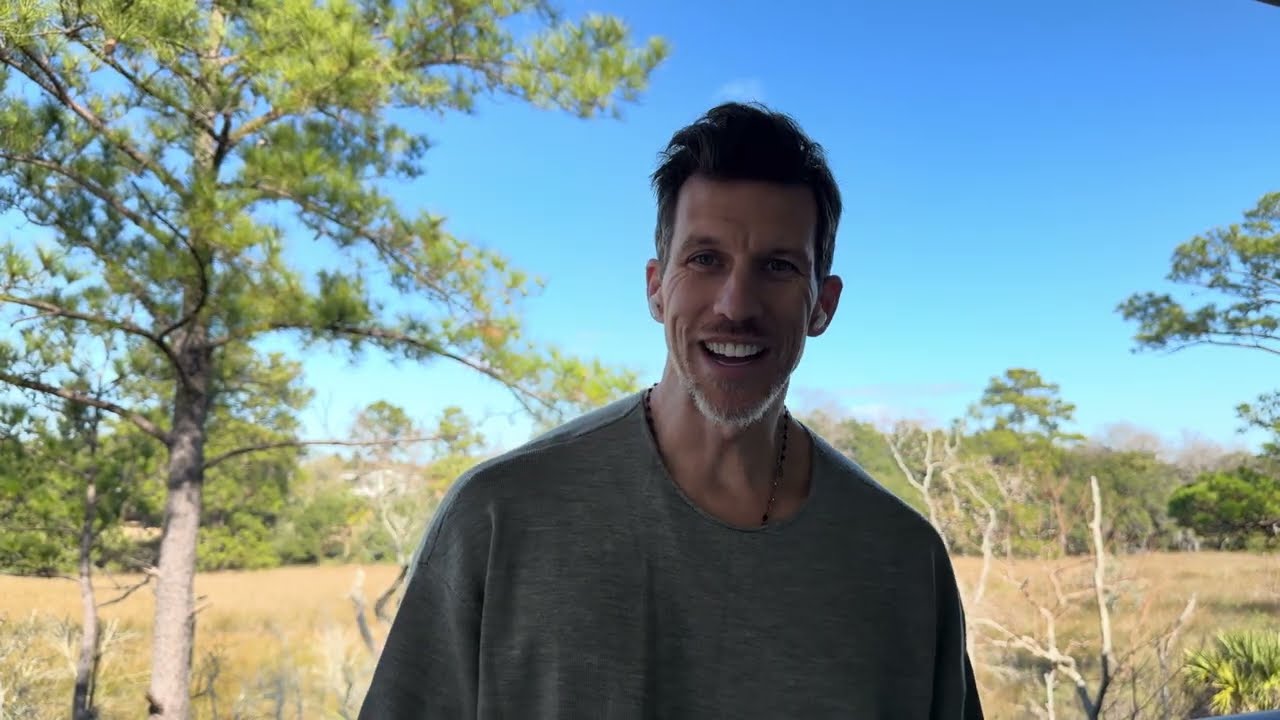
Welcome back, everybody. Uh, hope you had a great holiday season. We are well on our way to 2026 right now, and, uh, we're playing around with a new setup these days. So wouldn't you know it, we're, uh, fans of the brand of Apple, so testing out their new gear. Video seems to be a thing. These days, I suppose. The kids are watching it. Got a couple billion viewers on YouTube. People are spending more time than network TV on it, so that's a big deal. Instagram video, TikTok Shorts. You know, reading is just harder for folks, especially when they spend all day reading. And short-form video, now with these little mini-series that are like vertical video soap operas coming out. It's kind of crazy. So, um, yeah, what are we going to do here? So I think this is a good, um, moment just to talk about where we are, the state of affairs in the world, specifically in my area of expertise, which is emerging technology and how that intersects with business and the consumer population. On a planetary scale, specifically, we live in a closed ecosystem. We're one planet. We have one global economy at this stage, one global internet. We have one global supply chain, one global health, right? I mean, think about COVID spreads around the world, one global transportation system, interconnected series of highways, waterways, airways, planes, trains, you name it, right? Now the satellites are going into space, giving us internet connectivity pretty much anywhere that you can point a device to the open sky like you see behind me here. And so we're kind of left scratching our heads thinking like, what does this all mean, right? Like, self-driving's coming, Waymo's coming out pretty hard, Uber's got their stuff going, and Tesla. We've got autonomous spacecraft. Artificial intelligence has definitely crossed the chasm. Bitcoin and blockchain as well is going hard. And then spatial computing with all the glasses, both startups and big tech, is coming. IoT, robotics, software, artificial intelligence, technology, digitization is essentially eating the world. I mean, it's— here's the basic thought experiment, right? Like, if you turn off the internet, what happens to the world? Everything shuts down, like literally everything. So no more email, no more social, no more like chat at work, no more Slack, no more Teams, no more video calls, even no more SMS. Not really. Like assume cell towers are down as well. You can't order online, you can't search anything, you can't use Google Maps. It's gonna be really hard to make payments or do things like go to the gas station, rip a credit card through there. It's just not gonna call out, it's not gonna process. So it becomes pretty untenable. as a planetary species without the internet, uh, at this phase. So suffice to say, 5.5, encroaching on 6 billion out of 8 billion people— we've got about 70% of the global population connected to this thing. You got to be pretty rural, uh, to not have it make an impact. So, um, I chose this background specifically because It is, it is nature. And so we got to find some balance here, right? Like, what are we doing all this for? Right? I mean, if we just put a data center everywhere and we're destroying our planet in the process, like, that's not great. We love our computation, but we still got to take care of our home and our environment, the animals, the ecosystem that supports us. We've only got one. Again, it's a closed system. So you'll find us these days, and we have for a long time, we haven't changed the homepage of our website for years and years because of this. Like, we're leaning into core values, specifically strong core values, harder than ever this year. And so I think it lends itself to take a moment and talk about like, what are core values? What are our core values? And so for us, I think it starts with our mission. like what we do and why we do the things we do. And it really just comes down to something very simple, which is like build things that help people. And I've appended that over the years to include animals and the planet and nature. And so really it's like if you have that intent and that mindset where you're just out here trying to create, because creation is a very pure concept, but create with something positive in mind, Granted, we can't always foresee all the like second, third, fourth, fifth order consequences of that, and it does take energy and material to do it. But the alternative is you just like sit in a chair or lay in bed all day, every day, and you never get out and you never do anything. You never experience the world. You never connect with other individuals, other animals, with the planet, with nature, etc. So, uh, that would be a pretty empty life. And so I, I think like, you know, a lot of the world is because you have to, it's kind of like get money and that's the primary goal. And then what you see pretty quickly is you interview a lot of these folks that have gotten money and it's very empty. There's nothing there at the end of the line, right? Like you won the gold medal, you're standing on the podium, and then what? So they end up getting very depressed because it's like, well, I did all this stuff to get this thing and like now I did my vacations and I I bought my stuff, and then like, like, now what? What do I do? So you ultimately just come back to like this creation thing. And so, um, we've been there for a long time. And the real question at the end of all of this— and I think it actually does create value and will create money, and it's just you flip it— is like, what do you create, right? And so then that's where the cool work starts. That's where We get to use the stuff between our ears, behind our eyes. We get to utilize all the experiences we've had, the interactions with others, the way we think about the world. And we can take all of those things and use that as a funnel and craft that into different physical or digital experiences or objects or products or services. But I think it has to have some of that soul, some of that richness, right? Like, because you can't just connect. Like, I don't think anyone has sat there and looked at a dollar bill or whatever your currency is and go, you know what, like, we really have a strong connection. I'm giving you something and you're giving me back something, and it's compounded and it feels really good. And like, sure, like maybe that first paycheck, you know, my first paycheck was like $88 after, uh, working at a grocery store and collecting carts. And I don't know, I was like, 15 years old, 16 years old, 14, something like that. Um, and that's a cool moment, but pretty quickly that, that moment, that compensation event goes away. So here we are. Um, we have all of these incredible, amazing tools like emerging tech, an interconnected society. We've got distribution channels everywhere. Your message, like this itself, Could go viral to a billion people overnight. And so that's a lot of power for a species to get out of nowhere. I mean, when just my generation has gone from essentially rotary telephones and like mechanical operations to internet, computers, computers in your pocket, computers in the air, and, uh, now just like intelligence everywhere, and then robotics. So In a very short amount of time, plus social networking and interconnectivity, our global species, like COVID, the whole thing has really been transformed and disrupted. And so I think a lot of the world is just trying to figure out what to do with it while they're hanging on for dear life every day. And I just keep coming back to this creation thing and creating with core values. And so if you're running a business, you're thinking about starting one, or you're a founder, or maybe you're just an investor or a capital allocator, I think what we're gonna see as this creation becomes easier and becomes as generic as just like posting a photo or typing 140 characters into a, into a text box, like creating product and services, everyone's doing it. We're really just gonna only as a buyer, as a species, connect with things that are real, that are genuine, that foster that connection. I think that's ultimately all we're really looking for. Um, I hear it everywhere. I feel it everywhere. So you can close yourself off to it and, you know, it won't get you much. But, um, I, I think, I think that is sort of the answer as I sit here today at 2026. This could all change tomorrow, next week. I could have a completely different thesis and I don't know, maybe we'll upload another video or something. So until that point, Um, I think we're gonna make a couple more of these things. We're gonna share some of our knowledge about technology, mathematics, business, finance, economics, philosophy, wisdom, wealth generation, growth, sales, marketing, capital allocation, management principles. Um, every— all the little nicks and nuggets you pick up along the way and I was thinking about it today, and it's like, out of the course of your career, right? Like, maybe you feel the same. It's like, even any individual tiny thing, maybe that's a commodity. Maybe there's a lot of people that can do this one teeny tiny little thing, like, oh, I can respond to an email. But over time, over years, over months, over decades, you start to collect a bunch of them, and looping those together in the right way at the right moments in time, so you're creating like this musical note. As things are coming at you and you're interacting with the world, the business community, customers, consumers, friends, family, etc., that becomes less of a commodity and it becomes more niche. And I think the richness in that tapestry and that like wavelength and that line, the richness in that is where we will find the Amazing creations of the future— music, art, products, services, human touch. And I think things like artificial intelligence and robotics and spatial computing and Bitcoin transactions are all tools and elements in that bag. But you really gotta lean deep into like, who am I? Why am I doing this thing I'm doing? What's my mission? Is it helping people on a first, second, third order consequence? Is it helping animals? Is it helping the planet? Are we fostering like good, positive, durable growth over long time periods? Because duration is how you win over long time periods. Or are we just trying to do like a quick check collect or like a bag grab or whatever? And that stuff never really works out. Like, let me make a quick buck. Um, it just doesn't work. It compounds in the wrong direction, and people can just feel it. So you sort of gotta like take a pause and have a moment and have a real strategic conversation with yourself. Like, what's my purpose? What am I doing here? Why? What like lights me up? Like, what do I do when I'm not even getting paid for it? And then like do some more of that. And I think you can wrap something valuable around that that other people find value in. And they're willing to pay for it and pay attention to it with their time and their energy and their money. And then ultimately, like, if it's good enough, it's cool enough, if it sticks around long enough, you're going to talk to some other people about it. And so I think it's almost like people tend to, like, just shove a thing down people's throats, and it's just, like, off-putting. And we really need to reverse the polarity of that. And bring that all the way back into something real and then exude that out. And I think good things will come from that. So yeah, stay true to yourself. Just, you know, make sure it serves you, make sure it serves others. And, um, I think, you know, it can— good things sometimes take time, but duration beats everything. That water drip over 100 years beats, um, you know, a laser beam for a second. So I think we'll end there. Uh, thanks for spending some time with me today and enjoy the weather. It's beautiful out here. And, uh, 2026, here we go, y'all. All right, have a good one.









