Sean Everett explores belief as the foundation that sustains individuals, brands, and society through change. He uses examples like Bitcoin and currency design to show how authentic belief drives long-term impact, and tells the story of an artist who lost faith in a hopeful song to illustrate what happens when belief erodes.
Chapters
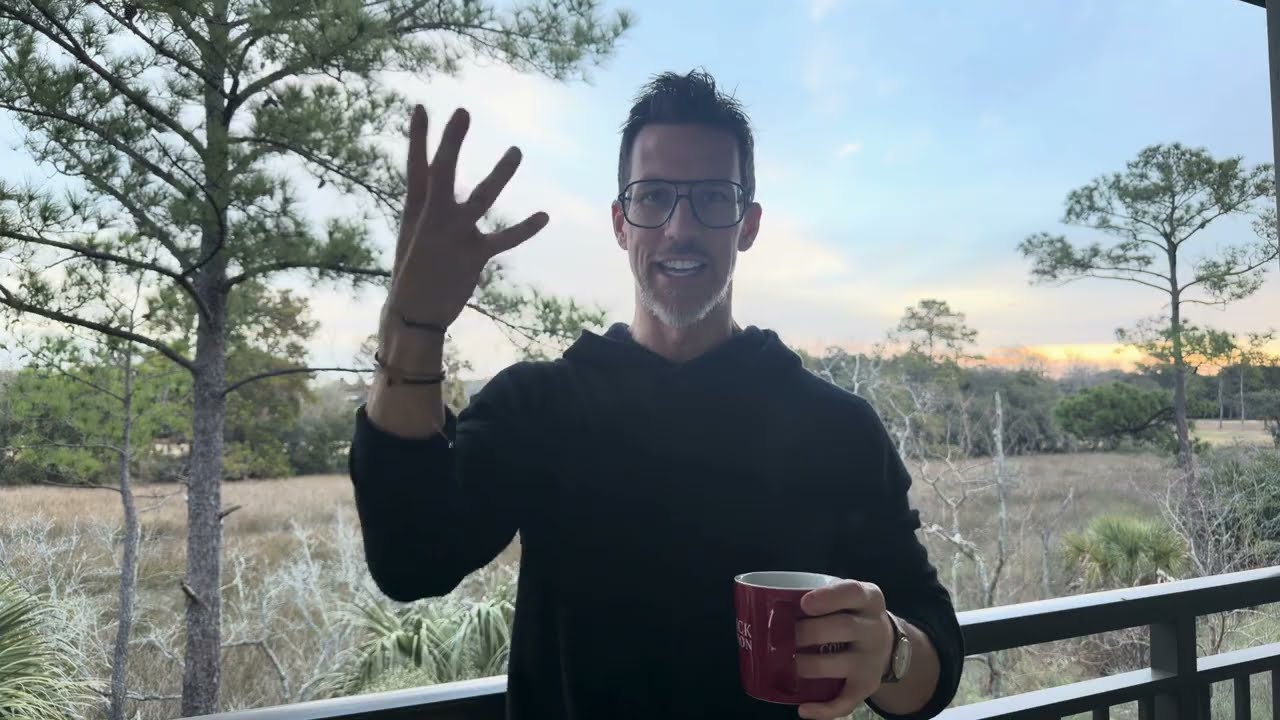
Good morning. We're going to talk about and go deep on the subject of belief today. And, uh, I get it, it can be a little strange to talk about something so esoteric and vaporous. What, what is belief? It's cloudy. I can't I can't hold it. It's not sturdy like this cup, right? Or like my physical body, which is really just made up of vibrations. So really, what is sturdy? But we won't get into the philosophical underpinnings of physics. But maybe— so people often shy away from talking about this belief thing, especially in a business context, because it brings up connotations of religion. And religion is religion, politics, right? Like topics we don't talk about, uh, because it's— people are deep-rooted in their belief systems. But it's taken me a long, long, long time, like Elton John's Rocket Man, to figure this one out. Maybe too long if you ask me. But, um, I was reminded of this when I was listening to one of my favorite recording artists who was really popular in the '80s and '90s. And he made this really interesting song, and it was this very hopeful tune about humanity and overcoming and just long time horizons. And I did some research on it, and because I wanted to get an update on like how the artist felt about it over, over time, and What was crazy about it is, um, this artist really never played the song again, um, and it was because he had kind of lost hope, faith, belief in humanity. And I grew up listening to this artist, and so I have a really strong emotional connection to him because from a young age He would. Okay, we caught that one in the nick of time. Glad we got that on camera. It may come right back around and get us right in the middle of a drink of coffee. So I fully expect that to happen. Knowing the universe, it's not without a sense of humor. But I had an emotional connection with this guy, and he had lost face about it, and it it took me. Down a level. It was kind of a like, oof, like a gut punch. Like, damn, like I really connected with that song and the philosophy of it. And, um, like this hope for the future in a better way. It was a really strong core value and vibration. And hearing that the one who made it had kind of like given up hope on it and, uh, stopped it, like— It made me fall a little bit, which is crazy, right? And so it got me thinking about this belief thing, and I wanted to wait to record this video until I actually had something substantive to say about it. I didn't know if I was ever going to get there, so interesting that it came so quickly. But I think what it actually is, is it's a backstop. And I'll get into this on a deep level as well as a surface level, but Um, given no one in the world— 8 billion people have all just lost hope, especially with AI. It's all going to take our jobs, it's going to destroy us, it's going to terminate us. Shouldn't there be somebody or something that actually stands and says, no, it's gonna be okay, and be a backstop? Not just as like a PR line to get press or the media, but like— actually believe it. And so it's like, there's so much in this world that will just make us fall and just keep falling forever and ever and ever, as if you were just thrown into outer space and you're just falling forever. And I think this belief system thing is interesting, especially as you infuse it into objects. into products, into services, into brands, into businesses where it can be a backstop. I mean, presidents won elections off just ideas of hope. What? Bitcoin is backed by just the idea of freedom, decentralization, like self-sovereignty, the fact that you are enough on your own and you don't have to rely on a system and you can take control back and ownership of your, your power, your domain. And they ask like, what's it built on or backed by? The United States dollar. The United States. The principles of freedom. The dollar has stuff like In God We Trust on it. Like, what? And so people say like, belief isn't sturdy. And I think it is. And you can't I suppose in some ways you can manufacture belief, right? But you know, you can manufacture inauthentic belief, which is vaporous, it is cloudy, there's nothing sturdy to hold on to. And I think that's the problem, is that all of these brands and companies and t-shirt lines and software companies, they're just trying to like slap something out there and it's manufactured and it's like Developed in a strategy deck or in a committee or an office. And so it is vaporous. You can hold on to it. There's nothing to attach to. There's no Velcro. It's Teflon. You just skate right on by. And there's other things that are built with actually a foundation of this, this belief, this like, no, like we are the backstop. And it doesn't come from just a decision. that we made, it comes from something deeper. Like, for me, it's always been there, like wanting to create things that actually improve the world, like build things that help has been in my brain for decades. I haven't really understood what that meant, why. I never decided on it. It's been there. I didn't like put together a PowerPoint deck. I didn't do a competitive analysis. I didn't like look at my favorite celebrity and go, yep, That's it. It's just been there. I didn't make it. It's— it was made inside of me. It came inside from something. So it takes us to this, like, universal ideal of, like, what's the atomic unit of belief? Gravity. Let's talk about gravity. In an empty universe, there's no objects, nothing. You can't tell if you're falling or floating. You have no orientation, right? Like, there's only movement Because it's in context of something else in comparison. But if we take everything else away, you can't tell whether this is moving or just static, falling, rising, going up, down, left, right. And so gravity is essentially just the atomic unit of a vibration that just said, no, like, this is what I stand for. This is sticky. This is the belief that I hold. And then things developed around it because they were attracted to it and connected to it, and it hooked on. And then things were able to grow and expand beyond that in layers over time as more things were attracted to it. That is essentially what happened with Bitcoin. We have like a real technological planetary-scale thing that was created this way that isn't Real? Really? It's electricity and energy stored in the internet with ones and zeros, electrical gates opening and closing around the world in real time. And then we attached money and a distribute— a mechanism of trade to— like, what? It doesn't make sense. And yet it's worth $2 trillion. And like, that's just an example of it. So I think, I think belief is actually behind core values. If we're at the very front and there's opinions and then principles and then facts and evidence, right? And behind that is maybe the values we stand on, and behind that is a belief system. And where does that come from? Beats me. I don't know. But what I do know is that if you let that go, everything collapses. Just back to that conversation that we started this with, with the artist, and it fell. And so perhaps this whole thing, at the end of the day, is just really, as they've always said and as we've communicated, you got to find out what's actually there, core inside you, that's been there from the very beginning. What is that actual pure essence? And that is the essence of belief, of values, of evidence, of creation, of connection, of the principles that we act upon, the opinions that we express in the world, and how we connect with other people and things and desire and yada yada. And the money is just like so vaporous, it comes and goes like far beyond that. So you got to go deep to that atomic unit. And, and, um, I think that we are at the precipice yet again of a species at a planetary scale where individually and collectively we all get to decide in this moment what the heck we stand for, like who the heck we actually are, what those actual real belief systems are that connect us, bring us together, that we can have this one ecosystem on this planetary-scale planet, like, work in harmony. And it's got to work in harmony. Um, so don't forget to turn on the light, even if you're living in night mode, because you're not sleeping. Um, Which, by the way, we're working on something for that, so coming soon. Um, or in the past, depending on when you view this video. So I think that is— you got to get really, really clear on, like, who you are and, like, why you've done the things you've done in your life and why and what you want to do for the rest of it and what you want to stand for. Because long after you're gone, the principles remain. And if the principles are sturdy enough, other people have the same ones, and it can become a lighthouse. And we'll never— none of us will ever reach that lighthouse, but damn if we can't try and put it up there and stare at it and hope to reach it. So what better North Star, right, to go for and aim for? And I've actually seen it in a tiny decision and the way a tiny little product decision is communicated over multiple cultures and halfway around the planet of how that core little teeny tiny atomic unit can shift. It's such a subtle tiny shift and it has a gigantic ripple effect as that wave's amplitude Continues to grow. So something on its surface that can appear like air that you can't touch, see, feel, hold, actually is the strongest thing in our universe. That's what I believe. Um, so yeah, we're, we're just gonna keep zooming in on that. And at this point, you just gotta take a— take a pause. Or even throughout your days, weeks, months, years, keep that little nugget in the back of your head. And as you interact with the world, use the world's interaction with your life experience to test that little thing and refine that little thing until you're like, you know what, I think that's it. And then you hold on to that thing. And now you have a seed, and that seed you can plant and it can grow into a beautiful tree that lasts for 1,000 years like the redwoods. So I think that's it for me today. Enough of me on a soapbox. Let's take a minute and take all this beauty in. Nature is the best product, and, uh, that ever will be. So that's the intention for today. I hope you have a great one. Love you.









