Not a Run of the Mill Billionaire featuring Samer Hakoura
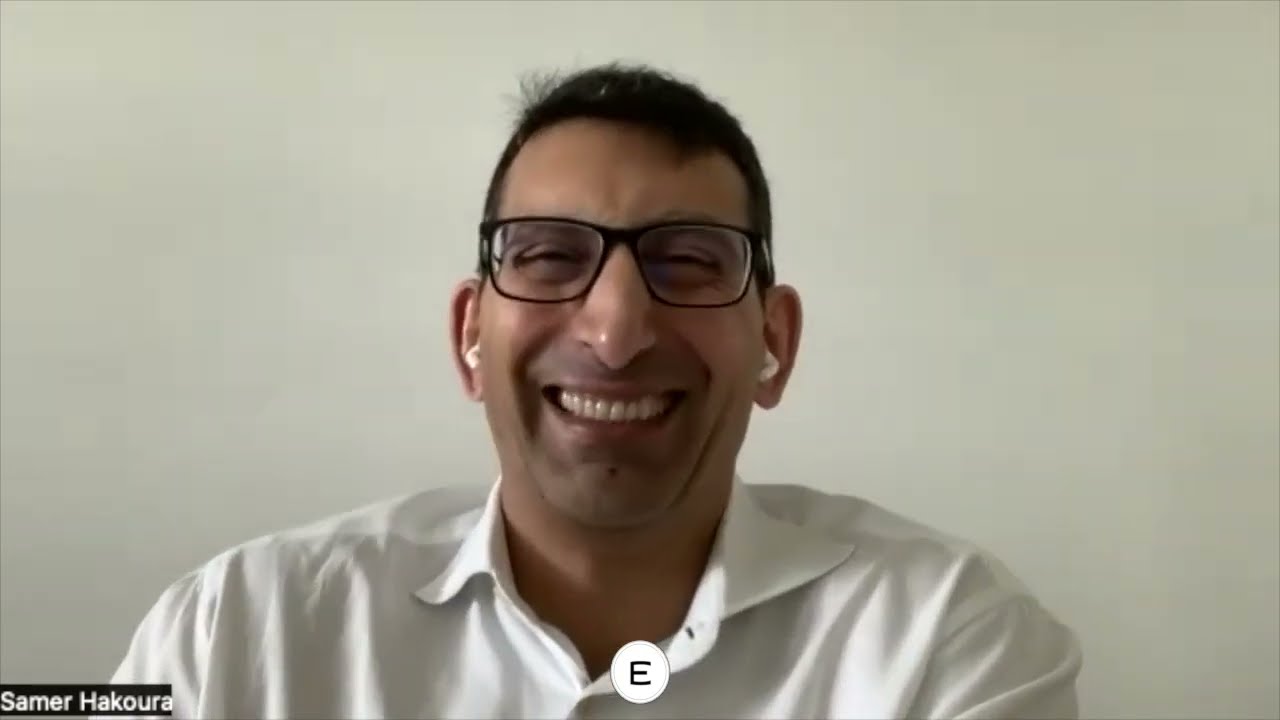
Samer Hakoura, an Oxford chemistry student turned investment banker and family entrepreneur, built his philosophy managing Abu Dhabi real estate through the 2008 crisis and running supermarket and recycling businesses in Turks and Caicos. He filters investments using Warren Buffett's checklist: competitive advantage, high returns on capital, and insurance float as synthetic leverage. Temperament and sell discipline matter more than picking winners.
Chapters
I think most people will just listen via, via audio anyway.
Oh yeah, that's all right. Yeah.
Yeah. So, and then, you know, when it's all said and done, I'll send you the, the link or whatever and you can, you can do your thing and we can review it. And if you're cool with it, um, yeah, happy to just edit out any, any not safe for work commentary though. I don't know, I haven't found—
I haven't had any instances of that, so I think it should probably be all right. It should be all right. I've done one of these before. This is my second interview. So, you know, the first time you're like, what am I getting myself into? Second time, it's like, okay, you know what, how bad can it be? Well, this is—
I mean, I just—
I don't know.
I just like it to be more casual and it can kind of go wherever the conversation wants to go. I mean, some of the stuff we talked about last time, I thought was really fascinating. So one of the things I want to talk about is like your story and just around the food and, you know, like how you guys built that business. I thought that was just a really fascinating thing. So we could go into that and then I think, you know, maybe a little bit of your background and how you got to where you are now and sure. just sort of, and then I think one of the other things that might be interesting is because you're sort of so deep in the finance industry or have been for a long time, just your perspective on everything from maybe a personal or professional basis, macro, micro, whatever, economy globally. Like, is it all just a bunch of fear and it's really like—
I've got some opinions on, I mean, I, you know, there's many ways to, and there's been some people have been far, far, far more successful than me. There's many ways to get to heaven, but I have an approach which, you know, you can only do what you know, right? And yeah, happy to talk about that. And I think there is a lot of fearmongering and a lot of short-termism, which doesn't help people. Yeah, it doesn't help most people. Some people are very good at it. Yeah, yeah, I'm happy to give you my views on that.
You know, it's like create fear to create opportunity and then profit from it.
It's— yeah. So I think you and I are aligned in many ways on that. From our previous conversation on some philosophy.
So yeah. Well, maybe we end on that one. So I mean, I think it'd be cool, like, hear some of your origin story if we want to just sort of warm up that way. And, you know, part of that you can delve into just your operator side of the business and how you grew up in it and working with your family in that perspective. I just, it's a super interesting story and the growth mode that you guys figured out too is interesting. So yeah, fire away, man.
All right, man. Thank you. Happy New Year. Happy New Year. Thanks for inviting me. It's, uh, it's nice to be here. And, um, yeah, so I started, um, I, I studied chemistry at Oxford out of all places. And, uh, the reason I studied chemistry is because I enjoyed it at high school because I was a bit of a nerd. had no idea what I was going to do next. But the nice thing about the UK is you don't have to choose that, um, you know, uh, there isn't necessarily correlation between what you study and what you, what you go into. Um, so I did chemistry and then realized, oh my God, this is pretty hard. There's no way I'm going to come around, go full-time into science, you know. Better find something, something to do. And I went into investment banking and, uh, really just because I thought who was fascinating, you know, um, you know, these, you know, young guys being thrown in front of CFOs and CEOs of, you know, multi-billion dollar public companies. I mean, we're the boss and all that. And, you know, you're supposed to present these sort of big mergers of, you know, clashing together 2 large companies, which affects, you know, mass amounts of money, jobs, the future of these industries and all that. I thought that was, that was incredible. I want, I want a taste of that. And of course, in real life, it's working late nights and weekends crunching numbers on Excel spreadsheets for your boss. That's what really happens when you first start. But, um, but look, you know, I got taken to a few meetings and, you know, over time was even able to speak in a few of the meetings. And that's just, you know, an incredible introduction to finance and how some parts of the financial world work, right? I was very fortunate to have that. Uh, did that for 5 years. Um, I sort of looked around and I realized that it was great to do that, but it's not what I want to do forever. One of the deals I did was with this American entrepreneur in Russia who did this TV business, and he built like a significant business on his own. And I really gelled with that guy. We were doing like a valuation sort of project for him, and I thought, wow, that's something that I can really you know, aspire to one day. So I, I went off to Wharton, um, had a great time there. And then after that, I said, okay, now what am I going to do? Well, I said, I'll go work with my dad. My dad had managed the Abu Dhabi royal family's real estate portfolio in the UK for a few years, um, with about a billion pound portfolio at the time. So real estate asset management. And I thought, you know what, this is an opportunity to, uh, try and learn how he does things. And Um, his work with the Abu Dhabi family had ended by the time I joined, but— and he'd started investing on his own account. So we did some interesting projects, basically investing in high-quality real estate, uh, in London. And then 2007-8 happened, and we were just very lucky in that we had a couple of really good buildings with really good tenants. So even though the world was kind of crashing down, our tenants kept paying us rent and interest rates went down. So, you know, um, our cash flows went up, you know. We weren't able to buy more properties because the bank shut down. Even though, you know, we had a relationship with banks for decades, uh, they were like, I'm sorry, you know, there's no money liquidity now to buy stuff. And that would have been a golden opportunity to— oh yeah, you know, you know, really make a dent. But, you know, it is what it is. Can't you know, um, we're very fortunate. Um, but that was an important lesson. Buy good quality assets with good quality tenants, have good quality financing in place, and even when the world goes crazy, you're okay.
Yeah.
The thing is, it's not marked to market, unlike the stock market, right? So, you know, had it been a public company or a REIT, you know, we'd have seen the value of our holdings demolished. But because it's private and no one can, you know, it's not on the screen somewhere, All we saw was the cash flow stories. Yeah, it was interesting, right?
At the end of the day, it's like cash is king anyways, right? And I mean, the only one that had money anyways was Buffett. So I mean, he just went straight into Goldman and he got some sweetheart deals there. But yeah, that's pretty amazing that you guys kind of came out unscathed and just, that's really it at the end of the day. It's like how much stress and worry do you want In your—
yeah. Oh, it was stressful. I'm painting the rosy side of the picture where we can't— okay, you know, of course we're stressed. We didn't know if the bank was going to call us at some point and call in the loan, and they didn't because they saw the quality of the cash flow. So I won't pretend it wasn't stressful, but it was, in the great scheme of things, it was pretty good, you know. Um, oh well, if you want, we can go back to that, uh, your comment about Buffett, because that's, uh, actually a huge part of how I invest in the stock market, actually, is Those kind of lessons. So it's funny you bring it up. So yeah.
Yeah, we'll go back to like fundamentals. Yeah, we'll get into that.
Um, look, again, the downside was I was in my, whatever, early 30s, mid— I can't remember now. And, um, there wasn't all that much for me to do. Um, but we, we had this business in the Caribbean because, you know, we had the property with cash flowing, but there was nothing to buy because, you know, everything shut down. But we had this business Caribbean with a couple other families. And so I got, you know, shipped off there. Um, and that was kind of like part 2 of my sort of education with my dad in terms of, you know, this is how you run a business. Or, you know, um, we have managers in place. This was a slight, you know, larger business. We had some employees and managers and a whole team. Uh, so I went in, you could call it, you know, one of 3 directors slash owners in the business. Um, and that was a supermarket business that my father and his, um, partners had bought some years previously. It had been loss-making with the previous owners, uh, but it sat on 64 acres of land. And, um, you know, my dad being a real estate guy said, okay, I can actually do something with the real estate there. And his partners said, okay, we'll take care of the operating side of the business. Um, hired in a phenomenal manager in, in the beginning. And the real trick he did was he managed to work out the, um, uh, the logistics of getting fresh produce in a timely manner to a small Caribbean island so that once it was done on the— presented on the shelves, it was fresher than everyone else's strawberries, lettuce, all that sort of thing. Obviously, that attracts clients. Obviously, once that attracts clients, you know, you can generate more cash flow. We're back to the cash flow thing again. Well, with that, we had a couple of partners who'd come from big, large public sort of CFO for a large public company. And, you know, we kind of had a lot of, you know, business acumen. And he said, look, we can use these cash flows to enhance the team, build up a whole accounting team. upgrade the management, upgrade the facilities. You know, my dad was involved with, okay, this is part of the facility upgrade and stuff using his real estate background. And so it kind of became this, you know, virtuous flywheel where the better we manage the business, the more cash flow we got, the more we were able to operate the business, the more we would get better employees. And, you know, we kind of grew to a $70 million revenue business over time. And then we use those cash flows to invest in real estate. And we use that real estate to enhance the, you know, the 64 acres of land we had and became like a hub in the— this is a very small country, but it became like a relatively big business in a small country. But, you know, it goes back to Warren Buffett's definition of does your business have a moat, which is a competitive advantage. And yeah, we had scale economics. We were doing— I mean, there's no official statistics, but call it 80% of the food retail and wholesale in this small country, the Turks and Caicos Islands. And so we, you know, we had purchasing power and shipping costs were low. And, uh, so, you know, uh, we were able to build out a business. And I got involved with some of the logistics, uh, because we had an inventory team that was no good at, um, pricing, telling us our inventory levels and pricing. And, you know, I complained to the partners about it and they said, oh, okay, smart aleck, why don't you go and fix it? So I landed myself a project.
Yeah.
And that took about 6 months. And it turned out actually really what it was, was about getting our IT guys who were brilliant IT guys, but just focused on the IT side of things with our line managers who were old school, like you know, um, uh, food retailing guys to actually speak together and getting the guys at the warehouse at the back to follow processes and procedures to get all the stuff in and catalog it properly, account for spillage, breakage, that kind of thing. Because it's like any other model, like my Excel models when I was a banker, you know, garbage in, garbage out. Um, and we'd spent about $1 million on this. software and implementing it, and it couldn't give us reliable results. And that just made me very upset. I said, how can we manage a business this way? So my project, that was probably my main contribution to this business, was getting that up and running. And by that time, we'd grown and we'd hired a different set of managers because the managers we had at the start of the business, although phenomenal for that part, we kind of felt Well, the partners felt we needed someone else to take it to the next step where we'd have multi-locations, stuff like that. In the beginning, we were managing— the manager was managing the business very well, but you look at the number of chicken bones at the back of the garbage and get a very good sense because he's been in the business for many years of how the meat department was doing, for example. Obviously, as you grow, you need to get some of the analytics and the processes in and We just needed a couple of people who were more used to managing that way. Very grateful for the first guy for, you know, as I mentioned, getting that logistics in place. Very grateful for the later managers for enabling us to actually expand locations and stuff. And that's where, you know, that flywheel really starts to take off because, you know, as you know, compounding isn't a straight line. It's an exponential line. And, and that was kind of my introduction to, um, having a kind of holding company and having a really good cash-flowing business and using that cash flow to reinvest at reasonable rates of return into ancillary businesses and kind of grow the pot. And, um, you know, very honestly, I just feel very fortunate to have been, you know, played a role in it, but also been, been allowed to come into this. And it's one thing to read it in the textbooks, and it's another thing to, uh, to actually be there on the coalface sort of thing and experience it. My brother and I started a side business, which was a waste management recycling business, which is still operating in the country. We're very proud to actually start to introduce recycling because, you know, it's a beautiful country, beaches and, you know, beautiful water and all of that. And it the waste management apparatus was severely lacking, which is, you know, an unfortunate thing to have in such a beautiful location. So we built that business up, started recycling. It didn't quite get the scale of the food services and food wholesale business. So it was a very interesting thing seeing how you operate a small business without competitive advantages versus operating a business with competitive advantages. And Just, I mean, how one thing seems much more easy. The other thing is like you just struggle and you're running just to stay in one place. So that really drilled into me again, this idea of competitive advantage and how important that is, which kind of leads on to the, okay, this is why I got very interested in reading about Warren Buffett's investment style because, you know, he goes on and on about high returns invested capital, competitive advantage, high returns invested capital, competitive advantage. And And I kind of resonate with a lot having experienced both sides of that.
Yeah, yeah, it's super. I mean, it's so interesting that, 'cause I kind of had a similar, you start with the Excel and then you go into operator role and it's so much more interesting at the end of that after a couple decades where now you're putting that financial model together and you go, eh, that assumption doesn't quite meet real world or like this is way more difficult in practice and you end up making the model better based on some of the dynamics from like the learnings from operating. And so I think having both of it in real time to be able to like have the conversation back and forth in your brain is like suit. It's, I think that is a competitive advantage as well because you can plan and operate in that flywheel. Kind of takes over too, which is cool. And then on the Buffett thing, yeah, like I grew up pretty close to Omaha and so like everybody knew about it and, you know, I've even seen one of my friend's dads like stand up at one of the meetings and like ask a question, which is kind of funny.
That's fantastic.
I've watched all his videos and stuff over the years, but there was one I just came across yesterday And yeah, I mean, it's the same stuff over and over again. It's like markets beat managers 10 days out of 10, you know, and it's so true. He was like, I saw one yesterday where he's like, oh yeah, I spent $400 million on a shoe company which seemed to be doing really well. They had great cash flow. They were, you know, no competition and I bought it in stock and he's like, I made one mistake. The business went out. Well, he's like, the business went out of business. And so my $400 million in stock went to zero. And today, whenever it was recorded, the Berkshire stock would have been worth $5 billion. So that hurts a bit. But then he said the thing he forgot to realize was shoes weren't going to be made in America anymore. They're going to be made overseas. And that was like the one thing that screwed the business up and it's like the blind spots that you don't even see, you know, regardless of how well you operate, it's, you know, and that's just sort of a cost structure thing and figuring out how you get it manufactured cheaper, better. So yeah, it's all there. I mean, how did you get into the Buffett mindset? Because there's so many different philosophies, right?
Yeah. So I'll tell you my, I mean, just on that Buffett thing you mentioned, it's one of the nice things about it. It just gives you a— when you had someone like Warren Buffett's track record, right? I mean, what, at his stage, what's there left to really talk about? You know, it's like, oh, these are the mistakes I made.
Yeah.
It's like, and, but he's— but it shows you the way the guy thinks. He thinks of things probabilistically. And he thinks of things in terms of opportunity cost, right? Everything for him is an opportunity cost of capital. Um, had I invested that $400 million, had I invested in a different way, what would have happened? And, um, and, and that, that opportunity cost way of thinking about it and that probabilistic way of, um, is, is, is, is a real key learning, I think, in terms of anyone trying to follow a little bit of what he does. Uh, plus the, you know, what you just said, the, um, crystallizing everything or synthesizing everything down to like the key points. You can do all this analysis, but these are the 1, 2, 3, 4, 5 factors that override everything else. So, I mean, hard to do, hard to do in practice. So what got me into him was the following realization. When we sold everything around 2012, '13, the business and the real estate and all of that, and we kind of went into cash and I said, well, what are we gonna do now? I first started, said, okay, let me go and try and buy a couple of private small businesses and, you know, that private equity style thing which I've come from. And I'd sort of invested a little bit in the markets while searching for companies. And then it didn't take long for me to say, you know what, I'm just gonna focus full-time on the equity markets. One, I, you know, I was trained in finance, but two is I realized that we had this, holding company, like I mentioned before, where we took the cash flows from the real estate business, the recent big fund from the food services business, and reinvested into real estate. And the other thing we did is we have, you know, high quality real estate with good tenants and good locations. So a version of competitive advantage, where we could build up a real estate portfolio that way. I said, those are interesting. There's a lot of public holding companies out there, uh, who do similar things. But the one thing these large, giant, multi-billion-dollar public holding companies can do that we couldn't do because we're much smaller was this idea of synthetic leverage. Um, and it all came from this paper I read by this, uh, called— by this, um, quant fund called AQR. They wrote about 10 years ago plus, more than 10 years ago, but they said, look, If you look at Warren Buffett, the secret to his success is twofold. The first is he's a phenomenal investor, no doubt. He picks high-quality companies, sticks with them, all the things everyone knows. Um, and this is kind of an open secret, but less people focused on it, was this idea of using, uh, insurance float to significantly and in a low-risk way juice his returns by effectively using cheap non-recourse leverage.
Yeah.
Now, of course, Warren Buffett goes on to say, you know, leverage, derivatives, all these things are weapons of mass destruction. Don't use leverage. Never do that. It'll kill you. And he's right, except that he's used leverage his whole career. But— and the but is everything here. He's used cheap, non-recourse. You can't get margin pulled on this leverage. And that is night and day, the difference between when most people go and get margin loans and what Warren Buffett does. And he did it through taking insurance float. So every year you pay in your insurance premiums to GEICO and all the other insurance businesses. And every year, GEICO and all insurance businesses pay out their claims for accidents and all sorts. But between paying out the claims and receiving the premium, there's like billions of dollars just sitting there.
Mm-hmm.
I think he's referred to as a revolving door of cash that just sits there. And he can invest it. on behalf of Berkshire Hathaway and its shareholders. And because, you know, I don't know about you, but I've never been able to go and say, give me back my insurance premium. You can't do that, right? Right.
Yeah.
So what he realized was, as long as he doesn't lose the money, right, it doesn't matter how volatile his investments are. So the stock price could go up and down 40%, but as long as he hasn't invested in excuse my language, crappy businesses that could go to zero, he can sit back and be pretty relaxed. And well, this paper analyzed, they said basically Warren Buffett's 6th year or 4th year, whatever the time they analyzed, he made 15% a year, which is phenomenal compounding. But with this leverage, he went to the low 20s. And that's the difference between being your run-of-the-mill billionaire and your, I made $500 billion, $80 billion myself. billionaire like Warren Buffett. It's all in the synthetic leverage through a holding company. And he discusses the advantages of holding companies in his 2014, I think it was annual letter, and he has a phenomenal 2, 3 pages on the advantages of holding companies. Coming from a much more modest, much, much more modest holding company background myself, I could, you know, that spoke to me. I said, okay, Are there other companies like Warren Buffett, maybe slightly, or Berkshire Hathaway earlier in their career, which have this concept of synthetic leverage that I can maybe not use leverage myself, but invest in these handful of companies that follow this similar ethos? And that's kind of the backbone of my strategy. It's basically investing in smart billionaires who figured it out and riding along with them.
I feel like I want to call this episode Run-of-the-Mill Billionaire.
There you go.
Because it's so, I mean, but look though, you're right. It's like how far can we stay ahead of the reaper? And it's like interest rate arbitrage. It's like if I can bring in cash and make a return that's higher than my risk level, then I get that difference as income to me. So the thing that got me with the insurance, though, because I started my career as an actuary and it was like you either go the life insurance or the insurance route or you go the pension route and I went the pension route, but I was familiar with all of that stuff. And it seems to me the one thing that Buffett and Munger lose sleep over is that one black swan major catastrophe event. And it's one of the reasons they hold so much cash on the balance sheet. It isn't because, oh, downturn, 1, 2, 3, 4. It's like, and but the flip side of that is if everything blows up, like if we get hit by a meteor, no one cares about the stock market.
So that's true.
So it's like on some level, like everything stops working. And so you just have to be prepared, like what is it before that level? So all the underwriters and actuaries and risk modelers and all of that, because it's like risk, real risk is the thing that you don't see coming is the blind spot. So It's like, okay, if you're searching for blind spots your whole life, can you find them all or is there one you can't find? Which is like, that's really the risk in the Berkshire equation. And then I think it's Ted, the new portfolio manager who's taken over more and more of the trading. Like the guy is a monster.
Yeah.
Like an absolute monster. I saw something where he put like $70K or $70 million into his IRA and turned it into like $500 million. Or it's— I mean, the numbers are just ridiculous. Like, it doesn't make sense.
That was unfortunate. I think it was one of these media outlets that were trying to, you know, name and shame people. And, uh, you know, and he responded back and said, at the time when I first did this, you know, he was not earning a— he was earning a very reasonable, modest salary, didn't come from a special background or anything like that. And he basically made it himself through very wise long-term investing, um, through tools available to just about everyone. You know, he had no special treatment. And I guess he felt forced to, to write this because he's like, look, I mean, if you're going to try and shame me for just being a regular— a genius, but a regular guy, then I'm going to answer you. And, you know, power to him.
Yeah.
But it sets us— it sets a model for the rest of us. Like, if we try and follow that, that's what, that's what you could do in theory, you know.
Well, I love the approach. So how difficult has it been for you to go out and find, because it's not like FactSet or Bloomberg terminals has like a Buffett button, you know, like using synthetic leverage based on this paper.
Yeah.
Like, that's a lot of time, energy, and you really have to unpack a lot of businesses. And so the filter, I mean, I saw this thing recently where it's like, you know, the problem today isn't finding businesses, it's filtering them. Where back in Buffett's early days, it was like I had to go to this weird library and pull out 10-Ks. And so you just had information asymmetry, but now it's just the mountain of noise. So how do you, and I mean, that also seems like why someone would come to you as their investment advisor or portfolio manager and be like, Look, I know where all these secret hidden doors are, and I know how to find this stuff, and I spend all my time thinking about it and unpacking it. But like, how do you, how do you go from, I read this paper, to, okay, now I'm implementing this and I feel some level of confidence north of, you know, 50/50 at the slot machine kind of thing? Like, how do you, how do you—
Yeah.
How do you link those 2 together and operationalize it?
Great question, actually. I think that there's multiple elements here. I'm just trying to think how to sort this through in a cohesive, you know, so I don't ramble at you. The first thing is going back to earlier part of the conversation that I'm a bit of a nerd and I kind of enjoy this, you know, I enjoy studying these things. When we sold the business, I was thinking, what am I going to do for a while? I think at one point my wife was frustrated and she says, I mean, you're kind of like a professor, you just like analyzing things. And I'm like, actually, you're right, I, I do, you know. And that's, you know, so let me, let me focus on that. So this is a very hard job if you don't like analyzing and reading things because it's just tedious otherwise. But if you're curious about the world, you're curious about business models, you're curious about what, you know, curious about money— I don't mean curious about money in terms of like, hey, I just want to get rich, but curious about how does business work? What have people done in the past to make things? What are mistakes they've made you can learn? You have that curious mindset about it and, you know, you're happy to just, you know, grab a bunch of paper and spend your day sort of reading those sorts of things.
Yeah.
This is a phenomenal business, right? Because you get to do that all day. Um, and when you do that, you sort of come across things. And I think, um, one of the best things I found is this idea of crowdsourcing. Um, everyone talks of this if you're a professional money manager, a lot of professional allocators, like, well, what's your point of differentiation? How do you get on— um, what's the word, I forgot— you know, uh, unique ideas that no one else has thought of?
Right.
And my view is no one has unique ideas. I mean, very few people have unique ideas anymore, right? Even Charlie Munger talks about it. What have you thought about someone else has thought about before? So read a lot. Um, just like any company you come across, someone's written about it. Even an obscure microcap, there's something called the Microcap Club where you put in the microcap and you'll more than likely find somebody somewhere's done a write-up on it. So instead of doing— trying to find something no one's thought of before, I like to invert and do it the other way where I say there are all these very clever fund managers who write open letters to investors and prospective investors telling about, you know, ideas they've got. And why don't you use that as a first-pass filtering mechanism? If a fund manager who's a professional investor has gone and written about something and put their money behind it, they obviously think it's a good idea.
Right.
Look, it's very important to not just blindly copy and have them completely influence your point of view. You have to know what you're looking for. Um, but that takes the— okay, there's 10,000 companies, how do I get that to 30 companies I'm going to look at as a first pass. And how do I narrow that down to 5 companies I'm going to do actually, because time is precious. You know, opportunity cost of time and capital. How am I going to, you know, whittle that down to 5 companies, 3 companies I'm going to really spend time on? And I find that's a really good way of doing it. Like I say, having this overlay of, I'm a Warren Buffett style adherent where I want high quality companies with high return on invested capital, that were run by intelligent and honest and capable managers, that's a very good start. So that helps you whittle out a vast majority of these things. And then having this idea of synthetic leverage on top of that helps you whittle it further. So, so it becomes a fairly efficient process for finding things to spend time on. The other thing about being a long-term investor, I like to hold things 5, 10 years if I can, more. Is I don't have to find an idea every week. If I find 2 really good ideas in a year, that's kind of all you need, frankly.
Mm-hmm.
Um, um, the difficulty, and I think why people come to me potentially, is one, is few people have the inclination to do what I'm doing, you know, spending that much time. But, but 2, it's also to have the, the, the mental, um, or the behavioral characteristics, which I think is very important to be able to sit on your hands and do nothing because you think you've got good companies. Even if you're underperforming for a period of time, even if the world's going a little bit crazy in a period of time, because you've studied what you own, you know what you own, you have a thesis, thesis hasn't been broken, it just takes time to play out. And not panic sell or panic buy because of FOMO or all that sort of thing. And I think that's That's huge. That's a huge part of that. And sometimes it looks like I'm not doing anything. It's just like behind the scenes, I'm reading, analyzing and stuff. There's just not much buying and selling going on. Yeah. So those are the— I hope I answered your question in terms of how that works. Yeah.
And I have 2 follow-ups. One is, how do you know when to sell? One was like the duration or hold period. You kind of answered that. But the other point that just sort of like connected for me as you were talking was, and this is sort of built into the Buffett mantra of value-based buying, but the fact that you were in that real estate business during 2008, during the real estate market crash, what happened was your portfolio didn't change overnight. Just the market's expectations. So the market price, as you said, you were private, so it didn't really matter. But like the market price went down by, I don't know, pick your number, half, whatever. But you were still cash flowing from one day to the next, probably pretty consistently. I mean, maybe that there was a little volatility in there, but it wasn't at the same level as the market price went down. So, you know, I think that is temperament. I think that stuff sort of trains you and obviously in the investor mindset, you can't be emotional about it. I mean, if your time horizon is 10 years, you're looking at different sorts of things for when you get out rather than just, oh, Mr. Market knocked on my door today and everything's on sale. So I guess the main question then is like, How do you decide to sell? Is it back to this opportunity cost of capital thing where you see a better possibility and you just want to shift that potential future return? Or how do you decide to get out of an equity?
I think it was Phil Fisher who Warren Buffett says he learned a lot from reading his stuff. I think he gave 3 reasons to sell. You made a mistake, the thesis has changed, I believe, or there's an opportunity cost, there's a better opportunity. He may have said something slightly different, but those are the 3 I use, right?
Yeah.
I made a mistake. I had a thesis on something and it went down. Okay. The stock price went down significantly. Now it's one of 2 things. Either I buy more because I like it at a cheaper price and I didn't blow all my capital in one go. I bought a half position and it went down so I can really load up and be comfortable. Hard to do emotionally, but sometimes, you know, I've done it if I felt confident it was a good company. Or no, it went down because, you know, I made a mistake, you know, I was wrong in my thesis. It's a very interesting game investing because on the one hand, you have to have the arrogance to think you can beat the market. Otherwise, just invest in the S&P.
Right.
On the other hand, you have to have the humility to know that You make mistakes all the time, and you know it's it's it's it's this holding both thoughts in your head at the same time is difficult in practice. So it's like reassess what happened. Why did it happen? Is this a short-term temporary thing, or is it no? The fundamental characteristics of this is not what I thought. In that case, you sell and you take your loss. You know the only advantage you get there is. Maybe it's a tax write-off, you know, tax loss selling a little bit. Blunts, you know, that thought blunts the blow a little bit, but it's still painful. And that's happened to me more times than I care to remember. Right. The other one is opportunity cost is a difficult one because you're taking a company you've owned for a long time, you've made money on, hopefully you've done well on if you've owned it for a long time and your thesis was right. So you're not going to pay capital gains tax on it.
Yeah.
And then you're re-risking onto a new situation. So I think you gotta be very careful about how you do that, right? Because you're literally paying away a large chunk of change on something very familiar to you in taxes to start a new level of risk on something new. So, I mean, obviously it has to happen at some point. You have to refresh some parts of the portfolio at some point. New ideas come along, but it's one to be careful about. Um, and then thesis changed. Like, this was a good company, you know, the dynamics have changed. Going back to your Warren Buffett shoe thing, probably was a good business, but the world changed. Everything should be being made, um, you know, internationally, right? Well, that changes the business. So that kind of thing. Okay. It's—
there's this thing I go back and forth on, um, especially being in the startup world because here's my thesis from an operational side as an operator, design your business to be as agile as possible. So you extract maximum profits or cash flow from the market as it exists today because this, it feels like we've almost fundamental shifted our global marketplace into a world where more disruptions are happening more often and we, in order to maintain the pole position or competitive advantage, it's the organizations that are designed to change on a dime and be agile enough to respond faster than competitors. And but then I marry that against, that's easy when you're early stage, but when you're Apple, You can't change the fact that you make computers for different use cases and the use case might change from I wear something on my wrist for health reasons versus I type on a sheet of glass all day for work reasons versus coming up next, I put something in front of my eyes or even after that, I drive around in a smart car computer, right? So the question is like, and agile has, Apple's maintained that agility from, you know, iPod to iPad, iPad to iPhone and everybody knows that whole story. So I just, I kind of go back and forth on this is like where, when you design a business to capture the maximum amount of this cash flow or profit that where if, and I've had this conversation with the head of strategy at a big fintech person used to work at Google and then some other folks as well and like the Origin of Wealth book where you think about like the The topology is this constantly moving wave where the peaks on the waves are the profit centers and they only exist for a short period of time. Case in point, e-commerce during a pandemic, short-lived, but a lot of companies overinvested that we see now because they thought that's new normal instead of approaching it as this is yet another new, new thing that we need to capture, but we don't assume it's gonna last forever. And so I guess my question to you is, as you've done all this research and looked at these companies with good fundamentals are working towards this compounding effect, have you seen management and discussion and analysis or maybe organizations that have been designed to be as agile as possible? Or do they say, here's our North Star, we make food, you know, and then We will just continue to iterate along whatever dimensions are required by the market. Do you see that? Do you have a thesis on any of this?
Um, it's not like a, like a formal thesis, uh, but hearing you speak, when you mentioned Apple, you mentioned Google. I mean, if it's okay with you, I'll talk about Amazon, right? Because Amazon's familiar to people. It's a holding in my portfolio. Um, it's a phenomenal company. Um, you know, it's been hit the rest of the market recently. But that's, you know, it goes back to your question, what do you do if the thing goes down? Do you think you made a mistake or not? And I don't think so for a number of reasons. But long story short, I think Amazon is the exemplar of this phenomenal management team who have a very competitively advantaged, strong business, but who stay ahead of the curve or up to date with the curve. And, you know, using— I like your analogy about it, you know, the policy keeps changing. Um, you know, Jeff Bezos is famous for saying it's all day one, right? And I was just actually reading this, this analysis on them, and someone's saying like Amazon can be thought of as the world's largest startup because even though it's just this behemoth large company, Jeff Bezos talked about all the operating teams of 2-pizza teams.
Yeah, right.
The teams are only large enough that can be supported by 2-pizza lunch or something like that. Um, so they're small teams and each of them is being very entrepreneurial, doing their thing. And if you look at how this has manifested in the company, you know, they started off selling DVDs and books, right? Or books and DVDs. Now they're the everything store. And then they grew into, well, every technology we use for ourselves, why don't we productize that and open it up to the world? So, well, we're developing all this amount of servers and stuff. Well, probably the rest of the world needs servers. And AWS was created and they literally invented in a meaningful way this idea of, you know, the cloud, right? And what it started with was a need they had, which they thought that we could productize that and open up to the world. They had need for fulfillment. Well, they built their own fulfillment, then they started charging for fulfillment. Every retailer needs to, you know, have, um, um, uh, you know, advertise for slotting fees. Well, they start an advertising business. Every single time they've had a need or the market has changed or there's been some, um, change in the e-commerce landscape, they've adapted to it. They've been ahead of it. They've created a whole sub-industry and they've productized it and sold it for extra profit to people. And I think it's all been done essentially because of this day one mindset. So I'd hold them up as the, as one of the banner companies in terms of what you're referring to.
Yeah, it makes sense. And I'm familiar with it too. I've got a bunch of friends who work there. I mean, they have 1.5 million people. So everybody knows somebody that works at Amazon these days. It's funny, that compared to like Costco and Munger described it as the Lollapalooza effect and Walmart getting more into digital. I've got some friends over there as well. And it's so interesting to see, you know, you're selling groceries and food, but there's totally different mindsets and strategies and models in each One, and then you go to like Dollar General from Walmart, which is like a different strategy, which is I'm gonna go into markets that are smaller than Walmart can handle and capture all of it. And then I even think about, I was talking to one startup founder who's making like automated dark stores and it's like now you can go into markets that are even smaller than Dollar General can handle and you just pick up your bodega stuff, you know, people from New York would get that reference. Pick up your bodega stuff from, you know, the gas station out of a, you know, large, very large vending machine, quote unquote.
So, well, Amazon's been trialing that with their, I forgot what they call it, their supermarket, their small format supermarket. So I don't know how successful that's been, but yeah, look, it's, I think it's very interesting.
They've got so much stuff. I don't know how you manage all of it, like their 200 people team. I mean, Andy Jassy's got his work cut out for him. Like, Bezos was like, all right, buddy, like, it's on you now. Like, I'm gonna go to space. Yeah, I did, I did about a 25-year stint, so I'm gonna go.
Fair enough, you know, fair enough. I think Jassy, from what I mean, I, you know, just thirdhand reading public materials and stuff, sounds like he's, um, he's very focused now on, on the profitability of the various units and stuff. Which I think, you know, is important for phase 2 as it were.
Yeah, you have to. So we've got, I don't know, maybe 10 minutes left. So I want to hear like 2 things. One, I usually like to end this stuff with like where's your head at? It could be anything like where's your head at, your most evergreen thinking in terms of approach to life, approach to market, approach to business, could be anything. And then at the very end, I just, for people who wanna get in touch with you, talk more about this stuff, potentially get engaged, where do they go? How do they find you? Obviously I'll link out to your stuff at the end of the episode. But yeah, that's a big one. Like where is your head at these days? Like what's the output? Because you have so many inputs, you know, what's the like, you know, I feel like maybe this has legs. Could be anything. You tell me.
I think it goes a little bit back to our discussion a few minutes ago about these companies being agile and, you know, have a good platform, but sort of staying ahead of what's going on in the world. And even Munger and Buffett say the same thing, that it's— I think the way I approach, I think, such a general thing is always be learning, you know, always be learning, always be iterating, always be improving. You've got to know what you're good at, what you're bad at, but try and get up a little bit smarter every, every— or go to bed a little bit smarter every day. And it's funny, I've got 2 young kids and it's 7 and 3. My 7-year-old, we have chats once in a while and, you know, I keep telling her it's okay to make mistakes as long as you try and you learn from them. As long as they're not catastrophic mistakes, but she's too young to understand that part. But, you know, I'll give you an idea. Like, I'm trying to learn to play the guitar and I'm terrible playing the guitar, you know, just a 40-something-year-old who's trying to come up with a hobby.
Yeah.
But I just practice 15, 20 minutes a day and I've been doing it for about a year and I can actually hold a semi-decent tune now. But if you looked at me, you know, 6 months ago, it's like, oh my goodness, this is terrible. I guess I've always approached things with the idea of I'm a quick study. I believe I'm a quick study, not because I'm smarter than anyone, but because I have this attitude.
Yes.
That I'm going to— I'm a quick study.
Yes.
And that's kind of what I'm trying to impart on my daughter, which is you've got to approach new things with this open attitude that I'm not going to learn everything. But the 80/20 rule, you know, 20% of a topic gives you 80% of the major understanding about it. And of course, then it takes years and years to become an expert, but just to get started, you just need to know a few basic things. To learn to play the guitar, you need to learn 5 or 6 chords and play them reasonably well, and then you can, you can actually hold a beginner tune pretty easily. You know, you can play around the fireplace, so to speak, and it won't sound terrible. And it's that attitude towards stocks, towards learning about new companies, towards learning a new skill. Like, I think that's— and if you keep doing that, that knowledge and that compounds. And if you keep forgiving yourself mistakes Because God knows I make so many all the time and keep that open attitude. I think that's where my head is at. You kind of need it when you're having a family because, you know, the families are so dynamic and that's the only way to just, you know, progress through things. And I think you need it as a stock picker and you need it as an investment manager because the world keeps changing.
Yeah.
And I hope that answers your question.
No, I love that. I love that. Always be learning and stay open and don't beat yourself up too much. I mean, it's like that old adage. Those who say they can't and those who say they do, they're both right. And it's just that mindset and that approach. Like, I would, math always sort of came easy to me and I just remember everyone saying like, I can't do math and like math is so hard. And I'm like, well, yeah, with that perspective. But like if the teachers were like, you know, math's not that bad, let me just show you a couple tricks and it's more about problem solving. Hey, there you go.
Yeah.
But I think you're right about like the learning and the older you get and having a family, it just humbles you in so many different ways.
Very true.
Where you're just like, you've seen that chart where it's like early on in your life you're like, I know everything, and then you're like, I don't know anything, and then at some point you're like, I know maybe one thing, maybe, and that's about it.
Yeah, that's, that's so true.
Yeah, yeah. So I love that. I had another guest on and, and hers was patience, and I like that combination of like patience, always be learning, be open. I feel like those things will help so many people just live a better life, personal, professional, whatever. So I love that. So, um, yeah, last Last bit is like, where can can folks find you online, website, whatever? Reach out to you. What's the best way to Sure, yeah, that's right.
And my website is alphyncap alphyncap.com. And there's my contact information there and some of my investor letters and that kind of thing. I'm also on Twitter. It's just my name, @samerhakoura, S-A-M-E-R-H-A-K-O-U-R-A. So yeah.
Great. I love it. And then I'll, if you don't mind, I'll also link out to your LinkedIn if you want and your website in the show notes. And then yeah, folks can just reach out to you, talk shop and do some cool work together maybe in the future.
That'd be great. Yeah, I love talking shop with people. I love talking investments, stocks, all that kind of thing. So it's actually fun to me. So anyone wants to talk about that, you're more than welcome. Please contact me.
Labor of love, man. That's— fascination will get you everywhere in life. And yeah, the road between expert and novice is just keep going.
Just keep going.
Just keep going.
Forgive you— forgive yourself your mistakes. Yeah, that's right.
Yeah, we're, we're all human and none of us are perfect. So that's it. Great. Well, Samir, this has been wonderful. Thanks so much. I'm glad we were able to get together today and, you know, looking forward to a bright new year for you and your family. And I'm bullish on 2023 from a variety of perspectives, even though the media is a bit dark-minded these days. But I just see so much opportunity and light and joy in the world that it's hard not to be. So I'm just grateful for you taking a little time and us being able to chat again. And I love your story. It's phenomenal. I think there's very few people like you who have operated, invested, have stayed in the game, you know, study Buffett, real estate, food, Amazon. I mean, you're just like right there in the core needs of humanity at a global scale. So I think it's great, man. Keep doing what you're doing and good things will happen.
I appreciate that. Thank you. Thank you so much for having me, Sean. It was fun speaking to you.
Yeah, great. All right, well, have a great day and a great weekend, and here's to a bright 2023.
Take care, man.
All right, bye-bye.









