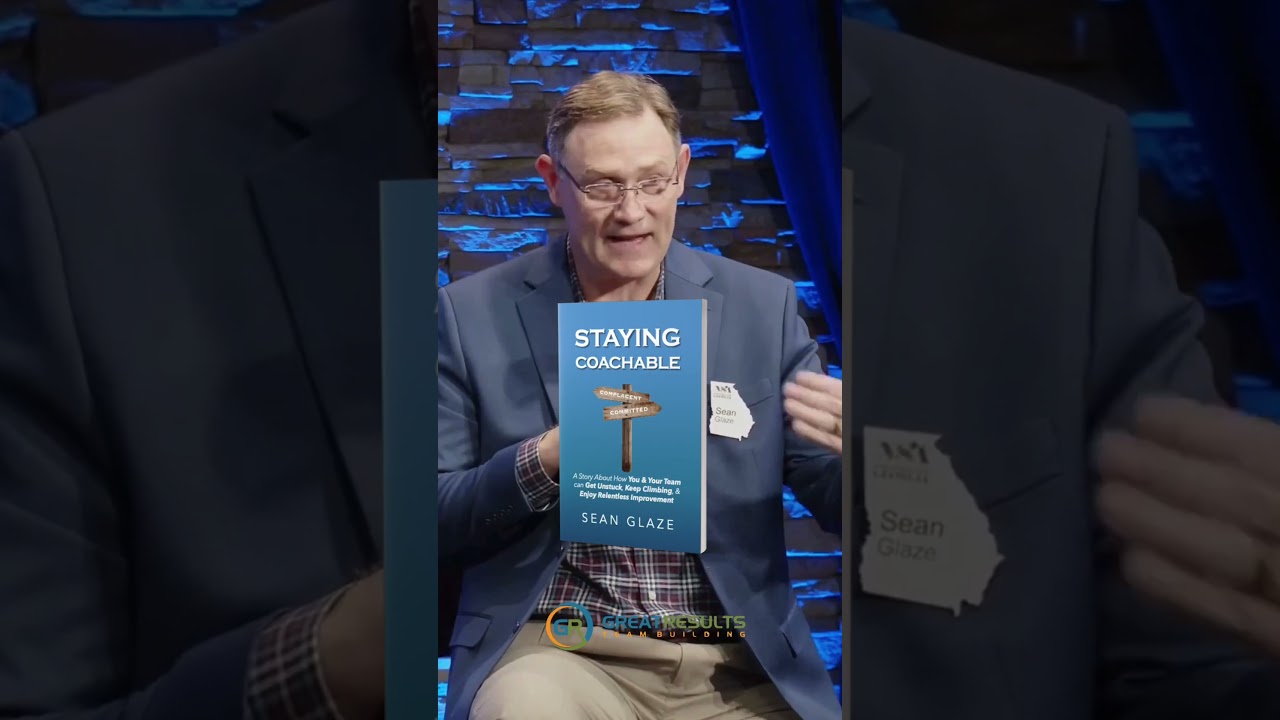
In this motivational speech, Sean Glaze emphasizes the importance of being coachable as a pathway to personal and team improvement. He defines coachability as a combination of honesty, hunger, humility, and the willingness to adopt new habits. Through vivid anecdotes—a hound dog stuck on a pine cone and a basketball team of poor shooters—he illustrates how pride and stubbornness keep individuals stuck on a plateau, while honest self‑assessment and a desire to learn drive performance gains. Glaze stresses that acknowledging discomfort is the first step toward change, cites Seth Godin’s insight that “the less you know, the more you can help,” and urges listeners to write down their personal problem as a concrete action toward becoming coachable.
Chapters
The truth about my message this evening is that what I have to say is a lot like yogurt. Everybody thinks the person next to them needs it more than they do. The truth is, it's important to all of us. Still, some people aren't going to listen. They're going to be too proud, too stubborn. They think they're just good enough. And even if sometimes they complain about where they are or how their situation seems, they're not coachable. See, coachable people are honest. They're hungry. They're humble, and they adopt habits that others choose not to. Coachable people outperform their peers because while their peers are stuck on a plateau making excuses, coachable people love to learn. They aspire to wise advice, and they take action. If you want to improve yourself, if you want to improve your team, the first step in the process is being honest. That's what I'd like to focus on tonight. A man was jogging down the street one afternoon, and as he made his way on his workout route, he saw an old man on his porch and an old hound dog laying on his side in the front yard. As the jogger passes by the hound dog, he hears it howling almost in pain. Aroo! Well, he's in the middle of a workout, so he continues, makes his route, makes his way back by the same house, the same animal, the same dog in the same spot in the yard, lying on his side, just whimpering in pain. Well, he's curious, so he steps into the yard, looks up at the man, and asks, "Mister, what's wrong with your dog?" The old man's on the front porch in a rocking chair. He goes back and forth. The jar. Looks at his dog. Mister, that there is Buster. Buster's been lying on a pine cone all day. Done told him I don't know how many times to get up, but he's stubborn. Guess it don't hurt him enough to make him move. Only hurts enough to make him whine about it. What's your pine cone? Will you stay stubborn, whimpering where you are? Or will you be honest and admit it's time to get up? See, being honest is the first part of being coachable. And it's the important step because so many of us are not willing to acknowledge our own discomfort. We lie there on our pine cones for years. When we convince ourselves that that's how our job or our relationship or our lives are supposed to be. But being honest about discomfort is the only reason we change anything in life. It's the only thing that makes us improve. Maybe you've been lying for a long time. You've been dismembering. But not getting up. The truth is, where you complain, you remain. As a basketball coach a couple years ago, the players I had were not very good shooters. So you go through the gym and instead of hearing the swish, swish, swish and shots through the net, what you heard instead was the thud and the clank of balls falling like bricks off the rim. They missed more shots than A nearsighted nurse. So early in each practice, I'd walk around and review individually with them problem shooting form and explain why flying elbows and poor technique was just not going to work. What I found was sometimes the worst shooters were the most stubborn. And instead of making progress, they were content to be stuck making excuses. I learned that teaching technique was a waste of time unless first you confirm that somebody's coachable. See, even as teenagers, they had been shackled by the same thing that you and I find keeps us from improving: pride. But the key to controlling pride is the help of those that are honest. See, after our first game, when I showed them their shots on video, they had to face the truth. And once they were honest about their platforms, then they became hungry enough and humble enough to change their habits. And the reason that I recognized in them is that pride Well, that was when my time comes. See, it's hard to admit when you're not where you want to be. And after a few losses as a first-year head coach, I wasn't. It's hard to admit that you don't know it all. And as a young coach, I didn't. Seth Godin says, "The less you know, the more you can help." Well, as a young coach, when I caught myself yelling from the sidelines at my players, I knew it was me that needed to improve first. And the only reason we got better was because I chose to be coachable. Maybe you have been making excuses. Maybe you've been stubborn. Maybe you're whimpering somewhere telling yourself things are good enough. Well, good enough seldom works. Is if you want things to get better, the first step is to be honest. Take out a sheet paper. Answer this question: What's your problem?