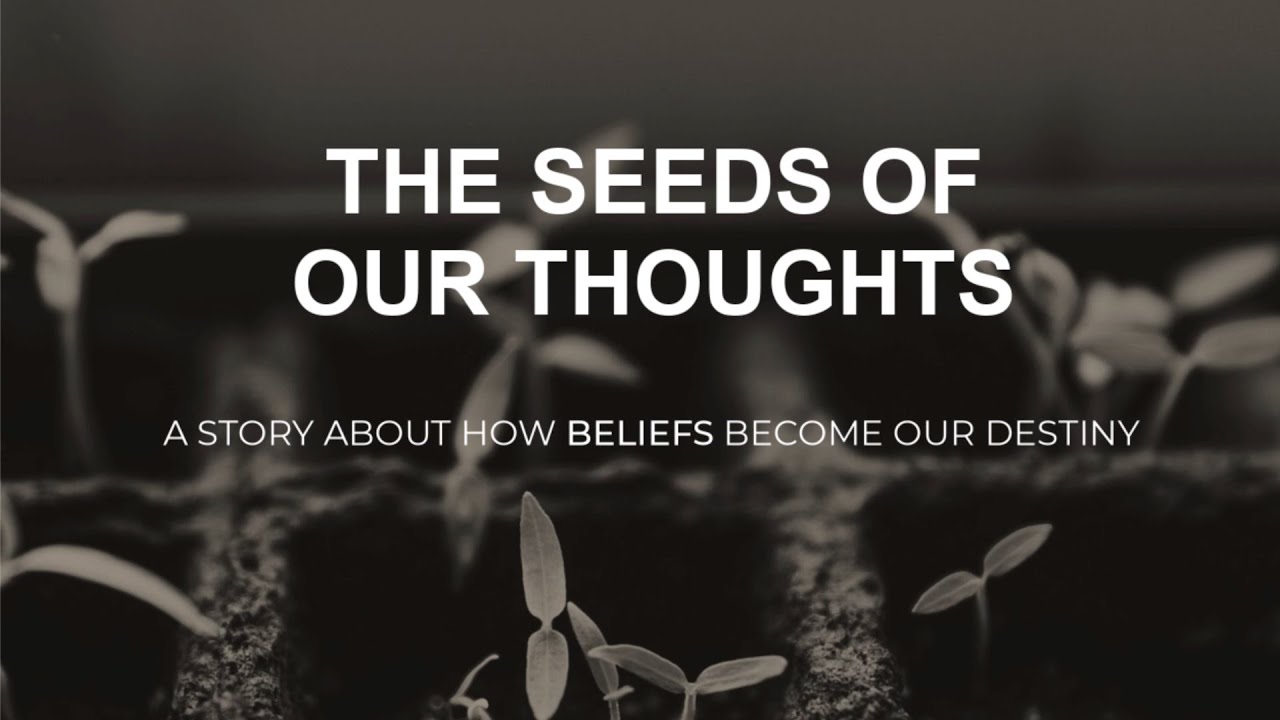
THE SEEDS OF OUR THOUGHTS - A STORY ABOUT HOW BELIEFS SHAPE OUR DESTINY
This content was created by Sean Glaze. This content was uploaded by Sean Glaze. This is a YouTube video titled "THE SEEDS OF OUR THOUGHTS - A STORY ABOUT HOW BELIEFS SHAPE OUR DESTINY" (uploaded 2025-10-08T12:21:21+00:00). The content is a narrated short story/prose piece (in English) following Ethan Maddox as he moves from bitterness and defeat to purpose and self-mastery under the guidance of an older mentor, Mr. Calhoun; other characters include Claire, a coworker Mark, and workplace figures. Thematically it’s a self‑help/parable about how thoughts and daily habits shape one’s life rather than a multi‑speaker conversational transcript.
Chapters
The Seeds of Our Thoughts: A Story About How Beliefs Become Our Destiny. Chapter 1: Struggle and Blame. Ethan Maddox had grown up with the sound of slammed doors and arguments. His earliest memory was of his mother yelling at a boyfriend who never came back, and of sitting on the carpet with his knees tucked into his chest, wondering if she would leave too. His father had disappeared before Ethan was old enough to speak his name. And his mother, though she loved him in the way she knew how, was too burdened by her own disappointments to be much of a guide. Bills piled on the kitchen counter like unopened letters of doom. Some nights the power went out because she forgot, or refused, to pay. On others she disappeared until dawn, leaving Ethan to make his own dinner from whatever was left in the pantry. By the time he was a teenager, he had learned two things: nobody was coming to save him, and it was easier to lower his expectations than to keep being let down. School to Ethan was just another stage where failure played out. Teachers scolded him for daydreaming or failing to hand in assignments. His friends, what few he had, either dropped out or drifted away. By senior year, he had stopped trying altogether. He skipped classes, barely graduated, and walked across the stage with a blank expression while other families cheered in the stands. At 21, Ethan was unloading trucks at a distribution warehouse. The work was backbreaking and monotonous, but the paycheck kept the lights on in the small apartment he shared with a cousin. Each morning, as he dragged himself from bed, he thought the same bitter thought: This is it. This is all I'll ever be. On Friday nights, after long shifts, he drowned that bitterness in beer at a local dive bar. Surrounded by the haze of cigarette smoke and the constant drone of country music on the jukebox, He muttered to anyone who would listen about how unfair life was. Some nodded, some laughed, but nobody really cared. It was on one such night, stumbling out into the cool air after closing, that Ethan's old sedan sputtered and died on the road home. He slammed the steering wheel and cursed. The car coughed once more and went silent. With no one to call, Ethan kicked the bumper so hard pain shot up his leg. He cursed louder, his anger echoing off the empty storefronts. He sank onto the curb, head in his hands, his thoughts spun in a familiar loop. Why me? Why is everything always against me? If my dad had stayed, if my mom had been responsible, if I'd had money, maybe things would have been different. The anger curdled into despair. He pulled his jacket tighter against the night air, muttering to himself, "The world's out to get me." And it was then, as though summoned by those words, that a quiet voice broke through the silence. Chapter 2: The Meeting on the Curb. "The world's out to get me," Ethan muttered the words into the dark street, his breath visible in the cool air. He leaned forward, elbows on his knees, staring at the cracked asphalt as though it might answer him. "That's an interesting theory," came a voice, calm and unhurried. "But if the world's out to get you, why are you the one helping it along?" Ethan jerked his head up. Under the dim glow of a streetlight stood an older man, silver hair neatly combed, a worn cane in his hand. His eyes were steady, not the cold stare of a stranger sizing him up, but the kind of gaze that seemed to look through him. "What's that supposed to mean?" Ethan snapped. The man took a few measured steps closer. "It means, son, that you can't spend your days planting weeds and then curse the garden for being overrun." Ethan squinted at him. "You talkin' about my life? You don't know a damn thing about me." A faint smile touched the man's lips. "I know enough." "I see a young man who thinks his circumstances are chains. But chains aren't forged outside. They're made in here." He tapped a finger to his temple. Ethan scoffed. "Yeah, easy for you to say. Bet you didn't grow up with a mom who couldn't keep the lights on. Bet you didn't have to work your tail off in some warehouse just to scrape by." "You're right," the man said, nodding. "I didn't. My troubles wore different clothes, but make no mistake, I had them. The difference is, I stopped blaming the world for giving me storms and started asking why I kept leaving my roof half-built." Ethan frowned, caught off guard by the metaphor. "So what? You're saying all this—" he waved toward his broken-down car, his shabby jacket, the empty street— "is my fault?" "I'm saying it's your responsibility," the man replied, his voice firm but not unkind. "Circumstances don't make the man; they reveal him. Your outer world is only ever a reflection of your inner one." Ethan let out a bitter laugh. "That's rich." "You think if I just— what?— think happy thoughts, suddenly I'll be driving a better car and living in a nicer place?" "No," the man said evenly. "Not happy thoughts. True ones. Thoughts that build instead of destroy. Thoughts that direct instead of drift. Change the root, and the fruit must follow." For a moment, silence hung between them. Ethan wanted to argue, but the man's words slid past his defenses and settled somewhere deep, like seeds in soil he didn't even know was there. Finally, Ethan shook his head. "Whatever. Sounds like philosophy crap. Doesn't work in the real world." The man tapped his cane against the sidewalk and gave a small shrug. "Suit yourself. But remember this, son: you don't get what you wish for. You get what you are." With that, he turned and began walking down the street, the steady rhythm of his cane fading into the night. Ethan sat frozen, unsure whether to curse the man or chase after him. He didn't either. Instead, he stared at the cracked pavement, the echo of those words gnawing at him. You don't get what you wish for. You get what you are. Chapter 3: The Garden Within. The diner smelled like burnt coffee and fried bacon, the kind of place truckers stopped for refills and locals came to escape their own kitchens. Ethan had been there before, usually after a night shift when he couldn't face the emptiness of his apartment. This morning, bleary-eyed from too little sleep, He slid into a booth near the back. He ordered eggs and toast, then pulled out his phone to scroll through headlines he didn't care about. "Mind if I sit?" The voice made him look up. Standing at his table was the old man from the streetlight, the one with the silver hair and the calm eyes. Mr. Calhoun, though Ethan didn't yet know his name. Ethan blinked. "You again?" "I often come here for coffee," the man said, gesturing to the empty seat. "Seems the world's not quite done with our conversation." Ethan gave a half shrug. "Do what you want." The man sat, resting his cane against the wall. The waitress brought him black coffee without asking, which told Ethan this wasn't his first visit. For a while they sat in silence, the clink of dishes and murmur of other patrons filling the space. Finally, the man spoke. "How's the garden?" Ethan frowned. "What garden?" "The one in your head." Ethan let out a short laugh. "Yah well, if I've got a garden up there, it's dead. Just weeds and dirt." The man nodded. "Exactly. And whose fault is that? The soil's?" Ethan didn't answer. "You see, son," the man continued, "a man's mind is like a patch of earth. It will grow something. Always. If you don't plant anything worthwhile, weeds will grow all the same. And if you feed anger, bitterness, and self-pity, don't be surprised when they choke out joy, "Discipline and hope." Ethan stirred his coffee, staring at the dark swirl. "So what, I'm supposed to just... think positive?" "Not positive," the man corrected gently. "Responsible. A gardener doesn't wish for tomatoes; he plants them. You've been wishing for a better life while sowing seeds of resentment every day." The words stung, and Ethan shifted in his seat. "Easy for you to say. You don't have my problems." The man leaned forward. "Problems aren't the issue. We all have them. The question is, what seeds are you planting while you face them? Weeds or fruit?" Ethan opened his mouth, then closed it again. For the first time in years, he had no comeback. The waitress set down Ethan's plate, and he stared at the toast like it might answer for him. The man smiled faintly, as though he'd said enough. He pushed himself up, steadying with his cane. "Name's Calhoun, by the way." "If we meet again, maybe you'll have an answer about your garden." And with that, he left, his coffee barely touched. Ethan sat in the booth long after his eggs had gone cold. He wanted to dismiss the whole thing as nonsense, but as he drove to the warehouse later, the metaphor kept circling in his mind. A garden, seeds, weeds, my thoughts. That night, lying awake in his apartment, Ethan realized something unsettling. If his life really was a garden, Then he'd been its worst gardener. Chapter 4: Purpose and Drift. The next Sunday afternoon was unseasonably warm. Ethan wandered into the park near his apartment, a place he usually avoided because it was filled with families, joggers, and people who looked like they had their lives together. But today, for reasons he couldn't explain, he went anyway. There, sitting on a bench beneath a spreading oak, was Mr. Calhoun. He wore a light jacket and balanced his cane across his knees, watching children chase each other near the swings. Ethan almost turned around. Something about the man unsettled him, the way his words cut through excuses. But curiosity tugged harder. He walked over. "Didn't think I'd see you again," Ethan said. Mr. Calhoun's lips curved into a small smile. "I had a hunch you might find your way here. Sit." Ethan dropped onto the bench, slouching. "So, what lesson is it today?" More about weeds. Not weeds. Purpose. Ethan raised an eyebrow. Purpose? My purpose is to survive, pay bills, make rent. That's it. That's drift, not purpose, Mr. Calhoun said, his voice steady. A boat without a rudder will always complain about the current. Until thought is linked with purpose, there is no accomplishment. Ethan frowned. So I'm supposed to— what? Pick some dream and chase it? "Not a dream," Calhoun corrected. "A direction. Something worth aiming your mind toward. Even a small aim will steady you. But without one, you'll always be tossed around. By the boss at work, by the bills on your counter, by the past you keep dragging behind you." Ethan dug the toe of his shoe into the dirt. "And what if I don't have some big purpose?" "Then start small," Calhoun said simply. "A man who learns to sweep a floor with purpose will eventually learn to lead with purpose." "The size doesn't matter. The direction does." Ethan thought about his warehouse job. He hated it, but he also hated being just another grunt with no future. "I guess... I always wanted to do more than haul boxes. Maybe get into logistics, planning, scheduling, something like that." "Good," Calhoun said, eyes lighting. "Then make that your direction. What's one step you could take this week?" Ethan hesitated. "I don't know." "Maybe start saving for classes? There's a tech school that offers night programs. Costs money though." "Then save," Calhoun said, as though it were the simplest thing in the world. "Link your thoughts to that purpose. Each dollar you put aside is proof you're not drifting anymore. Each choice, whether to waste it or save it, plants a seed." Ethan gave a dry laugh. "So I'm a broke guy with a savings jar. That's your grand advice?" Calhoun's eyes twinkled. 'A broke man with a savings jar has a future. A broke man with only excuses does not.' For the first time in years, Ethan felt something stir inside him. It wasn't confidence, not yet, but it was hope, faint and unsteady, like the first green shoot in a neglected garden. That night, he pulled an old coffee tin from his kitchen cabinet and dropped in his first $5 bill. It wasn't much, but it was something. As he set the tin on the shelf, Ethan whispered to himself, "No more drifting." Chapter 5: The Setback. For a while, Ethan surprised even himself. He started showing up early at the warehouse, volunteering for extra tasks no one else wanted. He stopped wasting money on late-night beers, slipping those dollars into the battered coffee tin instead. When his cousin mocked the "pathetic piggy bank," Ethan just shrugged. You wouldn't understand, he thought almost proudly. Even his supervisor noticed. Maddox, the man said one morning, clapping him on the shoulder, I like the way you've been working lately. Keep it up. Those words were enough to fuel Ethan for weeks. For the first time, he began to imagine a different version of himself, someone people respected, someone who didn't have to hide behind excuses. When a posting went up for a team leader position in the warehouse, Ethan's heart pounded. He'd never applied for anything like that before. His hands shook as he filled out the form, but Calhoun's words echoed in his head. Link thought with purpose. Stop drifting. He hit submit. For the next 2 weeks, he pictured the job every day. Supervising others, proving he wasn't just a grunt. He told himself it was the first real step toward a better life. Then, the announcement came. The position went to Mark, a coworker Ethan knew well. A man who spent most days joking around, barely lifting a box unless someone was watching. When Ethan read the notice on the bulletin board, something inside him snapped. "That's it," he muttered. "I bust my back, I try to change, and they hand it to him?" All the old thoughts came roaring back. Life's rigged. People like me don't get ahead. I should have known better. That night, he stormed out of the warehouse, fists clenched, chest tight with rage. He found Calhoun sitting on the same park bench, watching the sunset through the branches. "You lied to me!" Ethan shouted before the old man could speak. "Y-you said if I changed my thoughts, my life would change. Well, I worked harder, I thought positive, I even saved money, and it still doesn't matter. Nothing changes." Calhoun turned, calm as ever. "So? One storm comes, and you throw out the seeds you planted?" Ethan's jaw tightened. "You don't get it. People like me don't win. The system's stacked. Circumstances always win." Calhoun studied him for a long moment, then reached into his coat pocket. From it, he pulled a small leather notebook, the edges worn, the COVID creased. He held it out. "What's this?" Ethan asked, suspicious. "A mirror," Calhoun said. "Not the kind that shows your face. The kind that shows your mind." Ethan frowned. "It's just paper." "Write down your thoughts," Calhoun instructed. "Every one of them. Especially when you're angry. Then read them back. You'll see what's been ruling you all along." Ethan barked a laugh. "You think scribbling in a diary is gonna fix my life?" Calhoun's gaze hardened, though his voice remained steady. "Son, until you face the weeds you've been watering, you'll never learn how to grow anything else. Your circumstances are shouting at you because your thoughts have been whispering poison for years. You don't need a new job; you need a new master for your mind." Ethan stared at the notebook, tempted to fling it back. But something about Calhoun's eyes, the unwavering steadiness, stopped him. He shoved it into his jacket pocket. Fine. Whatever. As he walked away, the notebook felt heavier than it should have, as though it carried more than blank pages. That night, alone in his apartment, Ethan opened it. His pen hovered, then scratched across the paper. Life's unfair. I'll never get out. Nobody respects me. Nothing changes. He filled 3 pages before stopping. He read the words back, and his stomach twisted. Line after line of bitterness, resentment, self-pity. Seeing them written in black and white, he realized they looked uglier on the page than they had in his head. For the first time, Ethan wondered if Calhoun was right. Maybe the real prison wasn't the warehouse or the bills or the broken car. Maybe it was in his own thoughts. Chapter 6: Seeds of Change. The notebook sat on Ethan's nightstand for 2 days, unopened. Every time he glanced at it, he felt both challenged and exposed. What good could scribbling down his frustrations really do? But on the third night, after another shift of dragging pallets and listening to Mark, the new team leader, bark orders he barely followed himself, Ethan snapped it open again. He wrote furiously, Mark's an idiot. The boss is blind. I deserve better. Nobody cares if I try. I'll never get anywhere. When the anger drained from his hand, he slumped back and stared at the pages. His chest tightened. This is me, he realized. This is what I feed myself every day. The next morning, he forced himself to try something different. Beneath each bitter line, he wrote a counterthought. Mark's an idiot. My growth isn't tied to Mark. His choices don't control mine. The boss is blind. I can still be valuable even if unnoticed. I'll never get anywhere. Every dollar in that tin is a step forward. It felt awkward, fake. But as he wrote, a small spark lit inside him. He was no longer just a victim of his thoughts; he was answering them. That afternoon, he found Calhoun on the park bench again. "You were right," Ethan admitted. "My head's full of poison. I didn't even realize it until I saw it on paper." Calhoun nodded. "That's the beginning. A man can't clean a room he refuses to enter. Now that you see the mess, you can sweep it." Ethan chuckled bitterly. "Feels like it's gonna take forever." "Forever's just a string of todays," Calhoun replied. "Guard today's thoughts and tomorrow will take care of itself." From then on, the notebook became Ethan's companion. Each night, he wrote down the ugly, honest stream of his mind, and then answered it with something stronger. Some days, he failed. Some days, the old bitterness won. But gradually, new patterns began to form. He noticed the change first in his body. After weeks of quitting cigarettes and cutting down on beer, his lungs didn't burn as much climbing the warehouse stairs. He started running in the mornings, small laps that left him gasping but proud. Coworkers began treating him differently too. His calmer presence earned small nods of respect. One even asked, "What's gotten into you lately, Maddox? You don't blow up anymore." Ethan shrugged, but inside he felt something shift. He wasn't just drifting anymore. He was choosing. One evening while they sat in the park, Ethan asked, "How do you stay so calm, even when life kicks you in the teeth?" Calhoun rested his hands on the cane. "Because calmness is power. Anger is weakness. It wastes energy, clouds judgment. A calm man sees choices that rage blinds him to. Serenity is the jewel of wisdom, Ethan. Few ever polish it." Ethan thought about his past. How often he had lashed out at bosses, cursed strangers, even yelled at his mother when she stumbled back into his life. Each time, he had felt justified. But each time, he had also lost. He scribbled one more line into his notebook that night before bed: "Calmness is strength. Anger is surrender." Chapter 7: Worthy of Love. Spring arrived slowly, the chill of winter lifting day by day. By then, Ethan's notebook was nearly half full, pages of raw anger crossed out countered with steady lines of new resolve. The practice had become a ritual, one he no longer resented. He wasn't fixed. He still had days where bitterness crept back, where he muttered under his breath about unfair bosses or broken systems. But instead of spiraling, he caught himself. He flipped open the notebook, wrote the thought down, and faced it. One Saturday morning, Ethan volunteered to help set up tents and tables for a community fair. It wasn't something the old Ethan would have done. Working for free, around people who might judge him. But the new Ethan wanted to be useful, to direct his energy outward instead of folding it in on his own resentments. That's where he met Claire. She was organizing the volunteers, a woman with quick eyes and a warm laugh that carried across the parking lot. She thanked him for carrying the heavier boxes and asked questions that weren't just polite small talk. For the first time in years, Ethan found himself listening more than he spoke. Over the next few weeks, they crossed paths again, first at a coffee shop, then at the park where he often met Calhoun. Claire had a way of speaking that was both sharp and kind, and Ethan found himself drawn to her. But with that came an old fear. I don't deserve someone like her. That night, he opened his notebook and wrote the thought down. Then, with a steady hand, he answered it. Deserving isn't about where I came from. It's about who I'm becoming. Calhoun smiled when Ethan shared his doubts. "The world doesn't give you what you wish for," he reminded him, "but it will reflect what you are. If you want the love of someone special, become a man who is worthy of the affection of someone special." So Ethan did what he had learned to do—small, daily steps. He kept running in the mornings, saving in the coffee tin, showing up at work with steadiness instead of complaint. He looked for ways to encourage others instead of tearing them down. Slowly, he became a man Claire wanted to spend more time with. Months later, they walked together through the park at dusk. Claire's hand slipped into his, and for once, Ethan didn't question if he was worthy. He simply was. They passed by the same street where his car had broken down months before. Ethan slowed, staring at the curb where he had once sat in despair, cursing the world. Claire squeezed his hand. "What are you thinking?" He smiled faintly. "Just... how different things feel now. Back then, I thought the world was out to get me." "And now?" "Now I know the world was only showing me what I was planting inside. Once I started tending to the garden up here," he tapped his temple, "everything else began to change." They walked on, the sound of laughter from the fair in the distance. That night, Ethan opened his notebook one last time before bed. On a fresh page, he wrote, Circumstances are not my destination. They are my mirror. Each small choice, each daily thought, each seed planted with vision—this is how I build a life I am proud of. I am no longer drifting. I am becoming. He closed the book, placed it on the nightstand, and turned off the light. For the first time in years, he felt not just hope but peace. Ethan smiled, not because his life was perfect, but because he had finally learned the truth: the outer world is always a symptom of the inner one, and he was, at last, its master. Thank you.