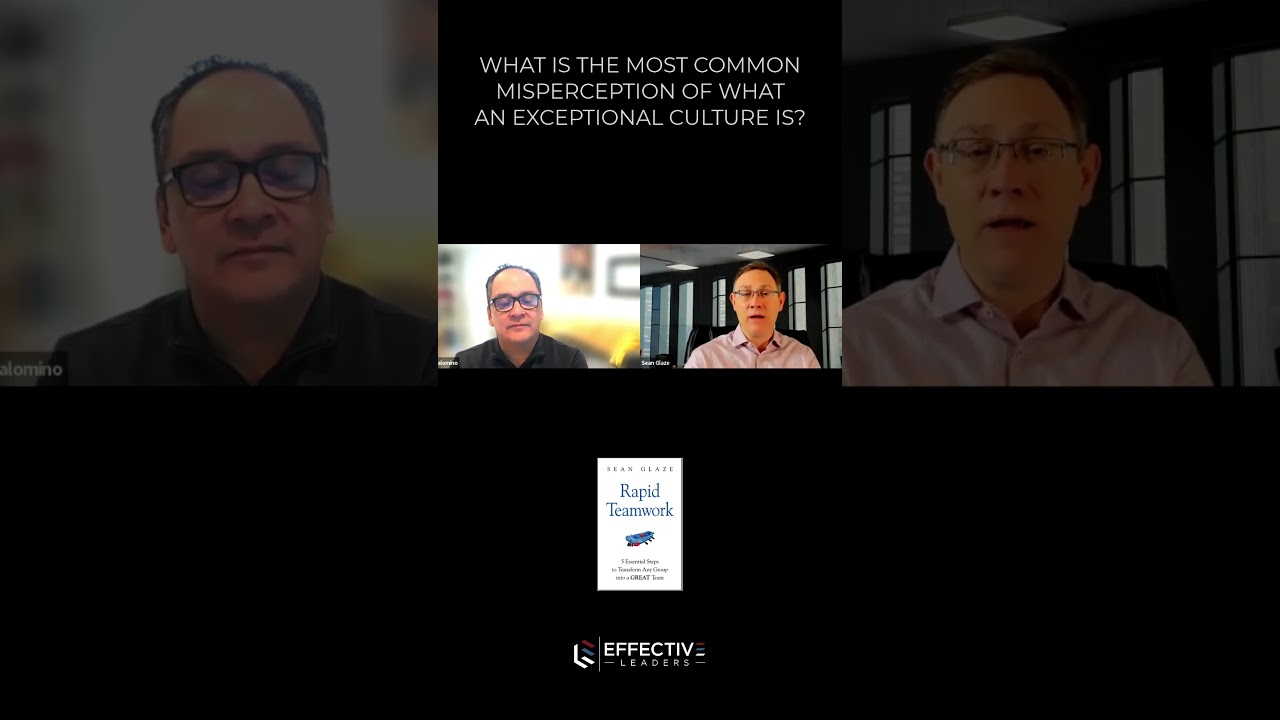
Sean Glaze argues that exceptional culture isn't about snacks and foosball. It's built on clarified goals, intentional relationships, set expectations, consistent feedback, and appreciation. Remote teams can have it too when these core elements are in place.
Chapters
That's a common misperception is that you've got to have snacks and foosball tables and all kinds of things surrounding your people in a shared space, that that's what defines an exceptional culture. An exceptional culture can absolutely be me sitting at home as a remote team member as part of something larger than myself when those 5 other areas are taken care of. And again, it goes back to, have you clarified that goal? Have you allowed people to intentionally build relationships and had events and opportunities for them to get to know the people that you're expecting them to collaborate with? Have you set those expectations? Are you having those consistent accountability and feedback and growth conversations? And do people feel appreciated for what they're doing?