Mike Melton walks through why your steering wheel shakes: unbalanced tires, bent wheels, over-torqued lug nuts (should be around 50 lb-ft), broken belts you can feel as a lump, and cupping from worn suspension. Rotate tires every 5,000 miles and get road-force balancing to catch runout.
Chapters
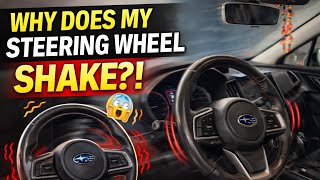
I'm Mike with Speedy in Lincolnton, North Carolina. Today we're going to go over why does my steering wheel shake in my car, right? So there's a lot of different things that will make your steering wheel shake. Number one is tire balance. So your tire balance is number one. So what you want to do is when you got a vehicle and you had your tires on there for a while, you want to rotate them every 5,000 miles and you want to check the balance on them every time you rotate them. The reason being is because if, say, you know, as you're wearing the tires down The rubber, you know, wears down also. What that does, it causes an imbalance in your tires. So what you want to do is check that balance regularly every time you rotate those tires to make sure it's done right. All right, 2 is a bent wheel. So if you have a bent wheel, what it's going to do is cause it to go up and down, up and down, and it's going to cause your steering wheel to shake just like that. So whenever you have them balanced, always say, hey, will you just check and make sure my wheels are not bent or anything like that? Because a lot of shops will just balance them out, put them in your car, and not say nothing to you. That's just how some shops are— a lot of shops are, I'm sorry. And so make sure you're getting that check, your tires balanced, and your bent wheel. So as far as your tire balancing, let's get back to that. A lot of companies don't have a road force balancer, right? And what road force is, is checking any kind of runout in your tires, so that's going to cause like vibrations, wheel hop, anything like that. So make sure that they have a road force balancer and make sure they're actually using it the right way. All right, so number 2 is going to be over-torquing your wheels. Somebody say, well, I use a torque wrench, right? Just because you're using a torque wrench don't mean they're still torqued down right. Say you got guys that are running them on with the impact and you got one that's, that's torqued over than the other one, right? What it's going to do is cause more pressure on your rotor on this lug nut than it will this one. It's going to cause a wobble inside your rotors. So you want to make sure that you run them up no more than like 50 pounds on each one, and then you go and torque them, right? So that way it's done the right way. All right, so number 3 is a broken belt on your tire. So broken belts are very easy to see. So if you look at your tire or you feel it like really got a, got a hard pull or something in your steering wheel, what you want to do, you can just take your hands and rub them all the way around your tire. If you feel a big lump or some kind of lumper on there more than likely that's going to be a broken belt in the tire, and you need to get that off immediately. Take that tire off your car. The next one is going to be out of round. So this is where the road force balancer comes into place. So if a tire is out of round, there's a couple ways to fix that. So one, one way is to put it on the road force balancer, see exactly where it's— where the out of roundness is in that tire. And what we can do is take and force match it. So what we do is we dismount the tire or or break the bead, you can take it, spin around exactly where that machine is calling for it, and what it's going to do is reduce that radial runout, which we call wheel hop or anything like that. And so when it's out of round, you're going to definitely feel that vibration in your steering wheel. So a lot of times you can fix it by just reseating the bead and blowing it back up and then massaging the bead. We do that all here in Speedy in Lincolnton, North Carolina. All right, next, what I've been talking about is that radial runout. So how you fix the radial runout is you force match the tire, is where you dismount it or break the bead. And what you want to do is lube that bead up really good so when you put air pressure back in it, it seats properly in there. And then what we do, we take our rollers and we roll the bottom bead and that top bead to reduce that radial runout which, you know, keeps it— it takes it from like an oval or an egg shape back into a more circular shape. Next thing is going to be cupped. So your tires are cupped. So if you take and rub your hand on them and you got high and low spots all the way around that tire, what that is is tire cupping. There's a couple of different things that cause that. It could be worn out suspension parts. It could be you're hauling stuff and not rotating your tires properly. It could be like, you know, your shocks or anything like that. There's a lot of different things that could cause your tires to cup. So, and how you— there's, there's one way to fix all of this stuff except you over-torquing, right? And except your broken belts. So a lot of times your tires could be out of round, or you're still getting vibrations if, if you had them balanced, or your tires are cupped. What you can do is true your tires. A lot of companies do not do it anymore because one, 1, you're shaving off a good portion of that tire in order to get it real smooth, so it reduces that radial runout. And 2, it's going to void that manufacturer's warranty. So that's why a lot of shops don't do it nowadays, and that's why we don't do it. Because for one, you're, you're reducing the amount of mileage you're going to get on there. 2, you're going to void any warranty. So make sure you're subscribing, liking, and following our channel so we give you more tips and tricks for your wheels and tires.