Mike Melton shows how to balance wheels using lug holes as reference points, then tests two tire setups on a roller with 1,200 lb of simulated force. The result: static balance values around 2 oz and 1.75 oz, smooth enough to feel like a Cadillac.
Chapters
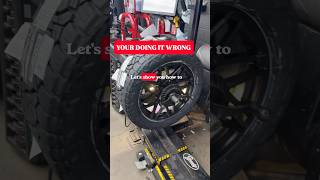
let's show you how to balance some wheels. So for one, you want to use the flange plate. What this is, it balances by the lug holes. Doesn't matter if the wheel is hub-centric or not, it gives you a better balance, right? So two, we're gonna be balancing the Nitto Recons. If you've never seen this, this is what my son drives on his truck. And the other one is a, um, so this is an all-terrain and the other one is a G3. So they make these in the big 22s and 24s, stuff like that. And then the G3s, mostly smaller tires, but they are coming out some, some bigger stuff. Now of course you know what we got to do, we got to take that damn sticker off, right? That's the first thing to do. Now next, make sure all the wheel weights and all that stuff's off, we cleaned all the glue off. Now let's go ahead, balance this thing out. All right, got her spinning. You always want to check, make sure there ain't no wheel hop or anything like that. We call that radial runout. Next you got your wheel coming down, your roller putting 1,200 pounds of force on there, simulating it being driven on the vehicle. And we're going to check, make sure it's not going to have any vibration issues at all. All right, rollers off. You got 2 ounces here, ounce and 3/4 here, and only 8 pounds of force. Now you can't get no damn better than that. This thing's gonna ride better than a Cadillac.