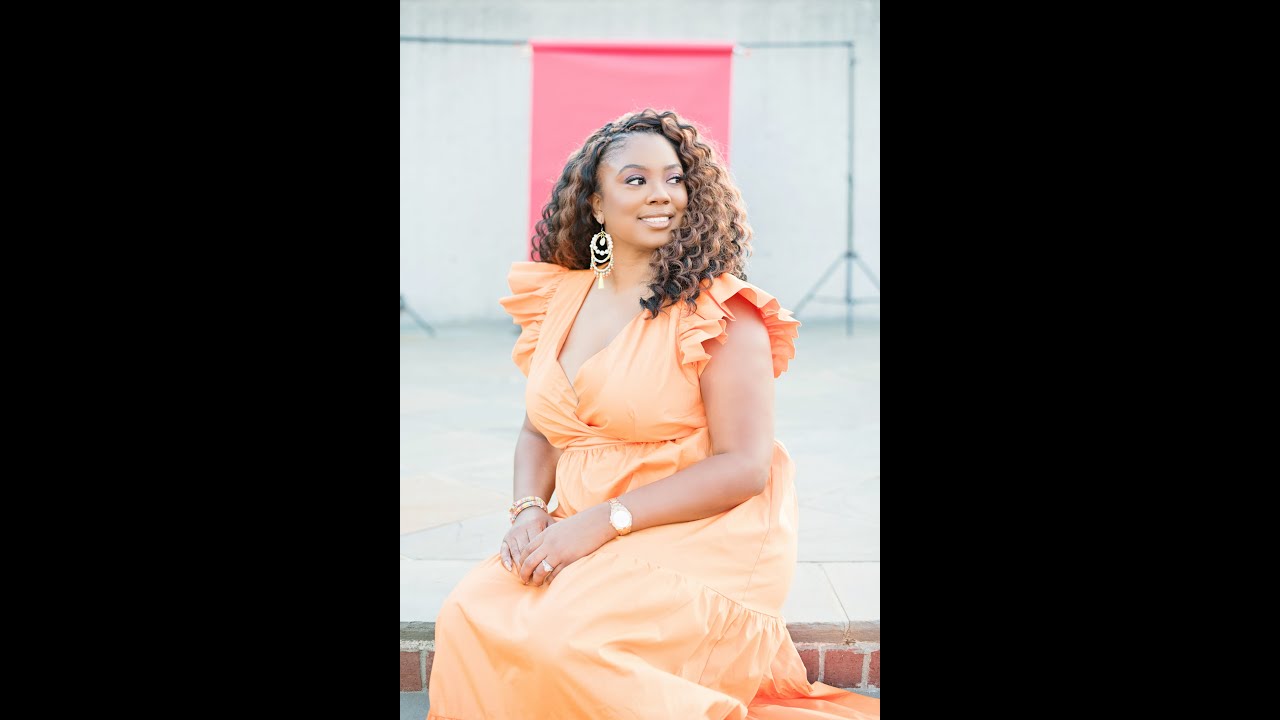
Shakeeta Torres discusses setting boundaries in friendships from a Christian and therapeutic perspective. She covers enabler dynamics, the difficulty of saying no, and when to pull back from one-sided relationships, using personal stories and referencing Proverbs 27:17.
Chapters
Hello everyone, welcome to my YouTube channel. My name is Shakeeta Torres and I'm here today to continue my series on boundaries. Um, last week I posted a short video on the introduction to boundaries. If you want to look more into that, please go back and review that, um, that video about what boundaries are. Um, today I'm going to discuss, um, boundaries in relationships. Relationships, um, relationships are very important. I hear people say things like, I don't need friends, I don't want friendships. A lot of times because that, you know, we've been hurt, we've been hurt by people, so therefore we shut down and push people away. Um, I'm guilty of that too myself in the past, of pushing people away because I'm hurt. But, um, as I grew and I matured and I began to read the word of God about relationships and friendships, you know, I had to learn how to set boundaries with people. Now, I'm not saying that you will never ever get hurt, no one's never going to disappoint— um, disappoint you, but you can have boundaries that are healthy to assure that you continue to have a friendship with someone that's healthy, and it's a two-way street. Okay, um, so let me say this first. As far as friendships, there are going to be times when you have to be there for someone, whether they're grieving or going through a hard time. It's a season for everything. Um, and during that time, you know, the Lord might put it on your heart, or you may feel led to be there for them during that time, and it won't feel like it's a burden. If anything, it will feel— it will be a joy for you. But if you get to a point where you feeling burned out, you feel like this friendship is toxic and this friendship is costing you so much of your time and energy, you might want to rethink the boundaries in that relationship. Um, my aunt will always tell me, uh, Shakeeta Torres, start out how you want to hold out. Meaning that as you encounter new people, you set the tone for the relationship. I'm not saying that it won't never change, that it can't grow, but if you a person who's always giving, giving, giving, giving in a relationship, people know that. And so they're going to gravitate to that, whether they mean to or not, in order to get their needs met. Now, when I think about friendship, the scripture comes to my mind, Proverbs 27:17, and it says that iron sharpens iron and one man sharpens another. I love that scripture because it lets me know that a friendship that I have is supposed to be a two-way street. I sharpen them and they sharpen me. That's a true friendship. And also, there are different levels of friendships. You have people who are very, very close to you who probably know know so much about you, who's walked with you through some dark times, some up times. You have people who, or you see in passing or talk to every once in a blue moon. You guys are still friends, it's just that they're not supposed to be so, so close to you. Um, one thing that I realized about people in general that I provide therapy for is that they are enablers. They have a hard time saying no to people. They have a hard time setting boundaries because they feel like in order to be considered a good friend, I'm supposed to always be there for them no matter what. And that is so unrealistic because what happens is that one time you're not there for that person, they're gonna be so upset with you. I've been there. I have been there where I've been friends with someone before and whenever they call, I was there. Whatever they needed, I was there. I was always a listening ear. Even whenever I didn't feel like it. Now, there are going to be times when that may happen with your friend, but all the time, to the point where it's costing you to feel stressed and to feel burdened and to start to dread talking to them, but you keep doing it out of obligation. Um, that's kind of how an enabler starts off, and then it becomes like a cycle, and it's hard to break that cycle. And I will discuss in later videos as well how to set boundaries in relationships and how to actually have a friendship where you feel like it may be a little, um, one-sided and how you want to go back and reset that relationship. Now, I would definitely recommend if you have a friendship in your life right now and you feel the way that I'm telling you right now, as far as feeling burnt out, exhausted, they always need something, and not only that, you continue to give them advice and they don't take heed to it and they're in a cycle, okay, it comes a point where you have to say, you know what, I told you what I wanted to say. I know I'm here as a listening ear, but I don't have anything else to— anything else to give you. Um, be honest with your friend. Let them know, hey, I love you, but this is too much. And of course you're gonna hear, well, I was there for you, and I've always been there for you, and what am I gonna do without you, without you Um, that's dangerous because you become their idol. Um, you know that I'm a Christian, I'm also a minister, and so, um, the Lord lets me know sometimes whenever I am superseding my boundaries with people and friendships. He'll let me know, you're doing too much, like you're starting to become, you know, their God, or, or you're starting to, um, they're starting to be dependent on you. So I have to pull back, and it's hard. It's so hard when you care about people and you want to see them, see them strive and see them grow and be the best that they can possibly be. But we can't be all things to all people. We just can't. Um, so, um, boundaries and friendships are very important. And if you are a person who is very dependent on someone, you might want to reevaluate your coping skills, reevaluate, um, the way that you look at life, reevaluate the way that you respond to, um, to, you know, the things in your life that may come up. Um, seek counselors, seek counseling. Counseling is becoming more and more popular now. People think that, um, seeing a counselor, um, in the past— most people in the past consider them to be crazy. That's not true at all whatsoever. I love therapy. I love going if I need to go, and I love, um, counseling other people, um, because no family is perfect and You know, not all families or people have the skills or tools to teach their children how to cope with life and how to set boundaries. Oh my God, saying the word no is so hard for so many people. For others, it's not a problem at all whatsoever, but for some people, saying no is extremely hard. And it does take someone to hold you accountable and help you to walk through that process because you start to feel guilty, you start to feel heavy, you start to feel like What can I do? And that's a huge burden. I've been there before. It took me, um, a while to learn how to say no to people. It took lots of, um, prayer, lots of applying the skills that I teach my clients today, um, having an accountable— accountability partner. I'm sorry, my husband is very good at saying no, and I wasn't. So he was my iron. He sharpened my iron, I sharpened him. So So we kind of have that good balance now. He let me know when I'm doing too much. I let him know when he need to be in a little bit. So he and I are much better in that area. So setting boundaries in friendships and relationships is so important. So I hope that you, um, learned something today. Um, if you have, please, uh, leave me a comment below. Um, like my video today, subscribe, and please share. Um, as I said before, I have so much to share with you all, and I'm excited about it. And I will be doing, um, the next, uh, segment is going to be about parenting and, um, children and setting boundaries. Okay, talk to you guys soon. Bye-bye. Thanks for watching.









