Season 1 (Episode 14): When & How to Talk to Your Kids About Child Sexual Assault
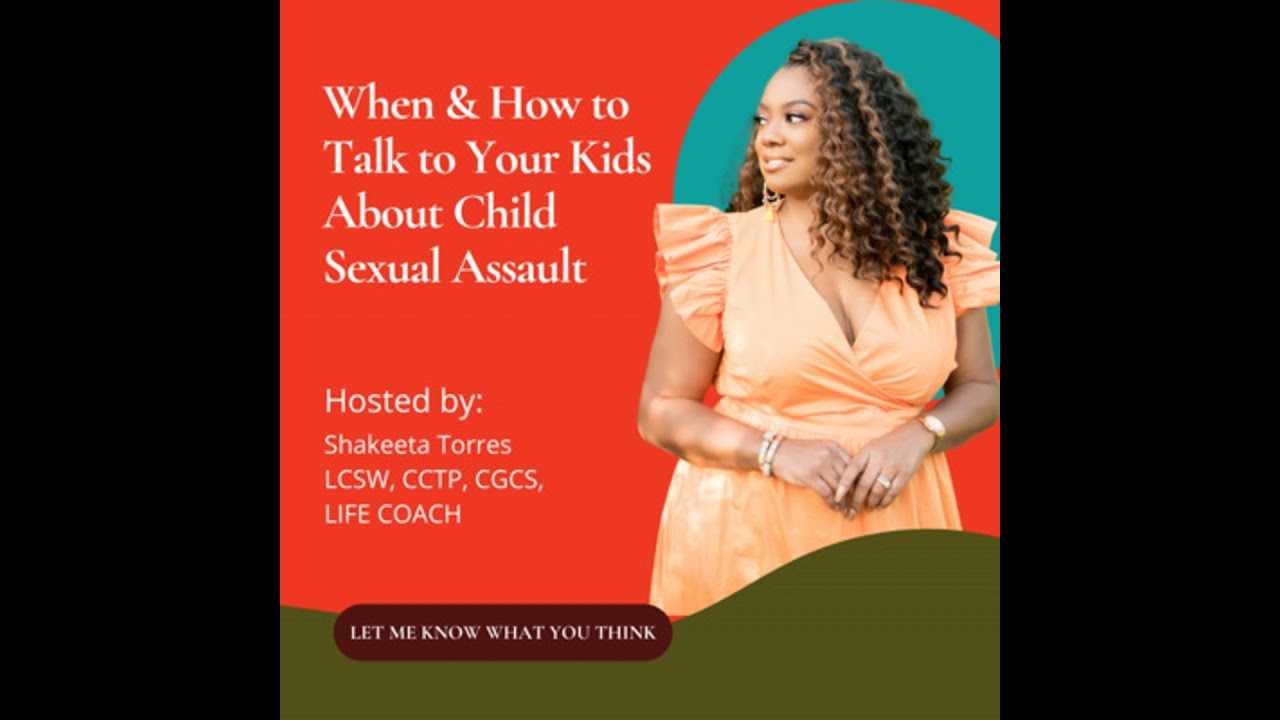
Shakeea Torres shares her own childhood sexual abuse and explains how parents can talk to kids about assault before it happens. She cites CDC data showing most abuse comes from trusted people, not strangers, and offers concrete steps: teach anatomical names, let kids say no, discuss secrets, and model safe disclosure.
Chapters
Welcome to Pain, Passion, and Purpose. I am your host, Shakeeta Torres, where I share mental health education, biblical teachings, and tips to help you to heal on purpose so you can walk boldly in your God-given purpose. This podcast is sponsored by Empowered Purpose Academy, a certified online Christian academy where where we provide services such as certification for Christian life coaches, mentorship for master's level aspiring and existing Christian therapists, mentorship for Christians, and continued education courses for the body of Christ. You can visit www.empoweredpurposeacademy.com to learn more and to download your free guide. If you like today's episode, please subscribe and leave us a raving review so that others can tap into the knowledge and wisdom that will be shared on this podcast.
Thank you so much for being here.
Hey, so before I get started on today's episode, if you have not subscribed to the paid membership of my podcast community, please do. It is going to bless your life. Listen, my episodes are already like therapy slash coaching sessions where I give you strategy and insight and all that good stuff. But the community, you're going to get a lot more. You're going to get more resources, more tools, and be able to ask more questions where I can create episodes around your questions. And you will be able to get discounts on some of my, my products and my events. So what are you waiting for? The price is very affordable. This is for those who are not quite ready to invest in one-on-one coaching with me or into the Pain, Passion, and Purpose mentorship program, which is also low, by the way, but that one is a lot more in-depth. You get access to courses, you get access to the Facebook community, and all that good stuff. But this is for those who just need to just listen and just gain some tools along the way. So what are you waiting for? Go ahead, subscribe. You won't regret it. It'll bless your life. We'll have topics around mental health and faith, biblical teachings, prayer, um, boundaries, communication, anxiety, depression, purpose, and so much more. I have had experience in mental health since actually about 2008 when I first finished my bachelor's program, and then from that point all the way up today and moving forward, I have gained so much knowledge, so much experience, so much wisdom, and I am anointed for it. So go ahead, hit that button, and I hope to see you in the community.
Hey y'all, welcome back to my podcast. And so today we are going to discuss Talking to your kids about sexual assault. This episode is inspired by my own personal life. As I explained to you guys in my episode about my pain, I shared with you all about how I was sexually abused as a child. And I know that if my mother had talked to me about sexual abuse at a very young age, I would have spoken up to her a lot sooner about my experience. Okay, so let's go ahead and dive on— dive into it. So according to the U.S. Centers for Disease Control, 1 in 4 girls and 1 in 6 boys are sexually abused by the time they're 18, and 44% of rape victims are under age 18. That's 44%, okay? Sadly but not surprisingly, Victims of sexual assault are 3 times more likely to suffer from depression, 13 times more likely to abuse alcohol, 26 times more likely to abuse drugs, and 4 times more likely to contemplate suicide, according to the Rape and Incest National Network. Okay, I will post this article in my podcast description box. Okay. So this article talks about, you know, why parents do not talk to their kids about sexual abuse, and I'll share with you right now what some of those are. One reason is some parents don't believe that child sexual abuse doesn't occur in their neighborhood. Okay, uh, some parents believe that their children know better than to talk to their strangers, but research shows that 93% of all child sexual abuse happens at the hands of someone the child's— no, child knows and trust. And parents teach their children only about stranger danger and not about those who are around them every day.
Okay.
My child is too young to handle this discussion. They think their kids are too young and they can't handle that information. They feel like they don't want to make their children scared or frighten them. They don't want their child to come, um, they feel like their child will come to them if something was to ever happen. They would just come and just tell them, right, without having to probe and ask and teach them about child sexual abuse. All these things are false, okay? And I know some of you guys who may be listening now, or some of you guys who know someone who's experienced sexual abuse as a child, even as an adult, and majority of the time is by someone that you already know. And to be honest, so sad, but it happens in the church too. You, you know, you hear about kids and you read these articles, and you know, even adults being sexually abused by pastors and leaders because the parent or the person, the adult, trusted trust that leader, right? So the next question is, so how do you talk to your kids about childhood sexual abuse? For me, I can say that I began first talking to my kids about their parts, helping them understand, okay, your butt, your private area, you know, your chest, like Using the appropriate words to describe what it is, because an article came out years ago that says that if your child was to ever be sexually abused for any given reason at any given time, it's best for them to know the proper terminology for their body parts. So that way when they go to court, they're not, you know, using, you know, these slang terms that we've been taught growing up. And it will hold a lot more validity. Because I remember distinctively when I was younger going to court, and I had to be in like a forensics room, and they asked me questions about, you know, where my mom boyfriend touched me. They had dolls in there, they had a playhouse in there, everything. And I know for a fact I did not use the proper language, and this is a part of the reason why my case was not that strong, because I didn't have the proper terms to really tell them what happened or where he touched me at. So I definitely, um, read that article a few years back. Okay, teaching your children that it's okay to say no. It's important to let children know they're allowed to say no to something that makes them uncomfortable, even if it's you. My youngest daughter, the older she gets, the less she wants me to kiss her on her lips. I said, um, I asked her, baby, "Mommy, you want Mommy to stop?" She said, "No." I'm like, "No, no, no, no, no. If you want me to stop, Mommy will stop doing that because you're getting older, you're getting big. I said I love you, but I'm not offended. And if anyone ever does that to you, you let me know." And so she said, "Okay, Mommy, well, I don't." So I let her initiate kissing me more than I kiss her because I don't want her to be uncomfortable or grow up thinking that just because a caregiver or a loved one, you know, shows you affection that you have to engage in that type of behavior. And my youngest one, she's very vocal anyway, and she'll let me know if something bothers her. She'll tell me, she'll come whisper in my ear, "Mommy, um, can you please tell so-and-so to stop doing this or stop doing that?" And so it's my job as a parent to say something to validate her feelings, so as she gets older, she won't be uncomfortable with sharing things with me. My oldest daughter, the same thing. For the longest, I would ask her Hey, somebody touch you here, here, here, I don't care who it is, I don't care where you at, you tell Mommy. And she asked me one day, Mommy, why do you always say that? I said, well, baby, when I was younger, Mommy was sexually abused. I told her the story, I told her what happened, and she was just, she was just in shock. And, you know, she may have been about 7 at that time, but I'm glad I told her because I want her to be fully aware that everybody is not safe. They're not. But at the same time, everybody is not, you know, out to get her either. So having that balance is also very important. Listen to your children, look at their body language, see how they respond to certain family members. And another thing I want to add to— I've definitely counseled people before where in their blood, their bloodline, or in their family someone has sexually abused them as a child, but for some reason, as they grow up, they feel like that person might have changed or that it won't happen again to their children or be passed down, but it does, and it has been. It happened to me. My mom was sexually abused. My grandmother was sexually abused. I was sexually abused. And I believe sometimes we believe that if we put a lid on it or don't talk about it, it goes away. It does not go away. That is definitely a form of intergenerational trauma. There's definitely a form of, you know, generational curses, to be honest. So you look at it from a scriptural standpoint, you know, of stuff being covered up and not dealt with. And so I don't— whenever my mom found out I was being abused, she didn't believe me because she felt that, you know, she was there with me all the time. Like, she never really left me alone with him, but she didn't. He would bother me when she was asleep. When she was asleep, majority of the time she was asleep. She didn't think that he was doing something like that. She never educated me on that. And my mom was an alcoholic, so she wasn't really paying attention. She wasn't really fully aware of what was going around. Like, you have to have discernment when it comes to your kids. You have to have discernment when it comes to who your children are around, and you have to guard them with your life. You have to guard them and not think that because, you know, so-and-so didn't do it to you, they wouldn't do it to one of your kids or a family member. I've counseled a lot of people over the years who have experienced this, even experienced it from their own fathers. I even tell my daughters, If your daddy do it to you, you let me know. I don't believe people do that, you know, but I even tell them, if you uncomfortable, please let me know. Because it has happened. And I don't know if you ever, um, if you guys know about Joyce Myers, but it happened to her, you know, her father sexually abused her. All right. Um, also talk about secrets in your family. Okay. Like let them know that someone asked them to keep a secret. Then that means they need to come and tell you. Don't keep it a secret. I had a client before who, she was very young, and her cousin had been sexually abusing her and told her to keep it a secret. Well, she did because no one never talked to her about, you know, secrets. No one ever talked to her, you know, about the importance of, you know, sharing with your parents things that inappropriate that make you uncomfortable. Another thing is, I want to add this as well, is that parents, especially mothers, you have to stop calling your daughters fast, okay? Fast means that you accusing them of being, um, uh, very sexual or promiscuous, or your child is being very, um, just like into guys or into just a whole bunch of sexual type stuff. That's not normal. That child has been introduced to something, whether it's through pornography or whether it's through sexual molestation or whether it's through, you know, seeing you. I don't know, but if your child is acting that way, that is not normal. They've probably been exposed to sexual abuse of some kind. And the sad part about it is people think that because the child likes it that they deserve it or they asked for it. That's not true either, because I was accused of that. I was accused of the child of seducing a grown man. What? How? How am I 8, 9, 10 years old seducing a grown man?
A grown man.
A grown man. A child is not seducing a grown man, okay? Or a grown woman for that matter, because little boys are being sexually abused too. And it's being minimized, and it's being pushed under the rug because he's a little boy, and it's being normalized, and it's not normal at all whatsoever. I have counseled men before who like, "Oh yeah, but this girl, she was like, you know, 17, 18, you know, 19. I was like maybe 7, and she put her hands—" I'm like, "That's sexual abuse." Like, "Really?" I'm like, "Yeah, that was sexual abuse. Like, what doors has that opened in your life?" You know? And they sit with that, and they're just in shock, and they're like, "Wow, you know, you're 100% right." You know, you have men sexually abusing little boys, women sexually abusing little girls. I have a lot of sexual trauma, not just from my, you know, Maw's boyfriend, but from other people too. That's the sad part. And no one ever knew. No one ever knew. No one ever knew because no one paid attention. People pushed it under the rug, and it was normalized, and no one really had discernment to know that something wasn't right. Okay. Also, reassure your children that they will not get in trouble. Young children often fear getting in trouble or upsetting their parents by asking questions or talking about their experiences. Be a safe place for your child to share information about things that they have questions about or that make them feel uncomfortable. Remind them that they won't be punished for sharing this information with you. I know I was punished. When everything finally came out, I was called a liar. I was told that, you know, I was being promiscuous. I was trying to ruin a relationship. The sad part is too, is my mom's boyfriend's sister believed me because she said that he had did it to her when she was a little girl. And she kept her daughter from him because she was afraid he would do it to her daughter. And all her brothers were like that. All her brothers were predators. All of them said she abused women. All of them. But my mother did say she didn't believe me, but I know, just looking back, my mom was— she was an alcoholic. And I think she was so in distress about it and just so in shock because it was right under her nose and she never paid attention to it. Also, you know, continue to have that talk with them. But I don't know if some of you guys ever seen this show before. This is for teens though. It's called 13 Reasons Why. And oh my God, that show is— wow, it is great. It would trigger some people. Everybody can't watch that TV show. But it is really a good show when it comes to talking about, you know, teen sexual violence. That is, oh my gosh, one of the best shows I've seen when it comes to that, and mental health and anxiety and depression and PTSD. So these are some of my tips for, you know, sharing and talking to your kids about sexual assault. Talk to them early. Don't wait. Don't wait till they're, you know, 7, 8, 9, 10, 11, 12 years old. At that time it's too late because the way the world's going now, it is so much exposure with the internet and social media and things like that. And even college, I even tell some of my teens who are seniors in high school, listen, you going to college soon. I tell my parents, talk to your kids about the potential and dangers of sexual assault on campus. It happens more than what we know. I have friends, I know people who have experienced this on campus and they've never said anything because they feel guilty and they feel shame. They feel guilty and shame because they're told, "Oh, well, you shouldn't have been in his room anyway," or, "Oh, what were you doing over there?" or, "What was you wearing? What did you say? What did you do?" Right? And it's somebody— it typically is someone that they trusted. Oh my God, I'm so grateful that in college it never happened to me, but it could have, okay? Looking back, I can see it could have happened to me, but thank God it never did. But I know people that it did happen to. So parents, caregivers, we have to talk to our babies about this, and we have to stop covering up what our family members have done to us. A lot of times we feel like if we just hush and we cover it up, act like it never happened, it goes away. But I promise you, generational curses are real. Intergenerational trauma is so real. And the, and the best way to combat that stuff is to, number One, talk about it. Number two, if you deal with that, you're an adult and you haven't healed from that, you need to seek out counsel. If you're still having nightmares from that stuff, if you're still, you know, traumatized by that, having anxiety, um, and it's coming up for you in different areas of your life, when you're being triggered, you need to go see a counselor. Because one of the things that keeps trauma going is suffering in silence. Whenever we keep our pain, our trauma to ourselves, and we don't vocalize that to anybody, and we swallow it over and over and over again knowing that it's hurting us, it keeps us in bondage. It leaves room for torment. It leaves room for spiritual warfare going on inside of us. And once you talk about it it loses so much power. I've had clients before that, that happened to. They've shared with me things they've experienced, experienced in church, experienced in their family, that they've never told a soul. And they speak up and they say what happened, crying and everything. And once they get it out, they're like, oh my God, I feel like a burden has been lifted off my chest. And they instantly begin the healing process instantly because they put a voice to it and they feel safe to say exactly what happened to them. So I hope this episode bless you today. I thoroughly enjoyed talking about this because I, for one, am so tired of seeing people suffering in silence. Till next time, bye-bye. Thank you so much for tuning in to today's episode.
Our prayer is that this podcast episode has blessed you. Don't forget to go and subscribe and leave us a raving review. If you would like to sow into this ministry or to this podcast, Pain, Passion, and Purpose, you can do so at anchor.fm/painpassionandpurpose or Cash App, $shakeetatorres. Thank you so much, and I will talk to you next time.









