Season 3 (Episode 23): Identity Theft: Free from Guilt and Shame
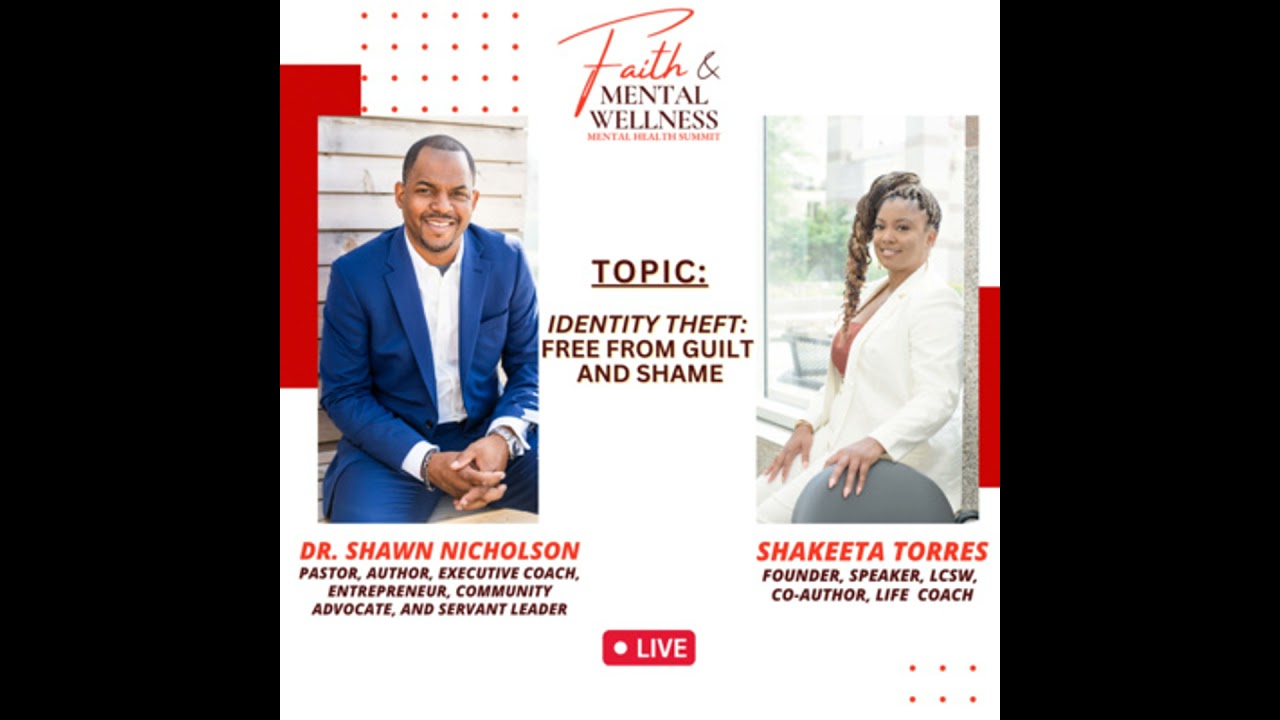
In this episode of Pain, Passion, and Purpose, host Shakeena Torres interviews Dr. Shawn M. Nicholson, a pastor, author, and community entrepreneur, to explore how shame and guilt function like identity theft in the lives of believers. Drawing on the biblical metaphor of the thief in John 10:10, Dr. Nicholson explains that the enemy steals a person’s true identity, replacing it with a distorted self‑image that hinders purpose. The conversation moves into practical ministry approaches: trauma‑informed care, cognitive‑behavioral therapy (CBT), motivational interviewing, and meeting people where they are—outside traditional church walls—through marketplace and community outreach. They discuss the upcoming Faith and Mental Wellness Summit (March 13‑14, theme “Unashamed”), its speaker lineup, and resources such as the free “Breaking the Barriers to Shame” workbook and the Empowered Purpose Academy’s Christian coaching certifications. Personal stories illustrate how Dr. Nicholson’s spiritual family background shaped his relational, “black‑sheep” ministry style, and both hosts emphasize speaking life, using faith‑driven language, and taking concrete steps to help those struggling with trauma, addiction, and mental health challenges. The episode ends with a prayer, calls to register for the summit, and contact information for Dr. Nicholson.
Chapters
Welcome to Pain, Passion, and Purpose. I am your host, Shakeeta Torres, where I share mental health education, biblical teachings, and tips to help you to heal on purpose so you can walk boldly in your God-given purpose. This podcast is sponsored by Empowered Purpose Academy. A certified online Christian academy where we provide services such as certification for Christian life coaches, mentorship for master's level aspiring and existing Christian therapists, mentorship for Christians, and continued education courses for the body of Christ. You can visit www.empoweredpurposeacademy.com to learn more and to download your free guide. If you like today's episode, please subscribe and leave us a raving review so that others can tap into the knowledge and wisdom that will be shared on this podcast. Thank you so much for being here. Hello everyone, welcome to Thriving Thursdays. I am so excited. We have a very, very special guest. That I respect and honor so, so much. He is one of the guest speakers for our upcoming Faith and Mental Wellness Summit that is on Monday, March 13th and March 14th. And so today we're going to talk with him more about his journey and talk more about the importance of mental health, the importance of even if you're a pastor, a leader, part of the fivefold ministry, like there's no shame in receiving the help that you need. And the theme for this year's summit is called Unashamed. And honestly, that theme may never change because we have so many people who are ashamed of receiving the help that they need. So before we, um, we, um, begin, I want to introduce, um, Dr. Sean to you all. So Dr. Sean M. Nicholson is a pastor, a author, a serial entrepreneur, a community advocate and servant leader, a globally respected thought leader who has been devoted to helping individuals activate their passion, potential, and purpose. Dr. Nicholson is a community connector and an, an innovative strategic leader with a passion for working in partnership with Black and brown communities to eradicate generational poverty and stimulate economic prosperity for those who have been most excluded from it. During the past 25 years, he has developed and maintained several thriving businesses, including Beautiful Temple Ministries, a community-rooted church ministry that was centered on loving people to life, called Precise Business Group Incorporated. A company that provides vocational training, workforce development, and staffing. PBG helped recruit, train— helped to recruit, train, mentor, and made and mold over 125 participants this year alone. He is the author of Passion: 7 Building Blocks to Sustainability and Success and Teach Me How to Pivot: Planning, Innovation, Vision, outweigh threats. Dr. Nicholson believes that God is the source of all his accomplishments, and his desire is to build a legacy that will last for generations to come. He believes that passion is simply the ability to pass I on. Already trademarked. So welcome, welcome, welcome, Dr. Nicholson. I'm going to give you more Um, the first question that I have for you is for you to share with us, share with the audience, what led you into what you do now.
All right, well, listen, thank you definitely for, um, for inviting me to be on this Thriving Thursday and also to be a speaker at your Faith and Wellness Summit. I'm so excited about this summit. It is very timely, very timely, and I want to encourage you to continue to do what you're doing because it's needed. You're being heard, you're being heard. And it kind of dovetails into what we do. What led me to do what I do now, let me answer it this way. Jesus did many things in his earthly ministry. We read about it, you know, we talk about it, we preach about it, but there were 3 things that he did that have basically patterned my, that I patterned my life, my ministry, my practice after, And that is this: he saw the need, he was moved with compassion, and he did something about it. So he was driven by love and compassion. I'm driven by love and passion. I'm passionate about what I do. I'm passionate about who I help. I'm passionate about the results. I'm passionate about leaving a legacy, uh, that will be— that will stand through generations to come. And I like to say, as you mentioned in my bio, passion is the ability to pass I on. So every day I'm looking for ways to pass a piece of me on to those individuals that I come in contact with. My prayer is for God to always show me someone, to put someone in my path that I can talk to, that I can be an encouragement to. You know, a lot of people are going through a lot of things, and it's just good to have someone to just, you know, speak life into, into their situation. So that's, that's why we do what we do. Oh, you're muted, you're muted.
Sorry about that. That's why I love what you just said, and what you said at the end is speak life into them. That is so true. The power of our words is so important when it comes to, um, being ignited and receiving the help that we need. And so, I mean, your experience— I mean, I remember whenever I first, you know, met you and we had our first, um, call together, I was just blown away. Oh my God, this is so amazing.
This is so amazing.
I'm like, he's He does so much for the body of Christ. He does so much for the kingdom. And as I said before, I said I'm honored to have you, um, be a part of this summit. It is needed. Your expertise is needed. I know one of the things that you mentioned before was how you want to do things differently. You know, you saw things be done a certain way in the church. Not that it was bad, but it wasn't really as productive as it could have been.
Sure.
So you literally became a trailblazer in your generation you know, from, you know, your, your family members being leaders, right?
Yeah, absolutely.
An approach. And that's that to me too. I'm like, wow.
I'm like, yeah, it's the calling, you know, it's a calling. We, we try to find different ways of doing things, but the model that has already been prescribed works, you know. So why are we going to go against everything? You know, when Jesus was on the earth, he did things that were radical, you know. He did things that were unorthodox, things on the outside the box. But one thing he never left was, or basically one thing that he never, uh, you didn't have to question that he loved you, you know. You didn't have to question that he didn't judge you. You didn't have to question that he legitimately wanted your life to be different. And that's the way that we should be. And we, and we are his ambassadors, or at least supposed to be anyway, you know. And we, we, we need to be bringing them in and taking care of them, not running them out the front and back door, you know. So, um, I'm, I'm just excited, listen, to be a part of what all that you're doing. And I've been praying for this summit since we've talked, and I just believe that it's going to be a blessing to the kingdom. It's all about kingdom business. It is.
It is. And I love what you said too. Whenever I was posting in the different groups, hey, I have a summit, you want to be a speaker, apply. And when I received your inquiry, I said, oh my God, this is perfect, right? And then when I talked to you, you was like, listen, I was praying, asking God, God, give me something, right? Yeah, right. And you said in the middle of the night and God said, here's the topic, and gave you the whole description.
Absolutely, absolutely. We, we've, we've, we've spoke on this subject many times of different, um, platforms, um, in messages, um, in daily life, you know, just counseling or whatever the case may be, but never formulated the way that It was given to me after, after we spoke, um, or after, you know, communication. But it's, it's perfect. And I, and I think that the people that, um, to listen to it and view it, they're going to really be, be blessed by it. And, um, and, and I'm telling you, you know, one of the questions that I know, um, that people have, um, is being able to— how do I, how do I live in a world that is so messed up and, and still be okay? And, and how, how do I live in a world that it seems like every single day is a struggle, you know, trying to make ends meet, you know, try having— have more time than you have money, you know, being able to bounce back from tragedies and crises and all these different things that happen, dealing with kids that are, uh, dealing with some issues themselves, you know, mental health issues, all how How do we recover from things after it happens, you know, from the shame? You know, how can we become free, if you will, from guilt and shame? And we find all of that in the word of God. You know, we find all of that in scripture. One of the theme verses is John 10:10, and this is very, very important. And I remember as a child learning about it in Sunday school, hearing the pastor preach about it, and it really was one kind of like a, we'll just say a scare tactic, if you will. That's the way I received it, you know, where it says that the thief, you know, comes to, uh, uh, steal, to kill, and destroy. Now that's very dark, you know, that's very dark. So, you know, it's like, okay, well, you need to do this, or you need to do that, because this is why he's doing it, and the ultimate goal is to destroy you. And unfortunately, it seems— I'm not saying they did it, but it seems like they forgot all about the rest of the verse, you know. And see, there's— there's— I love English, I love grammar, and there's a word in there, 3-letter word, that is so powerful that says 'but.' And 'but' is a conjunction, as we know, and I look at it as a divine conjunction. So even though we understand that the thief comes to steal, to kill, and destroy, Jesus said 'but.' Now that cancels out everything that came before it. I have come that you may have life and have life more abundantly. And that's what it's all about. And so how do we have that life more abundantly? By having a relationship with him. You know, even though we, we deal with stuff, he's still this— he still should be the center. So the topic identity theft, the enemy is coming to steal it. You know, we, we, we have, uh, people's accounts getting, um, hacked. We have— I talked to someone a little while ago talking about their credit card got hit. You know, this is something that's ongoing, and people are stealing folks' identity. And, you know, and it's the same way in the body of Christ. The enemy has been stealing folks' identity forever, right? But we are created in his image and his likeness, so he can't take that. The devil can't steal your identity and replace it with a distorted or negative self-image that, you know, and, and what happens is it releases or removes our confidence that we will fulfill our God-given purpose. Everyone has a purpose, and that's why I like to say we activate your passion, your potential, and your purpose. Satan will do anything that he to destroy your life. And he wants, he wants to take that experience, you know, he wants to take and keep you in bondage. He wants to have you hostage. He wants to take that hurt and that memory and cause trauma every time that person walks your way, or every time you see a reminder of that, you know. He wants to do all of that. But we as people of God and believers, we have to stand with the authority and the dominion that he has given us and speak life into every situation. And that's how we live. We live by faith. So the words that we speak, it should be faith-driven words. And I promise you, if we begin to do that, we'll see a tremendous change in each one of our lives.
Oh, that was good. Listen, I got me a little sermon today. That was great. I love what you said when you said the 'but.' So I hope the audience heard that too. For those who will come back and listen to the replay, when you read your word of God definitely look for those butts.
Okay, absolutely, absolutely.
That's a great point. Oh God, thank you for sharing that nugget with us.
That was—
yes. Oh God, great. So for you, you know, I have a podcast called Pain, Passion, and Purpose, and it will also go on my podcast too, this recording today. And so what was the pivotal point in your life that said, you know what, God, I'm gonna go all in for you? Um, I'm not going to allow, you know, anything I've been through to ever hinder me from truly walking in my purpose again.
Oh, wow. So I must say that— well, let me put it this way. So I come from a family, very— excuse me, very spiritual family. Father's a bishop. Now I have an uncle that's a bishop. I have cousins that are pastors, uncles that are pastors. It's like literally the tribe of Levi, right? And so when, um, I always have been engaged and involved in the community and things, and, and when it came, or it was a tug on me to, to start, um, or accept the call, and this was way back, like '97, um, I, I was like, well, look, we got a lot of preachers in the family and things like that, and I'm different. I've always been revered, uh, and even sometimes looked at as the black sheep of the family. Um, I don't know, God was doing something with me I don't know. But I was always different, you know, than a lot of folks. And sometimes it got me in trouble by being different, right? But it gave me a story. And everything that I have gone through, I know without a doubt, it wasn't for me, per se, but it's for— so that I can help other people that I come in contact with. So when I'm, when I'm out, and I'm, you know, teaching, or I'm at the prisons or even in the school systems or even in the street, I can be relatable to the people that I'm talking about because of all of the things that I went through, right? So the pain, in my opinion, pain is really subjective, you know? Only the person experiencing it can really identify it or describe it. You know, what may be painful to me may not necessarily be painful for the next person. So I think that when I accepted that and I wanted to have my own identity, going back to identity theft, you know, nothing's wrong with being like my father, you know, nothing's wrong with being like my uncle or my cousins or anything like— nothing's wrong with it because they're great people. But I need to have my own identity. And because I believe that there's, there's a certain number of people that God has already predestined that will hear a lot of people, but they will only be moved to change through my voice. And I just believe that. And I don't know what that number is, but it's, it's a number. And so I have to be in position that wherever I go, whatever I do, however I am, I got to tell my story. You know, I got to let people know that, yeah, this ain't always been like this, but what he's done for me, he can do for you as well. So, you know, so that pain that you have, it's very easy to turn it into purpose, you know, because you can forget— not necessarily forget that you never remember it again, but you use it as a building block, you know, to get you to the next step, and instead of a stumbling stone to keep you where you are.
Listen, that— oh, that was so good. I listen. Okay, so what I also see in here too is I see like even, even on the other side, it's like you are like a generational pastor. Generational.
Yeah, right.
And so I know there are people out there who come from the same type of environment and do things differently, but they might be seen as the black sheep for sure.
Yeah, yeah.
One of my sisters in Christ, her name is Miss Paula, she has a, you know, nonprofit doing great things. Her, her whole family was in ministry too, but she did things different. She was like, you know, shunned for that. And she said, I don't feel like God is calling me to do things this way. I feel like I'm called to do it that way. And so for those of you who are like, hey, you know, I wanted something different in my ministry, not what my mom and everybody else did, here's a blueprint for you guys to see that it's possible. Yeah, a whole entire like ministries around being different.
Absolutely. And, and that's what's, that's what's needed today, right? You know, Paul talked about how that, you know, become all things to all people, that you can win some. You know, and, and that's, that's very good. But at the same time, there's, there's only certain people that are really going to listen and to take in what we say. Now, that doesn't mean we stop talking, but so everybody's not going to receive what you have to say, you know. So we, when, when we were doing ministry, uh, we were community driven, right? And so we, we took the people that nobody else wanted, you know what I mean? Those that were, that was shunned about it, you know, the, the, the drug addicts and the you know, the people that were walking the street and all these other people. And my thing has always been, I'm not going to come to you all robed up and collared out, you know. I'm just going to come— I may have a baseball cap and Timbs on, you know, whatever, because I don't need to put myself in a place that you can't receive what I'm saying, you know. And that's why I say about Jesus, he met the people where they were, you know. He used practical examples with biblical principles, right? And so the model has already been set forth for us to do. We just have to do it. And then for years, people, you know, when things happen in church— and not that anything's wrong with it, but when you know better, you do better, right? And things will happen in church and we want to lay hands on and cast this demon out and all this, but people are really struggling because of past trauma. You know, we do trauma-informed care. You have, you know, adverse childhood experience, and there's things that happen that are never dealt with, especially in our community, that are triggers. And when they trigger that, you act out, right? It's not— you don't want to do it, but, you know, you haven't been able to, uh, um, come up with solutions of coping mechanisms to be able to get past that. But yet we want to, you know, ostracize them and stuff, and that's, that's just not right. And, and now we're living in a day that it's more prevalent You know, so we have to do something about it. That's why, again, kudos to you, uh, for the Faith and Wellness Summit, because if nothing else, it's going to bring awareness, right? And then you just begin to build upon that because it's much needed, especially in the body of Christ. Is much needed, much needed.
Thank you so much. And you're so right. I remember when I first started out in my ministry, because like what I hear you saying too is just it's time out for religion. It's time out for us to like stay cooped up in the four walls. We have to get out and meet them where they are, right? Absolutely, absolutely. Eventually, hopefully, they will come to the— come to the house of God, right? But everybody don't just come to church because they experience church hurt and disappointment.
Absolutely. But here's the thing, they don't have to come, you know what I'm saying? In my opinion, they don't have to come if, if I am pouring into their life and they are, uh, becoming better right? That's all that matters. We move on, you know. It doesn't— they don't necessarily have to be in the four walls, you know. These churches, for real, for real, if we, if we really minister to the, the people that are hurt, I mean, in, in numbers, we couldn't even hold all of them that would come to church. So what do we do? We just put a cap on it, you know? There's a ceiling? No, we just keep spreading the word, you know. And, and what's going to happen is they'll eventually the Holy Spirit would guide them to a place that they can be, that they can be fed on a regular, and they can grow, you know. But until that time, keep, you know, keep preaching, you know, keep teaching, keep, keep pouring into these souls because it's needed, you know. We, we have— there's, there's a cliché or a statement that, that said that sometimes we're so heavenly minded that we're no earthly good, you understand. And, and that is so accurate, right? Because my, my thing is, and that's again why I love what you're doing, because this is about holistic living, right? What, what point is it to be so high spiritually and struggling so much naturally? I mean, what is, what is that benefiting, right? There should be a balance to that. It's mind, body, and soul, you know. So as we, as we uncover these things Those are— that's when we'd be able to work. And, and then even with you being a licensed commissioner and being able to, you know, recognize that and come up with, uh, solutions and stuff, you know, to be able to, to help individuals that, that we come in contact with, that's, that's big, right? So now you're taking the principles of the word of God and you, and you're using the practical issues and the situations that we're dealing with, and we combine them together. And then that way, now we're being more effective to the people that are coming across our doors.
And it's powerful too, you know, it's, it's amazing. I remember whenever I first— whenever God was, um, beginning to bring me out of the four walls into marketplace ministry, it was a little difficult, and I received some backlash for that. And even now I receive some of that. I'm like, oh well, what church should you go to? And I'm like, well, um, I don't have to be a member of a church for me to be a leader, for me to make an impact. Right? Now people have really like created their identity around the four walls, and you did a great job at telling us and telling the people that you are the church.
That's it.
In whatever capacity you serve, God can use you right there, right in marketplace.
Absolutely. And I, and I may, and I may get flack, you know, because, you know, it, you know, people want people to come to church, you know. We'll give scriptures about that. And I'm not, I'm not saying that that's not good, you know what I mean? But at the same time, I understand that a lot of people that really, really, really need our help, they are not coming through those doors until they're led to come through those doors, right? So do we not try to help them until they come to that realization that this is what they need? You know, fellowship is great, you know, coming and being able to sit in a place of refuge and, you know, safety and all that. All that's great, but we got to get them to that point so that they can be able to, you know, receive the word that we're giving them, right? And, and, and that happens through marketplace ministry, you know. It happens through outreach. It happens to be summits that you're doing that are neutral, right? And, and though that's how we would be able to win them over, you know, uh, it's just very important for us to kind of pivot, if you will, you know, with ministry, because we can't do it the same way that we always did it. You know, we just can't. Another thing, you know, when I hear, you know, faith and mental wellness, and what comes to me, as I mentioned, is holistic ministry, right? But I understand definitely that we still have— well, in your field, as you know, you have cognitive behavior therapy, right? Uh, which is basically— when I was in school, in seminary and all, we were studying New Athletic Counseling, which basically was getting to the root of the situation. You know, we can't, we can't fix anything until we understand what caused it, right? So do it. So for, you know, CBT, basically, you know, people that— now you come in with a different option or a different way, uh, to teach, uh, new skills, right? So that they can, um, understand their situations that they're going through. Another term is like motivational interviewing, right? We bring them to that place so that they understand where they are and then they make the decision. Don't do it because I say do it, do it because you feel that this is the best thing to do. For example, you know, you have someone that, uh, I don't know, has substance abuse disorder, right? And this is a way of teaching them coping skills, right? This is a way of coming up with ways that you can avoid the urge. And, you know, you can avoid, uh, the effects of it because when you're triggered, you're prompted to do that, you know what I'm saying? So those are, those are great skill sets that the body of Christ needs, you know. Though you may be able to do that in a small group, you know, you may be able to do that in a recovery ministry, you may be able to do that in an AA meeting, you may be able to do that in an anger management meeting, right? That, that they will receive it better than they would with someone over the pulpit.
Absolutely.
So it all works in tandem. It all works in tandem.
Listen, that was— you are so right. I remember, um, you was talking about, you know, getting the skills and everything that you need. It triggered a memory for me. I remember, um, when I first started out becoming, you know, being a therapist, I had a couple clients that came and they was like— they were a part of ministries, but they were suffering in silence. Some of them had became alcoholics, some of them had a lot of unresolved trauma. And they had nobody to go to because they didn't want to feel like they were being shamed and embarrassed. And so I remember one time, one of my clients I had, um, she said, Shakeeta, she said, I have a problem. She said, I can't stop drinking. I said, okay. I said, well, the first thing you need to do, I was like, is, you know, you need to, um, go to the other department to work on, you know, you know, you know, the alcohol part, and you and I can work on the depression and the anxiety, right? And so then the Lord also told me to fast for her. He said, fast for her for, um, tomorrow so she can get the strength and the stamina that she needs for her to continue on this, right? And she, she and I both fasted together. And when I say she received so much breakthrough, she did. But she kept going to counseling. Yeah, me and her, in her, in AA, you know. And so AA, they was doing techniques and exercises and things like that. To help, you know, it's good to talk about the roots of why you're drinking, right? So she took it to her, to her leader, like, yeah, I'm, you know, I'm in therapy, I'm seeing someone, she's amazing, she's a woman of God but also a therapist. He said, how dare you? Like, how dare you? I mean, he shamed her. I was so upset. I had like, no, uh-uh, I had to speak life into her. I'm like, you're on the right path, you better keep going, right?
Right. No, that's, that— yeah, that's, that's awesome.
It still happens, I'm telling you. It makes me— it breaks my heart, to be honest, because people are really suffering and thinking that going to therapy or counseling or coaching or going to a workshop or a seminar, whatever it is, is that, you know, that you feel led to, it's a problem, like you don't have any faith, right?
Right. That could— and that couldn't be further from the truth, you know. Uh, it takes Courage, you know, to be able to, you know, acknowledge the issue and then even more courage to do something about it, you know. And again, as you said, how dare someone, you know, block that from anyone. But because of your summit, you know, because of the Faith and Wellness, those that are listening, they're able to come and they can— what, let me move over here. There it is.
See his topic, y'all?
Free from guilt and shame.
Strategy, you guys. He gonna bring strategies, points. All our speakers gonna have PowerPoints, um, tools. They have books. They have so much to offer to people. If you a believer, great. If you're not, you know, if you a non-believer, you want to come, you can still come, no problem, okay? Please come because we want to help everybody, okay? We want to help the body of Christ, including those who don't believe too, because I believe that God has something for you too as well. Um, so I'm excited. Um, I just know everybody's excited pretty much about the summit. Okay, we have Parenting from Your Trauma. We have, um, you know, Financial Wellness, um, your health, you know, Holy Spirit Health, how God can help you to, you know, heal, um, as far as your physical health. We have grief. I'm talking about boundaries, and I'm talking about trauma and shame. And we're all going to be bringing our education, our knowledge, our skills to you all to be able to help you combat some of these things so you can be equipped. Okay, having faith is great, but basically, you know, without works is dead.
Absolutely. You got to do something. Yeah, you got to do something. Yeah, yeah. This is— listen, this, this event, the Faith and Fam— Faith and, uh, Wellness Summit, is, is going to be epic. You know, I, I really believe it. Um, it's the best of both worlds. You know, it's faith and it's, and it's the, it's marketplace, it's the, you know, the clinical side of it, um, well-rounded. So you, you definitely don't want to miss it. You definitely don't want to miss it.
And there's like so many topics I wanted to cover, but I said, Lord, I can't have 25 speakers, right?
Right, right.
You mentioned before, you know, the addictions, you know, someone, you know, I thought about postpartum, but trust me, in the future we're gonna have that, all right, all right, you know, because men and women both can have postpartum depression, you know. Absolutely. Like, you know, normalize the human experience because you look at the word of God, it said that we're going to have seasons, hard seasons, easy seasons, rooting. I mean, you know, things when you plant and then uproot, like, oh, the word of God tells us everything we need to know, you know.
Everything. That's right, that's right, that's good, that's good.
Yeah. Dr. Nicholson, can you please share with us where we can find you on social media, website, and all that stuff.
Sure. Um, well, listen, it's very easy. You know, it's— you can find me on pretty much all the social media platforms at Dr. Shawn M. Nicholson. I, I try to make it easy for me. If anybody else can benefit from it, great, but it's just as simple as that. Dr. Shawn M. Nicholson on everything except Twitter. Twitter, I had to do Dr. Shawn M. N. Dr. Shawn M. N. Or you can go to our website, drshawnmichelson.com.
Okay, okay, perfect. Uh, for those who are watching now, if you have any questions, feel free to put them in the comment section. But if not, that's okay. You can go to the website www.faithandmentalwellness.faith. I have a free workbook called Breaking the Barriers to Shame, and it's a workbook walking you how to really combat, um, some shame. Um, and then you can also register for the summit March 13th and the 14th on a Monday and Tuesday. But we also will be able to give you access to the replays too, depending on what level you purchase.
So awesome. Excited.
Yes, me too, me too. And so I want to pray us out, if you don't mind, um, Dr. Nicholson, and then we will be gone.
All right.
Davina said thank you for sharing this, this content.
You're so welcome.
Awesome, awesome. Um, and so Father, I just thank you right now, God, for, um, for today. Holy Spirit, we thank you, God, for revelation We thank you, God, for information. Father, I thank you for Dr. Nicholson and everything that he does for the kingdom. Father, Father, I continue to, um, to ask you to bless his hands, bless his mind, that everything that he does for you, Lord. Holy Spirit, continue to guide him and direct his path, God, because he's so needed, so needed in the kingdom. Father, I pray for every single person who is watching live, who will watch the replay later and hear it on other platforms. Holy Spirit, that you would just bless them, open up their eyes to see God, that God, you love them, God, right where they are. There's no judgment. You're not ashamed of them, but God, you love them unconditionally, and they're fearfully and wonderfully made. And so, Holy Spirit, I ask you, God, just to touch their hearts. God, touch them in the areas where they're broken, where they feel like they're confused, God. And I ask you, God, to bring in your peace, um, to bring in your peace and breathe new life onto them. In Christ's name I pray, amen and amen.
Amen, amen. Awesome, awesome. Well, thank you again. I appreciate you having me here on your podcast, as well as for the Faith and Wellness Summit coming up on the 13th and 14th of this month.
Yes, perfect. Well, thank you guys so much again for watching, and we will see you guys hopefully at the summit.
All right, take care.
All right. Thank you so much for being here today. If you like today's episode, please take out time to rate my podcast and subscribe and share with your family and your friends. Thanks again, and I will talk to you soon. Shakeeta Torres.









