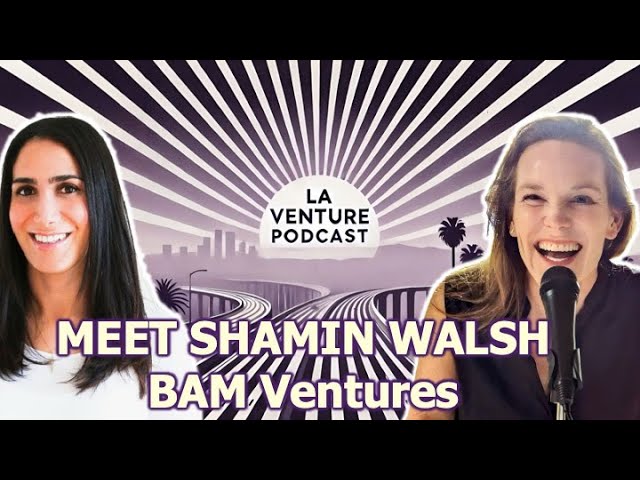
Don’t Raise VC Money Until You Hear This | Mike Gelb with Shamin Walsh | Consumer VC

Shamin Walsh of BAM Ventures explains why they write $500K checks from a $50 million fund and pass on most pitches. They hunt for founders with genuine motivation and evidence of super-fan cohorts, not just metrics. Pretty Litter and Honey returned 70-80x and 360x from early bets.
Chapters
There's very few people who have taken even one company from zero to a billion-dollar-plus public exit, and he had done it multiple times across categories.
Melody is like porn.
Change a public perception of his sexiness is more of an output problem than an input problem. Even in that hype era that you're kind of alluding to, we were still price disciplined on the tech side. It's like, how much effort have you put into this thing? If you look at like someone's average phone, they probably have like 50 or 100 apps and probably use like 4 of them on a daily basis.
Hi, I'm Mike Galp, and this is Consumer VC, where we discuss what it takes to invest in and build scalable consumer businesses. A big thank you to Odile for introducing me to our guest today, Shamin Walsh, who is the managing director at BAM Ventures. BAM is an early-stage consumer-focused venture capital firm based in LA. They backed some of the truly iconic consumer companies: Cotopaxi, NerdWallet, Zola, Away, Thrive Market, Honey. The list goes on. Seriously, some of the most exciting consumer businesses and success stories out there. In this episode, we dig into what it actually means to invest at the pre-seed stage and how BAM thinks about its fund size today and where they're headed. Also, how they balance investing across consumer brands, consumer tech, and commerce enablement. But before we jump in, I want to tell you about Highbeam. Highbeam is the all-in-one finance platform built specifically for consumer brands. If you're running a D2C or omnichannel brand, you know managing cash payouts, inventory, and vendors isn't just back office work; it's core to the business. Most banking platforms. Weren't built for that. Highbeam combines no-fee banking, automated treasury to maximize yield on idle cash, flexible credit, bill pay, and live 13-week cash flow, plus AI agents that automate tedious manual spreadsheet work. Think fast answers to ad hoc sales and finance questions, cash flow forecasting and scenario modeling, benchmarking, and much, much, much more. Brands like Bird Dogs, New York or nowhere. Ridge and Avocado use Highbeam to stay on top of their finances and scale without hiring a full team. Build your brand, keep your cash. Head to highbeam.co to sign up. That's highbeam.co. Also sign up today for a free 3-month trial of their AI analyst. And lastly, a quick disclaimer: all content on this show is for informational and entertainment purposes only. Nothing here should be considered investment Now let's get to it. Here's Shamin. Shamin, thank you so much for coming on the show. How are you?
I'm good. Thank you for having me. I was just saying how it's been nice to meet you in different contexts, and you've moderated a panel I was on, and we did that group lunch, but I have yet to see you in your space, so it's cool to be here.
No, I really, really appreciate you coming on. Yeah, we met through, um, O'Deal, uh, right? And then started off with the lunch, and then of course we, uh, uh, we also did a panel together. Um, and now you're here.
This is wonderful. Yeah, look at that.
Uh, so let's start from the very, very beginning of your BAM journey. What made you decide to join?
So prior to BAM, I worked at a small early-stage fund in LA. Our differentiator was that we owned tangible assets like 3PL fulfillment logistics. And I had done all the consumer sourcing there and kind of run the day-to-day because I'd had a great deal flow network. I'd been angel investing for years. I had the privilege of being one of the first investors in Sweetgreen. And thankfully, based on how well they had done, other great founders knew other great founders. And so the BAM guys were one of the first folks I had met when I had started in venture. We had ended up investing in a lot of deals together. You know, a good example is Thrive Market where they were the very first investors. They had so strong in consumer and then we had our 3PL logistics background. And so it was very synergistic in that way. That fund performed really well, but they wanted to go even deeper into logistics and more majority stake private equity type, and I wanted to stay in early-stage consumer. I just love consumer and starting at the earliest phase, and there's no one that I know that does it better than the BAM folks. And one thing that had particularly been helpful is that we'd been on a board together, so it wasn't just, you know, sharing deals, socializing, but you kind of like were in the trenches with them. And then of course, Brian's credibility as an entrepreneur. I mean, there's very few people who have taken even one company from zero to a billion-dollar-plus public exit, and he had done it multiple times across categories, and just, he loved the earliest stages of consumer, and so did I, and it was just the perfect fit. So yeah, I joined in 2017. We've always been equal partners, which was kind of like revolutionary at the time. I feel like it's revolutionary even today, sadly. And, um, we raised Fund 2 together, Fund 3 together, And then now we're, we're at the very tail end of, um, raising fund 4. So, um, we'll probably unlock that later this year.
Amazing. Amazing. What made the BAM folks so special when you met them? And also when you, when you work with them?
I think that there is a true, look, venture is risky as is, no matter what category you, you're in, there's always a, level of speculation when you're investing in anything around its future potential and growth. But I think that there's a lot of folks that feel a particular way, and rightly so, about consumer in a sense that there's a lot of touchy-feeliness around it, or it's like more of an art than a science. And coincidentally, totally irrelevant to our careers now, but Brian and I are both lawyers by background, and it reminds me of this law school case where they asked about the definition of pornography and the judge couldn't really articulate it. He's just like, you'll know it when you see it. And I feel like pre-seed consumer's very similar. There's, there are, you know, at the stage we invest, sometimes you have some metrics, but maybe not a lot. Like there's not a lot of like quantifiable, like XYZ you can point to as to why you think something will be great. And the Vamp guys, you know, Brian did it and he wasn't afraid of it. And he's also really good at it and he's also created it. So there's really no one else I could imagine wanting to work with that, um, both got it themselves but was able to create it as well.
No, that's, that's a, that's a really, um, no, I, I, I really do appreciate that. It actually reminds me a little bit just From what you said about pornography, I had this music teacher who said melody is like porn. You can't describe it, but, but you kind of know it or, or hear it when you kind of know, know what it is, um, once you, once you see it. So, um, very, very, very, very cool. What I mean, consumer is also really challenging though, right? Really. I mean, it's, and it's not quite, even though it's really sexy on one, on one level, because it is you know, it is products, it is, um, uh, it is, you know, things that we, that we touch, it's things that we buy. From an investment perspective, it's not very, uh, it's not very sexy though. It's kind of been left in the dust, um, uh, uh, for, for quite a few years. What is exciting to you about consumer and consumer startups, and what was your original attraction to consumer?
That's a really good— I think what you're saying articulates a lot of what folks have been saying in the market in general. But I think for us, consumer has always been sexy, which is why we've been doing it across 4 funds for the past 10 years. Because I think, you know, what has changed a public perception of the sexiness is more of an output problem than an input problem. So sure, consumer, you know, is not sexy if you define it only as consumer brand and you can only have a $10 billion outcome. Then maybe it's not the right category for you if you're, you know, a billion-dollar, multi-billion-dollar fund, and like that's the parameter you're going after. Your pool of opportunity is extremely limited, but there are many, many, many, you know, hundreds of acquisitions a year, and for $300 million, $500 million, you know, sub-billion, just on the brand side alone. Then of course you have the once-in-a-lifetime generational tech companies that, you know, people define as the 5 largest companies in the world, like 4 or 3 out of, you know, 3, 4 out of the 5 are consumer companies, which are, you know, do come once every 10, 15, 20 years, definitively. But between those 2, there's still been a lot happening in consumer. And for us as a $50 million fund who writes initial checks very early on, We're primed to return venture-like returns, whether this company exits for $300 million or, you know, $30 billion. And I think when you put a target on consumers back because you expect every company to have the same kind of outcome as Apple or Facebook, sure, they are consumer tech, but if you expect that to happen on a recurring annual basis, then of course But I don't think that's a category problem. I think that's just people taking outlier examples and now wanting everything to be that.
Do you think you can still get achieve power law type returns in consumer?
Of course. I mean, I've used this example in other podcasts or, and I have multiple examples that are like this, but you know, I mentioned, you know, we were early investors in Pretty Litter. They only raised a million and a half. They've exited for north of half a billion, and that was you know seventy eighty x like that was power law return type, and that was just on the brand side. And then we're investors in Honey, which is you know over a three hundred sixty x return for us. Like you can definitely get that, but again, it depends on when you invest, how much they end up raising. You know, you look at the capital stack, what they exit for. Or you don't necessarily need to have a multi-billion dollar outcome, but you do if you've raised a billion dollars. You know, you do if you've invested at a $300 million valuation. So again, like we're not talking about enough about the inputs, but the outputs are there. It just, it's just a hard category for a lot of folks that are deploying a lot of capital because You know, even going back to that Pretty Litter example, if you're a large fund, you know, a company that's only raising $1.5 million might never even come across your radar or not even be worth your time.
Right. It's just not meaningful enough and it's not really going to, if you have such a large fund as well, it's, that is actually not gonna maybe make a dent in terms of the actual ROI that you need to drive across, you You know, if you have a billion-dollar fund, let's say.
Yeah. And again, that's not a category problem, that's just like a matchup problem. And by the way, like there's nothing wrong with those funds' strategies. Again, it's like a puzzle piece. Like these 2 pieces may not fit together, something else may fit with them. Doesn't mean that anyone else's strategy doesn't work, but it's not the category itself that's flawed or that has changed or that doesn't have outcomes because How could that possibly be true if, you know, 70% of GDP has, you know, is still, you know, run by consumers? How can that be possible if we've had like the largest Black Friday sale, you know, last year? Or, you know, that we're not becoming any more well-known as a country or culture for becoming massive savers. Like, we're spending money and we're spending money somewhere, but we're, you know, how we it, how we spend our time, how we spend our money may be shifting, but the spend is still there and the opportunities are still there.
Is it a good thing that consumer maybe is underappreciated though in the venture community?
It's good for me. Yeah. Yeah.
Good for you. Yeah. Yeah, absolutely. How, so the current fund, Fund 3, you said it was $50 million, right? Yes. Is that, is that right? $50 million fund. How, and I know that you're, you're, you're, you're about to kind of lock up Uh, uh, fund for. How do you think about fund size overall? Um, and in terms of, 'cause I'd imagine in consumer, well, I've talked about this before with, with different investors, but, you know, I mean, in anything, your fund size is, it is your overall strategy, right?
Yeah.
In terms of how, how big your fund is. In consumer, it seems like you have to be pretty disciplined in terms of, in terms of how big the fund size is. So what, what is, how do you think about You know, um, Fund 4, Fund 5, Fund 6, for example, how big you want those funds to be, um, in order to be able to execute the strategy that you wanna execute when it comes to investing in consumer.
Yeah. Um, so Fund 4 will be $5 billion. I'm just kidding. Fund 3 is $50 million. Fund 4 is $50 million. Fund 5 will be $50 million. I mean, this is the strategy. It's funny because I often feel when you have a smaller fund, people think it's like a stepping stone to a larger size, and it would actually have been much easier to raise a larger fund because your pool of capital is more limited.
It spans. Yeah.
Yeah. And so it would've been, and especially with Brian's credibility and our past track record, it would've been so much easier. But there are, again, back to, this is a great category if you have the right infrastructure and setup You know, we wanna be able to see founders who don't need to raise necessarily tons of money, and maybe they're building a multi-billion dollar business that necessitates it, and that's fine. But we don't wanna invest in founders who have to take in a lot of money because we're saying to them, well, we're X size, and so you have to take this $20 million check or else this investment like isn't worth it for us. Like, we wanna be as aligned with our founders and our LPs as possible, where we're defining our success by performance and returns and not from management fees. I mean, the main downside of our fund size is obviously management fees, but other than that, I mean, we're as close to the founder journey as an investor can be. We're as close to like LP performance base as an investor can be. We're all just kind of in the same boat together. And I think, you know, there are a lot of different factors specific to our fund strategy and our fund size that contribute to, you know, why we have continued to have successes over the past 4 funds. Because even, you know, in the grand scheme of the world, even going from $50 to $100 million, for example, doesn't necessarily sound like a lot when there are billions and multi-billion dollar funds, but it completely shifts your strategy. You know, the amount of capital you have to deploy completely changes. And, you know, we're particularly strong in a certain aspect. So like, why would we try to change what we're good at if what we're doing is working?
How do you think about investing? 'Cause you kind of have 3 different buckets of categories that you invest in, right? Brands, commerce infrastructure and consumer tech. How do you, how do you balance kind of how many brands, for example, commerce infrastructure and consumer tech companies you invest in across your, your, across each fund?
Those categories don't, um, they don't have quotas or like check the box, like, okay, if we do 50 companies, X amount is this and X amount's that. We're very founder-driven. We've always been founder-driven. So we kind of back into it as, okay, these are the 3 categories where we feel like we can help you accelerate a potential competitive advantage, either based on what we've been focusing on for the past 10 years or have built ourselves. Like, this is where we think, you know, we can actually have a piece of knowledge that we can stand behind. Other than that, it's completely founder-driven. So we look at all the, you know, we have, Um, you know, one fund may be slightly more brand-driven than the other. Another one may be slightly more tech-driven than the other. And it's really just a function of, you know, the founders and, you know, and what we've come across.
What, what then do you look for when you have a first meeting with a founder?
We spend a lot of time trying to understand who founders are just as people. Um, like what's motivating them to start this business? Are they doing this for the glory? Are they doing this to have a title? Do they find it glamorous to be a CEO or not? Their ability to attract talent, you know, how much are they doing this where it's their thing as opposed to they're building something bigger than themselves? We're looking at someone who has kind of an eagle-eye lens on different consumer behaviors. Perhaps they have unlocked a superfan community that, you know, that's already been pretty saturated. So for example, let's say everyone's looking at sports, but no one's doing anything in power sports. And we meet a founder who comes from that world and loves that world and building a marketplace for their people, like in the power sports space. So the going deep in certain particular categories where you know that that audience is not just fickle, but what you're building is speaking to something that they can have an emotional connection with. And then I think most importantly, we're look— that kind of ties in all of these things is a founder who truly understands how their customer behaves and knows how they behave. So, you know, I'll tell you, sometimes it's easier for me to articulate what I'm not looking for. I think there's a lot of really smart people out there that are building things that would be amazing in a vacuum or in a perfect world, but like people do not operate necessarily rationally or in a perfect world. So for example, you know, if you're meeting someone who is building a multi-step logging platform that if adhered to perfectly will give you the most optimized way to track all of your macros, but it only works if you are diligent and meticulous about how you're doing it. Yeah, like if I did this perfectly right, I would love that. But, you know, that's not how we work, you know? And then you might, you might think, wow, if, if used perfectly, this was amazing, but I only inputted 30% of it in, or, you know, it, I've only used it for 2 days. And then I think the product sucks and it's like, it's not the product problem, it's just the fact that That this founder didn't truly understand how a person's mind works and actually how hard it is to change behavioral change and like how you really have to lead a consumer a certain way to, to either connect with them or to get them to trust you or to convert that sale.
What's an example of a company? It could be a company that you invested in or a co— or, or it could be a company that, you know, you just really admire. admire that you think have done a really good job in that in terms of making a new consumer behavior, but also was kind of in lockstep in terms of educating the consumer about the product?
I think Thrive Market's a really good example in the sense that, you know, when Nick was first raising, and Bam was the very first investor in the company, and when Nick was first raising, a lot of people didn't get the concept because it was during a time in which Amazon— well, you know, Amazon is still Amazon, but like it was at a time where people thought, I don't get it. You know, you're like, you're curating these like healthy foods at membership prices and you're offering them this convenience and XYZ, but like I could find all of these things on Amazon. Like how does this compete with Amazon? Like I could literally find the same exact peanut butter or whatever it is anywhere else. And he was a really good example to us of someone who understands consumer behavior or like how the consumer mind works. And, you know, he didn't try to necessarily say, become defensive and be like, no, you couldn't, or like, this is how it— he was like, you're absolutely right, you can find this on Amazon. But that necessitates a level of consumer intent that most people don't have. So if, you know, at that time it was, you know, really at the beginning of certain food regimes for folks like, you know, Whole30, paleo, keto, et cetera. And whichever philosophy you followed, you know, I may know that it's something I wanna try out. I can tell you if I wanted to try out something, I would have no idea where to even start on Amazon. So it's like, sure, if I knew I wanted a particular product, I don't even, you know, I can go and try to search for it. But in terms of feeling like I can be guided through a particular experience, that I feel like there's a community around it, it's one of the brands that had the earliest use that I'm aware of, of like true authority influencers. You know, with Mark Sisson and others, like within, like the actual leaders of particular regimes saying, participating with it and getting involved with the company and helping curate for folks. And to have a platform where if you're XYZ and I don't even need to think about it, like I can trust it. I know that they've done all the hard work of like the label reading and the sourcing and I can just go, paleo and know that every product there is safe. Like, just freeing up that mindshare, that's the kind of thing you look for in a founder. It's not something tangible in terms of, oh, you're offering ghee, how great. It's like not about the particulars, it's about somebody who understands that people want to be healthy, people want to free up mindshare, and like these are the things that matter. And that's the kind of Thinking that, that helps differentiate great founders for us.
Yeah, no, that's a great, that's a great example with, so Thrive Market, part of the mar— the, the value prop to consumers was, was trust, trust and recommendations, trust, um, trust in the actual curation of the products and, and alignment in terms of what your value values are as a consumer in food. We actually have the exact same values, so you don't have to go, Um, uh, spend a lot more time finding the right products.
Absolutely.
Makes sense. You, you, you brought up kind of a, a couple examples on the physical brands side of it where, uh, where a brand might raise, a company might raise, you know, $1 million or $2 million, but then that might be the first and last fundraise. And, and you can achieve venture-like returns. Because it's hopefully in like a $300 million, $500 million type exit. And of course the founder's really happy, you all are really happy. It's really just a win-win all around, right? And then you also have like, I'm thinking like commerce infrastructure, which is kind of interesting from the way I see it. And I'm curious about you. We've seen some funds that started off investing in physical brands, And then as they become bigger, I think kind of shifted towards investing into commerce infrastructure type companies because typically these outcomes from a venture perspective are a lot larger just on paper, the valuations from a valuation perspective. My point being, how do you think about reserves as well? it comes to investing in these companies? Because you obviously have the upfront investment when it comes to a physical brand or a commerce infrastructure company or a consumer tech company. I would say consumer tech probably is more in the bucket of like commerce infrastructure in terms of what those, uh, those outcomes could be. Um, how do you think about initial deployment and then how much is you actually reserving capital for, for pro rata?
That's a really good question and a good point. We typically invest $500K pre-seed And we're pretty valuation disciplined, so we're very early. If we invest in a brand, it's typically sub-ten post, but the ideal sweet spot is around that like five or six million dollar mark. And if we're investing in tech, if we think that there is truly the opportunity for a much larger outcome, you know, because you're always playing this like math trade-off game between larger outcome, more dilution. There are very rare examples. I can't even think of one off the top of my head where someone only needs $1 million and also is building a $10 billion company. So like traditionally there's like this kind of like trade-off. And so if you think the math continues to math, we can go a little bit later with tech up to 15 posts. So not even that much later. But the way we think about it is initially $500K check size, and then we'll follow on with You know, up to $1 million potentially in, you know, seed or our own As. So we don't write initial checks in As. Traditionally, I'd say about a third of the portfolio will probably get some level of follow-on. And then we don't invest beyond the Series A. And we have a lot of later stage funds that are investors in our funds. We have really strong relationships with other funds and growth funds. So nobody is starting from scratch after a BAM check.
Mm-hmm.
But in terms of BAM, to your point, we're trying to concentrate our check size and attention at the earliest stages where we can get the most juice out of the squeeze for like our dollars.
It seems like when it comes to price discipline in this market, it's, nothing's easy. I'm not saying it's easy, but it's much easier to stay price disciplined in this market than it was, let, let, let's call it 2018 to 2022. During the 2018, 2022 years, how were you able to stay price disciplined?
I think it's a function of having done it for, you know, as a fund, we've been around since 2014. Brian has been building companies since 1999. And, you know, I invested in Sweetgreen in 2007. I think we've just seen a lot of markets And it's hard for sure, but you know the opportunities are there and it helps a lot to cut out the noise and just focus on what matters. So even in that hype era that you're kind of alluding to, we were still price disciplined even then because we knew the numbers weren't going to math out. And also when we looked at some of our biggest successes, this is from BAM1, which is, you know, a 2014 fund. It mimicked the same strategy we have now, which is invest early and invest at this valuation. And you could see the difference. I mean, we had a couple portfolios in BAM1 that had, you know, from a PR perspective, had an incredible outcome, multi-billion dollar or public or whatever. And it made money and it looked good. But when you looked at like dollar for dollar, what, went back to LPs, you realize it's not just a logo game if you're seriously in this for the upside. So I think that's how we stay price disciplined, is having the benefit of looking on actual use cases and really just looking at actual numbers.
Were you able to still win deals, for example, while remaining price disciplined where other investors, for example, were happy to pay, you know, uh, a higher price for, for, for the same company?
I think you're always gonna miss out on stuff. Um, I think we, we benefited on winning from deals again because of how early we invest.
Mm-hmm.
And then I think a lot of founders really valued Brian's entrepreneurial experience as well, because not only has he built multiple successive businesses, but, you know, for us, like, we consider it a core strength that Brian is an active CEO because the same kind of strategies that help LegalZoom become successful in '99 is not what's making Arena Club successful today. You know, you didn't have even the same types of channels back then. And so I think founders really liked working with a fund where they truly believe that our journey is aligned with theirs. And I think, you know, this idea of being founder-friendly is so overused that it like has completely diminished its meaning whatsoever. But I can say just from a testament of like how many of our founders become LPs after, you know, great exits, or, you know, I feel confident that if you talk to any of our founders, they will tell you themselves like what a role we've played with them. And so I think that kind of investment in long-term relationship building and just kind of doing what we're say— we're gonna do and sticking to a category and just having, this institutional knowledge compound on each other and staying active in this space is oftentimes more valuable than other things. And then keep in mind, given our check sizes, sometimes founders are willing to, they're not as concerned because they're not taking in so much where the valuation conversation, we're not like, hey, take $3 million at a $5 million valuation, right? It's like not so much money that it's a hard conversation to have necessarily.
Got it. I know, you know, Bam, I know you, um, look for companies that make dollars before they make sense. How do you, and, you know, kind of alluding to as well, companies that are really capital efficient. How do you think about capital efficiency in today's landscape, and do you think capital efficiency at all has evolved?
I think capital efficiency, again, I think this is an input and output question. So I think capital efficiency may not matter as much if you're an incredible fundraiser and you're building something that has a multi-billion dollar outcome. So You know, look at something like Uber, right? It's, they've raised a ton of money, and, but all of their early investors also made a ton of money, and it wasn't even designed to be capital efficient from day one. So I don't think it's necessarily this hard and fast rule where you have to be capital efficient. I think it's, if you're not capital efficient, are you an amazing fundraiser? And if you're an amazing fundraiser, are you an amazing operator that's gonna build this once in a lifetime defining consumer technology type business. And if so, I have that conviction, then okay, then that's part of your strategy and it's an intentional part of your strategy. And some founders have that strategy. But I think if it's a particular category where you're not capital efficient, but you could easily be capital efficient, or if, you know, there's not enough of an outcome there where, you know, if you're trading in a category that typically gets acquired for a 1x revenue multiple, and then you're not capital efficient and you've raised, you know, $100 million to have a $200 million exit, then that's, again, the numbers aren't working. And so I think we're not so black and white where we say, if you're not profitable, you know, no way, because I think you can miss out on a lot of those like once in a generation type businesses if you look at things that way. So we're not sticklers in that sense. But to your question, of course things have changed. Once folks found out that, you know, there were certain outcomes that were more the exception than the rule and realized that there were a lot of companies that may have been attractive with a different set of inputs, but weren't attractive with the ways that they had been funded or with the way they had been run. Then they realized, hey, you know, we actually need like solid unit economics from the ground up because everybody got stuck in a position where they were waiting on the next round to justify this company's existence. And that next round didn't come. And then what happened? That company didn't have an infrastructure To sustain itself. So I think, you know, we don't wanna be in the business of investing in companies that necessarily rely on the next venture round for their existence without, unless they truly are going to become that like once in a lifetime, potentially generationally defining business. And those are very few and far between.
When you meet with a company, do you actually talk, and you're actually thinking about making investment even at the, you know, I mean, of course at kind of like the pre-seed level, do you talk about future fundraising in terms of what their like trajectory, what they're thinking about doing from, um, on the equity side or not really?
Yeah, of course. They always wanna talk to us about it because, you know, we have a really close relationship with our founders because we're often, as I mentioned, the earliest investors and the earliest investors are often the folks that saw something in you before you became hot and cool. And so, it builds a level of goodwill or trust that, you know, you're aligned in terms of like wanting the best for the company, or that you don't only like them because they're the new flashy, hot, cool thing. And founders always come and talk to us about it. You know, they talk about, I could go this path or that path, and we just talk it through. Okay, if you wanna go that path, you have to be X amount bigger, And if you want to do that, then great, like you should. But just know like how the bar changes as you make those different, like at those different inflection points.
What type of, I know that, you know, at this stage you're, you're betting a lot on the founder, betting everything on the founder, but what do you have to see maybe from a traction perspective or from a metric perspective in the, in the early, for the, in the early stage to, to make you curious or, or make you think they of course might not have gotten product market fit at this point, but make, um, there's certainly maybe signs that there might be that, that, that they're on their way.
Transparently, we don't invest very often pre-launch. Um, if we do, it really depends on the founder and having had potentially a preexisting relationship with the founder. And if we are investing in something that has launched, the numbers don't have to be large, they just need to necessarily be indicative of something. So if we can see enough to see, you know, whether it's a consumer social app and we can get a sense of, you know, how many hours people are spending inside it, how they're sharing it with others, are they downloading it, you know, what, Like how it's changing their behavior around it. Even if your numbers are small, we can get a sense that like you've gotten a super fan cohort. And then if it's a physical good, same thing, just thinking about, you know, returns, repeat purchase rate, and then benchmarking that against industry averages and thinking about, you know, like what is a typical cadence for this type of product, like how often are people buying skincare? And if people are, you know, bought a cleanser and then we see 2 months later they're also buying a moisturizer and a serum, and then we see that they've started to subscribe, like that's more indicative of and more meaningful for us than to say, you know, I had a million purchasers day one. Because I think part of what makes consumer difficult is that you can sometimes have a, false positive and false signaling. You know, you could have a lot of early excitement about something like a sellout inventory drop or everybody downloads this consumer app today, and then a month later or 2 months later, a year later, et cetera, they've moved on to the next thing. And so that's what we're like really trying to distill is like how much of this behavior is Sticky, so to speak.
Yeah, it's what's separation between a fad and a trend, right? So what are, I guess it's really hard, right? Because if a company is growing really quickly and you see like a lot of user engagement, a lot of downloads, a lot of time spent on, let's say an app, or even if it's a consumer product, a lot of kind of really high velocities, let's call it. How do you kind of measure if something kind of, if you think something is maybe temporary or something is actually long, could be long-lasting?
I think different categories have different, I think it's always hard, but I think different categories have different degrees of difficulty. So for example, I think consumer social is particularly hard. But again, if you, you know, Brian was an early investor in Snap. So if you invest in, you know, a consumer social platform that becomes one of the once-in-a-generation platforms, like, that's amazing. But I think we understand, like, we have a higher bar for identifying certain companies than others because the barrier, like, it's like way, it's way less friction to download something for free that you can just easily also delete, that you don't have to put a lot of effort effort into using that may just have entertainment nice-to-have value versus a utility. For example, you know, when you look at on the app space, for example, if you look at like someone's average phone, they probably have like 50 or 100 apps and probably use like 4 of them on a daily basis. Actually, like you can tell me like what apps are you using on your phone like every day, or you're like, I need to use this app.
I use Slack.
Utility.
Utility. Exactly. Gmail, also utility. Um, MyFitnessPal, uh, Perplexity, uh, uh, ChatGPT.
Um, so those are all utilities.
Yeah. Utilities. Uh, Spotify.
Um, now we're in entertainment.
In entertainment.
But like Spotify was really clever cuz they created playlists that discipline, that you put in, you have to put effort into making your playlist. And then it disappears if you unsubscribe. So that's pretty sticky.
That's, that is pretty sticky. Yeah, no, for sure. For sure.
But you put work into it, right? So that's something we look at. Like when we, let's say like on, cause I know we've talked about brand a lot, like on the tech side, it's like, how much effort have you put into this thing? And you've probably put a lot of effort into your Spotify at this point, cause you're, if you get rid of it, you have to start all over.
I think just like anything, ease of use. You just know it and it just becomes a habit and you know exactly where the songs you want to play are. I haven't been as good, I'll be honest, at making playlists. I just use a search function like crazy. And, but yeah, I mean, like, I know, like, it now knows like all the podcasts I listen to, so it just kind of just comes up Quite frequently and also kind of pings me when there's a new episode or something. So it's just really, just like anything, I'm just kind of like a creature of habit. Yeah. Just from using it. So, so yeah.
Okay. That makes sense.
Yeah. But that's a great point. But also YouTube. I took off TikTok off my phone. I used to be on TikTok, but I just like, once I start, I feel like it's just then like 20, 30 minutes down. Yeah, exactly. Then it's like 20, 30 minutes go down, even an hour, and I just can't, um, I can't do it. Um, but yeah, how about you?
Where's my phone? Oh, I don't think I've ever done this with anyone before.
Yeah, it's kind of a fun exercise.
Yeah. Okay, so I have my browsers. Um, I have, uh, like my kids' monitor, all the cable streaming ones, like Peacock and Hulu and—
yep, I have all that too.
Um, Pandora and Spotify. Um, the preschool, like, payment system. Uh, LinkedIn. Uh, Starbucks. My airlines.
Uh, yep. Wallet, I'd imagine.
Wallet. Um, and then My, and then news, like AP.
Um, okay.
And then, uh, yeah, I have Facebook, Instagram, and TikTok. Yeah.
Yeah.
But like, tell me this, how many apps do you have installed?
I don't think I wanna tell you that just because there's so many.
That's what I'm saying. Like the bar's really high, but like, the bar's really high. This is how we, but this is how we think about things. You know, it's like there's so much out there. Oh, my Kindle. But I, I guess to your point, what we really— oh, my pharmacy. What we really look for is around my health. What becomes habitual? Like what can become truly integrated in your life?
Do you think then from that point that, and I know that there's been a couple articles circulating around this, but do you think on the, on the point of social media that the, a new social plea, social media platform on this wave of mobile. Do you think that that is that one that truly takes off and becomes widespread? Do you think that that is going to happen?
Of course. I mean, sometimes things just emerge again because other things get stale and, or you wanna, you know, sometimes like great brands, and I would consider social media one of these, is that a brand says more about you than the title itself. Like I wanna invoke something about myself and that's why I use certain brands. And so I think you always see these trends where people use certain things and then they move on to other things or they start to fill different needs. Um, and then maybe they go back to the original brands or they have like, there's this always like push and pull. Like, here's a, here's an example. Um, I get a lot of heat from my friends because I still use Facebook sometimes or like Meta and they're like, Meta's for like, you're, oh my God, Shamin, how old are you? Like, it's for boomers now. And people are saying like, that's the reality of what people are saying. Although it's, it's an enduring brand, they're doing a ton of interesting things and innovative things. But, you know, nothing has changed about Meta. But like now there's this like perceived, you know, for a while there was like LinkedIn is your professional and, you know, Instagram's your selfies and Snapchat is for like the young kids and Meta is for like the boomers. So I think there's always gonna be room for something new because people are gonna need something to help identify themselves or like create community with someone else. But if you wanted to ask me like, what do I think it'll be and what shape it'll take and what will catalyze it? I have no idea, or else I'd already be an investor in it.
In terms of AI, I mean, I know that you've made some AI investments if, if I'm mistaken, um, but For you to become interested in AI, let's say like an AI company, what actually kind of has to happen in terms of, in terms of like the use case for you to become interested?
So we joke that, you know, AI for us is like saying you're like, you use the internet, right? So it's like Brian jokes, he's like, if you're not using AI, like what are you doing? So I think at least for us, there's nothing in terms of the innovative picks and shovels on building this in AI that would make us interested, either because we don't feel like a $500K check is gonna do anything for anyone, or we just don't have the technical knowledge to really vet how X is different than Y. Otherwise, I mean, I think, again, it's, you know, if like we look at a billion e-commerce companies, and some of them do well and others don't. And it's really— but no one comes to us and says like, I'm building a business where you can shop on a computer. And we're like, wow, you can buy something online?
Yeah, yeah, yeah.
Like, that doesn't—
You're using it, you're just using it as a technology.
Yeah, it's like, maybe you're making it smart because your user interface is great, or like you've integrated well with other platforms, or you have an interesting sales and distribution Advantage. So I don't hate on AI in a sense that I think that it is part of the future, but I don't necessarily hear it as a standalone term and think, oh, that's enough. Like at that point, it's just looking at what you traditionally look at a company, the founder, the product, how they think about their consumer. Do they have a sales and distribution advantage? Like how are you using AI? To be an accelerant to your business or to make something that wasn't possible before possible now, or to better serve your customer or give them a more delightful experience or make them, you know, maybe your customer doesn't even know you're using AI, but they think you have the best customer service of any company they've ever dealt with. Like, that's the kind of stuff that's interesting for us, not necessarily AI as a standalone technical term.
That's a really good point. That's a really good point. If it's okay, can we do a quickfire round?
Okay, cool. I'm not very good at these.
All right. What is the biggest consumer trend to watch out this year for? Do you think?
We're so founder-driven. Uh, I don't know anything. I think that we look a lot at like the downstream effects of like Ozempic and all of that.
Oh, okay.
This is gonna change things. How you date, how you drink, how you eat. Do you need special meal plans? Do you need more supplements because of it? Are you going to the gym more? Are you going to the gym less? Are people getting divorced more? 'Cause one of you's like, you know, not, you don't like meals out anymore, or you don't like the taste of alcohol and the other one wants to, you know, live it up. I think there's a lot happening.
Lifestyle changes with Ozempic. Yeah, that, no, that's a great point. Also, also, does that mean that you have to supplement it with, you know, more, more protein, for example, to, to make sure you still have, you know, adequate protein levels. And yeah, I've been thinking about how does Ozempic as well change the grocery store just in general? Like what actual categories won't do as well if, for example, mass, you know, people who are overweight, if they actually do subscribe to Ozempic or have prescriptions to it, how would that actually change like the grocery store?
One thing that's interesting is, and then I think there are like counterintuitive points, right? To your point. So are you going to eat less pastries because, you know, you're hunger controlled and so you're not going to eat, you know, things that are bad for you? Or are you going to eat more pastries because you can portion control now and so you can have treats that you love and know that you can only have a couple bites of them? Is this good or bad for donuts?
Yeah, no, that's a good, that's a really good thought. I would've thought it would've been bad just from face value, uh, would've been bad for donuts, but, but you do make a good point in that. Do, can you actually do a much better job in terms of, uh, portion controlling yourself with those?
I mean, if you, if you know that you can control your appetite and you want a treat and you can have a few bites of a donut. Then you might be able to actually enjoy certain treats the way that, you know, other countries make fun of us for, where they're like, we have desserts and we have pastries and we don't, we're not like restrictive because we portion control. So I'm curious. I don't know the stat, by the way, so I'm curious, but I do think there will be changes from things like that.
Yeah, no, it's a fair point. It's a fair point. What, what consumer category are you most bearish on?
VR, I guess.
VR.
Okay. Okay. Um, I don't know. I mean, I think great founders always know how to crack through the noise, which is why we're founder-driven, not category-driven. So many of our companies are not innovative categories. When you think about it's a beauty brand, it's a dog food brand, it's a, supplements brand, but the founders make it innovative in a certain way. And so the— that's why I'm so bad at these quickfire questions, 'cause I'm like, well, it depends. I don't know if it's the lawyer in me too, where I'm like, I, I don't wanna say something so black and white when I know there's a world of gray out there.
That's a fair point. That's a fair point. What's your favorite consumer product innovation from the Ozempic. Ozempic. Okay.
Yeah, I mean, I don't know. I think it's a huge one. Um, no, it's one we've just talked about.
Yeah.
Um, consumer product innovation. Now I feel old because I want to say ridesharing, and I feel like that was 20 years ago. So what happened, what happened in the past from 2020 to now? What are we—
I actually think on the ride sharing front, I think Waymo is unbelievable.
Yeah.
Just from the next age. I think that that is just incredible in terms of a product innovation.
Yeah. I mean, a lot of people joke about the freedom of not having to make small talk, but the ability to control your own music, Is really liberating and the volume.
Yeah.
Um, yeah.
All right.
I'll steal your answer, Waymo.
Final, final question. What's one book that's inspired you personally and one book that's inspired you professionally?
Uh, I think both. One of my favorite books as a child was The Little Prince, and it has inspired me both Personally and professionally because it has 2 really strong themes, one of which is don't diminish simplicity. You know, we lose— I mean, brief overview, it's about this little prince and he goes to this new planet and he wants to take care of his rose. He has this like beautiful— it's a children's book. He has like this little rose and he goes to this other planet and— He realizes there are like millions of roses. He thought he had this like one unique treasure thing and then realizes there are all these others and then kind of learns that there's meaning in the one he has because he has chosen for it to be significant to him and he has a connection to it. He doesn't have a connection to all these other roses. And I think personally and professionally, whether you're thinking about a spouse or like thinking about a consumer brand. One, you know, one of the big themes is that as adults, we overcomplicate everything or we try to diminish curiosity and creativity and whimsy. And so, for example, in the book, someone draws a picture of a hat and the adult says, of course, that's a hat. And he says, no, that's a snake eating an elephant. And I love, I just like love that idea to just remember to continue thinking outside the box. And also, um, that even if it's a children's book, it has so many, so much depth in it that it's okay to not necessarily recommend something that's, um, academically hard to like sift through. There's a reason why it's been an enduring book. But also on the line, like whether professionally through like marriage or a consumer brand, This idea of, you know, there's a lot of everything, but things have meaning to you because they have meaning to you. And like this, like kinship he has with this one rose, even though there are a million other roses, and the realization that no, this one is special to you is just kind of this like enduring idea that I think we go through in life, whether you're— you think about commitment or whether you think about Well, can someone build something that someone connects to when there's a million other X products? And for us, like, we're not investing in just products, we're investing in, you know, an emotional connection.
Totally, totally, totally. Um, I, no, no, that makes, that, that, that makes a ton of sense. And, uh, I really appreciate you, you sharing that. I think, I don't think we've had anyone else share The Little Prince before, so you are certainly original. Shamin.
Yeah, I feel like I should have said something like, no, I don't know.
That's perfect. That's perfect.
The Intelligent Investor. But I think there's like a lot to be learned about like just human principles and thinking, even from like a children's book, especially now that I have my own children. Sometimes, you know, my kids are asking questions like, what is God? And like, why do we die? And it's It's really incredible to be able to learn about it from the level, I don't know, like everyone talks about first principles thinking and there's nothing more first principles than a children's book, right? It's like, this is how basic you need to be to explain these grandiose topics. And it's been, it's like really been valuable to kind of go through life with that where you're like, Why am I overcomplicating this? Like, let me just pare it back. And I think for consumers as well, something we, I mentioned at the beginning, so maybe this kind of like bookends well, is that, you know, founders who, who also know how to deliver a message simply and they're not overcomplicating it because there's only so much our mind can, can absorb or connect with.
Yeah, no. For sure. Um, no, that's a great, uh, awesome example. Um, I haven't read The Little Prince, but now I definitely need to add it to my reading list.
Um, yeah, read it. Tell me what you think.
Will do. Will certainly do. Uh, Shamin, thank you so much for your time. This has been a lot of fun.
Thank you. And thank you for taking the time.
And that's it. Shamin, thanks so much for coming on the show. Highbeam, thank you so much for sponsoring this episode. And if you're loving the show, please hit that like button and subscribe on whichever platform you're listening on. And if you really, really like the show, check out theconsumervc.com and sign up to the newsletter. I send a weekly email of all the latest news in consumer that's happening. Thank you for listening.