EPISODE 13: THE INVISIBLE PRISON — WHEN TRAUMA BUILDS YOUR LOVE PATTERN
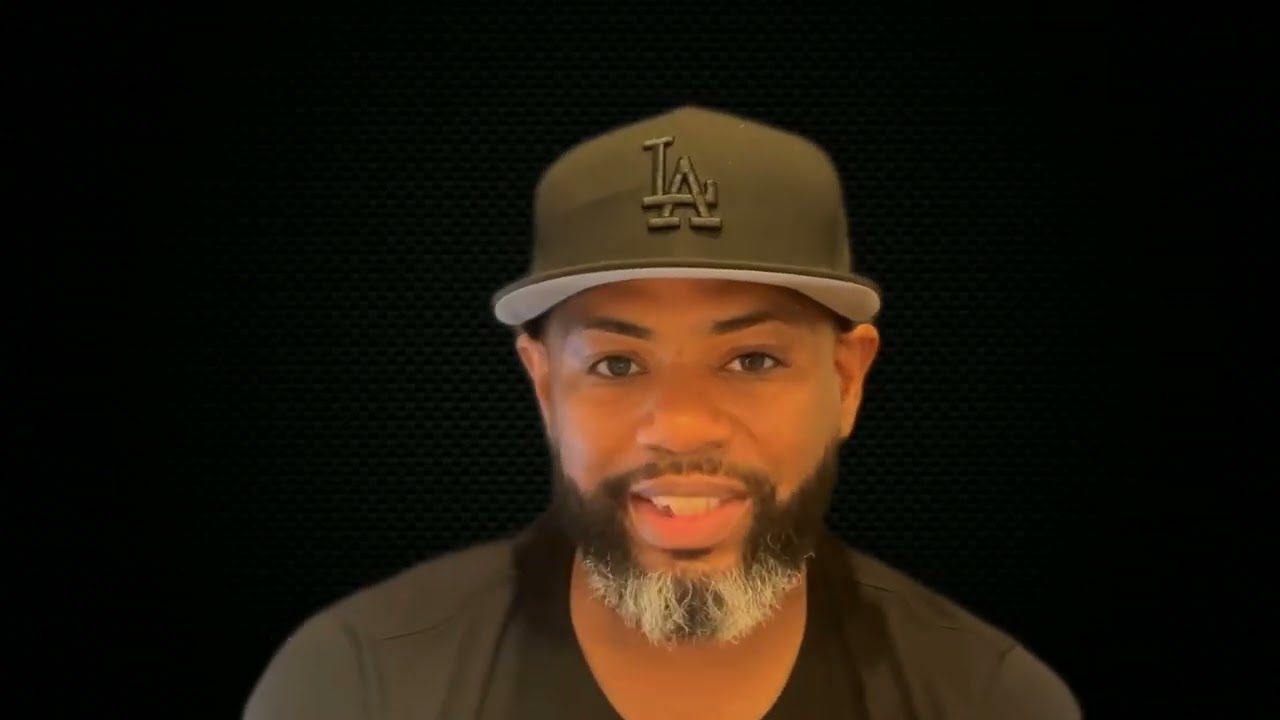
Shamsudin Hakim explores three trauma-based love patterns that trap men: avoiding masculine energy, fixating on physical criteria as a safety filter, and desperately rushing into relationships. He offers a 10-item checklist to diagnose whether your dating struggles stem from childhood trauma, and previews a coaching session with Marcus next episode.
Chapters
For 2 weeks, we looked at women. Week 1 was Veronica. She was held hostage by her narcissistic husband who activated 3 different love patterns within her. Her personality was drowning within the marriage and she had a 5C score of 0. In week 2, we looked at Tanya. Now, she had the courage to leave, but her problem was, is that she didn't have the courage to close the door and step out of that doorway and fully live the life that she knew that she wanted to live. Her faith was disguised as fear, and she was living a generational story where she thought that the ending of her marriage and divorce meant that she had failed, and she was repeating the same generational cycle her mother and father had gone through. Both are powerful stories, and both are very important. Both are necessary, but they're incomplete because we haven't flipped the mirror. We haven't What about the men? Not what about men in the dismissive way people throw that phrase out online. I mean, what patterns do men carry that we don't always see and we don't always recognize? What patterns do they carry that has them held hostage and locked in a prison that they're unable to break free of? What does it look like when a man is held hostage? Not by a woman, But by something he's never spoken about, something so deep he built his entire dating life around avoiding it. Not only his dating life, but he's built his entire life around avoiding that thing that has held him hostage, and now it's affecting every part of his life. This week we flip the mirror, and what we find there might change how you see every man who's ever confused you. frustrated you or broken your heart. Because some prisons don't have walls, they have patterns. And the man running the pattern doesn't even know that he's in a prison cell running that pattern. This is week 3 of the Held Hostage miniseries, The Mirror.
And tag life.
Now.
First they wanna see me fall, see me break, see me crawl. Never wanna see me whole, truth untold. But now I speak, so you gon' feel it all. I'm the presence in the room, I don't just speak. I command your presence, demand excellence. Breathe fire with reckless reverence, planted in the best soil. Deep like ancestral truth. Try to form a plan, but you could never reroute me. I'm still here, congratulate me. Survived it all, wore it like a suit and walked through hell with a heaven-bound boot. That's the same path you gonna walk, from broken to unbreakable, from loss to legacy talk. Intact Life, we map the journey. 7 loops, 5 modes, 5 pillars, no attorney. Break your loop, build your love. This is how we rise above. Shamsuddin Hakim, Intact Life Podcast. Welcome to the Welcome back.
I'm Shamsudin, and this is episode 13 of the Intact Life Podcast and day 1 of week 3 in the Held Hostage miniseries. Before we get into today's content, if you've been following this series and you haven't taken the free Intact assessment, this is the week to go ahead and do it. Go to theintactlife.com. It's free. Takes 10 minutes and you'll get your love pattern, your 5 pillar scores, your life mode, your evolved form, even your attachment style. Everything I've been coaching these guests through, theintactlife.com is where you will find it when you take the assessment. Go ahead and do it today. Now, before we go any further, I need to say something very important because this week's content involves childhood trauma, including abuse. Now, I'm going to handle it with the same care and compassion that I'd give any person sitting in front of me. No graphic details, no sensationalism, just truth told with love. If you're a man listening to this and something in these episodes hits close to home, then know that I do see you and there's no judgment here, only understanding. All right, let me set this up for you. Veronica's prison was visible. You could see it. A narcissistic husband, emotional abuse, and she was a woman that was drowning within her relationship, within her marriage. If you knew what to look for, then the signs were there. Tonya's prison was partially visible. You know, she left, she was free, but the doorway she couldn't close was at least identifiable. People could point at it and say, you need to file the papers. But the prison I'm introducing you to this week, nobody can see it. Not his friends, not the woman he dates, not even himself. It doesn't look like a prison. It looks like a man who keeps getting friend-zoned, a man who's too nice, a man who dates from the surface, a man who can't seem to create that spark with women no matter how hard he tries. And the world's diagnosis is that he's just not attractive enough. Or he needs to work out, or he needs more confidence. But the real diagnosis, the one nobody sees, goes back decades to a boy and what happened to that boy when he was supposed to feel safe. Let me teach you something that's not in most relationship books, and it applies to both men and women. But today I'm focusing on men because men are the least likely to talk about it. Seek help for it, or even know it's affecting them. When a child experiences trauma, especially abuse by someone who was supposed to be safe, their brain doesn't process it logically. A child's brain doesn't say, that person was wrong. A child's brain says, something about me caused this, and I need to make sure it never happens again. And so the brain builds survival patterns. Automatic responses designed to keep the child safe. And those patterns, they don't go away when you turn 18. They don't disappear when you get a job, get an apartment, start dating, find the love of your life. They just go underground. They become invisible. They become part of your personality. And in dating, they show up in 3 specific ways. Pattern 1, the avoidance response. If the person who hurt you was male, you might avoid male energy altogether. Not consciously. You don't wake up and say, I'm avoiding men, but you gravitate toward women. You feel safer around feminine energy. You don't hang out with guys. You don't have male friends. You don't have male mentors. And here's what happens. You never learn how to embody masculine energy because You never had a safe space to develop it. The men in your life were unsafe, so being like them feels unsafe to you. So you stay soft, you stay passive, you stay in the space that felt protected as a child, surrounded by women. But when you bring that energy into dating, women experience you as a friend, a good person, a safe presence, but not a romantic option because Romantic attraction for most women requires some form of masculine tension, and you've never learned how to create it. Not because you're broken, because the classroom where boys learn masculinity was dangerous for you, so you never enrolled. Pattern 2, the surface fixation. When you experience something as a child that you couldn't control, your brain develops a need to control what it can. In dating, this often shows up as hyper-specific physical criteria. She has to be this height, this weight, this body type, this hair, this skin tone. She has to have this shape. On the surface, that looks shallow. Why is this man so focused on looks? But underneath, physical criteria are safe criteria. They don't require vulnerability. You can filter body type on an app. You never have to open up. You never have to go Deep. Because deep means emotional. Emotional means vulnerable. Vulnerable means someone who can hurt you. And the last time someone got close enough to hurt you, you were a child with no way to stop it. So you stay on the surface, not because you're shallow, but because the surface is safe. Pattern 3, the urgency trap. The third pattern is rushing, wanting to settle down fast, putting a timeline on love. I need to find someone in the next couple months. This looks like impatience, but it's actually desperation for safety. You're not rushing because you're impulsive. You're rushing because somewhere inside you believe, if someone chooses me, that means I'm worth choosing. If someone stays, that means I'm not what happened to me. If I can just get this one thing right, a relationship, then I'll finally feel whole. But that's not how wholeness works. You can't use a relationship to heal a wound you haven't acknowledged. The relationship just becomes the next room in the invisible prison. If you just recognized yourself in one of those 3 patterns, the avoidance, the surface fixation, or the urgency trap, take the free INTAK assessment, theintaklife.com. It'll show you which love pattern is running underneath and which pillar is the weakest. That's the starting point, because you can't heal what you haven't named. Now I need to talk to the men directly for a minute, and I need the women listening to hear this too, because understanding this will change how you see every man who's ever puzzled you. Men don't talk about childhood trauma, especially not sexual trauma. Not because they don't remember, not because it didn't affect them, But because society has given them zero permission to be vulnerable about it. A woman who discloses childhood abuse gets sympathy. She gets support. She even gets believed. A man who discloses childhood abuse, especially by another man, gets silence. He gets uncomfortable looks. He gets, why didn't you fight back? He gets his masculinity questioned at the exact moment he's trying to be vulnerable about it. So what does he do? He buries it. He covers it. He builds an identity on top of it. He becomes the nice guy, the friend, the man everyone likes, but nobody wants to date. And he has no idea why his love life isn't working because the wound is so buried, so invisible, so protected by years of coping mechanisms. He doesn't even connect the dots. Why do I keep getting friend-zoned? he asks. And the answer is 30 years behind him, locked in a room he swore he never opened. Now, here's why this matters for everyone in this room. Ladies, some of the men who've confused you, frustrated you, seemed nice, but no spark, weren't broken. They were wounded, and the wound was invisible. Men, some of you are listening right now and your chest just got tight. You know exactly what I'm talking about, and you've never said it out loud. This episode isn't asking you to say it out loud. Not yet. I'm just asking you to acknowledge it to yourself in your own space quietly, because you can't heal what you won't name, and you can't break a pattern you won't trace back to its source. Like weeks 1 and 2, I'm giving you a checklist, but this one's different. This isn't about a relationship. This is about you Your history and your patterns. 10 signs that your love pattern may have roots in childhood trauma. Count your true statements as I go through each. Number 1, you have very few or no close male friends. Your social circle is predominantly female, and that's been true your entire adult life. Number 2, you've been told you're too nice, too soft, or like a brother. by multiple women. The friend zone isn't occasional, it's a pattern. Number 3, you avoid physical escalation on dates. Touch, eye contact, flirting— these feel risky or uncomfortable, so you default to hanging out. Number 4, your dating criteria are almost entirely physical. When asked what you want beyond looks, you struggle to articulate it. Number 5, you rush timelines. You want commitment fast, settle down in a couple months energy. Being single feels unsafe. Number 6, you have a hard time speaking up, being assertive, or taking charge, not because you can't, but because being too visible or too present feels dangerous. Number 7, you've never discussed a specific childhood event with anyone. There's something in your past that you told yourself Doesn't matter anymore, or didn't affect me. Number 8, intimacy scares you more than you'd admit. Not the physical act, but emotional closeness. Letting someone see all of you feels like exposure, not connection. Number 9, you become passive in relationships. You let her lead, you go with her flow, not out of respect, but out of an unconscious belief that asserting yourself Might trigger something bad. Number 10, you've always felt like something is off about how you show up in dating, but you can't explain what it is. The pattern repeats and you don't know why. If you check 3 or more, there may be an invisible prison running your love life. Not a character flaw, not a lack of confidence, a pattern that started before you were old enough to understand it. If you check 6 or more, the pattern is deeply embedded and it's not going away with dating tips, workout plans, or just be more confident. You need to go back before you can go forward. If you checked 8 or more, then brother, you're carrying something you were never supposed to carry alone. And the bravest thing you'll ever do is asking someone on a date, is asking someone for help. If those numbers hit you, the INTACT assessment will show you which love pattern is connected to what you just counted. Go to theintactlife.com and take your free assessment. It's 10 minutes and won't ask you to disclose anything you're not ready to share. It just shows you the pattern. And sometimes seeing the pattern is the first step to unlocking the prison. In episode 14, it's the man held hostage by what he can't say, Marcus's story. I'm taking you inside a real coaching assessment. A man who keeps getting friend-zoned Who wants a certain physical type he doesn't offer himself, who says, I'm ready to settle down in a couple months, but can't figure out why nobody wants him. On the surface, his story sounds like a dating problem. Underneath, it's a survival story. And when you hear what's really driving his patterns, you'll never look at a nice guy who can't find love the same way again. One thing before I go, take the free INTAQ assessment at theintactlife.com. Your love pattern, your 5 pillar scores, your life mode, your evolved form, even your attachment style. Free right now, free forever. If this episode stirs something, then the assessment will help you see the full picture. Go ahead and follow me at Ask Phenom. And when you see me doing the live coaching, go ahead and jump on one of the live coachings and see if you're a person who could get coaching live. If you want your pattern revealed in real time, then go ahead and show up. This is a safe space. Men, share this episode with a brother who needs it. Not with a lecture, just send the link and say, listen to this. Women, share this with the man you love who you know is carrying something he won't talk about. Let this episode say what he can't. I'm Shamsudin and this is The Intact Life. Some prisons don't have walls, they have patterns. And today we start breaking them.
Intact Life.
Now.
First they wanna see me fall, see me break, see me crawl. Never wanna see me whole, truth untold. But now I speak, so you gonna feel it all. I'm the presence in the room. I don't just speak, I command your presence, demand excellence, breathe fire with reckless abandon. It's reverence planted in the best soil, deep like ancestral truth. Try to form a plan, but you could never reroute me. I'm still here, congratulate me, survived it all. Wore it like a suit and walked through hell with a heaven-bound boot. That's the same path you gonna walk, from broken to unbreakable, from loss to legacy. Talk intact life, we mapped the journey.
7 loops.
5 modes, 5 pillars, no attorney. Break your loop, build your love. This is how we rise above.
Shamsuddin Hakim.
Intag Life Podcast. Welcome to the session. Let's go. Intag Life.