Episode #33: Mike Lee on Mindfulness, Mental Resilience, and Leadership
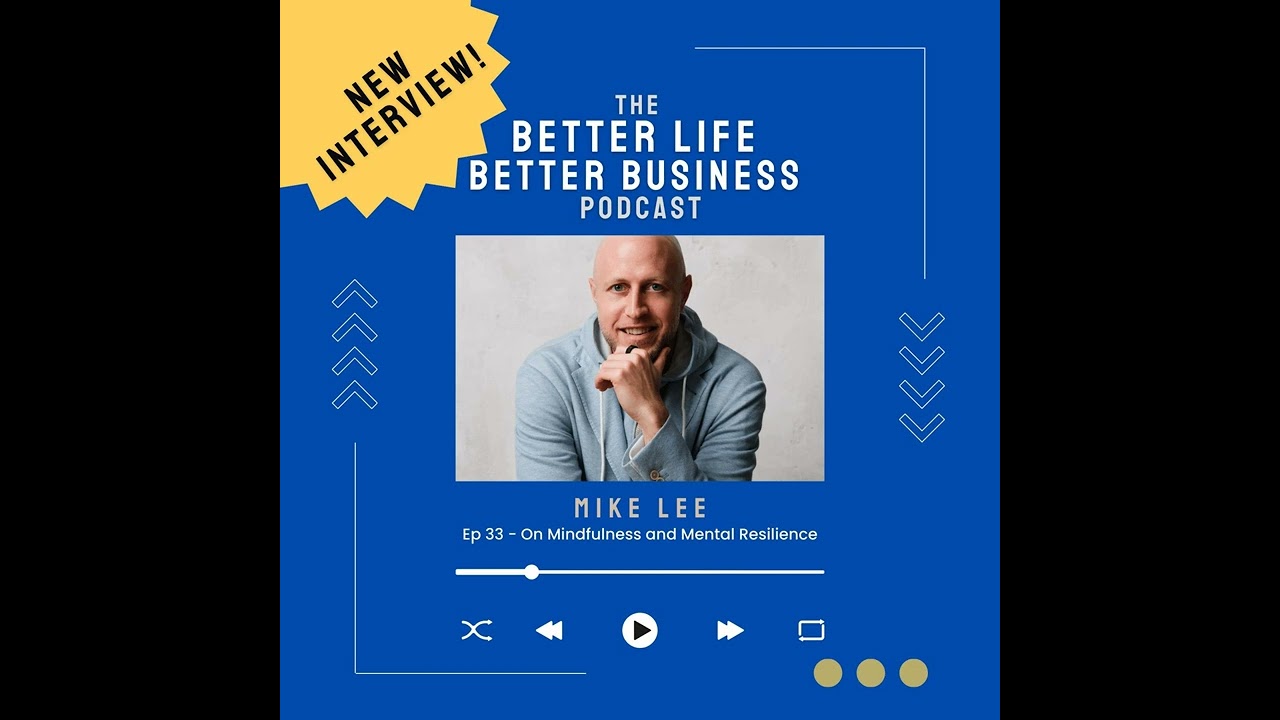
In this Better Life, Better Business podcast episode, host Shawn Ellis interviews Mike Lee, a former elite‑athlete coach turned mindfulness educator and leadership speaker. Mike recounts his early career building a youth basketball AAU program in Wisconsin, expanding to a training facility in Milwaukee and an academy in Barcelona, and coaching future Division I and NBA players. He shares his lifelong struggle with depression, the painful withdrawal from a 14‑year antidepressant regimen after moving to sunny California, and how that crisis led him into Eastern practices—meditation, breathwork, yoga, and mindfulness. A pivotal moment watching a Tony Robbins documentary sparked the insight that his suffering could become a tool to help others. Mike describes introducing mindfulness to his basketball camps, noting a split response among athletes: some dismissed it, while others experienced profound presence and flow. He explains how presence eliminates anxiety (future‑oriented), hopelessness (future‑oriented) and depression (past‑oriented), arguing that true performance—whether on the court, in the boardroom, or in healthcare—requires full, moment‑to‑moment awareness. The conversation moves to practical applications for parents, leaders, and client‑facing professionals, emphasizing the need to meet people where they are, model presence, and use simple exercises such as short guided meditations, gratitude letters, and heart‑centered leadership visualizations. Mike shares stories of impact, including a nurse’s presence affecting a patient’s experience, a gratitude‑letter exercise that moved blue‑collar managers to tears, and the importance of experiential learning in speaking engagements. He concludes by describing his current state of "surrender"—letting go of control to allow flow—and promotes his book, New Rules for the Future of Leadership, and his website mindshiftlabs.com.
Chapters
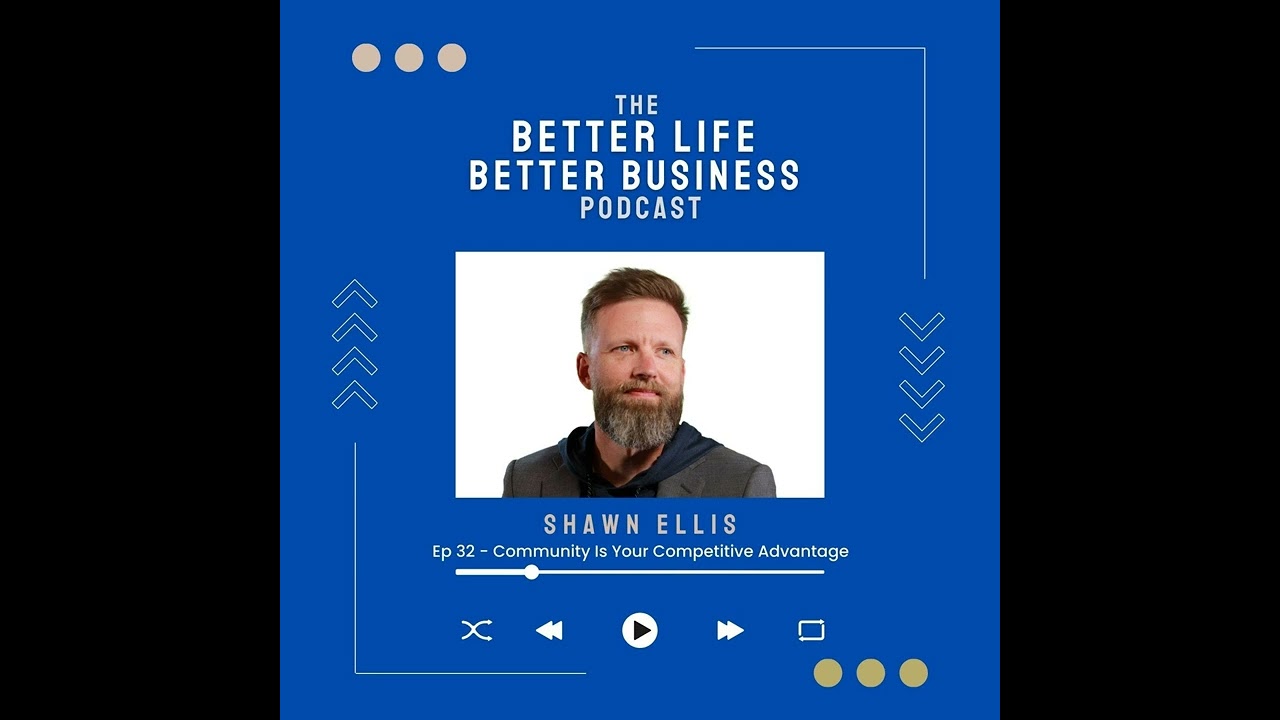
Hello, my friend, and welcome to the Better Life, Better Business podcast. I'm your host, Shawn Ellis, and I'm excited to bring you today's interview with someone who is both a colleague and a friend, Mike Lee. If you've ever found yourself struggling with staying present in your work or even your home life, if you've wondered how to overcome challenges like anxiety or burnout, then this episode is for you. Mike's journey from coaching elite athletes like Steph Curry and Joel Embiid To Empowering Leaders and Organizations is full of insights on mindfulness, presence, and mental resilience, which, as you know, are topics I love. Uh, Mike shares powerful lessons in this conversation and also opens up about his battle with depression and how being fully present transformed his life, but also how it can transform performance as well as psychology and leadership. As Mike says, the biggest barrier to our success isn't our environment or circumstances. It's winning the battleground of our minds. I love that quote. And it's a great setup for this conversation. We'll talk about some things you can do to win the battleground of your mind. I know you're going to love Mike's vulnerability and wisdom in this conversation. So let's dive in. Mike, welcome. And thanks for being on the podcast today.
Thanks for having me on, man.
Yeah, I know we were, we were together in person a couple weeks ago out in, uh, your, your home state, or your adopted home state at least, sunny California. And now I'm back in Ohio, you're there, but, uh, it's great to connect through the, uh, the magic of technology.
That's right. And you did a phenomenal job.
Oh, thanks. Very kind. I appreciate you coming out. It was a fun night. Let's talk. How did you get from working with elite athletes to this Speaking Space, now working with corporate audiences, working with leaders in organizations. As a starting point, I'd love to hear as much of your story as you'd like to share. Just how did you get to where you are now? And then we can go from there.
So I built my basketball training company out of my college apartment. I started in my senior year in college. I was an assistant coach on the men's basketball team and I was building this Youth basketball club. Some people would, if you're familiar with the basketball world, it was an AAU program that I was building for kids in Wisconsin that typically had to travel either to Minneapolis or to Milwaukee to play on a competitive club program, an off-season program where they could develop if they were kids who wanted to play college basketball, play Division I college basketball, even, you know, play in the NBA. That's who we built this program for. And so we started out with that and then eventually moved to Milwaukee where we developed a training facility. And we essentially had, you know, if you want to go to a fitness studio, like a yoga studio, whatever it is, we had classes 5 or 6 days a week there. And then we would run events all across the country, to be honest with you, all the world. We ended up building a, launching a training facility or an academy in Barcelona. Things were going pretty well. And I was fortunate to spend time with a lot of high-level players. We had 3 years in a row, we had a kid hit a game-winning shot in March Madness, which was just surreal to me. Some of these kids I'd known since they were literally little kids. And so, and things, so things were going well, but I had always dealt with a very deep personal challenge growing up in Wisconsin. I dealt with depression my entire life. I think the first time I ever remember feeling depressed was I was about 10 years old. And in the winters particularly, it would get really bad. When I was an adult and running my basketball company, there were winters, there were periods where I wouldn't get out of bed till 3 or 4 o'clock in the afternoon because I was just in this deep state of depression and finally got to a point where I decided I just could not take another winter in Wisconsin. And I decided to try LA for the winter, purely for the weather. And so I, when I got out here, it was January, it was sunny. I was feeling way better than I'd ever felt before in the winter. And I decided to get off an antidepressant medication that I had been on at that point for about 14 years., and getting off of it was quite literally what board-certified doctors have compared to somebody withdrawing from heroin. And as this is where, you know, my life started to take a little bit of a, a shift from, you know, living in, in the gym and having that, uh, you know, be the, the entire focus of my life really was I, I really dove deep into— you could put it in this bucket of Eastern philosophy, into meditation, into yoga, into mindfulness, into spirituality. And I was really deep into this for several years. Through this experience, I was trying to make sense of all this. And I remember I was sitting in my hotel room one night and I was watching— because I was suffering, Like, I'll give you an example. For 3 and a half years after I got off the antidepressant medication, whenever I'd go for a long run or get a hard, intense workout in, I never experienced the endorphin release. I never experienced runner's high for 3 and a half years. I would go on a 5-mile run and I would feel ap— just dead inside. And so, as you can imagine, this threw a wrench into my life personally and professionally. And I was trying to make sense of all this. And I remember I was watching a Netflix documentary with Tony Robbins called I Am Not Your Guru. And they ask him in this documentary, they say, why do you keep doing this? You have houses across the world, you have businesses that are doing billions of dollars a year. Why do you keep doing this work? And he said, I have an insatiable desire to alleviate human suffering for as many people as I possibly can. In my lifetime. And in that moment, I just started to cry. And I, because I could assign a different meaning to my suffering. I knew that some way, shape, or form that I was going to come out on the other side of this with a massive toolkit to share with people, to help build leaders, to help build people, and to build organizations that are looking to make an impact on the world.
Wow. That's— I got chills just as you were sharing that. Uh, first, I've seen that documentary and been to a few Tony events myself. I'm always fascinated by moments that create a turning point, and it sounds like that was one for you. What came after that? So that moment of insight, how did things start to shift then? How did that start to show up in your life for what you did next?
I'd say there are many moments. That was a big one, but there were— I think it was just starting to do little things. Like at the time teaching mindfulness at our basketball camps, um, teaching meditation, introducing more than just the on-court skills, really placing an emphasis on that and just doing the little things. There was a period where, you know, I got certified in a certain type of meditation called breathwork. I thought I wanted to go down that road. It was really a lot of trial and error and not doing the things that I'm doing today. It was a lot of trial and error trying to figure out what was the next thing in my life. At the same time, basketball was still my— I still loved it. It was still a passion of mine. The relationships that I had with kids that I coached and being able to run camps and events and have this training facility in Milwaukee was still a big part of my life.
Speaking of teaching that there in your camps, how did you— how did the kids, your athletes, how did they respond to that? Because we've heard a lot about the power of meditation. Of course, Coach, the great Coach Phil Jackson brought his approach to the Bulls and then the Lakers. We've heard some things about Kobe's approach, which I know you speak about that. But how did your athletes respond when you first started bringing that into the gym?
That's interesting. The kids fell into two buckets, one where they just totally didn't connect with it at all. And it was nap time for them. Uh, and then we had, there was this other group of kids where it was this profound experience for them. And I realized— I didn't know this at the time, but I realized that a lot of these kids, like, they didn't grow up without phones, without technology, without— without any white space in their life to do nothing.
Yeah.
And it was like this permission slip for them to be with themselves. I, I think one thing that I noticed in that space was that as the years went on, the more The kids' schedules were really filled from the time they got up in the morning to the time they went to bed at night. And there's a lot of stuff that I think is— it's a lot of impact that I think is coming out of that. But I think it was permission for them to just be with themselves for a moment. And then also we connected it to mental training. We connected it to why is being present so important on the basketball court?. And I think for a lot of the kids who had a desire to get better, to get to the next level, whatever that was for them, to play Division I college basketball, playing the NBA, WNBA, whatever it was, that they connected the meditation experience to their own experience of being in the zone or being in a state of flow. And that was something that they could connect to with it. And for those of you who aren't familiar with this, essentially a You know, we've all had it, whether it's been a deep conversation with somebody, whether it's been something that you're doing like performing arts, or you get lost in a creative project, whatever it is, when it's that mental space where— or mental state where time and space just completely disappear and you are in this optimal state of performance. And so I think a lot of them connected the kids who had a desire to get better, they connected this as a tool in order to help them get into that state faster and return to it when they were not in it anymore, when they got knocked out of that present moment.
Well, it's— having been on my own mindfulness journey, I, I, I've experienced the, the benefits of it myself as a way to just— I don't want to say escape, because it's not an escape at all. That's not the right way to put it, but just as, as noisy as our world is, as fast as things are moving. And like you said, with kids, the younger generations now that this, that's, they're bombarded from every direction from a young age with screens and all this input. It's such a stark contrast with all that noise. And then you settle into that space of presence, we could say. So I can only imagine what that experience was like for for a kid, and then also just knowing the value of that if you can learn that, develop that at a young age, knowing that the pace of, of life is only going to become— it's only going to accelerate. And something else, a couple things— my mind immediately wants to go two different directions at once, and of course we can't. So, uh, park one idea and ask you, what was your experience when you started to, to teach this and bring this into the gym, knowing what it had meant to you personally. How did— I'm curious, just did, did you feel, how did that feel for you as far as a sense of fulfillment or meaning? Did it light something up? Did you feel a sense that, ah, yes, this is the right path. I want to do more of that. Or was it, what was that experience like on your side of it?
Yeah, that's a good question. I, there was definitely a sense of fulfillment with it. You know, it was, I think the best way to teach is to first learn something yourself. And I think, and also like connect with them from the standpoint of the, I guess where I'm going with this is, so I'll back up a second. And one of the things at this same time that we started teaching this, that I noticed was just, it was part of the vernacular with these kids was they're just throwing around the words anxiety and depression, and more so anxiety. Um, they just talk about it like it was just normal to them, which kind of was not— you know, when you look at it objectively, not shocking. But when I was that age, nobody talked about it. I mean, I think I knew what that word meant. And so I think the fact that they were they were aware, they had a certain level of awareness that they were— they probably wouldn't put it into this category of suffering, but there was a level of it that they were aware of. They knew that something was off, that they didn't feel themselves, or they didn't feel like they were able to be comfortable with themselves. And I think, you know, when, when a— when you do, you know, I think there's a, there's a reward when you do something that you know is definitely new and a bit risky, and some kid comes up to you afterwards and says, "Can we do that tomorrow? That was my favorite thing that we did all day." Yeah. And so I think one of the lessons that I learned from that is in order to really be different and create change, you have to be willing to do something different. Do something new. Like, what, you know, everybody has heard the phrase, what got you here won't get you there. It's like, all right, on the basketball court, everybody is long and talented and athletic and can shoot and can dribble the basketball. What's going to give you an edge? What's going to give you that ability to separate yourself when everything's equal? And I think a lot of the kids bought into it from standpoint of it was their mind. And I think being able to introduce something to them that I knew they weren't getting anywhere else was definitely fulfilling.
Yeah. I wonder as you describe it and talking about the anxiety, which with, we've got 3 kids at home here. One, one is a teenage boy, one's a preteen boy, and anxiety is something we talk about with both of them. And like you, when I was a kid growing up, I don't think I ever heard the word anxiety. Definitely didn't know it, didn't understand it. And in adulthood, I've come to realize, you know, find my own spaces where, oh, that's, that's anxiety showing up there that I wouldn't have even known it in the past. But it sounds like, you know, talking about what you're bringing to them and going back to what you said, that meaningful moment with Tony and his mission or purpose to alleviate suffering, you got the taste of that there, I would think, or the way you're describing it, which I can only imagine how at least rewarding on some level to see, ah, this, I do have something that can make a difference. I guess I say that somewhat from my own perspective, kind of having, having felt the same thing. I think it brings, it brings a sense of meaning where we've all got our own pain inside our own stories. And then when somehow I can share something that, that has helped me with somebody else and it helps them, it's, I don't know, it has a way of bringing, bringing meaning to, to our own pain and suffering. At least that's my experience. I don't know how you would describe that or speak to that.
Yeah, very similar way. I think one thing that I've learned over the years is that the most fulfilling things that I do are not my own accomplishments. They're the accomplishments of the people that I've been able to help in some way, shape, or form by introducing them to something that I used to move through a difficult period in my life. And maybe they're able to move through it with a little bit more ease and grace and awareness.
Yeah. Beautifully said. Um, well, let's shift. And before we shift, I want to take this to the workplace and the work you do now and connect some of those dots and see where you see this applying, uh, in the workplace and in leadership. But first, having worked with as many kids as you have and understanding the anxiety and depression and just the mental health challenges for, for kids and for the younger generations coming up. What would you say to somebody who's a parent listening to this? And as a parent, I'm going to take notes myself, but if you could give just one or two nuggets of advice based on what you know, what you've seen working with kids, what you've seen to make a difference, or maybe just, hey, here's something you should know about your kids they're probably not telling you. What, what would you share with a parent?
That's a loaded question because I don't have any It's so I can only answer this from, uh, from my own experience, but I, the one thing I would say is their experience of the world is not, I think, I think a mistake that not only parents make, but leaders also make as well is that they expect, they like project their own experience at that age onto the person that they are leading or the person that they are parenting. It's like, well, when I was your age, we never did this, or we didn't do that, or, you know, back 10 years ago when I was in this position, we did it this way. Well, it's a completely different world. Like, it's a completely different experience. And I think one of the things that I learned from a coach that had a really big impact on me was, and this applies to parenting, this applies to leaders that are dealing with generational challenges in the workplace is that as a leader, you can't expect the people that you're leading or the kids that you're parenting to be the ones that change. You have to be the one that changes and meet them on their level. You have to meet them at the level that they're at, they're, you know, and have awareness of their level of awareness. And be able to use that connection from that level to, to call them up to the next one and create that connection and relationship at that place where they're at, where their level of awareness is. And I think like, you look at, I look at all the successful coaches that I was ever around and they were all, they were constantly changing. They were constantly learning. Because they knew that they had to stay relevant in order to be able to adapt and change in the dynamic world of, of basketball. The game is just constantly changing, and they knew that they had to adapt as well. So as a parent, I think just really trying to come from a place of understanding of what their experience of the world is, not what you project it to be.
That's really good. Great advice and a great segue into the workplace because you connected it so well between leadership and parenting. There are so many parallels there. As a matter of fact, when I speak to leaders, a lot of times I'm bringing stories from parenting because that's my experience on a day-to-day basis. And there are so many parallels there. So let's take it to the workplace. What do you see having worked with these, these elite level athletes and now going to the workplace where it's another elite level of performance? How do you see this lining up there? And I guess one of the questions, one of the things that came to me before was this idea. When we talk about slowing down, breathing, being mindful, meditating, a lot of times it seems unless you're somebody who already does this regularly, it seems so counter to the pace of life and work today. Like, how, how can I slow down? There's, there's so much going on, so many deadlines. I'm just trying to get through the day. And yet what we know is that this is critical to perform at a, at a higher level. What have you seen in your work with clients and in the workplace? How are you bringing this to them?
Yeah. So I put it in, you know, our area really focuses on, or we really focus on 3 areas and it's people, psychology, and performance. And I look at this from the standpoint, I'll take it back to the Tony Robbins experience. And it was like, it was the whole aspect. I was just in so much suffering, like emotional, psychological suffering that I was like, how, you know, you used the word escape before. I was like, how do I, How do I escape this, but not in a numbing out or avoiding way, but how do I move through this? How do I find peace within this? And what I've realized is that, you know, from a psychology standpoint, it's impossible to be in a state of suffering when we are in a deep state of presence. Anxiety exists in the future. Hopelessness exists projecting a future that's not there yet. Depression lots of times exists in the past, or it's about regret, guilt, or shame. But when we are completely present, when we are fully in the moment, it's impossible to be in a state of suffering. And so I think that's one aspect that we focus on from a people standpoint. It's people want to see, or people want to be heard. They want to feel seen and heard and, and feel a sense of connection and belonging. And they're never going to feel that unless their leaders are present with them. They're never going to feel that if they're in a one-on-one meeting and their, their boss or their direct reporter, their leader is checking email or answering phone calls. Like people, people feel your— people can feel your presence. Right. And as a leader, we have to be aware of that and have to bring that into how we interact with people. We've also kind of hit on this already, but the performance aspect is You know, we can only be at our best when we're in the present moment. We can't be at our best if our mind is in the future thinking about, or worrying about what's going to happen, worrying about an outcome that we can't actually control. We can maybe influence it, but we can't control it. Or we are in the past in regret, guilt, or shame about some mistake that we made or a missed sales opportunity, or. How we wish we would have shown up differently. We have to be fully in the moment in order to give ourselves a chance to be at our best. Absolutely.
Well, well said. I know I've, I've had a chance to talk with, you know, different salespeople over the years, but I remember one, one interview I did with a guy who had just won, or at least was in the top 1% of the sales performers at a company, and, and he was talking about how that his state of being, how important it is to his clients because his clients are showing up and maybe they've got problems, they've got a challenge. That's why they're talking to him to help him, help him or help them solve that challenge. But they're stressed out, they're anxious, they're worried, all that. And he was talking about how important it is that, that he brings a sense of calm and, and presence. I don't think he used that word, but what we're talking about today, like he can basically show up and be that for them before they ever start talking about products or services, but going back to what you were saying, if you're a leader showing up with that presence for your employees, certainly if you're in sales or service showing up that way for your clients and customers, we can take it back to parenting, but it is so important. I love that. It's well said.
Yeah, there's, I mean, I'll give you healthcare examples. There's a statistic. Somebody just shared this with me the other day that when a, when you're in your, not in the waiting room, but when you're in your like examination room at a clinic or a hospital and the nurse initially walks into the room, that research shows that the, the patient can tell whether or not that nurse is going to be fully present with them and, and be attentive to them within the first 7 seconds of them walking into the room. And that has like a massive impact on your experience experience as somebody that's dealing with a health challenge. I remember I had an experience where I was at a clinic getting, and it was, I guess, as I started sharing the story, I probably need to give, uh, some background or some context, but I went and I, when I went through this period of getting off medication, I was just, my, my neurotransmitters were just completely depleted. Like I mentioned before, I just, I just felt dead inside. And I went to this clinic to get an NAD infusion. And this is a— NAD is a specific form of vitamin B3 that is responsible for a lot of our, a lot of our energy production in our bodies. And they use it a lot in detox and rehab centers to help people get off of heroin or alcohol or something like that in order to mitigate the withdrawal symptoms, partially because it helps your body detox, but also because it can also be a brain reset. It can reset your neurotransmitters and be able to, to help you just get back to a state of being more, more balanced. Anyway, so I was at this clinic and I am like, I absolutely despise needles. Like, I think a few months before this I had to get my blood drawn and I was literally laying on the floor with my legs up the wall cuz I thought I was gonna pass out afterwards. Right. So this IV drip is, it's 8 hours long. You're there from, I think, 8 in the morning till 4 in the afternoon. And you're, it's, you're, you're there, right? The whole day. And I don't, I already feeling uncomfortable about this, but the, um, where I'm going with this is before they put the IV in, there were 2 nurses out in the hallway. That were arguing about something. Right. And so I don't— and so in my mind, A, I'm already nervous because I take needles and I'm also going to be going through this 8-hour procedure where I have an IV in my arm that I don't want to do anyways. And I'm already feeling really apprehensive— not— I was feeling apprehensive about the experience. I didn't know what to expect. Right. Um, and now I have these nurses who are in the hallway that are arguing with each other. And it made me feel even more uncomfortable about the experience because I'm like, are they arguing about me or what dose they're going to give me or who's— I don't know what's going on. And so from a, to your point, from a client experience standpoint, you're, when you're interacting in a like client-facing or patient-facing dynamic, it is super, super important. To be able to show up in a state of presence, being calm and collected and grounded. And it, that your internal state will transfer to the people that you're interacting with from a leadership role to a patient experience role, to a client role, whatever it is, that dynamic is transferable and it's super important to be able to manage that yourself.
Yeah, no, absolutely. Yeah. Those, those tiny moments. Just starting with your presence before even a word is spoken. I mean, that can, can change everything, just like you, you described. What is your goal when you go into an organization as a speaker, if you're speaking to their leaders or all their employees, whatever the audience may be, when you go in as a speaker, you know, we know you've got 30, 45, 60 minutes, maybe at best 90 minutes, but in that period of time, what is your goal when you go in there wanting to bring this message, bringing this insight to an audience, knowing that you can't, you know, you can't do an 8-week mindfulness training in 1 hour. What's your goal when you stand in front of an audience as far as how you want to, want to help them?
Yeah, so I can answer that in a few ways. I think if a— I don't do this with all of my talks, but quite a few of them I do. I'll lead a short mindfulness meditation session during the— I'll share some stories about it, some examples about how the Navy SEALs use it and elite athletes use it in order to enhance performance. I share my own story about getting into it. And then I'll lead them through a short meditation. It might— usually it's between 3 to 5 minutes, but I, the reason I do that is I think we— mindfulness is something that's really hard to describe and actually grasp. It's a, to me, it's an experiential learning. It's like reading a book about swimming and watching a video on YouTube versus having to actually get in the water and swim. And so I say that because I— one of my goals is really to give them an experience as to what it is like to be in that state. And then I think they're more likely to continue a practice on their own afterwards. I think the other aspect of that is the other way to— like, part of the answer to that question is in discovery calls with clients, I ask them like, when your, when your people leave the session, what do you want them to think? What do you want them to know? What do you want them to do? And what do you want them to feel when they leave the session? And I think I get, we get a lot of, you know, so you ask what my goals are, it's really a lot of it's dependent on that from the answers that we get from those sessions.
Yeah. That's taking it back to delivering what the client's looking for as as you should. So it's a good approach. What, do you have any favorite stories or experiences from working with clients and things you've heard from attendees afterward, just when they get a taste of what, what this, this presence feels like, or a more mindful approach?
I got 3 stories that came to mind. I don't know which one to share, but I'll, so I'll share a couple of them. One where I'll take audiences through what I call it our heart-centered leadership module where they will, I'll share, I'll share a story, a couple stories about heart-centered leadership. One about a coach that impacted my life, actually the one that I mentioned earlier in here. And then also how really connecting with a player that I was working with had an impact on his career. It's kind of led him to what he's doing today. Um, but then I'll also, so we'll Well, essentially I'll share some stories about heart-centered leadership, but then I'll take them through a few different exercises. And one of them is after, after I share that story, everybody's got their own— the coach that I share a story about is Coach MacArthur. And so I say everybody has a Coach MacArthur in their life. And so I asked them to partner up and share a story about why, why this person impacted them though. So they'll say that they instilled confidence in me. They taught me this, they taught me that. And so they'll partner up and they'll go through that exercise. Then what I'll have them do is I'll have them write out a letter of gratitude to that person that impacted their life. And actually, if possible, I'll have the, have the event planners have paper, have stamped, like pre, pre-stamped envelopes.
Yeah.
Uh, for each, for each person to actually send this letter out in the mail to this person that impacted their life. And then the last part of that is I'll have, have them go through a, what I call leadership embodiment, uh, practice or visualization where they essentially bring themselves into a, a challenge that they're going through and then how they can embody the skills that were modeled for them that from that other leader. And so after, after I, one of the first times I did this, I was sitting in, we went through the whole session and I was sitting in the room. Everybody had cleared out. I was sitting in the room, uh, talking to, um, talking to one of the, one of the attendees or whatever. And I had the meeting planner came back into the room and she came up to me and she said, did you see what happened in the hallway? And I was like, no, as if it was like a bad thing. Right? Like usually when people ask you, if you saw what happened, it's usually not something good. I was like, no. And she said, we, we had this, one of the managers who wasn't in the session was, this is an all-employee event. One of the managers who was, he wasn't in the session, was out in the hallway afterwards. And one by one, there were 4 guys from the, that were in the session. Came up to this manager, uh, to their manager afterwards, and they each handed them, the same guy, the letter that they had written in the session. And this is like a super blue-collar audience. And she's like, yeah, they were all, they handed him the letter and they were all crying afterwards in the hallway. And so it was this incredible moment of connection for these people and really an opportunity for them to express their gratitude to a leader who had changed their life in many ways. And so, uh, that's, that's one example.
That's, that's amazing. Uh, I can only imagine what a beautiful experience, both for those handing over the letters, but then also for that, for that manager receiving that feedback that, you know, perhaps he had had no idea, but I love, I'm glad you shared that story. And I know that for sake of time, we'll save the other stories for, for a future episode perhaps. But I love that you shared that story because I think that's one of the just most beautiful things about speaking. As speakers, we go in, we want to bring the best content and our best ideas and everything of that sort that you expect out of a speaker. But it's those moments like that, that you just, you can't script, you can't prepare for. Um, I think are just some of the, some of the most beautiful moments. I appreciate you. Sharing that. And before we do go, because we could talk a lot more about all this, I'd love to, I'd love to dive deeper. We'll put, you know, ways for, for people to contact you in the show notes so they can learn more about you and your work. But just to close the loop on kind of your journey, I'd love to hear kind of where you are today from where, where you were. You've obviously you've moved from Wisconsin to California. You went through that trial getting off the antidepressant. Kind of found your, you know, your calling, I guess we could say, as far as helping people alleviate suffering, now doing the work that you're doing now. How are, how are you today? And I know as we're all humans, the journey continues. And I guess let me just say this first of all, I appreciate your vulnerability and kind of sharing where you've been, where you are, because that's my, my own story is what I share. And I find that, you know, I talk about bankruptcy, I talk about divorce, things that I would, it's not that I love to talk about, this'll be a fun topic to talk about. It's just that I know that when we share those spaces, that's where I've found the greatest connection with audience members. Cause like, wow, finally somebody's talking about this. And, and I know that those listening to this podcast, they're going to hear you and say, ah, wow, thank, thank goodness I'm not the only one. So just to say thank you for sharing what you have, but just curious to know kind of how, how your journey continues, where you are today personally and in all of this and bringing this into your life?
Yeah, I would say from an actionable, like, takeaway standpoint, I am— I think I'm in a place in my life of surrender. And I know something that you talked about, uh, in your talk, uh, when I, when I saw you in Anaheim a few weeks ago. But I think there's, uh, you know, and you said the same thing, like, surrender is not It's not a place of complacency. It's a place of letting go of control so that the present moment can— whatever is supposed to unfold can unfold in a way that I'm not attached to. And, I've found that being in this place of surrender allows more flow in my life. I think we don't suffer because of what is, we suffer because of our psychological resistance. Resistance to what is, right? We don't experience stress because of the actual event. We experience because we're resisting that the event has actually happened. Right? And so I think being in this place of surrender and acceptance is allowing me to, you know, really live my brand of being more in the present moment.
Well, that's, that's beautiful. And I love that we land there on on surrender because you're right. It's, it's kind of where I landed after this 10-year period of my life of kind of learning lessons and trial and error. And then it was when I got to that place of surrender, that was not to say that was the end of the journey by any means, because again, the journey continues, but that was one of the most transformational spaces was when I got to that place. And I had lunch today with a speaker who's here in Columbus who I know you, you two would love each other. But she was saying that she has a card on her desk and she says it's, if I remember right, it's, I wonder what will happen today. And she was saying like, just, just this idea of stepping into the day and not knowing what it will bring. But it's, yeah, it's, it sounds like the easiest thing. Oh, just surrender it. But it's not. And like you said, it's not a place of complacency, but there is a freedom that comes with it. And I love that you're there. I love that we land there because I don't know of a better place to end that if we can. If you're listening to this and feel like you've done all that you can do, maybe that's the clue that surrender is the next step. And some of the most beautiful, amazing, magical things I've seen happen in my life have been on the other side of surrender. And then usually when I decide to take the reins back and start trying to control things and make things happen, that's usually the clue that I'm about to learn once again that I need to surrender. Mike, thank you again so much for taking the time to be here on the Better Life, Better Business podcast. It's the conversations, as I would say, it's about how to live a better life and build a better business. And presence is one of those things that will change your life. It'll change your business. And again, I appreciate you sharing your story. And for anyone listening, if they want to either get your book, check out some of your articles, find you on social media, they can get your website. It's mindshiftlabs.com. Do I have that correct?
Yeah, that's right.
Okay. And anything else you want to plug here before we go? We'll put any and all of it in the show notes.
I have a new book that's out. It's not new anymore, I guess it's been out for 8 months. If you want to check that out, it's called New Rules for the Future of Leadership. Shawn mentioned the beginning, but I'm just happy to connect with anybody if they're interested in continuing the conversation.
Absolutely. I, I, uh, I love this conversation, Mike. And by all means, if you want to learn more about presence, go to Mike, whether it's to buy his book, book him to speak, whatever it may be. I love the work you're doing, Mike. I'm grateful for your friendship and partnership. And for those of you listening, thank you for being here. Let us know what you've, what you took out of this, whether it's leaving a comment on the show, send us an email, uh, let us know what you took away from this. I hope you found it to be valuable. I look forward to seeing you, talking to you again next time. Thank you, Mike. Thank you to you who are listening. And that's all for today.
Thanks, Shawn.
More from Shawn

Shawn Ellis | Choose Your Ending™ — Radical Adaptability Keynote Speaker Highlights