4 September 2025 Things You Hear About Functional Medicine
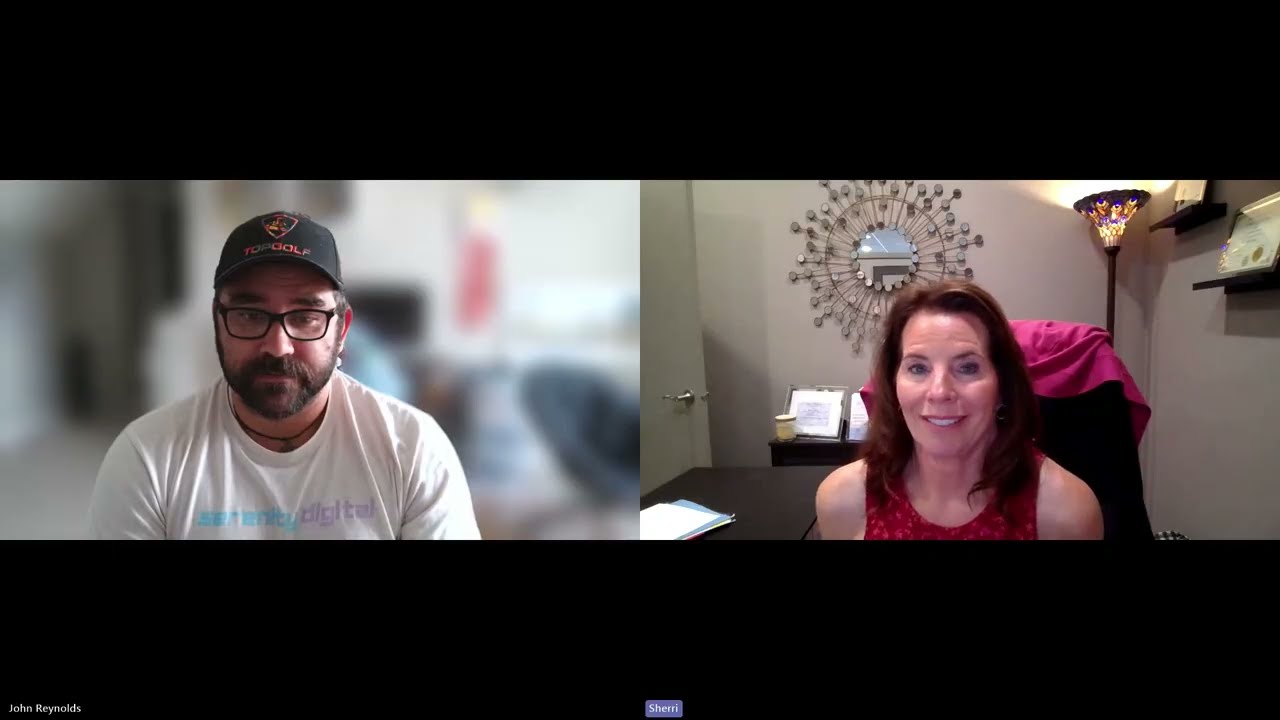
In this episode of the Balanced Body Podcast, host John interviews Sherri Griggs, owner of Balanced Body Health and Wellness in Omaha, about functional medicine, hormone replacement therapy (HRT), and common misconceptions circulating in the health‑wellness space. Sherri explains functional medicine as a whole‑person, preventative approach that relies on extensive data collection (cheek swabs, cortisol saliva, blood panels, stool microbiome tests) to identify root causes rather than merely masking symptoms. She critiques multi‑level‑marketing “natural drops” marketed for perimenopause, arguing they mask symptoms without addressing hormonal decline, which can increase risk of osteoporosis, heart disease, and dementia. Sherri discusses the legacy Women’s Health Initiative (WHI) study, its methodological flaws, and newer research—including a 2022 Yale study of 7 million women—that shows estrogen‑only therapy reduces breast, ovarian, lung, and colorectal cancer risk by 33% and lowers breast‑cancer mortality. She highlights barriers in conventional primary care (time constraints, limited nutrition training, missed early detection of pre‑diabetes and kidney disease) and the reluctance of some providers to prescribe bioidentical hormones, often due to state regulations. The conversation lists subtle perimenopausal symptoms (night waking, anxiety, vaginal dryness, brain fog, weight gain) that patients often overlook. Sherri emphasizes individualized baseline testing, shared decision‑making, and the importance of patient empowerment. The episode ends with a call‑to‑action for listeners to schedule a free discovery call or telehealth visit with Sherri.
Chapters
Welcome to the Balanced Body Podcast, where Sherri Griggs, owner of Balanced Body Health and Wellness in Omaha, talks to us about health, wellness, and balancing hormones.
Welcome to the Balanced Body Health and Wellness Podcast with Sherri Griggs, owner of Balanced Body Health and Wellness in Omaha. Hello, Sherri.
Hi, John. How are you doing?
Great. Any chance I get to talk to the hormone expert extraordinaire, aka the MacGyver of hormones in Omaha, is a great day for me.
Awesome. Yes.
And I'm doubly lucky because I get to see you in person every week in our networking. But that's just an aside.
That's good. We want to keep that up, John.
Oh, inside jokes are great. Um, Today, I think we've got a really good conversation going into just, you know, we were joking about it at first saying it's things that bother you, you know, but really diving into some of the things that you'll see out in the wild, what people may convey as true information or what you might hear and your take on like maybe what somebody means when they bring up different parts of either hormone replacement or something that you do with functional medicine. So I love I love the idea of kind of digging into things you might hear while you're networking or out meeting somebody or even talking to a trusted, you know, medical provider that just doesn't know functional medicine very well.
Right.
Did I frame that up appropriately?
You did. And, and, and prefacing functional medicine being a preventative. type of a, um, a whole person, whole person prevention, right? Not just looking at what's broken and only fixing it after it's broken or fixing it after you're sick, but preventing you from getting diseases. And so that you can feel better and live better and live, have a better quality of life.
Absolutely. And I think one of the things, just to get out in front of it, for how you and I are working on my own health journey, in what's important to me, is that we're diving in very specifically on a lot of data, but to get to root causes, like why is my body doing what it's doing? How do we avoid that? What do we change? You know, like it's, it's a very detailed plan just for me. And so this is functional medicine targeted just for John's health, right? And it'll be the same for whoever talks to you.
And keyword, using data, using data, right? So we're not just guessing. We're not just saying, well, you know, this is what happened to so-and-so. It'll probably work for you. No, it's actually looking at the information that we have gotten from your body, from your cheek swab, from your saliva for your cortisol, your blood. Right, your stool test to look at your— see what's going on with your microbiome and all of these different things that we can find out about you and how your body is running. Kind of think of it like your car, right? We're checking your oil and your transmission fluid and your rear end, you know, grease. We're checking all these things to see how these different parts are running and looking to see the health of your body. And using that information that we've collected about you to say, hey, maybe we need to pay attention to this area. This is something that if we don't, you will have an issue down the road. You will get sick if we don't do something.
Or on the flip side, this is how you're feeling now, and it might be due to this, this, and this. Like, case in point, on a, on a lower level, you know, we found out that I'm somewhat lactose intolerant. It made sense, but I never thought of myself as being lactose intolerant.
Right.
It just shows in my DNA.
And so we look at that because sometimes people are so used to, oh, well, when I eat this, it just kind of bothers me a little bit. But what they don't realize in the background is when you eat this that bothers you a little bit, it's causing inflammation in the body. And inflammation in the body, inflammation is our precursor to cancer. It's our precursor to illness. So even though we think it's harmless, saying, oh, I know, I know I'm going to eat this and I'm going to have an upset stomach for a couple hours, it's no big deal. It is a big deal, right? Once or twice or occasionally a couple times a year.
Yeah.
But if you're doing it once a week or once a month, eventually all that damage builds up. The body doesn't have time to heal itself.
It's true. So what are some buzzy things or, or interesting points that you might hear, like, kind of pique your interest about maybe functional medicine, or, or something somebody will say that kind of makes you grit your teeth and stare at somebody?
Well, here's one. Um, And this is something I've been seeing out there, mostly social media. It's from a multi-level marketing company, and they're telling women particularly, hey, if you're having symptoms of perimenopause, these are the symptoms, and you can take these drops, and you take these drops and these symptoms go away. And, you know, I don't do this much, but if you— if I'm pushing this, you know it's good and I believe in it. And that's fine. Right. That again, my thought process when I look at this is, well, this is really no different than traditional medicine because we are just masking the symptoms, but not the root cause. Right. What bothers me about it is that I fear that it's going to mislead women that— and because it's an all-natural drop— mislead them into thinking That this is the fix. This is fixing the problem, but it's not. It's doing the root cause, or it's not doing the root cause, it's doing the symptoms. And the issue with that is that hormone replacement, which would also take care of those symptoms, is prevention, right? The root cause is because as you've gotten older, you've lost the hormones that you've always had your whole life. And now you're having symptoms of that. So now if we just mask the symptoms, we don't prevent the osteoporosis that can happen from not enough estrogen, the heart disease that can happen from not enough estrogen, because estrogen is an anti-inflammatory. The, um, and then testosterone helps prevent osteoporosis. Um, and, and what about, you know, dementia? We know that inflammation Dementia can be caused by inflammation. And so estrogen being an anti-inflammatory can also help with that. So we're not telling people this. And I feel the fear that it— I don't think that anybody is trying to dishonestly trick anyone. I think they've been misinformed, and I feel that They're being misinformed by somebody above them in that pyramid that's not also saying, however, right? But saying, this is how it is, this is all natural, this is safer, this is X, Y, and Z.
Mm-hmm.
Um, hormones aren't for everyone. Not everybody wants to replace their hormones, but I want that to be an educated decision. a decision that they say, yep, I understand, I understand that I will be at a higher risk. Not that you'll definitely get it, but you'll be at a higher risk of these issues if you don't replace your hormones. But I don't want to. Why not?
Yeah.
Do you think that that's due to, you know, the people that are pushing some sort of miracle cure, just like, like you said, something that'll fix the issue? Not the issue, but the symptom. And they're like, but this gets rid of the symptoms, so you're going to be fine, right? So it just kind of leads into this easy solve— take this thing and then it's done.
And you know what? That's it. It's easy, right? Everyone wants things to be easy. So it's easy, you just take some drops. It's easy, you don't have to see a medical provider. It's easy, you don't need a prescription. It's easy, it's less expensive than getting the preventative care. Of course, then it's going to be more time-consuming and expensive when you potentially get these other issues for not replacing your hormones. And I, I also see that a lot of it comes from the misinformation that we had from the Women's Health Initiative study, right? That study that the results came out in 2002 and they were, you know, there's a book by Ira Bluming, Ira, Estrogen Matters. And it's a very interesting book in that he explains how we call the information was was data-mined, or data-mined, meaning that they looked at it, but they didn't really look at the numbers. They, they kind of pulled little snippets of things out and then made their own assumptions or recommendations because of this. You know, for instance, the, the women that they used were all older. They're all older women. They, they used women that had been in menopause for a long time. They used women that potentially had already had breast cancer. They used synthetic progestin instead of progesterone. They exaggerated the findings. And I believe it was 2018 when it came out what had happened and it was debunked. And it's like no one knows it. Everyone's only Heard the screaming from the rooftop that estrogen causes cancer. But the women that stayed on the estrogen— and this was the, I call it the horseshoe and the conjugated oral estrogen— had 22% less breast cancer when they looked at these ladies later.
Oh.
These were the same women in the study that were still living, had 22% less breast cancer. And had they— if they did get it, then they had a 40% less mortality. So, um, it— and that was the estrogen-only group. So, um, it's a great read if you're not certain, um, and they just really go into details about how the numbers were taken out. Um, so, so that definitely is another thing when I've got fellow practitioners That will say, why do you want to be on hormones? They cause cancer.
Hmm.
And they don't. There's so many studies. We have, we have so many studies, newer studies, right? They've also said, well, there aren't any new studies, thinking that all the studies from the '90s before the Women's Health Initiative that were all for giving women hormones, and then 2002 comes along. But these are studies, they're newer. There's some as new as, as 2024 that show statistically how you're better to have hormone replacement than not have it.
I mean, it's, it's crazy how that can be a thing where, you know, somebody can just point to some old study and then say, oh, this is a debunked theory. And then when you really look at like When somebody's looking at whatever happened, the data, it's so old. Like, 2002 doesn't seem like that far back.
That's 23 years ago.
Well, that's 23 years ago.
And, you know, we, we had, um, and it's like you don't hear anybody talk about a very large-scale study that they did, they did at Yale. Okay, I'm looking at that. They took 7 million women over a 12-year period.
Oh my gosh.
And they— those women on estrogen had a 33% lower risk of developing breast, ovarian, lung, and colorectal cancers if they'd been on hormones for at least 5 years, saying that staying on them is safer. Yeah. So it's very, very interesting. And I think that— when was that Yale study?
2022.
So they started that study right in 2010 if they did it over 12 years. So there are a lot of newer studies. They are out there and most Of them, the majority of them debunk the Women's Health Initiative study because again, that study numbers were just pulled out.
Hmm.
So, so, so speaking not from a place of being current and up to date, but because this is what I learned and what I was told. And I, and I think I've mentioned this before. One of my preceptors said, I don't have time to learn another specialty. And I can respect that because our primary care providers are super busy, right? If they're working with insurance, they are slammed. They've got to see, you know, upwards, and sometimes they see 20 patients a day.
Yeah.
And, and they're exhausted and they're charting and they're doing paperwork and they don't, they don't have time to go back to school. Yeah. So they only know what they hear or what they've heard. They don't know all of the updates and the nuances of it.
It takes— and this is one of the things that I'll say on my journey with you— I had to, I had to flip on its head a little bit because, you know, that's just what I've been— that's what I've known my entire life is when you're sick, you go to the doctor, you treat whatever you're sick with.
Yeah.
And it's, it is a bit of a strange, um, change of flow to be proactive, search for something, and then fix it.
Right. Prevention. Prevention. So when we catch you pre-diabetic early, maybe we prevent you from having numb toes, numb feet, right? We prevent you from having vision loss. Because the small capillaries in your eyes, your eyes that are damaged. So that's a pet peeve for me because I say there is no such thing as prediabetes. All right, we need to take care of this. We need to fix this. So I told my friend, I'm going to send you a bunch of stuff about, you know, glucose and, and glycemic index and foods I want you to avoid, and I want you to eat this way. And if that can't bring it down, then we need to get you on some berberine. Or, you know, I had a patient that said, I'd just rather be on metformin because insurance will pay for the prescription rather than pay for a supplement. Now, studies show berberine is just as good as metformin. It works just as well. But metformin is no longer evil. Longevity medicine shows that it lengthens our telomeres. My functional medicine guys in Europe take it Just to live longer.
Okay.
Oh, right. So, so I don't think like, oh, I wish you weren't doing that. I don't think that at all. But I let them know all their options. I lay all the options out. I've let him know what might be coming. Right. And but we want to prevent it. We don't want to wait until these things happen. So now we have the numbness in the toes. So now we better check and see if this person's diabetic. We better check their heart, see if their circulation is good. We better check their leg circulation. circulation to see if there's some issues there. Now, John, now we're looking for the cause of a symptom that's irreversible.
It's irreversible. That's hard.
And it's interesting because the doctor very calmly says, oh yeah, it'll start at the toes, goes up your feet, goes up your legs till it's on them. But it wasn't a scare tactic because he didn't say what to do about it. It just is what you're in for.
Yeah, probably just used to telling people that that's exactly what's coming down the pipe.
And, and, and instead of, you know, patients saying, so what do I do to prevent that from happening? It's like, okay, doc says we'll do this test, and that's where it ends. So you don't know what you don't know. You know, all of you people out there, you don't know what you don't know. And your doctor's right, we are looking because if we can prevent these things, we should.
Right.
Because the damage is irreversible. Once, once it— once this— once the symptom or the, you know, once you have that complication, you can't turn back the clock.
Right.
And not everything is fixable with a pill.
Although somebody will tell you otherwise.
Somebody will, right?
Yeah, certainly.
Yeah, your liver is severely damaged and you're dying, but hey, we'll just give you this pill and everything will be fine. Yeah. Um, well, and then don't get me on kidney functions because I cannot tell you how many people I see that have damage— they have kidney failure They're like in stage 3 kidney failure and their primary care has never told them that.
What? How is that possible?
My really good friend Sue, she's since passed, but Sue was told she was in stage 4 kidney failure when she got to stage 4. And she was angry. Why didn't they tell me when I was in stage 1 or 2 so that I could have prevented it from getting worse?
Yeah.
Not a word.
Oh my gosh.
So I, uh, I find this out. I have a little side gig. I, I, I love old people. I like geriatrics. So I spend about 15, 16 hours a month, uh, doing Medicare exams. And this is how I find this out, because I will get these reports and I'll say, you're in kidney failure. And they'll go, no, I'm not. And I'll go, well, Here's your report. You're stage 2B, right? You are in kidney failure. Well, why? My doctor told me. I go, well, that's a conversation I'll have to have with them. And then I put it down on my little thing. Patient wants to know why doctor's never told them that, you know, they have this. And this is a report the doctor's supposed to get, or the primary care, you know, nurse practitioner, PA, whoever. Um, and I don't know if they read those reports, but I run into it all the time, John. All the time. Oh my gosh, it is. And all ages, because we've also started doing some for the state, so some Medicaid people, and there— some of them are younger and they have no idea. It's, it's terrible. That's a pet peeve too. What does that do with— does it? I'm ranting now.
Oh, but, but you know what though, this is the kind of thing that is— it's all interlinked in that You know, even, even if we are in sick medicine, as long as the symptom isn't bad enough for you to go in and be like, hey doc, this is hurting, and why, they're not going to look for it.
You know, gone are the days of the annual physical. Now, I, I do know that there are still some providers, um, and I guess I can't say that gone are the days of the annual physical where they just do all this this blood work every year because that has very much been the norm for decades. Um, but for that gal to tell me that the pediatrician said to her they're not doing it anymore because kids are— most kids are just healthy. So, um, it is, it is interesting that that's happening. Yeah.
It is. So, um, I'm curious, are there any fuzzy terms or, um, items that people will kind of bring up and then sway against that fall into functional medicine or preventive medicine? that you hear quite often that kind of gets you mad? You're like, uh, this person doesn't like functional medicine even though it seems like maybe they are kind of pro-functional medicine.
Well, it's interesting because I do find a certain subset of providers that will shy women away from hormone replacement because they can't prescribe it. So, I mean, I feel that's what they're doing. I have no— I don't know why they would shy women away from it if they read the, the science and the medical studies. Um, and so they push more towards supplementation and fixing the symptoms again.
Hmm.
Although they tend to be— do a lot of functional and root cause stuff that, you know, and, and that's the only reason I can think I have no— I don't understand why somebody that's preventative and functional would shy a patient away from something that is root cause-based unless it's because they can't do it. Now, that's not all states. It is in the state of Nebraska. Those states, they can. It would be interesting. Maybe I should ask some questions and meet some people in some of the other states that can prescribe. and say, what do you think about it? And then I would know for sure, right? 'Cause if for sure they say, oh, I believe in it, it's root cause, it's functional, it's preventative, then I would know for certain that in our state they do that because there's nothing shady about it. So that's just my opinion, not the fact.
Do you think it's tied to the fact that Because people are just so rooted in sick medicine that the idea itself of preventative or functional medicine just doesn't make any sense. And so they like maybe have heard about it, it's been around for a long time, but they just don't practice that. So maybe they're anti-hormone replacement or anti-functional medicine just because it's not what they do. Have you seen that?
Um, I've seen that if we're thinking of like other medical practitioners, because it's not what they do. You know, the problem is, is that, um, functional medicine is such a catch-all phrase, right? And functional medicine has been around so long, and I'm trying to think the proper way to say that There is fact and science behind all of the testing and the stuff that is done and we know it works, but it hasn't always been mainstream, right? And because it's not taught in the medical schools— hormones are just finally being taught in medical school this year. And I'll say I've been on bioidentical hormones for 20 years. Okay, in Nebraska. So that means that they've been on the coasts and in Europe long, long before they were ever here. So there's a proven track record. But again, if it's not what everybody's used to, if you're not swimming the same direction, the unknown And change, people don't like that.
Well, and I mean, I know, or at least I think I know for a fact, one of the things that's also not really taught to just, you know, doctors, like mainstream doctors, are things like nutrition, right? Like, we'll take one course or something like that when we're in med school about nutrition and how important it is, but compared to all the other things that you're learning about and all the things that you have to do continuing education about as a doctor, Nutrition is not a part of it. And yet common knowledge, which, you know, who knows, like that is its own misnomer, but common knowledge is that 80% of, you know, doing things right is the food that you put in.
Right.
So you would think that would be a much bigger part of—
Yeah, Dr. Mark Hyman will tell you, you know, He's a doctor, um, Cleveland Clinic, uh, functional. And all of his stuff, if you ever look at most of his stuff, it's all about food. Food is medicine. Food can heal, right? But it— I wish I could remember the name of the book a friend of mine told me about in the food industry and about why there are so many of the things that are put into our processed foods. It's about money again.
Oh yeah, it's all money.
It's not about health or staying healthy. It's about money and how inexpensively this processed food can be made and how inexpensive it can be for people. But yet the stuff that's healthy and the stuff that would help keep us to be a healthy nation is so expensive. Again, we're backwards. We're doing it backwards.
Yeah. It's crazy when you think about it. So what would you tell somebody who, you know, maybe hasn't got enough time on their hands to have recently done any digging on hormone replacement in particular? But like, what are some symptoms that might lead Somebody to think, oh, maybe this is something that I want to research a little bit more about or start a conversation?
Sure. Um, and it can start young. I've got some ladies, they're in their late 20s starting to have symptoms, but they're the symptoms that people don't talk about. Okay, they're the waking up between 2 and 4 at night, not being able to sleep all night. That is one of the big ones that comes up. Anxiety that you don't know where it comes from. Why am I having anxiety? I've never had anxiety. Okay. All of a sudden I'm depressed. Vaginal dryness, going, whoa, what is that? Where did that happen? Incontinence. Okay, these are things that, well, that's just part of getting old, but it's not true. We hear about hot flashes and night sweats, but brain, you know, they call brain fog, or like the gal sits here and goes, I need to use my brain and it doesn't work right anymore.
Hmm.
Okay, people don't associate some of these symptoms with low hormones. Um, the, I'm eating the same and I'm working out the same, but I'm gaining weight. And the doc says, well, that's just part of getting old. That's part of your hormones leaving you. That's part of the hormones dwindling. Um, and, you know, and those are symptoms that we don't think about. We think that's just part of getting older, but it doesn't have to be. Um, and not everybody— I mean, I've known 70-year-olds that still make enough testosterone, their adrenals do it for them. So, you know, that's why I always test. That's why I always want to have a baseline. I'm not going to assume because you're a certain age that you need this. We want to get a baseline. We want to see where you're at because everyone's different. Um, I had somebody saying, well, I told my sister maybe she should get her hormones drawn before she goes into perimenopause. And I said, well, the problem is, is that it all works together. And people, as they age, the body functions do change. The liver changes, our cells and cell regeneration changes. These things change, and we could get into peptides and all kinds of stuff that's part of that. But we need different amounts and different levels. So knowing what you needed when you were maybe in your early 30s may not be the same thing you need in your late 50s. So you're not just a number, you're a person with symptoms.
And I'll tell you from my own experience too, like, it's almost like being that frog in a pot of hot water that's getting hotter.
Yeah.
Like, I think it's, it's, you don't, you don't have a name for it. You don't really realize some of the symptoms are true symptoms, you know. Oh, I feel like I'm down today, or, you know, there's something going on here. And then just all of a sudden one thing will happen and you're like, hey, it wasn't like this, like You know, just 2 years ago, right? Once you start balancing out your hormones and that starts slipping back into it, you know it. You're like, oh my gosh, yeah, I am slipping.
Because once you start balancing them, right, it's not like it was over years where you start to lose it slowly over the years. Your body will burn through it, right? There's only so much if you're doing an injection or a pellet or, you know, a topical It's not a constant, so you'll burn through what you've got and then you don't have nothing because your body doesn't keep making it. So when we're replacing it, we're literally replacing it. And it's something that, you know, people say, how long do I have to do this? And I go, how long do you want to feel good? It's up to you. I'm not going to tell you how long you have to do anything. I mean, they'll be prying my hormones out of my dead body. I'm never giving up.
I want to stop when I'm 42. No, I'm just kidding. I have no idea.
Right.
I just wanted to be ordinary.
Yes. Yes. That's good.
Well, if, if you're listening and you want to have a conversation with Sherri, because it all starts with one quick call or video call or whatever, you can do that at balancedbodymedical.com. And I'll let you finish off the rest of the spiel.
Sign up for a free discovery call. I just had somebody I was talking to yesterday, and, and he said, I'm not sure if this would be a fit for you. She's having dizziness, she's having this, she's having that. I said, have her sign up for a discovery call. Let's talk, right? If I can't get a handle on her symptoms on our phone call, then I'm probably not the right fit. Um, and I'll tell her that. Right. I, I want to stay in my lane. I want to stay in my specialty because I like to know more and be an expert in what I'm doing, which is why I didn't go into primary care, because you got to know a little bit about a lot. I wanted to know a lot about a little. Um, and so, yeah, sign up for that call.
It's free.
Uh, you can call the clinic at 402-807-5333. And set an appointment up there. Uh, it's, you know, I can do telehealth depending on what your issues are. I'm, you know, otherwise if it is like testosterone replacement, I need to be licensed in that state, but otherwise I can do telehealth because it's more symptom-based and number-based than it is exam-based.
And I'll tell you, it'll be fascinating once you start going through the data with Sherri because Because it's just things start clicking. It's like, it's almost like a puzzle. You start putting it together and then you start seeing the outline. Like, oh, there's my journey coming together. Yep, yep, very good.
Well, thank you, John.
This was totally fascinating to hear what grinds your gears out in the wild when you hear it. Um, and we should definitely do more of this because I'm sure there's so many little things that just catch Because I hear things about, you know, not just functional medicine, but just ideas on how to be healthy or use this, use this thing. Or, I mean, and we're all bombarded with big pharma. So, I mean, I'm sure there's tons of stuff that we could talk through. Oh yeah, that just throws, throws it off. Right.
And, you know, knowing that this is my opinion, right? This isn't all medical fact. I mean, some of it's medical fact, the statistics I read you. Or medical facts, but some of this is my opinion and from practicing and seeing people and the education that I've obtained. So I always recommend that people make their own decision. As I said to that patient today, make your decision, do the research, here are the studies, do whatever you do, but be comfortable with what you do and I will meet you there, right?
Right.
If you decide you don't want to do progesterone, you know, we can do some other, the things to help you sleep. We can do some, some natural things to help you sleep. And we'll do what we can to get you to feeling better. If you decide you don't want to do that, I will not push you.
Unless it's the patient wanting to be pushed, right? Let's say they want a goal. They have a goal in mind. You're like, all right, let's go. We're, we're packing it in.
Keep me accountable. I can do that.
Well, thank you so much, Sherri.
All right. Thank you, John.
Bye. This has been the Balanced Body Medical Podcast with Sherri Griggs, owner of Balanced Body Health and Wellness. If you're looking to find Sherri, go ahead and look for the website balancedbodymedical.com. If you're looking for the business and you want to find Sherri at her office, you can find her at 10815 Elm Street in Rockbrook Plaza. Thank you.
More from Sherri






Beyond Hormone Balance: Reclaiming Pleasure, Purpose, and Vitality in Midlife w/ Carla Wayne Wright

Beyond Hormone Balance: Pleasure, Purpose and Midlife Vitality with Carla Wainwright

Cortisol Hacks: Simple Ways to Calm Stress, Support Sleep, and Reset Your Nervous System


