5 April 2026 Rupina Intro

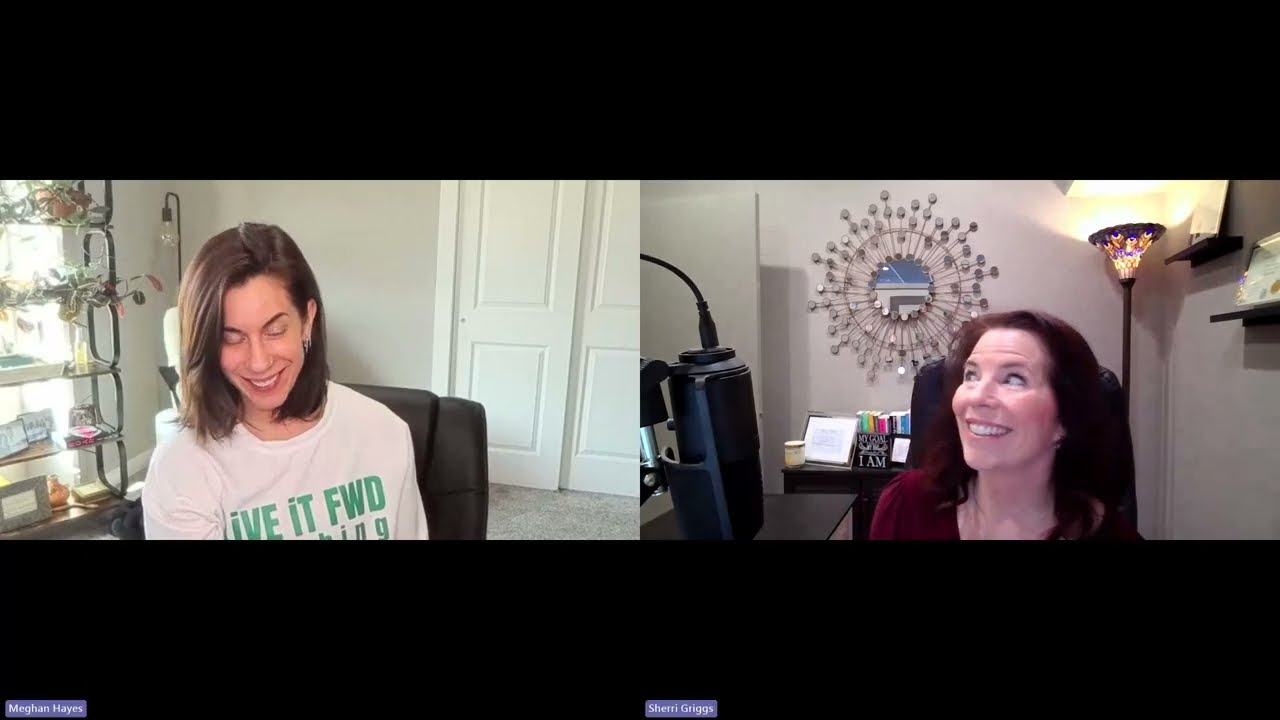
In this inaugural Balanced Body Podcast episode, host Sherri Griggs introduces new co‑host Rupina Mir, an integrative and functional nutritionist. Rupina recounts her personal health odyssey: a seizure triggered by over‑the‑counter medication, a brief cervical cancer procedure, and a seven‑year battle with invasive ER/PR‑positive breast cancer that she managed without chemotherapy or radiation. She describes how each crisis prompted a shift from conventional pharmaceutical approaches toward a holistic paradigm that blends nutrition, consciousness work (inspired by Joe Dispenza, Masaru Emoto, and epigenetics), and functional diagnostic nutrition (FDN). Rupina explains her "Science to Soul" methodology, which assesses eight foundational body systems (the HIDDEN acronym) and creates a personalized DRESS (Diet, Rest, Exercise, Stress management, Supplements) plan. The conversation also touches on the power of belief, placebo/nocebo effects, hormone replacement considerations, and future podcast topics such as menopause and its economic impact. Rupina invites listeners to connect via her website zen‑trition.com, while Sherri promotes her own practice at Balanced Body Health and Wellness.
Chapters
Welcome to the Balanced Body Podcast, where Sherri Griggs, owner of Balanced Body Health and Wellness in Omaha, talks to us about health, wellness, and balancing hormones.
All right, well, I've been telling you that we were going to have a new host, and our new host is here. This is Rupina Mir, and she is an integrative and functional nutritionist. And she will be joining us. We will be having some really interesting podcasts, even more so because she brings a whole different set of experience, set of tools, and she'll be able to help us learn new things, help me learn new things. So I'm going to let Rupina tell you a little bit more about her, how she got to where she's at now. And she has a very interesting story. Rupina, we're happy you're here. Thank you for joining me.
Thanks for having me. Pleasure. So yeah, my story, it goes a ways back. So I'll give you the nutshell version. So I was a young executive, an MBA in the corporate world, probably like many of your consumers living on caffeine and lattes and sugar, right? And then I've had 3 dark nights of the soul, which kind of brought me to my knees. One, one was like a one-time seizure that came from just taking too many over-the-counter meds like Sudafed with my allergy medicine. My sister is an allergist, medical doctor. And so she was always— I had all kinds of allergies. And their resolution at the time was just run the AC and heat all the time. This was when I was in Virginia, northern—
Okay.
Yeah. Northern Virginia, District, D.C. area.
Lots of trees, right?
Lots of trees. And they're like, don't ever go out, which is— I'm like, nature. I'm like a nature gal. So I'm like, no, that's not going to happen. So I had a one-time seizure from my body, just like shut down this chemical storm. And that was my first sort of awakening that it's not about how do I take some pill for an ailment, right? We're all indoctrinated into that. a pill for an ailment. You, you have something, you take a pill, and then that's the panacea. But I learned to just sort of know that the body has innate intelligence. And when it was giving me these symptoms like headaches and whatnot, to just lean into the pain, lean into that and see what is it trying to tell me. So, so, yeah, I had the seizure, which I, of course, never had, but they wanted to put me On a drug called Neurontin to prevent seizures for the rest of my life. I was like in my early 30s at the time. And I'm like, no, I'm not going to do that. That causes hypertension and blindness and, and all of that. And so they said, well, if you get off of it, Ms. Mir, be careful because it might cause a seizure. I'm like, you just— we did all the screenings and you said I didn't really have— I don't have an epileptic You know, it wasn't a seizure per se. It was just a chemical. So anyway, that was my first consciousness awakening where I stepped away from the pharmaceutical paradigm and just decided to go within and studied herbs and homeopathy and nutrition. Then I had a brief stint with cervical cancer. I was still in the corporate world at that time, and it was like snip, snip, easy peasy lemon squeezy. And I didn't even feel like a cancer patient at the time because I just did the little procedure and it was all done. Then the third one was breast cancer, and that journey lasted for 7 years. And by then I had known that, okay, this is asking something deeper of me, that it's not breast cancer is, you know, it can be the greatest teacher. And it has been my greatest teacher and awakened me into really befriending my body and hormones and understanding, because I think symptoms are sacred messengers. So now that I've emerged on the other side of that journey, basically, I literally had an open wound. I was walking around with an open wound, like a flesh-eating bacteria had bit into my breast. Like when I first got screening, everyone was like, how did this happen? How did this happen? I'm like, I have no idea. I was already the poster child for an anti-cancer diet. I was extremely didactic about, you know, sugar-free and gluten-free and lectin-free and all of that. So clearly I had exhausted the nutrition angle. But then I realized when I started diving deeper into Joe Dispenza's work that it's not just about what you're consuming on your plate, but it's what you're consuming at your consciousness level. Right. And it's all— all disease is a lowering of frequency. And the greatest way to heal your body is through sound. And that is the sound of your own voice. Like, you know, most of us have this very negative chatter going on, like we're not good enough or we're not— oh, how lazy or how stupid or— and our bodies are 70% water. And I think maybe your viewers have heard of that Masaru Emoto's— experiment with frozen crystals.
Yeah. And the difference of how the crystals looked with happy sounds and negative words. Negative words.
Exactly. And they formed these brilliant coherent patterns when they were preyed upon or loved on. And then when they were exposed to heavy metal music or said, you know, you're evil, you're foolish, they formed these really dark, incoherent patterns. And so our bodies are mostly water. And so it really— I started diving into all those different rabbit holes beyond nutrition. I was already an integrative nutritionist. But the breast cancer journey really asked me to— that's when I went back to school, got my FDN, which is functional diagnostic nutrition, because we look upstream at all the different foundational systems of the body and how that is creating what we call metabolic chaos. So it gives you the— FDN gave me the language to interpret those patterns, right? And the symptoms, and then to ultimately restore function so I could return the body back to wholeness and back to its innate intelligence.
Okay, so I feel like we're missing some stuff here. So you're working the high-level corporate job, you're an MBA, And you're— you have a seizure, and so you change some lifestyle.
Yeah.
And then you have the cervical cancer, so you make even more lifestyle changes, right? You're eating better, but you're still working that job, right?
Yes, correct.
Working that job. And then you get the breast cancer.
By then I had already switched. By then I was already an integral— so I had already fixed the nutrition piece, right? But then there was so much other with, like I said, the consciousness, the neuroplasticity, and all of that.
How we'd already moved towards the integrative nutrition side, right?
Right.
How did— I mean, I'm sure everyone listening, I mean, the same question I have. How did it get— how did that breast cancer get so invasive? Did it grow quickly? Was it— now you said 7 years. Have you been fighting it for 7 years? Did you have it? Tell us a little bit about Sure. You know, how did it start? When did you notice something? Because there might be somebody here now that's listening that has— is maybe going through what you were going through.
Absolutely. So it started out as a tiny little bump that I felt in the shower. And at that time, since I was already in integrative nutrition, I had zero fear and I'm like, oh, I got this. And I've got all my little protocols and my infrared sauna and this and that. And I got this. And then a few months went by and this little fleshy, little pink cyst came up on the side, like an external cyst. Right.
Oh.
And I was like, what the heck is this? But because I had a very bad experience with conventional medicine in the past, right, I was very reluctant and I had a lot of fear of going and getting it checked out because I knew that they would further indoctrinate me into So I said, I just kept being a one-person show and saying, no, I got this and I have all the tools. Um, and so I didn't have metastases. It was an invasive cancer, but it didn't get into my lymph nodes or anything. In over 7 years, I was walking around. It kept growing. So it was—
So you had an active cancer, an active breast cancer for 7 years?
Yeah, it was aggressive.
And it never got to your lymph nodes?
No. Or metastasized, which—
Right. Or metastasized.
Mostly to the inner work that I did with, you know, the Joe Dispenza work and, and at the consciousness level and meditation. But it was still there. And so then I think where I was very myopic was that I had pigeonholed my healing, that it has to come from nutrition. It has to come from meditation, or I'm going to have a mystical moment. And that's not what the divine had in mind, right? So eventually I had to surrender. I had my moment in the shower. I call it my Red Sea moment where I was bleeding in the shower for 77 minutes and I was standing in a sea of crimson water.
Oh.
Like I could not exit. that shower stall, or it would look like a crime scene.
Oh my gosh.
I was stuck. I mean, I was literally stuck because it just bled and bled and bled and bled. And that was my moment. I came out of the shower, I looked at my reflection in that foggy mirror, and I said, okay, I hear you. What— and I was talking to the divine, and I'm like, what would you like me to do? And previously a page from Marianne Williamson's book, A Return to Love. She writes about the— what is her— Marianne Williamson, A Course in Miracles. Course in Miracles.
Okay.
She's known for that. So that book literally fell open and it was like these— this little quote was highlighted like, God's plan will work, yours will not. And I'm like, all right, well, I surrender. I mean, what is it that you want me to do? So I had such resistance to surgery and conventional medicine But what you, what you resist persists, right? And whatever you resist creates more suffering. So I had pretty good quality of life, but I mean, not so every time it got infected or so forth. And I was dealing with an open bleeding tumor. So I finally acquiesced and found an amazing surgeon who treated me as a very sovereign partner. She knew that I was a functional practitioner myself and had the mastectomy. And then I didn't know what was— because I was absolutely Radiation and chemo was off the table for me because that's cytotoxic. And I'm like, no, that is not something I would ever choose. And 2 weeks later, just 2 weeks post-surgery, she said, all margins clear. I don't need to even see you for 6 months. So just like that, I was freed from a 7-year breast cancer sentence.
So your sister's a traditional medicine— yeah, your sister's a traditional medicine doctor.
Yeah. Yeah. Yeah.
Did she know about this?
Oh, yeah. She, she was quite upset. She was like, Rapina, something like this isn't going to go away on its own. And I'm like, well, I beg to differ. You know, I have a different opinion because I'm a dispenser student and I see metastatic cancers and people with Alzheimer's coming in wheelchairs and MS and all of that in one moment. But I didn't have that dramatic— some people do, can have. And that's really what I was gunning for. But we don't get what we want, right? We get what we need. And so I had to humble myself and go through the surgery. And then freedom was on the other end of that, the very thing that I resisted the most. But fortunately for me, because I had all this and I went into the surgery in such a strong— like, even my surgeon, she was the only one. Everybody else sort of turned me down. They're like, oh, what is it that you want to do now at this point? They're like, oh, sweetheart, you should have come earlier. This is like, this is too late. We can't, we can't operate on this. But I found this one woman and she was just like a breath of fresh air. And I glided out of that visit like I was walking on air. And she's like, Rapina, we can fix this. You are so healthy. All your markers, everything. Even my C-reactive protein with that was like 1.
Wow.
So, I mean, I managed my inflammation and everything else so well. Even my sister, girl, She's like, I don't know how you look so healthy. And it's like nobody— but then it's like only when the doctor like saw the, the breast, they're like, how? It's like a complete, um, contrast, right?
Well, you were able, through your belief and your health and your training, you were able to keep it—
Keep it at— yeah, manage it.
What I want to say, um, keep it It was, it was right there encapsulated almost in a sense, right? Because nothing spread.
Nothing. Exactly. Yeah. Which is in and of itself. So I am— I used to assert back then that I'm a walking miracle and I still am because, yeah, it didn't metastasize. It was invasive breast carcinoma, ER/PR positive, estrogen receptor, progesterone receptor positive. And right now I'm having the conversation with my oncologist. We'll talk about this in another episode about HRT and all of that. And I was saying that, well, actually, estriol can be very protective even for breast cancer survivors, right?
Yes.
And she— I showed her the research and she said, yeah, I think you have a point because, you know, estrogen is used by the heart, the brain, the bones. And that's when women have a much higher chance of cardiovascular or dementia. Muscle loss, osteopenia, osteoporosis, and all of that. And to me, I've always been about quality of life, not quantity. So I'm like, no thanks. If they wanted to put me on an estrogen blocker, I'm like, absolutely not. Because why would Mother Nature ever put a hormone in our body that causes cancer? That makes no sense. That makes no—
and we, we know to To support what you're saying, that it is the toxins and the way we eat and all that that causes our body to metabolize it down the proliferative pathway or the pathway of negativity.
Exactly.
And yet, but, but our bodies naturally, when we're healthy like you are, right, we'll, we'll process it down the protective pathway and it protects you against breast cancer. And if you get it, it protects you It keeps you healthy. It protects you from metastasis and colon cancer and lung cancer. And I mean, there's all these things that—
Exactly.
Statistically.
Yes.
And, and through studies that we know. Have you read, um, Dr. Jen Simmons' book? I never remember the name of it.
I have. Breast scan. Yeah, actually she sent me the PDF because she was, uh, a cohort in the program we took together at Mindshare. And we were in a Zoom breakout and we were kind of going over our messaging and she's like, I haven't done mine, but I'm very good at this. So you go. And then I go and she's like, it's great. I almost want to buy your program. And so we kind of met in that program and yeah, she had sent me the PDF. So yeah, it's wonderful.
And I recommend her book to people all of the time. A gal that works next door to me recommended it to her. And she took it to her oncologist and said, you're taking me off the hormone-blocking medication because I'm stopping it anyway.
Exactly, exactly. Because it's about the terrain, not the tumor, right? I think conventional medicine is so reductionistic because it's all about the tumor, but it's like— and everybody ignores the terrain, right? And so her approach, and which is my approach, is also— and she's also a Dispenza student, I think. So So I think it's so much, I mean, you know, tying in all those different pieces with epigenetics and neuroplasticity and your consciousness and, and how that's turning on and off those genes. And, you know, as Dr. Bruce Lipton says, that we now know that genes load the gun, it's the environment that pulls the trigger.
Absolutely. I do genetic testing, right? We know that there are things, just because you have the genetic It doesn't mean it's going to happen.
Exactly, exactly. They're like Christmas tree lights. They, they turn on and they turn off based on the epigenetics. And epi is literally above the genes. And what's the greatest part that's above the genes? It's the food, the nutrition. But even beyond that, it's the consciousness, your thought patterns and your stress and your belief systems that are creating that milieu of wholeness or disease. ease, where the body is literally not at ease. So as you can see, I've been through a really crazy journey, and so I'm super lit about helping other women alchemize their impossible wound, right? I think we're all faced with brilliant opportunities disguised as impossible situations, whether it's an open wound like mine or whether it's autoimmune or gut imbalances. And I think that those are all they're benevolent, right? The disease is there to wake us up. In order to wake up, wake us up, sometimes we need a wake-up call, right? And so the disease is knocking like, hey, pay attention, I'm here to allow you to shift into your highest self and make some changes, not just on the plate level but so much deeper. And so that's what I do now with my clients. is that I— my method is called, uh, From Science to Soul. It's like bridging science to soul, right?
Uh-huh.
Because science to soul alchemy, because obviously we look at all the different things, the nutrition and all of that, and we look upstream at 8 foundational systems of the body. We look at immune, uh, it's called— the acronym is HIDDEN. So it's hormones, immune, digestion, detoxification, energy production, nervous system, and oxidative stress. So it's kind of like you're throwing that pebble in the pond, and instead of chasing the pebble and all those little ripples that form, we, we look upstream at all the different foundational systems of the body where function has been lost. And that's why we call it functional nutrition, because instead of chasing symptoms or diagnoses. We focus on function. So we look at all the places where function has been lost and then we curate what we call a personalized DRESS, which is Dress for Health Success. And that acronym stands for diet, rest, exercise, stress management, and supplements based on your lab data and based on clinical correlation. And what I find, I do a very detailed— it's sort of like being a metabolic detective and looking at the—
Mm-hmm.
Right. So if somebody comes to you with obvious symptoms of, I've got Crohn's or IBD, obviously that's the elephant in the room that you have some gut imbalances. But nobody is looking at hormones and nobody is looking at oxidative stress and what's happening in your gut. And so we look at all this entire to identify all of your hidden healing opportunities. Right. It's often like with migraines. There's always, you know, some kind of toxicity or whatnot. So instead of like suppressing or Band-Aid approach to just resolving the system, we identify all the hidden healing opportunities and then we curate a customized protocol to address them and restore function. Does that make sense?
It makes sense because, and to be— to make it very simple, the root cause, right?
Yeah.
What is causing these symptoms? What is happening in these systems— symptoms? And I have to say that, um, and I've never talked about this on the podcast, but I have a short story myself of cancer of 7 years. And I was not eating healthy. I was not behaving in a healthy manner, but I've always had a really positive attitude. I always say my cup is always half full.
Yeah.
And I had melanoma. And so I went for a biopsy and the doctor, which we're not quite certain why he read his own slide, because in 2000 and '70s, nobody read their own slides. It all went to the pathologist. But he decided to do that. And I'd always hated this little thing, but here comes this little, you know, freckle on either side of it. And I go to the next dermatologist. This guy had retired because he was old and half blind. And, uh, they said, well, you— she calls me up. I'll never forget this. Um, it was nearly Christmas. She calls me up and she says, you have melanoma. Oh my God. And the pathologist was able to get a hold of the original slide, and you've had it for seven years.
Wow!
So we know melanoma generally grows down. That's the reason why it's so deadly, because as opposed to our basal cell and squamous cell skin cancers, right, that grow and spread, these grow down and they go, they metastasize. Yeah. Mine had. State was stage 1B, meaning it had one mitotic split. It had not spread. The nodes were clear.
And despite having it for 7 years, it had not spread. So, so you were just as much a miracle as, as I was, right? I mean, what parallels in our—
Right, we're a 7-year miracle.
Yeah.
And so obviously that's why many of us do what we do. Because we've experienced it. We've been through it. We believe in it.
Yes.
Now, I won't say that that experience is what moved me in the direction that it did, but I had been on bioidentical hormones since 2005, right? Um, when I'd had a hysterectomy in '03 and had said, take the ovaries, I don't want those cancer-causing boogers still inside of me. And because of a friend of mine, and, uh, they quit working 50% of the time anyway. So, you know, it, um, but it was that experience and my own experience with autoimmunity.
Yeah.
And I think that I really have asked the question. I've asked people, do you really think I dealt with that? Because I, I don't think about it. I don't look at it as a miracle. I don't see it as I'm— I was left here for something, you know. Do you think I've really— I asked one of my best friends, do you really think I dealt with it, or do you think I've just buried it? She said, no, I think you've dealt with it. I just think it's the attitude that you have, that it's just an expectation.
Right? Absolutely. Because we are— whether you believe you can or you believe you can't, either way you'll be correct. Right?
Right.
So, uh, that was me too. It's like I just kept believing that, no, there is— I can heal myself.
Yes.
And eventually it involves surrender to the divine as well. But I I just believed that it was possible, right? I think there's always, there's always infinite possibilities in the quantum field. And so when you can zero in on that possibility, and that's why I'm so lit up about this work, is to be that mirror of possibility for someone else going through their impossible situation, right? And I put it in quotes because I don't really believe that anything is truly impossible, right? I mean, you have—
Right.
Right now I have a friend that was just a friend's friend that was diagnosed with Lou Gehrig's, and she's having a horrible time. And I just— and she's like, you're an incredibly courageous woman. And I'm like, you know, you, you find the, the strength somehow when this happens.
Yeah.
And if you had told me 7 years ago that I'd emerge free, I, I knew there was a path, but I didn't know how it would happen, right? And so now I can be that. And I said, listen, you don't know, maybe they're on the verge. In fact, the other day, Hamel Patel, one of the scientists who runs Joe Dispenza's work, he was saying that they found something, that they're doing studies for Lou Gehrig's disease and whatnot.
Yeah.
They isolated a protein that they found in meditation that also addresses long-term COVID and whatnot. So I'm like, you don't know, just you don't have to see sometimes. And this is for anyone listening. If you're going through an impossible situation, You don't have to see that entire flight of stairs, right? You just have to take that first step, whatever is available right now. Can you just change your diet a little bit, or can you add more movement? Can you change the way you talk to yourself? These are things that you can just— little things, and then the way will be shown, right?
And if you think, if you believe that it really is impossible, if you really believe that the end will be a certain way, it will.
Absolutely. And that's called the placebo effect, right? Joe Dispenza talks about it a lot in his book, You Are the Placebo. When somebody was given a placebo and they're like, we found this chemotherapy and it was just a sugar pill, and now this will heal your tumor. And that person was like ecstatic and in remission. And then they said, sorry, now it's plateaued and it's not working. and you have 3 months to live, then that person literally counted because that's the nocebo when the physician tells you that you've got 3 months to live. And so they literally marked their calendar. They believed, they believed, accepted, and surrendered to that possibility. And then they manifested that outcome. I'm not saying I'm not blaming anyone, right?
No.
And nobody creates their disease. But when you believe, accept, and surrender to an outcome, Then your immune system, guess what, is always eavesdropping on that conversation that you're having. And if you think like, okay, this sickness has me, the cancer has me, or whatever it has me, then that, that will often determining— it will. Exactly.
It will.
Yeah.
Well, this has been amazing. I am looking forward because you bring such a different take to such— and yet we do the same thing. But yet in such a different way. So I think we're gonna have some amazing conversations.
Yeah.
Um, I know that we are planning our next podcast to be on menopause, the economic impact of menopause. So, you know, I'm gonna let you lead that one too. But if anybody wanted— if anybody wanted to reach you to talk to you further about what you do, to get some help from you, how would they— how would they reach you?
Just on my website, zen-trition. So it's like the word nutrition, but you just take out N-U and replace with zen, zen-trition.com. And yeah, that's the best way to get a hold of me.
So zen, and then put a dash, and then nutrition. Nutrition.
Yeah, zen-trition.com.
Perfect, perfect. And this has been a wonderful podcast. So all of you know me, except for actually those of you who may be listening to this because this is on Rapina's podcast, but I do hormone replacement. I'm Sherri Griggs with Balanced Body Health and Wellness. It's www.balancedbodymedical.com, uh, or 402-807-5333. Thank you for joining us.
Thank you.
And we look forward to talking to you, or I guess you listening to us and us talking to you, right, next week. Thank you for being here, Rapina. I, I really think we're gonna have a good time. This will be fun.
Thank you for having me.
This has been the Balanced Body Medical Podcast with Sherri Griggs, owner of Balanced Body Health and Wellness. If you're looking to find Sherri, go ahead and look for the website Balanced Body Medical If you're looking for the business and you want to find Sherri at her office, you can find her at 10815 Elm Street in Rockbrook Plaza. Thank you.
More from Sherri






Beyond Hormone Balance: Reclaiming Pleasure, Purpose, and Vitality in Midlife w/ Carla Wayne Wright

Beyond Hormone Balance: Pleasure, Purpose and Midlife Vitality with Carla Wainwright

Cortisol Hacks: Simple Ways to Calm Stress, Support Sleep, and Reset Your Nervous System


Transform your body, Transform your life: The power of strength training and hormonal balance