Transform your body, Transform your life: The power of strength training and hormonal balance
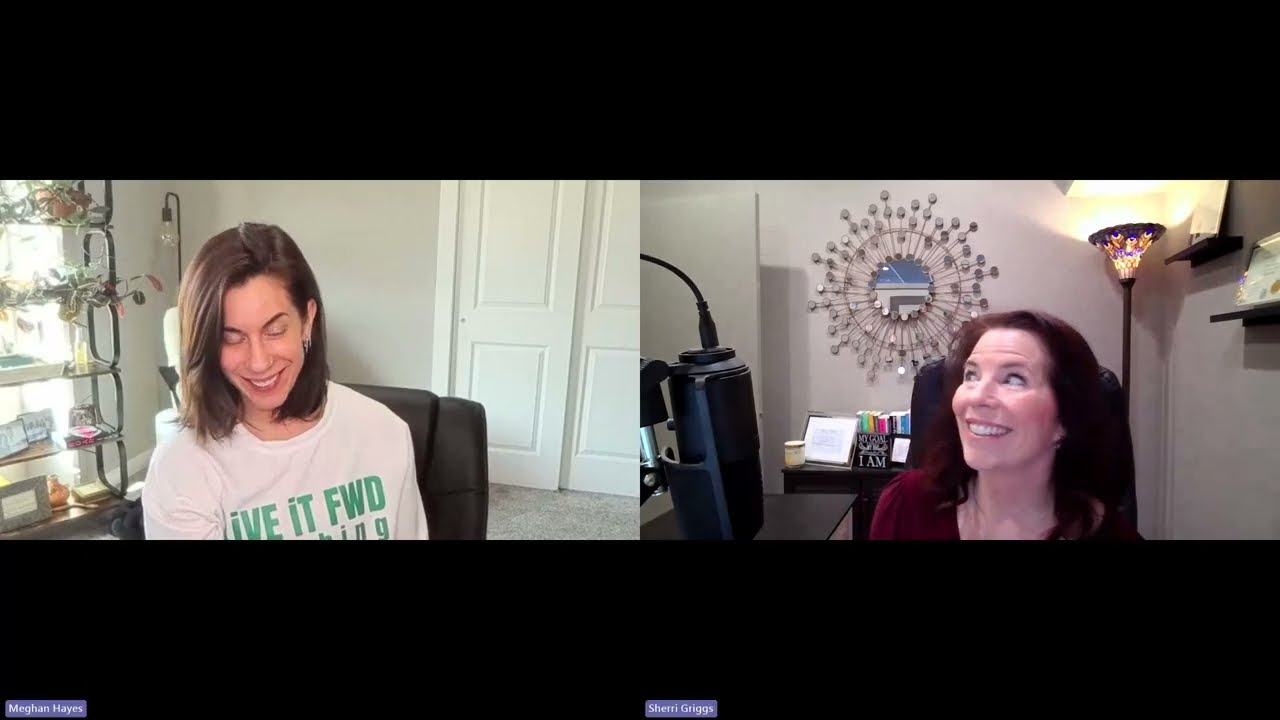
Strength coach Megan Hayes explains how resistance training improves insulin sensitivity, lowers cortisol, and boosts metabolism, while debunking the myth that women will bulk up. They discuss measuring body composition with InBody scans instead of weight, protein-forward nutrition, and using RPE scales to guide training intensity.
Chapters
Welcome to the Balanced Body Podcast, where Sherri Griggs, owner of Balanced Body Health and Wellness in Omaha, talks to us about health, wellness, and balancing hormones.
Welcome to the Balanced Body Podcast. Welcome back. We're so glad you're here. So today, and I believe we alluded that this would be coming up, we are here with a Wonderful, very educated coach, Megan Hayes with Live It Forward Coaching. Some of you might know her as Coach Megs, but she's going to talk to us about how important it is to do your strength training and your resistance. And, you know, I preach all the time about food is medicine, but I bet she'll probably throw a little bit of something in there from her expert— her expertise. Her expert point of view. So, Meg, welcome to the podcast. It's great to see you.
Oh, Sherri, I'm so excited to be here. I really appreciate it. I'm excited to share all the little magic nuggets and wisdom with strength training and nutrition and just about the body. I primarily do train women, but I have trained men, I have trained kids, I've trained individuals with Parkinson's. It's— so I'm excited, that's to say the least.
Yes. And the thing is, is that people don't realize, I think, how important strength training and resistance is, right? And some of us that are a little older that grew up in the '90s, right, it was cardio, cardio, cardio, cardio. And I would like take 2 cardio classes in a row, and I thought I had to do this and do that. And, um, you know, I believe gone are the days of the 2-hour workout, right?
Really? Yes, specifically the cardio 2-hour workout. And you are not wrong. And having grown up in the era to where that's what we knew, I get it, Sherri, all the feels with that. And I work with a lot of women that they get stuck in that space of, well, I only know this. I know that I'm supposed to go do cardio and cut carbs. And I'm like, well, those are kind of like the opposite things that we should be doing is we should be doing strength training and eating our carbs. Carbs give us energy. Carbs are our friends. And just really learning that. And it's almost this space of relearning because—
Yeah.
What we did with the no pain, no gain concept too. I mean, because all that's '80s and '90s and all that compounded with what we thought we were supposed to do. So in my practice, things that show up very frequently with women are they're still scared they're going to bulk up. With strength training, they are. And just to allude to this, you're not going to bulk up. The amount of food it would take for you to bulk up in a phase of that is a lot. And if you talk to any bodybuilders or anybody training to add muscle and add weight and add size, they're going to tell you they have to eat a lot of calories, purposeful calories. To be able to fulfill that need. So you're not going to bulk up. Muscle has shape, but muscle is going to help so many things. Um, it's going to help with our insulin sensitivity. It can help lower the baseline of cortisol over time. It can help our metabolism be more efficient. And so you just start to learn more about all these great things for muscle. Helps us move better, helps us add more years to our life.
Mm-hmm.
And so if we could have these things and get past that, I want the cardio and no carbs, and step into, I want to be strong, I want to understand that I can get off the couch, get in and out of my car, walk over here, sit over there, pick this up off the floor, grandchildren, or an object off the floor. Those are the things that we want to be able to do. So this whole piece takes that strength training is important and we've got to start and you've got to start somewhere.
Well, and what I found in— I want to say the last— well, it's probably been 10 years— is it doesn't have to be torture, right? No, you can get a really good workout with with strength training. And it's not like— again, it would be where you're like, oh my God, I cannot do this. This is going to be so hard. I hate going to this.
Yeah.
And, and I would work out and I would say, I didn't do anything. Like, this did nothing. This was nothing. But then I would feel it the next day.
Yeah. So help me with this, that in what you hear as well. So coming from the world of cardio and then coming into the world of strength training, for a lot of individuals in conversations. You brought up something that you talked about. I did strength training and I didn't feel it.
Yeah.
So until the next day, which there's a reason for that, DOMS, delayed onset of muscle soreness, and other things going on in the body. But one of the things that is very clear is we have a lot of great devices. I even wear one. I have an Oura Ring. I've worn an iWatch. I've worked for companies to where we utilize devices that pick up your heart rate. Okay, so let's talk about this. Your heart rate is attached more to the cardio in the sense of that's your cardiovascular. That's making sure that your heart and your lungs are able to take on a certain capacity, which is your lung capacity, how fast your heart can beat. And so we're going into all these things, right? And that's a whole nother game. But so then I can get my heart rate so high. So now you're used to getting those peaks and valleys of your heart rate, which is that I'm doing something, right?
Yes. Yeah.
And oftentimes, what do you do when that happens? Do you sweat more? Yes, potentially with that. Or you feel like you said, I feel like I did something because I got my heart rate here. I had a goal of this and I did that. I'm like, awesome. So when you strength train, which your heart rate can increase, by the way, when you strength train.
It does.
But oftentimes you look at it as, well, but what did I do? I mean, I might not have broke a sweat. You might not. I do, but you might not. And you might not sweat in the way you do when you do a cardio or a HIIT training piece. So it's teaching again a little different mindset of, okay, cool, here's what strength training is going to do. Here's why you need breaks also when you do strength training, of why you don't want to just do reps, reps, reps, move, move, move, and be like, oh look, I did that. And yeah, I don't feel like it did anything. So it's just a weird space. Do you feel then, Sherri, that you've heard a lot of this, that people are like, cardio makes me feel like I did something, and strength training, you're right, I might feel it a few days later, but I don't feel it when I'm doing it?
I've heard. So in thinking about that, I will hear when I talk to women about time to get back to the gym, right? And, well, you know, I'm doing fast walking all the time. I'm You know, I'm, I'm getting on a treadmill. I'm like, but no, no, no, no, no. Right. And when thinking about then this other workout I used to do, we would go to at this gym, we would literally say, I mean, we didn't feel like it was hard. Okay.
Right.
I think because it wasn't torture. But we definitely saw results. And that's That's the thing. And when I mean, when I say results, I'm talking about, like you said, muscle, right? Gaining muscle. A pound of muscle gives somebody, I see on average, about an additional 30 calories of resting metabolic rate.
Right.
And, you know, to see somebody that can convert fat to muscle and they don't, they actually enjoy what they're doing. They don't, they don't feel like they're being tortured anymore. And that's, that's where I think we've come a long ways in learning.
Yeah. Yeah. Well, and you're talking about then looking at ultimately body composition change. So, so much that the verbiage I feel like we used to use was weight loss. Yes, it's weight loss. It's weight loss. It's weight loss. So therefore, it was what was on the scale. Yeah, we paid attention to what was on the scale. So that's what it was. And now And I know you have one, I have one, different ones, but there's like InBody, there's DEXA scans, items like that, right? That at least will give you a great benchmark that will tell you this is what you weigh.
Cool.
Okay, there's the weight component, but it will break down then your muscle mass, your fat mass, your body fat percentage. It'll look at other things too, as far as in your body, but even looking at just your muscle mass and your body fat. To understand, as your body fat percentage goes down, your muscle mass goes up, the efficiency— what you talked about with, okay, now my body is going to be more efficient or effective in calorie burning, aka helping me lose weight or be more efficient, right?
Right.
So, if we start to kind of cross over some of the language, those are items that it is becoming more trendy and On point to talk about body composition, and if we know where we're at, we have that benchmark. We can start to measure because I know that's what you and I both do with our clients and your patients. My clients, same, same, little different, right? But it's to be able to say, okay, here's where you are. This is a benchmark. We want to watch your muscle go up. We want to watch your body fat go down minimally, and then yes, you got visceral and you have other things, BMI, that we're looking at by all means. But if you can start with body composition that you want to change your body composition. Versus just, I want to lose weight.
Right.
That's a huge thing that strength training and muscle— and yes, nutrition component is going to be there— really come into play.
Yeah.
So have you found that really valuable for you as well with your clients to start to shift them into the body composition over, I want to lose weight?
Oh my goodness. Yes. I give a perfect example of a gal that came in and she was 6 weeks in treatment. So if you're just joining us, I do a lot of hormone replacement. So we are replacing testosterone. These ladies, many of them, and they're in their 50s, 60s, they have zero testosterone. So this lady comes in, it's only been 6 weeks, and she says to me, I haven't lost a pound of weight, not one pound.
And I said, I don't mean to giggle, but it's—
I know, I know.
Okay, okay.
We weren't doing this for weight. We were doing this for you to be healthy because on average we have extended our lifespan to a point that our lifespan is 7 years longer than our healthspan, meaning we spend the last 7 years of our life in ill health. Okay. So it's to help lengthen quality of life. Like you said, body working more efficiently, effectively.
Yeah.
We put her on the InBody and she had literally converted, I mean, pound for pound, 4 pounds of fat turned into 4 pounds of muscle.
Oh, I love that.
So she weighed the exact same weight, but the attitude and the difference that made in her world was huge. She went from somebody who felt, this is not working, it's— I can't do this, this isn't working for me, to somebody that went, oh, wow, this is really great. So, so now what? I said, now go to the gym. Yeah.
Like, now go lift weights and get more muscle and keep dropping the other numbers, right?
Yes. You did this getting in and out of the car, going up and down the stairs. Stairs, carrying laundry, living your everyday life. Imagine what could happen if you started doing some resistance training and some weightlifting.
Yeah.
And it's right.
And this space is— so things that I talk about, like, if you read any of my marketing or anything that comes to us, like, I want to meet you where you're at. And this is what you do too. I know you well. And it's like, so I want to meet you where you're at. And that means, say, if this woman came to me and she's like, I haven't done strength training ever or in a long time. Awesome. We are going to start with just learning to move the body again for those movements, adding lighter weights and then heavier weights for her.
Yeah.
Which is different than yours, which is different than mine, which is different than another client. But it's like heavy for you. And so things that I utilize a lot in that is looking at RIR or else RPE. So RIR, reps in reserve, all these acronyms. So fun.
Right.
And then RPE is rate of perceived exertion. So think of this, if you're doing strength training and you're doing a set, whether you're working out by yourself or with a trainer, and you're doing 10 reps, rate of perceived exertion, and you get done with those 10 reps and you're kind of like, well, I don't need my break. I'm just going to carry on to this other versus if I tell you, I want you to have a rate of perceived exertion of an 8. And you're like, I don't know what that means. We'll keep it simple for RPE. As far as what I do is I do just that scale of 1 to 10. I'm not going to play with 1 to 20 points or anything like that. Just 1 to 10. 10 is going to be when you hit, you can barely do it, barely keep form and probably hitting failure and not be able to complete a rep. 9, after some time. Yeah. During those 9s, you're going to be hitting hard and probably some form's going to go. And again, failure.
Mm-hmm.
8 is you can still hold form, but it's Really hard. 7, it's hard, form is good. 6, moderate to hard, form's definitely really good. 5 is like, yeah, this is easy to moderate, so on down forth. So 1 to 10. So I ask my clients often to be like, hey, I want you to work at a 7 on that first set of 12. Now I want you to make it an 8 on this next set of 10. And maybe the next set is 8 reps, and I might ask them to increase their weight as the reps go down. But RPE is good because, Sherri, what this does is it helps me individualize, helps me customize and say, this is your weight for you because I don't, I don't know what you need to lift. There's not like any magic thing in the back of my brain that says you look like this, you should lift this.
Right, right. Yeah.
So I use RPE. So that's going to help as far as just customize things. And then RIR, right? So reps in reserve. Ties into that. So let's say I was training you, Sherri, and you did reps, and this is our first, second, or 80th time together. And you're— I'm like, hey, how'd that weight feel? You're like, yeah, pretty good. And I'm like, awesome. Do you want to add some weight for the next round, the next set? And you're like, yeah. And I'm like, cool, how much?
Yeah.
It's kind of hard to know. So what I ask is, how many more reps could you have done with that weight? So whatever movement you were doing, I'd be like, Sherry, how many more reps could you have done on that last set? And if you're like, I don't know, another 8, I'm like, oh, awesome. If that's upper body, I'm probably going up by 5 pounds on each side. Okay, definitely on that, maybe more. If it's lower body, it's probably 10 or more on each side because I want you to end up telling me majority of the time for me is either failure, I can't do anymore, or I could do 1 or 2 more reps. That tells me you're working really hard for you and you're getting closer on that RPE, rate of perceived exertion. Of that 8, 9, maybe a 7, maybe a heavy 7, you know, but it's right there. And so that's typically where you can take that work. But that's how you can discover on your own. If you're working with somebody too, like, what's heavy? Because we hear everybody say we should do weight training, it should be heavy for us. That's what's heavy for you.
Right.
And so if you start to use those pieces to measure, you're going to figure out you can lift more than you thought you could without Back to that statement again earlier, bulking up.
Right. I can tell some stories because no one would know who they are, but I had one gal come in. Her marriage wasn't going well. She couldn't stand her husband. She was just over the situation, and life just really sucked, right? And we got her hormones balanced. And so when I say hormones, I mean all of them. So I have my car analogy, which you've heard, and a lot of people have, but we talk about, you know, cortisol's the engine, thyroid's the transmission, Insulin is your electrical system, your overall, and then your 4 wheels, estrogen, progesterone, testosterone, and DHEA. So I always tell people, you've got to look at all of them. There are many places that you can go where they'll only look at 2 or 3. And if I give you new tires and your transmission isn't in the right gear, you're— it's not going to go well. It might go, but not as good as it could, or even the motor's not running right. So this gal, we got her all straightened out.
Okay.
And it's a new car. Yes, she's a new car. And she said, you've saved my marriage. My marriage. You've saved my marriage. She literally brought her husband to my event so he could meet me. And, and, you know, that's what— and somebody told me this just the other day, said it's conversations that more women are starting to have and need to have. And she was saying, I want to be screaming it to the world. I want people to listen. That women don't have to suffer. And it's not just hot flashes and night sweats, right? There's so many other things. It's the reason women over 50 are having so— have so many heart attacks and cardiovascular disease, because they don't replace their hormones. Um, there's so many other issues. There's, uh, depression and anxiety. And sure, we can give you a med for that, but we're just treating the symptoms.
And that's not the root cause.
And that's not the root cause, right? And and then you know we're literally setting ourselves up for osteoporosis, cardiovascular disease, and dementia. Um, and and getting the word out that the studies are out there. Um, hormones protect you against breast cancer. Replacing your hormones protect you against breast cancer. It doesn't cause it.
Come on, come on.
Yeah, all right. You know, I mean, and it's and I'll and I'll say people. you know, make weird faces. And I did see a few weird faces, um, you know, and they're like, that's not true. Well, in 2002, you know, we had that study come out. And so it's— people are talking about it more.
Mm-hmm.
Um, and, and then I'm seeing— those are the types of results I'm seeing. I'm seeing, um, ladies come in that say, thank you, everyone told me I was crazy. It's really nice to know I'm not crazy because I'm 29 and I'm already in perimenopause. Okay. It's happening earlier.
It's so—
yeah.
It's the stigma is still out there that it's like— so I'm 48. And when I talk to women, I oftentimes have to share my age or at least say I'm almost 50 and use those words. And then they say, no way. And I say, I'm 48. So usually I lead with that sometimes because otherwise they're like, there's no way you're in perimenopause. I'm like, actually, I could have been in perimenopause for 20 years by now. And I know I've been in perimenopause long longer than I've been diagnosed or doing hormone replacement, etc. And so it's— we've got to get past it. And if someone, man or woman by the way, is not feeling well, please get your panels done. And it's just, it's just got to be that practice.
Yeah.
And I hope soon it becomes more well known so they can have the conversations. Like you said, it is a conversation. And more women, men too, but I'm focused on women with what I do on my end. And I know you help both men and women, but it's just ask the questions and understand that it's going to be different for everybody because I don't have night flashes. I don't have— or I put them together, night sweats, hot flashes. There you go. I don't have either night flashes. That's— see, I'm putting them together because I don't have either, you know. But it's— I do have a lot of the other things.
Right.
And it's Also, one of the other pieces I wanted to make sure and say this clearly, and then kind of tie in some more stuff as we chat. But even though I led with the concept of sex hormones, again, there's more than just those because you went back and talked about you know cortisol, and we went through. So it's so many times we get caught up in only those hormones. We got to remember there's other hormones in our body, and we've got to be able to look at that blood sugar and the insulin, everything going. So there's more to it. So I love your analogy of the car and bringing that back up, um, is huge. And it's looking at— I mean, I said it earlier as well, like strength training improves your insulin sensitivity too.
Yep.
Because the muscle is the largest site for glucose storage. And so when you build muscle, what do you think you're doing? You're helping reduce sugar spikes. You can stabilize energy and cravings. You can help reduce fat. And it's just this piece of then if you think more muscle, better blood sugar control.
Yes. Yes.
So why aren't you training? Yeah.
Well, and and I had a patient. It's a patient coming yesterday, and you know, I truly believe that. Okay, so she is. She was. Was she fifty? Maybe she was fifty-two.
Yeah.
Real clean eater. Very, very clean eater. Okay. And she works out. Minimal to zero symptoms. And I, you know, and what I told her is, you are— your body's working so efficient that you are efficiently using the hormones that you do have on board. Now, I'll be interested to see what her numbers are. But that's What people have— and ladies need to understand too, right? Cortisol will sit on your receptors and block every other hormone out there. Okay? And everybody wants a quick fix for cortisol, but lifestyle is it. Lifestyle is the real fix. Exercise is part of that. It is. That helps bring cortisol down.
Yep.
And it also helps, as you have mentioned, our body to be more efficient. So I find that when you start to do, it becomes a cascade, almost like domino effect, where you start to feel better. You do something good for yourself. Now you want to do something more and something more and something more because you feel so good.
Yeah.
And it's— so I am seeing that. I am seeing people that are, you know, and it's not all about weight, but many of them want to lose some weight.
Right.
And it's— they're losing weight and they're not even trying, right? It's just happening because they're improving how I make everybody detox before I'll even start them on hormones, um, to, you know, make sure the liver's working properly, to make sure they know how to eat, right? I don't force them past that 2-week time period, but they at least have 2 weeks of clean eating And clearing out any liver congestion. And it's amazing, amazing when they do, especially the ones that do the 30-day and the other program. They'll come back and they're like, okay, I can think straight again. I'm not tired. I just lost 10 pounds and we haven't even started yet.
Yeah. And then, but looking at it, but you said with cortisol, just to make sure that Everyone really hears that is it can help lower, but that a lot of that is stress. So strength training helps build your body. So in regards to your stress, it makes you be able to handle stress a little bit better when your body's healthier and everything. So again, we're not as overwhelmed by it. So it can kind of help this control mechanism around cortisol.
Wow.
So cortisol's not overlapping and taking over everything, and it just becomes this huge piece that If we can look at muscle as literally our metabolic organ, if we can look at it as feeding and fueling versus only cosmetic, there's so many things that it does. Because without strength training, muscles are going to— you're going to lose a lot of muscle. You're going to gain fat easier. Like energy drops. I mean, for me, that's part of why I do strength training. But hormone regulation also, if you're not going to strength train, can become really hard. And that's what you're talking about, the efficiency of the body. So not just Metabolically, the muscle is going to help you be more efficient, but the efficiency of the body— and that comes into— you're talking about eating, right? So that's going to be huge for all your hormones, like, getting enough protein. Like, so I always talk to women about being protein forward and hydration next, and then that food is your friend.
Yeah. Yeah.
I'm like, I'm like, literally, like, just be protein forward. And I had somebody the other day On a friend's post, a friend had said something about ultimately, hey, give me your best ideas to hit protein. And one of the gals was like, I'm following, I can only hit like 80 grams of protein a day. All I did was pipe up on there and be like, first off, rather than just how does somebody else hit it, make a food list of the foods you like. Like, I, I am about food noise, food relationship first, because if you can understand It's easier to take a list for detox, right? It's easier to then create a habit long-term if you know what you like. Because if you're restricted, which 2 weeks is not bad, so that's pretty doable, but a 30-day, 45, 75-day, and on restriction is why we give up, get out, and gain weight back.
Yeah.
So, again, if you make a list of the foods you like and you categorize them however you want, if you want to call them protein, fats, if you want to call this my favorite cereal column, my favorite pasta column, That's fine. Find foods you like and then figure out how to make them better, better, better, better, and better for you. Figure out what portions you need for you to hit your numbers and learn what is your protein forward. And yes, then you have your fibers and your fats that are going to be in there. And of course, your carbs are going to be playing in there. But that's if you can just make a list rather than have somebody else. What do you eat? Well, I you might not like what I eat. Here's what I'm going to tell you: Make a list of foods you like, and let's. Learn how to make it better.
Because we're all different. Now, I'm, you know, I'm not a huge meat eater. So I'm trying to get protein, right? Yeah. I don't like fish. I don't like seafood. I don't eat pork. You know, it's like, okay, that's— so it's beef and chicken and I can take it or leave it. I could live on vegetables. So but I found that I like to make protein ice cream. I like to add a scoop. I was telling a gal today She eats the— oh, it's the 7 Sunday Protein Oats. And I said, throw a scoop of vanilla protein powder in there. You've got 30 grams of protein right there.
Yes.
It's not hard and it's yummy. Yeah.
And that's why I didn't even finish the thing. Like with the gal that said it was hard for her to hit 80 all day, I wrote her and said, it is 11 a.m., I have had this And I've already hit 90 grams of protein. And they're like, what? And I'm like, yeah. I'm like, and then I literally sent her all of the food that I eat. I'm like, here's my plan and this is for me and it gets me to 150, 170 grams of protein. Yeah. So for me, because the amount of muscle that I maintain, I'm at about, think a pound of muscle, a gram of protein. I'm about a 1 to 1 ratio or 1.1 just to give me a little bit over. So I weigh about 145, 150. So that's why you're hearing those numbers. And also, my body does really well on protein. I'm still getting the fibers. I'm still getting the fats, which gets me the carbs, all the fun stuff, right? And they were just like, how? And I'm like, you find what works best for you, but you got to know what you like to eat first. Because if you don't know what you like to eat, nothing's going to sound good. You're going to get tired of stuff. And I'm totally down to eat the same thing every day. But not everybody is.
Right, right.
And I hear that. I hear that.
Yeah, but you can make things fun. Just like I told her the oats, you know, she likes to eat that. And she goes, yeah, she she says I love to doctor it up a little bit. I put some blueberries in it. I said that's fine. That's okay.
Antioxidants.
Yeah, yeah, it's okay. But now throw this scoop in and look what just happened.
Yeah, so that's actually anytime I have cereal, I my boyfriend laughs at me. I do. I make I more or less make a protein shake, add protein, and then I pour that over my cereal because I'm like, well, now I now I got more. I'm like, I get to have what I want, but I'm like, I've done that for years. I've actually done that back in the day, even when it was SlimFast in college. Oh my gosh, I'm fast over my cereal.
Yeah, you've been doing it a long time. Yeah.
I mean, but I haven't— I mean, speaking of that stuff, right? And it's— but it's— we can understand how much protein supports hormonally, metabolically, and just craving-wise, satiety. So the fullness, like, it's going to help you. It's gonna help you with your muscle. It's gonna help with recovery, stabilizing your blood sugars.
Oh, it's huge for blood sugar.
And then the cravings, the satiety effect, right? And then it's gonna help even into some of the thyroid functions too, just as far as how the body delivers everything.
Right.
I mean, so again, getting into hormones. Yeah. Yeah.
So we're getting close on time. I would like to— I know. It's fun. Yes. Well, we may have to do it again.
Yes.
We can always do it again.
Yeah.
So what would be— so I'm kind of putting you on the spot here. Um, so let's say somebody is— they're eating well. Okay. Um, they're working out like they should. So they're eating, they're getting the protein and their macros, and they're They're working out, they're doing their resistance and their weightlifting, but they, they're ready to go to the next step. Okay. The hormones are all balanced. Um, what would you advise? I mean, I know everybody's different, but like in general, what would your next piece of advice be for somebody?
Okay. So I'm going to re-say this back. That's how my brain also works. So you're saying somebody is already doing strength training. Somebody's already hormonally balanced and somebody's already eating really well.
Yes.
Can you give me one more piece of information? That is, what are their goals?
Their goals are, again, to keep that muscle so that their body works efficiently, to keep the blood sugars managed, to increase their healthspan, right? And to Um, be to, let's say, um, change a little more of that composition, a little more muscle, a little less fat.
Yep. So if you wouldn't have brought up the body composition, I would say it's a bit of that status quo. But that does mean even in the weight training piece, you get to push yourself harder. So it's going to be playing around with the repetitions. So you're going to still go from any of those reps, maybe all the way down to that 4.
Mm-hmm.
And maybe up to 15 reps. Like, you don't need to in your sets of that. And usually it's anywhere from 2 to 4 sets. I use a wider range because I work in the space of meeting you where you are, that I have some women that are like, I only have 25 to 30 minutes to train, up to women that have 60 minutes to train.
Yeah.
So I want to be realistic with that. In the shorter timeframe they have, the more days I recommend they train per week, minimum of 2. And if I get 'em to 4 days, as long as those are shorter bouts, awesome. If it's 4 days, 45 minutes is cool. 4 days with 60 depends on the level. And that's only if you have the energy, you're getting the sleep, you feel good. And in that sense, you have this capacity in life to train that way. Then yes, if you're feeling stressed, you're not getting enough sleep, you have anxiety, anything else showing up, then it's pull one of those days back. Let's go to 3. So for somebody that you're describing, if body composition changes in play, I would start to adjust how they're programming and push their weight choices a little bit more, bring it down into that 4 to 10 or 4 to 8 repetitions and truly get a longer rest. Also, as we age, our rest component in between, just like when our reps go down, weights go up, that needs to get longer with the rest in between. And then it's fine-tune nutrition, see what else that we could potentially— I'm going to use the word tweak.
Sure.
Because at that point, if they're eating well and their body's responded to it, It's balancing that out as their body comp changes, meaning muscles increase, body fat changes, that then again, you still get to metabolically adjust this too because your BMR are, you know, your resting metabolic or your basal metabolic, same, same, a little different, right? But that you just want to make sure you're hitting that baseline to keep what they have. And they're going to sit more in a maintenance phase versus any kind of deficit or any kind of bulking phase, meaning add-on or surplus.
Okay, so a quick question for you. Do you do any online training? So if somebody isn't in Omaha, do you offer online training programs?
I do, I do. So online then looks like this, and all my programs start from this base. Customized online means I'm going to program for you. You get customized strength training in my app that you can go do for your equipment at home, or if you have access to a gym, take your phone with you where the app is. You follow the program, you check it off, you can progress by the way of— you always get to see your history of the weights that you have. Plus, I'm always going to see what you do. Plus, I'm going to progress your training and change your programming. The nutrition— you get a nutrition course that teaches you about food noise and food relationship, and we can go through macros. I use that we can because for some people macros is triggering.
Right.
But if you're going to get down to it, do bloodwork. We do need to look at macros. That's gonna be a huge piece. And then, of course, it's the weekly check-in. So you can live anywhere, and I can program for you for the tools you have access to.
There we go. So we're coming to you from Omaha, Nebraska. If you're in Omaha, Maggie, how— well, even if they're not in Omaha, how do they reach you if they wanna work with you?
Ah, awesome. So easiest is going to be website. So that is www. Liveitforward.com. So it's liveitforward.com. So forward is abbreviated like back in the day with rewind and forward, fast forward. So fwd. You could also head over to Instagram. So it's going to be @liveitforwardcoachmegs. So liveitforwardcoachmegs. MEGS, M-E-G-S on the end.
Perfect. And if you need your hormones balanced, if that's something you need, um, you know, I do know a lot of times our docs don't want to draw blood because if something is abnormal, they have to treat it. And I tell people hormones are a specialty. You cannot just— and you— and don't expect your traditional, your primary, your OB-GYN to know that. It's correct. It's a specialty, just like cardiology, right? So I can help you. It's www.balancedbodymedical.com, and it's balanced, past tense, balancedbodymedical.com. I do free discovery calls and we talk and see what we can do for you. So, Meg, thank you for being here. It was so great. I always enjoy talking to you.
Likewise.
You know so much. So, all right, everybody, until next week, I guess next week, um, Missy will be back and we will be talking about how important vitamin D is, especially if you live in the areas where it's cold and the sun's not out very much.
Right. That first daylight sun. Yeah.
It's gonna count.
Yeah.
Thank you for joining us.
You got it. This has been the Balanced Body Medical Podcast with Sherri Griggs, owner of Balanced Body Health and Wellness. If you're looking to find Sherri, go ahead and look for the website balancedbodymedical.com. If you're looking for the business and you want to find Sherri at her office, you can find her at 10815 Elm Street in Rockbrook Plaza.
Thank you.
More from Sherri






Beyond Hormone Balance: Reclaiming Pleasure, Purpose, and Vitality in Midlife w/ Carla Wayne Wright

Beyond Hormone Balance: Pleasure, Purpose and Midlife Vitality with Carla Wainwright

Cortisol Hacks: Simple Ways to Calm Stress, Support Sleep, and Reset Your Nervous System


