#003 Social Media Storytelling with Mark Kaye
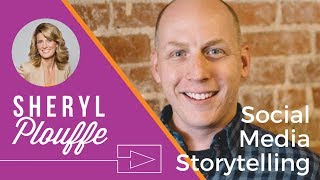
In this live interview for Personal Brand Breakthrough Day, host Sheryl Plouffe talks with award‑winning broadcaster and entrepreneur Mark Kaye about how entrepreneurs can use social media storytelling to grow their audience and sell more. Mark emphasizes that content creation doesn’t have to be done from scratch – you can curate, interview, or repurpose existing ideas. He illustrates the “wave” metaphor, showing how to ride trending news (e.g., Trump vs. Biden) by inserting yourself into conversations already happening. Authenticity is presented as the most powerful sales tool; being genuine and socially engaged (broadcast + chat) builds trust. Mark outlines a practical process for becoming a better storyteller: study great storytellers (Paul Harvey, Mike Rowe), practice repeatedly using sandbox channels, and treat every piece of content as a “show” rather than a simple podcast or email. He also shares examples from his own email newsletters that use conversational, narrative hooks. The conversation ends with Sheryl feeling inspired to launch her own show, and Mark offers final encouragement.
Chapters
Hi everybody, it's Personal Brand Breakthrough Day today and I have a very special guest with us. Mark Kay is here to talk about social media storytelling and how you and I can do a better job of being inspired by what happens around us in our day-to-day lives so that we can tell more compelling stories and we can grow our audience and we can get people to know, like, and trust us. And ultimately, as an entrepreneur, we want to sell more of our products and services., right? So that's why Mark is here, and he is an award-winning radio broadcaster. He is an entrepreneur. He is a social media star, and he speaks on stages all over the place on the topics of social media. So let's bring Mark in right now. Hey, Mark.
Hi, Cheryl, how are you?
Good, how are you? I'm so glad that you're here on this broadcast today because as you know, This is my third show. This is my third episode. I know. And you are the person responsible for getting me off my butt to do this show.
Well, you're welcome for that.
I'm glad that you're here because we are— I think that this is a topic that's important for entrepreneurs. And I know you work with a lot of entrepreneurs too. And it's this idea of creating content. It can seem so overwhelming and just time-consuming. And I wanted to just dig a little bit deeper with you today on some of your insider secrets as someone who I believe is really, you know, you have a very clever kind of style around how you create content. But what do you, what are some insider secrets that you can share with the audience today about how you can be inspired by what happens around you in everyday life?
Well, first of all, again, thanks so much for having me. This is fun and it's always exciting. And you're demonstrating really one of the key concepts that people forget is that when You're on social media, yes, one aspect is creating content, but really you could just be curating content or distributing content. And an interview is a great example of that. You are getting content from me, you know, all you have to do is ask a question and then I'll give you an answer. And I do the same thing in my group and on my shows. In fact, my daily radio talk show is about, you know, 50% phone calls because I can only come up with so much on my own. I need other people to fill in the spaces. And people get bogged down in the fact that they have to write everything, they have to record everything, they have to have every single idea, and you don't. You just have to take existing ideas and deliver them to your audience any way that you can. So sure, create as much content as you want, but if you can't create it, find someone who has content of their own and invite them to share that content with your audience. In the end, the audience will thank you. So that's a tip that I think a lot of people they don't even really consider right out of the gate.
Yeah, I think that's a really great point. And for those of you watching right now, please take this opportunity to ask questions and leave comments so that we can ask Mark, you know, to help you with some of the challenges that you may be facing with creating content. I see, let's see, we've got Carol on, Abia's here as well. So please be sure to ask your questions. I love that, Mark. And actually I listened to your radio broadcast this morning And I loved how you took something that was going on in the news right now, right? With Trump and Biden, and that's what you were talking about on your show. How do we use some of these broadcasting methods, if you will, and bring that into the entrepreneurial space?
Oh, that's a great question. One, and it all basically goes back to publicity or getting people involved in the conversation. And there's, you know, and this is an example that I stole from somebody, I forget who, But you walk into a party and typically most of us will wander around, look for an existing group of people talking about a subject and wait for an opportunity to inject some, you know, little tidbit we have, some interesting tidbit that maybe no one's talking about, about that subject though. None of us really go to the middle of the party, pull up a chair, stand on top of it and say, now we're talking about this because I'm here. And most people treat their social media or their marketing exactly the same way. And they don't get a reaction except weird looks and people moving away from them and eventually leaving the party. You have to look at it as, you know, another good example that I always use. I used to teach a publicity course to show people how to get booked on radio, and you have to look at it as a big wave. If you, if you are, you have a book or you have expertise or a new program or a show and you're trying to, you know, you're trying to get people involved in it, you need to figure out what they're already talking about. That's the wave, there's a big wave of publicity or a big wave of public opinion or public interest. Instead of trying to create your own wave, which is impossible, you just stand in the ocean flapping around looking like an idiot, find the big wave, get on a surfboard, which could be your show, which could be your book, which could be your email at all, it could be your Instagram post of the day, your tweet, whatever it is. That surfboard is going to ride the wave of whatever is happening that day. Today it happened to be Trump and Joe Biden throwing down with each other on social media. So instead of trying to create a topic that nobody cared about, I saw what people were already talking about. I inserted myself into the conversation and I had, you know, a pretty successful show as a result.
Yeah, no, it's exactly right. There's injecting yourself in a conversation that's already happening out there. And I think a lot of entrepreneurs are a bit confused about how they can best utilize social media. And social media is meant to be social. It's not really the place to be selling per se directly. So let's talk a little bit about this whole idea of content creation and thought leadership and how we can become subject matter experts, as an example, through content. The importance of that, and really, what is the skill set that entrepreneurs really truly need in order to capitalize on that?
Well, you need to know what you're talking about, number one. I mean, if you're an expert in something, great. If you're not an expert in something, don't try to come off as an expert on something because it'll be pretty clear-cut from the get-go. You know, social media, it's basically, it's a mirror of who you are, or it's, you know, it's people watching your every move. They're gonna see who you really are. You know, if you don't know what you're talking about, it'll be evident. If you don't have the results that you pretend to have, then that's gonna come across as well. So you need to be authentic. Authenticity is the number one sales tool that we have in the world. And if you're Here's the thing, you can be great and be authentic. You can be not great and be authentic. If you're on a journey, some of the most successful entrepreneurs, some of the people who have earned the most money in the past few years via social media are people who started on social media and said, I'm broke, but in the next 90 days I'm going to be a millionaire and I'm going to invite you along for the ride. And sure enough, 90 days later, they're either a millionaire or they're close., but it doesn't matter because they've got 500,000 people following them and they were authentic the whole time. And, and that's something that, you know, it really— if you're gonna sell on social media, you have to be you and you have to be authentic. And as you pointed out, you have to be social. When I started on Snapchat, one of the things I found out, being a broadcast media person who was also on Snapchat, also being your older Snapchat user, I found that companies were very excited to utilize my services. And as you mentioned, I I traveled around the world basically being hired to teach older people what this whole Snapchat thing was about. And the one thing that I realized was so, so many people forget that Snapchat had two variables. There was the snap, which is the broadcasting, the creating of the content, but then there's the chat, which is the social media aspect. And you can do one really well, or you can do the— some people never post on Snapchat, but they talk to their friends, and that's great. Some people only post on Snapchat and ignore every single comment, and that works for them. But the really successful people, the ones who can really harness the power of that social medium and any social media, are the ones that broadcast great content and take the time to care about and interact with their audience. And that is where the money comes in.
Well, speaking of interaction, I have a couple of comments here, so I'm just trying to figure out how to show them. Okay, so Christine is making a comment here. I'm looking at live comments. There she goes. Make money being you. Okay, I'm just looking for questions. Oh, she just says, this is a great point. So it's not a question mark, but I wanted to know, okay, so I believe you're brilliant at finding like day-to-day things and making it interesting. No, truly. It could be like you're at a, I don't know, you're at a coffee shop and you'll find something interesting to do or take a picture. And it's not just video, it's video, it's imagery. Some of your emails, which I wanna give at least an example of in a minute too, some really great storytelling. So talk to me about your process. I know that, you know, you and I are both broadcasters and I think that it doesn't hurt to have been, you know, have had that experience because we're sort of trained to create something from nothing. Right. But for the average entrepreneur, right? How do they go about observing what goes on around them to find and identify, hey, that's an interesting thing I could turn into a story? What would be a process that you could help people with to understand how that works?
Well, I mean, that's a great question, and that is something that everyone struggles with. The people I work with, you know, in my 1000 Shows group, everyone else, the one thing they say is, where do I find these stories? If I'm not a good storyteller, how do I become better? I mean, there are a couple of ways. It's just like learning anything else. The first thing is to find somebody who is a good storyteller and study them, whether it's watching a TV show or listening to a podcast of someone you really admire. You know, Paul Harvey was an amazing radio broadcaster with The Rest of the Story, and he basically, he did what I explained moments ago. He never created content. He found great stories, retold them in his folksy style, and became one of the most famous broadcasters in American history. You know, Mike Rowe from Dirty Jobs, he does it now on his podcast, similar kind of idea, but he does it in his own way as well. So you need to study the greats, just like a football player studies the greats or studies film of of fantastic quarterbacks. That's number one. Then you need to practice. And people, people think, you know, practicing social media, they think that's weird. It's not at all weird. It's very common. And the best people who are on social media do it. My wife, for example, before she posts on Instagram, takes about 18 photos of herself. That's practicing because you want to put forth the best possible image of yourself. Same with your storytelling. You can write and rewrite an email. You can record a video clip, delete it, record it again, delete it. There's no film anymore. It's not a hard cost that you know that you're losing. Even live video, I have, and I tell everybody, if you're doing live streaming or YouTube, create your channel, but then create a dummy channel, a fake channel, a practice channel, if you will, like a sandbox. And we have my company, we have 7 radio stations, and we have one corporate Facebook page that we can use to see how banners look on our pages before we publish them. We can record video and upload it and test the sound quality. And, you know, people need to realize that's something that they all have access to. So, so find somebody who you love as a storyteller, emulate what they do. You know, practice makes perfect. And then of course, I would say inspiration— some people call it stealing— but if you, if you find, you know, when again, when you're doing content, you could say, hey, I read this fantastic article the other day, let me share a snippet with you. And you get the article and you read the article. It's— you're still sharing great content, then you make your own points. If you are still in the process of learning how to be a great storyteller, just share someone else's story and that will help you get to the point where you can just, you know, you can do it on your own.
Yeah, well, and that leads me into this because I actually printed off a couple of— hang on, my pen just dropped and my cat is grabbing it.
Oh no.
Okay. 'Cause he's annoying.
Yeah, I know, cats are like that.
So this, you know, I'm on your email list obviously, so I love this. I want to use this as an example. Again, emails is separate from social media per se, but really storytelling is at the forefront here in terms of this is an email you called Nobody Recognizes the Invisible Man. If you want to be recognized, you have to be seen. Frankenstein, one of a kind. Dracula, I mean the large fangs, dead giveaway. 'But the invisible man, try picking him out of a crowd,' and then you go on. And I think it's just, you know, and I have other examples here of emails that you've sent out. 'Nobody cares about your dreams.' 'My least favorite phrase in the whole world is, I had the craziest dream last night because truly nobody cares.' It's so true. 'Guess what's in my pants,' which I love because you guys, obviously the radio station, you had, you said, you say, 'I had a really crappy prize.' Some client had paid money to promote their business, so it had to be done. So I came up with a fun little game I like to call What's in My Pants? And then you go on and on. But I bring these up because I think this is really a good example of storytelling, obviously in email format, but how you're able to sort of see things in day-to-day life and turn that into something that is a story that's compelling. And I think you do a really, really good job of that. And it's Conversational. And maybe something we can talk about is that the conversational tone of how you put together an email or how you say things on video or how you, you know, you put together a story and how important that is.
Well, first of all, and again, that's high praise and I really appreciate it. I do take a lot of, you know, I take a lot of enjoyment in my email writing and my email. Not only do I get the opportunity to write my email, but I do work for other entrepreneurs and I've done copywriting for them as well. And, and it's something that I enjoy. But coming from radio, having to tell stories every day, I think it comes more naturally to me than other people. But the thing you just need to realize is you need to keep your eye open for examples of whatever it is you teach. For example, my concept, and again, just to briefly explain it, is I want people to create greater content than they're creating. Videos are cool, podcasts great, email fine, but don't stop there. Make it a show. Make it Even better, instead of saying I have a podcast, say I have a show. Oh really? Because people watch shows and they make it a point to involve themselves. Everyone has a favorite show. Not everybody has a favorite email list. So make sure that whatever you're doing, you're doing it to the best of the ability and you're emotionally connecting with people and entertaining them and making it must-see, must-hear, must-read stuff.
Really appreciate your time today. Thank you so much for helping me and inspiring me to launch a show finally. I've been doing video forever, but never as an actual show, and so I'm excited about it, and I'm really happy that you were able to join us today to just throw down some value bombs for our audience. I really appreciate it. Thank you so much.
Thanks so much for having me.
I appreciate it. All right, thanks so much everybody for watching. If you have any questions, you're watching the replay, please post them in the comments below, and we'll see you next time on Personal Brand Breakthrough. Bye for now. Cheers.
More from Sheryl



From 'agreeable' to 'ruthless mentor' to 'strategic sparring partner' #substack #shorts







