#008 Sharing Your Story No Matter How Painful With Terron J. Cook
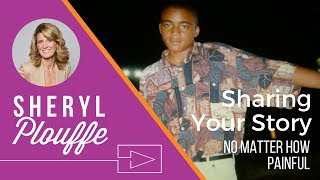
Terron J. Cook was kicked out at 14, slept in his car through high school, and lost his father to murder by his brother. He built a personal brand and coaching business by turning that pain into vulnerability, and shares healing practices like mirror work and meditation to help others do the same.
Chapters
We're live. Welcome to Personal Brand Breakthrough. It is Thursday and it's time to dive into all things social media, personal branding, messaging, video, and all of that. We have a very special guest who's joining us today. We have Taron Jay Cook who is joining us on the broadcast. Taron, thank you so much for being here. Really appreciate your time today to dive into a topic that I think is really going to benefit a lot of people, and it has to do with your story, and we're going to talk about your story just so that we can really set the premise of what it is that we're speaking about today, and that's the importance of your story and how it relates to your personal brand. So welcome to the program.
Thank you for having me, Sheryl.
I'm excited to— and let me just give a little bit of premise to our relationship. We're new friends. We met just a couple of weeks ago in Los Angeles at a 2-day mastermind event, and I know, remember, at that point we were out in the courtyard talking and it was a pretty You know, it was a pretty interesting conversation, a deep conversation that led me to realize you have such a powerful story. And why don't you start by sharing what that powerful story is with our audience? Then we'll come back and start to dissect that a little bit more and talk about the importance of sharing it with people.
Okay. Well, I'll just give a quick backdrop, everyone. Hello, and thank you for having me. I, you know, I really don't know where to start, but it started— I was speaking with Sheryl at the age of 14. There was a lot of family chaos and issues. Issues within the family dynamic, and that led to me being kicked out of my home. That's a very vulnerable, young, and ripe age to be out into the world alone. And, you know, my immediate instinct was to go into survival mode. And, you know, at that point, I'm still in high school, just trying to figure out how to graduate, stay out of trouble, and things of that nature. So fast forward, I graduate with honors. It was a very difficult path because I slept in my car for about a year and a half. Somehow found the bandwidth to move forward and get my grades so I can continue on with life. But from that point on, things became a little more real. You're out in the world, you have to figure out how to sustain yourself. And just things came up within my inner house, as I refer to it as. And a couple of years later, my father was murdered by my brother, and that really just it did a huge number on me internally and it forced me to deal with some of my own demons. But nevertheless, having to be in the world alone already, this just kind of compounded things in my mind and in my spirit. So I philandered for many, many years. I decided that I wanted to deal with the pain by writing a book. I've always had the gift of writing. And so I actually formatted a book. Self-published. I've sold a couple of thousand copies, which is great. And what I did was, you know, I said, this might be interesting, it might reach a broader audience, because initially I wrote the book because I wanted to just do some energy clearing of myself. But it turns out a lot of people could relate to the story. So I ended up publishing a second book, and I'm actually working on a third copy. But, and then the writing, it sort of, it forced me to look at other aspects of my life, like weight. I've always struggled with weight, skin problems, and things like that. And during the writing process, it really opened my mind up to a lot of different ways of thinking. And it shifted my consciousness a lot around just how I was framing my life, what had taken place. And I was sort of in a story. And I'm sure a lot of people are familiar with being stuck in your story. Those things did happen nevertheless, but I had to learn different coping skills, right? And, um, so what I did was I tried to turn— not try, I turned that struggle into a business model. And what that was called was Declutter Your Life. And, um, basically what we did was we worked with people that had some internal struggles going on. And I find that a lot of internal struggles start within the home environment, so I did that business for many, many years.
And it was very successful.
Yeah, it was very successful. It was very hard because when you're dealing with that realm, you're dealing with a lot of— there's a lot of intimate things going on. It's a lot of privacy issues. But you're working alongside people that have, on the outside, a beautiful life. But internally, people are just— they're having a struggle. So it was a great way for me to do my own house cleaning, if you will. And so now I'm in the arena of being a personal chef, but all that I've done along my path is just to really make sure that I'm okay before I go out into the world and try to deliver my best self. And, you know, go ahead.
I wanna say too, like that, again, your story is so powerful, right? You're on your own at 14, your brother murders your dad, your brother's still in jail, right? I mean, you have like all this, there's a lot of family drama that's going on there. And then you talked about, you know, other, really, and I think a lot of us can relate to the weight issue, right? Who doesn't want to lose another 10 to 20 pounds? And who wants to get, you know, doesn't want to get in better health? And so you have like all these really big, deep topics. And I wanted to sort of dive into, in terms of the story and the impact that it's had on you and in building the businesses that you have built and continue to build, would it have been possible to have been as successful as you've been without your story?
No, it's interesting that you you ask that question because, um, I've— let me shut this window. I apologize. There's a lot.
No, no, it's okay. Go ahead. This is totally cash. It's all good.
So, so it's interesting you say that because I've been around a lot of the, uh, the coaching world and things like that, and I have a lot of reverence for a lot of the greats. But, um, this would not be possible. I mean, if I had not— not only experienced that level of chaos and drama and trauma this, none of this would have been real. However, I always point people to the fact that I consciously chose to step out of that cycle. And so I used, you know, used to be very embarrassing to speak about my story, but, you know, as I evolved and I look back, and a lot of people really appreciate me sharing and opening up about, you know, the struggle, because a lot of people, you know, they haven't had to face that level of struggle, but it can really help other people along the way. You know, as you help yourself, you help others.
And no matter, I think no matter how dramatic your story is, some people's stories are much more dramatic than others. It's dramatic to us, right? It's the thing that happens to us and it feels, it is so real and it is dramatic to us. So no matter what that is, and I think that that's the point that I wanted to make today was that each of us does have a story, some more dramatic than others, But that our story is what makes us who we are. It's what makes us unique again. And how that translates to our brand is that our story is the catalyst, if you will, to help us differentiate ourselves and to put us out there and really show our uniqueness, so to speak. And that we can draw on our stories to help others. And I think you've probably done that extensively in your career. Was there a time when you were afraid to share those truths?
Yeah, you know, right around the time when I was 16, um, it was, you know, everything that took place in the home environment because we didn't really— we grew up in an upper middle class neighborhood, so, you know, got straight A's in school and things like that. So there's this level of expectation that's placed on us by society, and, you know, that level of happening doesn't— it's not, it's not common, you know. So it's— you don't, you don't really want to be considered an outcast and things like that. So when I was younger, right before the time that my father did get killed, you know, just even what was taking place, because my father was a very known foreman at General Motors Corporation. And so after the murder, that would just— it added to the stress and strife of, oh my gosh, my family life has been messed up. You know, you don't want to reveal too much because people unfortunately judge, you know, and then we judge ourselves. So it becomes this domino effect, and it's very unhealthy.
Yeah, and I think that that's really what it comes down to. We fear sharing the truth and the ugly stuff about our stories because we're afraid of being judged. Yes. And I want anyone who's watching right now, if you're watching live or potentially watching on the replay, I want you to really give some thought to what is something about your story that you're afraid of sharing, that you're maybe embarrassed of sharing. And this is an opportunity for you to kind of clear the air and comment and let us know what that thing is. What is that thing that you've been afraid— I'm going to start. I, for the longest time, was afraid and embarrassed to admit that I never graduated college. Because I went and I became a national broadcaster, and people would always ask me at functions and different things, and be like, "Oh, where did you go to J-school? Like, where did you go to journalism school?" And I'd be like, "Um, uh, no." And I would try to beat around the bush. I would like be— I didn't want to lie, but I would be like evading the question because I was embarrassed. I was embarrassed to say that I didn't actually graduate from college. I went to one semester and I hated it. And I was learning about philosophy and I was like, what am I doing? I need to make money. So I went off and started to volunteer. And that's kind of how I went through the ranks is I volunteered my way up and through cable television, pulling cable and doing all kinds of different things to get to where I needed to go. But I think that a lot of us are embarrassed about certain aspects of our story. And Teron, I just wanted to sort of ask you then as we wrap things up too, is, so I don't want to be mindful of your time. What is the role, do you think, of realness, authenticity, being who you are? What is the role of authenticity in entrepreneurship and building a business? How important of a role does it play?
I think it plays a very pivotal role, pivotal, pivotal role. Excuse me, I cannot talk today. That's okay. Because when you, when you're sharing, when you make yourself that vulnerable, you're in the public domain. People are watching you. You know, it's one thing if you're in a company and you're sharing your personal story, but if you're an entrepreneur, you're already setting yourself aside from the masses first and foremost. So I think it's necessary because entrepreneurship is very difficult. I mean, I've been an entrepreneur for a very long time. I mean, it doesn't look or smell the same way each and every day. As you know. So, um, but when you share your story and you are in that, that domain, it, it gives you a level of respect from the public. I mean, I've found that. I mean, I've, I've been in worlds that otherwise I would have never gotten involved in had I not shared my story. And so it's, uh, it's scary, you know, but when once you do that, it actually opens up a lot of doors for you. And, um, You know, I've done a lot of speaking engagements and things like that. And I've finally gotten to a place to where, you know, I feel okay with everything because here I am and I'm flourishing. So, and that's not to say it's going to look the same for everyone, but when you are confident in what you have been through, what you've chosen to go through and where you are right now, people will, they'll take heed to that.
So, yeah, I agree. So I want to challenge, if you're watching right now, I want to challenge you to write in the comments What is something that you might consider sharing? What is something that you've been hiding, that you're embarrassed about, that you are ashamed of, that you have now maybe reconsidered? You know, I should really talk more about X, Y, and Z. What is that thing that you've been afraid to share? This is an opportunity for you to start clearing the air, so let me know in the comments below. And whether, and where you're watching from. I always like to go back on the comments and see where you're watching from, anywhere in the world. Let me know in the comments. I'd like to go back and take a look at that. So, Teron, thank you so much for being here. And I wanted to ask you, what would you have any parting words to anyone who may be watching who's like saying, wow, that's an inspiration, you know, if he's had such a hard story to share, maybe I could share mine. What are some parting words that you have for people who might be afraid to share their story?
One thing I do, people always say, well, how do you continue to go through and surpass what you've gone through? It's important to spend time with yourself every day. I spend, you know, so much time with clients and, you know, being out in the world, as you know, networking. But I think the best way to healing is to stand in front of a mirror. This may sound silly, but every day I stand in front of the mirror and just remind myself of how far I've come and just spend time alone each and every day, at least 5 minutes. Meditate, clear your mind. And if you write down on a Post-it note, you know, what it is that you're seeking to overcome, not get over, but to overcome— those, that's a huge difference— then that is a great way to enter into healing. So that's my advice to everyone.
Thank you so much. So Taron is a— I don't know how you describe yourself, but I consider you to be like a home and health expert. So if there's anyone out there who wants to connect with you, it's taronjcook.com, correct? Yes. Okay. So I'm just going to show that on the screen. So if anybody wants to connect with you, they can do so. Thank you so much for your time today and your insights and for sharing your story. I think, I hope that it will help others who have stories to share, to feel more open and willing to do exactly how you, what you've done for your business and your brand.
Thank you so much, Sheryl, for having me.
Thank you so much.
Bye. All right. Bye-bye.
More from Sheryl



From 'agreeable' to 'ruthless mentor' to 'strategic sparring partner' #substack #shorts







