#012 Eyewear For Your Brand And Business With Wendy Buchanan
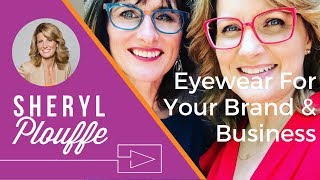
In this live interview on Personal Brand Breakthrough, host Sheryl Plouffe talks with eyewear specialist Wendy Buchanan about how glasses function as a strategic element of personal branding and business communication. Wendy explains her design‑first philosophy—sourcing boutique, color‑rich frames and matching them to a client’s complexion, clothing, accessories, and facial features (especially eyebrow alignment). They discuss common mistakes such as choosing frames that clash with the brow line or face shape, and why many people avoid wearing glasses on camera despite needing them. The conversation covers how color harmony, frame shape, and material can reinforce a brand’s visual identity, even extending to corporate colors versus personal palette. Wendy describes her “Spec Style” system (five personality‑based style categories) and how she builds curated collections for clients, including dedicated computer‑screen glasses. Real‑world anecdotes illustrate how the right pair can spark conversations, lead to sales meetings, or even a marriage. The dialogue also touches on practical advice: how many pairs to own, budgeting, and the importance of authenticity versus merely functional eyewear. The episode ends with a call‑to‑action for viewers to book appointments via perceptionseyewear.com.
Chapters
We're here, we're here. Welcome to Personal Brand Breakthrough. I'm Cheryl Plouffe, this is Wendy Buchanan, and I'm so excited that we're here. We're going to talk about— this is an eyewear image extravaganza. This is about personal branding, and I'm really excited that you're here. Listen, what I'd love for you to do right now is to let us know in the comments if if you wear eyeglasses or if you should be, type yes in the comments below. We would love to know. And also let us know where you're watching from as well. Now here's what's going to happen. We're going to be here for an extended period of time talking about glasses. I'm going to be trying them on. I'm going to be the model today, uh, try some stuff on. You guys can give us thumbs up, thumbs down, whatever in the comments. I also am going to be watching on my Facebook page and watching the comments. So if you have questions, Wendy is an expert in this area. It's about image, it's about branding. She knows exactly how to match you up with an amazing pair of, of eyeglasses. These are not just any kind of eyeglasses. These are bold, awesome colors, beautiful styles and shapes that we're talking about today. So please leave the comments below. I'm excited that you're here, and it's interesting because we met not too long ago, just a few weeks ago, and I was so blown away by the variety of frames that you have. But these are different kinds of frames. Do you want to just tell us a little bit more about your philosophy and your take on this?
Yeah, most of the frames I source from boutique designers all over the world. So these are designers like clothing designers who are specifically designing eyewear. So they're using unusual materials, plastics, metals, but the one thing I really notice is color. And I love fitting color for people because we dress in a certain array of colors, we have color in our complexion, in our hair, in our eyes, and when you can complement that for people in their eyewear, it creates that wow, it really stands out.
Well, I'm just looking at your outfit, right, and how you matched, it's amazing, you've matched your selection because you could— you have so many choices to what you're wearing. So there's a real art and a trick to this, right?
Yes, well, and I, I kind of have a lot of fun. I find really cool glasses and then I find the clothes that go with them. I work a little backwards, but that's because that's my brand. Eyewear is my brand. It's my personality. It's kind of my, my joy and passion is eyewear. So I kind of work from the top and go down, but Typically, I'm looking at the whole person. I'm looking at the style of clothing you wear, right down to the fabrics, the necklines that you wear, the colors of course. And then I'm looking at how do you accessorize? What do those accessories look like? What shape are they? How heavy are they? And then balancing it and complementing it with eyeglasses.
So let's talk then briefly about what are the big— what are some big mistakes that you see people making? You know, people who need to be wearing eyeglasses, they have choice, right? Typically, I mean, the typical route is you go to the eye doctor and you go out into the, into the store or the optometrist office and they'll have some frames. But tell me about like what some of the mistakes are and people are picking up frames that really are not perfect for them, right?
I think the number one thing that I see on TV and in video is a disconnect with the eyebrow. So the eyebrow might have a really nice curve to it, and then the glasses are horizontal or straight, right? And so now we have two lines. We've had the horizontal line of the glasses, and then we have the frame going in a completely different way. Can I, can I use you?
Please do. I want to, I want to model some glasses today for you guys. And listen, I'm also checking while Wendy's choosing some frames for me. I want to hear from you, so let me know in the comments where you're watching from and type yes in the comments if you wear glasses currently, or no, you should be, but maybe don't, maybe have never had someone like Wendy help you to choose the right frames for you. Let us know in the comments, and if you have any questions, just let me check real quick, Wendy, on questions, and if there aren't any, we'll just start doing some modeling. Okay, Yvonne says hello. Hi, Yvonne. We've got Marian. Hi, Wendy, looking beautiful as always. Do you know about Marian?
Kim.
Hi, Kim. Kim says, I'm seriously considering getting the glasses I tried on at Power of the Purse. So that's how we all met you. And Marty says he's joining from Ottawa, so thank you very much for joining. Okay, cool. So let us know. Yeah, this is great stuff, guys. So yes, I need Just some said yes, I love Wendy's frames. Cool. All right, cool. So Kim, we're gonna hook you up with Wendy. All right, let me try on some glasses.
And you know what, I'm gonna show you this pair because it'll speak a little bit to what we talked about with color. So when I talked about color, oftentimes people will come to me and say they want a brown frame or they want a black frame, and usually the reason for for that is they want one pair of glasses that they believe will go with everything that they wear. But when we go deeper and really look at the array of colors you wear, you're usually in a family of colors. Maybe they're cool, maybe they're warm, and they're a section of, of that. So I try to veer people away from brown. So brown is working well with your complexion. Okay. But it goes a little bit flat. And maybe you can see this on the video. I see it especially flat on screen. So in real life, there is some more life to it. It has some depth, but on the screen, it's just kind of— there's nothing. Now, to go back to my point about brows, though, this is— can I just look at— can you look at me?
Yeah.
So it's just it's just kind of flat. The frame is flat. It's not bad with her brow, but I'm losing Cheryl's eyes with this because it's not opening up her eyes. So what I want to do— and I know this isn't fair because she's wearing red today— but when I talk to Cheryl, she wears a lot of red. And maybe if it's not a solid red, there's red in her jacket. So look what happens when we alter the shape a little bit.
Oh, those are cool.
Those are really cool, right? So now, can you, looking at the video, see her eyes more clearly? So we've opened it up, we've curved it a little bit. So the other thing that I see with Cheryl is she's more feminine. She's pretty. She has the long flowing hair, the really big eyes, which indicate to me that, that she is— she's got she's a little romantic and pretty, but her clothing is also telling me that. The little bit of frill, the softer neckline is telling me this kind of flows and ties in. Even if this was a brown frame, would look good because it's addressed the other issues of the eyebrow and opening up your eyes.
It's interesting because if I saw these frames, you know, sitting, and I just wanna show you here, by the way, You know, Wendy has a whole— actually, you've got the really cool case for them too, but a whole selection of them.
But if I'm looking at a whole bunch of different frames, I might not actually choose this one because I think it's too square.
It's interesting, like, from a shape standpoint.
So can we— can you put those back on? Let's just talk about that for a minute. So you may have been taught, or you're read an article somewhere that if you have a round face, go square, if you have a square face, go round. And I like to— let's get away from the face shape conversation and let's really talk about facial features and how can we accentuate the facial features that work for you. So this works, um, well, one, we're opening up her eyes, but you have a little bit of an angle in your jawline. I do. The angle here, it's not a harsh angle, it's soft, so it's actually mimicking and working with the same angles. If you turn to the side, I want them to see. Look how sexy this is from the side angle. We've now just accentuated that cheekbone, so, and there's interest on the side. So someone, when you're talking or you're on video and you're moving around, people are able to see that too, which creates some interest. But it doesn't distract from you as a person. It's in harmony with your complexion.
Let's talk color, because so many of your frames, again, there's just a ton and ton of different color. You know, I'm looking at like the purple here, and we've got, uh, greens and teals and all these beautiful colors. From a branding standpoint, like, I know for me, my branding color is like a— it's like a magenta type of color. Do you recommend that we search the ends of the earth to find glasses in our corporate brand color and nothing more, or is it okay to veer away from that a little bit?
Yeah, I would, you know, I think that's, to try to break it down that much in color would be a little crazy. I don't know how much time we'd have. I'm a little crazy. I wish we had your bag because Cheryl has this great bag. So I started to look at the bag and think what is a color that would harmonize. So when we looked at it— so this is what's interesting— when I looked at her bag, this frame—
yes, I love, love purple, and my corporate color is like a magenta, which is like a pinky purple kind of color—
and this really worked well with her, her handbag. But when I put it on, it wasn't the wow. The color was just off a little bit with her complexion. And I thought, it's just as much as what the idea of trying to brand that way, maybe it'll work for some people but not for everyone. Right. But we could take elements of that, and when we found this, which plays—
see, I like those.
Wow. So again, we've introduced the red, but it's lifting up the eye. It's a more pretty feminine, softer look, which is more your style. So I think it's really honoring your brand, your personality, so that it's authentic. And, and that's what creates the wow too. The other frames were just okay, as much as the corporate brand color was great. This is veering off a little bit, but it's still making the impact for you too. That's great, I love that. Was there another? Oh, there was another one I wanted to show you really quickly. What happens if we go— oh no, you know what, can I show them? Cheryl used to be on TV.
Oh, okay. Oh, now I know where we're going with this.
This is what she wore on TV, and the thinking— you tell them why you wore these.
And by the way, feel free if you know someone, which you probably do, you know someone who wears glasses, share this on Facebook with them please. And also This will be on YouTube, on my YouTube channel later, and you can subscribe to the channel and check notifications so that you're notified next time we go live on Personal Brand Breakthrough, by the way. So I'll tell you the story about these glasses. So for those of you who are new to me, I'm a video marketing strategist, and for many, many years I was on TV, 25 years on TV as a broadcast journalist and anchor, and I have a very mild prescription. I I don't really— I can get through life without my glasses, but at one point I was needing to read the teleprompter from a distance, and it was recommended that I actually get some glasses to wear on air. I only wore these maybe 4 times because I didn't really love them, and maybe there's a reason why that is. So these are them, and what was recommended at the time was that I get frameless glasses and make them disappear. Put an anti-glare coating on them. We don't want to see the glasses was the recommendation. And you say no.
Well, you know what happens when I look at Cheryl here?
It's okay, you can totally be honest and say what you mean. Just tell it like it is.
It doesn't add anything. So when I'm working with clients, I kind of ask permission, right? But it isn't adding anything to her persona. It doesn't tell me much about her personality, and it can almost be aging because there's, there's no color there on TV. And I get the idea that you want them to blend in, but if you're an outgoing person person, and you're ready to step up and be bold, look what happens when we go back from a rimless on Cheryl to something, you know, it's a classic shape, but the color and the detailing on the shape that we picked to accentuate brings out your eyes. It gives— you look personally powerful, you look Smart.
Does it bug you when you— so I was a TV anchor for a long time. You watch TV and you watch the news. Does it bug you when you see news anchors or for that matter entrepreneurs or anyone who's putting themselves on video who are not wearing great glasses for them? Do you want to just reach into the screen and fix it?
You know what I think first is How much time, effort, and an investment did they maybe put into the shoes that they have on? And then we don't see them. Like, I have, I have a great pair of pumps, right, on right now that I spent a lot of money on, but you're not going to see that. So when you're in the business of promoting, marketing, branding, or you're the one in front of the camera all the time, This is the investment in your total look. And so for it to be authentic and congruent with who you are, your personality and your styling, then it makes total sense to have that look. If you're someone that, um, it is quieter, doesn't want to be noticed, maybe that rimless style is for you. But I find if we're entrepreneurs and we're out there, We need to put ourselves out there to get noticed, to have a conversation, and to build our businesses. Well, and I think that—
I believe that now having met you, having really learned more about eyeglasses and how this is connected or can be connected to your personal brand, we can actually make money from our eyewear in an indirect way.
Right. Do you agree?
Do you know what I mean by that? Like, I think that if you invested in a really bold, awesome pair, maybe maybe multiple pairs of eyeglasses that suit your personality, your face shape, your complexion, your hair, all of the things that you are an expert at doing. I think that from an entrepreneurial standpoint, you can actually make money from this because it's the glasses that can be— it can be an icebreaker. Can it be the thing that just helps you to get that little bit of attention that you need in a crowded marketplace for somebody to stop and go, oh my God, look at their glasses. That's right. Look at that person, they stand out, right? You agree?
Yeah, and I think it's— there was one client who had a conversation in an elevator with a gentleman just because of their eyewear. She was wearing great glasses, he complimented her, they started a conversation, it led to, "What do you do?" You know, "Why are you here?" Which led to a meeting, which led to new business. And And this happens quite often. It can even from a personal brand. I had a client who got new glasses and actually we were purposeful in choosing the glasses for him so that he, he wanted to get married. He was ready to settle down. He was back in the city from traveling extensively and that was our purpose when we were choosing. We were that purposeful and he met his wife because of his funky glasses.
You're kidding.
She said, "Who's the new guy with the funky glasses? I want to meet him." She ended up— they ended up dating and getting married. So it's a real love story. Wow. Just because of a pair of glasses.
It's so powerful. And I think that again, from the standpoint of choosing them, you can go on your own and— but I don't see this type of selection of glasses out there, right? You've done a really good job of, I'm guessing you curate frames with an intent and with purpose behind it. Like you're bringing these all together for a purpose.
Right, well, I've created actually 5 specific Spec Style personalities. So when I'm doing my buying and talking to designers, I'm bringing in a collection that caters to all 5. And we're never, we're never all 5, but we're typically at least 2 different spec styles. So it's getting those styles right for the occasion. For video, like, I have a great pair of black and white frames, but when I put them on for video— Oh! See what happens?
Right.
Yeah, no, it's too much. Now it's like I'm not talking to you. It's like bold. But then, oh, can I share my computer story with you? So I made up a pair of computer glasses just so the days that I'm on my computer and writing. And so I just took an old frame, an old frame out of some old stock, and I had the lenses made, and this is what they look like. So for me, pretty nondescript. They're red, but there's no real wow factor. And what happened was, when I do Skype or Zoom meetings or webinars that are video, I'm close to my computer, so I need to wear my computer glasses. So I'm actually now building a wardrobe of computer glasses. So that I can be more impactful when I'm having those Zoom meetings because I can't see when I wear my regular glasses. Okay. So this is set up specifically for this distance for me to see better because that's what the people on the other end were seeing and I didn't want to be wearing these. It's almost like wearing— can you imagine having a meeting or being on TV wearing like reading glasses?
You hate the readers. She's like, do not wear readers, whatever you do.
Right? Yeah, I don't, for so many reasons, you know, I think—
Down on your nose, you're looking down.
You're looking down. The other thing I find, I feel like I personally, if I put them on, I feel old. And what happens is when you're looking down, I'm not engaged. So now my body language is down and my eyes are up, so I'm not speaking well, I'm not projecting, I'm not connecting with my audience because they can't see my eyes. And then when I go back to this, yeah, it's—
and I always—
and I can read out of the bottom if I need to.
And I always say that when you're doing video, that you should be in an authoritative stance, that you should be looking straight at the camera, like you said, eye contact and all of those things. —when you're reading, when you have readers on and you have those little, you know, you're looking down, it's going against everything that I teach and that you obviously, you know, teach as well. You talked about something interesting a moment ago, and that was the collection of glasses. How many pairs of glasses should a person have in a collection? Because you're talking about, you know, having frames for, you know, matching your outfit, certain purposes like a pair of computer glasses, and then maybe another pair that you wear day to day. What would be sort of that number that you would think is is a good number for people to have and start a collection of glasses?
It's funny, it's evolving and changing. I'd say even in the last few years, so I used to say, you know, 2 or 3 pairs, and it's now getting where people are building even more. Not that they're doing it all at once, you know, if there's a budget, they're working within that budget, but they're building because, you know, once they buy 1 pair, or they might get 2 or 3 pairs the first time, and then they are coming back the next season. Okay, you know what, I'm doing a lot more presentations in front of groups and I just feel like, you know, maybe the black and white are, are too severe, maybe a little intimidating. I want to go a little softer. And so we're adding depending on lifestyle, we're sometimes depending on if their jobs have changed. So I'm seeing that grow where they, they build and build on it, but to typically they'll have 3 to kind of work with. And when you think— if I go back, how many pairs of these do we have?
Well, and it's interesting from a video standpoint, right? Who's really seeing your shoes in most cases on video, right? Occasionally, yes. But we, we think about shoes, we think about jewelry, these types of accessories, and somehow we negate to think about the thing that we're wearing on our faces. It's so interesting.
Well, it's gone beyond function. Absolutely. It used to be they're functional, I'm gonna buy a pair every 2 years when my insurance plan gives me $200, which, you know, I argue, would you wait till April to buy a winter coat in Canada because your plan might give you $200? You wouldn't. So from a branding and being in business, it's It is a marketing tool. I'm not saying buy eyeglasses if you don't actually really need them, right? Because that's not authentic or real. But if you are wearing them, to have that investment, have that pair that really says who you are, whether it's on camera or whether it's at a networking event or if you're speaking in front of a group of people, that really sets you apart from all the others. Authenticity.
So if you need to be wearing glasses, and then you see this a lot where people will in day-to-day life, they're wearing glasses because they have to. But then when it comes to video, they go, "Ah, I'm not going to wear my glasses for this video." And then they look completely different. Right. So there's a massive disconnect and in my opinion almost misrepresentation of themselves because they don't look the way that they normally look. What are your thoughts on that? Like, what would be the reason why people would not want to wear their glasses on camera?
Maybe it's they're wondering what other people will think. Yeah, right. I think we're all guilty of that. What will they think? How will they judge me? What, you know, how do I look? Do I look old? One study actually said that they think people look smarter wearing glasses, and I can get you the actual details and shoot it out in an email, but I think you have to be comfortable with who you are, and then everybody else will be comfortable. And I heard a great example of this on the news this morning where a gentleman was saying he wanted to be on TV, but he didn't think he could be on TV if his hair was in dreadlocks. And so he worked on himself and he got comfortable that that's his look, that's who he is, that's what he likes. And soon after that, he got a gig with with a video show in Toronto. Wow. So it's— if you're comfortable and you love your look, and I think it's just crafting your look so that it's exactly who you are and taking the time to go through the process of what is that look, what is the best look, why does it work, right? And then when you're comfortable, everybody else is completely fine with you too.
Authenticity wins Every time. Yeah, I love this conversation. Thank you so much. And, and I, I'm— you know, one of the things I noticed too, even just as we were prepping for this, I was trying on a few frames, and you're so good at being able to just look at somebody and go, yes, no, dude, it's this, change that. It's really remarkable. You have a talent and an intuition about this. And so how do people reach you if they're interested and they're like, I want to really up my game, my eyewear game, my branding game, how do they reach you and get in touch with, with what you do?
I am— so I actually work by appointment only, and I cater to the Greater Toronto Area. So I have a lot of out-of-town people that will come to me too. And my website is perceptionseyewear.com. There's a really fun— you're showing that now— really fun what is your spec style questionnaire that you can take And that quiz will tell you what your top 2 spec styles are. So it's a fun way just to check it out, see if this resonates with you. And then a 1-hour appointment— sometimes it's longer than that— we go through the whole process of looking at all the different elements and what your brand is and who you are and how do we bring that out in your eyewear accessory.
I think it's only appropriate that I wear these to sign off. Okay, so let's wear these because these are my favorites so far. And you've got what, 370 glasses? Okay, so we could be here for a while. So thank you so much, Wendy, for your expertise, your insights. And I would encourage you, if you wear glasses, this is the woman that you need to speak to and really kind of up your branding game and your eyewear game. It is going to make a huge difference for you. It's going to help you stand stand out and differentiate yourself, and it is authentic in the end. So thank you so much for your insights. Thank you guys for—
yeah, it's been fun. Thank you for joining us.
Thanks for joining us. And listen, if you have any questions at all, post them in the comments. We'll go through and make sure that we answer each and every one of them. Have a great day, you guys, and I'll see you next time on Personal Brand Breakthrough. Bye for now. Bye.
More from Sheryl



From 'agreeable' to 'ruthless mentor' to 'strategic sparring partner' #substack #shorts







