#013 Randy Spelling On Change & Pursuing Your Life's Purpose
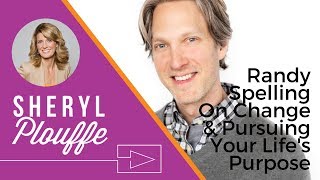
In this episode of Personal Brand Breakthrough, host Sheryl Plouffe interviews Randy Spelling, a life and business coach known as a "freedom strategist." Randy shares his upbringing as the son of famed TV producer Aaron Spelling and actress sister Tori Spelling, describing the pressures of Hollywood and his early sensitivity. He recounts a descent into addiction that nearly cost him his life, and how a turning point led him to meditation, spirituality, and ultimately recovery. A therapist suggested the term "life coach," which sparked Randy’s pursuit of coaching, initially focusing on emotional transformation before later embracing business coaching to sustain his family. He discusses his complex relationship with money, emphasizing that financial freedom enables purpose‑driven work. Randy explains his social media strategy, relying primarily on Instagram and Facebook Live/video to reach audiences, while acknowledging the internal struggle of introversion versus the need to share valuable content. He offers advice to entrepreneurs, coaches, and therapists: persist despite challenges, seek mentors, coaches, or supportive groups, and remember that serving others creates a limitless ripple effect. Contact information (Instagram @RandySpelling, Facebook page Randy Spelling Coaching, website randyspelling.com) is provided at the end.
Chapters
Welcome to Personal Brand Breakthrough. I have a very special guest with me today. Randy Spelling is here. He is a life and business coach and just a super awesome guy. So we're going to be talking today about his business and his personal brand and how he's been able to really carve out a niche for himself over the last decade. Decade. Randy, thank you so much for being here. Really appreciate your time today.
Yeah, thanks for having me.
Now, Randy, I want— I guess I would be remiss if I didn't really start this interview by talking about your past and your history, but not from the standpoint of, oh, you know, Randy grew up privileged and he grew up in Beverly Hills, but more from the standpoint of what your story is and how it relates to your brand. Can you give us a a rundown of what your history and your family life was like growing up?
Sure. I grew up in Los Angeles, in Hollywood. My father, an incredibly famous television producer named Aaron Spelling, my sister, an actress, Tori Spelling. And yeah, I grew up in the limelight and was definitely the one in the family who was— super sensitive and wanted everyone to be happy and wanted the best for people. And, uh, you know, that's hard to grow up in an environment such as Hollywood where everything is more, bigger, better, glamorous. Um, you know, I remember seeing, uh, a, a little crystal thing that said, you can never be too, too rich or too thin. Right, so that idea, and for me, you know, it's like I wanted world peace and I wanted everyone to be singing Kumbaya. So I had some challenges navigating that landscape, and what I did is I followed in the family business because when you're in that world, that's just what you do. And, and I did do that, and I had a lot of fun doing that, so it wasn't all bad, but it was hard to get out of the shadows of. And, um, my life took a different trajectory. Um, I struggled with, uh, addiction, and which almost cost me my life. And then it was time to do something different. It was just time for me to stop that put that in the past and move forward. And I changed many things in my life, and that's what got me on the path to life coaching.
You know, it's interesting, Randy, because we met, ironically enough, in Beverly Hills.
Yes.
At a mastermind event. And I remember being in that dark wood library room with you and me and 10 other people, and you were, I think, And you tell me if I could be totally off base, but it felt like you were downplaying your past or that you didn't really necessarily want to advertise that that was your past. Do you find that you, you, you actively or consciously try to disconnect from that part of your life, or do you leverage it to build your business and build your brand?
I've never leveraged it. You know, people ask me all the time, what was it like growing up? What was it like having a father? And my answer is, he was my father, or this was my life. So it's not like I look at myself and go, well, you know, when I walk into a room, well, you know, I'm, I'm Randy Spelling. I am— I look at myself the same as everybody else. You know, life can be hard, life can be great. We all have challenges and struggles and are trying our best to live happier, more fulfilled lives, and that's kind of where I'm at too. So what you saw, it's an astute observation, but that really is just me. I'm not in my head thinking, "Well, I'm just going to downplay anything." That really is just who I am. Anyone who wants to make change, you know that it's there, right? You know that it's coming. For me, there was a long time that I thought, I want to change. I don't want to live this way anymore, the way that I was living. I mean, I went down pretty far into the rabbit hole of addiction, um, and I had no freedom. It's funny because I call myself a freedom strategist now, how to help people create more personal freedom in their lives and their businesses. And I had no freedom. I was completely chained.
But at the same time, that experience makes you and qualifies you to now teach that, right?
Yes. Yes. And you know, it, that has evolved. Um, so to answer your question, uh, yes, I, it was, there were a culmination of things and events and circumstances that happened that got me to the point to say, I mean, and I mean this, I was literally going to die or I had to change. I chose to change, but I didn't know what was in store for me or what that was going to be. And you know, on the precipice of that change, it's scary, right? I had to change my friends. I had to change my lifestyle, what I did, how I had fun. I mean, all of it had to change. Uh, the one through line for me though was I had gotten into meditation and spirituality, psychology, metaphysics when I was around 17. So about 17 to 22, um, that was my anchor point that saved me because I knew that there was a more inner rich world than what I was living. And if I didn't have that experience, I, I, I I probably would have left the planet, but because I knew that, um, I wanted more of that again. And that's what pulled me through to say, I want to do something different with my life. I want to connect with people in a different way. I would like to work with people. I know firsthand what it's like to, uh, you know, not be enough, not be fulfilled, want to know what my purpose is. And me going about getting that.
It's a young age to come to that epiphany.
It didn't feel young to me. It felt way overdue.
Because you had so many experiences, you probably were older, you know, than your age. So, what— tell me about the path then to getting to a point where you're like, I am going to become a life and business coach. You know, was that just something— Was there someone who inspired you, or was there a coach that you worked with who you thought, I'd kinda like to do what they're doing?
No, funny enough, it was my therapist at the time. And he said, I was flailing about going, okay, I know I would like to do something different, I don't know what that is. And he said, Randy, what about being a life coach? And I said to him, and I had never really heard that term except on Oprah a couple times, and I said to him, Isn't that just for women? And he said, well, my wife is one, but, but there are— this is a growing profession. And I just remember he just planted a seed. And what I did is I went home that night, and for the next few days I looked it up online and I researched it, and it checked so many boxes. And I thought, hey, I'm gonna— I don't know if I'm gonna become a life coach. And by the way, at the time I wasn't studying to be a business coach at all. Business wasn't in the realm of what I wanted to do at all. In fact, I didn't want to study business. I turned my nose at it and just went into how to make change in people's lives, emotional. What stories did they have that, you know, what things did they go through in their past that are holding them back and how to move them forward? And I spent years doing that and I got really good at that. But the business part of it, I still— nope, don't want to look at that, don't want to do business. And after a while, after about 6 or 7 years of making okay money, being really good at what I did and getting great results, but making okay money and not really being able to fully provide for my family, it's like, maybe I need to study some business. Right. And I got a business coach and that really changed everything for me. And then I got into studying business and I thought, oh, this is fascinating.
And that was— We have a similar experience in that way because I'm the same way. I mean, I have always loved helping people to put themselves out there and make videos and all that, but it wasn't until I hired a business coach that everything kind of changed for me because I started to see things in a different way. So it sounds like we have a similar experience in that regard.
Yeah. Something that I just wanted to add, because I think this ties into my background and my relationship with money, is I turned my back on it a little bit. I wanted it, but I also turned my back on it. Money's not going to bring happiness and that sort of rhetoric. Listen, I teach that. It doesn't really buy happiness, but it does provide choice. And for service providers who have, you know, service-based businesses— life coaches, therapists, healers, so many entrepreneurial things now— it's really frustrating to want to live your passion and your purpose in the world and feel that you want to affect greater change and not get paid to do it. So if I could help people get paid so they could then be excited again about doing what they do and bring their purpose to the world and feel like they're living that, then that really is just life coaching and, you know, emotional work.
I, I couldn't agree more. I think it has to do with an abundance mindset, you know, and your relationship to money does have to change in that You know, actually, I think that we're all here to live in abundance, and when we can make— money is just the vehicle to be able to get our message out to more people. And so, I totally agree with you. When you change your relationship to money and your mindset around money, everything starts to fall into place, because it really isn't, as you said, about the money as much as it's about the choices that you can make when you have money or financial freedom to be able to do that. So, Randy, I wanted to talk to you then a little bit about— now we've talked about your business and how you have been able to build such a successful business from the standpoint of promoting yourself and putting yourself out there. You have a great Instagram following. Is Instagram your main social channel, your main social platform to get your message out to people?
Instagram and Facebook. Are my two. That's about all I can handle. Then people go into the Snapchat, and I'm like, I can't handle anymore. Instagram is definitely one, but the other is Facebook, you know, doing a lot of Facebook Lives and videos. I'm gonna tell you a dirty little secret.
Please do, I'm listening.
I still have to push myself to be out there and do videos. And sometimes the, the motivation for me is that I want to fill a group or I want to create something. And because of that, it then forces me to go, okay, I'm going to then show a part of my life because I'm, I'm, I can be pretty introverted. Um, I have some extrovert ambivert moments, but a lot of times I'm, you know, I can, I can keep to myself and be happy doing that, but then I'm not reaching people and I'm not sharing with people. I don't know what about me or my life or my viewpoint people find interesting, but I'm told that there are parts that are interesting. So part of it is sharing with people because I, I, the, the, the The posting is easy and I love it. And, you know, I can, I can write a message that's from my heart and hopefully get people to see things in a, in a new way. The videos are a big part of what have, uh, what has built my business. And as you know, there are times that, I mean, you're so comfortable on video and you're so good at that. There are times that just don't want to Shoot anything.
It's interesting though, Randy. I mean, I have times like that too. I, I think I am, you know what, I don't know what I am. I don't know if I'm really an extrovert because sometimes I do have moments where I do think I am an introvert. Um, but suffice to say that I do feel comfortable on camera. However, there are moments when I really don't feel like it, and it sounds like you have those moments as well. However, I always think about my audience, and I always think about value and how I can share more. And then I almost look at it from the standpoint of it's selfish of me not to share. Like, if I keep it to myself and I don't do it, then that's information or an insight or an experience that could maybe help somebody have a small little bit of transformation. So why should I hold that back? You know, so I I go in and do that. But I agree with you. I mean, I don't always, always feel like doing videos, but I do them anyway. So you said that video has had a big impact on your business.
A huge impact. And, you know, as you know, there are things in business building that you may not always like to do. But it's, it's part of business building. And that's why having your purpose your core of why you're doing what you're doing. And like you said, if you want to get out there and help people and have people be affected from what you share and, you know, have insights and whatever, then that purpose is going to motivate you enough to say, I'm going to turn on the camera right now and I'm going to share this. Same thing with me. If I'm lacking that, that, that is the disconnect is when I'm going, oh, I don't really want to do this. But in the back of my mind, I'm thinking, I'm feeling it, right? There's that intuitive internal nudge that says, you should probably do something today. You should probably do a video. You should probably put yourself out there and share something. Usually that nudge is always coming from a place of not necessarily, oh, I have to build my business, but whatever you're going to share, whatever that is, it's needed. So just to get out of my own way to be able to do that.
Yeah, that's interesting. What, um, I want to give you an opportunity to let people know how they can get in touch with you, Randy, if they wanted to follow you on Instagram and touch base with you on Facebook and all that. What are some ways that people can connect with you and follow you online?
Sure. Um, Instagram, it's Randy Spelling. Uh, Facebook, my page is Randy Spelling Coaching. I'm really active on both of those, so you can always reach out to me. Please do follow along. Hopefully I have very valuable content for you. And my website, randyspelling.com.
Wonderful. Do you have any parting words, Randy, for people who are watching this, whether they're entrepreneurs or coaches, consultants, therapists, like you mentioned, people who are looking to build a business and want to reach a level of success? Like you have, any parting words for them and advice on putting themselves out there and building their personal brand?
Mm, keep going, because not only is your passion and your dream worth it, um, but all the people that you're here to serve, all the people that you are here to help. That ripple effect is, you know, limitless and knows no bounds and keeps going outward. So I understand that it's frustrating. I know that it's challenging at times. Keep on going. And whatever you need to do to support yourself, if it's hiring a Coach, if it's getting help, if it's joining an an entrepreneurial group just to hear, you know, Cheryl, when we met, I just loved being in the room with other entrepreneurs because even though I have a small team now in my business, a lot of it is isolating and alone, and I have my business all up here and it goes with me everywhere I go. So to be in a room hearing other people's pains and struggles and victories, is so comforting. So don't do it alone. Either get the support you need, get a mentor, get a coach, get a group, do something so you don't have to do it alone. It's tremendously helpful.
I couldn't agree more. And thank you so much. And you know what I loved about that answer? I love that you paused to take a moment to actually think about what your answer was going to be. I think that is something we should all do more often is really take the time to pause and think about our answers when we're asked questions. So I love that you did that, and thank you so much, Randy, for being here and for sharing your story and for sharing your insights. I think it's gonna help a lot of people. And those of you watching Personal Brand Breakthrough right now, be sure to connect with Randy, follow him on Instagram and Facebook, because he knows what he's talking about and he does a great job. So thank you so much, Randy, and I'll see you next week.
Okay, sounds good.
Bye.
More from Sheryl



From 'agreeable' to 'ruthless mentor' to 'strategic sparring partner' #substack #shorts







